

Synopsis
Covers the whole plot, including the ending.
- Difficulty
- Medium
- Pacing
- Moderate
- Mood
- Atmospheric, Suspenseful, Dark, Intellectually stimulating
- Read it if
- You enjoy meticulously researched historical thrillers with a focus on early forensic psychology and atmospheric Gilded Age settings.
- Skip it if
- You prefer fast-paced action over detailed investigation and character development, or are sensitive to graphic descriptions of violence against children.
The Alienist Plot Summary
Covers the whole plot, including the ending.
A Gruesome Discovery on the Bridge
The year is 1896. Newspaper reporter John Schuyler Moore receives a message from his old friend, Dr. Laszlo Kreizler, an 'alienist' (psychologist). He is called to the unfinished Williamsburg Bridge, where the mutilated body of a young male prostitute, Georgie Carr, has been discovered. Dr. Kreizler, along with Police Commissioner Theodore Roosevelt, is already on the scene, observing the killer's meticulous work. The boy's eyes have been gouged out, and his genitals removed, suggesting a ritual. This murder starts a secret investigation, as Kreizler believes a new type of killer, driven by deep psychological motivations, is at work in New York City.
Forming the Unorthodox Team
Recognizing the limits of conventional police methods, Dr. Kreizler forms his own team to investigate the murder. He enlists John Moore to document their findings and provide an outside perspective. Sara Howard, the ambitious and intelligent first female employee of the NYPD, joins to assist with research and interviews. The brilliant but socially awkward Isaacson brothers, Marcus and Lucius, forensic specialists from the police department, are brought in for their scientific expertise in fingerprinting and autopsy. Together, this unusual group begins to analyze the crime scene and the victim, attempting to construct a psychological profile of the unknown murderer, a new concept for their time.
The First Profile and the Second Victim
The team investigates the victims' backgrounds, focusing on young male prostitutes and their connections to the city's darker side. Dr. Kreizler, using his knowledge of mental illness and criminal psychology, begins to form a profile of the killer: a man likely abused as a child, possibly by a woman, who projects his rage onto effeminate young boys. Their theories are soon confirmed when another boy, Benjamin Weaver, is found murdered with similar mutilations. This second murder makes their hunt more urgent and shows the brutal nature of their target.
Navigating Political Obstacles
The team's unusual methods and their pursuit of a killer who targets marginalized youth anger corrupt elements within the NYPD, particularly Chief Thomas Byrnes. Byrnes, eager to maintain his authority and avoid scandal, actively obstructs their investigation, planting false leads and threatening their associates. Commissioner Roosevelt provides a crucial, though precarious, shield, but his own position is vulnerable. The alienist's team must operate largely in secret, often making discreet inquiries and using their unique skills to get around the official channels that seek to stop their progress.
Deeper into the Killer's World
As the investigation continues, the team explores the grim realities of Gilded Age New York. Sara Howard visits various brothels and orphanages, interviewing children and staff, piecing together the lives of the victims. John Moore uses his journalistic skills to uncover social connections and rumors. Dr. Kreizler, through his psychological insights, begins to connect the mutilations to a deep hatred, possibly from a traumatic childhood experience involving a domineering or abusive female figure. The team identifies a pattern of victims being effeminate boys who often cross-dressed or presented as girls, further refining their profile of the killer's specific pathology.
The Mary Palmer Connection
A breakthrough occurs when the team discovers a connection to a specific type of 'female' clothing found near one of the victims. This leads them to investigate the history of Mary Palmer, a notorious madam who ran a brothel catering to specific desires, and who had a history of adopting and raising effeminate boys. The team hypothesizes that the killer may have been one of these boys, or someone deeply connected to Palmer's establishment and its unique clientele. This discovery provides a crucial link to the killer's potential past environment and the origins of his psychological trauma.
The Killer's Identity and His Past
Through diligent research and the tireless efforts of the Isaacson brothers, the team eventually identifies the killer as John Beecham, a former resident of an orphanage with ties to Mary Palmer. Beecham, who was psychologically tormented and abused in his youth, developed a deep hatred for women and those he saw as feminine. His victims, the effeminate boy prostitutes, are projections of his own unresolved trauma and rage. The team learns of Beecham's history of violence and his ability to blend into society, making him an even more dangerous and elusive target.
The Confrontation at the Reservoir
The team tracks Beecham to his hideout, leading to a tense chase through the city. They corner him near a reservoir, resulting in a dramatic confrontation. During the pursuit, the team members face danger, with Dr. Kreizler using his psychological understanding to try and reason with the killer, while John Moore and the Isaacson brothers attempt to apprehend him. Beecham, driven by his deranged compulsions, fights fiercely, showing his desperation and the depth of his psychosis. The struggle is violent and precarious, with the lives of the investigators at risk.
Resolution and Aftermath
In the struggle, Beecham is killed, ending his reign of terror. The team, though physically and emotionally scarred, has solved the case using new methods. The official report attributes the capture to conventional police work to avoid public scandal and protect the careers of those involved, particularly Commissioner Roosevelt. Despite the lack of public recognition, the members of Kreizler's team understand the importance of their achievement, having pioneered criminal psychology and shown the power of understanding the 'alienated' mind to solve even the most heinous crimes. The experience changes each of them.
The Legacy of the Alienist
After the resolution, the team disperses. Dr. Kreizler continues his work as an alienist, changed by the direct confrontation with such evil. John Moore returns to his journalism, changed by the horrors he witnessed and the intellectual stimulation of the investigation. Sara Howard pursues her career, empowered by her role in the case and her determination to break barriers for women in law enforcement. The Isaacson brothers continue their forensic work, their expertise now more valued. Though their methods remain largely unacknowledged by the public, their collaborative efforts set the stage for modern criminal profiling and forensic science, changing crime detection.
The Alienist Characters
Dr. Laszlo Kreizler
Protagonist
The brilliant but socially ostracized 'alienist' leading the investigation.
Dr. Laszlo Kreizler is a pioneering psychologist, or 'alienist,' in Gilded Age New York. He is brilliant, intensely driven, and possesses a profound, if sometimes unsettling, understanding of the human mind, particularly its darkest corners. Kreizler is socially awkward and often abrasive, making him an outcast among his peers and the public, who view his work as controversial and disturbing. He is deeply committed to understanding the origins of criminal behavior, believing that killers are made, not born, a radical idea for his time. His personal history, marked by a difficult childhood, fuels his empathy for the damaged and his relentless pursuit of justice.
Relationships: John Schuyler Moore (Childhood friend, confidant, and chronicler of the investigation); Sara Howard (Professional colleague, intellectual equal, and source of emotional support); Theodore Roosevelt (Professional ally and political protector); Marcus and Lucius Isaacson (Professional colleagues, providing forensic expertise)
John Schuyler Moore
Protagonist/Narrator
A melancholic newspaper reporter and Dr. Kreizler's confidant.
John Schuyler Moore is the novel's narrator, a society reporter for The New York Times. He is a man of refined tastes and a melancholic disposition, often reflecting on his past and lost love. Moore is initially drawn into Kreizler's world out of loyalty and morbid curiosity, but he quickly becomes an indispensable member of the team, using his observational skills, journalistic contacts, and common sense to aid the investigation. He serves as the reader's entry point into the macabre world of criminal psychology, often grappling with the moral and emotional implications of their work.
Relationships: Dr. Laszlo Kreizler (Childhood friend, professional collaborator, and intellectual guide); Sara Howard (Professional colleague, developing romantic interest); Theodore Roosevelt (Acquaintance and source of information)
Sara Howard
Supporting
The ambitious and intelligent first female employee of the NYPD.
Sara Howard is a fiercely intelligent, independent, and determined young woman who has broken barriers to become the first female employee of the New York City Police Department. She works as a secretary for Commissioner Roosevelt but quickly proves her value to Kreizler's team with her keen mind, meticulous research skills, and ability to navigate social circles inaccessible to the men. Sara is driven by a strong sense of justice and a desire to prove herself in a male-dominated world, often facing sexism and condescension. Her empathy and practical approach balance Kreizler's more theoretical methods.
Relationships: Dr. Laszlo Kreizler (Professional colleague, intellectual partner); John Schuyler Moore (Professional colleague, developing romantic interest); Theodore Roosevelt (Employer and mentor)
Theodore Roosevelt
Supporting
The reformist Police Commissioner providing covert support to the team.
Theodore Roosevelt is the dynamic and reform-minded Police Commissioner of New York City. A man of integrity and ambition, he is frustrated by the corruption and inefficiency of his department. Roosevelt secretly supports Dr. Kreizler's unorthodox investigation, providing a crucial, albeit precarious, shield against political interference from corrupt officials like Chief Byrnes. He believes in progress and modern methods but must carefully navigate the treacherous political landscape of the city, balancing his ideals with the practicalities of power. His involvement highlights the real-world challenges faced by those seeking change.
Relationships: Dr. Laszlo Kreizler (Professional ally and protector); John Schuyler Moore (Acquaintance and occasional source); Sara Howard (Employee and mentee)
Marcus Isaacson
Supporting
A brilliant, meticulous, and socially awkward forensic expert.
Marcus Isaacson is one half of the Isaacson brothers, two Jewish-American police sergeants and forensic specialists. Marcus is the more outspoken and theoretically inclined of the two, possessing a brilliant mind for chemistry, ballistics, and the nascent science of fingerprinting. He is meticulous in his work but often struggles with social interactions, prone to nervous tics and a blunt manner of speaking. His expertise in applying scientific methods to crime scenes is invaluable to Kreizler's team, representing the cutting edge of forensic science at the time.
Relationships: Lucius Isaacson (Brother and professional partner); Dr. Laszlo Kreizler (Professional colleague, providing scientific insights)
Lucius Isaacson
Supporting
A quiet, equally brilliant forensic expert and Marcus's brother.
Lucius Isaacson is Marcus's equally brilliant but more reserved brother. He is a skilled anatomist and medical examiner, often performing autopsies and analyzing biological evidence. While Marcus is the theoretician, Lucius is the practical application, quietly and efficiently extracting crucial information from the physical evidence. He shares his brother's social awkwardness but is more composed. Together, the Isaacsons represent the nascent field of forensic science, providing the empirical data that complements Kreizler's psychological profiling.
Relationships: Marcus Isaacson (Brother and professional partner); Dr. Laszlo Kreizler (Professional colleague, providing scientific insights)
Cyrus Montrose
Supporting
Dr. Kreizler's imposing, loyal, and protective servant.
Cyrus Montrose is Dr. Kreizler's imposing African-American servant and driver, a man of immense physical strength and unwavering loyalty. He has a troubled past, having once been a patient at Kreizler's institute for children with mental afflictions. Cyrus is deeply devoted to Kreizler, acting as a bodyguard and trusted confidant. His quiet strength and protective nature are essential for the team's safety, especially when they venture into dangerous parts of the city or face threats from corrupt officials. He is a man of few words but profound presence.
Relationships: Dr. Laszlo Kreizler (Employer, benefactor, and object of deep loyalty)
Stevie Taggert
Supporting
Dr. Kreizler's young, street-smart valet and ward.
Stevie Taggert is Dr. Kreizler's young valet and ward, a street-smart and resourceful boy who was also once a patient at Kreizler's institute. Stevie is quick-witted, observant, and possesses an innate understanding of the city's hidden networks and the behavior of its marginalized inhabitants. He often acts as a messenger and informant for the team, his youthful appearance allowing him to move through areas where the adults might draw unwanted attention. He looks up to Kreizler, who has given him a second chance at life.
Relationships: Dr. Laszlo Kreizler (Guardian and employer); Cyrus Montrose (Fellow house staff and protective figure)
Chief Thomas Byrnes
Antagonist
The corrupt and obstructionist Chief of Detectives for the NYPD.
Chief Thomas Byrnes is the primary antagonist within the police force, representing the entrenched corruption and resistance to change within the NYPD. He is a powerful and politically connected figure who views Kreizler's modern methods as a threat to his authority and the department's traditional, if ineffective, ways. Byrnes actively obstructs the investigation, planting false leads, intimidating witnesses, and attempting to discredit the team. He is driven by a desire to maintain control and avoid any scandal that might expose the city's darker elements or his own complicity.
Relationships: Theodore Roosevelt (Political rival and adversary); Dr. Laszlo Kreizler (Professional adversary, attempting to discredit his work)
John Beecham (The Killer)
Antagonist
The deeply disturbed serial killer targeting effeminate young boys.
John Beecham is the elusive and terrifying serial killer at the heart of the novel. He is a deeply disturbed individual, driven by a profound psychological trauma rooted in childhood abuse and neglect, likely at the hands of a domineering or abusive female figure. His victims are effeminate young male prostitutes, whom he ritualistically mutilates, particularly their eyes and genitals, as a symbolic act of rage and projection. Beecham is intelligent and cunning, capable of blending into society and meticulously planning his crimes, making him incredibly difficult to track. His actions are a desperate attempt to reclaim power and control over his own tortured past.
Relationships: Dr. Laszlo Kreizler (The object of Kreizler's psychological investigation); Mary Palmer (A past connection who inadvertently shaped his pathology)
The Alienist Themes
The Birth of Criminal Psychology
The novel explores early criminal psychology, contrasting it with the basic police methods of the late 19th century. Dr. Kreizler's idea that criminals are 'made' by their environment and past experiences, rather than simply 'born evil,' is central to the investigation. The team's methodical approach to profiling the killer, analyzing his motives and patterns, represents a shift in understanding crime. This theme is clear in the detailed discussions of the killer's potential childhood trauma and its manifestation in his ritualistic murders, a direct application of psychological theory to police work.
“We are all, each of us, a product of the forces that shaped us. That includes the criminal.”
Social Injustice and the Marginalized
The Alienist shows the social inequalities and the plight of the marginalized in Gilded Age New York. The serial killer's victims are young male prostitutes, often runaways or orphans, whose lives are deemed unimportant by much of society and the corrupt police force. The novel highlights how their vulnerability makes them easy targets and how their deaths are initially dismissed. The investigation, therefore, is not just a hunt for a killer, but a quest for justice for those society has forgotten, emphasizing the moral responsibility to protect the most vulnerable, regardless of their social standing. Sara Howard's empathy for these boys is particularly moving.
“The city’s wealth and power are built on the backs of the invisible, the forgotten, the damned.”
Corruption and Resistance to Change
The novel shows the widespread corruption within the NYPD and the broader political scene of 1896 New York. Chief Thomas Byrnes and his cronies obstruct Dr. Kreizler's investigation, not only due to ignorance but also to protect their own power, reputations, and illicit dealings. This resistance to change and modern methods forces Kreizler's team to operate covertly, relying on the tenuous protection of Commissioner Theodore Roosevelt. This theme highlights the difficulty of implementing new ideas when faced with established power structures and a society unwilling to confront its uncomfortable truths.
“The greatest enemy of truth is not the lie, but the myth of progress in the face of ingrained corruption.”
The Nature of Evil and Trauma
A central theme is how trauma can lead to evil. Dr. Kreizler's core belief is that the killer's actions are not random acts of depravity but the twisted manifestations of deep psychological wounds from his past. The detailed analysis of the killer's methods and choice of victims reveals a pattern rooted in childhood abuse, particularly involving a dominant female figure. This theme forces the characters, and the reader, to confront the uncomfortable truth that horrific acts often stem from horrific experiences, blurring the lines between perpetrator and victim in a complex psychological situation. The novel investigates the 'why' behind the 'what'.
“The evil we face is not born of a demon, but of a damaged soul. And that makes it all the more terrifying.”
The Role of Women in Society
The novel explores the restrictive roles of women in late 19th-century society through Sara Howard. As the first female employee of the NYPD, Sara faces constant sexism, condescension, and skepticism from her male colleagues, particularly Chief Byrnes. Despite these obstacles, she proves herself an invaluable member of Kreizler's team, showing intelligence, resourcefulness, and courage. Her struggle highlights the societal barriers women faced in pursuing professional careers and the quiet strength required to challenge traditional gender norms, paving the way for future generations.
“I will not be dismissed because of my sex. My mind is as capable as any man’s.”
Plot Devices & Literary Techniques
The Unreliable Narrator (Subtle)
John Moore's personal biases and emotional state color the narrative.
While John Moore is generally a trustworthy narrator, his melancholic disposition, romantic leanings, and personal connection to the events subtly color the reader's perception. His descriptions of characters, particularly Sara Howard and Dr. Kreizler, are imbued with his subjective feelings. He often reflects on his own past and emotional state, occasionally diverting from a purely objective account of the investigation. This device adds a layer of intimacy and human frailty to the scientific pursuit of the killer, reminding the reader that the story is filtered through a deeply personal lens.
Foreshadowing through Psychological Profiling
Early psychological insights predict future events and the killer's nature.
Dr. Kreizler's initial psychological profiles of the killer, based on the first murder, subtly foreshadow the nature of subsequent crimes and the killer's eventual identity. His theories about the killer's childhood trauma, obsession with effeminacy, and ritualistic mutilations are gradually confirmed as the investigation progresses and more evidence emerges. This device builds suspense and validates the revolutionary nature of criminal psychology, demonstrating how understanding the 'why' can predict the 'what' and 'who' of a serial killer, even when specific details are still unknown.
Historical Allusions and Real-Life Figures
Integrating actual historical figures and events grounds the fiction in reality.
The novel extensively uses historical allusions and features real-life figures such as Theodore Roosevelt, Chief Thomas Byrnes, and even mentions of J.P. Morgan and other Gilded Age personalities. This device immerses the reader in a meticulously recreated 1896 New York, lending authenticity and gravitas to the fictional narrative. The inclusion of these figures, particularly Roosevelt, allows for realistic depictions of political machinations and social attitudes of the era, while also creating a sense of urgency and importance around the fictional events, making the story feel deeply intertwined with actual history.
The 'Locked Room' Mystery (Psychological Variant)
The killer's mind is the 'locked room' that needs to be unlocked.
While not a traditional locked-room mystery in the physical sense, the killer's mind functions as a psychological 'locked room.' The team's challenge is to 'unlock' the motivations, patterns, and identity of a killer who leaves few conventional clues. The 'key' is Dr. Kreizler's psychological profiling, which attempts to deduce the unseen internal mechanisms driving the external violence. This device transforms the investigation from a mere hunt for physical evidence into a profound journey into the depths of human pathology, making the unraveling of the killer's psyche the central puzzle.
The Alienist Quotes
“The past is a place where you can always find yourself, but you can never stay.”
“Every man has his own demons. The trick is to know them, and to fight them.”
“We are what we pretend to be, so we must be careful about what we pretend to be.”
“The human mind, you see, is not a simple mechanism. It is a labyrinth.”
“Sometimes, the only way to understand a monster is to become one, if only in your mind.”
“Justice, my dear Mr. Moore, is not always about what is right. It is about what can be proven.”
“To truly see, one must often close one's eyes to the obvious.”
“Fear, gentlemen, is a powerful motivator. But so is curiosity.”
“The city itself is a living organism, with its own pulse, its own diseases.”
“We are all, in a sense, prisoners of our own making.”
“The human heart, Mr. Moore, can endure a great deal. More than you might imagine.”
“It is not the darkness itself that frightens us, but what we imagine hides within it.”
“Truth, like beauty, is often in the eye of the beholder, but some truths are undeniable.”
“There are no monsters, only men who do monstrous things.”
Quiz
10 questions on the plot and the characters. Each answer comes with a short explanation.
Question 1
Who is the primary narrator of 'The Alienist'?
- Dr. Laszlo Kreizler
- Theodore Roosevelt
- John Schuyler Moore
- Sara Howard
Show answer
C. John Schuyler Moore John Schuyler Moore, a newspaper reporter, is the first-person narrator who recounts the events of the investigation.
Question 2
What is Dr. Laszlo Kreizler's profession, which gives the book its title?
- Psychiatrist
- Neurologist
- Alienist
- Forensic Pathologist
Show answer
C. Alienist Dr. Kreizler is known as an 'alienist,' an early term for a psychologist or psychiatrist specializing in mental illness.
Question 3
Which iconic New York City landmark, still under construction, is the site where the first mutilated body is discovered?
- Brooklyn Bridge
- Manhattan Bridge
- Williamsburg Bridge
- Queensboro Bridge
Show answer
C. Williamsburg Bridge The horribly mutilated body of an adolescent boy is found on the unfinished Williamsburg Bridge, initiating the investigation.
Question 4
What is the primary innovative technique Dr. Kreizler and his team employ to catch the killer?
- Fingerprint analysis
- Ballistics
- Psychological profiling
- Autopsy and forensic examination
Show answer
C. Psychological profiling The team embarks on a revolutionary effort in criminology: creating a psychological profile of the perpetrator based on the details of his crimes.
Question 5
Who is the ambitious and determined woman who works as a secretary for Theodore Roosevelt and later assists Kreizler's team?
- Mary Palmer
- Sara Howard
- Elizabeth Cady Stanton
- Lucy Moore
Show answer
B. Sara Howard Sara Howard is the strong-willed secretary to Police Commissioner Theodore Roosevelt who becomes an integral part of Kreizler's investigative team.
Question 6
What is the social stigma or prevailing belief that Dr. Kreizler challenges with his methods regarding criminals?
- That all criminals are inherently evil and beyond help.
- That all killers are born, not made, and cannot be understood.
- That mental illness is a punishment from God.
- That only the poor commit violent crimes.
Show answer
B. That all killers are born, not made, and cannot be understood. The novel highlights an age in which questioning society’s belief that all killers are born, not made, could have unexpected and fatal consequences.
Question 7
Which historical figure, serving as Police Commissioner of New York City, plays a crucial role in enabling Kreizler's unorthodox investigation?
- Boss Tweed
- Andrew Carnegie
- Theodore Roosevelt
- J.P. Morgan
Show answer
C. Theodore Roosevelt Theodore Roosevelt, then Police Commissioner, is a key ally who sanctions and supports Dr. Kreizler's revolutionary approach to solving the murders.
Question 8
What is the killer's distinctive method of mutilation that provides significant clues for the psychological profile?
- Removing the victims' eyes
- Severing the victims' hands
- Excising specific organs, particularly the genitals and eyes
- Decapitation
Show answer
C. Excising specific organs, particularly the genitals and eyes The killer's specific, ritualistic mutilations, especially the removal of genitals and eyes, are crucial for Kreizler's profile, suggesting a deep-seated psychological motive related to sexual identity and trauma.
Question 9
The investigation delves into the 'tortured past' of the murderer. What is the primary psychological trauma suggested to be at the root of the killer's actions?
- A severe head injury from childhood
- Abuse and sexual trauma during childhood, leading to a distorted view of identity and sexuality
- Extreme poverty and starvation
- A genetic predisposition to violence
Show answer
B. Abuse and sexual trauma during childhood, leading to a distorted view of identity and sexuality The team's profiling leads them to understand that the killer's actions stem from severe childhood abuse and sexual trauma, particularly related to his mother, which warped his sense of self and sexuality.
Question 10
Which member of the investigative team is renowned for his expertise in early forensic photography, capturing crucial details of the crime scenes?
- Cyrus Montrose
- Marcus Isaacson
- Lucius Isaacson
- None of the above; John Moore handles all photography.
Show answer
. The Isaacson brothers, Lucius and Marcus, are police sergeants with expertise in forensic science, including fingerprinting and early forensic photography, making them invaluable to the team. (Both brothers contribute, but specifically Lucius is often associated with the photographic detail).
The Alienist FAQ
What is the central premise of 'The Alienist'?
The Alienist follows Dr. Laszlo Kreizler, an early forensic psychologist, and his team in 1896 New York City as they attempt to profile and capture a serial killer preying on young male prostitutes. This pioneering effort challenges prevailing societal views on crime and mental illness, venturing into the then-new field of criminal psychology.
Who are the key members of Dr. Kreizler's investigative team?
The core team includes Dr. Laszlo Kreizler, newspaper reporter John Schuyler Moore, and the formidable Sara Howard, the first woman employed by the NYPD. They are aided by the brilliant detective brothers Marcus and Lucius Isaacson, who provide forensic analysis and innovative investigative techniques.
What kind of crimes are they investigating in Gilded Age New York?
The team investigates a series of gruesome murders of adolescent boy prostitutes, whose bodies are found horribly mutilated. These crimes display a distinct pattern and ritualistic nature, leading Kreizler to believe they are dealing with a serial killer driven by deep-seated psychological motivations.
How does the book explore the concept of the 'alienist'?
The term 'alienist' refers to a psychologist or psychiatrist who studies mental illness, then seen as a foreign 'alienation' from sanity. Dr. Kreizler embodies this, using his understanding of the human mind to delve into the psyche of the killer, a revolutionary and often ridiculed approach in 1896.
What role does Gilded Age New York play in the story?
Gilded Age New York is more than just a setting; it's a character itself, with its stark contrasts between extreme wealth and abject poverty, corrupt police, burgeoning scientific advancements, and rigid social hierarchies. This backdrop highlights the societal pressures and hidden depravities that inform both the crimes and the investigation.
How do the Isaacson brothers contribute to the investigation beyond traditional policing?
Marcus and Lucius Isaacson are pioneers in forensic science, applying novel techniques like fingerprint analysis, ballistic examination, and early blood pattern analysis. Their methodical, scientific approach contrasts sharply with the often brutal and unscientific methods of the corrupt NYPD, providing crucial physical evidence for the profile.
What is the significance of the killer's method of mutilation?
The killer, John Beecham, targets specific body parts related to sexual identity and perceived sin, particularly the eyes and genitalia. This ritualistic mutilation is deeply symbolic, reflecting his own repressed trauma and twisted moral code, which he projects onto his victims whom he sees as 'impure'.
What is the underlying connection between the killer's past and his victims?
John Beecham's traumatic childhood, marked by severe abuse from his mother and stepfather, forms the core of his psychopathy. He targets young male prostitutes because they represent a perceived vulnerability and sexual deviance that mirrors his own repressed trauma and the 'impurity' he was taught to despise.
How does Sara Howard's presence challenge societal norms of the era?
As the first woman hired by the NYPD, Sara Howard faces constant sexism and dismissal, yet she proves indispensable with her sharp intellect, organizational skills, and keen insights into human behavior. Her struggle highlights the societal barriers women faced in professional roles during the Gilded Age.
What psychological theories does Dr. Kreizler employ in his profiling?
Dr. Kreizler draws upon nascent psychological theories of the late 19th century, including the impact of childhood trauma, sexual repression, and the concept of a 'moral insanity.' He hypothesizes that the killer's actions stem from a deeply disturbed psyche, shaped by environmental factors rather than inherent evil.
How does Dr. Kreizler's own past influence his understanding of the killer?
Kreizler's own difficult childhood, including a strained relationship with his father and a strong sense of being an outsider, gives him a unique empathy and insight into the fractured minds of disturbed individuals. This personal connection allows him to delve deeper into the killer's motivations, sometimes to his own peril.
What is the psychological impact of the investigation on John Schuyler Moore?
John Schuyler Moore, initially a detached observer, becomes increasingly drawn into the gruesome reality of the crimes and the psychological toll of the hunt. He grapples with his own moral compass, the brutality he witnesses, and the disturbing insights into human depravity that challenge his worldview.
How does the book portray the concept of 'nature vs. nurture' in criminology?
The novel strongly argues for the 'nurture' side, suggesting that the killer, John Beecham, was 'made' by his horrific childhood abuse and societal neglect, rather than being 'born' evil. This was a radical idea in the 1890s, challenging the prevailing belief that criminals were inherently degenerate.
Why is the killer, John Beecham, so resistant to conventional capture methods?
Beecham's intelligence, meticulous planning, and deep understanding of human behavior, combined with his ability to blend into society, make him exceptionally elusive. His motivations are not monetary or rational, making him unpredictable and difficult to apprehend through traditional police work alone.
Is the ending of 'The Alienist' conclusive, or does it leave room for future exploration?
While the killer, John Beecham, is ultimately identified and killed, the ending is not entirely neat. It leaves open questions about the long-term psychological impact on the team, the ongoing struggle against corruption, and the continuing evolution of criminal psychology, setting the stage for the sequel, 'The Angel of Darkness.'
How does the novel critique the societal hypocrisy of Gilded Age New York?
The book exposes the stark hypocrisy where opulence coexists with extreme poverty, and moralistic public facades hide rampant corruption and vice, particularly the exploitation of children. The police force, meant to uphold order, is shown to be deeply corrupt, protecting powerful interests over justice for the vulnerable.
What is the significance of the unfinished Williamsburg Bridge as a crime scene?
The unfinished Williamsburg Bridge symbolizes the transitional nature of New York City and the era itself—a place of progress and ambition, yet also of hidden dangers and unfinished business. It represents a liminal space where societal ills are exposed, away from the polished facades of the city.
How does the book's historical accuracy contribute to its impact?
Caleb Carr's meticulous research into Gilded Age New York, including its social customs, political figures, nascent scientific fields, and specific locations, grounds the thrilling narrative in a rich, believable reality. This historical authenticity enhances the story's suspense and immerses the reader in a vivid past.
What enduring themes does 'The Alienist' explore that remain relevant today?
The novel explores timeless themes of good versus evil, the origins of violence, the impact of childhood trauma, societal hypocrisy, and the struggle for justice against corruption. It also highlights the pioneering spirit of those who challenge conventional wisdom to advance scientific understanding, echoing modern debates in psychology and criminology.
About the author
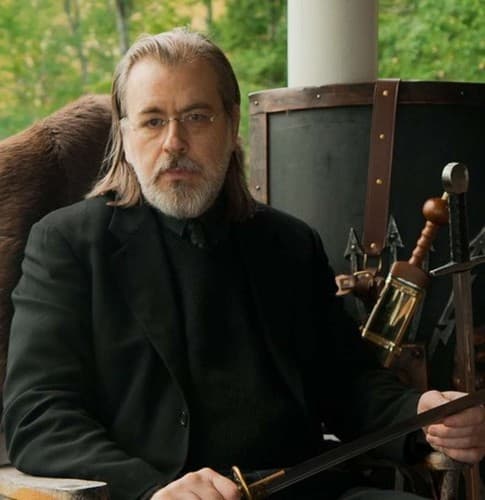
Caleb Carr is an American military historian and author. Carr is the second of three sons born to Lucien Carr and Francesca Von Hartz.
Similar books
- The Silent Patient
Alex Michaelides
4.1 (507k) average on GoodreadsThrillerA psychological thriller with a focus on unraveling a complex criminal mind.
- The Name of the Rose
Umberto Eco
4.1 (301k) average on GoodreadsHistorical FictionHistorical mystery with intellectual depth and a strong sense of time and place.
- Death Comes to Pemberley
P.D. James
3.3 (91k) average on GoodreadsHistorical FictionWhile both are historical crime fiction, James's novel focuses on traditional deductive reasoning and character-driven mystery within an established literary setting (Pride and Prejudice sequel). The Alienist distinguishes itself by pioneering the application of nascent psychological profiling and forensic science, making its investigative methods more innovative and central to the plot.
- The Adventures of Sherlock Holmes
Arthur Conan Doyle
4.3 (243k) average on GoodreadsMysteryDoyle's work is foundational to detective fiction, showcasing brilliant observation and deduction. However, The Alienist goes beyond this by introducing systematic psychological profiling and delving into the 'why' of a killer's pathology. While Holmes observes external clues, Kreizler attempts to reconstruct the killer's internal world, representing a significant evolution in fictional investigative techniques.
- Nineteen Eighty-Four
George Orwell
4.2 (5.5M) average on GoodreadsFictionWinston Smith dreams of truth and rebellion in a world where Big Brother watches all, but he confronts the terrifying power of a regime that controls not just actions, but thoughts.
- The Frozen River
Ariel Lawhon
4.4 (600k) average on GoodreadsFictionIn 1789 Maine, a heroic midwife's diary helps her expose a murder and get justice in a town that wants to silence her.






Enjoyed the summary?
A summary gives you the shape of the book. The book itself has the detail, the examples and the voice.
Find The Alienist on AmazonAs an Amazon Associate, BookBrief earns from qualifying purchases. How we're funded