
Synopsis
Covers the whole plot, including the ending.
- Difficulty
- Medium
- Pacing
- Fast
- Mood
- Dark, Suspenseful, Psychological, Terrifying, Intense
- Read it if
- You enjoy dark, psychological thrillers featuring Batman, are fascinated by alternate, villainous versions of the hero, and appreciate high-stakes, multiverse-level conflicts.
- Skip it if
- You prefer a more traditional, less grim take on Batman, or are not familiar with the events of 'Dark Knights: Metal' (though the story provides some context).
The Batman Who Laughs Plot Summary
Covers the whole plot, including the ending.
The Dark Multiverse's Contagion
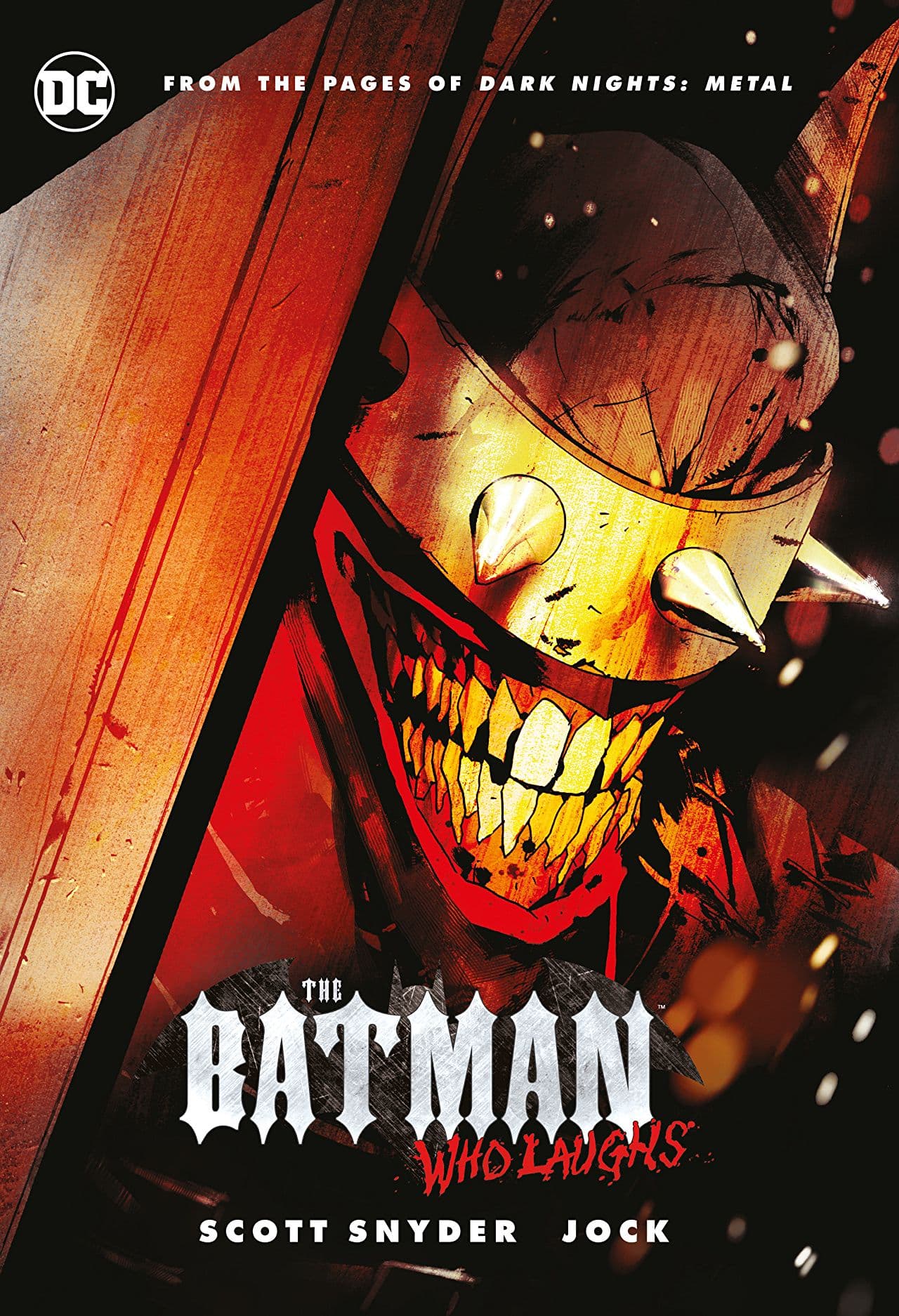
After *Dark Nights: Metal*, Bruce Wayne is haunted by visions and the unsettling feeling that dark energy from the Dark Multiverse still affects him. He discovers a series of gruesome murders, each victim found with a Jokerized grin and a peculiar chemical signature. Commissioner Gordon and the GCPD are baffled, but Batman quickly deduces that the perpetrator is the Batman Who Laughs, who survived their previous encounter. This twisted version of himself from Earth-22 now operates in Gotham, infecting key figures and locations, spreading a nihilistic influence that threatens to unravel the city's sanity and Batman's resolve.
The Infection Begins
As Batman investigates the murders, he confronts the Batman Who Laughs in the Gotham City morgue. During their skirmish, the Batman Who Laughs reveals his true purpose: to transform Bruce Wayne into another version of himself. He infects Batman with a unique strain of Joker toxin, designed to bypass Bruce's immunity and accelerate his descent into madness. This toxin doesn't just make him laugh; it begins to twist his morality, making him consider the unthinkable — killing his enemies. Bruce feels his mind slipping, experiencing disturbing urges and visions, signaling the beginning of his horrifying transformation into a 'Batman Who Laughs' himself.
A Desperate Alliance
Realizing the dire nature of his infection and the potency of the Batman Who Laughs' plan, Bruce understands he cannot fight this alone. In a desperate and unprecedented move, he seeks out the Joker, imprisoned in Arkham Asylum. Batman explains the threat, revealing that the Batman Who Laughs is a perversion of both of them, and that the only way to stop him might be to embrace the very madness he represents. The Joker, surprisingly, agrees to help, seeing the Batman Who Laughs as an affront to his own brand of chaos. This alliance is tense, as Batman must constantly battle his own deteriorating mind and the Joker's unpredictable nature.
The Grim Knight's Arrival
The Batman Who Laughs, anticipating Batman's moves, unleashes his most lethal enforcer from the Dark Multiverse: the Grim Knight. This alternate Batman is a hyper-militant, gun-toting vigilante who never shies away from lethal force, having murdered Joe Chill and subsequently become a merciless executioner of criminals. The Grim Knight's mission is to eliminate Batman and the Joker, and he is a formidable foe, using an arsenal of advanced weaponry and brutal tactics that even Batman struggles to counter. His presence highlights the extreme consequences of Batman's 'no-kill' rule being broken, representing a dark mirror to Bruce's own potential.
The Dark Bat-Family
To further his plan and break Batman's spirit, the Batman Who Laughs targets members of the Bat-Family. He infects Commissioner Gordon, Batgirl (Barbara Gordon), Nightwing (Dick Grayson), and Red Hood (Jason Todd) with his specialized toxin, transforming them into his grotesque 'Rabid Robins.' These corrupted heroes become his loyal, maniacal enforcers, their once-noble spirits twisted into instruments of his will. This act is a cruel psychological blow to Batman, forcing him to confront his allies as enemies and further isolating him in his fight against the rising darkness, making the stakes personal and devastating.
The Last Laugh Protocol
Through his investigations, aided by the Joker's insights, Batman uncovers the Batman Who Laughs' ultimate objective: the 'Last Laugh Protocol.' This involves infecting Gotham City's reservoirs and power grids with a potent airborne version of his toxin, designed to turn the entire population into laughing, homicidal maniacs, creating a permanent Dark Multiverse foothold on Earth-0. The Batman Who Laughs believes this will prove his philosophy that all heroes are just one bad day away from becoming monsters, and that Gotham, the heart of Batman's identity, is the perfect stage for this grand, nihilistic experiment.
Descent into Madness
As the toxin within him progresses, Batman experiences increasingly severe symptoms. His thoughts become darker, his laughter more frequent and unsettling, and he finds himself contemplating lethal solutions with chilling ease. He hallucinates vivid, disturbing scenarios and struggles to maintain control over his own mind and body. The Joker, observing this, taunts him, noting the similarities between Bruce's current state and his own origin. Batman's internal battle becomes a central conflict, as he fights not only the external threat but also the horrifying possibility of becoming the very monster he is trying to defeat, a true perversion of his heroic identity.
The Final Confrontation
The final confrontation takes place in the heart of Gotham, as the Batman Who Laughs prepares to unleash the Last Laugh Protocol. Batman, teetering on the edge of full transformation, and the Joker, surprisingly focused, confront the Batman Who Laughs and the Grim Knight. The battle is brutal and chaotic, with Batman fighting his corrupted allies and struggling against the Grim Knight's overwhelming firepower. The Joker, using his unpredictable nature, creates diversions and exploits weaknesses, while Batman attempts to find a way to stop the protocol without succumbing to his own dark impulses and breaking his ultimate rule.
Embracing the Darkness (Temporarily)
Realizing that conventional methods won't work against the Batman Who Laughs, Bruce makes a terrifying decision. He allows the Joker toxin within him to take over, but only partially, gaining a temporary, controlled form of the Batman Who Laughs' nihilistic insight and brutal efficiency. This allows him to fight on an equal footing, anticipating the enemy's moves and employing ruthless tactics he would normally reject. It's a calculated risk, a walk on the razor's edge, as he uses the darkness within him as a weapon against the ultimate darkness, hoping to pull back from the abyss before it consumes him entirely. This moment is a profound violation of his own code.
Victory and Aftermath
Batman, using his temporary embrace of controlled madness, manages to defeat the Batman Who Laughs. He doesn't kill him, but incapacitates him, thwarting the Last Laugh Protocol. The Grim Knight is also defeated. With the immediate threat contained, Batman begins the difficult process of reversing the effects on his infected allies and purging the toxin from his own system. The victory is bittersweet; while Gotham is saved, Batman is shaken by how close he came to becoming his darkest self. The experience leaves him changed, questioning his own limits and the very nature of his heroism, as the specter of the Dark Multiverse continues to loom.
Principal Figures
Batman (Bruce Wayne)
Protagonist
Gotham's protector, grappling with his own inner darkness and a terrifying alternate self.
Bruce Wayne is the stoic, brilliant detective and vigilante known as Batman. Driven by the murder of his parents, he dedicates his life to fighting crime in Gotham City, adhering to a strict no-kill rule. In this story, he is deeply affected by his previous encounter with the Dark Multiverse, experiencing visions and a growing sense of unease. He is forced to confront the ultimate perversion of his own ideals in the Batman Who Laughs, and struggles with a dangerous infection that threatens to transform him into a similar monster. His core drive is to protect Gotham and maintain his moral code, even as it's tested to its breaking point.
Relationships: The Batman Who Laughs (Arch-nemesis, dark mirror self); The Joker (Uneasy, temporary ally); Commissioner Gordon (Trusted ally, later infected victim); Bat-Family (Nightwing, Batgirl, Red Hood) (Allies, later infected victims)
The Batman Who Laughs
Antagonist
The twisted fusion of Batman's intellect and the Joker's nihilism, aiming to corrupt the Multiverse.
The Batman Who Laughs is an alternate Bruce Wayne from Earth-22 of the Dark Multiverse, who, after killing the Joker, was infected by a potent strain of Joker toxin, transforming him into a sadistic, hyper-intelligent, and utterly nihilistic being. He retains Batman's strategic genius and physical prowess but combines it with the Joker's love for chaos, cruelty, and psychological torment. His primary motivation is to prove that all heroes are just one bad day away from becoming monsters like him, and to spread the darkness of the Dark Multiverse across all realities. He delights in breaking Batman's spirit and corrupting those closest to him.
Relationships: Batman (Bruce Wayne) (Target for corruption, ideological opponent); The Grim Knight (Loyal, ruthless enforcer); Rabid Robins (Corrupted Bat-Family members, minions)
The Joker
Supporting
Batman's arch-nemesis, forced into an unlikely alliance against a common, more disturbing foe.
The Joker is Batman's most iconic and unpredictable adversary, a psychopathic criminal mastermind obsessed with chaos and tormenting Batman. In this story, he is initially imprisoned in Arkham Asylum. He agrees to help Batman because he views the Batman Who Laughs as a perversion of his own 'art,' a rival who threatens the very nature of their unique dynamic. Despite his inherent madness and untrustworthiness, the Joker provides crucial insights into the Batman Who Laughs' psychology and tactics, making him an invaluable, albeit dangerous, ally in the fight. His motivations remain selfish, but his temporary alignment with Batman highlights the extreme nature of the threat.
Relationships: Batman (Bruce Wayne) (Arch-nemesis, temporary ally); The Batman Who Laughs (Ideological rival, common enemy)
The Grim Knight
Antagonist
A hyper-militant, gun-toting alternate Batman from the Dark Multiverse, serving the Batman Who Laughs.
The Grim Knight is an alternate Bruce Wayne from the Dark Multiverse who, after his parents' murder, immediately killed Joe Chill with his own gun. This act set him on a path of extreme vigilantism, where he routinely uses lethal force and an arsenal of firearms to eradicate crime. He is the ultimate embodiment of Batman without his no-kill rule, a brutal and efficient killer dedicated to 'justice' through any means necessary. He serves as the Batman Who Laughs' primary enforcer, a formidable physical threat who challenges Batman's resolve and methods, showcasing the terrifying potential of Batman's skills without his moral compass.
Relationships: The Batman Who Laughs (Master and subordinate); Batman (Bruce Wayne) (Alternate self, enemy)
Commissioner James Gordon
Supporting
Gotham's police commissioner and Batman's most trusted law enforcement ally.
Commissioner James Gordon is a seasoned and incorruptible police officer, serving as Batman's most reliable contact within the GCPD. He respects Batman's methods and often acts as his moral compass. In this story, he is one of the first to investigate the strange murders and quickly becomes embroiled in the conflict. His unwavering dedication to justice makes him a target for the Batman Who Laughs, who eventually infects him with the 'Last Laugh' toxin, turning him into one of the Rabid Robins. His corruption is a significant blow to Batman, highlighting the pervasive and personal nature of the threat.
Relationships: Batman (Bruce Wayne) (Trusted ally, friend); The Batman Who Laughs (Antagonist, corruptor)
Batgirl (Barbara Gordon)
Supporting
Oracle and Batgirl, a skilled hacker and fighter, who falls victim to the Batman Who Laughs' toxin.
Barbara Gordon is a brilliant hacker and skilled combatant, operating as Oracle and occasionally as Batgirl. She is a vital member of the Bat-Family, providing technical support and frontline assistance. Her intelligence and resilience make her a formidable hero. However, she, along with other members of the Bat-Family, is targeted and infected by the Batman Who Laughs' specialized toxin, transforming her into one of his 'Rabid Robins.' Her transformation underscores the depth of the Batman Who Laughs' cruelty and the personal stakes for Bruce Wayne.
Relationships: Batman (Bruce Wayne) (Ally, protégé); Commissioner Gordon (Father); The Batman Who Laughs (Antagonist, corruptor)
Nightwing (Dick Grayson)
Supporting
Batman's first Robin, now an independent hero, who is corrupted by the Batman Who Laughs.
Dick Grayson, the original Robin, now operates as Nightwing, a highly skilled acrobat and fighter known for his optimism and leadership. He represents a lighter, more hopeful side of the Bat-Family. His strong moral compass and close bond with Bruce make him a prime target for the Batman Who Laughs' psychological warfare. He is infected and twisted into one of the 'Rabid Robins,' becoming a manic, violent version of his former self. His corruption is particularly painful for Batman, as it represents the turning of his first and most trusted protégé against him, shattering a symbol of hope.
Relationships: Batman (Bruce Wayne) (Mentor, father figure); The Batman Who Laughs (Antagonist, corruptor)
Red Hood (Jason Todd)
Supporting
The resurrected and morally ambiguous former Robin, also corrupted by the Batman Who Laughs.
Jason Todd, the second Robin, was brutally murdered by the Joker and later resurrected, returning as the Red Hood, a more violent and morally ambiguous vigilante who often uses lethal force. His past trauma and struggle with Batman's no-kill rule make him a complex figure. The Batman Who Laughs targets him, along with other Bat-Family members, infecting him with the toxin and turning him into a 'Rabid Robin.' Jason's pre-existing darkness and history with the Joker make his corruption a particularly unsettling outcome, highlighting how easily even the most resilient can fall to the Batman Who Laughs' influence.
Relationships: Batman (Bruce Wayne) (Former mentor, complicated ally); The Batman Who Laughs (Antagonist, corruptor)
Themes & Insights
The Nature of Evil and Corruption
The central theme explores how easily even the most righteous can be corrupted, and the fine line between hero and villain. The Batman Who Laughs embodies this, being a twisted version of Batman himself. His goal isn't just destruction, but transformation, proving that all heroes are just 'one bad day' away from becoming monsters. Batman's own infection and near-transformation show this theme, as he grapples with the dark urges and nihilistic thoughts the toxin induces, forcing him to confront the darkness within himself that he has always suppressed. The corruption of the Bat-Family further reinforces the pervasive nature of this evil.
“A Batman who laughs is a Batman who always wins.”
The Limits of Morality and the No-Kill Rule
This theme examines the ethical boundaries Batman imposes upon himself, particularly his unwavering no-kill rule, and the immense pressure placed upon it. The Batman Who Laughs exists precisely because Batman broke his rule in a moment of weakness on Earth-22, leading to his transformation. Throughout the story, Batman is constantly tempted to violate this rule, especially when fighting the Grim Knight, who represents a Batman without such limits, and when facing the existential threat of the Batman Who Laughs. His eventual, temporary embrace of a 'controlled madness' to defeat his foe highlights the extreme measures required when conventional morality seems insufficient, pushing him to the very edge of his principles.
“I can't kill. Not because I'm afraid of them. But because I'm afraid of me.”
Identity and Self-Perception
The story looks at Batman's identity, forcing him to confront what makes him 'Batman.' The Batman Who Laughs is his darkest reflection, a terrifying 'what if' scenario that challenges his sense of self. Bruce is constantly reminded of his own potential for darkness, and the infection makes him question if his heroism is merely a facade. The appearance of the Grim Knight, another alternate self, further complicates his self-perception, presenting yet another path he could have taken. This theme explores the psychological toll of being Batman and the constant battle to define and uphold his own identity against external and internal pressures.
“I am what happens when you break your one rule. I am the monster you could have been.”
Desperation and Unlikely Alliances
This theme highlights the extreme circumstances that force characters to set aside their differences and form unlikely partnerships. Batman, usually a solitary figure, is driven to the unprecedented act of allying with his arch-nemesis, the Joker. This alliance, born of sheer desperation against a greater evil, underscores the severity of the threat posed by the Batman Who Laughs. The dynamic between Batman and Joker, filled with tension, mistrust, and darkly humorous banter, shows how dire the situation is, forcing them to temporarily overcome their fundamental opposition for the survival of Gotham and, arguably, the Multiverse.
“He's an insult to both of us, Bats. A blasphemy.”
Plot Devices & Literary Techniques
Joker Toxin (Enhanced Strain)
A specialized, potent variant of the Joker toxin designed to corrupt Batman's mind and morality.
The Joker Toxin, in this story, is not merely a poison that induces a Joker-like grin and madness. The Batman Who Laughs engineers a unique, highly potent strain specifically tailored to infect Batman, bypassing his natural immunity and accelerating his descent into a nihilistic, homicidal state. This toxin acts as a ticking clock for Batman, forcing him to confront his inner demons and make desperate choices before he completely transforms. It's a psychological weapon that turns Batman's greatest strength (his mind) against him, making the internal conflict as critical as the external battle.
Dark Multiverse Alternates
Alternate versions of Batman from a twisted, unstable reality, embodying his worst fears and potentials.
The Dark Multiverse serves as the origin point for the Batman Who Laughs and the Grim Knight. These characters are not just alternate-reality versions of Batman; they represent his deepest fears and the terrifying consequences of his core principles being broken or taken to extremes. They are plot devices that externalize Batman's internal struggles, forcing him to confront what he could become if he were to succumb to despair, break his moral code, or allow his methods to become unchecked. Their presence heightens the stakes, showing the Multiverse-spanning implications of one hero's choices.
The Last Laugh Protocol
The Batman Who Laughs' ultimate plan to infect Gotham and the world with his unique Joker toxin.
The Last Laugh Protocol is the central macguffin driving the narrative's climax. It's the Batman Who Laughs' master plan to contaminate Gotham's infrastructure (water, power) with his airborne Joker toxin, turning the entire city into laughing, homicidal maniacs. This protocol raises the stakes to an apocalyptic level, making the conflict not just about Batman's personal struggle but about the fate of an entire city. It provides a clear, tangible objective for Batman to prevent and serves as a powerful symbol of the Batman Who Laughs' nihilistic ambition to spread his 'truth' across the world.
The Rabid Robins
Corrupted members of the Bat-Family, turned into maniacal minions of the Batman Who Laughs.
The Rabid Robins are a plot device used to amplify the psychological torment inflicted upon Batman. By infecting Commissioner Gordon, Nightwing, Batgirl, and Red Hood, the Batman Who Laughs directly attacks Batman's emotional core and his support network. These corrupted allies force Batman to fight against those he cares for most, making every confrontation deeply personal and painful. They symbolize the pervasive nature of the Batman Who Laughs' corruption, demonstrating his ability to twist even the purest heroes into instruments of his will, and further isolating Batman in his desperate fight.
The Batman Who Laughs Quotes
“A hero is only as good as his villains. But what happens when the villain… is you?”
“The only way to fight a monster is to become one. But what if you can't come back?”
“I’m not a hero. I’m just a guy who knows how to make things break.”
“Every great hero has a great weakness. And yours, Bruce, is that you believe in hope.”
“The greatest trick the devil ever pulled was convincing the world he didn't exist. The greatest trick *I* ever pulled was convincing them I was just a joke.”
“There are always more ways to fall. Always. And I've found them all.”
“You can’t defeat me, Bruce. Because I am you. The you that finally let go.”
“Sometimes, the only way to win is to lose yourself entirely.”
“The only thing worse than a world without Batman… is a world with a broken one.”
“Laughter is contagious. Especially when it's the last thing you expect.”
“You think you know pain, Bruce? I was born from it. Bathed in it. And I learned to love it.”
“The darkness isn't just outside, Bruce. It's inside. And it's hungry.”
“There's a fine line between genius and madness. I dance on it.”
“You can't save everyone. But you can try to save yourself from becoming what you fight.”
“The only constant in the multiverse is change. And the only constant in change… is fear.”
Quiz
10 questions on the plot and the characters. Each answer comes with a short explanation.
Question 1
What is the primary motivation of the Batman Who Laughs in the story?
- To restore the Dark Multiverse to its original state.
- To make Batman break his one rule and become like him.
- To conquer Earth-0 and rule it as a dictator.
- To find a cure for his Joker toxin infection.
Show answer
B. To make Batman break his one rule and become like him. The Batman Who Laughs' main goal is to corrupt Bruce Wayne, forcing him to kill him and thus break his cardinal rule, transforming him into a similar entity.
Question 2
Which key event from 'Dark Knights: Metal' directly precedes the events of 'The Batman Who Laughs' series?
- The formation of the Justice League Dark.
- The defeat of Barbatos and the return of the Multiverse.
- Lex Luthor's rise to power in the Legion of Doom.
- The discovery of the Multiverse's true origin.
Show answer
B. The defeat of Barbatos and the return of the Multiverse. The synopsis explicitly states that Bruce Wayne is 'left rattled by the events of Dark Knights: Metal,' which culminated in the defeat of Barbatos and the Multiverse's restoration.
Question 3
What is the 'one rule' that Batman considers breaking to stop the Batman Who Laughs?
- Never reveal his secret identity.
- Never use lethal force against an opponent.
- Never trust the Joker.
- Never abandon Gotham City.
Show answer
B. Never use lethal force against an opponent. The synopsis clearly states, 'When Bruce Wayne realizes the only way to stop this madman is to kill him, he must consider violating the very rule Batman can't ever break... the rule that created this insatiable villain.' This refers to Batman's no-kill rule.
Question 4
Who is the 'brand-new evil' unleashed by the Batman Who Laughs, described as 'one of the most punishing Batmen of the Dark Multiverse'?
- The Red Death
- The Grim Knight
- The Drowned
- Devastator
Show answer
B. The Grim Knight The synopsis explicitly introduces this character: 'The Batman Who Laughs unleashes a brand-new evil. Enter one of the most punishing Batmen of the Dark Multiverse: the Grim Knight!'
Question 5
What is the core thematic tension explored in the series regarding Batman's identity?
- The struggle between justice and vengeance.
- The fine line between being a hero and becoming the monster he fights.
- The conflict between his personal life and his life as Batman.
- The challenge of leading the Justice League effectively.
Show answer
B. The fine line between being a hero and becoming the monster he fights. The synopsis highlights Batman's internal struggle with the idea of killing the Batman Who Laughs, which would violate his core principles and make him dangerously similar to his enemy, reflecting the theme of becoming what you fight.
Question 6
How does the Batman Who Laughs reportedly survive his fight with The Joker at the end of 'Dark Nights: Metal'?
- He was rescued by Perpetua.
- He was never truly defeated, merely incapacitated.
- He used a Mother Box to escape to the Dark Multiverse.
- He was resurrected by the Court of Owls.
Show answer
B. He was never truly defeated, merely incapacitated. The synopsis states, 'The Batman Who Laughs not only survived his fight with The Joker at the end of Dark Nights: Metal, but is now enacting a sinister plan...' implying he was not defeated in a permanent sense.
Question 7
What specific characteristic defines the Batman Who Laughs, making him uniquely terrifying?
- His mastery of advanced alien technology.
- His ability to manipulate time and space.
- His combination of Batman's intellect and the Joker's nihilistic sadism.
- His supernatural control over fear itself.
Show answer
C. His combination of Batman's intellect and the Joker's nihilistic sadism. The description 'One part Batman one part Joker' directly points to the horrific blend of Batman's strategic mind and the Joker's madness as his defining, terrifying characteristic.
Question 8
The synopsis mentions Bruce Wayne beginning to deduce that his 'current life is somehow wrong and that all the mistakes he's made are somehow connected.' What does this imply about the Batman Who Laughs' overarching plan?
- He is subtly altering Gotham City's infrastructure.
- He is manipulating Bruce's perceptions and reality.
- He is recruiting Bruce's former allies to his side.
- He is physically relocating Bruce to a different reality.
Show answer
B. He is manipulating Bruce's perceptions and reality. The phrase 'his current life is somehow wrong and that all the mistakes he's made are somehow connected' suggests a psychological manipulation or a distortion of reality orchestrated by the Batman Who Laughs to break Bruce down.
Question 9
The quote 'A Batman who laughs is a Batman who always wins' suggests a critical difference in philosophy between Batman and the Batman Who Laughs. What is it?
- Batman fights for justice, while the Batman Who Laughs fights for chaos.
- Batman believes in hope, while the Batman Who Laughs embraces nihilism and despair.
- Batman relies on intellect, while the Batman Who Laughs relies on brute force.
- Batman works alone, while the Batman Who Laughs commands an army.
Show answer
B. Batman believes in hope, while the Batman Who Laughs embraces nihilism and despair. The 'laughing' aspect of the Batman Who Laughs, combined with his Joker-like nature, points to a complete abandonment of hope and embrace of nihilism, contrasting with Batman's unwavering commitment to justice and a better future.
Question 10
What is the significance of the collection including 'The Batman Who Laughs: The Grim Knight #1'?
- It features a backstory for the Batman Who Laughs.
- It introduces a key antagonist who serves the Batman Who Laughs.
- It explores an alternate ending to 'Dark Nights: Metal'.
- It details the origins of the Dark Multiverse.
Show answer
B. It introduces a key antagonist who serves the Batman Who Laughs. The synopsis mentions, 'The Batman Who Laughs unleashes a brand-new evil. Enter one of the most punishing Batmen of the Dark Multiverse: the Grim Knight!' This confirms the Grim Knight is a distinct antagonist serving the main villain.
The Batman Who Laughs FAQ
What is the central conflict Bruce Wayne faces in 'The Batman Who Laughs'?
Bruce Wayne is tormented by the lingering effects of Joker toxin from Dark Nights: Metal, which threatens to transform him into a version of the Batman Who Laughs. His central conflict is the desperate need to stop the Batman Who Laughs while simultaneously fighting the internal battle against becoming him, pushing him to consider breaking his no-kill rule.
Who is the Batman Who Laughs and what is his origin?
The Batman Who Laughs is a dark reflection of Batman from Earth-22 of the Dark Multiverse. He originated when his Bruce Wayne, after finally breaking and killing the Joker, was exposed to a potent strain of Joker toxin that slowly warped his mind, merging Batman's intellect and planning with the Joker's nihilistic madness.
What role does James Gordon Jr. play in the story?
James Gordon Jr., Commissioner Gordon's psychopathic son, is initially recruited by the Batman Who Laughs due to his unique understanding of madness and his history with Batman. He becomes a key ally for Batman in understanding the Joker toxin's effects and ultimately helps devise a counter-strategy, leveraging his own twisted perspective for good.
Who is the Grim Knight and what makes him a threat?
The Grim Knight is another dark Batman from the Dark Multiverse, originating from a reality where Bruce Wayne found Joe Chill's gun and used it, becoming a brutal, gun-toting vigilante who kills criminals without hesitation. He poses a threat by being a highly efficient, ruthless version of Batman who employs lethal force and advanced weaponry, acting as the Batman Who Laughs' enforcer.
What is the 'Last Laugh' protocol that Batman develops?
The 'Last Laugh' protocol is Bruce Wayne's desperate, last-ditch effort to stop the Batman Who Laughs by becoming a controlled version of him. It involves a specific combination of Joker toxin and a counter-agent, allowing Bruce to tap into the Batman Who Laughs' mindset without fully succumbing, giving him the mental edge needed to confront his foe.
How does the Joker contribute to stopping the Batman Who Laughs?
The Joker, surprisingly, becomes an unlikely and crucial ally. He helps Batman by providing insights into the Batman Who Laughs' psychology and ultimately injects Batman with a 'cure' during the final confrontation, a concentrated dose of Joker toxin that allows Batman to 'laugh back' and defeat the Batman Who Laughs on a psychological level.
What is the significance of the Bat-Joker card Batman carries?
The Bat-Joker card is a physical representation of the internal struggle and the lingering Joker toxin within Bruce Wayne. It symbolizes his fear of becoming the Batman Who Laughs and serves as a constant reminder of the fine line he walks, ultimately becoming a tool in his 'Last Laugh' protocol.
How does Commissioner Gordon react to his son, James Gordon Jr., reappearing?
Commissioner Gordon is deeply conflicted and wary of James Gordon Jr.'s reappearance, given his son's violent past and psychopathic tendencies. While he cautiously accepts James's help due to the dire circumstances, he never fully trusts him, highlighting their strained and complex father-son relationship.
What specific 'mistakes' does Bruce Wayne realize are connected during his investigation?
Bruce realizes that many seemingly disparate mistakes and failures in his past, particularly those related to his inability to truly 'stop' the Joker, were subtly orchestrated or influenced by the Batman Who Laughs. This realization fuels his paranoia and the sense that his reality has been tampered with, making his own history a weapon against him.
How does the narrative explore the psychological toll of Batman's 'no-kill' rule?
The story profoundly explores the psychological toll by presenting the Batman Who Laughs as a direct consequence of that rule. Bruce Wayne is forced to confront the idea that his unwavering moral code, while noble, allowed the Joker to persist and, in an alternate reality, led to his own horrifying transformation, pushing him to the brink of breaking it.
What is the psychological impact of the Joker toxin on Bruce Wayne?
The Joker toxin has a profound psychological impact, slowly eroding Bruce Wayne's sanity, making him prone to dark thoughts, paranoia, and a twisted sense of humor. It forces him to confront his deepest fears of becoming his greatest enemy, blurring the lines between hero and villain within his own mind.
How does the story use the concept of 'laughter' as a psychological weapon?
Laughter is used as a potent psychological weapon by the Batman Who Laughs, who believes a Batman who laughs always wins because he's embraced the chaos. His insidious laughter, and the Joker toxin's effect, aim to break Bruce Wayne's will and sanity, turning his own mind against him by forcing him to find humor in horror.
What does James Gordon Jr.'s perspective add to the psychological depth of the story?
James Gordon Jr.'s perspective offers a chilling insight into the mind of a psychopath, providing Batman with a unique, albeit disturbing, lens through which to understand the Batman Who Laughs. His ability to anticipate and analyze extreme madness allows Batman to strategize against a foe whose mind operates outside conventional morality, adding a layer of dark psychological realism.
Is the ending of 'The Batman Who Laughs' a true victory or a pyrrhic one for Bruce Wayne?
The ending is debatable; while Bruce Wayne defeats the Batman Who Laughs, it's arguably a pyrrhic victory. He had to cross significant moral lines, embrace a part of the Joker's madness, and the lingering threat of the Dark Multiverse and his own internal darkness remains, suggesting his 'victory' came at a great personal cost.
Does the book suggest that Batman's no-kill rule is ultimately a weakness?
The book strongly suggests that in extreme circumstances, Batman's no-kill rule can be perceived as a weakness, or at least a vulnerability. The Batman Who Laughs exists precisely because a Batman *didn't* kill the Joker, challenging the core of Bruce's morality and forcing readers to question the absolute nature of his code.
How does the story critique or comment on the nature of heroism?
The story critiques heroism by presenting a hero who is pushed to the absolute brink, forced to adopt villainous tactics to defeat a villainous version of himself. It suggests that true heroism might sometimes require uncomfortable compromises or a descent into darkness, blurring the traditional lines of good and evil.
What is the broader implication of the Dark Multiverse's existence for the main DC Universe?
The broader implication is that the Dark Multiverse represents the worst fears and failures of the main DC Universe, constantly threatening to corrupt or consume it. It suggests that every hero's deepest anxieties and every potential 'wrong turn' they could make has a terrifying, living manifestation, making the fight for good an eternal, internal struggle.
Could Batman truly have become the Batman Who Laughs, even with the 'Last Laugh' protocol?
The narrative strongly implies that Batman was always on the precipice of becoming the Batman Who Laughs, even with his controlled protocol. The line between control and succumbing was incredibly thin, and his survival was a testament to his immense willpower, but the risk of complete transformation was ever-present, making his choices incredibly dangerous.
About the author

Scott Snyder is an American comic book writer known for his work in the superhero genre. He is particularly recognized for "The Batman Who Laughs," a graphic novel that explores a dark version of Batman. Snyder's contributions to the comic book industry have garnered significant attention and acclaim.
Similar books
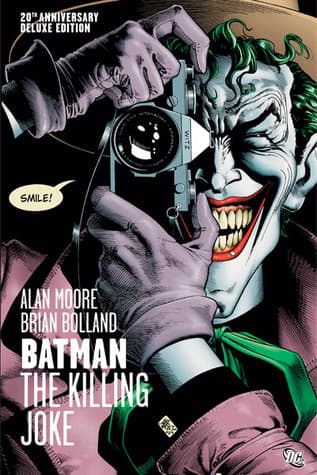
- Batman: The Killing Joke
Alan Moore
4.4 (170k) average on GoodreadsFantasyClassic examination of the Joker's philosophy and its impact on Batman, dark and psychological.
- Nineteen Eighty-Four
George Orwell
4.2 (5.5M) average on GoodreadsFictionWinston Smith dreams of truth and rebellion in a world where Big Brother watches all, but he confronts the terrifying power of a regime that controls not just actions, but thoughts.
- The Frozen River
Ariel Lawhon
4.4 (600k) average on GoodreadsFictionIn 1789 Maine, a heroic midwife's diary helps her expose a murder and get justice in a town that wants to silence her.
- A Man Called Ove
Fredrik Backman
4.4 (569k) average on GoodreadsFictionA stubborn widower, who lives by strict rules, finds his quiet world changed by a lively new family next door, making him face his past and find happiness in human connection.
- The Art of Racing in the Rain
Garth Stein
4.2 (452k) average on GoodreadsFictionThrough the eyes of Enzo, a wise and observant dog, a race car driver's family navigates a journey of love, loss, and resilience, learning that life's most important lessons often come in the curves, not just on the straightaways.
- The Colour of Magic
Terry Pratchett
4.0 (425k) average on GoodreadsFictionOn a discworld hurtling through space on the back of a giant turtle, an inept wizard and his naive, walking-luggage-toting tourist embark on a chaotic, belief-fueled journey to the very edge of their flat planet, encountering dragons that only exist if you believe in them.





Enjoyed the summary?
A summary gives you the shape of the book. The book itself has the detail, the examples and the voice.
Find The Batman Who Laughs on AmazonAs an Amazon Associate, BookBrief earns from qualifying purchases. How we're funded