
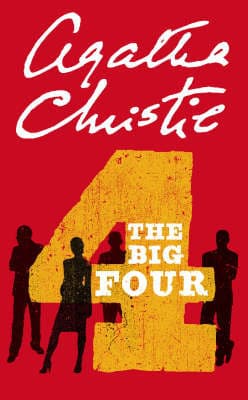
Synopsis
Covers the whole plot, including the ending.
- Difficulty
- Medium
- Pacing
- Fast
- Mood
- Suspenseful, Intriguing, Adventurous, Classic
- Read it if
- You enjoy classic mystery thrillers with international intrigue, a high-stakes plot, and Hercule Poirot, Hastings, and Japp working together on a grand scale.
- Skip it if
- You prefer traditional whodunits with a single, clear-cut mystery, as this book leans heavily into espionage and a more sprawling, serialized plot.
The Big Four Plot Summary
Covers the whole plot, including the ending.
The Mysterious Arrival and the 'Big Four'
Hercule Poirot and Captain Hastings are discussing Poirot's retirement plans when a stranger, covered in dust and clearly in distress, suddenly appears. The man, later identified as a secret service agent named Mayerling, collapses and dies in Poirot's apartment. Before he dies, he gives fragmented warnings about 'The Big Four' and mentions 'Number Four', scribbling the numeral '4' repeatedly on paper. This strange incident immediately pulls Poirot out of his retirement, drawing him into a complex international conspiracy. He realizes the dying man's words point to a powerful, secret organization that poses a global threat. Hastings, always loyal, joins Poirot in this new adventure.
Unraveling the Conspiracy: The First Clues
Poirot, with his careful methods, begins to investigate Mayerling's death. He finds that 'The Big Four' is a highly organized criminal group with global reach, made up of four individuals: a Chinese mastermind (Li Chang Yen), an American millionaire (Abe Ryland), a French scientist (Madame Olivier), and 'Number Four', a British destroyer. The first clues lead Poirot and Hastings to a house where Mayerling had been held captive, and they barely escape an explosion. They learn that Mayerling was tracking the organization and had found important information before he was killed. Poirot realizes this is not a typical murder case but a fight against a powerful, multi-national force aiming for world control.
The Disappearance of Achille Poirot
The investigation becomes personal when Poirot hears that his estranged twin brother, Achille Poirot, has died strangely in Belgium. Poirot travels there with Hastings to identify the body. The 'death' of Achille is a clever trick by Hercule Poirot himself. Realizing the constant danger he is in from 'The Big Four', who have shown they can infiltrate and predict his moves, Poirot fakes his own death (using a decoy body) and takes on the identity of his 'brother' Achille. This allows him to continue his investigation secretly, free from the organization's direct attention, and to see how they react to his supposed death. Hastings is at first unaware of the deception.
Encounters with 'Number Two' and 'Number Three'
As Achille, Poirot begins to gather more information. He meets the American millionaire, Abe Ryland (Number Two), a powerful financier with much political influence. Poirot observes Ryland's activities, especially his involvement in international conferences and his subtle manipulation of global markets. Later, he encounters the brilliant French scientist, Madame Olivier (Number Three), a known physicist. He suspects she is developing a dangerous new weapon or technology for 'The Big Four'. Poirot carefully handles these dangerous meetings, using his 'brother's' persona to get information without revealing who he really is, all while Hastings slowly starts to suspect the truth about 'Achille'.
The Threat of Global Conflict
Poirot's investigation shows the frightening extent of 'The Big Four's' goal: to start a large global war. They plan to make a lot of money from the resulting chaos and then become the ultimate power brokers, setting the terms of peace and establishing a new world order under their control. They are manipulating political figures, economic markets, and scientific developments to do this. Poirot understands that time is running out and that he must act quickly to stop this catastrophic plan. The risks are very high, as the fate of nations depends on his ability to break up this powerful group.
The Hunt for Number Four
Throughout his investigation, Poirot tries to identify 'Number Four', the British member of the group. This person is the hardest to find and seems to be a master of disguise and infiltration, working within the highest levels of British society. Poirot suspects several important figures, including a high-ranking politician and a known actor, but each clue leads nowhere or is a clever distraction. The identity of Number Four is important, as this person carries out 'The Big Four's' plans in Britain and connects to the other members. The true identity of 'Number Four' remains a puzzle for Poirot, adding to the tension.
The Rescue of Countess Vera Rossakoff
Poirot again meets Countess Vera Rossakoff, a dramatic Russian noblewoman and jewel thief he has encountered before. This time, she is not a criminal but a victim, forced into 'The Big Four' because of her skills and connections. Poirot, using his past relationship with her, manages to rescue her from the group. Grateful for her freedom, Countess Rossakoff gives Poirot valuable information about 'The Big Four's' operations, their hidden places, and some of their key agents. Her information helps Poirot put together the final parts of the puzzle and plan his counter-attack.
Confrontation at the Italian Villa
Following an important clue, Poirot, Hastings, and their allies track 'The Big Four' to a remote villa in Italy, where the group is holding a final meeting to finish their war plans. They get into the heavily guarded place, leading to a tense confrontation. Poirot, having finally figured out that 'Number Four' is a master of disguise named Claude Darrell, confronts the assembled members. A dramatic struggle happens, during which Poirot's quick thinking and strategic planning are tested. The villa is a central place for their global operations, holding important documents and equipment.
The Demise of 'The Big Four'
In a dramatic ending, Poirot and his team defeat 'The Big Four'. Li Chang Yen, the Chinese mastermind, dies during the fight. Abe Ryland (Number Two) and Madame Olivier (Number Three) are captured, and their plans for global control are stopped. 'Number Four', Claude Darrell, tries to escape but is caught or dies. The group's network is broken up, their weapons and resources are taken, and the immediate threat of a devastating world war is avoided. Poirot's careful planning, courage, and intelligence again save the day, strengthening his reputation as a world-class detective.
Aftermath and Reflection
With 'The Big Four' defeated, Poirot and Hastings return to their normal lives, changed by the experience. Poirot thinks about the huge evil they faced and the cleverness of such a powerful criminal organization. Hastings, relieved but also excited by the adventure, admires Poirot's brilliance and ability to outsmart such powerful enemies. The world is safe, thanks to Hercule Poirot. The case shows the global threats that exist and the constant watch needed to keep peace. Poirot again considers retirement, but with a lasting sense of the darkness that exists.
The Big Four Characters
Hercule Poirot
Protagonist
The meticulous Belgian detective, facing his greatest challenge.
Hercule Poirot is a brilliant, highly intelligent, and impeccably dressed Belgian detective with a distinctive egg-shaped head and a fastidious nature. He is known for his 'little grey cells' and his reliance on psychological insight and order rather than physical clues. In 'The Big Four', he is initially contemplating retirement but is immediately drawn into a global conspiracy. His vanity and meticulous habits are often a source of amusement but are also key to his success. He is driven by a strong sense of justice and a desire to restore order to a chaotic world. He is willing to go to extreme lengths, even faking his own death, to achieve his goals.
Relationships: Captain Arthur Hastings (Loyal friend and chronicler); Countess Vera Rossakoff (Amicable rival/ally); Achille Poirot (Fictional twin brother (Poirot's alter ego))
Captain Arthur Hastings
Supporting
Poirot's loyal, often bewildered, companion and narrator.
Captain Arthur Hastings is Poirot's long-suffering and devoted friend, often serving as the narrator of their adventures. He is less intelligent and perceptive than Poirot, frequently misinterpreting situations and failing to grasp the full implications of clues. However, his loyalty and steadfastness are unwavering, and he provides a grounded, everyman perspective on Poirot's extraordinary deductions. In 'The Big Four', he is pulled back from his life in Argentina to assist Poirot, often finding himself in perilous situations. He is earnest and brave, though sometimes naive, and his presence highlights Poirot's genius.
Relationships: Hercule Poirot (Best friend and partner in detection); Achille Poirot (Initially confused by, then complicit in, the deception)
Li Chang Yen (Number One)
Antagonist
The Chinese mastermind and leader of 'The Big Four'.
Li Chang Yen is the brilliant and enigmatic Chinese mastermind, the intellectual leader of 'The Big Four'. He is described as a man of immense intellect, cunning, and ruthlessness, operating from the shadows and orchestrating the syndicate's global plans for power and profit. He represents the strategic and philosophical core of the organization, pulling the strings from behind the scenes. His influence is vast, and his identity remains largely mysterious for much of the novel, making him a formidable and almost mythical antagonist. He is ultimately defeated in the climax of the novel.
Relationships: Abe Ryland (Co-conspirator (Number Two)); Madame Olivier (Co-conspirator (Number Three)); Claude Darrell (Co-conspirator (Number Four))
Abe Ryland (Number Two)
Antagonist
The American millionaire providing financial muscle to 'The Big Four'.
Abe Ryland is a powerful and ruthless American millionaire, representing the financial and economic power of 'The Big Four'. He uses his vast wealth and influence to manipulate global markets, fund the syndicate's operations, and exploit international conflicts for profit. He is a man of business, driven by greed and a desire for ultimate control. His public persona is one of respectability, which makes his true nature as a criminal mastermind all the more insidious. Poirot observes him closely, understanding that Ryland's financial leverage is critical to the syndicate's ability to wage global war.
Relationships: Li Chang Yen (Co-conspirator (Number One)); Madame Olivier (Co-conspirator (Number Three)); Claude Darrell (Co-conspirator (Number Four))
Madame Olivier (Number Three)
Antagonist
The French scientist providing technological expertise to 'The Big Four'.
Madame Olivier is a brilliant and renowned French scientist, representing the scientific and technological power of 'The Big Four'. She is responsible for developing advanced weaponry and other scientific means to aid the syndicate's plans for global domination. Her intellect is formidable, but it is twisted to serve destructive ends. She is a cold, calculating figure, driven by a desire for intellectual supremacy and perhaps a detached view of humanity. Poirot recognizes the immense danger posed by her scientific contributions, which could lead to unprecedented destruction if unchecked.
Relationships: Li Chang Yen (Co-conspirator (Number One)); Abe Ryland (Co-conspirator (Number Two)); Claude Darrell (Co-conspirator (Number Four))
Claude Darrell (Number Four)
Antagonist
The elusive British 'destroyer' and master of disguise.
Claude Darrell is the mysterious 'Number Four', the British member of 'The Big Four'. He is an expert in disguise, infiltration, and espionage, making him incredibly difficult to identify and track. He acts as the operative who executes the syndicate's plans within Britain and provides a crucial link to the other members. His ability to assume various identities and blend into different social strata makes him a highly dangerous and elusive adversary. Poirot spends a significant portion of the novel trying to unmask this chameleon-like figure, who embodies the deceptive nature of the entire organization.
Relationships: Li Chang Yen (Co-conspirator (Number One)); Abe Ryland (Co-conspirator (Number Two)); Madame Olivier (Co-conspirator (Number Three))
Countess Vera Rossakoff
Supporting
A flamboyant Russian noblewoman and occasional ally to Poirot.
Countess Vera Rossakoff is a flamboyant, aristocratic Russian émigrée with a colorful past as a jewel thief. She is a woman of great charm, wit, and dramatic flair, and one of the few people who genuinely fascinates and impresses Poirot. In 'The Big Four', she is initially caught up with the syndicate against her will, but Poirot's intervention leads her to become an unlikely, if temporary, ally. Her connections and knowledge of the criminal underworld prove invaluable to Poirot's investigation, and her presence adds a touch of theatricality and romance to the otherwise grim proceedings.
Relationships: Hercule Poirot (Admirer and occasional ally, with mutual respect)
Mayerling
Mentioned
The secret service agent whose death sparks Poirot's investigation.
Mayerling is a secret service agent who, at the very beginning of the novel, stumbles into Poirot's apartment, covered in dust and dying. He is the catalyst for Poirot's involvement in the 'Big Four' case, as his dying words and the repeated scribbling of the number '4' alert Poirot to the existence of the formidable international syndicate. Though he appears only briefly, his sacrifice and the information he was trying to convey are central to setting the plot in motion and establishing the high stakes of the investigation. He represents the initial victim of the syndicate's ruthlessness.
The Big Four Themes
Global Conspiracy and World Domination
'The Big Four' looks at the terrifying idea of a secret, powerful organization wanting to control the world. This theme shows through the group's manipulation of international politics, finance, and science, as they try to start a global war for their own benefit. Poirot's investigation shows the wide reach of their influence, from high-ranking government officials to scientific research labs, showing how easily nations can be affected by such organized evil. The threat is not just a single crime but a systematic breaking down of global order, making the risks very high.
“'The Big Four,' said the dying man, 'it is a name of fear. A name of power. A name that spells doom for the world.”
Identity and Deception
Deception is a common theme, especially with 'Number Four', a master of disguise, and in Poirot's own trick of faking his death and taking on the identity of 'Achille Poirot'. The novel constantly plays with how things appear versus how they really are, showing how individuals and organizations can hide their true intentions and identities. This theme challenges the reader and Poirot to look past the surface, to question what they see, and to find the truth hidden under layers of pretense. It shows how hard it is to unmask a truly clever enemy.
“And so, my friend, the great Hercule Poirot will die. And a new, equally brilliant, but less conspicuous, figure will rise from the ashes.”
The Battle of Intellect vs. Power
The main conflict of the novel is a battle between Poirot's intelligence and the great power (financial, scientific, political) of 'The Big Four'. Poirot, with his 'little grey cells' and reliance on logic and deduction, is against an organization that seems to have endless resources and influence. This theme shows that real power is not just brute force or wealth, but the ability to think, observe, and outsmart. Poirot's win shows the victory of human intelligence and moral strength over corruption and great material power.
“They have money, they have influence, they have science. But I, my friend, I have my little grey cells.”
Loyalty and Friendship
Captain Hastings's loyalty to Poirot is a central emotional part of the story. Despite his occasional frustrations and confusion, Hastings always supports Poirot, even when facing deadly danger or being confused by Poirot's tricks. This friendship adds a human element to the large, international intrigue. Their bond shows the importance of companionship and trust when facing great difficulty, contrasting with the ruthless individualism of 'The Big Four'.
“Wherever you go, Poirot, I shall go. You know that, don't you?”
The Dangers of Unchecked Scientific Progress
Through Madame Olivier, the novel explores how scientific advancements can be turned into weapons and used for destruction. Her role in developing powerful, dangerous technologies for 'The Big Four' shows the ethical problems around scientific discovery. The theme suggests that without moral guidance, scientific progress can become a tool for tyranny and global destruction, instead of for the good of humanity. It is a warning about misusing intelligence and innovation.
“Science, my friend, can be a beautiful thing. But in the wrong hands, it is the most terrible weapon of all.”
Plot Devices & Literary Techniques
The 'Big Four' Syndicate
A global criminal organization driving the central conflict.
This is the primary antagonist, a powerful and secretive international criminal organization comprising four distinct individuals. Its structure (Chinese brain, American money, French science, British 'destroyer') allows for a global reach and diverse methods of operation. This device creates a formidable, almost insurmountable foe for Poirot, elevating the stakes from a typical murder mystery to a battle for global peace. It provides a clear, overarching threat that ties together disparate plot threads and locations, giving the narrative a grand, epic scope.
The Faked Death of Hercule Poirot (Achille Poirot)
Poirot's ingenious deception to operate undercover.
This is a clever narrative device used by Poirot to gain an advantage over 'The Big Four'. By faking his own death and assuming the identity of his fictional twin brother, Achille, Poirot is able to move freely, gather intelligence, and observe his enemies' reactions without their direct scrutiny. This device introduces an element of dramatic irony, as Hastings and others are initially deceived, and allows Poirot to explore different facets of his character, particularly his willingness to bend rules for justice. It also highlights the extreme lengths he must go to combat such a powerful enemy.
The Number '4'
A recurring symbol representing the syndicate's core structure.
The number '4' is a central motif, scribbled by the dying Mayerling and constantly referenced. It symbolizes the four key members of the syndicate and their collective power. This simple numerical device acts as a persistent clue and a constant reminder of the formidable opposition Poirot faces. It unifies the disparate elements of the conspiracy, giving it a memorable and ominous identifier, and adds a layer of symbolic mystery to the villains' identity and organization.
Master of Disguise (Number Four)
A character whose changing identities drive suspense and misdirection.
The character of 'Number Four', Claude Darrell, as a master of disguise, serves as a crucial plot device for generating suspense and misdirection. His ability to assume multiple identities and infiltrate various social circles makes him incredibly elusive and difficult for Poirot to unmask. This device allows for red herrings and false leads, keeping the reader guessing about his true identity and adding a layer of psychological complexity to the antagonist. It also showcases Poirot's deductive skills as he must see through these elaborate facades.
The Big Four Quotes
“The world is full of people who are determined to be unhappy, no matter how much good fortune they have.”
“It is the little things that are so important. The little things that one remembers, or that one forgets.”
“My friend, you have a penchant for the dramatic. It is a quality that can be both useful and dangerous.”
“The truth, my friend, is often far stranger than any fiction.”
“There are times when one must act quickly, without too much deliberation. Otherwise, the moment is lost.”
“The human mind, Hastings, is a curious thing. It can be swayed by the most trivial of matters.”
“One must always be prepared for the unexpected. It is the first rule of survival.”
“The greatest criminals are often those who appear the most respectable.”
“Logic, my friend, is a beautiful thing. It is the key to unlocking many a mystery.”
“It is not enough to observe; one must also interpret what one sees.”
“Even the most carefully laid plans can go awry. That is the nature of life.”
“There is a vast difference between knowing something and proving it.”
“The pursuit of evil is a tiring business, Hastings, but a necessary one.”
“My little grey cells, they are working overtime.”
Quiz
10 questions on the plot and the characters. Each answer comes with a short explanation.
Question 1
Who is the uninvited guest found in Poirot's bedroom at the beginning of the novel?
- Captain Hastings
- Inspector Japp
- A man named Mayer
- A man named Halliday
Show answer
D. A man named Halliday The novel opens with an unexpected visitor, a man named Halliday, collapsing in Poirot's bedroom. He is covered in dust and appears to be in distress, mumbling about 'Number Four'.
Question 2
What is the primary significance of the 'figure 4' scribbled on a piece of paper by the uninvited guest?
- It refers to the number of witnesses to a crime.
- It indicates the address where a secret meeting is taking place.
- It represents 'The Big Four', an international criminal organization.
- It is a clue to the fourth victim in a series of murders.
Show answer
C. It represents 'The Big Four', an international criminal organization. The repeated scribbling of the figure 4 by Halliday is the initial clue that introduces Poirot to the existence of 'The Big Four', the powerful international criminal group central to the plot.
Question 3
Which of these characters is NOT traditionally part of Poirot's usual investigative team, but plays a significant role in 'The Big Four'?
- Captain Hastings
- Inspector Japp
- Countess Vera Rossakoff
- George, Poirot's valet
Show answer
C. Countess Vera Rossakoff Countess Vera Rossakoff, a flamboyant criminal introduced in earlier Poirot stories, plays an unexpected and crucial role in aiding Poirot against The Big Four, using her underworld connections and unique skills.
Question 4
What is the ultimate goal of 'The Big Four' organization?
- To accumulate immense wealth through diamond smuggling.
- To achieve world domination through scientific advancements and political manipulation.
- To destabilize global markets for personal profit.
- To exact revenge on specific individuals who wronged them.
Show answer
B. To achieve world domination through scientific advancements and political manipulation. The Big Four are not merely common criminals; their ambition is far grander – to control the world through a combination of scientific genius, political influence, and criminal enterprise.
Question 5
Which country is NOT explicitly mentioned as a base or area of operation for members of The Big Four?
- China
- France
- Russia
- Brazil
Show answer
D. Brazil The Big Four are described as having members from various powerful nations, including a Chinese mastermind, a French scientist, an American millionaire, and a Russian nihilist woman. Brazil is not mentioned as one of their direct bases.
Question 6
What specific method does 'Number Two', the French scientist, employ in his criminal activities?
- Financial fraud and market manipulation.
- The development and use of deadly chemical weapons and poisons.
- Espionage and blackmail through a network of spies.
- Organizing political assassinations and coups.
Show answer
B. The development and use of deadly chemical weapons and poisons. Number Two, Madame Olivier, is a brilliant French scientist who specializes in chemistry and poisons, using her expertise to create deadly substances for the organization's nefarious ends.
Question 7
Poirot fakes his own death at one point in the novel. What is the primary reason for this deception?
- To escape a charge of murder.
- To lure The Big Four into revealing themselves and their plans.
- To protect Captain Hastings from further danger.
- To retire from detective work permanently.
Show answer
B. To lure The Big Four into revealing themselves and their plans. Poirot's faked death is a strategic maneuver, designed to make The Big Four believe he is no longer a threat, thereby encouraging them to drop their guard and expose their true operations and identities.
Question 8
What is the ultimate fate of 'The Big Four' organization by the end of the book?
- They successfully achieve their goal of world domination.
- They disband voluntarily after internal conflict.
- They are completely dismantled and their leaders brought to justice or eliminated.
- They go into hiding, planning a resurgence in the future.
Show answer
C. They are completely dismantled and their leaders brought to justice or eliminated. Through Poirot's persistent efforts and cunning, The Big Four are ultimately defeated. Their key members are either apprehended, killed, or their plans are thwarted, leading to the complete breakdown of the organization.
Question 9
Which member of The Big Four is known as 'Number One' and is described as the 'Chinese mastermind'?
- Madame Olivier
- Abe Ryland
- Li Chang Yen
- Countess Vera Rossakoff
Show answer
C. Li Chang Yen Li Chang Yen is identified as 'Number One' of The Big Four, the brilliant and elusive Chinese mastermind behind the entire criminal enterprise.
Question 10
What unique challenge does The Big Four present to Poirot, unlike many of his previous cases?
- It's a purely domestic crime with no international implications.
- It involves a single, isolated murder with a clear motive.
- It's a vast international conspiracy requiring him to use physical action and espionage alongside his intellect.
- The culprit is a close friend, making the investigation emotionally difficult.
Show answer
C. It's a vast international conspiracy requiring him to use physical action and espionage alongside his intellect. Unlike many of Poirot's more confined, cerebral cases, 'The Big Four' forces him into a world of global intrigue, espionage, and physical danger, pushing him beyond his usual methods and often relying on Hastings' more adventurous nature.
The Big Four FAQ
What is 'The Big Four' about?
'The Big Four' plunges Hercule Poirot into an international conspiracy involving a powerful organization aiming for world domination. After an unexpected encounter with a dying man who repeatedly scribbles '4', Poirot, Captain Hastings, and Inspector Japp find themselves battling a secret society composed of a Chinese mastermind, an American millionaire, a French scientist, and an Englishwoman, each representing a 'number' in the insidious 'Big Four'. They must race against time to prevent global catastrophe and expose the true identities of these elusive figures.
Why should I read 'The Big Four'?
You should read 'The Big Four' for its unique blend of classic Poirot deduction with a grand, globe-trotting espionage thriller. It offers a departure from Christie's usual village mysteries, presenting a high-stakes adventure where Poirot's life is repeatedly threatened, and the fate of the world hangs in the balance. It's also notable for featuring the reunion of Poirot, Hastings, and Japp, working together on their biggest case yet.
What is the background/setting of 'The Big Four'?
The novel is set primarily in the immediate aftermath of World War I, reflecting the era's anxieties about international espionage and secret societies. The action spans various locations, from Poirot's London flat to country estates, French chateaus, and even a remote Italian villa, giving it a much broader scope than most Christie novels. The backdrop of political instability and scientific advancement fuels the 'Big Four's' sinister plans.
What are the most memorable quotes?
One memorable quote is Poirot's declaration, 'I am not a dog to be kept on a leash!' illustrating his defiance against manipulation. Another is his frequent assertion, 'The little grey cells, they do not fail me,' showcasing his unwavering confidence in his deductive abilities even in the face of overwhelming odds. The repeated mention of 'The Big Four' itself becomes an ominous, memorable phrase throughout the narrative.
What writing style does the author use?
Agatha Christie employs her signature clear, concise prose, but 'The Big Four' is unique for its more action-oriented and adventurous tone, narrated by Captain Hastings. While still featuring intricate plotting and clever deductions, it leans heavily into the thriller genre with frequent chases, disguises, and narrow escapes, a departure from the more contained, psychological mysteries often associated with Poirot.
What minor details add significant meaning?
The initial appearance of the dying man, Mr. Renauld, covered in dust and babbling about 'The Big Four', immediately sets a tone of urgent international mystery. The repeated use of disguises by the villains, particularly Number Four, Madame Olivier, highlights the pervasive deception and difficulty in identifying the true threats. Even seemingly innocuous items like a tennis ball or a specific brand of cigarettes can become crucial clues.
What are some subtle foreshadowing moments?
Early on, Poirot's insistence on the existence of a grand, organized criminal network, despite initial skepticism from Hastings and Japp, foreshadows the revelation of 'The Big Four's' extensive reach. The repeated close calls and near-fatal attacks on Poirot and his allies subtly hint at the formidable and ruthless nature of their adversaries, suggesting that this is no ordinary criminal enterprise. The mention of various scientific breakthroughs also foreshadows their weaponization by the organization.
What unexpected character connections exist?
An unexpected connection is the revelation that the seemingly innocent Englishwoman, Madame Olivier, is actually Number Four, the manipulative and dangerous mastermind behind many of the Big Four's schemes. Furthermore, the character of Countess Vera Rossakoff, a previous adversary and love interest for Poirot, unexpectedly reappears, becoming an unlikely ally in the fight against the Big Four, showcasing a complex and evolving relationship with the detective.
What are unspoken character motivations?
The unspoken motivation for the 'Big Four' members is primarily power and control on a global scale, driven by ideological or personal gain, though their specific individual motivations are less explored than their collective goal. Poirot's unspoken motivation, beyond his professional duty, is a deep-seated belief in order and justice, which compels him to confront such a vast force of chaos and evil, even at great personal risk.
What psychological complexities do characters exhibit?
Poirot exhibits a complex mix of vanity and profound moral conviction; his ego is often played upon, but his core dedication to justice never wavers. Captain Hastings struggles with his own perceived inadequacy in comparison to Poirot's brilliance, often feeling frustrated by Poirot's secrecy or his own inability to keep up. The villains, particularly Madame Olivier, show a chilling psychological detachment, capable of immense cruelty under a veneer of charm.
What are the major emotional turning points?
A major emotional turning point is the presumed death of Poirot, which deeply affects Hastings and Japp, pushing them to continue the investigation with renewed determination. Another is the initial realization of the sheer scale and ruthlessness of 'The Big Four', which instills a sense of dread and urgency in the protagonists, forcing them to confront their own vulnerability. The reunion with Countess Vera Rossakoff also introduces a unique emotional dynamic for Poirot.
How do relationship dynamics evolve?
The relationship between Poirot, Hastings, and Japp solidifies into a true partnership, with Hastings and Japp growing to trust Poirot's eccentric methods implicitly, despite their initial skepticism. Poirot's dynamic with Countess Vera Rossakoff evolves from a cat-and-mouse game to one of mutual respect and even affection, highlighting a rare instance of Poirot's emotional vulnerability. The bond between the three protagonists is tested but ultimately strengthened by the shared danger.
Which parts remain ambiguous or open-ended?
While the main plot of dismantling 'The Big Four' is resolved, the ultimate fates or specific long-term consequences for all the minor operatives involved in the organization are not fully detailed. The full extent of the 'Big Four's' past global influence and its potential lingering effects on international politics remain somewhat open-ended, hinting at a world still vulnerable to such conspiracies. Also, the exact nature of Poirot's 'death' and resurrection is left somewhat ambiguous in its execution.
What are controversial scenes or decisions?
One controversial aspect is Poirot's decision to fake his own death, which is a significant and ethically dubious move for a detective, causing considerable distress to his friends. Another is the more overt action and espionage elements, which some traditional Christie fans found to be a departure from her typical intricate, clue-based mysteries. The rapid, almost episodic nature of some plot developments can also be seen as controversial for its deviation from sustained suspense.
'The Big Four' ending explained: how it ends & what it means
The book ends with Poirot successfully exposing and dismantling 'The Big Four' organization. After a climactic confrontation in a remote Italian villa, Poirot reveals that he faked his own death to lure the Big Four into a trap. He unmasks the true identities of the remaining members, including the elusive Number Four, Madame Olivier, and prevents their plot for global control. The ending signifies the triumph of order and justice over chaos and ambition, reaffirming Poirot's unparalleled deductive prowess and his commitment to protecting the world, even if it means risking his own life and deceiving his closest friends.
About the author
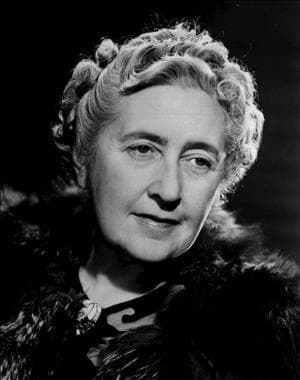
Dame Agatha Mary Clarissa Christie, Lady Mallowan, was an English writer known for her 66 detective novels and 14 short story collections, particularly those revolving around fictional detectives Hercule Poirot and Miss Marple. She also wrote the world's longest-running play, the murder mystery The Mousetrap, which has been performed in the West End since 1952. A writer during the "Golden Age of Detective Fiction", Christie has been called the "Queen of Crime". She also wrote six novels under the pseudonym Mary Westmacott. In 1971, she was made a Dame (DBE) by Queen Elizabeth II for her contributions to literature. Guinness World Records lists Christie as the best-selling fiction writer of all time, her novels having sold more than two billion copies.
Similar books
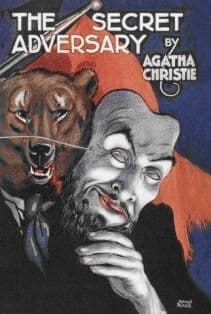
- The Secret Adversary
Agatha Christie
3.9 (42k) average on GoodreadsThrillerFeatures a similar blend of mystery and international espionage with recurring characters.
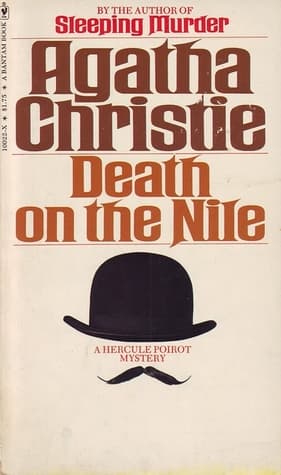
- Death on the Nile
Agatha Christie
4.1 (127k) average on GoodreadsThrillerAnother Hercule Poirot mystery involving travel and high stakes, though less espionage-focused.
- THE MURDER OF ROGER ACKROYD
Agatha Christie
4.2 (153k) average on GoodreadsThriller"The Big Four" stands in stark contrast to "The Murder of Roger Ackroyd" (1926). While "Ackroyd" is a masterpiece of intricate plotting, meticulous clue-laying, and a shocking, paradigm-shifting twist that redefined the genre, "The Big Four" is a sprawling, often disjointed thriller. "Ackroyd" focuses on intense psychological depth and a contained, logical puzzle, whereas "The Big Four" sacrifices coherence for broad, international espionage, featuring less credible villains and a reliance on action over intellectual deduction. Critics like T.J. Binyon, in 'Murder Will Out': The Detective in Fiction, highlight "Ackroyd" for its structural integrity and fairness to the reader, qualities largely absent in "The Big Four" due to its episodic nature and less rigorous adherence to detective story conventions.
- Angels & Demons
Dan Brown
3.9 (2.7M) average on GoodreadsThrillerA Harvard symbologist races through Rome's ancient sites, deciphering cryptic clues to unmask the Illuminati and stop a vengeful plot to destroy the Vatican with a stolen antimatter weapon.
- Gone Girl
Gillian Flynn
4.1 (2.3M) average on GoodreadsThrillerA wife's sudden disappearance on her fifth anniversary reveals a web of lies and psychological warfare, exposing the secrets within a seemingly perfect marriage.
- The Girl on the Train
Paula Hawkins
3.9 (2.1M) average on GoodreadsThrillerA woman’s fascination with a seemingly perfect couple she watches from her daily train commute leads her into a dark investigation when she witnesses something that shatters their idyllic image.



Enjoyed the summary?
A summary gives you the shape of the book. The book itself has the detail, the examples and the voice.
Find The Big Four on AmazonAs an Amazon Associate, BookBrief earns from qualifying purchases. How we're funded