
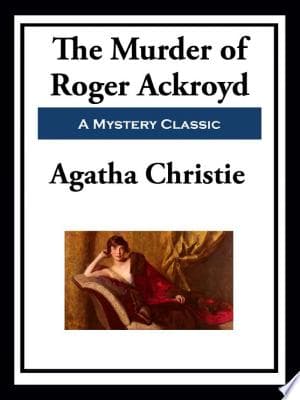
Synopsis
Covers the whole plot, including the ending.
- Difficulty
- Medium
- Pacing
- Moderate
- Mood
- Intriguing, Suspenseful, Classic
- Read it if
- You love classic whodunits with brilliant twists, unreliable narrators, and meticulous detective work.
- Skip it if
- You prefer fast-paced thrillers with graphic action, or if you dislike intricate, dialogue-heavy mysteries.
THE MURDER OF ROGER ACKROYD Plot Summary
Covers the whole plot, including the ending.
A Village Scandal and Sudden Death
Dr. James Sheppard, the narrator, introduces King's Abbot, a quiet village recently affected by Mrs. Ferrars' death. She was a rich widow, widely thought to have poisoned her first husband, Ashley Ferrars, a year earlier. Dr. Sheppard goes to her home on September 17th and finds her dead from an overdose of veronal. While officially a suicide, the timing is odd. It happened a day after she told Roger Ackroyd, a rich local gentleman, about a secret. Many think she confessed to poisoning her husband, and that this confession led to her death.
Roger Ackroyd's Murder
Roger Ackroyd asks Dr. Sheppard to come to his estate, Fernly Park. Ackroyd wants to discuss a letter from Mrs. Ferrars. In it, she admits to poisoning her husband and says she was being blackmailed. Ackroyd reads the letter to Dr. Sheppard but stops before saying the blackmailer's name. After Dr. Sheppard leaves, Ackroyd's stepson, Ralph Paton, is seen entering the study. Later that evening, Ackroyd's niece, Flora Ackroyd, finds her uncle dead in his locked study, stabbed in the neck. Ralph Paton, who has disappeared, is immediately suspected.
Hercule Poirot Enters King's Abbot
News of Roger Ackroyd's murder spreads fast in King's Abbot. Flora Ackroyd wants to clear Ralph Paton's name. She asks Hercule Poirot, who recently retired to the village to grow vegetables, to investigate. Poirot is interested in the case and thinks there is more to it than it seems. He agrees to investigate. He immediately starts questioning people at Fernly Park and other key village figures, including Dr. Sheppard, who becomes his unofficial assistant and record-keeper.
The Search for Ralph Paton and Key Clues
Poirot carefully examines Ackroyd's study, noting the locked door, the open window, and the body's position. He finds a dictaphone, which Ackroyd often used, is missing. Caroline Sheppard, Dr. Sheppard's gossipy sister, says she overheard Ackroyd talking to a woman on the night of the murder. This suggests Ackroyd had a secret meeting after Dr. Sheppard left. Poirot also learns that Ralph Paton was secretly engaged to Flora Ackroyd, a fact hidden from Roger Ackroyd, and that Paton was deeply in debt.
The Mysterious Stranger and the Footprints
More investigation shows a mysterious stranger was seen near Fernly Park on the murder night. Parker, the butler, first denies seeing anyone but later admits to speaking with a man looking for Roger Ackroyd. Footprints are also found in the garden leading to the study window, suggesting an intruder. Meanwhile, the police, led by Inspector Raglan, focus on Ralph Paton as the main suspect. Poirot has growing doubts and believes the evidence points too easily to Paton.
Uncovering Secrets and Alibis
Poirot questions everyone connected to Fernly Park. He discovers that Ursula Bourne, the parlor maid, secretly married Ralph Paton and Ackroyd fired her just before his death. Major Blunt, a big-game hunter, was also staying at Fernly Park and provides an alibi. Geoffrey Raymond, Ackroyd's secretary, admits to money problems. Poirot also learns that Ackroyd had been discussing his will and planned to change it, possibly disinheriting Flora and leaving a lot to Ralph. This makes the motive more complicated.
The Dictaphone and the Overheard Conversation
Poirot focuses on the timeline and the missing dictaphone. He concludes that the conversation Caroline Sheppard overheard could not have been with Roger Ackroyd himself, as Ackroyd was already dead. He thinks a dictaphone recording was played to create a false alibi for the killer, making it seem Ackroyd was alive and speaking after Dr. Sheppard left. This changes the investigation's focus, moving away from a simple break-in.
The Motive for Blackmail
Through careful questioning and observation, Poirot concludes that Ursula Bourne, the parlor maid, blackmailed Mrs. Ferrars. Her secret marriage to Ralph Paton and her firing by Roger Ackroyd left her with money problems. She had found out Mrs. Ferrars' secret about her first husband's death and used this to get money. However, she did not murder Roger Ackroyd; her reason was financial gain from Mrs. Ferrars, not killing her employer.
Poirot's Gathering and the Revelation
Poirot gathers everyone involved—the household staff, family members, and Dr. Sheppard—in the drawing-room at Fernly Park. He systematically rules out each suspect, revealing their individual secrets and reasons, but none are the murderer. He then reconstructs the murder night, focusing on the exact timing of events and small details. He reveals that the dictaphone created the illusion of Ackroyd being alive, and that the killer was someone in the room.
The Unmasking of the Killer
In a shocking reveal, Poirot names Dr. James Sheppard, the narrator and his seemingly loyal assistant, as Roger Ackroyd's murderer. Poirot explains that Dr. Sheppard killed Ackroyd. Knowing Ackroyd would be found later, he placed the dictaphone with a recording of Ackroyd's voice to create a false timeline and alibi. Dr. Sheppard had also blackmailed Mrs. Ferrars, a secret he could not let Ackroyd reveal. He admitted his crime in his own written account, which Poirot uses as proof. Poirot gives Dr. Sheppard a chance to write a final note before the police are told, suggesting a choice between public shame and suicide.
THE MURDER OF ROGER ACKROYD Characters
Dr. James Sheppard
Protagonist/Antagonist
The seemingly trustworthy village doctor and narrator, who is secretly the murderer.
Dr. James Sheppard is the unassuming village doctor of King's Abbot and the first-person narrator of the story. He presents himself as a keen observer and a helpful assistant to Hercule Poirot, diligently documenting the investigation. Beneath his calm and respectable exterior, however, lies a calculating and ruthless individual. He is motivated by the desire to protect his reputation and wealth, having blackmailed Mrs. Ferrars and fearing exposure by Roger Ackroyd. His meticulous nature allows him to plan and execute the murder, and then meticulously record the investigation, believing he has outsmarted everyone.
Relationships: Caroline Sheppard (Sister and source of local gossip); Hercule Poirot (Unofficial assistant and chronicler of his investigation); Roger Ackroyd (Friend and victim); Mrs. Ferrars (Patient and blackmail victim)
Hercule Poirot
Protagonist
The eccentric, retired Belgian detective who investigates Roger Ackroyd's murder.
Hercule Poirot is a world-renowned Belgian detective, now retired to King's Abbot to pursue a quiet life of growing vegetable marrows. Despite his retirement, his 'little grey cells' are quickly engaged by the murder of Roger Ackroyd. He is meticulous, observant, and possesses an extraordinary ability to piece together seemingly disparate clues and understand human psychology. Poirot values order and truth above all else, and his unique methods often involve psychological probing and re-enactments rather than purely physical evidence. He is the intellectual foil to Dr. Sheppard's cunning.
Relationships: Dr. James Sheppard (Relies on him as an assistant, unaware he is the killer); Flora Ackroyd (Initially hired by her to investigate); Inspector Raglan (Collaborates with local police, often guiding them)
Roger Ackroyd
Victim/Central Figure
A wealthy and prominent resident of King's Abbot, whose murder drives the plot.
Roger Ackroyd is a rich and influential man living at Fernly Park. He is a widower and a man of strong opinions, known to be somewhat hot-tempered. His character is central to the plot, as he becomes the victim whose death Poirot must solve. Ackroyd is privy to Mrs. Ferrars' confession about poisoning her husband and her blackmail, making him a dangerous target for the blackmailer. His decision to read Mrs. Ferrars' letter and his subsequent murder set the entire mystery in motion, revealing the hidden secrets and complexities of the King's Abbot community.
Relationships: Mrs. Ferrars (Confidante, with whom he had a romantic interest); Flora Ackroyd (Niece); Ralph Paton (Stepson); Dr. James Sheppard (Friend and neighbor)
Caroline Sheppard
Supporting
Dr. Sheppard's gossipy sister, who provides valuable, albeit sometimes distorted, village insights.
Caroline Sheppard is Dr. Sheppard's unmarried elder sister, known for her insatiable curiosity and her talent for gathering and disseminating village gossip. Despite her seemingly intrusive nature, her observations and overheard conversations often provide Poirot with crucial pieces of information that others overlook or dismiss. She represents the 'eyes and ears' of the village, and her detailed knowledge of local affairs and personal relationships inadvertently aids Poirot's investigation, even if her conclusions are often incorrect. Her character adds a touch of local flavor and humor to the narrative.
Relationships: Dr. James Sheppard (Brother and confidante, though he often dismisses her); Hercule Poirot (A source of information, though he must sift through her gossip)
Ralph Paton
Supporting/Red Herring
Roger Ackroyd's stepson, the initial and seemingly obvious suspect in the murder.
Ralph Paton is Roger Ackroyd's stepson, a charming but somewhat irresponsible young man known for his debts and his secret engagement to Flora Ackroyd. He is the immediate and most obvious suspect in Ackroyd's murder due to his financial troubles, his argument with Ackroyd on the night of the murder, and his subsequent disappearance. His absence and the circumstantial evidence against him serve as a major red herring throughout the investigation, diverting attention from the true killer. He is eventually found and cleared by Poirot.
Relationships: Roger Ackroyd (Stepson); Flora Ackroyd (Secretly engaged to her); Ursula Bourne (Secretly married to her)
Flora Ackroyd
Supporting
Roger Ackroyd's niece, who discovers the body and initially hires Poirot.
Flora Ackroyd is Roger Ackroyd's beautiful and seemingly delicate niece. She is the one who discovers her uncle's body and is deeply distressed by the murder, particularly by the suspicion falling on Ralph Paton, to whom she is secretly engaged. Flora is instrumental in bringing Poirot into the case, as she initially hires him to clear Ralph's name. She is a member of the household at Fernly Park and provides insights into the family dynamics, though she also harbors her own secrets, such as her engagement and her attempt to steal money from Ackroyd.
Relationships: Roger Ackroyd (Niece and ward); Ralph Paton (Secretly engaged to him); Hercule Poirot (Her initial employer)
Mrs. Ferrars
Mentioned/Catalyst
A wealthy widow whose death and secrets precipitate Roger Ackroyd's murder.
Mrs. Ferrars is a wealthy widow whose sudden death from an overdose of veronal occurs just before Roger Ackroyd's murder. She is a pivotal character, despite being deceased, as her actions and secrets are the catalyst for the entire plot. She was widely suspected of poisoning her first husband and was being blackmailed. Her confession to Roger Ackroyd about her past crime and the identity of her blackmailer directly leads to Ackroyd's death. Her character highlights the hidden darkness beneath the surface of the seemingly respectable village.
Relationships: Roger Ackroyd (Confidante and potential romantic interest); Dr. James Sheppard (Patient and blackmail victim)
Ursula Bourne
Supporting
The parlourmaid at Fernly Park, secretly married to Ralph Paton and the blackmailer of Mrs. Ferrars.
Ursula Bourne is the parlourmaid at Fernly Park, a young woman with a strong will and a hidden past. She is secretly married to Ralph Paton, a fact she keeps hidden due to Roger Ackroyd's disapproval of such unions. Her financial desperation, exacerbated by her secret marriage and Ackroyd's subsequent dismissal of her, drives her to blackmail Mrs. Ferrars. Her character introduces a layer of social commentary on class and hidden relationships, and her testimony and secrets become important clues for Poirot, though she is not the murderer of Ackroyd.
Relationships: Ralph Paton (Secret wife); Roger Ackroyd (Employer who dismissed her)
Parker
Supporting
Roger Ackroyd's butler, who harbors secrets about his past.
Parker is the dignified and somewhat secretive butler at Fernly Park. He initially gives a misleading account of the night of the murder, denying seeing anyone unusual. Poirot later uncovers that Parker had a past as a blackmailer in a previous position, making him a suspicious figure. His character serves as another red herring, as his past and his initial evasiveness make him seem like a potential suspect. His role highlights the idea that even seemingly trustworthy individuals can have hidden secrets.
Relationships: Roger Ackroyd (Employer)
Major Hector Blunt
Supporting
A big-game hunter staying at Fernly Park, who provides an alibi and has a secret affection for Flora.
Major Blunt is a guest at Fernly Park on the night of the murder, a renowned big-game hunter and a man of few words. He provides an alibi for the time of the murder, claiming to have been in his room. Poirot later uncovers that Major Blunt is secretly in love with Flora Ackroyd, a fact he keeps hidden. His quiet demeanor and his presence in the house make him a person of interest, and his unrequited love for Flora adds another layer of emotional complexity to the household dynamics.
Relationships: Roger Ackroyd (Host and friend); Flora Ackroyd (Secretly in love with her)
THE MURDER OF ROGER ACKROYD Themes
Deception and Hidden Truths
The novel is a great example of deception, where almost every character has a secret, and the most trusted person is the ultimate deceiver. Mrs. Ferrars' secret about poisoning her husband, Ursula Bourne's secret marriage and blackmail, Flora's secret engagement and theft, and most importantly, Dr. Sheppard's hidden identity as the murderer and blackmailer, all create an atmosphere of hidden truths. Poirot must uncover these layers of lies, showing that appearances are always misleading, and that even small details can hide a dark reality.
“'Everyone in King's Abbot, as in most other places, was always far more interested in other people's affairs than in their own.'”
The Unreliable Narrator
The main theme is the use of an unreliable narrator in Dr. James Sheppard. His first-person story guides the reader, shaping their views and making them misinterpret clues and suspect the wrong people. The narrator's apparent fairness and careful record-keeping hide his own guilt. His eventual unmasking is a deep betrayal of the reader's trust. This device makes the reader re-evaluate every detail, showing how easily one can be fooled by a seemingly trustworthy voice.
“'I am writing this at Poirot's suggestion. He seems to think that I have a flair for marshalling facts, and that I may be able to present the case in a more interesting fashion than a mere police report.'”
The Nature of Guilt and Confession
The story starts with Mrs. Ferrars' confession of a past murder and her death, which begins the events. Roger Ackroyd's murder is directly linked to his knowledge of her confession and the blackmailer's identity. This theme explores how guilt, both admitted and hidden, drives characters' actions. The twist shows that the murderer himself is driven by the guilt of his blackmail and the fear of being exposed. This leads him to commit more crimes to protect his secret, ending with his silent, indirect confession within his own story.
“'She had poisoned her husband. I had known that for a fact.'”
Justice and Poirot's Morality
Poirot's search for truth and fairness is central, but the ending questions what justice means. Poirot unmasks the killer, but he gives Dr. Sheppard a chance to take his own life to avoid public scandal, instead of immediately handing him to the police. This decision shows Poirot's unique moral code, where restoring order and the psychological effect of truth can sometimes be more important than legal punishment. It highlights the complexities of morality and personal responsibility.
“'The truth, however ugly in itself, is always beautiful in its effect.'”
Social Class and Appearances
King's Abbot's strict social structure helps hide the true nature of its residents. Characters like Parker the butler and Ursula Bourne the parlor maid have secrets linked to their social status and financial needs. The respectable appearance of upper-class residents, such as Roger Ackroyd and Dr. Sheppard, hides their questionable actions. Christie shows how society's expectations and the wish to maintain appearances can push people to desperate acts, and how these appearances can mislead investigators and readers, proving that bad deeds are not limited to any social group.
“'The criminal, you know, is a person just like yourself. He has a mother, a father, perhaps a wife and children. He has his feelings, his aspirations, his hopes. He is not a monster.'”
Plot Devices & Literary Techniques
The Unreliable Narrator
The story is told by the murderer, who subtly misleads the reader.
The most famous plot device in the novel is the use of Dr. James Sheppard as the first-person narrator, who is ultimately revealed to be the murderer. His narrative is meticulously crafted to appear objective and helpful, guiding the reader's suspicions away from himself through selective omission and clever phrasing. He records the investigation, including details that incriminate him, but presents them in a way that suggests innocence. This device creates a shocking twist, forcing the reader to re-read the entire story with a new understanding of the narrator's true role and the subtle clues embedded in his account.
The Locked Room Mystery
Roger Ackroyd is found dead in a seemingly locked study, adding to the puzzle.
Roger Ackroyd's murder takes place in his study, which appears to be locked from the inside. This classic 'locked room' scenario presents a seemingly impossible crime, as there is no apparent way for the killer to have entered or exited without being seen. Poirot meticulously investigates the room, the windows, and the timeline, eventually demonstrating how the illusion of a locked room was created. The solution involves an ingenious use of the dictaphone and the killer's strategic actions, circumventing the apparent impossibility.
The Dictaphone
A seemingly innocuous recording device used to create a false alibi.
The dictaphone, a relatively new piece of technology at the time, serves as a crucial plot device. Roger Ackroyd uses it regularly for dictation. On the night of the murder, the killer uses a recording of Ackroyd's voice, played from the dictaphone, to create the illusion that Ackroyd was still alive and speaking after the actual time of his death. This misleads witnesses and creates a false timeline, allowing the murderer to establish an alibi and escape detection for a crucial period. Its presence and subsequent disappearance are key to Poirot's unraveling of the deception.
The 'Least Suspected Person' Trope
The murderer is the character least likely to be suspected by the reader.
Christie masterfully employs the 'least suspected person' trope by making the narrator, Dr. Sheppard, the killer. This device plays on reader expectations, as the narrator is typically assumed to be reliable and separate from the criminal element. By placing the killer in the role of the investigator's assistant and chronicler, Christie achieves a profound shock when his true identity is revealed. This subversion of narrative conventions is central to the novel's enduring impact and its reputation as one of the most innovative mysteries ever written.
Gossip and Misinformation
Village gossip, particularly from Caroline Sheppard, provides clues but also misdirection.
Caroline Sheppard's constant stream of village gossip acts as a dual-edged sword. While her detailed observations and overheard conversations provide Poirot with valuable, granular information about the community's secrets, relationships, and movements, her interpretations and conclusions are often flawed. This device highlights how easily information can be distorted and how popular opinion can create strong, yet incorrect, suspicions (e.g., regarding Ralph Paton). Poirot must sift through the 'chaff' of gossip to find the 'grain' of truth, demonstrating his superior analytical skills.
THE MURDER OF ROGER ACKROYD Quotes
“The truth, however ugly in itself, is always curious and beautiful to seekers after it.”
“I have a little idea...”
“It is completely unimportant. That is why it is so interesting.”
“The impossible cannot have happened, therefore the impossible must be possible in spite of appearances.”
“Every murderer is probably somebody's old friend.”
“The facts, they are there, you understand, but they are the wrong facts.”
“One must seek the truth within—not without.”
“I do not argue with obstinate men. I act in spite of them.”
“The simplest explanation is always the most likely.”
“There is nothing so dangerous for anyone who has something to hide as conversation!”
“The dead cannot cry out for justice. It is a duty of the living to do so for them.”
“It is the brain, the little gray cells on which one must rely.”
“A man's past is not a mere sequence of events. It is a pattern.”
“Fear is a very terrible thing.”
Quiz
10 questions on the plot and the characters. Each answer comes with a short explanation.
Question 1
Who is the narrator of 'The Murder of Roger Ackroyd'?
- Hercule Poirot
- Dr. James Sheppard
- Inspector Raglan
- Roger Ackroyd
Show answer
B. Dr. James Sheppard The novel is narrated by Dr. James Sheppard, the village doctor who becomes Poirot's assistant in the investigation. This narrative choice is central to the book's famous twist ending.
Question 2
What was the cause of Mrs. Ferrars' death as initially believed?
- Poisoning
- Natural causes/overdose of sleeping draught
- Stabbing
- Strangulation
Show answer
B. Natural causes/overdose of sleeping draught Mrs. Ferrars was initially believed to have died from an overdose of a sleeping draught, which was considered accidental or possibly suicide. Her death sets the mystery in motion.
Question 3
What secret was Mrs. Ferrars blackmailing someone about?
- A stolen inheritance
- The murder of her husband
- An illegitimate child
- Forged documents
Show answer
B. The murder of her husband Mrs. Ferrars had poisoned her husband and was blackmailing someone who knew her secret. This blackmail connects to Roger Ackroyd's murder.
Question 4
How was Roger Ackroyd murdered?
- Poisoned in his study
- Stabbed with a dagger from the collection
- Stabbed with a Tunisian dagger
- Shot with a revolver
Show answer
C. Stabbed with a Tunisian dagger Roger Ackroyd was stabbed in the neck with a Tunisian dagger from his collection while sitting at his desk in the study.
Question 5
What crucial piece of evidence disappears from the crime scene?
- A suicide note
- A sum of money
- A chair
- The murder weapon
Show answer
C. A chair A chair from the study disappears after the murder. Poirot deduces it was removed because it would have shown someone was hiding behind it.
Question 6
Why does Hercule Poirot come to King's Abbot?
- He is visiting relatives
- He is investigating Mrs. Ferrars' death
- He has retired there to grow vegetable marrows
- He is on vacation
Show answer
C. He has retired there to grow vegetable marrows Poirot has retired to King's Abbot to grow vegetable marrows, but is drawn out of retirement to investigate Roger Ackroyd's murder.
Question 7
What is the significance of the 'dictaphone' in the murder investigation?
- It contains a recording of the murder
- It was used to fake an alibi
- It belonged to Mrs. Ferrars
- It was stolen from the study
Show answer
B. It was used to fake an alibi The murderer used Roger Ackroyd's dictaphone to play back his voice, making it seem he was alive and working in his study after the murder had actually occurred.
Question 8
Which character is revealed to be the murderer at the end of the novel?
- Flora Ackroyd
- Major Blunt
- Dr. James Sheppard
- Parker the butler
Show answer
C. Dr. James Sheppard In the famous twist ending, Dr. James Sheppard—the narrator himself—is revealed to be the murderer of Roger Ackroyd.
Question 9
What motive did the murderer have for killing Roger Ackroyd?
- To inherit Ackroyd's fortune
- To protect Mrs. Ferrars' secret
- To prevent exposure as Mrs. Ferrars' blackmailer
- Revenge for a past wrong
Show answer
C. To prevent exposure as Mrs. Ferrars' blackmailer Dr. Sheppard was being blackmailed by Mrs. Ferrars. When Ackroyd learned about this from Mrs. Ferrars' letter, Sheppard killed him to prevent exposure.
Question 10
What does Poirot notice about the time of the telephone call that provides an important clue?
- It was made before the murder
- The telephone was off the hook
- The call lasted exactly 20 minutes
- The call was too short to have been a real conversation
Show answer
D. The call was too short to have been a real conversation Poirot realizes the telephone call Sheppard claimed to have made was too brief to have been an actual conversation, suggesting it was faked as part of the alibi.
THE MURDER OF ROGER ACKROYD FAQ
What is 'The Murder of Roger Ackroyd' about?
The novel follows Dr. James Sheppard, who becomes the assistant to detective Hercule Poirot as they investigate the murder of wealthy widower Roger Ackroyd in the village of King's Abbot. Ackroyd was killed shortly after learning that his fiancée, Mrs. Ferrars, committed suicide after being blackmailed, and the investigation uncovers secrets among his family and household.
Why should I read 'The Murder of Roger Ackroyd'?
It's considered one of Agatha Christie's masterpieces due to its groundbreaking narrative twist, where the narrator, Dr. Sheppard, is revealed to be the murderer. The book revolutionized the mystery genre with its clever use of an unreliable narrator and remains a classic for its tight plotting and surprising resolution.
What is the background/setting of 'The Murder of Roger Ackroyd'?
Set in the 1920s in the small English village of King's Abbot, the story unfolds in a closed community where everyone knows each other, allowing secrets and gossip to fester. Key locations include Fernly Park (Ackroyd's estate), Dr. Sheppard's home, and the local village, creating an intimate atmosphere that heightens the mystery.
What are the most memorable quotes from 'The Murder of Roger Ackroyd'?
Notable quotes include Poirot's 'The truth, however ugly in itself, is always curious and beautiful to the seeker after it' and Dr. Sheppard's opening line: 'Mrs. Ferrars died on the night of the 16th–17th September—a Thursday.' The latter sets the tone for the precise, clinical narration that masks the narrator's guilt.
What writing style does Agatha Christie use in this book?
Christie employs a first-person narrative from Dr. Sheppard's perspective, which is deceptively straightforward and detailed, mimicking a doctor's clinical observations. This style creates an illusion of objectivity while subtly hiding the narrator's involvement, making the twist more shocking upon revelation.
What minor details add significant meaning to the story?
Small details like Dr. Sheppard's habit of noting exact times (e.g., 'eight o’clock on the morning of Friday the 17th') and his overcoat being a 'wise precaution' against chill subtly hint at his meticulous, controlling nature. The locked study door and the missing dictaphone wire are crucial clues that seem minor initially but prove pivotal.
What are some subtle foreshadowing moments in the book?
Foreshadowing includes Dr. Sheppard's early statement 'I am not going to pretend that at that moment I foresaw the events of the next few weeks,' which ironically hints at his future crimes. Also, his repeated emphasis on being a mere observer and his knowledge of poisons (as a doctor) subtly prepare readers for his role as the murderer.
What unexpected character connections exist in the story?
Unexpected connections include Dr. Sheppard's secret blackmail of Mrs. Ferrars, which links him to her suicide and Ackroyd's murder. Additionally, Flora Ackroyd's engagement to Ralph Paton is a red herring, but it ties into financial motives and family tensions that obscure the true culprit.
What are the unspoken character motivations in the book?
Dr. Sheppard's motivation is unspoken until the end: he murders Ackroyd to cover up his blackmail of Mrs. Ferrars and to gain financially from Ackroyd's will. Similarly, Mrs. Ferrars' suicide is driven by her fear of exposure for poisoning her husband, a secret she confesses to Ackroyd before her death.
What psychological complexities do characters exhibit?
Dr. Sheppard displays a dual personality: outwardly a respectable doctor and reliable narrator, but inwardly a manipulative and narcissistic criminal who enjoys outsmarting Poirot. Roger Ackroyd shows complexity through his desire to protect family honor while being entangled in village gossip, making him a sympathetic victim.
What are the major emotional turning points in the story?
Key emotional turning points include Mrs. Ferrars' suicide, which triggers the blackmail plot; Ackroyd's murder, which shocks the village and sets off the investigation; and the climax where Poirot confronts Dr. Sheppard, leading to Sheppard's confession and suicide, revealing the depth of his deception.
How do relationship dynamics evolve among the characters?
Relationships shift from superficial village camaraderie to deep suspicion as Poirot's investigation progresses. For example, Flora Ackroyd and Ralph Paton's engagement is initially seen as suspicious but later revealed as a genuine bond. Dr. Sheppard's relationship with Poirot evolves from friendly assistance to a tense cat-and-mouse game, culminating in betrayal.
Which parts of the book remain ambiguous or open-ended?
Ambiguities include the exact extent of Dr. Sheppard's blackmail activities beyond Mrs. Ferrars, and whether he felt any genuine remorse before his suicide. The fate of minor characters like the butler Parker is left unclear, adding to the realistic, unresolved feel of village life after the mystery is solved.
What are controversial scenes or decisions in the book?
The most controversial aspect is the twist ending where the narrator is the murderer, which some readers initially criticized as unfair but is now celebrated for its innovation. Dr. Sheppard's suicide after confessing is also debated, as it avoids legal punishment and leaves moral questions about justice unresolved.
'The Murder of Roger Ackroyd' ending explained: how it ends & what it means
The ending reveals Dr. Sheppard as the murderer: he killed Ackroyd to silence him about Sheppard's blackmail of Mrs. Ferrars. After Poirot deduces the truth, Sheppard confesses in a written account and commits suicide. This twist critiques the reliability of narration and explores themes of deception and the facades of respectability in small communities.
About the author
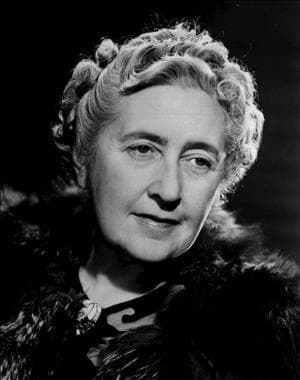
Dame Agatha Mary Clarissa Christie, Lady Mallowan, was an English writer known for her 66 detective novels and 14 short story collections, particularly those revolving around fictional detectives Hercule Poirot and Miss Marple. She also wrote the world's longest-running play, the murder mystery The Mousetrap, which has been performed in the West End since 1952. A writer during the "Golden Age of Detective Fiction", Christie has been called the "Queen of Crime". She also wrote six novels under the pseudonym Mary Westmacott. In 1971, she was made a Dame (DBE) by Queen Elizabeth II for her contributions to literature. Guinness World Records lists Christie as the best-selling fiction writer of all time, her novels having sold more than two billion copies.
Similar books
- And Then There Were None
Agatha Christie
4.3 (822k) average on GoodreadsThrillerFeatures a group of people trapped with a killer among them and a high body count.
- The Hound of the Baskervilles
Arthur Conan Doyle, Sir Arthur Conan Doyle
4.1 (254k) average on GoodreadsThrillerA classic detective story with a strong sense of atmosphere and a clever reveal.
- Gone Girl
Gillian Flynn
4.1 (2.3M) average on GoodreadsThrillerExplores the theme of an unreliable narrator and a shocking twist.
- Angels & Demons
Dan Brown
3.9 (2.7M) average on GoodreadsThrillerA Harvard symbologist races through Rome's ancient sites, deciphering cryptic clues to unmask the Illuminati and stop a vengeful plot to destroy the Vatican with a stolen antimatter weapon.
- The Girl on the Train
Paula Hawkins
3.9 (2.1M) average on GoodreadsThrillerA woman’s fascination with a seemingly perfect couple she watches from her daily train commute leads her into a dark investigation when she witnesses something that shatters their idyllic image.
- The Da Vinci Code
Dan Brown
3.9 (1.9M) average on GoodreadsThrillerA symbologist and a cryptologist race through European landmarks, deciphering ancient codes and uncovering a conspiracy that could rewrite the foundations of Christianity.






Enjoyed the summary?
A summary gives you the shape of the book. The book itself has the detail, the examples and the voice.
Find THE MURDER OF ROGER ACKROYD on AmazonAs an Amazon Associate, BookBrief earns from qualifying purchases. How we're funded