
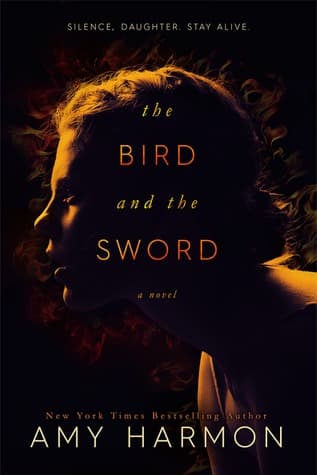
Synopsis
Covers the whole plot, including the ending.
- Difficulty
- Easy
- Pacing
- Moderate
- Mood
- Romantic, Enchanting, Hopeful, Suspenseful
- Read it if
- You enjoy a unique fantasy romance with a strong, silent protagonist and a powerful, brooding king, set in a world where magic is slowly returning.
- Skip it if
- You prefer fast-paced action over character development and a slower burn romance, or are looking for a magic system with clearly defined rules from the outset.
The Bird and the Sword Plot Summary
Covers the whole plot, including the ending.
The Silent Curse and the Prophecy
The story begins with young Lark seeing her mother murdered by the King's men, who are killing 'Gifted' individuals. Before dying, Lark's mother curses her: Lark will lose her voice, and if she dies, her father will die too. Her mother also predicts the King will trade his soul and lose his son to the sky. Lark's father, a Lord with a distant claim to the throne, becomes obsessed with this prophecy, thinking it will lead him to kingship. He keeps Lark isolated and silent, seeing her as a tool for his ambition rather than a daughter, always reminding her of the curse and her perceived inability to speak or use magic.
The King's Demand and Lark's Imprisonment
Years later, the prophecy starts to unfold. King Tiras, desperate to save his dying son, Prince Wren, decrees that he needs a Gifted woman who can speak to the sky to heal his son. He threatens to execute one Lord daily until such a woman appears. Lark's father, seeing an opportunity, forces Lark to show her hidden Gift of 'sky-speaking' – a telepathy that lets her communicate with the sky and control clouds. He then presents her to King Tiras, claiming she is powerful but silent. Lark is imprisoned in the castle, a silent captive in a strange world, both feared and mistrusted.
Prince Wren and the Silent Bond
At the castle, Lark is brought before Prince Wren, who is gravely ill, his skin turning to stone. She finds her true Gift is not just speaking to the sky, but 'hearing' and understanding the essence of all living things, including the Prince's suffering. She communicates with him through touch and shared thoughts, slowly healing him by drawing the 'stone' from his body. Despite her silence, a deep connection forms between Lark and Wren, based on trust and shared vulnerability. King Tiras remains doubtful but lets Lark continue, desperate for his son's recovery.
Court Intrigue and Suspicion
Lark finds herself in a dangerous court full of suspicion. Many, especially Lady Elara, dislike her presence and the King's favor, believing her to be a witch. They whisper about her silence and unusual methods. Lark's father, Lord Lathrop, visits her, reminding her of her role and his ambitions, further isolating her. Despite the hostility, Wren's condition slowly improves under Lark's care, confusing the castle's healers. She learns to use her Gift more precisely, not just drawing out the stone, but also using the sky's energy to rejuvenate him, though this drains her.
The Growing Connection with King Tiras
As Wren recovers, King Tiras, initially cold and distrustful, starts to see Lark's genuine compassion and her powerful effect on his son. He observes her silent dedication, gentle touch, and unique communication with Wren. He begins to protect her from the court's hostility, giving her better rooms and ensuring her safety. Their relationship slowly changes from captor and prisoner to mutual respect, and a new affection starts to grow between them, despite the age difference and political complications. He sees past her silence to her inner strength.
Unveiling the Curse's Truth
Through her growing connection with Wren and her own thoughts, Lark begins to understand her mother's curse. She realizes her silence is not just an inability to speak, but a protective measure, holding her immense power. Her mother had not cursed her out of malice, but to keep her safe and allow her Gift to mature. Lark's 'sky-speaking' evolves; she can not only communicate with the sky but also sense the emotions and intentions of those around her. She starts to subtly influence her environment, showing a growing mastery over her abilities, though she still cannot speak aloud.
The King's Vulnerability and Lark's Strength
Lark learns about King Tiras's past decisions and the heavy burden he carries, especially the guilt over his wife's death and his role in purging the Gifted. She confronts him, not with words, but through shared emotions and powerful mental images, showing her understanding and empathy. This shared vulnerability greatly strengthens their bond. Tiras, who had emotionally closed himself off, finds comfort and understanding in Lark's silent presence. He confesses his fears and regrets, recognizing her as more than a healer, but a true confidante and a woman of great strength, despite her perceived weakness.
The King's Trade and the Threat of War
King Tiras reveals the 'trade' his mother predicted: he made a pact with an ancient being (linked to the 'stone' sickness) to save his dying wife. The price was his firstborn son, Wren. This explains Wren's mysterious illness and the King's desperate actions. Meanwhile, news arrives that Lord Lathrop, Lark's father, is gathering an army to seize the throne, using Lark's perceived power as justification. The kingdom is on the brink of war, and Lark realizes her father's ambition directly threatens Tiras and Wren, further complicating her loyalties.
The Battle for the Throne and Lark's Choice
Lord Lathrop's forces march on the castle. Lark is torn but chooses to stand with King Tiras and Wren. During the battle, Lark uses her full Gift. She controls the weather, summoning powerful winds and creating illusions, using the sky as a weapon against her father's army. Her silence breaks as she channels her immense power, a scream of pure energy that devastates the enemy. She defends Tiras and the castle, showing her loyalty and the destructive potential of her Gift. Her actions turn the tide of battle, securing Tiras's reign.
The Curse Broken and the Kingdom Renewed
After the battle, Wren's condition worsens, fulfilling the prophecy of losing him to the sky. Lark, now fully understanding her Gift and power, performs a final, desperate act of healing. She fully accepts her Gift, breaking her mother's curse and regaining her voice, using it to call upon the sky's pure energy to completely heal Wren, fully reversing the stone. With her voice restored and her powers understood, Lark strengthens her bond with Tiras. She accepts her destiny, not as a silent bird, but as a powerful Queen, ready to rule alongside King Tiras, bringing a new era of balance and acceptance to the kingdom.
Principal Figures
Lark
Protagonist
A Gifted woman cursed to silence, who discovers immense power and love.
Lark is a young woman burdened by a childhood curse that renders her mute and by a father who sees her as a means to power. She is initially timid and isolated, her silence fostering a deep sense of observation and empathy. Despite her outward fragility, she possesses an extraordinary inner strength and a unique Gift to 'speak' to the sky and manipulate elements. Her journey is one of self-discovery, from a perceived weakness to embracing her formidable power. She values kindness, loyalty, and freedom above all else, often feeling trapped by circumstances.
Relationships: King Tiras (Initially captor/prisoner, evolves into deep love and partnership.); Prince Wren (Healer/patient, evolves into a close, protective, almost sibling-like bond.); Lord Lathrop (Father) (Manipulative, ambitious father who sees her as a tool; relationship is one of fear and eventual betrayal.)
King Tiras
Love Interest / Deuteragonist
A burdened king haunted by past choices, seeking redemption and love.
King Tiras is a stern, powerful, yet deeply grieving king, haunted by the death of his wife and the mysterious illness of his son, Prince Wren. He is a man of duty and sacrifice, having made difficult choices, including the purge of the Gifted, for what he believed was the good of his kingdom. Beneath his hard exterior lies a man capable of immense love and regret. He is initially suspicious of Lark but comes to respect and deeply love her, seeing past her silence to her profound strength and compassion. He struggles with the weight of his past actions.
Relationships: Lark (Initially skeptical captor, becomes her protector, confidante, and ultimately her husband.); Prince Wren (Devoted father, desperate to save his son.); Lady Elara (Political ally, but with underlying tension and mistrust regarding Lark.)
Prince Wren
Supporting
The dying prince whose illness is the catalyst for Lark's arrival.
Prince Wren is King Tiras's only son, afflicted by a mysterious, petrifying illness that slowly turns his body to stone. He is a gentle and kind young man, enduring his suffering with quiet grace. His illness serves as the central crisis that brings Lark into the castle and drives much of the plot. He forms a deep, silent bond with Lark, trusting her implicitly when no one else does. His recovery is a testament to Lark's power and the hope she brings to the kingdom.
Relationships: Lark (Patient to her healer, develops a deep, trusting bond.); King Tiras (Beloved son, for whom Tiras would sacrifice anything.)
Lord Lathrop
Antagonist
Lark's ambitious father, who uses her powers for his own gain.
Lord Lathrop is Lark's father, a cunning and ruthlessly ambitious man who harbors a distant claim to the throne. He is driven by a lust for power and views his daughter's Gift and the prophecy as a means to achieve his goals. He is cold, manipulative, and devoid of genuine paternal affection, keeping Lark isolated and constantly reminding her of her curse. His greed ultimately leads him to treason, as he attempts to overthrow King Tiras, using Lark as a pawn in his scheme. He represents the corrupting influence of unchecked ambition.
Relationships: Lark (Abusive, manipulative father; their relationship is based on his control and her fear.)
Lady Elara
Supporting
A noblewoman at court who is suspicious and jealous of Lark.
Lady Elara is a prominent noblewoman in King Tiras's court, a figure of influence and a close advisor. She is initially highly suspicious of Lark, viewing her as a dangerous Gifted and a potential threat to the kingdom and Tiras's reign. She embodies the court's fear and prejudice against those with magic. Her jealousy of Lark's growing influence with the King is palpable, but she is ultimately a loyal servant of the crown, albeit one with a strong traditionalist viewpoint. She struggles to accept the changes Lark brings.
Relationships: Lark (Antagonistic, suspicious, and jealous.); King Tiras (Loyal advisor, but with differing views on Lark.)
Lark's Mother (Mentioned)
Mentioned
The Gifted woman whose death and prophecy shape Lark's destiny.
Lark's mother was a powerful Gifted woman, tragically murdered by the King's men during the purge. Before her death, she placed a protective curse on Lark, rendering her silent, and delivered a pivotal prophecy regarding King Tiras and his son. Her actions, though seemingly harsh, were driven by a profound love for her daughter and a desire to protect her. Her memory and her words guide Lark's journey, and her true intentions are gradually revealed, showing her to be a wise and foresightful figure.
Relationships: Lark (Loving mother whose curse was a form of protection.); Lord Lathrop (Wife, but with deep ideological differences regarding the Gifted.)
Themes & Insights
The Power of Silence and Voice
Lark's initial silence, from her mother's curse, is both a weakness and a source of power. It forces her to communicate through empathy, touch, and 'sky-speaking,' allowing her to form deeper connections. Her journey is about understanding that true power is in intent, not volume. When she finally breaks her silence, it is not just regaining her voice, but unleashing a controlled, potent force, showing her full mastery over her Gift and destiny, as seen in the battle where her 'scream' of power changes the outcome.
“Silence, Daughter. Stay alive.”
Love as the Ultimate Magic
In a world without magic and where it is feared, love emerges as the most powerful and transformative force. Lark's ability to heal Prince Wren is not just about her Gift, but her compassion and the loving bond she forms with him. Her relationship with King Tiras, built on trust and respect, shows how love can bridge divides, heal old wounds, and inspire courage. The love between Lark and Tiras gives them strength to face political intrigue and war, proving emotional connection is a powerful 'magic' that can change hearts and kingdoms.
“In a land purged of enchantment, love might be the only magic left.”
Redemption and Forgiveness
King Tiras's character arc is central to this theme. He carries great guilt for his past actions, especially purging the Gifted and the 'trade' he made to save his wife, which caused Wren's illness. Lark's presence and her ability to see into his heart allow him to confront his regrets and seek redemption. Her silent understanding offers him forgiveness, both from others and, importantly, from himself. The story suggests that true leadership involves acknowledging past mistakes and building a better future, rather than succumbing to guilt or repeating destructive patterns.
“He traded his soul and lost his son to the sky.”
Destiny vs. Free Will
Lark's life is initially controlled by her mother's prophecy and curse, and her father's ambitions. She feels trapped. However, throughout the story, she makes choices that defy these paths. She chooses to heal Wren, to trust Tiras, and to fight for the kingdom. Her mother's 'curse' is revealed to be a protection, giving Lark space to grow into her powers. This theme explores whether destiny is fixed or a potential that individuals fulfill through their actions, showing Lark forging her own path within the prophecy.
“I just want to be free.”
Plot Devices & Literary Techniques
The Prophecy
A foretelling of future events that drives much of the plot.
Lark's mother's prophecy — that the King would 'trade his soul' and 'lose his son to the sky' — acts as a central plot device, setting the stage for the entire narrative. It creates a sense of impending doom and mystery, compelling characters like Lord Lathrop to act on its perceived implications and King Tiras to desperately seek a cure for Wren. The gradual unfolding and reinterpretation of the prophecy (e.g., the 'trade' being Tiras's pact, 'losing his son to the sky' being the stone illness) provides narrative tension and reveals deeper layers of the world's magic and history, guiding the characters' understanding of their roles.
The Silence/Curse
Lark's inability to speak, which is both a limitation and a source of power.
Lark's curse of silence is a defining plot device. Initially, it isolates her and makes her seem vulnerable, leading to mistreatment by her father and suspicion from the court. However, it also forces her to develop alternative forms of communication (telepathy, empathy, touch) which are crucial for her healing of Wren and her connection with Tiras. The silence serves as a metaphor for her suppressed power, and its eventual breaking is a powerful moment of liberation and the full realization of her Gift. It highlights the idea that true strength isn't always loud or obvious, and that limitations can foster unique abilities.
The Stone Sickness
Prince Wren's mysterious illness, which is the catalyst for Lark's arrival.
Prince Wren's petrifying illness, where his body slowly turns to stone, is the primary inciting incident that brings Lark to the castle. It creates immediate urgency and desperation for King Tiras, leading him to seek out a Gifted individual despite his kingdom's purge of magic. The sickness is not merely a medical condition; it is revealed to be a direct consequence of Tiras's past 'trade,' linking it to the central prophecy and the kingdom's history of magic. Its progression and eventual reversal through Lark's Gift serve as a tangible measure of her power and the growing hope she brings.
The Bird and the Sword Quotes
“Love is not a choice. It is a destiny. A gift from the gods. A curse from the gods.”
“Words are like swords. They can be used to protect, or they can be used to wound.”
“Sometimes the quietest voices hold the most power.”
“A king without his queen is just a man with a crown.”
“Fear makes us do strange things, but love can make us do braver ones.”
“There is a difference between being silent and being silenced.”
“The greatest battles are not always fought with swords.”
“You don't have to be loud to be heard.”
“Our scars tell stories, not just of what we've lost, but of what we've survived.”
“Some things are worth fighting for, even if the odds are against you.”
“Magic isn't just about spells and power. It's about connection, about understanding.”
“A crown doesn't make a king. His people do.”
“The greatest strength often lies in vulnerability.”
“To truly live, one must be willing to risk everything.”
Quiz
10 questions on the plot and the characters. Each answer comes with a short explanation.
Question 1
What is the primary reason Lark cannot speak or make a sound?
- She was born mute.
- Her mother placed a curse of silence on her to keep her safe.
- She was injured in an accident that damaged her vocal cords.
- She made a vow of silence to a deity.
Show answer
B. Her mother placed a curse of silence on her to keep her safe. Lark's mother, knowing the dangers of Lark's magical abilities, placed a curse of silence on her to protect her, as revealed in the opening lines: 'Silence, Daughter. Stay alive.'
Question 2
What prophecy did Lark's mother make regarding the king?
- The king would find a new queen and have many children.
- The king would trade his soul and lose his son to the sky.
- The king would be overthrown by a foreign invader.
- The king would restore magic to the land.
Show answer
B. The king would trade his soul and lose his son to the sky. The excerpt explicitly states: 'Then she predicted the king would trade his soul and lose his son to the sky.'
Question 3
What is Lark's father's primary ambition, as described in the excerpt?
- To protect Lark from all harm.
- To restore magic to the land of Jeru.
- To become king.
- To find a cure for Lark's silence.
Show answer
C. To become king. Lark states, 'My father has a claim to the throne, and he is waiting in the shadows for all of my mother’s words to come to pass. He wants desperately to be king.'
Question 4
What unique magical ability does Lark possess, despite her inability to speak?
- She can communicate with animals telepathically.
- She can manipulate earth and stone with her mind.
- She can draw words and concepts from others' minds and manifest them.
- She can heal wounds with a touch.
Show answer
C. She can draw words and concepts from others' minds and manifest them. Lark is a 'Word Weaver' or 'Word Speaker,' meaning she can draw words from others' minds and make them tangible, although her mother's curse prevents her from speaking them aloud or 'calling' them herself.
Question 5
Who is Tiras, and what is his initial relationship with Lark?
- He is Lark's childhood friend and secret admirer.
- He is the current king's son, and he takes Lark as his captive/advisor.
- He is a powerful sorcerer who seeks to exploit Lark's abilities.
- He is Lark's estranged brother, thought to be dead.
Show answer
B. He is the current king's son, and he takes Lark as his captive/advisor. Tiras is the current king's son, and he abducts Lark, bringing her to the castle to understand and potentially utilize her unique abilities, effectively making her his captive and advisor.
Question 6
What is the significance of the title 'The Bird and the Sword' in relation to Lark's character?
- The 'bird' refers to her love for actual birds, and the 'sword' to her hidden fighting skills.
- The 'bird' represents her silence and perceived helplessness, while the 'sword' symbolizes the power she eventually wields.
- The 'bird' is her family's crest, and the 'sword' is a magical artifact she seeks.
- The 'bird' is a nickname given to her by her enemies, and the 'sword' is the weapon of her protector.
Show answer
B. The 'bird' represents her silence and perceived helplessness, while the 'sword' symbolizes the power she eventually wields. Lark is often referred to as 'the bird' due to her silence and seeming fragility. The 'sword' represents the powerful, tangible words she can draw and eventually the strength and agency she develops, contrasting with her initial helplessness.
Question 7
What is the 'Scourge' that plagues the land of Jeru?
- A political rebellion against the current monarchy.
- A magical blight that corrupts the land and its people.
- A famine caused by harsh winters and poor harvests.
- An invasion by a neighboring kingdom.
Show answer
B. A magical blight that corrupts the land and its people. The Scourge is a magical affliction that causes madness, decay, and death, spreading across the land and affecting both the environment and its inhabitants, including the king.
Question 8
How does Lark eventually break her mother's curse of silence?
- She finds a magical artifact that grants her speech.
- She performs a powerful act of magic that requires her to speak a word of power.
- She speaks her first word to Tiras, driven by love and necessity.
- Her father, having achieved his ambition, lifts the curse.
Show answer
C. She speaks her first word to Tiras, driven by love and necessity. Lark's curse is ultimately broken when she speaks to Tiras, specifically when she declares her love for him during a critical moment, an act of self-sacrifice and true emotion that fulfills the 'curse not, cure not, ‘til the hour' prophecy.
Question 9
What is the true nature of Lark's mother's death and its connection to Lark's abilities?
- She was killed by Lark's father in a fit of rage.
- She was executed for practicing forbidden magic.
- She died protecting Lark from a magical attack, but her death was also a sacrifice to place the curse.
- She died of a natural illness, unrelated to magic.
Show answer
C. She died protecting Lark from a magical attack, but her death was also a sacrifice to place the curse. Lark's mother, a powerful Word Weaver herself, sacrificed her life to place the silence curse on Lark, foreseeing the danger her daughter's abilities would bring and ensuring her survival.
Question 10
How does Lark's ability to 'pull in' words function, and what does it reveal about her true power?
- She can read minds and know what others are thinking, which is her full power.
- She can draw out the unspoken thoughts and intentions of others, manifesting them as tangible words, revealing her as a powerful Word Weaver.
- She can absorb spoken words and store them within herself, making her a living library.
- She can physically manipulate written text, but not spoken words.
Show answer
B. She can draw out the unspoken thoughts and intentions of others, manifesting them as tangible words, revealing her as a powerful Word Weaver. Lark's power is to 'pull in' words that 'sit upon your lips' (or in others' minds) and make them manifest. This ability to draw unspoken thoughts and intentions into tangible form is the core of her Word Weaver magic, allowing her to understand and eventually influence the world in profound ways, despite her silence.
The Bird and the Sword FAQ
What is the central premise of 'The Bird and the Sword'?
'The Bird and the Sword' centers on Lark, a young woman cursed to silence by her mother, who also prophesied that Lark's death would mean her father's. Lark's father, Lord Bren, interprets this as a means to gain the throne, using Lark as a pawn, while Lark herself struggles with her silence and the re-emerging magic in a land that has suppressed it.
Who is Tiras and what is his role in the story?
Tiras is the King of Jeru, a powerful and initially intimidating figure who is searching for a wife to secure his lineage and the stability of his kingdom. He is drawn to Lark despite her silence, recognizing her unique qualities and the truth in her eyes, eventually becoming her husband and a key figure in unraveling her curse and the kingdom's magical past.
What is the nature of Lark's 'curse' and how does it affect her?
Lark's 'curse' is a powerful enchantment from her mother that renders her mute, preventing her from speaking any words or sounds. This silence is meant to protect her from those who would exploit her inherent magic, but it also isolates her and makes her vulnerable to manipulation, particularly by her ambitious father.
How does magic function within the world of Jeru, and why is it suppressed?
Magic in Jeru is an inherent power, often tied to bloodlines, but it has been systematically purged and feared by the ruling class, known as the 'Wordless,' who believe it leads to chaos and destruction. This suppression forces those with magical abilities, like Lark and her mother, to hide their powers, leading to a kingdom that denies its own magical heritage.
What is the significance of the 'bird' in the title and Lark's identity?
The 'bird' in the title refers to Lark, who is often called 'Bird' by Tiras, symbolizing her perceived fragility, her inability to speak, and her hidden potential for flight and freedom. It also alludes to her connection to the 'Wordless' and the unique way she experiences and expresses herself without words, much like a bird's songless existence in her case.
What is the true origin of Lark's silence, and how is it related to her mother's prophecy?
Lark's silence is not a curse of malice but a powerful protective enchantment cast by her mother, Elara, a powerful Word. It was designed to prevent Lark from inadvertently revealing or using her own potent magic before she was ready, thereby protecting her from those who would exploit or harm her, particularly from the dangerous Wordless.
How does the prophecy about the king trading his soul and losing his son to the sky come to pass?
The prophecy refers to King Tiras, who, in his desperate search for a queen and an heir, 'trades his soul' by making difficult choices and enduring personal sacrifice for his kingdom. His son, Roric, is 'lost to the sky' when he is born with wings, a manifestation of the re-emerging magic and a direct fulfillment of Elara's foresight, signifying the return of the Wordless.
What is the significance of the 'Wordless' and their connection to the 'Words'?
The 'Wordless' are the magical beings of Jeru, able to wield elemental powers, while the 'Words' are those who can speak and command these powers through language. Lark is revealed to be a powerful 'Word' herself, her silence a temporary measure to contain her immense power, contrasting with the kingdom's history of fearing and suppressing the Wordless.
How does Lark's father, Lord Bren, misinterpret his wife's prophecy, and what are the consequences?
Lord Bren misinterprets Elara's prophecy that 'if I died, he would die too' as a guarantee of his own power and a means to the throne, using Lark as a tool. He believes Lark's continued existence is solely for his benefit, rather than recognizing the deeper protective intent, leading him to manipulate and imprison her, ultimately contributing to his own downfall.
How does Lark's silence shape her emotional and psychological development?
Lark's enforced silence forces her to develop acute observational skills and a deep internal world. She learns to communicate through her eyes, expressions, and actions, fostering a profound empathy and understanding of others' unspoken feelings. This isolation also cultivates resilience and an inner strength that belies her quiet demeanor.
What psychological journey does Tiras undergo in accepting Lark and her magic?
Tiras initially embodies the kingdom's skepticism towards magic, but his interactions with Lark gradually dismantle his preconceived notions. He moves from seeing her as a silent, mysterious woman to recognizing her profound intelligence, strength, and inherent goodness, ultimately embracing her magical nature and challenging the deep-seated fears of his people.
How does the novel explore themes of control versus freedom through Lark's experiences?
The novel deeply explores control versus freedom through Lark, who is initially controlled by her mother's curse, her father's ambition, and society's fear of magic. Her journey is one of breaking free from these constraints, not by escaping her powers, but by understanding and embracing them, ultimately finding true freedom in self-acceptance and love.
What is the psychological impact of prophecy and destiny on the characters, particularly Lord Bren?
Prophecy and destiny exert a profound psychological impact, particularly on Lord Bren, who becomes consumed by his interpretation of Elara's words, leading to ambition, paranoia, and cruelty. He believes himself destined for the throne and is driven to extreme measures, illustrating how a flawed understanding of fate can corrupt and destroy a person.
Is Lark's mother, Elara, a villain or a protector, and why is her decision to silence Lark debatable?
Elara is ultimately a protector, but her decision to silence Lark is debatable because it imposed significant hardship and isolation on her daughter. While intended for protection, it also made Lark vulnerable to her father's manipulation and delayed her understanding of her own powers, raising questions about the ethics of such a drastic, long-term intervention.
How does the book challenge traditional notions of strength and power?
The book challenges traditional notions of strength by portraying Lark, a silent and seemingly powerless woman, as the key to restoring balance and magic to the kingdom. Her strength lies not in martial prowess or vocal command, but in her resilience, empathy, intelligence, and the immense, quiet power she ultimately wields, redefining what it means to be powerful.
What is the underlying message about fear versus understanding in the context of magic in Jeru?
The underlying message is that fear, born of ignorance and misunderstanding, leads to suppression and suffering, as seen in Jeru's purging of magic. Only through understanding, acceptance, and integration of what is feared can true harmony and progress be achieved, illustrating that knowledge and empathy are more powerful than prejudice.
How does the romance between Lark and Tiras contribute to the broader themes of the novel?
The romance between Lark and Tiras is central, symbolizing the bridging of divides: silence and speech, magic and the mundane, fear and acceptance. Their love allows Lark to find her voice and Tiras to embrace magic, demonstrating that true connection requires seeing beyond superficial differences and accepting one another entirely, fostering healing and change.
Could Lark have broken her silence earlier, and what would have been the implications?
Lark likely could not have broken her silence earlier without dire consequences, as her mother's enchantment was specifically timed to protect her until she was mature enough to control her vast powers. Breaking it prematurely would have exposed her to the dangers of her own untrained magic and the hostile kingdom, potentially leading to her destruction or exploitation.
What does the ending suggest about the future of magic in Jeru?
The ending suggests a hopeful future for magic in Jeru, with Lark and Tiras's child, Roric, born with physical manifestations of magic, symbolizing its return and integration into society. It implies that the kingdom will move past its fear and embrace its magical heritage, fostering a new era where magic and humanity coexist and thrive.
Similar books
- A Court of Thorns and Roses
Sarah J. Maas
4.2 (476k) average on GoodreadsFantasyFeatures a strong female lead navigating a magical court and a developing romance with a powerful male figure.
- Uprooted
Naomi Novik
4.1 (167k) average on GoodreadsFantasyInvolves a young woman with latent magic, a mysterious sorcerer, and a dark, encroaching forest blight.
- Shadow and Bone
Leigh Bardugo
4.0 (307k) average on GoodreadsFantasyWhile Bardugo's Grishaverse provides a complex political landscape, a larger ensemble cast, and a diverse range of magical abilities, Harmon's novel focuses on a more concentrated emotional impact and the singular, powerful connection between its two main characters. 'The Bird and the Sword' prioritizes character intimacy and a unique, less overt magic system over sprawling epic fantasy and intricate political intrigue.
- Harry Potter and the Sorcerer's Stone
J.K. Rowling
4.5 (7M) average on GoodreadsFantasyRescued from a miserable life under the stairs, an orphaned boy discovers he's a wizard destined for a magical school, where he uncovers a dangerous secret tied to the dark wizard who murdered his parents.
- The Hunger Games
Suzanne Collins
4.3 (6.4M) average on GoodreadsFantasyIn a future where children fight to the death on live television, Katniss Everdeen volunteers for the arena, turning a death sentence into a fight for survival and a spark of rebellion.
- 1984
George Orwell
4.2 (3.1M) average on GoodreadsPoliticsIn a future where surveillance and thought control are absolute, a man's search for truth clashes with the Party, showing that hope can be a form of rebellion.





Enjoyed the summary?
A summary gives you the shape of the book. The book itself has the detail, the examples and the voice.
Find The Bird and the Sword on AmazonAs an Amazon Associate, BookBrief earns from qualifying purchases. How we're funded