
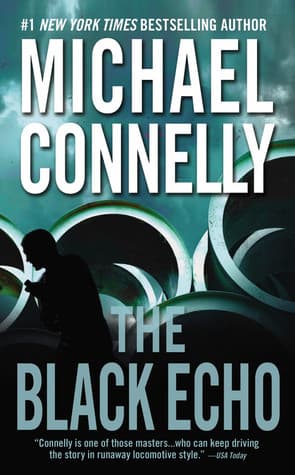
Synopsis
Covers the whole plot, including the ending.
- Difficulty
- Medium
- Pacing
- Moderate
- Mood
- Gritty, Suspenseful, Dark, Brooding
- Read it if
- You enjoy gritty police procedurals with a strong, morally complex protagonist and intricate plots involving both street-level crime and institutional corruption.
- Skip it if
- You prefer lighthearted mysteries or stories without significant violence and dark themes.
The Black Echo Plot Summary
Covers the whole plot, including the ending.
The Body in the Drainpipe
LAPD Homicide Detective Harry Bosch responds to a suspected overdose in a drainpipe. The victim, Billy Meadows, has a heroin needle nearby, but Bosch notices details that don't fit, like the lack of other drug items and clean clothes. Bosch recognizes Meadows as a fellow 'tunnel rat' from the Vietnam War, making the case personal. He remembers their hard times in Vietnam's underground tunnels. This connection drives Bosch to prove Meadows was murdered, despite pressure from his department to call it an overdose. This path puts him against his superiors and the FBI.
The FBI's Intervention and the Bank Heist Link
As Bosch investigates, the FBI abruptly takes over, led by Agent Eleanor Wish. Bosch is frustrated, feeling the LAPD is being pushed aside. He soon learns Meadows was involved in a bank heist, where millions were stolen from a vault holding safe deposit boxes of a corrupt S&L. The FBI thinks Meadows was killed to keep him quiet about the heist, and his death is now part of their bigger plan to get the money back and catch the others. Bosch reluctantly joins a joint task force, but his independent nature and distrust of the FBI immediately create tension, especially with Wish.
Uncovering the Heist Details
Bosch and Wish begin to piece together the bank robbery. They find out the thieves didn't target the bank's general funds but specifically the safe deposit boxes of the fraudulent Western Federal Savings and Loan, stored in the vault. The heist was carefully planned, involving tunneling into the vault from a storm drain system, like the 'tunnel rat' tactics used in Vietnam. This detail makes Bosch suspect other former tunnel rats are involved. Their investigation shows Meadows was a key player, likely the one who broke into the vault, and his death is directly linked to how the money was divided or a betrayal among the thieves.
The Suspects and the Tunnel Connection
Using his knowledge of Vietnam tunnel rats, Bosch starts to identify suspects who might have been with Meadows. He recalls other members of their unit, especially those with special skills or a history of crime. John Chastain, another former tunnel rat known for his engineering skills, is a main suspect. Bosch believes the heist's unique method points to people with similar combat experience. He begins tracking down these former comrades, often going against FBI rules, believing their shared past holds the key to solving the current crime and Meadows' murder. His methods often conflict with Eleanor Wish's more by-the-book approach.
Internal Departmental Conflicts
Throughout the investigation, Bosch faces strong opposition from within his own department. His LAPD superiors, especially Deputy Chief Irvin Irving, are wary of his independent ways and his history of bending rules. The FBI, through Agent Wish, sees Bosch as unpredictable, constantly undermining their authority and procedures. Bosch's drive to find justice for Meadows, even if it means exposing corruption in his city or clashing with federal agents, puts him at odds with almost everyone. He often works outside official channels, using personal connections and instincts, often risking his career to follow leads he believes are important, further isolating him within the police hierarchy.
The Growing Relationship with Eleanor Wish
Initially, Harry Bosch and Eleanor Wish's relationship is marked by professional disagreement and distrust. Wish sees Bosch as a rogue, while Bosch sees her as an obstacle and a symbol of the bureaucracy he dislikes. However, as they spend more time together, sharing the dangers and frustrations of the case, they start to respect each other. They find common ground in their dedication to justice, though they go about it differently. This professional partnership slowly turns into a personal and romantic relationship, adding emotional depth to the high-stakes investigation. Their bond becomes a source of both strength and weakness for Bosch, challenging his usual solitary nature.
The Tunnel Pursuit and Confrontation
After a series of intense leads, Bosch and Wish discover the remaining conspirators are trying to move the stolen money through the same storm drain system used for the heist. This leads to a harrowing chase through dark, narrow underground tunnels, which brings back Bosch's traumatic Vietnam memories. The chase ends in a tense confrontation within the tunnels, where Bosch faces the remaining thieves. The environment reminds him of the terrible conditions of his past, forcing him to confront his inner demons while battling the desperate criminals. The echoes of his war experience are clear as he moves through the underground maze.
The Betrayal and the True Killer's Identity
Through his investigation, Bosch uncovers a shocking betrayal within the heist crew. He learns that Billy Meadows was murdered not by an outsider, but by one of his own comrades. The person behind the bank heist and Meadows' killer is revealed to be John Chastain, the former tunnel rat Bosch had suspected. Chastain, driven by greed and a desire to remove loose ends, killed Meadows and planned the bank robbery. This revelation hits Bosch hard, as it forces him to confront the dark side of loyalty and the psychological scars of war that can twist people years later. The personal nature of the betrayal strengthens Bosch's resolve for justice.
The Final Showdown and Aftermath
The story's climax shows Harry Bosch in a direct, violent fight with John Chastain. This showdown is more than just catching a killer; it's a deeply personal battle for Bosch, a fight against a ghost from his past and a twisted version of his own war experience. The fight is brutal, pushing Bosch's physical and mental limits. Bosch eventually brings Chastain to justice, but at a significant personal cost. The case closes, the stolen money is mostly recovered, and the criminals are dealt with. However, the emotional and psychological toll on Bosch is immense, leaving him to deal with the lingering trauma and moral complexities of his past.
Justice and Vengeance
Throughout the investigation, Harry Bosch struggles with the moral question of justice versus vengeance. Meadows' murder is deeply personal, bringing up old traumas and a desire for revenge that goes beyond his professional duty. He is constantly pushed to the edge, tempted to cross ethical lines to avenge his friend. While he ultimately follows a form of justice, the journey forces him to confront his own dark impulses. The case's resolution, while holding the killers accountable, doesn't fully resolve Bosch's inner conflict, leaving him with a deeper understanding of the cost of his choices and the lasting impact of his experiences in Vietnam and Los Angeles.
The Black Echo Characters
Harry Bosch
Protagonist
A maverick LAPD homicide detective with a haunted past as a Vietnam 'tunnel rat'.
Harry Bosch is a deeply complex and often solitary figure. Shaped by a troubled childhood in foster homes and the brutal realities of the Vietnam War, he is driven by a fierce, almost obsessive, commitment to justice, particularly for the dead. He operates by his own moral code, frequently clashing with authority figures and departmental protocols. His past as a 'tunnel rat' has left him with a keen sense of observation, an ability to navigate dark, confined spaces, and a persistent struggle with PTSD. He is intelligent, relentless, and often cynical, but beneath his hardened exterior lies a profound sense of empathy for victims.
Relationships: Billy Meadows (Fellow Vietnam tunnel rat, victim, catalyst for the investigation); Eleanor Wish (FBI agent, initially antagonistic, becomes romantic partner); John Chastain (Former Vietnam tunnel rat, perpetrator of the heist and Meadows' murder); Irvin Irving (Deputy Chief of LAPD, Bosch's superior and frequent antagonist)
Eleanor Wish
Supporting
An intelligent and ambitious FBI agent assigned to the bank heist case.
Eleanor Wish is a sharp, by-the-book FBI agent who initially views Harry Bosch as an unprofessional rogue. She is highly competent, dedicated to her work, and initially focused on the larger federal implications of the bank robbery. As she works alongside Bosch, she begins to appreciate his unconventional methods and deep understanding of the criminal mind, despite their frequent clashes. She represents the structured, bureaucratic side of law enforcement, providing a contrast to Bosch's independent style. Her developing relationship with Bosch softens her professional edges and allows her to see the human element of the case more clearly.
Relationships: Harry Bosch (Initially antagonistic colleague, becomes romantic partner); Agent Foster (FBI colleague)
Billy Meadows
Victim/Supporting
A former Vietnam tunnel rat and the murder victim whose death sparks Bosch's investigation.
Billy Meadows is the catalyst for the entire plot. A fellow 'tunnel rat' from Bosch's Vietnam unit, his death is initially dismissed as an overdose, but Bosch's personal connection and astute observations reveal it to be murder. Meadows' past as a decorated soldier who later fell into a life of crime highlights the difficult transition many veterans faced. He was a key participant in the bank heist, likely using his specialized skills from the war. His character, though deceased, serves as a poignant reminder of the enduring impact of war and the complex lives of those who served, driving Bosch's quest for justice.
Relationships: Harry Bosch (Former comrade in Vietnam); John Chastain (Co-conspirator in the heist, ultimately his murderer)
John Chastain
Antagonist
A former Vietnam tunnel rat and the mastermind behind the bank heist and Meadows' murder.
John Chastain is the primary antagonist, a former comrade of Bosch and Meadows during the Vietnam War. He was known for his intelligence and resourcefulness, skills he later perverted into orchestrating a sophisticated bank robbery. Driven by greed and a ruthless pragmatism, Chastain murdered Meadows to eliminate a loose end and secure a larger share of the heist money. He is a formidable opponent, capable of meticulous planning and brutal violence, and he represents the darker path some veterans took after the war. His actions force Bosch to confront the corruption of their shared past and the profound impact of war on individuals.
Relationships: Harry Bosch (Former comrade, now adversary); Billy Meadows (Co-conspirator, then victim)
Irvin Irving
Supporting
Deputy Chief of the LAPD, a shrewd political operator and Bosch's bureaucratic adversary.
Irvin Irving is a powerful and politically astute Deputy Chief within the LAPD. He is primarily concerned with departmental image, political maneuvering, and maintaining control, often at the expense of individual justice. Irving views Bosch as a talented but unruly detective whose maverick tendencies threaten his carefully constructed order. He frequently tries to rein Bosch in, sideline him, or use him for his own political gain. He embodies the institutional resistance Bosch constantly faces, representing the bureaucratic obstacles that can hinder true justice. Despite their adversarial relationship, Irving sometimes acknowledges Bosch's effectiveness, albeit grudgingly.
Relationships: Harry Bosch (Superior, often antagonistic); Other LAPD brass (Colleague in departmental politics)
Agent Foster
Supporting
A junior FBI agent working with Eleanor Wish.
Agent Foster is a relatively inexperienced but earnest FBI agent who assists Eleanor Wish on the bank heist case. He often serves as a sounding board for Wish and a contrast to Bosch's more seasoned, cynical approach. Foster represents the younger generation of law enforcement, still learning the ropes and adhering strictly to protocol. His presence often highlights the procedural differences between the FBI and the LAPD, and he occasionally finds himself caught between Bosch's unorthodox methods and Wish's more structured approach.
Relationships: Eleanor Wish (FBI colleague); Harry Bosch (Colleague on joint task force)
Captain Frank Sheehan
Supporting
Bosch's immediate superior at Hollywood Division.
Captain Sheehan is Bosch's direct commanding officer at the Hollywood Division. He is a pragmatic and often frustrated superior who has to manage Bosch's rebellious nature while also recognizing his effectiveness as a detective. Sheehan is caught between the demands of his own superiors (like Irving) and Bosch's tendency to disregard orders. While he often admonishes Bosch, he also occasionally protects him, understanding that Bosch gets results, even if his methods are unconventional. He represents the middle management struggling to balance bureaucracy with practical police work.
Relationships: Harry Bosch (Subordinate, often a source of exasperation); Irvin Irving (Superior)
Jerry Edgar
Supporting
Bosch's partner at the beginning of the story.
Jerry Edgar is Harry Bosch's partner at the start of the novel. He is a more conventional detective, often serving as a foil to Bosch's maverick style. Edgar is reliable and by-the-book, providing a grounding presence when Bosch's impulses threaten to take over. While he respects Bosch's abilities, he is also often exasperated by his partner's disregard for rules and his tendency to go off on his own. He represents the more traditional detective work that Bosch often deviates from, highlighting Bosch's unique approach to investigations.
Relationships: Harry Bosch (Partner)
The Black Echo Themes
The Lingering Trauma of War
The Vietnam War, especially the experiences of 'tunnel rats,' affects the characters, particularly Harry Bosch and the criminals. Bosch's PTSD appears as claustrophobia and flashbacks when he enters tunnels, blurring the line between past combat and the current investigation. The heist itself uses military precision and tactics from their war experiences, showing how combat skills can be used for crime. The story explores how war can permanently scar people, leading some to seek justice and others to a life of crime, unable to escape their past.
“The tunnels were never far from him. They were the black echo.”
Justice vs. Vengeance
Bosch's investigation into Billy Meadows' murder is deeply personal, blurring the ethical line between seeking justice and personal vengeance. Because Meadows was a fellow tunnel rat, Bosch feels a strong loyalty and a need to avenge his death, which sometimes makes him ignore rules and risk his career. He struggles with the temptation to take justice into his own hands, especially when a former comrade betrays him. The story constantly asks if Bosch's actions are purely for the law or driven by a more basic, vengeful instinct from his past.
“He knew the difference between justice and vengeance. Or thought he did. Tonight, the line blurred.”
Corruption and Institutional Distrust
The novel shows Bosch's deep distrust of authority and the widespread corruption in institutions, both police and financial. The bank heist targets funds stolen through a fraudulent S&L, suggesting a larger system of greed and lies. Bosch often clashes with LAPD leaders, especially Deputy Chief Irving, who prioritizes politics over real detective work. His interactions with the FBI are also full of suspicion, as he believes they care more about their own agenda than the truth. This theme highlights Bosch's isolation and his commitment to an honest form of justice, even when it means fighting against the system he serves.
“The law was a living, breathing thing. But the system, the system was a machine, and it could be broken.”
Loyalty and Betrayal
The mystery centers on the bonds of loyalty formed in extreme situations – specifically, among the Vietnam tunnel rats – and the betrayal of those bonds. Billy Meadows' murder by a former comrade, John Chastain, is a profound act of treachery. Bosch's strong loyalty to his dead friend drives his relentless pursuit. The story explores how shared trauma can create strong bonds, but also how greed and desperation can break them, turning comrades into enemies. This theme is central to Bosch's emotional journey, as he deals with the idea that those he once fought alongside could turn against each other.
“In the tunnels, you trusted your brother with your life. What happens when that trust is broken?”
Plot Devices & Literary Techniques
The 'Tunnel Rat' Motif
A recurring symbol and skill set derived from the Vietnam War.
The 'tunnel rat' experience from the Vietnam War serves as a central motif. It is not only Bosch's past profession but also the specific skill set used by the perpetrators of the bank heist. This motif provides a psychological backdrop for Bosch's character, explaining his unique abilities and his claustrophobia. It also links the past and present crimes, suggesting that the war's influence extends far beyond the battlefield. The confined, dark spaces of the underground tunnels become a physical manifestation of Bosch's internal struggles and the 'black echo' of his trauma.
Red Herring Suspects
Misleading clues and characters designed to divert the investigation.
The novel employs several red herring suspects and misleading clues to complicate the investigation and keep the reader guessing. Initial assumptions about Billy Meadows' death as an overdose, and the FBI's early focus on other individuals, serve to divert Bosch and the reader from the true culprits. These diversions highlight Bosch's keen detective instincts as he sees through the superficial evidence to uncover deeper truths, reinforcing his maverick nature and his ability to connect seemingly disparate pieces of information.
The Personal Stake
The protagonist's direct emotional connection to the victim.
Harry Bosch's personal connection to the victim, Billy Meadows, as a fellow Vietnam tunnel rat, is a crucial plot device. This personal stake elevates the investigation beyond a routine homicide, imbuing it with deep emotional resonance and driving Bosch's relentless pursuit of justice. It fuels his defiance of authority and his willingness to take extreme risks, as he is not just solving a case but avenging a comrade. This device allows the author to explore Bosch's character depth and his internal conflicts more profoundly.
Flashbacks and PTSD
Recurrent memories of past trauma that impact the present narrative.
Flashbacks to Bosch's experiences as a tunnel rat in Vietnam, and the manifestation of his PTSD, serve as a significant plot device. These memories are triggered by the underground settings of the investigation, adding a layer of psychological tension and explaining Bosch's unique reactions to confined spaces. The flashbacks not only provide exposition about his past but also illuminate his character's motivations and struggles, showing how his wartime experiences continue to influence his present actions and perceptions, blurring the lines between his two 'wars'.
The Black Echo Quotes
“Everybody counts or nobody counts.”
“The past is a wilderness of horrors.”
“The law is a weapon, and it needs to be wielded with care.”
“There are no coincidences in murder, only links that haven't been found yet.”
“Sometimes the light at the end of the tunnel is a train.”
“He knew the city like a lover, intimate with its secrets and its scars.”
“The dead speak to the living, if you only know how to listen.”
“Silence was a weapon, and he knew how to use it.”
“The truth was a beast, and it often left a trail of destruction.”
“He was a man who lived on the edge of the dark, comfortable in its shadows.”
“The city was a thousand stories, and he was just trying to read one.”
“You can't save everyone, but you have to try for the ones you can.”
“Every secret had a price, and someone always paid.”
“He was a hunter in a city of prey, and the hunt was all he knew.”
Quiz
10 questions on the plot and the characters. Each answer comes with a short explanation.
Question 1
What is the initial location where the body of Billy Meadows is discovered?
- Griffith Park Observatory
- Mulholland Dam
- Hollywood Hills
- Sepulveda Dam
Show answer
B. Mulholland Dam The body of Billy Meadows, Bosch's fellow tunnel rat, is found in a drainpipe at Mulholland Dam, making the case personal for Harry.
Question 2
What was the specific military role Harry Bosch and Billy Meadows shared during the Vietnam War?
- Snipers
- Radio Operators
- Tunnel Rats
- Forward Observers
Show answer
C. Tunnel Rats Bosch and Meadows were both 'tunnel rats' in Vietnam, a shared traumatic experience that deeply connects Bosch to the murder victim.
Question 3
What is the primary motivation for the elaborate bank heist central to the plot?
- To fund a terrorist organization
- To steal money from drug cartels
- To recover stolen Vietnamese gold
- To exact revenge on the bank's CEO
Show answer
C. To recover stolen Vietnamese gold The bank heist is orchestrated to recover Vietnamese gold that was stolen during the war, connecting back to Bosch's past.
Question 4
Who is the FBI agent Harry Bosch is forced to work with, despite their initial animosity?
- Agent Ryan
- Agent Eleanor Wish
- Agent Miller
- Agent Davies
Show answer
B. Agent Eleanor Wish Bosch forms a complicated working relationship, and eventually a romantic one, with FBI Agent Eleanor Wish during the investigation.
Question 5
What piece of evidence found with Billy Meadows' body initially suggests a connection to drugs?
- A small bag of heroin
- Needle marks on his arm
- A small amount of cocaine
- Drug paraphernalia
Show answer
C. A small amount of cocaine A small packet of cocaine is found on Meadows, initially leading some to believe his death was drug-related, though Bosch suspects otherwise.
Question 6
What internal conflict does Bosch grapple with throughout the investigation, highlighted by his connection to Meadows?
- Loyalty to the LAPD versus his personal ambitions
- The desire for fame versus anonymity
- Justice versus vengeance
- Following rules versus breaking them
Show answer
C. Justice versus vengeance The synopsis explicitly states Bosch is 'forced to make the agonizing choice between justice and vengeance,' a central theme given his personal connection to the victim.
Question 7
Who is ultimately revealed to be the mastermind behind the bank heist and the murder of Billy Meadows?
- FBI Agent Eleanor Wish
- Detective Jerry Edgar
- Lieutenant Harvey Pounds
- Theodore 'Ted' Bond
Show answer
D. Theodore 'Ted' Bond Theodore 'Ted' Bond, another former tunnel rat, is revealed to be the orchestrator of the heist and the killer, creating a shocking betrayal for Bosch.
Question 8
What specific method is used by the criminals to access the bank's vault during the heist?
- Blasting through the main entrance
- Tunneling from the sewer system
- Posing as security guards
- Using a helicopter to breach the roof
Show answer
B. Tunneling from the sewer system The heist utilizes a tunnel dug from the city's sewer system directly into the bank vault, a method reminiscent of the 'tunnel rat' tactics from Vietnam.
Question 9
What significant personal item of Harry Bosch's is stolen during the course of the investigation, adding to his frustration?
- His service weapon
- His car
- His badge
- His dog tags from Vietnam
Show answer
B. His car Bosch's car is stolen, which leads to further complications and a sense of being targeted personally.
Question 10
The 'black echo' in the title refers metaphorically to what aspect of Bosch's life?
- The sound of gunfire in the city at night
- The lingering trauma and memories of the Vietnam War
- The corruption within the LAPD
- The darkness of the tunnels during the bank heist
Show answer
B. The lingering trauma and memories of the Vietnam War The 'black echo' represents the enduring psychological impact of the Vietnam War on Bosch, constantly reverberating through his present life and the current case.
The Black Echo FAQ
What is the central mystery that Harry Bosch investigates in 'The Black Echo'?
Harry Bosch investigates the murder of Billy Meadows, a fellow 'tunnel rat' from his Vietnam War days, whose body is found in a drainpipe at Mulholland Dam. This discovery immediately makes the case personal for Bosch, driving his relentless pursuit of the killer.
Who is Billy Meadows and what is his significance to Harry Bosch?
Billy Meadows was a comrade-in-arms to Harry Bosch during the Vietnam War, serving as a fellow 'tunnel rat.' Their shared traumatic experiences in the underground tunnels of Vietnam forge a deep, unspoken bond, making Meadows's murder a profound personal blow to Bosch.
What kind of criminal activity is linked to Billy Meadows's death?
Billy Meadows's death is linked to a sophisticated bank robbery scheme involving tunnels beneath Los Angeles, specifically targeting the vault of the Wilshire National Bank. This elaborate plan mirrors the underground warfare tactics Bosch and Meadows employed in Vietnam.
Who are the primary antagonists Harry Bosch faces in this novel?
Bosch faces not only the actual killers but also internal antagonists within the LAPD, particularly Deputy Chief Irvin Irving and FBI Agent Eleanor Wish, who initially obstruct his investigation. The true mastermind behind the heist, however, remains hidden for much of the novel.
What is the significance of the 'black echo' in the book's title?
The 'black echo' refers to the lingering psychological trauma and haunting memories of the Vietnam War that resonate within Harry Bosch. It symbolizes the dark, echoing experiences of the tunnels and the way they continue to influence his perception and actions in the present.
How does the setting of Mulholland Dam connect to the deeper plot?
Mulholland Dam is where Billy Meadows's body is discovered, but it also symbolizes the hidden depths and secrets that lie beneath the surface, much like the tunnels used for the bank heist. The dam's structure, designed to hold back vast amounts of water, mirrors the pressure Bosch feels to contain his own past.
What is the role of the 'tunnel rat' experience in shaping the plot and characters?
The shared 'tunnel rat' experience between Bosch and Meadows is central, as it provides the motive for Meadows's involvement in the heist and informs Bosch's investigative methods. The unique skills and psychological scars from this past are directly applied to the contemporary criminal operation.
Are there any subtle clues about the true mastermind's identity early in the book?
Yes, subtle clues exist, such as the detailed knowledge of the tunnel system and bank security, hinting at someone with insider access or specific expertise. The way certain characters deflect or mislead Bosch can also be seen as early indicators of their complicity or knowledge.
How does Harry Bosch's past in Vietnam influence his present-day detective work and decision-making?
Bosch's Vietnam past profoundly influences him, making him distrustful of authority, reliant on his own instincts, and deeply empathetic to fellow veterans. His 'tunnel rat' training gives him unique insights into the criminal's methods, but also fuels his personal vendetta.
What psychological impact does the betrayal by fellow officers or figures of authority have on Bosch?
The betrayal by figures like Irvin Irving and others within the LAPD reinforces Bosch's inherent distrust of institutions and authority, deepening his sense of isolation. It solidifies his belief that true justice often requires operating outside conventional rules, pushing him towards more maverick tactics.
How does the novel explore themes of loyalty and betrayal, particularly among veterans?
The novel deeply explores loyalty through Bosch's commitment to avenging Billy Meadows, a fellow veteran. Betrayal is highlighted by the involvement of other veterans in the criminal enterprise and the institutional opposition Bosch faces, questioning the bonds forged in combat.
What is the nature of Harry Bosch's relationship with Eleanor Wish?
Harry Bosch's relationship with FBI Agent Eleanor Wish is complex and adversarial at first, marked by professional conflict and distrust. However, it gradually evolves into a grudging respect and even a romantic connection, as they navigate the treacherous investigation together.
How does the book's ending reflect Harry Bosch's character and his personal code of justice?
The ending reflects Bosch's unwavering commitment to his personal code of justice, even if it means bending or breaking rules. His actions demonstrate his belief that some wrongs demand a direct, decisive response, prioritizing moral outcome over strict legal adherence, solidifying his 'everybody counts or nobody counts' mantra.
Does 'The Black Echo' suggest a critique of the justice system or law enforcement?
Yes, 'The Black Echo' offers a strong critique of the justice system, portraying it as often corrupt, bureaucratic, and more concerned with optics than true justice. It highlights the internal politics and rivalries within law enforcement that can impede investigations and protect wrongdoers.
What is the moral dilemma Harry Bosch faces regarding justice versus vengeance?
Bosch grapples with the agonizing choice between pursuing official justice for Billy Meadows's murder and succumbing to personal vengeance. His deep emotional connection to Meadows blurs the lines, constantly tempting him to bypass legal procedures for a more immediate and personal retribution.
How does the novel use the theme of 'tunnels' metaphorically beyond the literal bank heist?
Beyond the literal tunnels of the heist and Vietnam, 'The Black Echo' uses tunnels metaphorically to represent the hidden, dark aspects of human nature, the buried pasts of characters, and the labyrinthine paths of corruption within institutions. Bosch himself often delves into these metaphorical 'tunnels' of the mind.
Is the ultimate resolution of the bank heist and murder satisfying, or does it leave lingering questions?
While the immediate perpetrators of the heist and Meadows's murder are brought to a form of justice, the resolution can be seen as bittersweet. Bosch achieves a measure of closure, but the systemic issues and the personal toll of his actions leave lingering questions about the true cost of his pursuit of justice.
How does the ending set the stage for Harry Bosch's future character development?
The ending solidifies Bosch's reputation as a maverick detective willing to operate outside the rules, cementing his isolation within the department but also his unwavering moral compass. It foreshadows his continued struggles with authority and his enduring commitment to his personal code of justice in future novels.
About the author

Michael Connelly is an American author known for his crime fiction novels. His notable works include The Lincoln Lawyer, The Black Echo, The Poet, The Gods of Guilt, The Black Ice, and The Brass Verdict, which often feature complex characters and intricate plots. Connelly's writing frequently explores themes of justice and morality within the legal system.
Similar books
- The Lincoln Lawyer
Michael Connelly
4.2 (193k) average on GoodreadsThrillerFeatures another compelling Connelly protagonist navigating the complexities of the justice system.
- The Silence of the Lambs
Thomas Harris
4.2 (464k) average on GoodreadsThrillerInvolves a driven investigator working with federal agents on a high-stakes, psychologically intense case.
- Presumed Innocent
Scott Turow
4.1 (107k) average on GoodreadsThrillerThe Black Echo and Presumed Innocent both involve high-stakes criminal investigations and explore themes of justice and betrayal within institutional frameworks. However, Turow's novel is primarily a legal thriller, focusing on courtroom drama, prosecutorial misconduct, and the intricacies of the justice system from a legal perspective. Connelly's book is firmly a police procedural, emphasizing the detective's legwork, forensic investigation, and street-level police politics. While both protagonists face personal and professional jeopardy, Rusty Sabich's battle is largely within the legal system, whereas Harry Bosch's is on the streets and against corrupt elements within law enforcement itself.
- Angels & Demons
Dan Brown
3.9 (2.7M) average on GoodreadsThrillerA Harvard symbologist races through Rome's ancient sites, deciphering cryptic clues to unmask the Illuminati and stop a vengeful plot to destroy the Vatican with a stolen antimatter weapon.
- Gone Girl
Gillian Flynn
4.1 (2.3M) average on GoodreadsThrillerA wife's sudden disappearance on her fifth anniversary reveals a web of lies and psychological warfare, exposing the secrets within a seemingly perfect marriage.
- The Girl on the Train
Paula Hawkins
3.9 (2.1M) average on GoodreadsThrillerA woman’s fascination with a seemingly perfect couple she watches from her daily train commute leads her into a dark investigation when she witnesses something that shatters their idyllic image.




Enjoyed the summary?
A summary gives you the shape of the book. The book itself has the detail, the examples and the voice.
Find The Black Echo on AmazonAs an Amazon Associate, BookBrief earns from qualifying purchases. How we're funded