
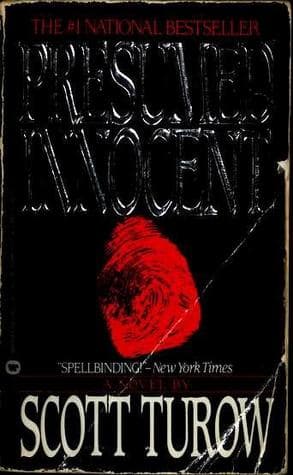
Synopsis
Covers the whole plot, including the ending.
- Difficulty
- Medium
- Pacing
- Moderate
- Mood
- Suspenseful, Dark, Intense, Thought-provoking
- Read it if
- You enjoy courtroom dramas with intricate plots, moral ambiguities, and psychological depth.
- Skip it if
- You prefer lighthearted mysteries or stories with clear-cut heroes and villains.
Presumed Innocent Plot Summary
Covers the whole plot, including the ending.
The Discovery and Initial Investigation
Rusty Sabich, chief deputy prosecuting attorney, is called to investigate the murder of his colleague, Carolyn Polhemus. Carolyn, an ambitious assistant prosecuting attorney, is found dead in her apartment, raped and strangled. Rusty, despite his recent affair with her, approaches the case professionally, leading the initial investigation with Detective Lipranzer. He knows his past relationship with Carolyn could complicate things, but he focuses on gathering evidence and interviewing suspects, including Raymond Horgan, the Prosecuting Attorney, and Nico Della Guardia, Horgan's political rival. Pressure grows as media attention increases and the political implications become clear.
Rusty Becomes the Prime Suspect
As the investigation continues, inconsistencies and suspicious details emerge, all seemingly pointing to Rusty. Key evidence, like a glass with Rusty's fingerprints found in Carolyn's apartment and a hair matching his on the victim, is discovered. It's also revealed that Rusty was the last person to speak with Carolyn by phone before her death. Nico Della Guardia, now the acting Prosecuting Attorney after Horgan's election loss, uses this information. Driven by political ambition and a desire for a high-profile conviction, Della Guardia, with his assistant Tommy Molto, arranges Rusty's arrest for Carolyn's murder. Rusty is shocked, realizing his life is about to change forever.
The Arraignment and Bail Hearing
Rusty is formally charged with first-degree murder. The bail hearing becomes a public spectacle, with Della Guardia and Molto portraying Rusty as a cold-blooded killer. Rusty's wife, Barbara, supports him, though their marriage is strained by the affair's revelations. Rusty's friend and mentor, Raymond Horgan, now out of office, offers support and helps Rusty get a strong defense attorney, Sandy Stern. Stern, known for his careful and strategic approach, immediately challenges the prosecution's story, pointing out the circumstantial evidence and the political reasons behind the charges. The media frenzy makes it hard for Rusty to escape public scrutiny, making him feel more isolated.
Defense Strategy and Pre-Trial Maneuvers
Sandy Stern, with help from Detective Lipranzer, thoroughly investigates the case, dissecting every piece of evidence from the prosecution. Stern focuses on showing the weaknesses in Della Guardia's case, especially the lack of direct evidence and the reliance on circumstantial links. He suspects the prosecution might have tampered with evidence or hidden important information. During pre-trial hearings, Stern challenges the evidence's chain of custody and questions the forensic analysis's integrity. He also uncovers the political animosity between Della Guardia and Horgan, suggesting Rusty is just a pawn in their power struggle. Rusty, meanwhile, tries to remember every detail of Carolyn and their affair that might help his defense.
The Trial Begins: Prosecution's Case
The murder trial begins, presided over by Judge Lyttle. Della Guardia and Molto present their case, trying to portray Rusty as a jealous and obsessive lover who murdered Carolyn after she rejected him. They present the physical evidence, including fingerprints and hair, as undeniable proof. Witnesses testify about Rusty's affair with Carolyn, his possessiveness, and his emotional state after their breakup. The prosecution's story focuses on motive, opportunity, and the circumstantial evidence linking Rusty to the crime scene. Rusty endures the public humiliation of hearing intimate details of his affair discussed in court, while Barbara remains composed, her pain visible. The accusations weigh heavily on Rusty, who feels increasingly alone and misunderstood.
The Defense Counters: Cross-Examination and New Theories
Sandy Stern begins his cross-examination, systematically taking apart the prosecution's case. He exposes inconsistencies in witness testimonies, challenges the forensic evidence's validity, and highlights the lack of a clear, direct link between Rusty and the murder. Stern suggests other suspects, including Nico Della Guardia himself, who had a tense professional relationship with Carolyn, and even Raymond Horgan, who might have had reasons to silence her. He implies the evidence against Rusty was either planted or misinterpreted. Stern's careful approach begins to create doubt in the jury's minds, making them consider other theories beyond the prosecution's seemingly simple story. Rusty, though still under immense pressure, feels a glimmer of hope as his attorney fights for his innocence.
The Revelation of Carolyn's Manipulation
As the trial continues, Stern uncovers more about Carolyn Polhemus's complex and manipulative character. It's revealed that Carolyn had multiple affairs, often using her charm and ambition to advance her career. She had also been involved with other powerful men in the legal community, including Judge Lyttle and Raymond Horgan, before her relationship with Rusty. Stern suggests that Carolyn's web of relationships and her ambition could have created many enemies, any of whom might have had a reason to kill her. This revelation shifts the focus from Rusty's alleged jealousy to Carolyn's own actions and the possible consequences of her manipulative behavior, further weakening the prosecution's sole focus on Rusty.
The Judge's Bias and Verdict
During the trial, Judge Lyttle's increasing hostility towards Rusty and his defense becomes clear. Stern, through his investigation, uncovers a past affair between Judge Lyttle and Carolyn Polhemus. This revelation explains the judge's bias and his attempts to hinder Stern's defense. Stern skillfully uses this information, subtly implying the judge's conflict of interest and further eroding the court proceedings' credibility with the jury. Despite the judge's bias, Stern's efforts to expose the truth and cast doubt on the prosecution's case work. The jury, after long deliberations, returns a 'not guilty' verdict, acquitting Rusty Sabich of Carolyn Polhemus's murder. Rusty is relieved, but the emotional scars remain.
Aftermath and Lingering Doubts
Rusty is free, but his life is changed. His career is ruined, his reputation damaged, and his marriage to Barbara is deeply fractured by the public exposure of his affair. He tries to move on, but the question of who killed Carolyn Polhemus still haunts him. The acquittal, while a victory, does not bring closure. Rusty struggles with the emotional aftermath of the trial, the betrayal he felt from some colleagues, and the lingering shadow of suspicion. He returns to a quiet life, trying to rebuild his shattered existence with his family, though trust between him and Barbara is severely damaged.
The Shocking Confession
Years after the trial, a devastating truth is revealed. Barbara Sabich, Rusty's wife, confesses to him that she murdered Carolyn Polhemus. Driven by jealousy and rage over Rusty's affair, Barbara had gone to Carolyn's apartment to confront her. The confrontation escalated into a violent struggle, ending with Barbara strangling Carolyn and staging the scene to implicate Rusty, using knowledge from his work as a prosecutor. The confession is a shattering blow to Rusty, who had endured so much believing he was innocent, only to discover his wife was the killer. The revelation adds a layer of tragic irony to the ordeal, showing the destructive power of betrayal and obsession within his own home.
Presumed Innocent Characters
Rusty Sabich
Protagonist
Chief Deputy Prosecuting Attorney accused of murder.
Rusty Sabich is a dedicated, if somewhat disillusioned, chief deputy prosecuting attorney in Kindle County. He is intelligent, methodical, and deeply committed to the law, yet he carries the burden of a recent, passionate affair with his colleague, Carolyn Polhemus. He is a family man, devoted to his wife Barbara and daughter, but his hidden desires lead him down a path of self-destruction. Accused of murder, he is forced to confront the flaws in the justice system he once served and the complexities of his own moral compass. His internal struggle between his professional integrity and his personal failings drives much of the narrative.
Relationships: Carolyn Polhemus (Ex-lover, murder victim); Barbara Sabich (Wife, eventually revealed as the killer); Raymond Horgan (Mentor, boss, friend); Nico Della Guardia (Political rival, prosecutor during his trial); Sandy Stern (Defense attorney)
Carolyn Polhemus
Victim/Catalyst
Ambitious and manipulative assistant prosecuting attorney.
Carolyn Polhemus is the enigmatic victim whose murder sets the entire plot in motion. She is portrayed as beautiful, highly intelligent, and fiercely ambitious, using her charm and sexuality to advance her career and manipulate those around her. She has a complex web of relationships, engaging in affairs with multiple powerful men in the Kindle County legal community, including Rusty, Judge Lyttle, and possibly Raymond Horgan. Her manipulative nature and ruthless drive make her a polarizing figure, creating numerous potential enemies. Even in death, her presence dominates the narrative as her past actions are meticulously dissected during the murder trial.
Relationships: Rusty Sabich (Lover); Barbara Sabich (Rival, killer); Raymond Horgan (Boss, rumored lover); Judge Lyttle (Rumored lover); Nico Della Guardia (Colleague, political rival)
Barbara Sabich
Supporting/Antagonist
Rusty's devoted, yet ultimately destructive, wife.
Barbara Sabich is Rusty's wife and the mother of their daughter. She presents herself as a strong, supportive, and dignified woman, standing by Rusty during his public trial despite the humiliating revelations of his affair. Beneath her composed exterior, however, lies a deep well of pain, jealousy, and ultimately, a dark capacity for violence. She is fiercely protective of her family and her marriage, viewing Carolyn Polhemus as a direct threat to her happiness. Her actions are driven by a desperate desire to eliminate the source of her pain and preserve her family, leading her to commit the ultimate betrayal.
Relationships: Rusty Sabich (Husband, victim of her manipulation); Carolyn Polhemus (Rival, murder victim)
Sandy Stern
Supporting
Rusty's brilliant and meticulous defense attorney.
Sandy Stern is a highly respected and formidable defense attorney, known for his sharp intellect, meticulous preparation, and calm demeanor in court. He is a pragmatic and strategic thinker, able to dissect complex cases and expose the weaknesses in the prosecution's arguments. Stern takes on Rusty's seemingly unwinnable case, driven by a commitment to justice and a keen understanding of the political machinations at play. He becomes Rusty's lifeline, guiding him through the legal labyrinth and fighting tirelessly to prove his innocence, despite the overwhelming circumstantial evidence.
Relationships: Rusty Sabich (Client); Raymond Horgan (Colleague, mutual friend)
Raymond Horgan
Supporting
Former Prosecuting Attorney, Rusty's mentor and friend.
Raymond Horgan is the former Prosecuting Attorney of Kindle County and Rusty's long-time mentor and friend. He is a seasoned politician and prosecutor, but his career is on the decline. Horgan initially assigns Rusty to the Carolyn Polhemus murder case, unaware of Rusty's involvement with her. After losing the election to Della Guardia, Horgan offers his full support to Rusty, helping him secure Sandy Stern as his attorney. He believes in Rusty's innocence and is fiercely protective of his former protégé, often acting as a sounding board and providing crucial insights into the political landscape of the prosecutor's office.
Relationships: Rusty Sabich (Mentee, friend); Nico Della Guardia (Political rival); Carolyn Polhemus (Colleague, rumored lover)
Nico Della Guardia
Antagonist
Ambitious prosecutor and Rusty's political rival.
Nico Della Guardia is the ambitious and ruthless prosecutor who defeats Raymond Horgan in the election and subsequently takes over the Carolyn Polhemus murder investigation. Driven by a hunger for power and a desire to make a name for himself, Della Guardia quickly targets Rusty Sabich, seeing a high-profile conviction as a stepping stone to further political success. He is manipulative and willing to stretch the truth to secure a conviction, often working in tandem with Tommy Molto to build a seemingly airtight case against Rusty, regardless of the actual facts. His actions are primarily motivated by self-interest and political gain.
Relationships: Rusty Sabich (Defendant, political target); Raymond Horgan (Political rival); Tommy Molto (Assistant, accomplice in prosecution)
Tommy Molto
Supporting Antagonist
Della Guardia's ambitious and aggressive assistant prosecutor.
Tommy Molto is Nico Della Guardia's ambitious and aggressive assistant prosecutor. He is a loyal subordinate, eager to please Della Guardia and advance his own career by securing a conviction against Rusty Sabich. Molto is relentless in his pursuit of Rusty, often employing aggressive tactics and questionable ethical practices to build the prosecution's case. He is a key figure in presenting the circumstantial evidence against Rusty and cross-examining witnesses, acting as Della Guardia's enforcer in the courtroom. His zeal, however, sometimes blinds him to the nuances of the case and the potential for alternative explanations.
Relationships: Nico Della Guardia (Boss, collaborator); Rusty Sabich (Defendant, target)
Detective Lipranzer
Supporting
The lead detective on the Carolyn Polhemus murder case.
Detective Lipranzer is the lead detective assigned to the Carolyn Polhemus murder. He is initially a meticulous and straightforward investigator, working alongside Rusty Sabich. As the case progresses, Lipranzer develops a quiet sense of unease about the direction the investigation takes, particularly when Rusty becomes the prime suspect. While he maintains his professional duties, he harbors doubts about Rusty's guilt and subtly provides information and assistance to Sandy Stern's defense team, believing in the importance of uncovering the truth rather than merely securing a conviction. He represents a moral compass within the police force.
Relationships: Rusty Sabich (Colleague, later defendant); Sandy Stern (Informal collaborator)
Judge Lyttle
Supporting Antagonist
The presiding judge in Rusty's murder trial, with a hidden past.
Judge Lyttle presides over Rusty Sabich's murder trial. He is initially portrayed as a stern and authoritative figure, but his behavior throughout the trial becomes increasingly biased against Rusty and his defense. It is later revealed that Judge Lyttle had a past affair with Carolyn Polhemus, creating a significant conflict of interest that influences his rulings and demeanor. His attempts to obstruct Sandy Stern's defense and his clear favoritism towards the prosecution highlight the corruption and personal entanglements that can permeate the justice system, undermining the very principles of fairness and impartiality.
Relationships: Carolyn Polhemus (Former lover); Rusty Sabich (Defendant)
Presumed Innocent Themes
The Corrupting Nature of Power and Ambition
The novel shows how the pursuit of power and ambition can corrupt individuals and institutions, especially in the legal system. Nico Della Guardia's relentless pursuit of Rusty Sabich is driven by his desire for political advancement, causing him to manipulate evidence and ignore other theories. Carolyn Polhemus herself used her ambition and charm to advance her career, engaging in multiple affairs for influence. Even Judge Lyttle's past affair with Carolyn compromises his fairness, showing how personal interests can distort justice. This theme is central to understanding many characters' actions and the flaws in the Kindle County justice system.
“What is it about this place, this office, this whole damn county? It eats people alive.”
Betrayal and its Consequences
Betrayal is a common theme, appearing on many levels. Rusty's affair with Carolyn is a betrayal of his wife, Barbara, and their marriage. This personal betrayal starts a chain of events that leads to his public humiliation and legal ordeal. The most shocking betrayal, however, comes from Barbara, who not only kills Carolyn but also carefully frames her husband, letting him suffer through a murder trial for a crime she committed. This ultimate act of betrayal devastates Rusty, shattering his view of his family and the trust he placed in those closest to him, leaving him with deep emotional scars.
“The truth is a thing of the heart, and if you cannot find it there, you will not find it anywhere.”
The Elusiveness of Truth and Justice
The novel constantly questions the nature of truth and whether the legal system can deliver true justice. Despite the long trial, the 'truth' of Carolyn's murder remains hidden for much of the story, with different characters offering their own versions of events. The legal process, as shown, is not always about finding objective truth but about building a convincing story. Rusty's acquittal, while a legal victory, does not immediately reveal the real killer, leaving him and the reader with doubts. The final confession shows how official verdicts can differ from actual events, demonstrating the difficulties in achieving absolute justice.
“Justice is not a thing. It is a process. And it is not always just.”
Obsession and Its Destructive Power
Obsession drives many characters to destructive ends. Rusty's attraction to Carolyn Polhemus leads him to betray his wife and family, making him the main suspect in her murder. Carolyn's obsession with power and career advancement fuels her manipulative behavior and complex relationships, ultimately contributing to her death. Most importantly, Barbara's obsessive jealousy over Rusty's affair consumes her, leading her to commit murder and frame her own husband. This theme shows how uncontrolled desires and strong emotions can lead individuals to commit terrible acts and destroy lives.
“I loved her. And I hated her. It was the same thing.”
Plot Devices & Literary Techniques
Unreliable Narrator
The story is told from Rusty Sabich's subjective and often self-serving perspective.
The novel is narrated in the first person by Rusty Sabich, making him an unreliable narrator. While he recounts events with detail, his perspective is inherently biased, shaped by his guilt over the affair, his fear of conviction, and his attempts to rationalize his actions. He withholds certain details, either consciously or subconsciously, and his interpretations of other characters' motives are filtered through his own experiences. This device creates suspense and forces the reader to question Rusty's honesty, both with himself and the audience, until the final shocking revelation. It highlights the subjective nature of truth and memory, especially under duress.
Red Herrings
Misleading clues and suspects divert attention from the true killer.
Throughout the investigation and trial, the narrative introduces several red herrings to mislead the reader and Rusty himself. Evidence is presented that points to Rusty, but also suggests the involvement of other characters like Nico Della Guardia, Raymond Horgan, or even Judge Lyttle, all of whom had reasons to dislike or be involved with Carolyn. These false leads create intricate layers of suspicion and keep the reader guessing about the true killer's identity, making the final revelation all the more impactful. The meticulous construction of these misleading clues serves to highlight the complexity of the judicial process and the ease with which one can be falsely accused.
Flashbacks and Internal Monologue
Rusty's memories and thoughts provide crucial background and emotional depth.
The narrative frequently employs flashbacks and extensive internal monologues from Rusty Sabich. Flashbacks detail his passionate affair with Carolyn Polhemus, revealing the intensity of their relationship and the emotional turmoil it caused him. His internal monologues offer deep insight into his fears, guilt, and legal strategies, as he grapples with the accusations and tries to recall every detail that might prove his innocence. These devices not only provide essential backstory and character development but also deepen the psychological suspense, allowing the reader to experience Rusty's deteriorating mental state and his desperate search for answers.
The Courtroom Drama
The trial itself acts as a central stage for uncovering truths and lies.
The courtroom serves as the primary setting for much of the novel, transforming the legal proceedings into a highly dramatic and suspenseful arena. The trial is not merely a procedural event but a battle of wits, strategies, and narratives between the prosecution and the defense. Through the cross-examinations, witness testimonies, and legal arguments, the novel dissects the characters, their motivations, and the intricate details of Carolyn's life and death. This device allows for the slow revelation of information, the exposure of corruption, and the exploration of legal ethics, keeping the reader engaged in the intellectual and emotional stakes of the justice system.
Presumed Innocent Quotes
“The truth is a funny thing. No one ever wants to hear it, until it's too late.”
“Until you have been in a courtroom, until you have seen a man's life hanging in the balance, you don't know what justice is.”
“We are all presumed innocent until proven guilty. But in the court of public opinion, the verdict is often rendered before the trial even begins.”
“The law is a weapon, and like all weapons, it can be used for good or ill.”
“There are no accidents in life, only incidents that have not yet been explained.”
“Love, like a crime, leaves traces. And sometimes, the traces are all that's left.”
“Every man has his breaking point. The trick is to find it before he does.”
“The past is never dead. It's not even past.”
“We live in a world where facts are negotiable, and truth is a matter of perspective.”
“A man's reputation is like a house of cards. One strong gust, and it's gone.”
“The only thing worse than being guilty is being innocent and no one believing you.”
“In the end, all we have are our choices. And the consequences of those choices.”
“Justice is not about truth. It's about procedure.”
“The hardest part of a lie is not telling it, but remembering it.”
Quiz
10 questions on the plot and the characters. Each answer comes with a short explanation.
Question 1
What is Rusty Sabich's profession at the beginning of the novel?
- District Attorney
- Chief Deputy Prosecuting Attorney
- Public Defender
- Homicide Detective
Show answer
B. Chief Deputy Prosecuting Attorney Rusty Sabich holds the position of Chief Deputy Prosecuting Attorney under Raymond Horgan.
Question 2
Who is the victim whose murder sets the central plot in motion?
- Barbara Sabich
- Raymond Horgan
- Carolyn Polhemus
- Nico Della Guardia
Show answer
C. Carolyn Polhemus The story begins with the discovery of the murdered body of Carolyn Polhemus, a fellow prosecutor and Rusty's former lover.
Question 3
What is the key piece of physical evidence found in Rusty Sabich's apartment that implicates him?
- Carolyn's diary
- A bloody knife
- A pubic hair matching Carolyn's
- A note from Carolyn
Show answer
C. A pubic hair matching Carolyn's During a search, a pubic hair matching Carolyn Polhemus's is found in Rusty's apartment, connecting him to the victim.
Question 4
Who is the prosecuting attorney assigned to Rusty Sabich's case?
- Raymond Horgan
- Nico Della Guardia
- Lipranzer
- Sandy Stern
Show answer
B. Nico Della Guardia Nico Della Guardia, Rusty's political rival, takes over the prosecution of the case against Rusty.
Question 5
What is the primary motivation for Rusty's affair with Carolyn, as explored in the novel?
- A desire for career advancement
- A genuine romantic love
- An all-consuming fatal attraction and obsession
- Revenge against his wife, Barbara
Show answer
C. An all-consuming fatal attraction and obsession The novel emphasizes Rusty's 'all-too-human, all-consuming fatal attraction' for Carolyn, highlighting his obsessive nature.
Question 6
Who is Rusty Sabich's defense attorney?
- Tommy Molto
- Sandy Stern
- Judge Lyttle
- Jamie Kemp
Show answer
B. Sandy Stern Sandy Stern, a highly respected and cunning defense attorney, represents Rusty Sabich during his trial.
Question 7
During the trial, what critical piece of evidence does Sandy Stern use to discredit the prosecution's theory about the murder weapon?
- He proves the knife was never found.
- He demonstrates the victim was right-handed, making a left-handed stab wound unlikely.
- He reveals the victim's blood type didn't match the blood on the alleged weapon.
- He shows that the 'murder weapon' presented could not have caused Carolyn's specific head injury.
Show answer
D. He shows that the 'murder weapon' presented could not have caused Carolyn's specific head injury. Stern masterfully demonstrates that the 'murder weapon' presented by the prosecution, a fire poker, could not have inflicted the specific and deep head wound Carolyn sustained, suggesting a different, sharper instrument.
Question 8
What is the ultimate fate of Rusty Sabich at the end of the novel regarding the murder charge?
- He is found guilty and sentenced to life in prison.
- He is acquitted by the jury.
- He commits suicide before the verdict.
- He escapes before the trial concludes.
Show answer
B. He is acquitted by the jury. Despite the strong circumstantial evidence against him, Rusty Sabich is ultimately acquitted of Carolyn Polhemus's murder.
Question 9
What is the true identity of Carolyn Polhemus's murderer, revealed in the shocking conclusion?
- Raymond Horgan, out of jealousy.
- Nico Della Guardia, to frame Rusty.
- Barbara Sabich, Rusty's wife.
- Jamie Kemp, a former lover.
Show answer
C. Barbara Sabich, Rusty's wife. In a stunning twist, it is revealed that Rusty's wife, Barbara, murdered Carolyn out of jealousy and to protect her family.
Question 10
What is the primary theme explored through the character of Judge Lyttle during the trial?
- The pursuit of justice regardless of personal cost.
- The corrupting influence of power and political ambition within the legal system.
- The importance of marital fidelity.
- The psychological impact of grief.
Show answer
B. The corrupting influence of power and political ambition within the legal system. Judge Lyttle's actions and decisions throughout the trial are heavily influenced by his political aspirations and desire to maintain his public image, highlighting the theme of political corruption within the judiciary.
Presumed Innocent FAQ
What is the central premise of 'Presumed Innocent'?
Rusty Sabich, a chief deputy prosecutor, finds his life upended when he is assigned to investigate the murder of his colleague and former lover, Carolyn Polhemus. He quickly becomes the prime suspect, forcing him to navigate the legal system from the defendant's side and fight for his freedom and reputation.
Who is Rusty Sabich and what is his role in the legal system at the beginning of the novel?
Rusty Sabich is the chief deputy prosecutor in Kindle County, a seemingly upstanding figure within the district attorney's office. He works directly under Raymond Horgan and is initially tasked with leading the investigation into Carolyn Polhemus's murder, a case that quickly turns against him.
Who is Carolyn Polhemus and what is her significance to the plot?
Carolyn Polhemus is a driven, ambitious, and manipulative assistant prosecutor whose brutal murder sets the entire plot in motion. She had affairs with multiple colleagues, including Rusty Sabich and Nico Della Guardia, making her death a highly charged and complex investigation.
What is the primary conflict Rusty faces, beyond the murder charge itself?
Beyond the murder charge, Rusty grapples with the betrayal of his colleagues, the public scrutiny of his affair with Carolyn, and the immense strain on his marriage to Barbara. He must also confront his own moral compromises and the dark side of the legal system he once upheld.
How does the novel explore the concept of justice?
'Presumed Innocent' delves into the subjective and often flawed nature of justice, showing how personal biases, political maneuvering, and legal technicalities can overshadow truth. Rusty's experience reveals the stark difference between legal justice and moral justice, and how easily an innocent person can be ensnared.
What is the significance of the missing 'B' file from Carolyn's office?
The missing 'B' file is crucial because it contained evidence related to a bribery scheme involving Judge Lyttle, which Carolyn was investigating. Its disappearance suggests a motive for her murder beyond personal revenge and implicates other powerful figures, making the case even more complex.
How does Raymond Horgan's political campaign influence the investigation?
Raymond Horgan, the District Attorney, is up for re-election against Nico Della Guardia. His desperate need to win leads him to initially assign Rusty to the case to maintain an appearance of integrity, but then to sacrifice Rusty when it becomes politically expedient, demonstrating the corrupting influence of ambition.
What is the true identity of the murderer and how is it revealed?
The murderer is Barbara Sabich, Rusty's wife. She confesses to Rusty in the book's chilling conclusion, revealing she killed Carolyn out of jealousy and a desire to protect her family, using Rusty's own evidence and knowledge to stage the crime scene.
Were there any subtle clues pointing to Barbara as the killer earlier in the book?
Yes, subtle clues include Barbara's unusual calm during the trial, her detailed knowledge of Rusty's affair, and her seemingly opportune discovery of the murder weapon in the basement. Her cold demeanor and calculated actions later make her confession believable, retrospectively highlighting these hints.
How does Rusty's fatal attraction to Carolyn impact his decision-making and judgment?
Rusty's obsession with Carolyn blinds him to her manipulative nature and clouds his judgment, leading him to make poor choices like having the affair and later trying to cover his tracks. This emotional entanglement ultimately makes him a plausible suspect and complicates his defense.
Analyze Barbara Sabich's motivation for murder. Was it purely jealousy?
Barbara's motivation extends beyond pure jealousy; it's a complex mix of protective instinct for her family, resentment over Rusty's betrayal, and a deep-seated desire to preserve her life and social standing. She saw Carolyn as an existential threat to everything she had built with Rusty.
How does the novel explore the psychological toll of public accusation and trial on Rusty?
The novel vividly portrays Rusty's descent into paranoia, isolation, and self-doubt under the weight of public accusation. He experiences profound psychological distress, questioning his own memories and sanity, and enduring the humiliation of having his private life dissected in court.
What role does denial play in Rusty's understanding of his situation and his wife's actions?
Denial is central to Rusty's character, as he initially denies the severity of his affair's impact and later struggles to accept the possibility of Barbara's guilt. His inability to fully confront uncomfortable truths about himself and those closest to him leaves him vulnerable.
Is Rusty truly 'innocent' by the end of the book, given his actions and knowledge?
While legally acquitted of Carolyn's murder, Rusty is not morally innocent. He had an affair, covered up evidence, and benefited from Barbara's crime. His 'innocence' is a legal technicality, leaving him with the heavy burden of complicity and knowledge.
How does the ending, with Barbara's confession, redefine the entire narrative for the reader?
Barbara's confession completely recontextualizes every event, every suspicion, and every character interaction throughout the book. It forces the reader to re-evaluate motives and actions, revealing the meticulous planning behind the 'perfect' crime and the depth of Barbara's deception.
What is the novel's commentary on the nature of truth in the legal system?
The novel suggests that the legal system is often more concerned with presenting a plausible narrative and achieving a conviction or acquittal than with uncovering absolute truth. Truth becomes a malleable concept, shaped by evidence, rhetoric, and political agendas rather than objective reality.
Could Rusty have avoided his predicament if he had been more honest from the start?
It's debatable. While honesty might have initially protected him from some accusations, Carolyn's murder was a complex web of motives. His affair made him a prime suspect, and even full honesty might not have shielded him from the political machinations and the ultimate revelation of Barbara's crime.
What lasting impact does the ending have on Rusty Sabich's life, despite his acquittal?
Despite his acquittal, Rusty's life is irrevocably shattered. He lives with the knowledge of his wife's heinous crime, the destruction of his career and reputation, and the profound moral compromise of protecting a murderer. He is left with a hollow victory, forever haunted by the events.
About the author

Scott Turow is an American author and attorney known for his legal thrillers. His notable works include "Presumed Innocent," which explores the complexities of a murder trial, and "The Burden of Proof," a sequel that delves into themes of guilt and redemption. Turow's writing often reflects his background in law and has garnered significant attention in the genre.
Similar books
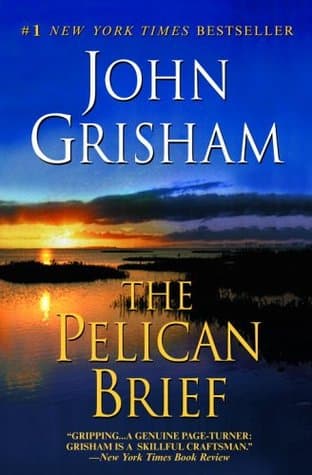
- The Pelican Brief
John Grisham
4.0 (374k) average on GoodreadsThrillerFeatures a legal thriller with a high-stakes plot and a protagonist in grave danger.
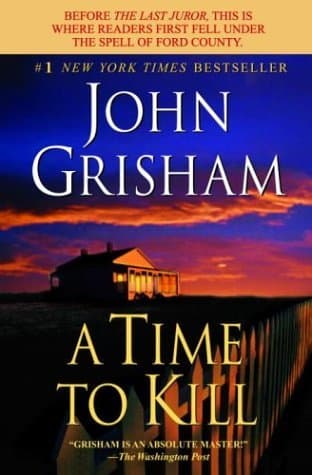
- A Time to Kill
John Grisham
4.1 (703k) average on GoodreadsThrillerExplores a morally complex legal case with intense courtroom drama and ethical dilemmas.
- Defending Jacob
William Landay
4.0 (264k) average on GoodreadsThrillerFocuses on a prosecutor whose child is accused of murder, exploring themes of family, justice, and doubt.
- Angels & Demons
Dan Brown
3.9 (2.7M) average on GoodreadsThrillerA Harvard symbologist races through Rome's ancient sites, deciphering cryptic clues to unmask the Illuminati and stop a vengeful plot to destroy the Vatican with a stolen antimatter weapon.
- Gone Girl
Gillian Flynn
4.1 (2.3M) average on GoodreadsThrillerA wife's sudden disappearance on her fifth anniversary reveals a web of lies and psychological warfare, exposing the secrets within a seemingly perfect marriage.
- The Girl on the Train
Paula Hawkins
3.9 (2.1M) average on GoodreadsThrillerA woman’s fascination with a seemingly perfect couple she watches from her daily train commute leads her into a dark investigation when she witnesses something that shatters their idyllic image.




Enjoyed the summary?
A summary gives you the shape of the book. The book itself has the detail, the examples and the voice.
Find Presumed Innocent on AmazonAs an Amazon Associate, BookBrief earns from qualifying purchases. How we're funded