

Synopsis
Covers the whole plot, including the ending.
- Difficulty
- Medium
- Pacing
- Moderate
- Mood
- Gritty, Suspenseful, Dark, Cynical
- Read it if
- You enjoy gritty police procedurals with a cynical but principled detective and a complex, dangerous conspiracy.
- Skip it if
- You prefer lighthearted mysteries or stories without significant violence and moral ambiguity.
The Black Ice Plot Summary
Covers the whole plot, including the ending.
The Apparent Suicide of Cal Moore
LAPD Detective Harry Bosch arrives at the scene of Narcotics Detective Cal Moore's death in a cheap motel room on Christmas Day. Moore has a fatal gunshot wound, a .38 revolver in his hand, and a suicide note. The official ruling is suicide, but Bosch immediately notices inconsistencies. The note's handwriting looks wrong, and Moore's reputation as a dedicated officer makes suicide seem unlikely, especially given his recent involvement in a high-profile drug case. Bosch's partner, Jerry Edgar, helps with the initial investigation, and they find Moore had been working a side investigation into 'Black Ice,' a designer drug, and a potential leak within the department. This makes Bosch suspect Moore's death is more complicated than it appears.
Unraveling Moore's Last Days
Ignoring the official suicide ruling, Bosch meticulously reconstructs Cal Moore's final days. He learns Moore spent an unusual amount of time in Tijuana, Mexico, and was obsessed with 'Black Ice,' a synthetic drug flooding the Los Angeles market. Bosch interviews Moore's estranged wife, Eleanor Wish, a former FBI agent now in Las Vegas, who says Moore was secretive and under immense pressure. Bosch also finds Moore had been meeting with a confidential informant, Juana, a young woman who worked at a clinic in Tijuana. These leads suggest Moore was pursuing a dangerous investigation beyond his official duties, challenging the suicide narrative.
The Tijuana Connection and Juana's Fate
Following the trail to Tijuana, Bosch crosses the border to investigate Moore's activities there. He learns Moore was deeply involved in a clandestine investigation. Bosch seeks out Juana, Moore's informant, at her clinic. However, he finds her brutally murdered, her death staged to look like a drug overdose. This confirms Bosch's fears that Moore's death was not a suicide and that he was silenced because of what he knew. Juana's murder further connects Moore's investigation to dangerous criminals operating across the border, raising the stakes for Bosch and putting him in harm's way.
The Pharmaceutical Link
As Bosch puts the puzzle together, he discovers 'Black Ice' is not just a street drug but a sophisticated synthetic compound. His investigation leads him to Western Pharmaceuticals, a company with a legitimate facility in Tijuana. Bosch suspects the company's resources are being used to make 'Black Ice' illegally. He finds evidence of a complex distribution network involving corrupt officials and powerful figures. This realization elevates the case from a drug bust to a far-reaching conspiracy, implicating influential individuals and making the investigation perilous for Bosch.
Encountering the Cartel
Bosch's pursuit of the truth puts him against the drug cartel making and distributing 'Black Ice.' He faces intimidation and direct threats, showing he is getting too close to their operations. His life is in danger multiple times, emphasizing the ruthlessness of his adversaries. The cartel's reach seems to extend into law enforcement, complicating Bosch's investigation and making him question who to trust. These encounters highlight the extreme danger of his mission and the personal risks he is taking.
The Corrupt Cop and the Inside Man
Through diligent detective work and connecting evidence, Bosch suspects a fellow LAPD officer is involved in the 'Black Ice' operation. He focuses on Detective Rodolfo 'Rudy' Tafero, a seemingly respected officer in the Narcotics Division. Bosch uncovers Tafero's suspicious financial activities and unusual connections to the Tijuana drug trade. Tafero's involvement is a critical breakthrough, explaining the leaks and the cartel's ability to stay ahead. This discovery confirms Bosch's initial intuition that Cal Moore was investigating corruption within his own department, leading to his murder.
A Deadly Confrontation
Bosch confronts Rudy Tafero, cornering him with evidence of his corruption. The confrontation quickly escalates into a violent shootout. Bosch, using his combat experience, subdues Tafero after a fierce struggle. During the confrontation, Tafero reveals details about the broader conspiracy, confirming Cal Moore was murdered to prevent him from exposing the 'Black Ice' operation and the corrupt network supporting it. This climactic encounter provides crucial answers but leaves Bosch shaken by the close call and the betrayal within his own ranks.
The Mastermind Revealed
After the confrontation with Tafero, Bosch uncovers the true mastermind behind the 'Black Ice' operation: Dr. Shizuo Ikeda, a chemist at Western Pharmaceuticals. Ikeda, driven by greed and a twisted scientific ambition, used the company's resources to synthesize and distribute 'Black Ice,' leveraging his expertise and connections to build a criminal enterprise. He also ordered Cal Moore's death and Juana's murder to protect his operation. This revelation exposes the depth of the conspiracy and the calculated nature of the crimes, showing the villain's cold intelligence.
The Final Showdown
Bosch tracks Dr. Ikeda to a remote location where 'Black Ice' is produced. He confronts Ikeda in a tense standoff, where the chemist, believing himself superior, tries to justify his actions and escape justice. Bosch, using his observational skills and psychological tactics, outwits Ikeda. The confrontation ends with Ikeda's arrest, dismantling the 'Black Ice' operation and ending the murders. This final act of justice brings closure to Cal Moore's death and highlights Bosch's commitment to the truth, regardless of the personal cost.
Aftermath and Reflection
After the 'Black Ice' case, Bosch deals with the investigation's lingering effects. He reflects on the corruption he uncovered, the betrayal of fellow officers, and the toll the case took on him. The official report confirms Cal Moore's murder and clears his name, providing some solace to his estranged wife, Eleanor Wish. Bosch, a solitary figure, continues to wrestle with justice's complexities and his profession's moral ambiguities. The case reinforces his belief in the 'primal police rule' – looking for the glue that holds facts together – and strengthens his resolve to seek truth, even when it's uncomfortable.
The Black Ice Characters
Harry Bosch
Protagonist
A relentless LAPD homicide detective driven by a strong sense of justice.
Harry Bosch is a veteran LAPD homicide detective, haunted by his past as a Tunnel Rat in Vietnam and his mother's unsolved murder. He is a solitary figure, often clashing with authority due to his unconventional methods and unwavering commitment to the truth, even when it leads to uncomfortable places. Bosch possesses a sharp mind, keen observational skills, and an almost intuitive understanding of criminal psychology. He lives by his own moral code, which frequently puts him at odds with departmental politics. His drive stems from a deep-seated desire to speak for the dead and ensure justice is served, regardless of the perpetrator's status or influence.
Relationships: Cal Moore (Investigator of Moore's murder, feels a kinship with his pursuit of truth.); Jerry Edgar (His loyal and pragmatic partner.); Eleanor Wish (Moore's estranged wife, a former FBI agent with whom Bosch develops a complex, respectful rapport.)
Cal Moore
Victim/Catalyst
A narcotics detective whose mysterious death triggers the investigation.
Cal Moore was a dedicated and respected narcotics detective whose apparent suicide is the catalyst for the entire plot. Unknown to most, Moore was conducting a dangerous, off-the-books investigation into the 'Black Ice' drug trade and internal police corruption. He was driven by a strong moral compass and a desire to expose wrongdoing, even at great personal risk. His secretive nature and his pursuit of justice mirror some of Bosch's own traits, making his death particularly resonate with the protagonist. Moore's actions, even posthumously, guide Bosch's investigation, revealing the depth of his commitment.
Relationships: Harry Bosch (The subject of Bosch's investigation, whose life and motivations Bosch uncovers.); Eleanor Wish (His estranged wife, with whom he had a complicated and distant relationship.); Juana (His confidential informant in Tijuana.)
Jerry Edgar
Supporting
Bosch's reliable and pragmatic partner.
Jerry Edgar is Harry Bosch's longtime partner, offering a grounded and often more diplomatic counterbalance to Bosch's intense and sometimes confrontational approach. He is a competent detective who respects Bosch's abilities, even if he doesn't always agree with his methods. Edgar provides practical support, handles administrative tasks, and often serves as a sounding board for Bosch's theories. While not as emotionally driven as Bosch, he is committed to police work and justice. His presence highlights Bosch's isolation while also providing a crucial tether to departmental protocol and reality.
Relationships: Harry Bosch (Bosch's trusted and loyal partner.)
Eleanor Wish
Supporting
Cal Moore's estranged wife and a sharp former FBI agent.
Eleanor Wish is Cal Moore's estranged wife and a highly intelligent former FBI agent now working as a professional gambler in Las Vegas. She provides Bosch with crucial insights into Cal's character and his secretive nature, helping him understand the pressures Moore was under. Eleanor is sharp, resilient, and possesses her own keen investigative instincts, which she occasionally lends to Bosch. Her past connection to federal law enforcement and her independent spirit make her a formidable character who respects Bosch's pursuit of justice, even as she grieves for her complicated relationship with Moore.
Relationships: Cal Moore (His estranged wife, with a complex history.); Harry Bosch (Provides information and develops a respectful, professional rapport with Bosch.)
Rodolfo 'Rudy' Tafero
Antagonist
A corrupt LAPD narcotics detective involved in the 'Black Ice' operation.
Rodolfo 'Rudy' Tafero is initially perceived as a respected LAPD narcotics detective, but he is later exposed as a corrupt officer deeply entrenched in the 'Black Ice' drug trade. He serves as the inside man for the cartel, providing crucial intelligence and facilitating the drug's distribution within Los Angeles. Tafero's corruption highlights the pervasive nature of the criminal enterprise and the betrayal from within law enforcement. His character embodies the moral decay that Bosch is fighting against, making him a personal and professional adversary.
Relationships: Harry Bosch (Bosch's adversary and target of his investigation into police corruption.); Dr. Shizuo Ikeda (An accomplice in the 'Black Ice' operation.)
Dr. Shizuo Ikeda
Antagonist
The brilliant but corrupt chemist and mastermind behind 'Black Ice.'
Dr. Shizuo Ikeda is a brilliant chemist at Western Pharmaceuticals and the true mastermind behind the 'Black Ice' operation. Driven by ambition, greed, and a detached scientific curiosity, he uses his expertise and the company's resources to synthesize and distribute the deadly drug. Ikeda is cold, calculating, and believes himself to be intellectually superior, attempting to justify his criminal enterprise through a warped sense of scientific achievement. He orchestrated Cal Moore's murder and Juana's death to protect his illicit empire, making him the ultimate villain Bosch must confront.
Relationships: Harry Bosch (The ultimate target of Bosch's investigation and the orchestrator of the crimes.); Rudy Tafero (His accomplice in the 'Black Ice' operation.)
Juana
Mentioned/Victim
Cal Moore's confidential informant in Tijuana.
Juana was Cal Moore's confidential informant, a young woman working at a clinic in Tijuana who provided him with crucial information about the 'Black Ice' operation. Her willingness to help Moore ultimately led to her brutal murder, staged as a drug overdose, shortly after Moore's death. Juana's fate underscores the extreme danger of Moore's investigation and provides Bosch with further evidence that Moore was indeed murdered. She represents the innocent victims caught in the crossfire of the drug trade and corruption.
Relationships: Cal Moore (His confidential informant.); Harry Bosch (Her murder provides Bosch with critical evidence and motivation.)
The Black Ice Themes
Corruption and Betrayal
The novel explores corruption, not just in the criminal underworld but within justice institutions. Cal Moore's murder results from his investigation into a corrupt network including an LAPD detective, Rudy Tafero, and a pharmaceutical chemist, Dr. Ikeda. This betrayal from within the police force deeply affects Bosch. It makes him question who he can trust and highlights greed's insidious nature that can infect even guarded institutions. The pervasive nature of this corruption, across borders, underscores justice's fragility when power and money are involved, as Bosch realizes Moore was killed to cover up Tafero's involvement.
“Don’t look for the facts, but the glue that holds them together.”
The Search for Truth and Justice
At its core, 'The Black Ice' is about pursuing truth and justice against overwhelming odds. Harry Bosch is driven by a need to uncover the real story behind Cal Moore's death, rejecting the easy answer of suicide. His dedication to speaking for the dead, even when it risks his life, is central to his character. This theme shows through Bosch's meticulous investigation, his willingness to cross international borders, and his defiance of departmental orders. His pursuit is not just about solving a crime but about restoring honor to Moore's name and exposing the darkness that led to his death, even when the truth is painful and complex, as seen in his unwavering focus on Moore's last days.
“Everybody counts or nobody counts.”
The Nature of Evil
The novel explores evil, showing it doesn't always reside in the stereotypical criminal. Dr. Shizuo Ikeda, a brilliant and seemingly respectable chemist, embodies a cold, calculated evil driven by intellect and greed. His ability to rationalize making and distributing a deadly drug, and the murders to protect his enterprise, highlights a chilling depravity. Rudy Tafero, a corrupt police officer, further complicates this theme, showing how evil can infiltrate and corrupt institutions from within. This theme suggests evil can wear many masks, making it harder to detect and combat.
“The darkness was always there, lurking, waiting for the light to falter.”
Solitude and Personal Code
Harry Bosch is a solitary character who operates by a personal moral code, often at odds with the LAPD's bureaucracy. His willingness to defy orders and pursue the truth independently shows this theme. He often finds himself isolated, relying only on his instincts and resilience. This solitude is not just physical but emotional, as he grapples with past traumas and his work's moral ambiguities. His personal code, which prioritizes justice over protocol, is both his greatest strength and a source of constant conflict with his superiors, as seen in his refusal to accept the suicide ruling for Moore.
“There was no solace in numbers, only in the truth.”
Plot Devices & Literary Techniques
The Red Herring (Suicide Ruling)
An initial, misleading conclusion designed to divert the investigation.
The initial ruling of Cal Moore's death as a suicide serves as a major red herring. It is meticulously staged with a gun and a suicide note, creating a plausible but ultimately false narrative. This device immediately establishes a sense of mystery and defiance, as Harry Bosch instinctively rejects the official story. It forces Bosch to dig deeper, questioning appearances and challenging authority, thereby propelling the plot forward and revealing the deeper conspiracy that the perpetrators intended to hide. The red herring highlights Bosch's unique detective intuition and his refusal to accept easy answers.
The Unseen Catalyst (Cal Moore's Secret Investigation)
A posthumous investigation that drives the current plot.
Cal Moore's secret investigation into 'Black Ice' and police corruption, conducted before his death, acts as the unseen catalyst for the entire story. Bosch is essentially picking up a trail that Moore laid, piecing together fragments of Moore's covert work. This device allows for a layered narrative, where past events directly influence the present investigation. Moore's posthumous presence guides Bosch, providing clues through his actions and discoveries, and adds a sense of urgency as Bosch realizes he is following in dangerous footsteps.
Cross-Border Investigation
The setting shifts between Los Angeles and Tijuana, complicating the investigation.
The plot device of a cross-border investigation, primarily between Los Angeles and Tijuana, significantly complicates the case and introduces jurisdictional challenges. This geographical divide not only creates logistical hurdles for Bosch but also highlights the international scope of the 'Black Ice' drug operation and the difficulty of enforcing justice across different legal systems. It allows for the introduction of diverse characters and criminal elements, expanding the world of the story and increasing the stakes and dangers Bosch faces.
Internal Police Corruption
The betrayal of trust within law enforcement.
The revelation of internal police corruption, specifically through Detective Rudy Tafero, serves as a powerful plot device. It raises the stakes significantly, as Bosch must contend not only with external criminals but also with betrayal from within his own department. This device creates a sense of paranoia and isolation for Bosch, forcing him to be even more cautious and distrustful. It underscores the theme of integrity versus compromise and adds a layer of personal conflict for Bosch, who deeply believes in the sanctity of his badge. This corruption is the reason Moore was killed and what the criminals are desperate to keep hidden.
The Black Ice Quotes
“Everybody counts or nobody counts. That's been my motto.”
“The past is a monster. It will eat you alive if you let it.”
“The truth was a slippery thing, always just out of reach.”
“There were no clean kills in life, only varying shades of messy.”
“He knew the city, its dark corners and hidden sins, like the back of his hand.”
“Sometimes you had to break a few rules to get to the truth.”
“He was a man who lived in the shadows, comfortable with the darkness.”
“The dead whispered secrets to those who listened closely enough.”
“Every case was a puzzle, and he lived for the moment it all clicked into place.”
“Fear was a cold companion, but it could also sharpen the senses.”
“The city was a labyrinth, full of dead ends and false turns.”
“He didn't believe in coincidences, only patterns waiting to be discovered.”
“Sometimes the greatest evil wore the most respectable disguise.”
“The job was his life, and his life was the job. There was no separating them.”
Quiz
10 questions on the plot and the characters. Each answer comes with a short explanation.
Question 1
What is the initial cause of death for narcotics officer Cal Moore?
- Stab wound to the chest
- Fatal bullet wound to the head
- Drug overdose
- Car accident
Show answer
B. Fatal bullet wound to the head Cal Moore is found in a motel room with a fatal bullet wound to the head, initially made to look like a suicide.
Question 2
Where is the suicide note found on Cal Moore's body?
- In his wallet
- On the bedside table
- Stuffed in his back pocket
- Clutched in his hand
Show answer
C. Stuffed in his back pocket The suicide note is specifically mentioned as being 'stuffed in his back pocket,' a detail that raises suspicion.
Question 3
What is the primal police rule Harry Bosch is reminded of during the investigation?
- Always trust your gut feeling
- Don't look for the facts, but the glue that holds them together
- Follow the money
- The truth is always stranger than fiction
Show answer
B. Don't look for the facts, but the glue that holds them together The text explicitly states Harry is reminded of the rule: 'don't look for the facts, but the glue that holds them together.'
Question 4
What was Cal Moore's initial assignment before his death?
- Investigating a series of bank robberies
- Looking into the city's latest drug killing
- Undercover work in a motorcycle gang
- A routine patrol assignment
Show answer
B. Looking into the city's latest drug killing Cal Moore's orders were to look into the city's latest drug killing, which becomes a key element in Bosch's investigation.
Question 5
Who is the protagonist investigating Cal Moore's death?
- A rookie detective named Johnson
- LAPD detective Harry Bosch
- An FBI agent named Miller
- A private investigator
Show answer
B. LAPD detective Harry Bosch The summary clearly states, 'Working the case, LAPD detective Harry Bosch is reminded of the primal police rule.'
Question 6
The string of murders Harry Bosch uncovers extends from Hollywood Boulevard to where?
- The wealthy suburbs of Beverly Hills
- The desert regions of Nevada
- The back alleys south of the border
- The docks of Long Beach
Show answer
C. The back alleys south of the border The narrative describes the murders winding 'from Hollywood Boulevard to the back alleys south of the border,' indicating an international scope.
Question 7
What kind of connections does Harry Bosch start making that are described as 'dangerous'?
- Connections to his own past cases
- Connections starting with a dead cop and leading to a bloody string of murders
- Connections to local street gangs
- Connections to political corruption
Show answer
B. Connections starting with a dead cop and leading to a bloody string of murders Harry's dangerous connections are explicitly tied to 'a dead cop and leading to a bloody string of murders.'
Question 8
What is the primary genre of 'The Black Ice'?
- Science Fiction
- Romance
- Thriller, Mystery
- Fantasy
Show answer
C. Thriller, Mystery The provided information clearly labels the book as 'Thriller, Mystery.'
Question 9
How is Harry Bosch characterized in the description?
- A young, inexperienced officer
- A battle-scarred veteran
- A cynical, disillusioned detective nearing retirement
- A family man struggling with work-life balance
Show answer
B. A battle-scarred veteran The text describes Harry as a 'battle-scarred veteran,' highlighting his experience and resilience.
Question 10
What is the ultimate danger Harry Bosch faces by the end of the summary?
- He might be reassigned to a different department.
- He may be the next and likeliest victim in the deadly game.
- He might lose his badge and pension.
- He could be forced to work with a rival agency.
Show answer
B. He may be the next and likeliest victim in the deadly game. The summary concludes with Harry potentially becoming 'the next and likeliest victim,' emphasizing the extreme personal risk he faces.
The Black Ice FAQ
What is the central mystery Harry Bosch investigates in 'The Black Ice'?
Harry Bosch investigates the apparent suicide of narcotics detective Cal Moore, whose body is found in a motel room with a bullet wound to the head and a suicide note. However, Bosch quickly suspects foul play and begins to uncover a deeper conspiracy involving drug trafficking and corrupt officers, connecting Moore's death to a much larger criminal enterprise.
Who is Cal Moore and what is his initial connection to the plot?
Cal Moore is a narcotics detective whose death is initially ruled a suicide, triggering Harry Bosch's investigation. Moore was supposedly looking into a drug-related murder, but his own demise quickly becomes the primary focus, revealing his involvement in a scheme to sell a powerful new synthetic drug called 'black ice' for personal gain.
What is 'black ice' and why is it significant to the story?
'Black ice' is a potent new synthetic drug, a designer heroin, that is central to the illicit operation Harry Bosch uncovers. Its introduction into the drug market signifies a major profit opportunity for the criminals and corrupt officers involved, driving much of the violence and conspiracy in the novel.
Where does the investigation lead Harry Bosch geographically?
Harry Bosch's investigation takes him from the initial crime scene in Hollywood, through the streets of Los Angeles, and ultimately across the U.S.-Mexico border. He travels to Tijuana, Mexico, following leads related to drug manufacturing, distribution, and the network of individuals involved in the 'black ice' operation, highlighting the international scope of the conspiracy.
What is the 'primal police rule' Harry remembers and how does it guide his investigation?
The 'primal police rule' Harry remembers is: 'don't look for the facts, but the glue that holds them together.' This guides his investigation by prompting him to look beyond the surface details of Cal Moore's death, such as the suicide note, and instead search for the underlying connections and motivations that link seemingly disparate events and individuals, ultimately revealing the true nature of the conspiracy.
What is the significance of the missing drug money and how does it tie into the conspiracy?
The missing drug money, specifically $100,000, is crucial as it represents the profits from the 'black ice' sales that Cal Moore was involved in. Its disappearance suggests a betrayal among the conspirators and becomes a key motive for some of the subsequent murders, as various parties seek to recover or control the illicit funds.
How does the character of Detective Frankie Sheehan contribute to the plot's complexity?
Detective Frankie Sheehan initially appears as a potential ally or a fellow officer mourning Cal Moore, but he is later revealed to be deeply involved in the 'black ice' operation and Moore's murder. His betrayal and role as an inside man within the LAPD highlight the pervasive corruption and complicate Bosch's efforts to trust his colleagues.
What is the role of the pharmaceutical company, Metro-Goldwyn, in the drug scheme?
Metro-Goldwyn is a pharmaceutical company that, unbeknownst to many, is used as a front or unwitting participant in the 'black ice' operation. Its legitimate drug manufacturing processes and distribution channels are exploited by the conspirators to produce and move the synthetic drug, providing a veneer of legitimacy to the illicit trade.
What subtle clues suggest Cal Moore's death was not a suicide early in the investigation?
Early clues suggesting Cal Moore's death was not a suicide include the peculiar placement of the suicide note in his back pocket, the lack of powder burns on his hand consistent with a self-inflicted gunshot, and the unlikely scenario of a narcotics officer choosing such a public and messy way to end his life, all of which raise Harry Bosch's suspicions.
How does Harry Bosch's personal history and cynicism influence his approach to the case?
Harry Bosch's personal history, marked by his Vietnam War experience and a deep-seated distrust of authority and corruption, fuels his cynicism and makes him uniquely suited to uncovering the conspiracy. He is less likely to accept official narratives and more willing to pursue uncomfortable truths, even when they implicate fellow officers, driving his relentless investigation.
What psychological toll does the widespread corruption take on Harry Bosch during this investigation?
The widespread corruption, especially among fellow police officers like Frankie Sheehan, takes a significant psychological toll on Harry Bosch, reinforcing his isolation and distrust. It forces him to question who he can rely on within the department, deepening his sense of being an outsider and making him increasingly wary of the institutional systems he is meant to serve.
How does the theme of betrayal manifest itself through different characters in the novel?
The theme of betrayal manifests prominently through characters like Cal Moore, who betrays his oath as a police officer by engaging in drug trafficking, and Frankie Sheehan, who betrays Bosch and the department by his active involvement in the conspiracy. These betrayals highlight the corrosive nature of greed and power within the police force and the criminal underworld.
What motivates the various characters involved in the 'black ice' scheme?
The primary motivation for the characters involved in the 'black ice' scheme is financial gain, driven by the immense profits promised by the potent new synthetic drug. This greed overrides professional ethics and personal loyalties, leading police officers like Cal Moore and Frankie Sheehan to engage in criminal activities and murder to protect their illicit enterprise.
Is Cal Moore a sympathetic character, despite his criminal involvement? Discuss.
Cal Moore is presented with a degree of ambiguity; while he is clearly involved in criminal activity, there are hints that he may have been manipulated or found himself in over his head, rather than being a purely malicious figure. His 'suicide note' and the circumstances of his death suggest a man caught in a dangerous game, making him somewhat tragic but not entirely sympathetic given his actions.
How does 'The Black Ice' challenge the reader's perception of law enforcement and justice?
'The Black Ice' profoundly challenges the reader's perception of law enforcement by exposing deep-seated corruption within the LAPD, blurring the lines between police officers and criminals. It suggests that justice is not always served by official channels and often requires an individual like Harry Bosch to operate outside the system to uncover the truth, leading to a more cynical view of institutional integrity.
What is the ultimate message about morality conveyed through the ending of the book?
The ending of 'The Black Ice' conveys a complex message about morality, suggesting that justice can be elusive and often comes at a high personal cost, even for those who pursue it. While Harry Bosch uncovers the truth, the pervasive nature of corruption and the compromises made to achieve a semblance of justice leave a lingering sense of moral ambiguity, highlighting the constant struggle against dark forces.
How does the setting of Los Angeles and Tijuana contribute to the novel's atmosphere and themes?
The settings of Los Angeles and Tijuana contribute significantly to the novel's atmosphere, portraying a gritty, dangerous underworld where crime transcends borders. Los Angeles represents the veneer of order masking deep corruption, while Tijuana symbolizes the lawless, shadowy realm where the drug trade thrives, emphasizing the global reach of the criminal enterprise and the moral decay that permeates both sides of the border.
Can the 'black ice' drug be seen as a metaphor for something larger in the story?
Yes, 'black ice' can be interpreted as a metaphor for the insidious and destructive nature of corruption itself. Like the drug, corruption is potent, highly addictive (to power and money), and spreads silently, causing widespread harm while often remaining hidden beneath the surface of legitimate operations. It highlights how something seemingly innocuous can be deeply dangerous.
About the author

Michael Connelly is an American author known for his crime fiction novels. His notable works include The Lincoln Lawyer, The Black Echo, The Poet, The Gods of Guilt, The Black Ice, and The Brass Verdict, which often feature complex characters and intricate plots. Connelly's writing frequently explores themes of justice and morality within the legal system.
Similar books
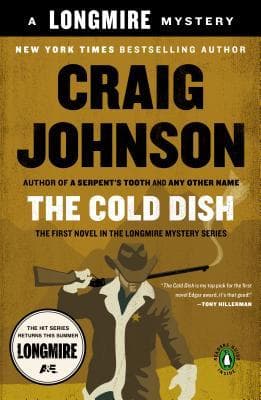
- The Cold Dish
Craig Johnson
4.1 (29k) average on GoodreadsThrillerA detective investigating a murder with deep-seated corruption and personal stakes.
- The Big Sleep
Raymond Chandler
4.0 (126k) average on GoodreadsThrillerThe Black Ice shares thematic similarities with Chandler's The Big Sleep in its exploration of a complex, morally ambiguous world where the protagonist, Philip Marlowe (and Harry Bosch), navigates a labyrinth of crime, corruption, and hidden agendas. Both novels feature a stoic, principled detective facing powerful, shadowy figures, and both use the city (Los Angeles) as a character in itself. However, Connelly updates the noir sensibility with contemporary issues like international drug cartels and pharmaceutical crime, which were not present in Chandler's 1930s setting.
- The Silence of the Lambs
Thomas Harris
4.2 (464k) average on GoodreadsThrillerWhile The Black Ice is a police procedural focused on internal corruption and drug trafficking, it can be compared to Thomas Harris's The Silence of the Lambs in its meticulous unraveling of a criminal conspiracy and the psychological depth of its investigation. Both novels feature a protagonist (Clarice Starling and Harry Bosch) driven by a relentless pursuit of truth against formidable adversaries, and both delve into the dark underbelly of human nature. However, The Black Ice leans more into the procedural aspects of detective work and organized crime, whereas Harris's novel is more focused on psychological horror and serial killer profiling.
- Angels & Demons
Dan Brown
3.9 (2.7M) average on GoodreadsThrillerA Harvard symbologist races through Rome's ancient sites, deciphering cryptic clues to unmask the Illuminati and stop a vengeful plot to destroy the Vatican with a stolen antimatter weapon.
- Gone Girl
Gillian Flynn
4.1 (2.3M) average on GoodreadsThrillerA wife's sudden disappearance on her fifth anniversary reveals a web of lies and psychological warfare, exposing the secrets within a seemingly perfect marriage.
- The Girl on the Train
Paula Hawkins
3.9 (2.1M) average on GoodreadsThrillerA woman’s fascination with a seemingly perfect couple she watches from her daily train commute leads her into a dark investigation when she witnesses something that shatters their idyllic image.





Enjoyed the summary?
A summary gives you the shape of the book. The book itself has the detail, the examples and the voice.
Find The Black Ice on AmazonAs an Amazon Associate, BookBrief earns from qualifying purchases. How we're funded