
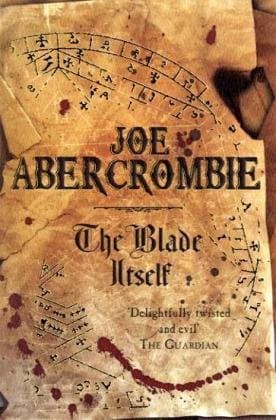
Synopsis
Covers the whole plot, including the ending.
- Difficulty
- Medium
- Pacing
- Variable
- Mood
- Dark, Cynical, Gritty, Suspenseful
- Read it if
- You enjoy grimdark fantasy with morally grey characters, political intrigue, brutal action, and a cynical, witty narrative.
- Skip it if
- You prefer traditional heroic fantasy, clear-cut good vs. evil, or stories with a strong sense of hope and optimism.
The Blade Itself Plot Summary
Covers the whole plot, including the ending.
Logen's Desperate Escape
The story starts with Logen Ninefingers, a Northman warrior, ambushed by Shanka—primitive, monstrous humanoids—after falling into a river. He barely escapes, losing his friends Rudd Threetrees and Tul Duru. Logen, known for his violent past and the 'Bloody-Nine' name, regrets his luck and the constant violence. He decides to go south, away from the North's endless feuds, hoping for a new life or a break. His journey is dangerous; he uses his brutal instincts to survive the wilderness and avoid Shanka and other hostile groups.
Jezal's Superficial Aspirations
In the Union capital of Adua, Captain Jezal dan Luthar, a handsome but arrogant nobleman, is introduced. He cares most about winning the 'Contest' fencing competition and getting a good social position. He trains with his fencing master, Major West, and gambles with his friends, including Prince Ladisla. Jezal is self-absorbed and looks down on common people, thinking his noble birth means he deserves success and praise. He dislikes his father and sees military service as a way to glory, not a duty, often avoiding his responsibilities.
Glokta's Grimy Investigations
Former war hero Sand dan Glokta, now a crippled Inquisitor for the Union, is introduced during his work. Tortured and maimed as a Gurkish prisoner, Glokta now inflicts similar pain to get confessions for the Closed Council. His current target is the merchant Seff, suspected of treason. Through interrogation, Glokta learns of a wider conspiracy with the powerful Valint and Balk, a banking and trading firm. Glokta's thoughts show his cynical, self-hating nature and his sharp mind, which he uses to handle Adua's dangerous politics, always aware of his own uncertain place.
Bayaz's Unexpected Arrival
Logen, after a hard journey, meets the wizard Bayaz, First of the Magi, in the wilderness. Bayaz, with his silent apprentice Malacus Quai, is an old and powerful figure, though he looks like an old man. He quickly shows his authority, healing Logen's wounds and saying he will travel to Adua. Bayaz says he has an important mission and needs Logen's skills. They travel to the Union capital, with Logen reluctantly agreeing to go with the wizard, feeling his life is about to get more complicated.
The Contest and its Aftermath
Jezal, despite his arrogance and lack of true effort, wins the fencing Contest, surprising himself and the crowd. His win raises his social status and brings him closer to Major West's sister, Ardee. However, the celebration in Adua is overshadowed by the growing conflict in the North with Bethod's armies, the self-proclaimed King of the Northmen. Major West, now Colonel, is sent to the front, and Jezal is expected to follow. His dreams of an easy life are broken by the reality of war, making him face the responsibilities he has avoided.
Glokta's Unraveling Conspiracy
Glokta continues his investigation into the conspiracy around Valint and Balk. He questions Brother Longfoot, a member of the Guild of Spicers, and starts to understand the extent of the corruption. His questions lead him to doubt the motives of Arch Lector Sult, his boss, and other powerful people on the Closed Council. Glokta realizes the conspiracy is bigger than simple treason and involves the highest levels of Union society, possibly threatening the government. He uses his sharp mind and network of informers, including his torturers Frost and Vitari, to handle the dangerous political currents, always aware he could become a target.
Bayaz's Grand Design
Arriving in Adua, Bayaz quickly makes his presence known, meeting with the Closed Council. He states his purpose: to get the Seed, a powerful artifact, to fight the rising Gurkish Empire and the plans of Khalul, another old Magi. To do this, he gathers a group: Logen Ninefingers for his warrior skills, Jezal dan Luthar for reasons not yet clear, and Longfoot as a guide. They will go on a dangerous journey to the 'Edge of the World' to find the artifact. Bayaz's old power and mysterious nature are clear as he manipulates events and people for his plan.
The Journey Begins
The group—Bayaz, Logen, Jezal, Longfoot, and Quai—starts their journey from Adua, going east. The first parts have internal conflict, especially between the rough Logen and the proper Jezal, whose pampered nature clashes with the realities of travel. Bayaz often steps in, using his authority and influence to keep the group together. They face dangers and challenges, making them rely on each other despite their differences. The journey is long and hard, slowly removing Jezal's grand ideas and making Logen face his past as they go into unknown and dangerous lands.
The Northmen's War
Meanwhile, in the North, Colonel West, now leading the Union forces, prepares for the war against Bethod. He struggles with Prince Ladisla's incompetence and the realities of military command. West's character develops as he deals with his duty, his loyalty to his men, and his growing disappointment with the Union's leaders. The harsh conditions, the brutal Northman warfare, and the constant threat of desertion and internal conflict weigh on him. He finds an unexpected friend in Ardee West, who has followed him north, showing the personal costs of the war.
Glokta's Dangerous Game
Back in Adua, Glokta continues his dangerous game, looking deeper into the Valint and Balk conspiracy. He finds that the firm is far more powerful and hidden than he first thought, seemingly untouchable and with influence everywhere in the Union. He suspects that Sult himself might be involved or at least aware. Glokta's investigation gets more dangerous, as he realizes he is a pawn in a larger game, possibly run by forces beyond the Closed Council. He uses his wits and his ability to cause fear to survive, always questioning who truly holds power in Adua.
Ardee West's Predicament
Ardee West, Major West's sister, is in a difficult spot after Jezal leaves. She handles Adua's social rules and the expectations for women. Her sharp mind and independent spirit often clash with society's norms. She develops a complex relationship with Glokta, who first sees her as a way to get information but later finds himself drawn to her intelligence and strength. Ardee later goes north to be with her brother, seeing the realities of war firsthand and further changing her views of the world and her place in it.
Principal Figures
Logen Ninefingers
Protagonist
Infamous Northman warrior, seeking to escape his violent past.
Logen is a legendary Northman, known as the 'Bloody-Nine' for his berserker rage in battle. Despite his fearsome reputation, he attempts to live a peaceful life, constantly reminding himself to 'stay alive.' He possesses a pragmatic, often brutal, survival instinct but also shows moments of introspection and weariness with violence. His past is a heavy burden, and he struggles with the duality of his nature: the thoughtful Logen and the murderous Bloody-Nine. He is fiercely loyal to his friends but prone to making rash decisions that often lead to more bloodshed. Bayaz recruits him for his strength and experience.
Relationships: Bayaz (reluctant subordinate/ally); Jezal dan Luthar (antagonistic fellow traveler); Rudd Threetrees (loyal friend (deceased)); Tul Duru (loyal friend (deceased))
Jezal dan Luthar
Protagonist
Vain and privileged nobleman, aspiring to fencing glory and social status.
Jezal is a handsome, self-absorbed, and somewhat cowardly nobleman. He is obsessed with his appearance, social standing, and winning the fencing Contest. He views the world through a lens of privilege and is initially blind to the suffering of others. His interactions with Logen and the hardships of the journey with Bayaz slowly begin to chip away at his arrogance, revealing a more vulnerable and even empathetic side. He resents his father and seeks validation through superficial achievements. He is chosen by Bayaz for a mysterious purpose, forcing him out of his comfortable life.
Relationships: Major West (fencing master/mentor); Ardee West (love interest/brief affair); Logen Ninefingers (antagonistic fellow traveler); Bayaz (subordinate/pawn)
Sand dan Glokta
Protagonist
Crippled Inquisitor, using torture and intellect to uncover conspiracies.
Glokta is a former war hero, now a crippled and bitter Inquisitor. Tortured extensively by the Gurkish, he now inflicts similar pain as part of his duties for the Closed Council. He is cynical, self-loathing, and constantly in pain, but possesses an incredibly sharp and analytical mind. He navigates the treacherous political landscape of Adua, uncovering deep-seated corruption and conspiracies. Despite his cruel profession, he often questions the morality of his actions and the motivations of those in power. He is a master manipulator and observer, always looking for the angles.
Relationships: Arch Lector Sult (superior/rival); Frost (loyal torturer/assistant); Vitari (loyal torturer/assistant); Ardee West (complex, uneasy alliance/attraction)
Bayaz
Supporting
Ancient and powerful First of the Magi, manipulating events for his own ends.
Bayaz is an ancient, powerful, and enigmatic wizard, the First of the Magi. He presents himself as a gruff old man but possesses immense magical abilities and a formidable intellect. He is a master manipulator, orchestrating events and people to achieve his goals, which revolve around a millennia-old conflict with Khalul and the Gurkish Empire. He is ruthless, pragmatic, and holds little regard for individual lives, viewing people as tools. His true motives and history are shrouded in mystery, but his influence is undeniable, and he is a force to be reckoned with.
Relationships: Logen Ninefingers (recruiter/master); Jezal dan Luthar (recruiter/master); Malacus Quai (apprentice/assistant); Khalul (ancient rival)
Colonel West (Bremer dan Gorst)
Supporting
Diligent and honorable Union officer, burdened by duty and the incompetence of others.
Major West, later Colonel West, is a highly capable and honorable Union officer. He is a skilled swordsman and a dedicated military man, often frustrated by the incompetence and political maneuvering of his superiors, particularly Prince Ladisla. He is a stark contrast to Jezal's superficiality, taking his duties seriously and caring for his men. He struggles with the moral compromises of war and the weight of command. He is fiercely protective of his sister, Ardee, and finds himself increasingly disillusioned with the Union's leadership and the realities of conflict.
Relationships: Jezal dan Luthar (mentor/friend); Ardee West (sister); Prince Ladisla (superior (incompetent))
Ardee West
Supporting
Sharp-witted and independent noblewoman, navigating societal expectations.
Ardee is Major West's intelligent and spirited sister. She is strong-willed and often chafes against the restrictive societal norms for women in Adua. She has a cynical view of men and relationships, shaped by past experiences. She is observant and perceptive, quickly seeing through the facades of others. She has a brief, ill-fated affair with Jezal and later develops a complex, uneasy relationship with Glokta, finding herself drawn to his intellect despite his profession. She travels north with her brother, witnessing the brutal realities of war.
Relationships: Colonel West (brother); Jezal dan Luthar (brief lover); Sand dan Glokta (complex, uneasy alliance/attraction)
Malacus Quai
Supporting
Bayaz's silent, enigmatic apprentice.
Quai is Bayaz's young apprentice, a quiet and seemingly meek individual who rarely speaks. He is often seen carrying Bayaz's belongings and assisting him. Despite his unassuming demeanor, there are hints of hidden depth and power within him, and his true nature remains largely mysterious. He is utterly devoted to Bayaz, following his commands without question, and is a constant presence throughout the journey to the Edge of the World. His silence makes him an intriguing and somewhat unsettling figure.
Relationships: Bayaz (apprentice/devoted servant)
Brother Longfoot
Supporting
Eccentric member of the Guild of Spicers, recruited as a guide.
Brother Longfoot is a member of the Guild of Spicers, known for his vast knowledge of geography, history, and ancient lore, though he often expresses this knowledge in a rambling and tangential manner. He is eccentric, overly talkative, and prone to complaining about discomfort. Despite his quirks, he proves to be an invaluable guide for Bayaz's fellowship due to his extensive travels and detailed maps. He is initially interrogated by Glokta regarding the Valint and Balk conspiracy before being recruited by Bayaz.
Relationships: Bayaz (reluctant guide); Sand dan Glokta (interrogated by)
Arch Lector Sult
Antagonist
Head of the Inquisition, manipulating power for his own gain.
Arch Lector Sult is the cunning and ruthless head of the Union's Inquisition and a powerful member of the Closed Council. He is Glokta's superior and a master of political maneuvering and intrigue. Sult is ambitious and self-serving, seemingly always one step ahead, and is willing to sacrifice anyone to maintain or expand his power. He uses Glokta for his brutal efficiency but also views him as a disposable tool. His true allegiances and the extent of his involvement in the conspiracies are ambiguous, making him a constant threat to Glokta.
Relationships: Sand dan Glokta (superior/manipulator)
Bethod
Antagonist
Self-proclaimed King of the Northmen, leading an invasion against the Union.
Bethod is the ambitious and ruthless King of the Northmen, a former friend and ally of Logen Ninefingers. He united the disparate tribes of the North through force and cunning and now seeks to expand his dominion by invading the Union. He is a formidable warrior and a shrewd tactician, representing a significant external threat to the Union. His past with Logen is hinted at, suggesting a complex history of betrayal and rivalry that fuels Logen's personal demons and the broader conflict.
Relationships: Logen Ninefingers (former ally/current enemy)
Themes & Insights
The Brutality of War and Violence
The book shows the realities of war and the constant presence of violence. From Logen's fight for survival to the war in the North, Abercrombie shows the pain, suffering, and moral decay that come with battle. Characters like Logen and Glokta are shaped by their violent pasts, and even the seemingly protected Jezal faces its harshness. This theme shows that violence creates more violence, and there are rarely clear heroes or villains, just survivors and victims.
“Once you've got a task to do, it's better to do it than live with the fear of it.”
Moral Ambiguity and Shifting Perspectives
Abercrombie blurs the lines between good and evil, hero and villain. Each viewpoint character, despite their flaws, has a voice that lets the reader understand their reasons, no matter how dark. Logen is a killer but also wants peace; Glokta tortures but was also tortured and sees injustice; Jezal is selfish but can grow. The Union, seemingly the 'good' side, has corruption, while the Northmen, often called savages, fight for their own justice. This theme challenges common fantasy ideas by showing a world where morality is rarely simple.
“There are no good men. There are only good decisions.”
Appearance vs. Reality
Many characters and situations in the book are not what they seem. Jezal, the dashing nobleman, is a coward; Glokta, the terrifying Inquisitor, is in constant pain; Bayaz, the wise old wizard, is a ruthless manipulator. Adua, the grand capital, hides deep corruption. This theme explores how appearances can deceive and how characters, and even societies, show a front to the world that hides their true, often darker, intentions or realities. It makes characters and readers look past the surface to understand the real nature of power, ambition, and self.
“It's a strange thing, but sometimes it's the very people who have been hurt the most who are the most hurt by others.”
The Burden of the Past
The past greatly affects the present for almost every character. Logen is haunted by the 'Bloody-Nine' and his past violence. Glokta's torture by the Gurkish permanently shapes his body and mind, driving his current cruelty and cynicism. Bayaz's actions come from old feuds and long-held grudges. This theme shows how past traumas, decisions, and reputations define a character's identity and limit their choices, making escape from one's history almost impossible and often leading to old cycles continuing.
“You can never have too many knives.”
Power and Its Corrupting Influence
The pursuit and use of power are central to the story. From the political plans of the Closed Council and Arch Lector Sult to the old, almost divine power of Bayaz and Khalul, the book shows how power corrupts and influences people and groups. Glokta's investigations show the deep corruption in the Union, driven by greed and ambition. Bayaz's manipulation of others for his grand plan shows how even 'good' intentions can be overshadowed by ruthless control. The theme suggests that power, no matter its source, often leads to moral compromise and control.
“A man must have his reasons.”
Plot Devices & Literary Techniques
Multiple Perspective Narrative
Alternating chapters from different character viewpoints to provide a broad and nuanced story.
The novel employs a multiple perspective narrative, switching between the viewpoints of Logen Ninefingers, Jezal dan Luthar, and Sand dan Glokta, with occasional chapters from other characters like Colonel West. This device allows Abercrombie to present a complex and morally ambiguous world, showing events from various angles and allowing the reader to empathize with characters who might otherwise be seen as villains. It deepens the characterizations and provides a comprehensive view of the political and geographical landscape, while also building suspense as different plotlines converge.
The 'Bloody-Nine' Persona
Logen's secondary, berserker personality, representing his violent past.
The 'Bloody-Nine' is a distinct, almost separate, personality that Logen Ninefingers embodies during moments of extreme violence or rage. It acts as a plot device to represent Logen's struggle with his violent past and his attempts to become a 'better man.' When the Bloody-Nine emerges, Logen loses control, becoming an unstoppable, brutal killing machine. This persona is a manifestation of his internal conflict and a constant reminder of the darkness within him, often appearing at crucial moments to ensure his survival, but always at a moral cost.
The Closed Council
A shadowy, corrupt governing body representing the Union's political machinations.
The Closed Council serves as a central political plot device, representing the corrupt and manipulative power structures within the Union. It is the body that Inquisitor Glokta reports to and investigates, and its members are often the source of intrigue and conspiracy. The Council's internal power struggles, backroom deals, and self-serving agendas drive much of Glokta's storyline, highlighting the theme of political corruption and the arbitrary nature of justice in the Union. It is the visible face of the Union's flawed government, often acting against the best interests of its people.
The Seed
A powerful, ancient artifact sought by Bayaz for his grand design.
The Seed is a mythical, powerful artifact that Bayaz believes is crucial to combating the threat of Khalul and the Gurkish Empire. It acts as the primary MacGuffin that drives Bayaz's quest and brings together the disparate characters of Logen, Jezal, Quai, and Longfoot. Its nature and true capabilities are largely unknown in this first book, but its immense significance is stressed by Bayaz, making it a powerful motivator for the characters and a source of mystery and anticipation for future installments.
Internal Monologue
Extensive use of character's inner thoughts to reveal their true nature and motivations.
Abercrombie heavily utilizes internal monologue, particularly for Glokta, Logen, and Jezal, to provide deep insight into their minds. Glokta's cynical, self-deprecating, and often darkly humorous thoughts reveal his intelligence and pain, contrasting with his outward stoicism. Logen's constant refrain of 'You have to be realistic about these things' and 'Say one thing for Logen Ninefingers, say he's a survivor' gives insight into his pragmatic worldview. Jezal's shallow, self-serving thoughts highlight his initial arrogance. This device allows for complex characterization and reinforces the theme of moral ambiguity by letting readers experience the world through their flawed perspectives.
The Blade Itself Quotes
“Say one thing for Logen Ninefingers, say he's a survivor.”
“You can never have too many knives.”
“Once you've got a task to do, it's better to do it than live with the fear of it.”
“The dead can't be hurt. The dead can't be betrayed. The dead can't be disappointed.”
“It's a strange thing, but sometimes the most dangerous men are those who have nothing left to lose.”
“The world is full of people who are trying to make a living, and the best way to make a living is to make other people's lives worse.”
“No man is an island, but some men are an archipelago.”
“You have to be realistic about these things.”
“Power is a knife. You can use it to cut bread, or you can use it to cut throats.”
“The trick is to keep breathing. No matter what.”
“It's always the quiet ones you have to watch out for.”
“A man must have a code.”
“Sometimes, the only way to save a life is to take one.”
“The greatest trick the Devil ever pulled was convincing the world he didn't exist. The greatest trick the Magi ever pulled was convincing the world they did.”
Quiz
10 questions on the plot and the characters. Each answer comes with a short explanation.
Question 1
What is Logen Ninefingers' primary struggle at the beginning of 'The Blade Itself'?
- He is attempting to win a fencing tournament in Adua.
- He is on the run from a feud and about to be killed.
- He is trying to overthrow the King of the Union.
- He is investigating a conspiracy within the Inquisition.
Show answer
B. He is on the run from a feud and about to be killed. At the outset of the book, Logen Ninefingers is introduced as a barbarian caught in a seemingly endless feud, on the verge of death before being saved by Bayaz.
Question 2
What is Captain Jezal dan Luthar's main ambition or focus at the start of the novel?
- To become the First of the Magi.
- To lead the Union army in the North.
- To achieve glory in the fencing circle and enjoy a life of ease.
- To expose corruption within the Closed Council.
Show answer
C. To achieve glory in the fencing circle and enjoy a life of ease. Jezal begins the story as a self-centered nobleman primarily concerned with his fencing prowess, gambling, and social standing, dreaming of glory in tournaments.
Question 3
What is Inquisitor Glokta's physical condition and former profession?
- He is a strong, healthy general who retired from the army.
- He is a crippled former war hero, now a torturer.
- He is a blind scholar who became a librarian.
- He is a wealthy merchant who lost his fortune.
Show answer
B. He is a crippled former war hero, now a torturer. Glokta was once a celebrated fencing champion, but was captured and tortured, leaving him crippled and in constant pain. He now serves as a ruthless Inquisitor and torturer.
Question 4
Who is Bayaz, and what is his initial role in the story?
- A Northern chieftain leading an invasion of the Union.
- A merchant prince funding a rebellion.
- An ancient, powerful wizard who recruits Logen, Jezal, and Glokta for a mysterious purpose.
- The King of the Union, secretly manipulating events.
Show answer
C. An ancient, powerful wizard who recruits Logen, Jezal, and Glokta for a mysterious purpose. Bayaz is introduced as the First of the Magi, an ancient and powerful wizard who appears to manipulate the lives of the main characters, bringing them together for his own agenda.
Question 5
What event signals the beginning of the wider conflict mentioned in the synopsis?
- Jezal winning the Grand Tournament.
- Logen escaping his pursuers in the North.
- The brewing war on the battlefields of the frozen North.
- Glokta uncovering a plot in the capital.
Show answer
C. The brewing war on the battlefields of the frozen North. The synopsis explicitly states 'war is brewing, and on the battlefields of the frozen North they fight by altogether bloodier rules,' setting the stage for the wider conflict that will draw in the characters.
Question 6
Why does Glokta harbor such a deep hatred for almost everyone?
- He was born with a naturally cruel disposition.
- His past as a torturer has desensitized him to human emotion.
- He was betrayed and horribly tortured, leaving him crippled and bitter.
- He believes hatred is necessary to maintain order in the Union.
Show answer
C. He was betrayed and horribly tortured, leaving him crippled and bitter. Glokta's bitterness and hatred stem directly from his traumatic experience of being captured and tortured by the Gurkish, which left him physically broken and psychologically scarred.
Question 7
What is the nature of the 'rotten heart of government' that Glokta's investigation might lead to?
- A secret society of wizards controlling the King.
- A conspiracy involving high-ranking officials and potentially the King's own council.
- An invasion force hidden within the city walls.
- A cult worshipping a forbidden demon.
Show answer
B. A conspiracy involving high-ranking officials and potentially the King's own council. Glokta's investigations into treason and various 'corpses' suggest a deep-seated conspiracy reaching into the highest levels of the Union's government, implying corruption and betrayal within the ruling elite.
Question 8
Which character is described as a 'paragon of selfishness' at the beginning of the novel?
- Logen Ninefingers
- Inquisitor Glokta
- Bayaz
- Captain Jezal dan Luthar
Show answer
D. Captain Jezal dan Luthar The synopsis explicitly labels Jezal dan Luthar as a 'paragon of selfishness,' highlighting his early characterization as vain and self-absorbed.
Question 9
What is the central thematic tension highlighted by the phrase 'the line between hero and villain is sharp enough to draw blood'?
- The constant threat of physical violence in the world.
- The moral ambiguity of the characters and their actions, where traditional roles are blurred.
- The importance of clear moral choices in times of war.
- The literal danger of betrayal among allies.
Show answer
B. The moral ambiguity of the characters and their actions, where traditional roles are blurred. This phrase encapsulates one of the core themes of 'The Blade Itself' and the First Law series: characters often perform both heroic and villainous acts, and their morality is rarely black and white, making it difficult to categorize them neatly.
Question 10
What is Bayaz's relationship with his assistant, as described in the synopsis?
- He has a loyal and highly competent apprentice.
- He has a pathetic assistant, despite his own powerful status.
- He has no assistant, preferring to work alone.
- His assistant is actually a powerful hidden enemy.
Show answer
B. He has a pathetic assistant, despite his own powerful status. The synopsis mentions Bayaz as 'A bald old man with a terrible temper and a pathetic assistant,' providing a small, ironic detail about his immediate companions.
The Blade Itself FAQ
What is "The Blade Itself" about?
"The Blade Itself" is a grimdark fantasy novel that introduces three main protagonists: Logen Ninefingers, a notorious barbarian trying to escape his violent past; Jezal dan Luthar, a narcissistic nobleman focused on fencing glory; and Inquisitor Glokta, a crippled torturer unraveling a vast conspiracy within the Union. Their disparate lives are drawn together by the arrival of the mysterious First of the Magi, Bayaz, as war looms in the North and political intrigue festers in the capital.
Why should I read "The Blade Itself"?
You should read "The Blade Itself" for its gritty realism, morally ambiguous characters, and subversion of traditional fantasy tropes. Abercrombie crafts a compelling narrative with sharp dialogue, dark humor, and an unflinching look at the brutal consequences of violence and power. It's a perfect entry point into grimdark fantasy with a focus on character-driven storytelling.
What is the background/setting of "The Blade Itself"?
The story is set in the world of the Circle of the World, primarily within the Union, a vast empire reminiscent of early modern Europe, and the wild, frozen North inhabited by warring clans. The Union's capital, Adua, is a hub of political maneuvering and corruption, while the North is a land of constant conflict between the Union and the Northmen, characterized by harsh landscapes and brutal warfare.
What are the most memorable quotes?
Some memorable quotes include Logen's mantra, 'Say one thing for Logen Ninefingers, say he's a survivor,' which encapsulates his resilient but brutal nature. Another is Glokta's cynical internal monologue, 'Why do I do this? Why do I do this?', reflecting his constant struggle with pain and his role. These lines capture the dark humor and character depth.
What writing style does the author use?
Joe Abercrombie employs a distinctive grimdark style characterized by sharp, witty prose, frequent use of internal monologue, and a cynical, unromanticized view of heroism. His narrative often shifts between character perspectives, allowing deep insight into their flawed minds, and he uses visceral descriptions to convey the brutality of combat and the squalor of the world.
What minor details add significant meaning?
One minor detail is Glokta's constant internal struggle with his physical pain and the limitations it imposes, which profoundly shapes his ruthless efficiency and cynical worldview. Another is Logen's 'Bloody-Nine' persona, a suppressed monstrous rage that hints at his true, terrifying potential and the cyclical nature of violence he tries to escape.
What are some subtle foreshadowing moments?
Subtle foreshadowing includes Bayaz's casual displays of immense power and ancient knowledge, hinting at his true age and manipulative nature far beyond what he initially reveals. Also, Logen's repeated references to his 'bad luck' and the inevitability of violence subtly foreshadow the return of his 'Bloody-Nine' persona and the inescapable cycle of his past.
What unexpected character connections exist?
An unexpected connection is between Logen and Bayaz, as the First of the Magi seeks out the infamous barbarian for a specific, yet unrevealed, purpose, drawing him into the Union's politics. Another is the growing, grudging respect (or at least tolerance) between Glokta and his torturers, Practical Frost and Practical Vitari, hinting at a twisted form of camaraderie in their dark profession.
What are unspoken character motivations?
Logen's unspoken motivation is a deep-seated desire to escape his violent past and become a better man, despite his ingrained nature and the allure of the 'Bloody-Nine'. Glokta's unspoken drive, beneath his cynicism, is a desperate need for control and meaning in a life ravaged by torture, which he finds in his ruthless pursuit of truth for the Union.
What psychological complexities do characters exhibit?
Jezal exhibits profound psychological complexity through his struggle with vanity and self-doubt, constantly torn between his privileged upbringing and a yearning for genuine purpose. Glokta battles chronic pain and the trauma of his past, leading to a profound cynicism and a detached, almost philosophical approach to his brutal work, masking deep-seated resentment.
What are the major emotional turning points?
One major emotional turning point is Jezal's disillusionment with the fencing tournament, realizing the hollowness of his victory and the superficiality of his life, which forces him to confront his own shallowness. For Logen, a turning point is his decision to join Bayaz's quest, a desperate gamble to escape his past that pulls him further into the world he tried to leave.
How do relationship dynamics evolve?
The relationship between Jezal and Ardee West evolves from initial mutual disdain and flirtation to a more complex, forbidden attraction, highlighting the class divides and personal desires. Logen's interactions with his new companions, particularly Longfoot and Quai, transform from wary suspicion to a tentative, functional camaraderie forged by shared dangers on their journey.
Which parts remain ambiguous or open-ended?
The true nature and ultimate goals of Bayaz remain largely ambiguous; while he is clearly powerful and manipulative, his long-term agenda for the Union and his companions is hinted at but not fully revealed. The extent of the conspiracy Glokta uncovers is also left somewhat open-ended, suggesting deeper, unseen forces at play within the government.
What are controversial scenes or decisions?
One controversial aspect is Glokta's unapologetic use of torture to extract information, which is depicted graphically and without moral judgment from the narrative perspective, forcing readers to confront the grim realities of his role. Another is Logen's sudden, brutal return to his 'Bloody-Nine' persona, which challenges reader perceptions of his efforts to change and his potential for redemption.
"The Blade Itself" ending explained: how it ends & what it means
The book ends with Logen, Jezal, and Glokta's storylines converging but not resolving. Logen's group successfully reaches the ancient city of Aulcus but faces a devastating betrayal from Bayaz, who reveals his true, ruthless nature. Glokta uncovers a vast conspiracy involving Arch Lector Sult and the banking house of Valint & Balk, solidifying his role as a key player in the Union's dark underbelly. Jezal, having won the Grand Tournament, is left disillusioned and manipulated by Bayaz. The ending signifies that the characters are merely pawns in a larger game, with their personal struggles far from over, setting the stage for deeper conflicts and moral compromises in subsequent books.
About the author

Joe Abercrombie is a British author known for his works in the fantasy genre. His notable books include "The Blade Itself," "Before They Are Hanged," and "Last Argument of Kings," which comprise "The First Law Trilogy," as well as "Best Served Cold." Abercrombie's writing is characterized by its complex characters and gritty narratives.
Similar books
- A Game of Thrones
George R.R. Martin
4.5 (2M) average on GoodreadsFantasyFeatures multiple POVs, political intrigue, morally ambiguous characters, and a grim, realistic take on fantasy.
- The Way of Shadows
Brent Weeks
4.1 (149k) average on GoodreadsFantasyOffers a dark, character-driven narrative with assassins, magic, and a focus on the gritty underbelly of a fantasy world.
- Best Served Cold
Joe Abercrombie
4.2 (65k) average on GoodreadsFantasyAnother standalone by the same author, known for its grimdark tone, complex characters, and brutal action.
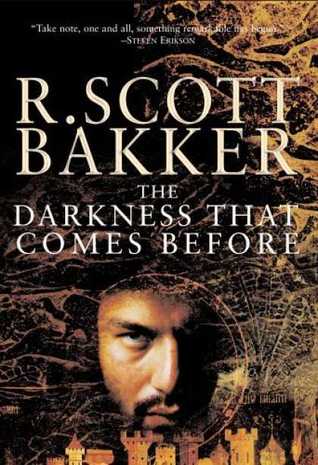
- The Darkness That Comes Before
R. Scott Bakker
3.8 (18k) average on GoodreadsFantasyBoth authors explore dark themes, philosophical concepts, and the grim realities of war and power. Abercrombie's grimdark is often more grounded in cynical human nature and visceral character experiences, with a distinct dark humor. Bakker delves into deeper, more abstract philosophical and theological horrors, often with a more overtly bleak and oppressive tone, making Abercrombie's work generally more accessible despite its grimness.
- Harry Potter and the Sorcerer's Stone
J.K. Rowling
4.5 (7M) average on GoodreadsFantasyRescued from a miserable life under the stairs, an orphaned boy discovers he's a wizard destined for a magical school, where he uncovers a dangerous secret tied to the dark wizard who murdered his parents.
- The Hunger Games
Suzanne Collins
4.3 (6.4M) average on GoodreadsFantasyIn a future where children fight to the death on live television, Katniss Everdeen volunteers for the arena, turning a death sentence into a fight for survival and a spark of rebellion.


Enjoyed the summary?
A summary gives you the shape of the book. The book itself has the detail, the examples and the voice.
Find The Blade Itself on AmazonAs an Amazon Associate, BookBrief earns from qualifying purchases. How we're funded