
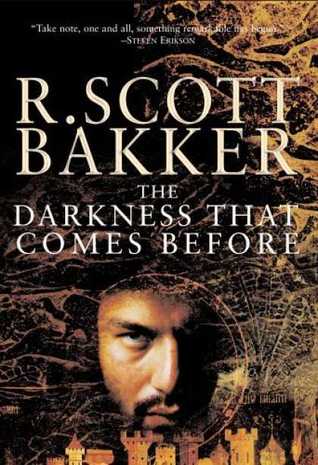
Synopsis
Covers the whole plot, including the ending.
- Difficulty
- Hard
- Pacing
- Slow
- Mood
- Dark, Philosophical, Ambitious, Intriguing, Bleak
- Read it if
- You crave complex, morally ambiguous epic fantasy with deep philosophical undertones, intricate world-building, and a focus on psychological manipulation and power dynamics.
- Skip it if
- You prefer lighthearted fantasy, clear-cut heroes and villains, or a fast-paced plot from the outset without much world-building and philosophical exposition.
The Darkness That Comes Before Plot Summary
Covers the whole plot, including the ending.
The Arrival of the Consult
Drusus Achamian, a battle-hardened sorcerer and former Mandate Schoolman, has disturbing dreams. He goes to the library of the Imperial Palace in Momemn, the capital, looking for answers in forbidden books. There, he finds ancient prophecies and histories suggesting the Consult, a malevolent, non-human entity behind the First Apocalypse millennia ago, is real and returning. Achamian's discovery is met with doubt, but he becomes convinced the Second Apocalypse is near. He realizes the world is unprepared, and the burden of this knowledge weighs on him.
Cnaiür's Oath and Kellhus's Introduction
Cnaiür, a powerful and brutal Scylvendi barbarian chieftain, captures Anasûrimbor Kellhus in the northern wilderness. Kellhus, from the far north, shows an unnerving intelligence and understanding of human behavior and combat. Though Cnaiür's prisoner, Kellhus subtly manipulates those around them with a few words or a glance. He says he wants to go south, towards the Holy War. Cnaiür, despite his initial power, finds himself drawn into Kellhus's plans, held by fear, fascination, and grudging respect. Kellhus's presence immediately unsettles everyone he meets, hinting at his deep, almost alien, understanding of the world.
The Holy War Declared
The Prophet Maithanet, the Fanim spiritual leader, becomes a central figure, uniting the tribes and nations of the Kianene continent under a new Holy War. He preaches a doctrine calling for the purification of the land and the removal of non-believers, especially the Imperial Factions. His sermons create religious fervor among his followers, drawing thousands to his cause. The Holy War's declaration sets the stage for a large conflict, as armies gather, driven by zeal and the promise of reward. This event will reshape the political and religious world.
Akka's Mission and the Mandate's Decline
Recognizing Achamian's warnings, the Grandmaster of the Mandate, Seswki, sends him on a dangerous mission: to find the sorcerer Anasûrimbor Moënghus, who may have knowledge to fight the Consult. Moënghus, a powerful but mysterious figure, has been missing for centuries, his existence often dismissed as myth. Achamian, burdened by the task, thinks about the Mandate's declining power, once the world's main magical order, now a shadow of its past. He understands that the Mandate's internal issues and outdated ways have left them vulnerable, making his search for Moënghus a desperate and solitary effort against global catastrophe.
Kellhus's Infiltration of the Holy War
Kellhus, with the reluctant Cnaiür, travels south and joins the Holy War's large, disorganized armies. His arrival is unremarkable at first, but his intellect and strategy quickly become clear. He observes the internal politics, rivalries, and fervent but often misguided zeal of the Fanim. Through calculated actions, advice, and an ability to read and manipulate people, Kellhus begins to rise through the ranks and gain the trust of key figures in the crusade. He subtly undermines rivals and becomes an indispensable advisor, all while keeping his motives secret, pursuing his own agenda within the larger conflict.
Esmenet's Captivity and Marriage
Esmenet, a young woman from a noble house, finds her life changed when Cnaiür's Scylvendi band captures her during a raid. Stripped of her old life, she faces the harsh realities of captivity. Her resilience and intelligence catch Cnaiür's attention, and she becomes his concubine. Despite her brutal situation, Esmenet shows strength and adaptability. Her relationship with Cnaiür becomes a complex bond, leading to a forced marriage. This union highlights the clash between her civilized upbringing and the savage world she is forced into. Her experiences in captivity make her a hardened survivor.
Serwë's Initiation into the Prostitute Guild
Serwë, a young and naive girl, is sold to the House of Courtesans, a powerful guild in Momemn. She enters a world of social dynamics, political intrigue, and the harsh realities of her new job. Under the guidance of older courtesans, Serwë learns not only about intimacy but also observation, manipulation, and information gathering. She quickly sees that the House of Courtesans is more than a brothel; it is a network of spies and power brokers, deeply involved in the politics of the Thousand Cities. Her forced initiation shows her society's cynical side and forces her to mature quickly.
Achamian's Pursuit and the Sranc
Achamian's difficult journey to find Moënghus takes him through dangerous lands, far from civilization. He encounters the Sranc, horrific, subhuman creatures known as the Consult's soldiers. These encounters are brutal and terrifying, confirming Achamian's worst fears about the Consult's return and the immediate danger. The battles against the Sranc are desperate, testing Achamian's magic and resolve. These fights remind him of the ancient evil he faces and the dire stakes of his mission, further isolating him in his grim task.
The Battle of the Plains of Mengedda
The Holy War armies, now a large and somewhat unified force thanks to Kellhus's guidance, fight the Imperial forces of the Thousand Cities on the Plains of Mengedda. This battle is the first major clash of the conflict. The Fanim, fueled by religious fervor, fight with savage intensity, while the Imperial forces, though disciplined, struggle against the numbers and zeal of their opponents. The battle is bloody and chaotic, showing the war's brutality and the differences in fighting styles and motivations. Mengedda sets a grim precedent for the scale and ferocity of future battles.
Kellhus's Rise to Prominence
After the Battle of Mengedda and other fights, Kellhus's strategic skill and ability to predict outcomes become clear. He consistently gives advice that leads to Fanim victories or fewer losses, earning him the respect of warlords and even some in Maithanet's inner circle. His mysterious origins and deep understanding of human nature allow him to manipulate events and people with ease. He becomes an important figure, his authority growing to rival that of experienced commanders. Kellhus's rise to power within the Holy War is swift and seems unstoppable, making him a central, enigmatic force in the unfolding conflict.
Achamian's Revelation and the No-God
As Achamian continues his journey and learns more about ancient lore, he uncovers more truths about the Consult. He learns that their goal is not just conquest, but the return of the No-God, an anti-divine entity that could erase all existence. This revelation makes Achamian more desperate, as he realizes the apocalyptic scale of the threat. The No-God means ultimate undoing, a force that would plunge creation into oblivion. This knowledge weighs heavily on him, making his quest for Moënghus not just about survival, but about preventing reality from being unmade. The stakes are immense.
The Seeds of Doubt and Loyalty
Cnaiür, despite his initial power over Kellhus, finds himself increasingly under the enigmatic man's control. He struggles with his oath of loyalty, his barbarian pride clashing with Kellhus's intellect and power. He is both terrified and fascinated by Kellhus, seeing a profound, almost monstrous, otherness in him. Meanwhile, Esmenet, now Cnaiür's wife, navigates the brutal world of the Scylvendi and the Holy War. She uses her intelligence and resilience to survive, observing the machinations around her and subtly influencing events. Both Cnaiür and Esmenet find their lives deeply tied to Kellhus's rise, their struggles reflecting the larger chaos of the war.
Principal Figures
Anasûrimbor Kellhus
Protagonist/Antagonist
The enigmatic Prince of Nothing, a master manipulator with an alien intellect.
Kellhus is a man of mysterious origins from the far North, a survivor of the ancient, isolated school of the Consult. He possesses an unparalleled intellect, an uncanny ability to read and predict human behavior, and a profound, almost inhuman, understanding of logic and consequence. He is driven by a hidden agenda, meticulously manipulating everyone around him with cold, calculating precision. While appearing to aid the Holy War, his true motivations remain inscrutable, hinting at a larger, more terrifying design. He lacks conventional human emotions, viewing people as complex machines to be understood and operated.
Relationships: Cnaiür (Captor/subordinate, bound by a complex, fearful loyalty); Esmenet (Object of observation and potential manipulation); Maithanet (Rival/tool in his larger scheme)
Drusus Achamian
Protagonist
A grizzled Mandate Schoolman burdened by the knowledge of the coming apocalypse.
Achamian is a veteran sorcerer of the Mandate, scarred by battle and haunted by visions of the past. He is a man of duty and grim determination, despite his increasing world-weariness and disillusionment with his order. He is the first to truly grasp the resurgence of the Consult and the impending Second Apocalypse, a burden that isolates him. His magic is powerful but raw, often relying on instinct rather than refined technique. He is driven by a desperate need to protect humanity, even if it means confronting ancient, unimaginable evils alone.
Relationships: Esmenet (Former lover, deeply missed and regretted); Seswki (Grandmaster of the Mandate, his superior and confidant); Anasûrimbor Moënghus (His quest's objective)
Cnaiür
Supporting
A brutal Scylvendi chieftain, bound by a terrible oath and fascinated by Kellhus.
Cnaiür is a powerful and fearsome Scylvendi barbarian, defined by his warrior culture, his strict adherence to oaths, and his profound sense of honor, albeit a brutal one. He is consumed by guilt over a past act of incest, believing himself damned. His initial capture of Kellhus leads to a complex, almost symbiotic relationship where he is both master and increasingly, a subordinate. He is a man of intense emotions, prone to violence and introspection, and struggles deeply with his place in the world and his evolving relationship with Kellhus, who he fears and respects in equal measure.
Relationships: Kellhus (Captor/captive, then bound by oath and mutual dependence); Esmenet (Wife, initially captive, then a complex bond)
Esmenet
Supporting
A young noblewoman thrust into the harsh realities of captivity and war.
Esmenet begins as a sheltered noblewoman, but her capture by the Scylvendi forces her to adapt rapidly to a brutal, unforgiving world. She is intelligent, resilient, and possesses a strong will to survive. Despite her initial helplessness, she learns to navigate the complexities of barbarian society and later, the Holy War. She is an astute observer of human nature and political machinations, often providing a grounded perspective amidst the grander struggles. Her past relationship with Achamian adds a layer of personal tragedy to her story, as she is forced to make difficult choices for survival.
Relationships: Achamian (Former lover); Cnaiür (Captor/husband, a deeply complicated and often brutal bond); Kellhus (Observer of his actions and influence)
Serwë
Supporting
A young girl forced into the world of courtesans and political intrigue.
Serwë is a young girl, initially innocent and vulnerable, who is sold into the House of Courtesans in Momemn. She is quickly initiated into a world far more complex and dangerous than she could have imagined. She learns the arts of seduction, manipulation, and information gathering, becoming a pawn in the political games of the Thousand Cities. Despite her circumstances, she retains a spark of humanity and a desire for agency. Her experiences expose her to the corruption and hidden power structures of society, forcing her to mature beyond her years and develop a cynical but practical worldview.
Relationships: Achamian (Acquaintance, receives minor aid from him); The Grandmaster of the House of Courtesans (Mentor/employer)
Maithanet
Supporting
The charismatic prophet who ignites the Holy War.
Maithanet is the spiritual and political leader of the Fanim, a charismatic prophet who inspires immense devotion in his followers. He is a powerful orator, capable of uniting disparate tribes and nations under the banner of his faith. He genuinely believes in his divine mission to cleanse the world of infidels, but his zeal also makes him susceptible to manipulation. He represents the fervent, often destructive, power of religious conviction and the potential for a single figure to reshape the course of history through sheer force of will and belief.
Relationships: Kellhus (Advisor/tool, unknowingly manipulated by Kellhus); The Fanim (Spiritual leader and commander)
Seswki
Supporting
The Grandmaster of the Mandate, a wise but aging sorcerer.
Seswki is the Grandmaster of the Mandate, an ancient and powerful sorcerer, though his order's influence has waned. He is wise, perceptive, and one of the few who takes Achamian's warnings about the Consult seriously. He bears the heavy responsibility of leading the Mandate in an era of decline, struggling to maintain its purpose and power. He represents the old guard, a bastion of knowledge and tradition, but also embodies the Mandate's struggles to adapt to new, terrifying threats. He trusts Achamian implicitly and tasks him with the crucial mission to find Moënghus.
Relationships: Achamian (His most trusted subordinate, friend, and confidant)
Anasûrimbor Moënghus
Mentioned
A legendary, missing sorcerer, key to understanding the Consult.
Moënghus is a figure of legend, a powerful sorcerer from the ancient Anasûrimbor line, who disappeared centuries ago. He is believed to possess unique knowledge about the Consult and the First Apocalypse, making him Achamian's desperate objective. His very existence is debated, and his methods were rumored to be extreme, even for a sorcerer. He represents a forgotten, potentially dangerous, source of power and information that might be the world's only hope against the coming darkness.
Relationships: Achamian (The object of Achamian's quest)
Themes & Insights
The Nature of Free Will vs. Determinism
This theme is central, especially through Kellhus. His ability to predict and manipulate human behavior raises questions about whether characters have free will or if their actions are just predictable outcomes of their traits and circumstances. Kellhus's 'absence of soul' suggests a mechanistic view of existence, where all choices are predetermined. Achamian and Cnaiür, in contrast, struggle with their choices and consequences, often feeling trapped by fate or past actions, suggesting a fight against a deterministic force, embodied by Kellhus's calculating presence.
“All men are dogs, and all women bitches. And the world is a great kennel where they lick their wounds.”
The Corruption of Power and Religion
The Holy War, appearing as a righteous crusade, quickly shows its darker side. Maithanet's fervor, though inspiring, also leads to fanaticism, brutality, and the suppression of dissent. The political maneuvering within the Fanim ranks, and the Consult's historical influence, show how even good intentions can be corrupted by power and rigid religious dogma. The Mandate itself, once a force for good, is weakened by internal politics and a reluctance to face uncomfortable truths, showing how institutions can become corrupt or ineffective.
“Belief, more than any other thing, was the source of their strength. But belief was also their greatest weakness.”
The Burden of Knowledge and Isolation
Achamian perfectly shows this theme. His discovery of the Consult's return and the coming Second Apocalypse is knowledge so terrifying that it isolates him from his peers and his order. He struggles to convince others of the threat, leading to loneliness and desperation. This burden of knowing, and the inability to share or be understood, drives his solitary quest and shows the personal cost of facing truths that most people cannot or will not accept. His past with Esmenet further highlights his isolation.
“To know was to be alone.”
The clash of Civilization vs. Barbarism
This theme is clear in the interactions between Cnaiür and the 'civilized' world, and Esmenet's forced integration into Scylvendi culture. The novel explores the brutal honor codes and primal instincts of barbarians against the more nuanced, but often equally cruel, political schemes of settled empires. It questions which 'way of life' is more savage or humane, showing the violence and hypocrisy in both. Cnaiür's internal conflict and Esmenet's forced adaptation highlight the often unclear boundaries between these two perceived states.
“The civilized man built walls. The barbarian broke them down.”
The Unveiling of Ancient Evils
The book's entire premise involves the gradual revelation of the Consult's return and the terrifying reality of the First Apocalypse. Through Achamian's research and the increasing presence of the Sranc, the reader and characters slowly uncover the scale of an ancient, cosmic horror that threatens all existence. This theme creates dread and urgency, as the past is not just history but an active, malevolent force re-emerging to shatter the present. The history of the No-God serves as the ultimate ancient evil.
“The past was never dead. It was not even past.”
Plot Devices & Literary Techniques
The Dunyain Training
A rigorous philosophical and physical discipline that produces individuals like Kellhus.
The Dunyain training is a brutal, lifelong regimen designed to eliminate all 'irrationality' and emotion, honing the mind and body to a state of absolute self-mastery and logical precision. It allows individuals like Kellhus to understand and manipulate others with unparalleled accuracy, essentially turning them into living supercomputers of human behavior. This device explains Kellhus's uncanny abilities and his detached, almost alien, perspective on the world, making him both incredibly effective and deeply unsettling. It serves as a philosophical underpinning for the exploration of free will and determinism.
The Mandate Sorcery
A system of magic based on accessing the 'Warp' through the Gnosis.
Mandate sorcery is a complex magical system where practitioners, or Schoolmen, access a chaotic, dangerous dimension called the 'Warp' through a metaphysical faculty known as the Gnosis. This allows them to cast powerful spells, but at great personal risk, often leading to physical and mental degradation. This device provides the primary magical framework of the world, offering both offensive and defensive capabilities against threats, but also highlighting the inherent dangers and limitations of such power. It contrasts with the Consult's more insidious, ancient forms of magic.
The Consult Lore
Forbidden ancient texts and prophecies detailing the history and return of a malevolent entity.
The Consult Lore refers to the fragmented, often forbidden, historical accounts, prophecies, and religious texts that detail the First Apocalypse and the malevolent, non-human entity known as the Consult. Achamian's discovery and interpretation of these texts drive much of the initial plot, providing crucial exposition and establishing the overarching threat. This device functions as a source of mystery, dread, and exposition, slowly revealing the terrifying scope of the ancient evil and the stakes of the impending Second Apocalypse. It provides the historical and mythological backbone of the series.
The Scylvendi Oath
A sacred, binding vow among the barbarian Scylvendi that dictates loyalty and actions.
The Scylvendi Oath is a powerful cultural and spiritual institution among the barbarian tribes, particularly exemplified by Cnaiür's binding to Kellhus. These oaths are considered inviolable, carrying immense weight and consequence, often leading to severe internal conflict for those bound by them. This device serves to explain Cnaiür's often contradictory actions and his deep, complex loyalty to Kellhus, despite his initial dominance. It highlights the clash between barbarian codes of honor and the more manipulative strategies of the civilized world, driving much of Cnaiür's personal struggle.
The Darkness That Comes Before Quotes
“The world is not what it is, but what it means.”
“All men are fools, brother, but some are more foolish than others.”
“The past is a wound, and the future is a scar.”
“To know is to suffer.”
“There are no gods, only men and their desires.”
“The greatest lie is the one we tell ourselves.”
“Memory is a traitor.”
“Power is not given, it is taken.”
“Hope is the greatest cruelty.”
“Only the dead have seen the end of war.”
“What is true is not always what is real.”
“The heart of man is a dark forest.”
“Prophecy is a cage.”
“Every man is his own hell.”
Quiz
10 questions on the plot and the characters. Each answer comes with a short explanation.
Question 1
Which ancient, feared race is Anasûrimbor Kellhus revealed to be descended from?
- The Consult
- The Nonmen
- The Anasûrimbor
- The Cishaurim
Show answer
C. The Anasûrimbor Kellhus is a direct descendant of the Anasûrimbor, a powerful and ancient line of sorcerer-kings who once ruled the world.
Question 2
What is the primary motivation for the Holy War being assembled in 'The Darkness That Comes Before'?
- To reclaim ancient territories from the Scylvendi
- To eradicate the Fanim from the Holy Lands of High Ainon
- To discover the true nature of the Outside
- To establish a new unified empire under the God-Emperor
Show answer
B. To eradicate the Fanim from the Holy Lands of High Ainon The Holy War, or Great Ordeal, is launched by the Inrithû to drive the Fanim (followers of the False Prophet) out of the sacred lands of High Ainon.
Question 3
Which character serves as a spy and assassin for the Mandate, initially tasked with observing Kellhus?
- Drusas Achamian
- Cnaiür
- Esmenet
- Serwë
Show answer
D. Serwë Serwë is a Mandate spy and an assassin, sent by the Mandate to monitor Kellhus due to his mysterious origins and disturbing abilities.
Question 4
What is the name of the ancient, powerful sorcery known to the Mandate school, which Achamian practices?
- The Gnosis
- The Glamour
- The Logos
- The Cant
Show answer
A. The Gnosis Drusas Achamian is a Anagogic sorcerer of the Mandate, wielding the ancient and potent magical system known as the Gnosis.
Question 5
What is the philosophical concept that Kellhus frequently employs to manipulate and understand others, often referred to as 'seeing the Cause'?
- The Principle of Empathy
- The Logos of Persuasion
- The Dunyain Discipline
- The Mandate's Insight
Show answer
C. The Dunyain Discipline Kellhus's extraordinary ability to predict and manipulate others stems from his rigorous Dunyain training, which allows him to perceive the 'cause' behind all actions and thoughts.
Question 6
Which character is a Scylvendi barbarian chieftain who becomes inexplicably bound to Kellhus?
- Moëngus
- Cnaiür
- Proyas
- Ikurei Conphas
Show answer
B. Cnaiür Cnaiür, a powerful and brutal Scylvendi chieftain, is one of the four individuals ensnared by Kellhus's presence and becomes his unwilling companion.
Question 7
What is the name of the apocalyptic past event that scarred the world of Eärwa, leaving behind the Sranc and other horrors?
- The First Apocalypse
- The Great Cataclysm
- The Sundering of the Heavens
- The Age of Scars
Show answer
A. The First Apocalypse The world of Eärwa was devastated by the First Apocalypse, an ancient war against the Inchoroi and Consult that left permanent scars, including the creation of the Sranc.
Question 8
What is the primary difference between the Mandate sorcerers and the Cishaurim sorcerers?
- Mandate sorcerers use the Gnosis, while Cishaurim sorcerers use the Glamour.
- Mandate sorcerers draw power from the Outside, Cishaurim from within.
- Mandate sorcerers are religiously devout, Cishaurim are atheists.
- Mandate sorcerers focus on destruction, Cishaurim on healing.
Show answer
A. Mandate sorcerers use the Gnosis, while Cishaurim sorcerers use the Glamour. The Mandate wields the Gnosis, drawing power from the Outside (the void beyond the world), while the Cishaurim practice the Glamour, a form of sorcery that relies on internal focus and manipulation of perception.
Question 9
What is the name of the city where the Great Ordeal initially gathers and from which it departs?
- Sumna
- Momemn
- Cisauria
- Aëricus
Show answer
B. Momemn The vast armies of the Great Ordeal, composed of various nations and peoples, assemble in the mighty city of Momemn before beginning their march.
Question 10
What is the ultimate, terrifying goal of the Consult, the ancient enemy that instigated the First Apocalypse, as hinted at in the book?
- To establish a new global empire under their rule.
- To achieve apotheosis and become gods.
- To sever the world from the Outside and achieve a final, permanent damnation.
- To unleash the Inverse Fire upon all creation.
Show answer
C. To sever the world from the Outside and achieve a final, permanent damnation. The Consult's ultimate aim is to sever Eärwa from the Outside, preventing souls from escaping to the Divine and thus achieving a state of 'ultimate damnation' for all.
The Darkness That Comes Before FAQ
What is the primary conflict driving the narrative in 'The Darkness That Comes Before'?
The primary conflict is the escalating Holy War, called the Consult's Second Apocalypse, where the Sranc-led forces of the Consult threaten the human kingdoms of the Three Seas. This existential threat unites disparate human factions, including the Imperial Holy War led by Maithanet and the disparate Fanim tribes, against a common, monstrous enemy.
Who is Anasûrimbor Kellhus and what is his initial role in the story?
Anasûrimbor Kellhus is a mysterious figure from the far North, a Scion of the ancient and feared Anasûrimbor line, who appears in the Three Seas. Initially, he is a captive of Drusas Achamian, but his extraordinary intellect, martial prowess, and uncanny ability to manipulate those around him quickly establish him as a pivotal, enigmatic force, drawing others into his orbit.
Who are the four main POVs that become entangled with Kellhus?
The four main POVs who become entangled with Kellhus are Drusas Achamian, a veteran Imperial Aspect-Emir and sorcerer; Cnaiür, a fearsome Scylvendi barbarian chieftain; Esmenet, a courtesan and Achamian's lover; and Serwe, a priestess and former lover of Kellhus's father, who becomes a pawn in Kellhus's machinations. Each is drawn to him for different reasons, often against their will.
What is the significance of the Nonmen and the ancient history of Eärwa?
The Nonmen are an ancient, immortal race, remnants of a once-great civilization, now largely in decline and madness. Their history, particularly their wars against the Consult and their profound knowledge of sorcery and the world's deeper truths, provides crucial context for the current Holy War and hints at the true nature of the threats facing humanity. Their ruins and artifacts are often sources of power and peril.
What is the Consult and what are the Sranc?
The Consult is an ancient, nihilistic organization of various races, including Nonmen and humans, dedicated to bringing about the end of the world, or the 'Second Apocalypse.' The Sranc are a monstrous, ape-like race, genetically engineered by the Consult to be their shock troops and cannon fodder, renowned for their brutality and numbers, forming the vanguard of the invading armies.
What is the true nature of Kellhus's powers and how do they differ from traditional sorcery?
Kellhus's abilities, often described as 'Logos' or 'Absolute Command,' are not traditional sorcery but rather a profound understanding and manipulation of cause and effect, psychology, and the underlying logic of the world. He doesn't cast spells in the conventional sense; instead, he orchestrates events and people with perfect precision, making his actions seem prophetic or supernatural, though they are rooted in a deeper, rational comprehension.
What is the significance of the 'Gnosis' and 'Anasûrimbor' names that Achamian recalls?
The 'Gnosis' refers to ancient, powerful, and dangerous forms of sorcery, distinct from the 'Mandate' sorcery practiced by the Imperial mages. The name 'Anasûrimbor' links Kellhus to a legendary, almost mythical ancient lineage, feared for their power and ambition, suggesting a deeper, more profound connection to the world's history and possibly to the very origins of the Consult's threat.
What is the 'No-God' and how does it relate to the Consult's goals?
The 'No-God' is the ultimate weapon and goal of the Consult: a being or entity designed to negate divine influence and bring about a true, final apocalypse, erasing all meaning and hope. It is a concept that embodies absolute nihilism, and the Consult's efforts throughout history, including the current Holy War, are aimed at its resurrection or unleashing.
How does Kellhus exploit the deeply ingrained religious beliefs and superstitions of the Three Seas people?
Kellhus masterfully exploits the religious fervor and prophecies of the Three Seas, particularly the belief in the coming 'Prophet.' He meticulously engineers events and performs seemingly miraculous feats that align with these prophecies, allowing him to be perceived as a divine messenger or even a god, thereby gaining immense influence and control over the masses and key figures like Maithanet.
Analyze Achamian's psychological struggle with his past and his perception of Kellhus.
Achamian is haunted by his failure to warn the Mandate of the Consult's resurgence and his perceived cowardice. He struggles with self-doubt and guilt, which makes him vulnerable to Kellhus's manipulations. He simultaneously fears and is fascinated by Kellhus, recognizing the danger but also the potential for salvation, creating a profound internal conflict between his rational observations and his desperate hope.
Discuss Cnaiür's complex psychological relationship with Kellhus.
Cnaiür, a proud and brutal Scylvendi chieftain, initially views Kellhus as a captive and a potential slave. However, Kellhus's superior intellect and cunning quickly dominate him, forcing Cnaiür into a reluctant servitude. This creates a deep psychological torment for Cnaiür, torn between his inherent desire for freedom and dominance, and his absolute, almost instinctual, submission to Kellhus's will, which he both resents and depends upon.
How do Esmenet and Serwe represent different facets of female experience and vulnerability in Kellhus's presence?
Esmenet, a pragmatist and courtesan, initially sees Kellhus as a means to an end, but becomes genuinely enamored and increasingly dependent, symbolizing intellectual and emotional seduction. Serwe, a former priestess, is more fragile and innocent, becoming a tragic victim of Kellhus's cold, calculated manipulation, representing the brutal sacrifice of purity and agency for his grander schemes.
Is Kellhus truly a 'hero' fighting for humanity, or is he something more sinister and self-serving?
This is a central interpretive debate. While Kellhus's actions undeniably benefit humanity by combating the Consult, his methods are devoid of empathy, relying on ruthless manipulation, psychological torture, and sacrifice of individuals. His ultimate motives remain opaque, leading many to question if he is a necessary evil, a new kind of tyrant, or an entity whose goals transcend human understanding and morality.
How does the author use the concept of 'darkness' throughout the novel, both literally and metaphorically?
The 'darkness' literally refers to the invading forces of the Consult and their monstrous Sranc. Metaphorically, it encompasses the ignorance and superstition of humanity, the hidden machinations of ancient powers, and the moral ambiguities within even the 'heroes' like Kellhus. It also alludes to the philosophical 'darkness' of a world without meaning or light, which the Consult seeks to usher in.
What philosophical themes are explored through the characters' interactions and the world-building?
The novel deeply explores themes of free will versus determinism, the nature of good and evil, the role of reason versus faith, and the possibility of objective truth. Kellhus embodies a radical form of rationalism that challenges traditional morality, while characters like Achamian grapple with the limitations of human understanding and the burden of knowledge in a chaotic world.
How does the narrative structure, particularly the use of multiple POVs, contribute to the reader's understanding of the events?
The multiple POVs provide fragmented, subjective perspectives on the unfolding events, particularly regarding Kellhus. This prevents the reader from fully understanding Kellhus's motives or the true nature of his abilities, mirroring the confusion and manipulation experienced by the characters. It emphasizes the theme that truth is often obscured and that individual perceptions are limited, fostering a sense of mystery and unease.
Is the 'Second Apocalypse' a literal or metaphorical event, or both?
The 'Second Apocalypse' is presented as both a literal and metaphorical event. Literally, it refers to the physical invasion of the Consult and their aim to unleash the No-God, bringing about a global catastrophe. Metaphorically, it represents a philosophical or existential crisis, threatening humanity's understanding of itself, its gods, and its place in a universe that might be devoid of inherent meaning, as Kellhus's actions often suggest.
How does the novel challenge traditional fantasy tropes of heroism and morality?
The novel subverts traditional fantasy tropes by presenting a 'hero' in Kellhus who is utterly amoral and manipulative, achieving his goals through calculated cruelty rather than selfless acts. It blurs the lines between good and evil, suggesting that survival in a world facing ultimate darkness might require abandoning conventional morality, forcing readers to question what truly constitutes heroism.
About the author
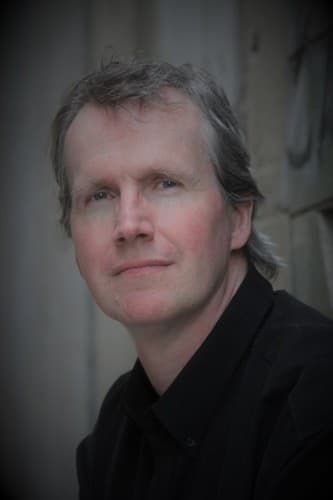
R. Scott Bakker is a Canadian author primarily known for his work in speculative fiction. His notable book, "The Darkness That Comes Before," is the first installment in the Prince of Nothing series, which explores themes of philosophy and power within a richly constructed fantasy world. Bakker's writing often delves into complex ideas and character development.
Similar books
- A Game of Thrones
George R.R. Martin
4.5 (2M) average on GoodreadsFantasyWhile both Bakker and Martin present grim, morally complex fantasy worlds with political intrigue and a lack of clear-cut heroes, Bakker's work is significantly more philosophical and less focused on political machinations. Martin's characters, though flawed, often retain a greater degree of relatability and internal struggle within a more grounded historical framework. Bakker delves deeper into abstract concepts of free will and consciousness, making his work less accessible than Martin's, which prioritizes character-driven plot and intricate political maneuvering. Bakker's world is also arguably more overtly bleak and nihilistic than Martin's, which still offers glimmers of hope and heroism.
- Harry Potter and the Sorcerer's Stone
J.K. Rowling
4.5 (7M) average on GoodreadsFantasyRescued from a miserable life under the stairs, an orphaned boy discovers he's a wizard destined for a magical school, where he uncovers a dangerous secret tied to the dark wizard who murdered his parents.
- The Hunger Games
Suzanne Collins
4.3 (6.4M) average on GoodreadsFantasyIn a future where children fight to the death on live television, Katniss Everdeen volunteers for the arena, turning a death sentence into a fight for survival and a spark of rebellion.
- 1984
George Orwell
4.2 (3.1M) average on GoodreadsPoliticsIn a future where surveillance and thought control are absolute, a man's search for truth clashes with the Party, showing that hope can be a form of rebellion.
- Divergent
Veronica Roth
4.2 (2.9M) average on GoodreadsFantasyIn a society divided by virtues, a sixteen-year-old's difference from the norm starts a rebellion that threatens her world.
- The Hobbit, or There and Back Again
J.R.R. Tolkien
4.3 (2.9M) average on GoodreadsFantasyA comfort-loving hobbit named Bilbo Baggins is whisked away by a mischievous wizard and a band of dwarves on an unexpected journey to reclaim stolen treasure from a fearsome dragon, discovering courage and a magical ring along the way.






Enjoyed the summary?
A summary gives you the shape of the book. The book itself has the detail, the examples and the voice.
Find The Darkness That Comes Before on AmazonAs an Amazon Associate, BookBrief earns from qualifying purchases. How we're funded