

Synopsis
Covers the whole plot, including the ending.
- Difficulty
- Medium
- Pacing
- Moderate
- Mood
- Atmospheric, Suspenseful, Dark, Historical
- Read it if
- You enjoy intricate historical mysteries with a strong medical-thriller element and a dual timeline structure.
- Skip it if
- You are sensitive to graphic descriptions of anatomical dissection, murder, and grave robbing, or prefer a straightforward modern-day thriller without historical detours.
The Bone Garden Plot Summary
Covers the whole plot, including the ending.
A Gruesome Discovery
In present-day Massachusetts, Julia Hamill, a retired schoolteacher, finds a human skull while digging in her garden. Disturbed, she contacts authorities, and Boston medical examiner Maura Isles is called. Dr. Isles quickly determines the skull belongs to a female and shows clear signs of blunt force trauma, indicating murder. The discovery upsets Julia, who had hoped for a peaceful retirement. The skull's age and lack of immediate clues turn the investigation into a historical mystery, suggesting the victim died long ago, possibly in the 19th century.
A Glimpse into the Past
Intrigued and disturbed, Julia Hamill begins to research her property's history, hoping for clues about the skull's owner. She visits local historical societies and libraries, eventually finding an old, leather-bound diary hidden in her house walls. The diary belongs to Rose Connolly, written in the 1830s. As Julia reads, she learns about Rose's life as a seamstress and her difficult experiences in a city dealing with medical advancements, social class differences, and a series of gruesome murders.
Norris Marshall's Desperate Measures
In Boston, 1830, Norris Marshall is a talented but poor medical student at Boston Medical College. Desperate to pay for his education and support his family, he becomes a 'resurrectionist' – a grave robber who digs up recently buried bodies to sell them to medical schools for dissection. This illegal trade is dangerous and morally questionable, but it is one of the few ways someone of his social standing can pursue a medical career. He works with a small crew, often at night, risking arrest and public disapproval to get the anatomical specimens needed for medical progress.
The First Gruesome Murder
Boston's peace is shattered when a young nurse, Mary O'Connell, is found brutally murdered on the university hospital grounds. Her body is horribly mutilated, with marks suggesting the killer had disturbing anatomical knowledge. The shocking crime spreads fear through the city, especially among the medical community. Authorities are baffled, with no clear suspects or motive. This murder marks the start of a dark period in Boston's history, setting the stage for a serial killer.
A Doctor's Demise and Norris's Predicament
The terror grows when Dr. William Prescott, a respected surgeon and anatomy professor, is found murdered with similar mutilations as the nurse. The closeness of the murders to the medical college and the precise anatomical wounds lead authorities to suspect someone within the medical community. Because of his involvement in the illegal cadaver trade and his anatomical knowledge, Norris Marshall quickly becomes a prime suspect. His desperate attempts to clear his name are complicated by his secret activities and social prejudices against him.
Rose Connolly, the Witness
Rose Connolly, a young seamstress from Boston's poor slums, unexpectedly gets involved in the murder investigation. One night, while returning home, she sees a shadowy figure fleeing the scene of Dr. Prescott's murder. Though she only gets a brief glimpse, she becomes the only potential witness to the killer. Fearing for her safety and distrusting authorities, Rose initially hesitates to come forward, but she soon realizes her testimony might be vital to stopping the murderer and possibly clearing Norris Marshall's name.
An Unlikely Alliance
To prove his innocence and protect Rose, Norris Marshall forms an alliance with her and a bright, sarcastic young man named Oliver Wendell Holmes, a fellow student with a sharp mind and an interest in forensic science. Together, they begin a dangerous search to find the serial killer. Their investigation takes them through Boston's streets, from its cemeteries and secret dissection rooms to its grand mansions and the halls of Brahmin power. They face skepticism, danger, and the harsh realities of social class in 19th-century Boston.
Unraveling the Clues
As Norris, Rose, and Oliver investigate, they uncover a disturbing pattern in the murders, realizing the victims share a hidden connection beyond their link to the medical college. Their investigation leads them to a dark secret involving past medical experiments, unethical practices, and a conspiracy reaching into Boston's highest society. They piece together information, discovering the killer is targeting individuals connected to a specific, morally wrong event from years prior, seeking revenge.
The Killer Revealed
Through their careful and risky investigation, Norris, Rose, and Oliver finally unmask the serial killer. The revelation is shocking, exposing a person whose motives stem from personal tragedy and a desire for vengeance against those they believe wronged them or their loved ones. The killer is someone unexpected, showing the hidden darkness that can exist beneath a respectable appearance. The discovery puts Rose in grave danger, as she is the last loose end for the murderer.
A Desperate Confrontation
The killer, realizing Rose is close to fully exposing them, targets her directly. A tense confrontation follows, testing Rose's quick thinking and courage. The climax of the historical story sees Rose fighting for her life against a deranged and determined attacker. Norris and Oliver race against time to save her, leading to a dramatic showdown that determines Rose's fate and resolves the 1830s murder spree. The struggle is brutal, leaving lasting scars on everyone involved.
Resolution and Lingering Questions
In the past, the serial killer is caught, and Boston is relieved. Norris Marshall's name is cleared, and he and Rose, having survived, consider their future. The diary entries conclude, revealing Rose's full connection to the events and the killer's ultimate fate. Back in the present, Julia Hamill finishes reading Rose's diary. While the diary provides a complete account of the 1830s murders and the skull's owner, Julia is left with one final, chilling question that connects the past to her present: how did the skull end up buried in her garden?
The Bone Garden Characters
Julia Hamill
Protagonist (Present Day)
A retired schoolteacher who unearths a historical mystery.
Julia is a recently retired schoolteacher seeking a peaceful life in a new home in rural Massachusetts. Her quiet existence is upended when she discovers a human skull in her garden, sparking her curiosity and leading her to delve into the property's dark past. She is intelligent, persistent, and empathetic, driven by a desire for truth and a sense of responsibility towards the unknown victim. Her present-day investigation mirrors the historical narrative, connecting the reader to the past through her eyes.
Relationships: Maura Isles (Medical examiner, provides forensic analysis and initial guidance.)
Rose Connolly
Protagonist (1830s)
A resilient seamstress who becomes a key witness to a serial killer.
Rose is a young, resourceful seamstress from the impoverished slums of 1830s Boston. She is independent, courageous, and possesses a sharp wit, often relying on her street smarts to navigate a harsh world. Her life takes a perilous turn when she witnesses a glimpse of a serial killer, making her a target. Despite her vulnerability due to her social standing, she bravely aids Norris Marshall in his quest for justice, demonstrating remarkable resilience and moral fortitude.
Relationships: Norris Marshall (Forms a close, trusting alliance in their hunt for the killer.); Oliver Wendell Holmes (Collaborates with him as part of the investigative trio.)
Norris Marshall
Protagonist (1830s)
A driven medical student forced into grave robbing who becomes a murder suspect.
Norris is a talented and ambitious medical student from a humble background in 1830s Boston. His dedication to medicine drives him to desperate measures, including becoming a 'resurrectionist' to fund his education. He is earnest, intelligent, and morally conflicted by his actions. When he is wrongly accused of murder, he is compelled to prove his innocence, showcasing his determination and integrity. He is a man caught between the rigid social structures of his time and his scientific aspirations.
Relationships: Rose Connolly (Forms a close, trusting alliance in their hunt for the killer.); Oliver Wendell Holmes (Fellow medical student and investigative partner.)
Oliver Wendell Holmes
Supporting (1830s)
A brilliant and sardonic medical student who aids the investigation.
Oliver is a sharp-witted and highly intelligent medical student, known for his keen observational skills and dry humor. He comes from a more privileged background than Norris but is drawn to the mystery and the pursuit of truth. His intellectual prowess and logical reasoning are invaluable to Norris and Rose in their investigation, often providing crucial insights and connections. He is a historical figure, adding authenticity and a touch of academic rigor to the narrative, foreshadowing his future as a prominent intellectual.
Relationships: Norris Marshall (Fellow medical student and investigative partner.); Rose Connolly (Collaborates with her as part of the investigative trio.)
Maura Isles
Supporting (Present Day)
A meticulous Boston medical examiner.
Maura Isles is a highly competent and professional medical examiner. Her role is primarily to provide forensic expertise on the discovered skull, confirming its human origin, gender, and the cause of death. While not central to the historical mystery, her initial assessment validates Julia's suspicions and sets the stage for the deeper investigation. She represents the scientific and rational approach to crime-solving, contrasting with the more intuitive and dangerous methods of the past.
Relationships: Julia Hamill (Professional interaction regarding the skull discovery.)
Dr. William Prescott
Victim/Mentioned (1830s)
A distinguished but morally compromised surgeon and anatomy professor.
Dr. Prescott is a prominent surgeon and anatomy professor at Boston Medical College. He is one of the serial killer's victims, and his murder intensifies the investigation. While initially presented as a respected figure, the investigation into his death and the past events reveals his involvement in unethical medical practices and a dark secret, making him a complex character whose past actions directly influence the present murders. He represents the darker side of medical advancement in the 19th century.
Relationships: Norris Marshall (Professor to Norris, later revealed to have a hidden connection to the killer's motive.)
Mary O'Connell
Victim/Mentioned (1830s)
A young nurse, the first victim of the serial killer.
Mary O'Connell is a young nurse whose brutal murder on the university hospital grounds marks the beginning of the serial killer's spree. Her death is shocking and gruesome, setting the tone for the escalating violence. While she doesn't have a developed personality within the narrative, her fate is crucial to the plot, serving as the catalyst for Norris and Rose's investigation and highlighting the vulnerability of women in 19th-century Boston.
The Bone Garden Themes
The Duality of Progress and Ethics in Medicine
The novel contrasts rapid 19th-century medical advancements with the ethical compromises and brutal methods often used. The need for cadavers for anatomical study leads Norris to grave robbing, showing the moral dilemma of progress at any cost. The serial killer's motives come from a past medical injustice, revealing how unchecked scientific ambition can lead to tragedy. Scenes of dissection and the illegal cadaver trade show the dark side of medical education, while the murders reflect a twisted understanding of anatomy.
“'We are but a breath away from God's mysteries, yet we defile His creations to understand them.'”
Social Class and Injustice
The social class differences of 19th-century Boston are a constant theme. Rose Connolly, from the slums, faces distrust and vulnerability, while Norris Marshall struggles against his poor background to achieve his dreams. The novel shows how the wealthy and powerful can exploit the less fortunate, and how justice is often unevenly applied based on social standing. The killer's victims and motives are often tied to these class differences, showing how ingrained social injustice can fuel resentment and vengeance. Julia's present-day discovery subtly links to these historical inequalities.
“'In this city, a man's worth is measured not by his mind, but by the weight of his purse and the lineage of his name.'”
The Echoes of the Past
The novel skillfully combines two timelines, showing how historical events and unresolved injustices can affect centuries. Julia Hamill's present-day discovery of a skull directly connects her to Rose Connolly's 19th-century struggles. The diary acts as a literal bridge, allowing the past to explain the present. This theme highlights the lasting impact of secrets and trauma, suggesting that true closure comes when the past is fully acknowledged and understood, even generations later.
“'Some secrets refuse to stay buried, no matter how much earth is piled upon them.'”
Revenge and Justice
Revenge drives the serial killer, fueled by a deep desire to avenge past wrongs and perceived injustices. The killer believes they are delivering a twisted form of justice against those responsible for a long-forgotten tragedy. This theme explores the destructive nature of vengeance and questions the true meaning of justice. Norris and Rose, in contrast, seek conventional justice, aiming to stop the killer and clear Norris's name, contrasting their pursuit with the killer's violent retribution.
“'There is a justice beyond the law, a reckoning for those who believe themselves untouchable.'”
Plot Devices & Literary Techniques
Dual Narrative Structure
Interweaving present-day investigation with a historical diary.
The novel employs a dual narrative, alternating between Julia Hamill's present-day discovery of a skull and her subsequent research, and Rose Connolly's diary entries from 1830s Boston. This structure builds suspense by gradually revealing clues from the past that explain the present mystery. It allows for a rich exploration of historical context while maintaining a contemporary hook, creating a sense of inevitability as the two timelines converge towards a shared truth.
The Found Document (Diary)
A historical diary serves as the primary link between the two timelines.
Rose Connolly's diary, discovered by Julia Hamill, functions as the central plot device connecting the present-day and historical narratives. It provides the reader with direct access to the 19th-century events, character perspectives, and crucial plot details. The diary entries are not merely exposition; they are dynamic, revealing secrets, building tension, and ultimately providing the solution to the long-unsolved murder mystery, acting as a direct voice from the past.
Red Herring
Misleading clues and suspects to divert attention from the true killer.
The narrative frequently employs red herrings, particularly in the 1830s storyline, to mislead both the characters and the reader about the killer's identity and motives. Norris Marshall himself becomes a prime suspect, and other characters with suspicious behaviors or connections are introduced to cast doubt and increase the mystery. These diversions heighten suspense and make the eventual reveal of the true killer more impactful and surprising, demonstrating the complexity of the investigation.
Foreshadowing
Subtle hints and clues that predict future events or revelations.
Throughout both timelines, the author uses foreshadowing to build anticipation and create a sense of impending doom or discovery. In the present, the nature of the skull's injury hints at the brutality of the historical murders. In the past, early descriptions of certain characters or historical events subtly allude to their later significance or involvement in the central conspiracy, making the unfolding of the plot feel both organic and inevitable once the connections are made.
The Bone Garden Quotes
“The dead have their secrets. And the earth, it never forgets.”
“History isn't just about dates and kings. It's about the people who lived and died, and the stories they left behind.”
“Sometimes, the truth is more horrifying than any fiction.”
“The past is never truly dead. It just waits for the right moment to reawaken.”
“Fear is a powerful motivator. It can make you do things you never thought possible.”
“Even in death, there is a kind of eloquence, a story waiting to be told.”
“Some wounds never heal, no matter how much time passes.”
“The greatest monsters are often those who wear the most convincing masks.”
“Every bone has a whisper, if you know how to listen.”
“Justice, sometimes, takes a very long time. But it always comes, eventually.”
“The human heart, for all its fragility, can hold an astonishing amount of darkness.”
“To forget the past is to be condemned to repeat it.”
“There are some secrets that the grave was meant to keep.”
“Even the most beautiful gardens can hide the most grotesque secrets beneath the soil.”
Quiz
10 questions on the plot and the characters. Each answer comes with a short explanation.
Question 1
What horrifying discovery does Julia Hamill make on the grounds of her new home in rural Massachusetts?
- A cache of antique jewelry
- A human skull
- An abandoned well
- A hidden diary
Show answer
B. A human skull Julia Hamill discovers a human skull buried in the rocky soil of her new home, which is later identified as belonging to a murder victim.
Question 2
In the 1830 Boston timeline, what is Norris Marshall's illicit occupation to pay for his medical education?
- Bootlegging alcohol
- Gambling runner
- Resurrectionist (graverobber)
- Counterfeiting currency
Show answer
C. Resurrectionist (graverobber) Norris Marshall becomes a 'resurrectionist,' plundering graveyards to sell cadavers on the black market to fund his medical studies.
Question 3
Who is the medical examiner in the present-day timeline who confirms the skull found by Julia Hamill belongs to a murder victim?
- Dr. Isabel Sanchez
- Dr. Maura Isles
- Dr. Evelyn Reed
- Dr. Sarah Chen
Show answer
B. Dr. Maura Isles Boston medical examiner Maura Isles is the one who examines the skull and determines it bears the marks of murder.
Question 4
What specific injury mark does Maura Isles identify on the discovered skull, indicating murder?
- A gunshot wound
- A clear fracture from a fall
- Scars with unmistakable marks of murder
- Evidence of blunt force trauma post-mortem
Show answer
C. Scars with unmistakable marks of murder The text states the skull was 'scarred with the unmistakable marks of murder,' as identified by Maura Isles.
Question 5
Why does Norris Marshall become a prime suspect in the 1830 murders?
- He had a known rivalry with the first victim.
- His involvement in the illicit cadaver trade makes him suspicious.
- He was found near the scene of the second murder.
- He confessed under duress.
Show answer
B. His involvement in the illicit cadaver trade makes him suspicious. Norris's involvement in 'trafficking in the illicit cadaver trade' makes him a prime suspect after the murders of the nurse and doctor.
Question 6
Who is the 'sardonic, keenly intelligent young man' who assists Norris and Rose in their investigation in 1830 Boston?
- Nathaniel Hawthorne
- Edgar Allan Poe
- Oliver Wendell Holmes
- Ralph Waldo Emerson
Show answer
C. Oliver Wendell Holmes Oliver Wendell Holmes is specifically mentioned as the 'sardonic, keenly intelligent young man' who joins Norris and Rose.
Question 7
What is Rose Connolly's profession in 1830 Boston?
- A tavern keeper
- A street vendor
- A seamstress
- A school teacher
Show answer
C. A seamstress Rose Connolly is described as a 'beautiful seamstress from the Boston slums.'
Question 8
What is the primary motivation for Norris Marshall to track down the killer in 1830?
- To gain fame and recognition in the medical community.
- To protect his family from the killer.
- To prove his innocence after becoming a prime suspect.
- To recover a valuable stolen artifact.
Show answer
C. To prove his innocence after becoming a prime suspect. Norris's main motivation is 'To prove his innocence' after his involvement in the cadaver trade makes him a suspect.
Question 9
The two timelines in the novel, present-day and 1830, are implicitly linked by what overarching theme?
- The struggle for women's suffrage.
- Unsolved murders and the pursuit of justice across time.
- The development of modern medical practices.
- The social stratification of Boston society.
Show answer
B. Unsolved murders and the pursuit of justice across time. Both timelines involve a murder mystery, linking them through the theme of unsolved crimes and the pursuit of justice, even centuries apart.
Question 10
Where do Norris and Rose search for clues about the killer in 1830 Boston?
- Exclusively in the Boston Medical College archives.
- From its grim cemeteries and autopsy suites to its glittering mansions and centers of Brahmin power.
- Only in the docks and working-class neighborhoods.
- They only interview witnesses in the city's taverns.
Show answer
B. From its grim cemeteries and autopsy suites to its glittering mansions and centers of Brahmin power. The description states they 'comb the city–from its grim cemeteries and autopsy suites to its glittering mansions and centers of Brahmin power.'
The Bone Garden FAQ
What is the central mystery that Julia Hamill uncovers in the present day?
Julia Hamill discovers a human skull buried on her new rural Massachusetts property. Medical examiner Maura Isles confirms it's a female skull with signs of murder, suggesting a cold case that reaches back into the past and links to the historical narrative.
Who is Norris Marshall and what is his primary occupation in 1830 Boston?
Norris Marshall is a talented but impoverished student at Boston Medical College in 1830. To fund his education, he works as a 'resurrectionist,' illegally exhuming bodies from graveyards to sell on the black market for anatomical study.
What significant crime occurs at the university hospital in 1830 that draws Norris into a murder investigation?
A nurse is found brutally murdered and mutilated on the university hospital grounds. This shocking event is followed by the equally grisly murder of a distinguished doctor, making Norris, due to his involvement in the cadaver trade, a prime suspect.
Who is Rose Connolly and how does she become involved in Norris's quest to prove his innocence?
Rose Connolly is a beautiful seamstress from the Boston slums and the only witness to have glimpsed the killer of the nurse and doctor. Fearing she might be the next victim, she reluctantly teams up with Norris Marshall to track down the true murderer.
What role does Oliver Wendell Holmes play in Norris and Rose's investigation?
Oliver Wendell Holmes, a sardonic and keenly intelligent young man, joins Norris and Rose in their investigation. His sharp intellect and connections help them navigate Boston's diverse social strata, from grim cemeteries to glittering mansions, in pursuit of the killer.
How does the present-day discovery by Julia Hamill connect directly to the 1830s storyline?
Julia Hamill's discovery of the murdered woman's skull in the present day directly connects to the 1830s narrative as the identity of that victim, or a related individual, is revealed to be someone involved in or affected by the serial killings Norris Marshall investigates. The historical events provide the backstory for the modern crime scene.
Are there any specific historical figures or events woven into the 1830s plot beyond Oliver Wendell Holmes?
Beyond Oliver Wendell Holmes, the novel delves into the real historical context of early medical education in Boston, including the practices of resurrectionists and the societal attitudes towards anatomy and death. It also touches upon the social stratification and burgeoning medical science of the era, though specific other historical figures may be fictionalized or minor.
What is the significance of the 'bone garden' in the title, beyond Julia's initial discovery?
The 'bone garden' likely refers not only to Julia's literal discovery of a skull but also metaphorically to the numerous unmarked graves, dissected bodies, and hidden secrets of the past that Norris and Rose uncover. It symbolizes the forgotten dead and the dark underbelly of 1830s Boston's medical practices.
How does Norris Marshall's background as a resurrectionist influence his perspective and abilities during the investigation?
Norris Marshall's experience as a resurrectionist gives him an intimate, albeit illicit, knowledge of human anatomy, death, and the hidden places where bodies are handled. This unique perspective allows him to understand forensic clues and navigate the dark world of cadaver trade that others, including the police, might overlook.
What psychological pressures does Rose Connolly face as a witness and potential next victim?
Rose Connolly faces immense psychological pressure from her fear of being the killer's next victim, compounded by her precarious social standing as a seamstress from the slums. Her fear likely makes her hesitant to trust authorities and forces her to rely on Norris, pushing her into dangerous situations.
How does the novel explore the ethical dilemmas of early 19th-century medical practice, particularly regarding cadaver acquisition?
The novel deeply explores the ethical dilemmas of early 19th-century medicine by showcasing the necessity of cadavers for anatomical study against the moral and legal implications of 'resurrectionism.' It highlights the societal demand for medical advancement clashing with the sanctity of the dead and the exploitation of the poor.
What psychological traits might characterize the 'maniacal fiend' that Norris and Rose are hunting?
The 'maniacal fiend' likely possesses traits such as extreme cunning, a lack of empathy, possibly a pathological obsession related to the victims or the medical field, and a profound enjoyment of inflicting suffering. Their ability to lurk 'where least expected' suggests a deceptive and manipulative nature.
Is the killer's motive in 1830 purely random or is there a deeper, more personal reason behind the murders?
Given the description of a 'maniacal fiend' and the specific targeting of a nurse and a distinguished doctor, it is highly probable that the killer's motive is not random. There is likely a deeper, more personal reason, possibly linked to revenge, a twisted ideology related to medicine, or a profound psychological disturbance connected to the victims' professions or social standing.
How does the author use the dual timelines to enhance the mystery and suspense?
The author uses dual timelines to enhance mystery and suspense by creating a parallel discovery process. Julia's modern-day investigation provides a contemporary hook and a physical link to the past, while the historical narrative gradually unspools the full story, allowing readers to piece together how the past crime impacts the present and deepening the sense of unresolved injustice.
What broader themes about justice and time might the novel be exploring through its narrative?
The novel likely explores themes of justice deferred, the enduring nature of secrets, and how past injustices can ripple through time to affect the present. It questions whether true justice can ever be achieved for long-forgotten victims and highlights the persistence of human cruelty and the quest for truth across generations.
Could Oliver Wendell Holmes's sardonic nature hint at a more complex or morally ambiguous character than a simple helper?
Oliver Wendell Holmes's sardonic nature could indeed hint at a more complex character. While he aids Norris and Rose, his wit might mask a detached observation, a cynical view of humanity, or even a hidden agenda, making his role potentially more ambiguous than that of a straightforward ally and adding depth to his portrayal.
How does the setting of 1830s Boston contribute to the atmosphere and challenges faced by the characters?
The setting of 1830s Boston contributes significantly by providing a stark contrast between its glittering Brahmin society and its grim, poverty-stricken slums, enhancing the atmosphere of social inequality and hidden dangers. The nascent state of forensic science and the prevalence of illicit activities like resurrectionism also create unique challenges for the characters in their quest for justice.
About the author

Tess Gerritsen is an American author known for her work in the thriller and medical fiction genres. Her notable books include The Surgeon, The Mephisto Club, The Bone Garden, Harvest, Gravity, and The Sinner, which often explore themes of crime and human anatomy. Gerritsen's writing has garnered a significant readership and has been adapted into television series.
Similar books
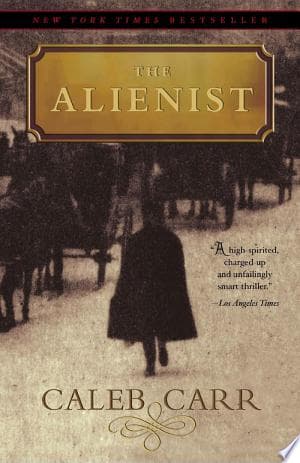
- The Alienist
Caleb Carr
4.1 (182k) average on GoodreadsFictionFeatures a historical serial killer hunt in a meticulously recreated 19th-century city with a focus on early forensic psychology.
- The Silent Patient
Alex Michaelides
4.1 (507k) average on GoodreadsThrillerA modern psychological thriller with a mystery at its core, though without the historical element, it shares a similar 'unraveling the truth' vibe.
- Angels & Demons
Dan Brown
3.9 (2.7M) average on GoodreadsThrillerA Harvard symbologist races through Rome's ancient sites, deciphering cryptic clues to unmask the Illuminati and stop a vengeful plot to destroy the Vatican with a stolen antimatter weapon.
- Gone Girl
Gillian Flynn
4.1 (2.3M) average on GoodreadsThrillerA wife's sudden disappearance on her fifth anniversary reveals a web of lies and psychological warfare, exposing the secrets within a seemingly perfect marriage.
- The Girl on the Train
Paula Hawkins
3.9 (2.1M) average on GoodreadsThrillerA woman’s fascination with a seemingly perfect couple she watches from her daily train commute leads her into a dark investigation when she witnesses something that shatters their idyllic image.
- The Da Vinci Code
Dan Brown
3.9 (1.9M) average on GoodreadsThrillerA symbologist and a cryptologist race through European landmarks, deciphering ancient codes and uncovering a conspiracy that could rewrite the foundations of Christianity.





Enjoyed the summary?
A summary gives you the shape of the book. The book itself has the detail, the examples and the voice.
Find The Bone Garden on AmazonAs an Amazon Associate, BookBrief earns from qualifying purchases. How we're funded