
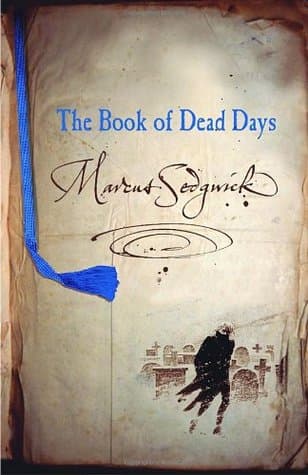
Synopsis
Covers the whole plot, including the ending.
- Difficulty
- Medium
- Pacing
- Moderate
- Mood
- Atmospheric, Mysterious, Dark, Suspenseful, Melancholy
- Read it if
- You enjoy atmospheric historical fantasies with a touch of gothic mystery, strong world-building, and a race-against-time plot.
- Skip it if
- You prefer fast-paced action over intricate mysteries and character-driven exploration of dark themes.
The Book of Dead Days Plot Summary
Covers the whole plot, including the ending.
The Pact and the Impending Doom
The story begins in a grim, gaslit city during the 'Dead Days' between Christmas and New Year's Eve. Valerian, a magician, is in trouble. A demonic entity, Malo, haunts him, coming to collect on a pact made years ago: Valerian's soul for magical power. With only days left until New Year's Eve, Valerian is frantic. His only companions are his loyal servant, Boy, and the sharp orphan girl, Willow, who has found a home with them. Valerian believes an ancient scroll holds the key to his salvation, hidden in the city's forgotten catacombs. He sends Boy on dangerous errands to gather information and supplies, while Malo's presence grows stronger.
Willow's Discovery and the Search for the Scroll
Willow, observant and clever, starts to piece together clues from Valerian's cryptic words and the strange items Boy brings back. She finds a hidden message in one of Valerian's old books, hinting at a secret society and a location beneath the city. This confirms Valerian's suspicions about the scroll's location. The magician, weakened and desperate, tasks Boy and Willow with venturing into the city's sewers and catacombs. Their mission is to find the entrance to a legendary subterranean city, believed to hold the scroll and a powerful artifact that could break Valerian's pact with Malo. The young duo, though scared, understand their mission's importance and prepare for the dangerous journey.
Descent into the Underworld
Boy and Willow descend into the dark sewers, a world full of vermin and shadowed figures. They meet the 'Undertakers,' a secretive community living beneath the city, scavenging and maintaining forgotten passages. These people are wary but not hostile, offering warnings about deeper dangers. Boy's quick thinking and Willow's observations help them navigate the treacherous tunnels, avoiding collapsing sections and hidden traps. They follow their clues, slowly making their way towards the entrance of the legendary subterranean city, a place whispered about by the Undertakers. The air grows colder and heavier, with a sense of ancient power.
The Subterranean City and the Keepers
Boy and Willow find the hidden entrance, a disguised portal leading into a vast, ancient subterranean city. This city is inhabited by the 'Keepers,' a reclusive society preserving knowledge and artifacts from a bygone era. The Keepers, led by the stern Elder, are initially suspicious of the children. They dislike the surface world and protect their secrets. Boy and Willow must prove their intentions, explaining Valerian's problem and the urgent need for the scroll. The Keepers test their resolve and knowledge, slowly understanding the situation's gravity and the threat from Malo, a name that frightens even them.
The Scroll and the Revelation
With the Keepers' reluctant help, Boy and Willow find the ancient scroll in a hidden chamber. The scroll, however, does not contain a simple counter-spell. Instead, it reveals the true nature of Valerian's pact with Malo. It details a more sinister agreement than Valerian had admitted, involving not just his soul but a dangerous ritual that would unleash Malo's full power. The scroll also hints at a forgotten lineage and a connection between Valerian and the entity he sought to control. This revelation shatters the children's understanding of their master, forcing them to question his motives and the extent of his desperation. The weight of this knowledge falls heavily on them.
The True Nature of Malo
As the deadline nears, Malo's presence in Valerian's workshop becomes almost real. Through the scroll's revelations and Valerian's fragmented confessions, the children learn that Malo is not just a demon, but an ancient entity Valerian tried to harness for his ambitious magical experiments. The pact was not just for power, but a desperate attempt by Valerian to control something he barely understood, leading to a catastrophe. Malo seeks not only Valerian's soul but to fully manifest in the mortal world, using Valerian as a vessel. The stakes are higher than Valerian's life; it's about preventing an apocalyptic event. The scroll details how Malo can be stopped, but it requires a sacrifice of immense power and a specific bloodline.
The Ritual and the Sacrifice
Back in Valerian's workshop, the magician, now frail and consumed by Malo's influence, prepares a final ritual he believes will save him. However, the children, armed with knowledge from the scroll and the Keepers, understand that Valerian's ritual will only empower Malo. They discover that the scroll outlines a different, ancient ritual that can sever Malo's connection to the world and banish him. This alternative ritual requires a specific bloodline — one Valerian possesses — and a willing, selfless sacrifice. As the Dead Days end, the children realize they must confront Valerian, not just Malo, to save the world.
Confrontation and Betrayal
As New Year's Eve approaches, Boy and Willow confront Valerian, showing him the truth from the scroll. Valerian, driven to madness by fear and ambition, admits his darker intentions. He confesses he knew the full extent of the pact and the ritual's true purpose: to become an immortal vessel for Malo, gaining ultimate power. His initial story was a deception to manipulate the children. This betrayal deeply wounds Boy and Willow, who had trusted him. The revelation forces them to act independently, realizing that Valerian is no longer simply a victim but a willing participant in a dangerous scheme that threatens everyone. The final confrontation is set, with the fate of the city, and possibly the world, in the balance.
The Battle for Valerian's Soul
In a confrontation, Boy and Willow, aided by the Keepers' knowledge and their own courage, try to perform the true banishing ritual. Malo, almost fully materialized and possessing much of Valerian, fights back with terrifying force. The workshop becomes a storm of dark magic and raw power. Boy, using his agility and quick thinking, distracts Malo while Willow, guided by the scroll, attempts to complete the complex incantations. They try to appeal to the last parts of Valerian's humanity, hoping to awaken his will to resist Malo. The battle is not just against Malo, but for Valerian's soul, caught between redemption and damnation.
The Sacrifice and the Aftermath
In a final, desperate act, Valerian, momentarily regaining control, makes the ultimate sacrifice. He uses his own life force to complete the banishing ritual, severing Malo's connection to the mortal realm and sending the entity back to its dimension. The workshop is in ruins, and Valerian is gone. Boy and Willow, though heartbroken, are safe. As the first light of New Year's Day breaks, the oppressive atmosphere lifts from the city. The Dead Days are over, and Malo's threat is averted. The children, now orphans, must forge their own path, forever changed by their journey and the sacrifices made.
The Book of Dead Days Characters
Valerian
Protagonist/Antagonist
A once-renowned magician cursed by a demonic pact.
Valerian is a complex and ultimately tragic figure. Driven by ambition and a thirst for magical power, he made a pact with the demonic entity Malo, which now threatens to claim his soul. He is intelligent, manipulative, and often self-serving, yet also capable of moments of genuine affection and desperation. His fear of death and his desire for power lead him to deceive Boy and Willow, but deep down, he possesses a flicker of humanity that ultimately allows for his redemption. He is a master of arcane knowledge, though his understanding of the forces he dabbles with is ultimately incomplete.
Relationships: Boy (Master and loyal servant, though Valerian often exploits Boy's devotion.); Willow (Guardian figure, though he uses her intelligence for his own ends.); Malo (The entity with whom he made a pact, now his tormentor and eventual destroyer.)
Boy
Protagonist
Valerian's loyal, unnamed servant with a mysterious past.
Boy is a quiet, observant, and fiercely loyal young man. He has no memory of his past or his true name, having been taken in by Valerian at a young age. Despite Valerian's often harsh treatment and manipulative nature, Boy remains devoted, carrying out dangerous tasks without question. He is resourceful, quick-thinking, and possesses an innate bravery. His lack of a past makes him somewhat of a blank slate, but his experiences throughout the Dead Days forge his identity, revealing him to be a person of immense courage and integrity. He is often the one to physically execute the plans, demonstrating surprising strength and agility.
Relationships: Valerian (Loyal servant to master, though the relationship is tested by Valerian's deception.); Willow (Close companion and ally, forming a strong bond of friendship and mutual reliance.)
Willow
Protagonist
A quick-witted, resourceful orphan girl who sees through deceptions.
Willow is an intelligent, independent, and highly perceptive orphan girl. She is quick-witted and possesses a sharp mind, often being the one to piece together clues and see through Valerian's evasions. Unlike Boy, she is more questioning and less blindly loyal, making her a crucial counterbalance to Valerian's manipulations. Her pragmatism and courage are invaluable in navigating the dangers of the city's underworld. She is fiercely protective of Boy and possesses a strong moral compass, which guides her actions even in the face of terrifying odds. She represents the intellectual and intuitive strength of the duo.
Relationships: Valerian (Initially a guardian, later a figure of distrust and a goal to save.); Boy (Close companion and ally, forming a strong bond of friendship and mutual reliance.)
Malo
Antagonist
A powerful, ancient demonic entity seeking to manifest in the mortal world.
Malo is the primary antagonist, a formidable and ancient demonic entity. It represents raw, untamed power and malevolence. Malo is not merely a demon but an almost primal force that Valerian foolishly attempted to control. Its presence is oppressive and terrifying, growing stronger as the Dead Days progress. Malo seeks to fully manifest in the mortal world, using Valerian as a vessel, which would unleash untold chaos. It is relentless, cunning, and without mercy, embodying the consequences of unchecked ambition and the dangers of tampering with forces beyond one's comprehension. Its true form is rarely seen, its power often felt as a crushing weight and a pervasive dread.
Relationships: Valerian (The entity Valerian made a pact with, now his tormentor and intended possessor.)
The Elder
Supporting
The wise and stern leader of the Keepers in the subterranean city.
The Elder is the leader of the Keepers, the reclusive society living beneath the city. He is ancient, wise, and initially suspicious of outsiders, particularly those from the surface world. He is a guardian of ancient knowledge and traditions, fiercely protective of his people and their secrets. Despite his stern demeanor, he possesses a deep understanding of the balance between worlds and the dangers of entities like Malo. He eventually provides crucial assistance and knowledge to Boy and Willow, recognizing the greater threat. He represents ancient wisdom and the hidden history of the city.
Relationships: Boy (Initially wary, later a source of guidance and assistance.); Willow (Initially wary, later a source of guidance and assistance.)
The Undertakers
Supporting
The secretive community living in the city's sewers and catacombs.
The Undertakers are a community of people who live in the labyrinthine sewers and catacombs beneath the city. They are scavengers and caretakers of the forgotten passages, living apart from the surface world. They are wary and secretive, often communicating in riddles or cryptic warnings. While not directly involved in the main conflict, their knowledge of the underworld is invaluable to Boy and Willow's journey. They represent the forgotten underbelly of society and the hidden lives that exist just beneath the surface, providing a sense of the vast, unseen world within the city.
Relationships: Boy (Provide cryptic directions and warnings.); Willow (Provide cryptic directions and warnings.)
The Book of Dead Days Themes
The Price of Ambition
This theme is central to Valerian's character. His desire for magical power leads him to make a pact with Malo, ultimately costing him his soul and nearly unleashing evil upon the world. The story shows how unchecked ambition can corrupt and blind individuals to the true consequences of their actions. Valerian's journey from a magician to a desperate, fear-ridden man consumed by his own creation shows the price paid for power gained unethically. His eventual sacrifice is a direct result of the debt incurred by his initial ambition.
“Some doors, once opened, can never be truly closed, no matter the cost.”
The Power of Loyalty and Friendship
Despite Valerian's manipulative nature, Boy and Willow's loyalty drives the narrative. Boy's devotion to his master, even in extreme danger, highlights his strong character. Willow's quick wit and determination to protect Boy, and ultimately to save Valerian despite his flaws, shows the impact of their bond. Their partnership helps them overcome obstacles in the subterranean city and confront Malo. Their friendship provides the emotional core of the story, proving that connection and mutual support are stronger than dark magic.
“We're in this together, Boy. Always.”
Hidden Worlds and Secret Knowledge
The novel creates a sense of hidden worlds existing just beneath the familiar. The city's sewers, catacombs, and the Keepers' ancient subterranean city represent layers of forgotten history and secret knowledge. This theme emphasizes that there is more to the world than meets the eye, and that ancient truths and dangers often lie hidden. The discovery of the scroll and the Keepers' wisdom are important to understanding and fighting Malo, highlighting the importance of seeking out and preserving knowledge that might otherwise be lost. The 'Dead Days' themselves are a time when these hidden realities become more accessible.
“The city breathes, but not all its breaths are taken in the light.”
Redemption and Sacrifice
Valerian's character arc explores redemption. Despite his deceit and ambition, he ultimately chooses to sacrifice himself to banish Malo and protect the world, showing that even those who have strayed can find a path to atonement. His final act shows that true power is not in control or ambition, but in selfless giving. This theme is highlighted by the tragic necessity of his sacrifice, which allows for balance and ensures the safety of Boy and Willow. It suggests that while past mistakes cannot be undone, their consequences can be lessened through ultimate selflessness.
“To truly break a pact made in darkness, one must offer a light brighter than any shadow.”
Plot Devices & Literary Techniques
The Dead Days
A liminal period when magic is heightened and spirits roam.
The 'Dead Days' between Christmas and New Year's Eve serve as a crucial atmospheric and magical plot device. This period is described as a time when the veil between worlds thins, making magic more potent and allowing spirits and entities like Malo to exert greater influence. This heightened magical energy intensifies the urgency of Valerian's predicament and provides a plausible backdrop for the extraordinary events that unfold. It also adds a layer of gothic mystery and foreboding to the narrative, making the city itself feel like a character imbued with ancient, restless power.
The Pact with Malo
A magical contract that drives Valerian's desperation and the central conflict.
The pact Valerian made with Malo is the primary instigating force of the plot. It establishes the ticking clock, the immediate threat, and the high stakes of the story. Initially presented as a simple exchange for magical power, its true, more sinister nature is gradually revealed, adding layers of complexity and betrayal. This device not only drives Valerian's actions but also forces Boy and Willow into their perilous journey, as they seek a way to break or circumvent the binding agreement. It exemplifies the classic Faustian bargain, where the promise of power comes with a terrible cost.
The Ancient Scroll
A cryptic document holding the key to Valerian's salvation or damnation.
The ancient scroll acts as a classic MacGuffin, a vital object that drives the characters' quest. Initially believed to contain a simple counter-spell, its true contents reveal the complex truth about Valerian's pact and Malo's nature. It serves as a source of exposition and a catalyst for major plot turns, guiding Boy and Willow through the subterranean city and ultimately providing the knowledge needed to confront the antagonist. The scroll represents hidden knowledge and the power of ancient wisdom, contrasting with Valerian's more modern, reckless approach to magic.
The Subterranean City and the Keepers
A hidden world beneath the city, guarding ancient secrets and knowledge.
The subterranean city and its inhabitants, the Keepers, function as a device to introduce ancient lore and provide crucial information. This hidden world serves as a physical and symbolic journey into the past, revealing truths that are lost to the surface world. The Keepers, as guardians of this knowledge, provide the exposition necessary to understand Malo's true nature and the means to defeat him. Their existence highlights the theme of hidden worlds and the idea that solutions to modern problems can often be found in forgotten histories and traditions.
The Book of Dead Days Quotes
“The dead days are coming, and with them, the time for the dead to walk.”
“Magic is just science we don't understand yet.”
“Sometimes, the only way to find out who you are is to find out who you are not.”
“The greatest trick the Devil ever pulled was convincing the world he didn't exist.”
“Fear is a powerful motivator, but it's a terrible guide.”
“The past is never truly dead; it simply waits for the right moment to return.”
“Curiosity killed the cat, but satisfaction brought it back.”
“There are more things in heaven and earth, Horatio, than are dreamt of in your philosophy.”
“Every secret has a cost, and some are too high to pay.”
“The world is a stage, and all the men and women merely players.”
“Sometimes, the truth is not what you want to hear, but what you need to know.”
“To escape the maze, you must first understand its walls.”
“The greatest danger often lies not in what you face, but in what you refuse to see.”
“Even in the darkest of times, a flicker of hope can ignite the greatest changes.”
Quiz
10 questions on the plot and the characters. Each answer comes with a short explanation.
Question 1
What is the specific time period during which the events of the story unfold?
- The week leading up to Christmas
- The days between Christmas and New Year's Eve
- The first week of January
- The last week of November
Show answer
B. The days between Christmas and New Year's Eve The book explicitly states the events occur during 'The days between Christmas and New Year’s Eve', which are referred to as 'dead days'.
Question 2
What is the name of the magician who must save his life within the dead days?
- Merlin
- Valerian
- Alatar
- Zoltan
Show answer
B. Valerian The magician's name is Valerian, and he is central to the plot as he needs to save his life.
Question 3
What is the servant of Valerian called?
- Girl
- Man
- Boy
- Servant
Show answer
C. Boy Valerian's servant is called Boy, a child with no name and no past.
Question 4
What is the primary reason Valerian is in danger and must save his life?
- He has been cursed by a rival magician.
- He made a pact with evil many years ago.
- He accidentally unleashed a powerful demon.
- He is being pursued for stealing a magical artifact.
Show answer
B. He made a pact with evil many years ago. Valerian 'must save his own life within those few days or pay the price for the pact he made with evil so many years ago.'
Question 5
What kind of power is pursuing Valerian, and against which his magic is no match?
- An ancient curse
- A rival wizard's spell
- Demonic power
- A magical plague
Show answer
C. Demonic power The summary states 'alchemy and sorcery are no match against the demonic power pursuing him.'
Question 6
What is Willow's defining characteristic, as described in the summary?
- Shy and reserved
- Strong and silent
- Quick-witted orphan
- Mysterious and powerful
Show answer
C. Quick-witted orphan Willow is described as 'The quick-witted orphan girl'.
Question 7
Where do Valerian, Boy, and Willow go that is described as a 'subterranean city'?
- A hidden library
- A sprawling blackness of a subterranean city
- An ancient wizard's tower
- A forgotten temple
Show answer
B. A sprawling blackness of a subterranean city The trio is 'swept into the sprawling blackness of a subterranean city on a journey from which there is no escape.'
Question 8
What happens to magic during the 'dead days'?
- It disappears completely.
- It becomes uncontrollable and dangerous.
- It shifts restlessly just beneath the surface of lives.
- It is amplified and easier to control.
Show answer
C. It shifts restlessly just beneath the surface of lives. The summary states that during the dead days, 'magic shifts restlessly just beneath the surface of our lives.'
Question 9
What specific activity are Valerian, Boy, and Willow engaged in at midnight?
- Performing a complex ritual spell
- Searching for a hidden treasure
- Digging in death fields
- Consulting ancient texts
Show answer
C. Digging in death fields Willow is with them 'as they dig in death fields at midnight'. This detail suggests a desperate and possibly macabre search.
Question 10
What is implied about the journey into the subterranean city?
- It is a short detour with little consequence.
- It is a journey from which there is no escape.
- It leads to the solution of Valerian's pact.
- It is a voluntary quest for knowledge.
Show answer
B. It is a journey from which there is no escape. The summary explicitly states they are 'swept into the sprawling blackness of a subterranean city on a journey from which there is no escape', implying grave danger and finality.
The Book of Dead Days FAQ
What is the central premise of 'The Book of Dead Days'?
The story revolves around the magician Valerian, who must find a way to save his life during the 'dead days' between Christmas and New Year's Eve. He is pursued by a demonic power due to an ancient pact, and his only hope lies in the assistance of his servant Boy and the orphan girl Willow as they embark on a dangerous quest.
Who are the main protagonists in the story?
The central characters are Valerian, a powerful but desperate magician; Boy, his enigmatic and amnesiac servant; and Willow, a resourceful and quick-witted orphan girl who gets drawn into their perilous journey. Their individual strengths and vulnerabilities are crucial to their survival.
What are the 'dead days' and why are they significant?
The 'dead days' are the period between Christmas and New Year's Eve, when the veil between worlds is thin, allowing spirits to roam and magic to become more potent and unstable. This temporal window is critical because Valerian's pact with the demonic power comes due during this specific time, intensifying the urgency of his quest.
What kind of magic and supernatural elements are present in the book?
The book features a blend of alchemy and sorcery, as practiced by Valerian, alongside more sinister demonic powers that are pursuing him. The 'dead days' themselves are a magical phenomenon, and the narrative delves into the existence of spirits, pacts with otherworldly entities, and the inherent dangers of wielding such forces.
Where does a significant portion of the story take place, beyond Valerian's initial setting?
Much of the perilous journey takes the characters into a sprawling, mysterious subterranean city. This dark, hidden metropolis serves as a critical location for their quest, holding secrets and dangers that push Boy and Willow to their limits as they navigate its treacherous depths.
What is the true nature of Boy's past and his connection to Valerian?
Boy's lack of a name and past is a central mystery, gradually revealed to be linked to Valerian's past deeds and the very pact he made. Boy is more than just a servant; his existence is a direct consequence of Valerian's manipulation of dark magic, making him a living embodiment of the magician's past choices.
How does Willow's background as an orphan prove to be an advantage during their quest?
Willow's street smarts, resourcefulness, and independence, honed by her life as an orphan, make her uniquely resilient and adaptable. She is quick-witted in dangerous situations, unafraid to challenge authority, and her practical skills often provide solutions where magic or academic knowledge fails, proving invaluable to the group.
What is the specific nature of the 'pact with evil' that Valerian made?
Valerian's pact involved trading something deeply personal and vital for power or extended life, likely sacrificing innocence or a part of his soul, or even another's life. The 'demonic power' pursuing him is the entity to whom he made this bargain, now demanding its due payment, which is his very life.
Are there any subtle clues about the true identity of the demonic power early in the book?
Subtle clues might include recurring symbols, specific types of magical effects that align with the entity's domain, or Valerian's unusual fear or evasiveness when discussing his past. The narrative might hint at the entity's nature through its influence on the environment or the behaviors of those touched by Valerian's magic.
How does Valerian's desperation influence his moral choices throughout the story?
Valerian's profound desperation to survive often pushes him to make ethically dubious choices, prioritizing his own life above all else, at least initially. His fear of the demonic power drives him to manipulate Boy and Willow, revealing a complex character who grapples with the consequences of his past actions and present needs.
What psychological journey does Boy undergo as he uncovers his past?
Boy experiences a profound identity crisis and emotional turmoil as fragments of his past emerge, challenging his understanding of himself and his relationship with Valerian. He grapples with feelings of betrayal, anger, and the burden of a destiny he didn't choose, forcing him to define his own identity separate from his creator.
How does Willow's empathy and resilience contrast with the more cynical or desperate characters?
Willow's innate empathy allows her to connect with Boy and even find a flicker of understanding for Valerian, while her resilience prevents her from succumbing to despair. She acts as a moral compass, often questioning the ethics of their actions and offering a more hopeful, human perspective amidst the dark magic and desperate circumstances.
What psychological impact does the 'dead days' atmosphere have on the characters?
The eerie, liminal atmosphere of the 'dead days' heightens the characters' anxieties and sense of isolation. The constant presence of spirits and shifting magic contributes to a feeling of vulnerability and impending doom, amplifying their internal struggles and making them question reality and their own sanity.
Is Valerian truly evil, or is he a victim of his own choices and circumstances?
Valerian is a complex character; while his past actions were undeniably self-serving and led to suffering, his current desperation and fear suggest he is also a victim of the very power he sought. His journey forces readers to consider if redemption is possible for someone who has made such grave errors, or if he is simply reaping what he sowed.
What is the broader thematic significance of the subterranean city in the story?
The subterranean city can be interpreted as a metaphor for the hidden, darker aspects of the characters' pasts or the collective unconscious. It represents a descent into the unknown, confronting buried truths and the consequences of actions that have been swept beneath the surface, mirroring the psychological journey of Boy and Valerian.
Does the ending offer a clear resolution, or does it leave room for ambiguity regarding the characters' futures?
The ending provides a resolution to Valerian's immediate predicament and the threat of the demonic power, but it often leaves an ambiguous path for Boy and Willow. Their future together, their individual destinies, and the long-term ramifications of their experiences are typically left open, inviting readers to ponder their ongoing journeys beyond the final page.
How does the book explore the themes of sacrifice and redemption?
The narrative deeply explores sacrifice through Valerian's initial pact and the choices he must make to potentially avert his fate, often at the expense of others. Redemption is a central theme, particularly for Valerian, as he grapples with the consequences of his past and whether he can truly atone for his actions, often through the unexpected moral compasses of Boy and Willow.
What role does the concept of 'names' or 'namelessness' play in the story, particularly for Boy?
Namelessness is profoundly significant for Boy, symbolizing his lack of identity, history, and agency, a direct consequence of Valerian's manipulative magic. The quest for his name becomes a search for self, purpose, and reclaiming his individuality, highlighting how names are intrinsically linked to identity and existence in the narrative.
About the author

Marcus Sedgwick is a British author known for his work in children's and young adult fiction. His notable books include "Midwinterblood," a tale of love and sacrifice across time, "The Book of Dead Days," which explores themes of life and death, and "My Swordhand is Singing," a historical novel set in Eastern Europe.
Similar books
- Stardust
Neil Gaiman
4.1 (359k) average on GoodreadsFantasyShares a whimsical yet dark fairy-tale feel with a quest narrative.
- Inkheart
Cornelia Funke
3.9 (369k) average on GoodreadsFantasyFeatures magic, ancient secrets, and a blend of adventure and mystery for a young adult audience.
- The Graveyard Book
Neil Gaiman
4.1 (438k) average on GoodreadsFantasyExplores themes of an orphan's journey, mysterious pasts, and a touch of the macabre in a unique setting.
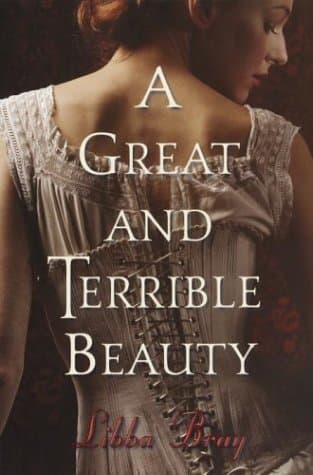
- A Great and Terrible Beauty
Libba Bray
3.8 (208k) average on GoodreadsFantasyWhile both The Book of Dead Days and Bray's A Great and Terrible Beauty feature young protagonists thrust into supernatural mysteries with gothic undertones, Bray's novel delves more deeply into themes of female agency, social critique, and psychological complexity within its historical setting. Sedgwick's focus is more on the immediate peril and a race against time, with less emphasis on the broader societal implications or the protagonist's internal psychological landscape. Bray's character development, particularly for Gemma, is often cited as more layered, as noted by critics like those in Publishers Weekly.
- Harry Potter and the Sorcerer's Stone
J.K. Rowling
4.5 (7M) average on GoodreadsFantasyRescued from a miserable life under the stairs, an orphaned boy discovers he's a wizard destined for a magical school, where he uncovers a dangerous secret tied to the dark wizard who murdered his parents.
- The Hunger Games
Suzanne Collins
4.3 (6.4M) average on GoodreadsFantasyIn a future where children fight to the death on live television, Katniss Everdeen volunteers for the arena, turning a death sentence into a fight for survival and a spark of rebellion.


Enjoyed the summary?
A summary gives you the shape of the book. The book itself has the detail, the examples and the voice.
Find The Book of Dead Days on AmazonAs an Amazon Associate, BookBrief earns from qualifying purchases. How we're funded