

Synopsis
Covers the whole plot, including the ending.
- Difficulty
- Easy
- Pacing
- Slow
- Mood
- Reflective, Liberating, Poignant, Witty
- Read it if
- You enjoy stories about female empowerment, late-life reinvention, and quiet, character-driven narratives.
- Skip it if
- You prefer fast-paced plots, high-stakes drama, or clear-cut resolutions.
The Book of Eve Plot Summary
Covers the whole plot, including the ending.
The Departure
Eva Carroll, 65, abruptly walks out on her husband, Burt, after 40 years of marriage. The decision is sudden and unplanned, made while Burt is preoccupied with a football game. She packs a small bag, takes her savings, and leaves their comfortable suburban home in Montreal. There is no argument, no note, just a quiet, decisive departure driven by a sense of suffocation and a desire for an unknown freedom. She feels immediate relief, leaving a life she found dull and confining, characterized by Burt's predictable routines and lack of emotional connection.
Arrival in the City
Eva takes a bus into the city, choosing a less affluent, working-class area of Montreal. She finds a room for rent in a run-down boarding house owned by a Polish immigrant, Mrs. Klonk. The room is small, sparsely furnished, and far from the comfort she left behind, but Eva embraces its simplicity and anonymity. She feels independent, enjoying the freedom to make her own choices, from what she eats to how she spends her time. This new environment, while initially isolating, offers a stark contrast to her previous life and helps her become self-reliant.
Adjusting to Solitude and Simplicity
Eva settles into a routine of solitude, learning to cook for herself on a hot plate and manage her limited finances. She finds pleasure in small, everyday tasks she never had to do before, like grocery shopping and laundry. She reflects on her past marriage, realizing how much of her identity was defined by Burt's needs. Despite loneliness, a new sense of purpose emerges as she creates a life for herself, free from her former domestic role. She starts to observe the lives of others in her neighborhood, a world new to her.
First Encounters and New Perspectives
Eva becomes acquainted with the other residents of Mrs. Klonk's boarding house. She meets Mrs. Klonk, a gruff but kind landlady, and other tenants: a young actor, a quiet student, and a factory worker named Johnny. These interactions, though initially brief, expose Eva to different lifestyles and perspectives, expanding her understanding of the world beyond her sheltered suburban existence. She starts to feel less like an observer and more like a participant in this new reality.
Work and Financial Independence
Recognizing the need to supplement her savings, Eva looks for work. She finds a job at a local bakery, working the early morning shift. The work is physically demanding, but Eva embraces the challenge. She enjoys the camaraderie with her co-workers and the satisfaction of earning her own money. This job is a step towards full independence, providing financial security and a sense of purpose that had been missing for decades. She takes pride in her contribution and the physical exertion, feeling a renewed vitality.
The Developing Friendship with Johnny
Eva develops a quiet friendship with Johnny, the factory worker who lives in the boarding house. They share meals occasionally and talk. Johnny, a younger man, treats Eva with respect and kindness she hasn't experienced in a long time. Their interactions are free from the expectations that burdened her relationship with Burt. This friendship offers companionship and emotional support, helping Eva feel less isolated and more connected to her new life. It is a platonic bond that slowly deepens, built on shared experiences and mutual understanding.
Burt's Attempted Reconnection
Burt eventually tracks Eva down and calls her, trying to persuade her to return home. He expresses confusion and a superficial regret, failing to truly understand her reasons for leaving. Eva, however, remains firm in her decision. The conversation highlights the emotional distance between them and reinforces her conviction that she made the right choice. She feels no guilt, only a quiet resolve to continue building her new life, free from her past marriage. This interaction solidifies her commitment to independence.
A New Romantic Connection
The friendship between Eva and Johnny deepens and unexpectedly becomes a romantic relationship. Their shared experiences and mutual respect lead to a physical and emotional intimacy Eva had not anticipated, especially at her age. This new love is tender, respectful, and brings Eva joy. It is a relationship built on genuine affection and shared vulnerability, contrasting with the stagnant nature of her marriage to Burt. Eva experiences a rejuvenation of spirit and body through this connection.
Confronting Age and Societal Norms
Eva becomes aware of societal judgments regarding her unconventional life choices and her relationship with a younger man. She encounters subtle disapproval and curiosity from others, but she finds the strength to disregard these external pressures. Her newfound independence and happiness with Johnny outweigh any concerns about what others might think. This period marks a development in her self-acceptance and her defiance of traditional expectations for women of her age, solidifying her commitment to living authentically on her own terms.
Embracing the Present
Eva fully integrates into her new life, finding peace and contentment. She continues her work at the bakery, cherishes her relationship with Johnny, and enjoys the simple pleasures of her independent existence. She no longer dwells on the past or worries excessively about the future, focusing instead on the richness of her present experiences. Her journey culminates in an understanding of self and a joyous acceptance of the life she has chosen, free from the constraints of her previous existence. She recognizes her own strength and resilience.
The Book of Eve Characters
Eva Carroll
Protagonist
A 65-year-old woman who leaves her marriage to find independence and self-discovery.
Eva is a woman who, after 40 years of marriage, realizes she has lost herself within the confines of her domestic role. She is initially timid and unassertive but possesses an underlying strength and a deep longing for personal freedom. Her journey is driven by a quiet desperation to reclaim her identity and experience life on her own terms. She is observant, reflective, and surprisingly resilient, adapting to harsh new circumstances with a growing sense of self-worth and independence. She values authenticity and genuine connection above societal expectations.
Relationships: Burt Carroll (Husband for 40 years; a stagnant, unfulfilling relationship.); Johnny (Younger lover and companion; a relationship built on mutual respect and affection.); Mrs. Klonk (Landlady; initially gruff, but a source of stability and practical advice.)
Burt Carroll
Antagonist/Mentioned
Eva's husband of 40 years, representing the life she chooses to leave behind.
Burt is Eva's husband, depicted as a man of routine, emotionally distant, and largely oblivious to Eva's inner life. He represents the comfortable but stifling suburban existence that Eva escapes. His attempts to contact her after she leaves reveal a superficial understanding of her unhappiness, seeing her departure as an inconvenience rather than a profound personal crisis. He is not malicious, but his self-absorption and lack of emotional depth are key factors in Eva's decision to leave. He embodies the societal expectation of a traditional, patriarchal marriage.
Relationships: Eva Carroll (Wife; a relationship characterized by emotional neglect and unfulfillment.)
Johnny
Supporting
A younger factory worker and fellow tenant who becomes Eva's lover.
Johnny is a kind, gentle, and respectful man who works at a factory. He lives in Mrs. Klonk's boarding house and forms an unexpected bond with Eva. He offers her companionship, emotional support, and eventually, a tender romantic relationship. Johnny's youth and lack of pretense stand in stark contrast to Burt, offering Eva a fresh perspective on love and partnership. He is not without his own struggles but approaches life with an open heart, and his genuine affection helps Eva to feel seen and valued.
Relationships: Eva Carroll (Lover and companion; a deeply affectionate and respectful relationship.)
Mrs. Klonk
Supporting
The gruff but ultimately kind owner of the boarding house where Eva lives.
Mrs. Klonk is a Polish immigrant and the landlady of the dilapidated boarding house. She is initially portrayed as stern, practical, and somewhat intimidating, but beneath her gruff exterior lies a pragmatic and occasionally compassionate nature. She provides Eva with a safe, if humble, haven and a sense of community. Her no-nonsense approach to life and her resilience serve as a subtle example for Eva, who is learning to navigate a much harsher reality than she is accustomed to. She is a survivor who runs her establishment with an iron will.
Relationships: Eva Carroll (Landlady to tenant; a relationship of mutual respect and eventual understanding.)
The Bakery Co-workers
Supporting/Mentioned
Eva's colleagues at the bakery who introduce her to a new social dynamic.
These unnamed individuals represent Eva's first foray into paid labor and a new social circle outside her domestic sphere. They are working-class individuals who accept Eva without judgment, providing camaraderie and a sense of belonging. Their shared experiences and the physical demands of the work foster a sense of solidarity that is new and invigorating for Eva. They allow her to feel useful and part of a team, contributing to her growing sense of self-worth and independence.
Relationships: Eva Carroll (Colleagues; a relationship of shared work and camaraderie.)
The Book of Eve Themes
The Quest for Self-Identity and Freedom
The central theme is Eva's search for her authentic self after decades of being defined by her role as a wife. Her spontaneous departure from Burt is not an escape from him, but an escape from a life that had suffocated her identity. She finds freedom in anonymity, poverty, and the challenge of building a new life. This is evident when she embraces the simple, solitary existence in the boarding house, cooking for herself and relishing the freedom to choose her own daily activities, a stark contrast to her previous life dictated by Burt's routines.
“She felt like a newly released prisoner, blinking in the harsh, beautiful light of absolute freedom.”
Age and Rejuvenation
The novel challenges societal expectations regarding aging, particularly for women. Eva, at 65, refuses to accept a life of quiet decline. Her journey is one of rejuvenation, both emotional and physical. She discovers new capacities for work, love, and self-sufficiency, proving that age is not a barrier to personal growth or happiness. Her relationship with Johnny, a younger man, further shows this theme, as it defies conventional norms and highlights her renewed vitality and capacity for intimacy. She finds a second spring in her life, proving that it's never too late for transformation.
“Who said life was over at sixty? Hers was just beginning.”
The Nature of Love and Companionship
The book explores different facets of love: the stagnant, unfulfilling love of Eva's marriage to Burt, and the tender, respectful, and passionate love she finds with Johnny. Her relationship with Burt was based on routine and obligation, without genuine emotional connection. In contrast, her connection with Johnny is built on mutual respect, shared vulnerability, and an appreciation for her true self. This theme shows that love can take unexpected forms and that companionship, even in old age, is important for human flourishing, emphasizing quality over societal expectations.
“It was a different kind of love, without history or expectation, just a quiet, surprising warmth.”
Social Class and Perspective
Eva's move from a comfortable suburban home to a working-class boarding house exposes her to a new social reality. This shift broadens her perspective, forcing her to confront the realities of poverty and different lifestyles. She learns to appreciate the resilience and community spirit of those in her new neighborhood, a world she was previously sheltered from. This change in social class is integral to her self-discovery, as it strips away her former privileges and forces her to engage with life on a more fundamental level, fostering empathy and understanding.
“She had lived in a gilded cage, unaware of the vibrant, sometimes harsh, world outside.”
Plot Devices & Literary Techniques
The Epistolary Frame (Implied)
The story is presented as Eva's personal reflections, like entries in a journal.
While not explicitly a diary, the narrative style often feels like Eva's internal monologue or a reflective account of her experiences, giving the reader direct access to her thoughts, feelings, and evolving perspectives. This intimate, first-person (or close third-person with deep immersion) narration allows the reader to understand her motivations and internal struggles, making her transformation deeply personal and relatable. It emphasizes her subjective experience of freedom and self-discovery, allowing for a retrospective understanding of her past and present choices.
Symbolism of the Boarding House
The dilapidated boarding house symbolizes Eva's new, unadorned life and freedom.
The run-down boarding house owned by Mrs. Klonk serves as a powerful symbol. It represents Eva's rejection of her previous life of material comfort and her embrace of a simpler, more authentic existence. Its worn appearance and diverse inhabitants reflect the unvarnished reality Eva now inhabits, free from the pretense and expectations of her suburban past. The small, spartan room symbolizes her newfound independence and the stripping away of unnecessary luxuries, allowing her to build a life based on fundamental needs and desires.
The Sudden Departure
Eva's spontaneous and unplanned exit from her marriage as a catalyst for change.
Eva's decision to leave her husband is presented as a sudden, unplanned act, rather than a carefully considered one. This spontaneity highlights the depth of her desperation for change and the overwhelming impulse for freedom. It serves as the primary inciting incident, immediately thrusting her into an unfamiliar world and forcing her to confront her own capabilities. This abruptness underscores the idea that profound life changes can occur without meticulous planning, driven by instinct and a breaking point, setting the stage for her immediate and dramatic transformation.
The Book of Eve Quotes
“I was born in the world, and there I was, Eve. No other name, no other place, no other life.”
“The world was full of people, but I was not one of them. I was a thing apart, a creature of my own making.”
“Loneliness is a peculiar thing. It can be a vast emptiness, or it can be a comfortable cloak.”
“I learned to read, not from books, but from the faces of people, from the way they moved, the way they spoke.”
“There is a kind of freedom in having nothing to lose.”
“The past is a country I did not visit, and the future is a road I do not see.”
“Love, I decided, was a dangerous thing, but also the only thing that made sense of the chaos.”
“To be seen, truly seen, is a terrifying and wonderful thing.”
“I was not a woman made for houses and husbands, but a woman made for the wind and the open sky.”
“The world keeps turning, whether you are in it or not. That is the great comfort, and the great terror.”
“Every day was a new beginning, because I had no yesterday to cling to.”
“Sometimes the greatest strength is to simply endure, to keep breathing, to keep going.”
“A name, I discovered, was not just a sound, but a story, a history, a belonging.”
“The silence was not empty; it was full of all the words I had never spoken, all the lives I had never lived.”
Quiz
10 questions on the plot and the characters. Each answer comes with a short explanation.
Question 1
What is Eva Carroll's approximate age when she decides to leave her husband?
- Early 40s
- Late 50s
- Early 60s
- Late 60s
Show answer
C. Early 60s Eva has been married for 40 years, and it's implied she married in her early twenties, placing her in her early sixties when she leaves.
Question 2
Where does Eva initially move to after leaving her husband, before finding her own apartment?
- A hotel in downtown Montreal
- Her sister's house
- A boarding house on the 'wrong' side of Montreal
- A small cottage outside the city
Show answer
C. A boarding house on the 'wrong' side of Montreal The book's description explicitly states she builds a new life for herself in a boarding house on the 'wrong' side of Montreal.
Question 3
What is Eva's initial feeling immediately after walking out on her husband?
- Overwhelming guilt and regret
- Fear and anxiety about the unknown
- Rejuvenation and blissful freedom
- Anger and resentment towards her husband
Show answer
C. Rejuvenation and blissful freedom The book description states, 'Yet Eva feels neither guilt nor remorse. Instead, she feels rejuvenated and blissfully free.'
Question 4
What is a primary theme explored through Eva's journey in 'The Book of Eve'?
- The inevitable decline of marital relationships over time
- The societal expectations placed on women in old age
- The pursuit of individual freedom and self-discovery in later life
- The challenges of living on a fixed income in a big city
Show answer
C. The pursuit of individual freedom and self-discovery in later life Eva's entire journey is about breaking free from her old life to find happiness and independence, highlighting themes of freedom and self-discovery.
Question 5
How does Eva's relationship with her children evolve or change after she leaves her husband?
- They immediately support her decision and offer help.
- They are largely absent from her new life, causing her sadness.
- They are initially disapproving or confused, reflecting societal norms.
- She completely cuts off contact with them to avoid judgment.
Show answer
C. They are initially disapproving or confused, reflecting societal norms. Her children, particularly her daughter, struggle to understand or accept her radical departure from their family's established life, reflecting the societal shock of her actions.
Question 6
What kind of work does Eva undertake to support herself in her new independent life?
- She becomes a freelance writer.
- She works as a part-time librarian.
- She finds various odd jobs, including cleaning and babysitting.
- She relies on a small pension from her previous marriage.
Show answer
C. She finds various odd jobs, including cleaning and babysitting. Eva takes on practical, often physically demanding, part-time jobs like cleaning and babysitting to make ends meet and maintain her independence.
Question 7
What specifically triggers Eva's spontaneous decision to leave her husband, despite it being unplanned?
- A sudden argument over a significant financial matter.
- Her husband's infidelity, which she discovers unexpectedly.
- An accumulation of quiet dissatisfaction and a desire for something more.
- A direct invitation from a friend to join them in a new city.
Show answer
C. An accumulation of quiet dissatisfaction and a desire for something more. The book suggests her departure is 'an unplanned, completely spontaneous gesture' born from a long-simmering, unarticulated desire for freedom, rather than a single dramatic event.
Question 8
How does Eva's new love interest, Keir, differ significantly from her estranged husband, Robert?
- Keir is much wealthier and offers her financial security.
- Keir is younger and more physically attractive than Robert.
- Keir is more open, unconventional, and accepting of Eva's independence.
- Keir is also married, making their relationship illicit.
Show answer
C. Keir is more open, unconventional, and accepting of Eva's independence. Keir represents the unconventional and independent life Eva now seeks. He embraces her freedom and individuality, contrasting with her husband's more traditional expectations.
Question 9
What is the primary symbolic significance of Eva moving to the 'wrong' side of Montreal?
- It highlights her financial struggles and inability to afford better housing.
- It represents her deliberate rejection of societal norms and expectations.
- It foreshadows her eventual return to her old, more respectable life.
- It signifies her desire to remain anonymous and avoid being found by her family.
Show answer
B. It represents her deliberate rejection of societal norms and expectations. The phrase 'wrong side of Montreal' symbolizes her breaking away from her previous respectable, conventional life and embracing a new, less judged existence outside of social expectations.
Question 10
Despite finding happiness and independence, what subtle internal conflict does Eva still grapple with regarding her past life or her decision?
- A continuous struggle with financial insecurity, making her question her choice.
- Lingering doubts about whether she truly loved her husband at any point.
- A deep-seated fear of loneliness, despite her newfound freedom.
- A desire to reconcile with her husband and return to her old life.
Show answer
C. A deep-seated fear of loneliness, despite her newfound freedom. While the book emphasizes her freedom and happiness, Eva still faces moments of introspection and the very real human fear of being truly alone, a contrast to her previous life of constant companionship.
The Book of Eve FAQ
What prompts Eva Carroll's sudden departure from her marriage?
Eva's departure is not triggered by a specific fight or infidelity, but rather a slow, suffocating realization that her life with Vincent has become a series of expected routines and unfulfilled desires. One morning, the sheer weight of its predictability becomes unbearable, leading her to impulsively pack a bag and leave without a word.
How does Eva initially support herself financially after leaving Vincent?
Eva initially relies on a small amount of cash she had saved and the sale of a few personal items. She quickly seeks employment, finding work as a secretary, which provides her with a modest but sufficient income to cover her rent at Mrs. Parker's boarding house and her daily expenses.
Who is Mrs. Parker and what role does she play in Eva's new life?
Mrs. Parker is the no-nonsense but ultimately kind proprietress of the boarding house where Eva finds refuge. She provides Eva with a room and a degree of anonymity, but also a sense of community among the other residents, becoming a stable, if somewhat gruff, maternal figure.
Describe Eva's relationship with her children, Stephen and Elizabeth, after her departure.
Eva's relationship with her children becomes strained and complex. Stephen, her son, is initially disapproving and struggles to understand her actions, while Elizabeth, her daughter, shows a mix of concern and a nascent understanding, though she too is bewildered by her mother's radical choice.
Who is the man Eva falls in love with and what is his background?
Eva falls in love with Burt, a younger man who is also a resident at Mrs. Parker's boarding house. Burt is a musician, specifically a jazz trumpeter, who brings a vibrant, unconventional energy into Eva's life, representing a stark contrast to Vincent's staid demeanor.
What is the significance of the boarding house's location on the 'wrong' side of Montreal?
The 'wrong' side of Montreal symbolizes Eva's deliberate break from her upper-middle-class life and the societal expectations that came with it. It represents a raw, less polished existence where she can shed her former identity and forge a new one free from judgment.
Are there any subtle indications early in the book that Eva was unhappy, even before her spontaneous departure?
Yes, the narrative subtly hints at Eva's long-standing discontent through her internal monologues, where she often reflects on the repetitive nature of her days and the unspoken disappointments in her marriage. Her detachment from Vincent and their shared life is apparent in her observations.
How does Vincent react to Eva's leaving, and does he attempt to reconcile?
Vincent is initially shocked and deeply bewildered by Eva's departure, struggling to comprehend her actions. He does attempt to contact her and persuade her to return, appealing to their shared history and the disruption her absence causes, but Eva remains resolute.
What is the psychological impact of Eva's 'spontaneous' act on her own self-perception?
Eva experiences an profound shift in self-perception, feeling an unprecedented sense of liberation and authenticity. She sheds the constraints of her former role as wife and mother, discovering an independent identity and a capacity for joy she believed had long vanished.
How does Eva's age, being a woman in her sixties, influence her journey of self-discovery?
Eva's age is crucial, as it challenges societal norms about older women's roles and desires. Her journey demonstrates that self-discovery, romance, and independence are not exclusive to youth, empowering her to embrace a vibrant new chapter later in life.
What psychological barriers does Eva overcome in pursuing a relationship with Burt, given their age difference and her past?
Eva overcomes internal doubts about the appropriateness of their age difference and the perceived scandal of a relationship outside of marriage, especially after forty years with Vincent. She confronts her own internalized societal judgments, choosing personal happiness over convention.
How does Eva's experience reflect or challenge feminist ideals of the 1970s?
Eva's story resonates with 1970s feminist ideals by portraying a woman who rejects traditional domesticity and seeks personal fulfillment outside of marriage. Her quest for independence and self-definition, even late in life, aligns with the era's push for women's liberation.
Is Eva's decision ultimately portrayed as selfish or courageous?
The novel largely portrays Eva's decision as courageous, emphasizing her personal liberation and newfound happiness. While it acknowledges the impact on her family, the narrative focuses on her right to self-determination and the revitalizing effect it has on her.
What is the significance of the title, 'The Book of Eve,' in relation to the biblical Eve?
The title alludes to the biblical Eve, suggesting a parallel between Eva's 'fall' from her conventional life and the original Eve's act of defiance. Both Eves seek knowledge and experience outside prescribed boundaries, leading to a new, more complex existence.
Does the novel offer a definitive resolution or does it leave Eva's future open-ended?
The novel offers a sense of resolution for Eva's immediate happiness and independence, but it also leaves her future somewhat open-ended. While she finds love and contentment, the challenges of her new life and relationships are ongoing, suggesting a continuous journey rather than a final destination.
How does the author use Eva's internal monologue to convey her emotional state and evolving perspective?
The author extensively uses Eva's internal monologue to provide direct access to her thoughts, doubts, and burgeoning joys. This technique allows readers to intimately experience her journey of self-discovery, understanding her motivations and the profound emotional shifts she undergoes as she builds a new life.
Are there any characters in the boarding house, other than Burt, who significantly impact Eva's transition?
While Burt is Eva's romantic interest, other residents at Mrs. Parker's boarding house, such as the eccentric Miss Pym or the quiet Mr. Henderson, contribute to the tapestry of her new life. They offer a sense of community and normalcy in her unconventional existence, providing a social fabric distinct from her past.
How does the setting of Montreal contribute to the novel's atmosphere and Eva's journey?
Montreal, with its distinct cultural blend and vibrant urban landscape, provides a dynamic backdrop for Eva's transformation. The contrast between the city's lively 'wrong side' and the more traditional areas she left behind underscores her journey from a confined existence to one of freedom and exploration.
Similar books
- Major Pettigrew's Last Stand
Helen Simonson
3.9 (132k) average on GoodreadsLiterary FictionFeatures an older protagonist finding unexpected love and challenging societal norms in their later years.
- Olive Kitteridge
Elizabeth Strout
3.8 (172k) average on GoodreadsLiterary FictionExplores the interior life of an older woman in a small town, focusing on relationships and personal growth.
- A Man Called Ove
Fredrik Backman
4.4 (569k) average on GoodreadsFictionDeals with an older character's journey of self-discovery and connection after a significant life change, with a blend of humor and poignancy.
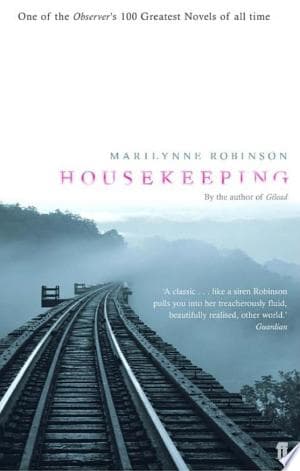
- Housekeeping
Marilynne Robinson
3.8 (44k) average on GoodreadsLiterary FictionBoth novels explore female solitude and unconventional living. However, Robinson's novel focuses on a childhood shaped by absence and often delves into a more melancholic, poetic contemplation of loss. "The Book of Eve" distinguishes itself by focusing on a later-life awakening and a more optimistic embrace of newfound independence.
- Nineteen Eighty-Four
George Orwell
4.2 (5.5M) average on GoodreadsFictionWinston Smith dreams of truth and rebellion in a world where Big Brother watches all, but he confronts the terrifying power of a regime that controls not just actions, but thoughts.
- The Frozen River
Ariel Lawhon
4.4 (600k) average on GoodreadsFictionIn 1789 Maine, a heroic midwife's diary helps her expose a murder and get justice in a town that wants to silence her.





Enjoyed the summary?
A summary gives you the shape of the book. The book itself has the detail, the examples and the voice.
Find The Book of Eve on AmazonAs an Amazon Associate, BookBrief earns from qualifying purchases. How we're funded