

Synopsis
Covers the whole plot, including the ending.
- Difficulty
- Medium
- Pacing
- Slow
- Mood
- Reflective, Melancholic, Poignant, Observational, Humanistic
- Read it if
- You appreciate character-driven literary fiction that delves deeply into the complexities of human relationships and the quiet dramas of small-town life, with a focus on psychological realism and emotional nuance.
- Skip it if
- You prefer fast-paced plots, clear-cut resolutions, or stories with a single protagonist and linear narrative arc. This book can be melancholic and deals with difficult themes.
Olive Kitteridge Plot Summary
Covers the whole plot, including the ending.
Pharmacy
Henry Kitteridge, the kind owner of Crosby Pharmacy, observes the lives of the townspeople, including his often-brusque wife, Olive. He hires Denise Thibodeau, a young, shy woman, to work at the pharmacy. Denise, recently married to the aspiring musician Jerry McCarthy, quickly becomes an object of Henry's quiet affection and concern, as he notices her delicate nature and her husband's erratic behavior. Henry's loyalty to Olive is unwavering despite her difficult personality, and he finds solace in his routines and his interactions with the community. He sees the complexities of small-town life, often acting as a quiet confidant or observer for the various residents who frequent his store, while Olive remains a formidable, often judgmental, presence in their shared life.
The Piano Player
Angela O'Meara, a lounge pianist at the local restaurant, has a deep, unrequited love for a married man named Paul. Her life is a melancholic echo of past choices and missed opportunities. When Paul's wife dies, Angela finds herself drawn back into his orbit, hoping for a resolution to their long emotional entanglement. However, she discovers that Paul is already involved with another woman, a revelation that shatters her hopes. Angela's story explores loneliness, regret, and the power of first loves, even when they remain unfulfilled. Olive Kitteridge, observing Angela from a distance, offers a brief, unsolicited comment that, while seemingly harsh, carries a kernel of Olive's own complex understanding of human suffering.
A Little Burst
Kevin Coulson and his new wife, Patty, are on their honeymoon when a sudden, tragic accident occurs. Patty is killed in a boating incident, leaving Kevin in shock and grief. The community of Crosby rallies around Kevin, offering support and condolences, but his sorrow is immense and isolating. Olive Kitteridge, despite her usual reserved nature, observes Kevin's suffering with a surprising degree of empathy. This chapter highlights the suddenness of tragedy and its far-reaching impact on individuals and small communities, forcing characters to confront their own vulnerabilities and the fragility of life. Kevin's struggle to cope with the loss of his wife explores the raw pain of bereavement and the arduous path towards healing.
Security
Olive Kitteridge, while shopping, encounters Kevin Coulson, a former student who is now a young man plagued by depression and suicidal thoughts after his wife's death. Kevin, lost in his grief, attempts to shoplift a small item. Olive, recognizing his distress, intervenes not with condemnation but with a surprising act of compassion. She talks to him, offering a blunt but empathetic perspective on his pain, sharing a piece of her own understanding of life's hardships. This interaction is a moment for Olive, revealing a deeper, more vulnerable side of her character beneath her often-prickly exterior. It shows her complex nature and her unexpected capacity for connection and concern, particularly for those she perceives as suffering.
The Tide
This chapter describes the childhood of Christopher Kitteridge, Olive and Henry's son, focusing on his complex and often strained relationship with his mother. Christopher, a sensitive boy, frequently feels overshadowed and criticized by Olive, who struggles to express her affection in conventional ways. Henry, in contrast, is a more gentle and supportive presence, often mediating between Olive and Christopher. The narrative highlights Christopher's longing for his mother's approval and his internal conflict as he tries to navigate her demanding personality. This chapter provides insight into the family dynamics that shaped Christopher, revealing the roots of his later emotional distance and his struggle to forge his own identity apart from his powerful mother.
Windswept Pond
Olive Kitteridge reflects on her past, particularly a significant encounter with a fellow teacher, Jim O'Casey, a charismatic and intelligent man who once stirred a quiet longing within her. She recalls a time when she considered leaving Henry for Jim, a moment of internal conflict and temptation. This chapter reveals Olive's emotional landscape, her unfulfilled desires, and the choices she made that shaped her life. It shows her awareness of her own complexities and the road not taken. Her memories are tinged with both regret and a certain fierce acceptance of her reality, further illustrating her understanding of the nuances of human relationships and the enduring impact of past decisions.
The Burglar
Olive Kitteridge experiences a home invasion, an unsettling event that forces her to confront her own vulnerability and the precariousness of her existence. During the incident, she engages in an unexpected conversation with the young burglar, who is revealed to be a troubled individual named Harmon. Instead of pure fear or anger, Olive finds herself engaging with him on a human level, offering him a meal and a degree of understanding. This encounter, while frightening, leaves Olive with a renewed sense of her own strength and a deeper, albeit uncomfortable, understanding of the desperation that can drive people to extreme acts. It subtly shifts her perspective on both herself and the world around her, highlighting her capacity for empathy.
Incoming Tide
Christopher Kitteridge, now an adult and a podiatrist, marries Suzanne, a woman Olive disapproves of, primarily because she feels Suzanne is manipulative and not good enough for her son. The wedding itself is a source of tension, particularly for Olive, who struggles to accept her son's choice and the perceived distance between them. Henry tries to bridge the gap, but Olive's critical nature creates an uncomfortable atmosphere. This chapter details the strained family dynamics, particularly Olive's inability to fully embrace her son's independence and happiness. It further illustrates the impact of parental expectations and the challenges of adult children forging their own paths while still seeking familial approval.
Shipwreck
Henry Kitteridge suffers a debilitating stroke, leaving him partially paralyzed and dependent on Olive for care. This event forces Olive to confront her deep, often unspoken, love for her husband. She dedicates herself to his care, demonstrating loyalty and tenderness that surprises even herself. The experience brings them closer in a quiet, intimate way, as Olive reflects on their shared life and the enduring bond they forged. This chapter shows the quiet strength of their marriage and the way that crisis can reveal the deepest currents of affection. It also highlights Olive's resilience and her capacity for selfless devotion, offering a different facet of her complex character.
The Last Scene
Years after Henry's death, Olive Kitteridge, now in her seventies, lives alone and reflects on her life, her grief, and her enduring sense of self. She develops an unlikely friendship with Jack Kennison, a kind and lonely retired Harvard professor who has also experienced loss. Their connection is built on shared experiences of aging, loneliness, and a mutual understanding of life's complexities. This relationship offers Olive a new form of companionship and a renewed sense of belonging, challenging her ingrained isolation. The chapter concludes with Olive finding a measure of peace and acceptance, recognizing the beauty and pain of life, and the human need for connection, even in old age.
Principal Figures
Olive Kitteridge
Protagonist
A retired, often stern, but deeply complex and empathetic schoolteacher.
Olive Kitteridge is a retired seventh-grade math teacher in Crosby, Maine, known for her formidable presence, blunt honesty, and often critical demeanor. Beneath her brusque exterior, she possesses a keen observational intelligence and a surprising capacity for empathy, especially for those suffering. She struggles with her own emotional landscape, often alienating those closest to her, yet she deeply cares for her family and community. Olive is fiercely independent but also deeply lonely, grappling with the changes in her town and within herself. Her internal world is rich with reflections on love, loss, and the complexities of human relationships.
Relationships: Henry Kitteridge (Husband, a kind and patient man who balances her sharp edges with his gentle nature.); Christopher Kitteridge (Son, a strained and complex relationship marked by Olive's critical nature and Christopher's longing for her approval.); Jack Kennison (Later-life companion and friend, a shared understanding of loneliness and loss.)
Henry Kitteridge
Supporting
Olive's kind, patient, and unassuming husband, owner of the local pharmacy.
Henry Kitteridge is Olive's long-suffering but deeply loving husband, a pharmacist who serves as a quiet anchor in the Crosby community. He is known for his gentleness, patience, and unwavering loyalty, often acting as a buffer between Olive and the world. Henry finds quiet joy in his routines and his interactions with the townspeople, offering a listening ear and a steady presence. He represents a grounded, compassionate force, often contrasting with Olive's more turbulent nature. His internal life, though less overtly dramatic than Olive's, is rich with quiet observations and a deep, abiding love for his family and community.
Relationships: Olive Kitteridge (Wife, a deeply loving but often challenging marriage.); Christopher Kitteridge (Son, a supportive and understanding father figure.); Denise Thibodeau (Employee, a quiet, protective affection and concern for her well-being.)
Christopher Kitteridge
Supporting
Olive and Henry's son, a podiatrist struggling with his mother's influence.
Christopher Kitteridge is the only child of Olive and Henry, a sensitive and intelligent boy who grows into a successful podiatrist. His childhood is marked by a complex relationship with his mother, Olive, whose critical nature often makes him feel inadequate and stifled. He longs for her approval but also resents her strong personality, leading to emotional distance in adulthood. Christopher struggles to forge his own identity apart from his powerful mother, often making choices that subtly defy her expectations. He represents the universal challenge of adult children navigating their parents' influence and seeking their own happiness.
Relationships: Olive Kitteridge (Mother, a strained and complex relationship.); Henry Kitteridge (Father, a more supportive and understanding bond.); Suzanne (Wife, a choice Olive disapproves of, further highlighting his desire for independence.)
Denise Thibodeau
Supporting
A shy young woman who works at Henry's pharmacy, experiencing marital troubles.
Denise Thibodeau is a young, quiet, and somewhat naive woman who works at Henry Kitteridge's pharmacy. Recently married to the aspiring musician Jerry McCarthy, Denise's life quickly becomes fraught with marital difficulties and her husband's infidelity. She is a gentle soul, easily hurt and often overwhelmed by the harsh realities of her life. Henry Kitteridge develops a quiet, protective affection for her, seeing her vulnerability. Denise represents the fragility of innocence and the harsh awakenings that can come with early adulthood and difficult relationships. Her story highlights themes of domestic struggle and the search for stability and kindness.
Relationships: Henry Kitteridge (Employer, a source of quiet support and paternal affection.); Jerry McCarthy (Husband, a troubled and unfaithful musician.)
Angela O'Meara
Supporting
A melancholic lounge pianist haunted by a past, unrequited love.
Angela O'Meara is a lounge pianist at a local restaurant, a talented but melancholic woman whose life is shaped by a long-standing, unrequited love for a married man named Paul. She embodies the quiet despair of missed opportunities and the enduring power of a love that never fully materialized. Her music often reflects her inner turmoil and sorrow. Angela's story explores themes of loneliness, regret, and the search for connection, even when hope seems dim. She represents the many individuals in Crosby who carry their own private burdens, often observed by Olive with a mix of judgment and reluctant understanding.
Relationships: Paul (Object of unrequited, long-standing love.)
Kevin Coulson
Supporting
A former student of Olive's, devastated by tragedy and struggling with depression.
Kevin Coulson is a young man, a former student of Olive Kitteridge, who experiences a profound and sudden tragedy when his wife, Patty, dies in a boating accident shortly after their wedding. Overwhelmed by grief and depression, Kevin struggles to cope with his loss, leading to acts of desperation like shoplifting. He is a poignant figure of raw sorrow and the fragility of life. Olive's unexpected intervention and empathy towards Kevin reveal a softer side of her character, as she recognizes and connects with his deep suffering. His story underscores the devastating impact of loss and the challenging path towards healing.
Relationships: Patty (Deceased wife, whose death triggers his profound grief.); Olive Kitteridge (Former teacher, who offers him unexpected compassion during his darkest hour.)
Jack Kennison
Supporting
A retired Harvard professor who becomes a later-life companion to Olive.
Jack Kennison is a retired Harvard professor who moves to Crosby late in life after experiencing his own losses. He is intelligent, cultured, and also deeply lonely, having lost his wife and experienced estrangement from his children. Jack finds an unexpected connection with Olive Kitteridge, drawn to her sharp wit and genuine, if unconventional, nature. Their relationship, which develops in their later years, is built on a shared understanding of aging, grief, and the enduring human need for companionship. He offers Olive a new sense of connection and purpose, helping her to navigate her own loneliness and reflections on life.
Relationships: Olive Kitteridge (Later-life companion and friend, a bond forged through shared experiences of loss and loneliness.)
Jerry McCarthy
Mentioned
Denise Thibodeau's aspiring musician husband, prone to infidelity.
Jerry McCarthy is Denise Thibodeau's husband, an aspiring musician who is often absent, unfaithful, and emotionally distant. He represents the instability and heartbreak that Denise experiences in her early marriage. His character is primarily seen through Denise's struggles and Henry Kitteridge's observations, serving as a catalyst for Denise's vulnerability and Henry's protective instincts. Jerry embodies a certain kind of youthful recklessness and self-absorption, contributing to the quiet tragedies unfolding in Crosby.
Relationships: Denise Thibodeau (Wife, a source of marital strife and heartbreak.)
Themes & Insights
Loneliness and Connection
The novel explores the pervasive sense of loneliness that affects many characters in Crosby, despite living in a close-knit community. Olive herself is often isolated by her sharp personality, yet she yearns for connection. Characters like Angela O'Meara live with unrequited love, while Kevin Coulson is isolated by grief. The moments of genuine connection, often brief and unexpected, are powerful, such as Olive's interaction with Kevin in 'Security' or her later-life friendship with Jack Kennison, which provides solace and a shared understanding of life's hardships. The book suggests that connection, even fleeting or unconventional, is a fundamental human need.
“It was a good day, and the world was good, and she wanted to live in it. It was a good day, and she felt a connection to it all, to the trees and the sky and the cold, flat Atlantic.”
The Complexity of Love and Marriage
Strout dissects the multifaceted nature of love, particularly within long-term marriages. Olive and Henry's relationship is central, portrayed as a bond of deep, abiding love despite Olive's often harsh demeanor and Henry's quiet frustrations. Their marriage is not idealized but shown with all its imperfections, loyalty, and unspoken affection, especially evident after Henry's stroke. The novel also explores other forms of love—unrequited love (Angela), the devastating loss of love (Kevin), and the challenges of parental love (Olive and Christopher). It highlights that love is often messy, enduring, and manifests in unexpected ways.
“She had loved Henry. She had loved him for fifty years, and she had never told him. Not once.”
Grief and Loss
Grief is a palpable force throughout the novel, affecting almost every character. From Kevin Coulson's sudden, devastating loss of his wife, Patty, to Angela O'Meara's enduring sorrow over unfulfilled love, and Olive's eventual widowhood, the book portrays the different facets of mourning. It explores how individuals cope, or fail to cope, with profound loss, and how grief can isolate or, unexpectedly, create new bonds. The narrative emphasizes that loss is an inescapable part of the human experience, and healing is often a long, arduous, and non-linear process, shaping characters' identities and perspectives.
“There were moments, for example, when Olive felt a sudden surge of pure, raw grief for Henry, as though he had only just died.”
The Unspoken and Unseen Lives
A significant theme is the idea that beneath the surface of everyday life, people carry immense internal struggles and unexpressed emotions. Many characters, including Olive herself, present one face to the world while harboring complex inner lives, secret desires, and silent sorrows. Henry's quiet observations of his community, Denise's hidden marital pain, and Angela's private heartbreak are all examples. The novel subtly reveals the gap between outward appearances and inner realities, suggesting that true understanding often requires looking beyond the obvious and acknowledging the unspoken narratives that shape individual lives.
“It was a mistake to think you knew anyone, she thought. You knew a little bit of them, but not the whole.”
Aging and Change
The novel spans several decades, chronicling the aging process and the changes it brings to individuals and the small town of Crosby. Olive grapples with her own physical and emotional decline, the loss of loved ones, and the transformation of her community. The theme explores the challenges of adapting to new realities, the wisdom gained through experience, and the enduring human spirit in the face of time's relentless march. It highlights how memories, both cherished and painful, become more prominent in later life, shaping one's understanding of the past and the present, and the search for meaning in the twilight years.
“The world was changing, and she was changing with it, though she often felt she was fighting a losing battle.”
Plot Devices & Literary Techniques
Interconnected Vignettes
A series of interconnected short stories centered around a single protagonist.
The novel is structured as a collection of thirteen interconnected short stories, each focusing on different residents of Crosby, Maine, but always with Olive Kitteridge either as the central figure, a significant presence, or a tangential observer. This device allows Strout to explore a broad spectrum of human experiences and relationships within a specific community. It provides multiple perspectives on Olive's character, revealing her complexities through the eyes of others as well as her own internal monologue. This structure creates a rich, textured portrait of a town and its inhabitants, where seemingly disparate lives are woven together by shared geography and the gravitational pull of Olive's personality.
Limited Omniscient Point of View
Alternating perspectives provide insight into various characters' inner lives.
While Olive Kitteridge is the titular character, the narrative frequently shifts its limited omniscient point of view, allowing the reader deep access into the thoughts and feelings of other characters, such as Henry Kitteridge, Angela O'Meara, or Christopher Kitteridge. This device enriches the reader's understanding of the community and offers diverse perspectives on Olive herself, highlighting her impact on those around her. By seeing Olive through different lenses—her husband's patient love, her son's resentment, a former student's fear—her character becomes more nuanced and realistic, preventing her from being a one-dimensional figure. It underscores the theme of the unseen lives and the subjectivity of perception.
Foreshadowing and Flashback
Subtle hints of future events and recollections of the past inform the present.
Strout uses subtle foreshadowing, often in the form of quiet observations or fleeting thoughts, to hint at future events or character developments. For instance, early mentions of Denise Thibodeau's fragility or Angela O'Meara's melancholic nature subtly set the stage for their later struggles. Flashbacks, particularly Olive's recollections of her past with Jim O'Casey or her younger years, are employed to provide context and depth to characters' motivations and current emotional states. These devices weave a rich tapestry of time, connecting past decisions and experiences to the present realities of the characters, emphasizing the enduring impact of history on individual lives and relationships.
Olive Kitteridge Quotes
“The only thing I ever understood was that I didn't understand anything at all.”
“There was no such thing as a good person or a bad person. There were just people who did good things, and people who did bad things.”
“It was a terrible thing, to be a person, and to have to go on, and on, and on.”
“She had the feeling that she had been sleeping for a long time, and now she was awake, and the world was still there, and it was still beautiful, and it was still terrible.”
“But what she had learned was that the world was stranger than she had ever imagined, and that people were stranger still.”
“She was a woman who had lived a life, and the life had left its marks.”
“It amazed her, sometimes, the things people kept inside themselves.”
“The fact that you could love someone so much, and still want to kill them, was a mystery.”
“Life was a series of choices, and sometimes you just had to make the best one you could, with what you had.”
“You couldn't escape your past, not really. It was always there, a shadow, a reminder.”
“There were moments of pure happiness, yes, but they were like fireflies, brief and fleeting.”
“It was an ordinary day, but then, most days were ordinary, until something happened to make them not.”
“She was a difficult woman, yes, but she was also a woman who cared, deeply, in her own way.”
“The sea, always the sea, a constant presence, a reminder of something vast and indifferent.”
Quiz
10 questions on the plot and the characters. Each answer comes with a short explanation.
Question 1
What is Olive Kitteridge's profession before retirement?
- Librarian
- Schoolteacher
- Doctor
- Shop owner
Show answer
B. Schoolteacher Olive Kitteridge is a retired schoolteacher in the town of Crosby, Maine.
Question 2
What is the name of Olive's husband?
- Jim
- Frank
- Henry
- Robert
Show answer
C. Henry Olive's husband is Henry Kitteridge, who runs the local pharmacy.
Question 3
Which town in Maine serves as the primary setting for the novel?
- Bangor
- Crosby
- Portland
- Bar Harbor
Show answer
B. Crosby The novel is set in the fictional small town of Crosby, Maine, where Olive lives and interacts with various townspeople.
Question 4
What significant event occurs in Kevin Coulson's life that leads him to encounter Olive while contemplating suicide?
- He lost his job as a lawyer.
- His mother, a former student of Olive's, died.
- His wife left him for another man.
- He was diagnosed with a serious illness.
Show answer
B. His mother, a former student of Olive's, died. Kevin Coulson, a former student of Olive's, attempts to take his own life after his mother's death, highlighting his deep emotional struggles.
Question 5
What does Olive frequently complain about regarding the changes in her town and the world?
- The lack of new businesses and development.
- The increasing number of tourists.
- The decline in traditional values and the perceived deterioration of society.
- The rising property taxes.
Show answer
C. The decline in traditional values and the perceived deterioration of society. Olive often deplores the changes she observes in Crosby and the broader world, frequently lamenting a perceived decline in morals and traditional ways of life.
Question 6
What is the primary source of tension in Olive's relationship with her son, Christopher?
- Christopher's choice of career.
- Olive's critical nature and her son's feeling of being stifled or judged.
- A dispute over inheritance.
- Christopher's rebellious teenage years.
Show answer
B. Olive's critical nature and her son's feeling of being stifled or judged. Christopher often feels tyrannized by Olive's 'irrational sensitivities' and critical demeanor, leading to a strained and complex mother-son relationship.
Question 7
What role does Jim O'Casey, the lounge musician, play in Olive's life?
- He is a former colleague of Henry's.
- He is a brief romantic interest for Olive, representing a moment of connection and vulnerability.
- He is a patient of Henry's at the pharmacy.
- He is a student Olive once taught.
Show answer
B. He is a brief romantic interest for Olive, representing a moment of connection and vulnerability. Jim O'Casey, a lounge musician, shares a brief but significant emotional connection with Olive, offering her a moment of intimacy and understanding outside of her marriage.
Question 8
What does the recurring motif of the natural world, particularly the Maine coast and its weather, symbolize in the novel?
- The fleeting nature of human life and happiness.
- The unchanging, harsh, and often indifferent backdrop to human struggles and the enduring quality of life.
- The beauty and tranquility that Olive rarely experiences.
- The isolation and loneliness of the characters.
Show answer
B. The unchanging, harsh, and often indifferent backdrop to human struggles and the enduring quality of life. The Maine coast, with its rugged beauty and often harsh weather, serves as a constant, indifferent backdrop to the characters' lives, symbolizing the endurance required to face life's challenges and the enduring nature of human existence despite individual suffering.
Question 9
How does Olive's understanding of herself evolve throughout the various interconnected stories?
- She becomes more self-righteous and less empathetic.
- She remains largely unchanged, consistent in her views and personality.
- She gains a deeper, often painful, but honest self-awareness, recognizing her own flaws and vulnerabilities.
- She becomes entirely dependent on others for her emotional well-being.
Show answer
C. She gains a deeper, often painful, but honest self-awareness, recognizing her own flaws and vulnerabilities. Despite her stern exterior, Olive undergoes a journey of self-discovery, often painfully realizing her own complexities, her capacity for love and cruelty, and the limitations of her perspective, leading to a deeper, more honest understanding of herself.
Question 10
In the story 'Security,' what is the primary reason Olive is critical of Christopher's new wife, Suzanne?
- Suzanne is much younger than Christopher.
- Olive perceives Suzanne as overly cheerful, insincere, and not a suitable match for her son.
- Suzanne has a very different cultural background.
- Suzanne is financially irresponsible.
Show answer
B. Olive perceives Suzanne as overly cheerful, insincere, and not a suitable match for her son. Olive is intensely critical of Suzanne, finding her overly optimistic and seemingly superficial, which highlights Olive's own discomfort with outward displays of happiness and her difficulty accepting her son's choices.
Olive Kitteridge FAQ
What is the overarching premise of 'Olive Kitteridge'?
The book is a collection of interconnected short stories centered around Olive Kitteridge, a retired, often cantankerous middle school math teacher, and the various residents of Crosby, Maine. It explores the complexities of small-town life, human relationships, and the quiet struggles and triumphs of ordinary people over several decades.
Who is Olive Kitteridge, and what are her most defining characteristics?
Olive Kitteridge is the titular protagonist, a formidable, often blunt woman with a deep, if sometimes hidden, capacity for empathy. She is characterized by her stern demeanor, her love for her husband Henry, her complicated relationship with her son Christopher, and her keen, though often critical, observations of her community.
How does the structure of the book contribute to its themes?
The book is structured as a series of interconnected stories, some with Olive as a central figure, others where she is a minor character or merely observed. This structure allows for a multifaceted portrayal of Crosby and its inhabitants, revealing how individual lives intersect and influence one another, and how Olive's presence shapes the community, even when she's not the focus.
What role does Crosby, Maine, play in the narrative?
Crosby, Maine, is more than just a setting; it's almost a character in itself, reflecting the changing tides of small-town America. Its tight-knit community, its struggles with economic decline, and its enduring sense of place provide the backdrop against which the characters' personal dramas unfold, highlighting themes of belonging and isolation.
What is the nature of Olive's relationship with her husband, Henry?
Olive and Henry Kitteridge have a long, complex marriage built on deep affection, mutual respect, and unspoken resentments. Henry, a kind and gentle pharmacist, often serves as a foil to Olive's bluntness, and their dynamic reveals the enduring power and quiet compromises inherent in a lifelong partnership.
How does the story 'Pharmacy' subtly reveal Henry's inner life and his perception of Olive?
In 'Pharmacy,' Henry's interactions with Denise Thibodeau reveal his quiet kindness and his capacity for affection outside his marriage. His internal monologue, particularly his thoughts about Olive's formidable nature, subtly hints at the emotional space he often seeks from her intensity, highlighting his own gentle resilience.
What is the significance of the deer Olive sees in 'The Piano Player'?
The deer Olive sees after her encounter with Kevin Coulson symbolizes a fleeting moment of grace, beauty, and perhaps a connection to something wild and untamed, much like the unexpected emotional vulnerability she experiences. It contrasts with the harsh realities of human suffering she has just witnessed and her own internal turmoil.
What is the underlying connection between Olive and the character of Kevin Coulson, the lounge musician?
Both Olive and Kevin Coulson carry deep, unresolved emotional wounds and a sense of isolation, despite being surrounded by others. Kevin's despair over a past romance mirrors Olive's own buried sorrows and her struggles with intimacy, creating a subtle, unspoken understanding between them during their brief, impactful encounter.
How does Olive's relationship with her son, Christopher, evolve and what does it reveal about her?
Olive's relationship with Christopher is fraught with tension; he feels stifled by her strong personality and critical nature. As he grows, their dynamic reveals Olive's deep, often misguided love, her fear of losing him, and her inability to express affection in ways he can accept, leading to a profound sense of mutual misunderstanding.
Discuss Olive's coping mechanisms for grief and loneliness, particularly after Henry's death.
Olive copes with grief and loneliness through a combination of stoicism, sharp wit, and a continued, if sometimes intrusive, engagement with her community. She avoids direct emotional expression, often channeling her feelings into practical tasks or critical observations, until her eventual, vulnerable connection with Jack Kennison.
How does the novel explore the concept of 'hidden lives' or internal struggles versus external appearances?
The novel masterfully reveals the vast discrepancy between characters' outward personas and their complex inner worlds. Each story peels back layers, showing that even the most seemingly ordinary or contented individuals, like Henry, harbor secret desires, regrets, or profound sadness, emphasizing the isolating nature of private experience.
What psychological impact does Olive's bluntness and critical nature have on those around her?
Olive's bluntness often creates emotional distance and can be deeply hurtful, particularly to sensitive individuals like Christopher or even Henry at times. While sometimes born of a desire for honesty or a misguided attempt at guidance, it frequently leaves others feeling judged, misunderstood, or emotionally bruised, contributing to their own internal struggles.
Is Olive Kitteridge a 'good' person, or is her morality more ambiguous?
Olive Kitteridge's morality is deeply ambiguous. While she possesses a strong moral compass and a capacity for profound kindness, she is also judgmental, emotionally clumsy, and often causes pain. The book portrays her not as simply good or bad, but as a complex, flawed human being grappling with her own limitations and the demands of life.
How does Olive's eventual relationship with Jack Kennison in 'The Last One' provide a sense of closure or evolution for her character?
Olive's tentative relationship with Jack Kennison, a similarly lonely and complex individual, offers her a chance at late-life companionship and a rare moment of genuine vulnerability and acceptance. It suggests that even in old age, profound human connection and the possibility of emotional growth remain, providing a hopeful, if bittersweet, evolution for her character.
What is the novel's ultimate message about the human condition and endurance?
The novel's ultimate message is that life is a messy, often painful, but ultimately enduring journey filled with both profound sorrows and quiet joys. It emphasizes the importance of human connection, even imperfect ones, and the resilience required to navigate loss, love, and the relentless passage of time, always with a ruthless honesty about oneself and others.
Does the book ultimately offer hope, despite its often somber themes?
Despite its exploration of loneliness, grief, and despair, the book does offer a profound sense of hope. This hope isn't a naive optimism, but rather a realistic acknowledgment of human resilience, the enduring capacity for love, and the small, often imperfect connections that sustain people through life's challenges, especially seen in Olive's final relationship.
How does the ending, particularly Olive's reflection on 'the good things' and 'the bad things,' encapsulate the novel's philosophy?
Olive's final reflection on holding both the good and bad things in her heart encapsulates the novel's embrace of life's full spectrum. It suggests that true wisdom and peace come not from denying pain or only focusing on joy, but from accepting the entirety of one's experiences and emotions, integrating them into a holistic understanding of existence.
About the author

Elizabeth Strout is an American author known for her literary fiction that often explores complex human relationships and emotional depth. Her notable works include "Olive Kitteridge," which won the Pulitzer Prize for Fiction, "My Name Is Lucy Barton," and "Amy and Isabelle." Strout's writing frequently delves into the lives of ordinary people in small-town settings.
Similar books
- Empire Falls
Richard Russo
3.9 (110k) average on GoodreadsLiterary FictionExplores the lives of working-class people in a small, declining Maine town with a focus on character and community.
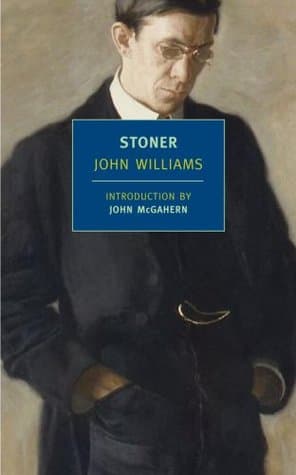
- Stoner
John Williams
4.3 (103k) average on GoodreadsLiterary FictionA quiet, profound character study of an ordinary life, focusing on inner experience and resilience.
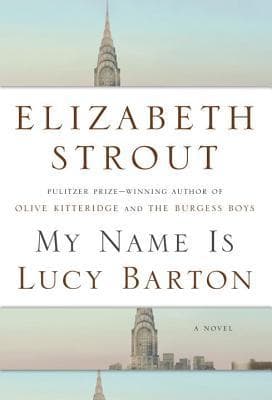
- My Name Is Lucy Barton
Elizabeth Strout
3.5 (112k) average on GoodreadsLiterary FictionAnother Strout novel known for its deep character insight, emotional depth, and exploration of complex family dynamics.
- Pastoralia
George Saunders
4.1 (18k) average on GoodreadsLiterary FictionWhile George Saunders' Pastoralia is also a collection of short stories, the comparison highlights a stark difference in style and thematic approach. Saunders often employs satire and surrealism to critique modern American society and its absurdities, with characters frequently trapped in bizarre, dehumanizing situations. In contrast, Strout's Olive Kitteridge maintains a grounded realism, focusing on the internal lives and emotional landscapes of its characters without overt fantastical elements or satirical exaggeration. Strout's work is characterized by its quiet introspection and empathy, while Saunders' often uses humor and the grotesque to provoke thought and highlight societal flaws. Both are masters of the short story form, but their tonal and stylistic registers are vastly different, with Strout leaning into traditional literary realism and Saunders exploring more experimental and allegorical territory.
- The Old Man and the Sea
Ernest Hemingway
3.8 (831k) average on GoodreadsLiterary FictionA Cuban fisherman's long struggle with a giant marlin becomes a story of endurance and dignity, now retold for young adults with illustrations, phonetic guides, and writing prompts in Traditional Chinese.
- One Hundred Years of Solitude
Gabriel García Márquez
4.1 (753k) average on GoodreadsLiterary FictionThrough the multi-generational story of the Buendía family, a mythical town deals with the repeating patterns of time, love, and solitude, as the extraordinary mixes with the ordinary.




Enjoyed the summary?
A summary gives you the shape of the book. The book itself has the detail, the examples and the voice.
Find Olive Kitteridge on AmazonAs an Amazon Associate, BookBrief earns from qualifying purchases. How we're funded