
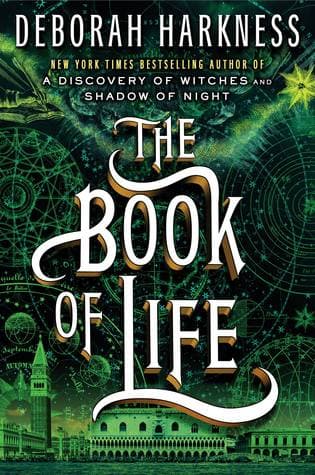
Synopsis
Covers the whole plot, including the ending.
- Difficulty
- Medium
- Pacing
- Moderate
- Mood
- Intriguing, Romantic, Suspenseful, Conclusive
- Read it if
- You've read the previous books in the All Souls Trilogy and want a conclusive, action-packed finale that ties up all loose ends.
- Skip it if
- You haven't read 'A Discovery of Witches' or 'Shadow of Night' as this book is the series conclusion and heavily relies on prior plot.
The Book of Life Plot Summary
Covers the whole plot, including the ending.
Return to the Present
Diana Bishop and Matthew Clairmont return from Elizabethan London to the present day at Sept-Tours, Matthew's ancestral home in France. They are accompanied by their twin children, Philip and Rebecca, and a group of historical figures including Gallowglass, Pierre, and Fernando. Their return is met with relief and worry by the assembled family, including Ysabeau, Marcus, Miriam, and Sarah. However, the joy is immediately lessened by the revelation that Stephen Proctor, Diana's father, has left her a message in a chess set: 'Find the Book of Life.' This message renews the urgency of their quest for Ashmole 782 and its missing pages, while also hinting at deeper mysteries about Diana's lineage and power.
Unraveling the Book of Life
Upon their return, Diana and Matthew focus on understanding Ashmole 782, now called the Book of Life. Diana discovers that the book is not just a historical text but a living entity, connected to her own magical lineage as a weaver. She realizes that the missing pages are not lost but are integrated into the book itself, revealing themselves only to her. With Miriam and other scholars' help, Diana deciphers new sections of the text, which contain information about the origins of creatures and the forbidden practice of creating new ones. This knowledge strengthens their belief that the book holds the key to breaking the Covenant and ensuring a future for creatures.
Benjamin Fuchs's Threat
The Clairmont family faces a dangerous threat from Benjamin Fuchs, Matthew's illegitimate son from his vampire life in Bohemia. Benjamin, a renegade vampire, has been manipulating events and gathering power. He seeks to exploit the secrets of Ashmole 782 and Diana's unique abilities for his own malicious purposes, driven by revenge against Matthew and a desire for control. His existence complicates Matthew's already strained relationship with the Congregation and adds a personal and unsettling dimension to their struggles, forcing Matthew to confront a dark part of his past.
The Congregation's Interference
The Congregation, the governing body of creatures, remains a significant obstacle. Gerbert d'Aurillac, Peter Knox, and Satu Järvinen continue their pursuit of Diana and Ashmole 782, believing the book holds dangerous secrets. Their interference is constant, with Knox specifically targeting Diana's family and trying to undermine her authority. This pressure forces Diana and Matthew to navigate a complex web of political intrigue and old prejudices, making their quest for the book's secrets more perilous. The Congregation's strict adherence to the Covenant and their fear of change threaten to destroy any hope of a peaceful future for creatures.
Tracing the Bloodlines
A large part of their efforts goes into understanding the genetic basis of creature existence and why fertility is declining, especially among vampires. Working with Miriam and Marcus, they discover that the Book of Life contains a detailed genetic blueprint, showing the intricate connections between witches, vampires, and daemons. They realize that creature bloodlines are not as distinct as previously believed and that interspecies mixing might be important for the survival of all creatures. This research challenges long-held beliefs and the foundation of the Covenant, suggesting that the strict separation of species has been harmful.
The Creation of New Creatures
The investigation into declining creature numbers leads Diana and Matthew to uncover a horrifying truth: the creation of new creatures. They learn that Benjamin Fuchs has been experimenting with human blood and daemon DNA, trying to artificially create new vampires and other creatures. This forbidden practice, driven by Benjamin's twisted ambition, shows the dangers of unchecked power and how far some will go to defy the natural order. The ethical implications are deep, and the existence of these 'new creatures' poses a threat to the delicate balance of the creature world.
Confrontation in Oxford
The climax of their pursuit takes Diana and Matthew to Oxford, where Benjamin Fuchs has a hidden lair. They are joined by their allies, including Gallowglass and Fernando. A tense and dangerous confrontation follows, with Benjamin proving to be a formidable and cunning adversary. Diana, using the full extent of her weaver powers, plays a key role in the struggle, using her magic to combat Benjamin's dark arts. The battle is not just physical but also a clash of ideas, with Benjamin representing the destructive forces of unchecked ambition and old grudges.
The Weaver's Power
During the confrontation with Benjamin, Diana fully uses her powers as a weaver. She not only defends herself and her family but also uses her unique ability to integrate the missing pages back into Ashmole 782. This act completes the book, turning it into a unified, living document, revealing all its secrets. Her mastery of weaving allows her to mend the fractured history of creatures and, in doing so, to symbolically mend the divisions between species. This moment shows her coming into her full power and destiny.
The Fall of Benjamin
In a final struggle, Benjamin Fuchs is defeated. Matthew, confronting the son he never truly knew, plays a crucial role in Benjamin's downfall, but Diana's power and strategic thinking seal his fate. His defeat ends his dangerous experiments and his attempts to destabilize the creature world. The resolution of this personal conflict allows Matthew to finally accept his past and embrace his future with Diana and their children. The threat of Benjamin is neutralized, but the effects of his actions will remain.
The New Covenant
With Ashmole 782 complete and its truths revealed, Diana and Matthew present their findings to the Congregation. The Book of Life clearly shows that the Covenant, which strictly separates creatures, is based on flawed understandings of creature biology and history. The evidence of interspecies fertility and shared genetic heritage forces the Congregation to confront the need for major change. While not an immediate dissolution, the revelations start a process of reevaluation, hinting at a future where creatures can coexist and intermarry without fear of persecution, preparing the way for a new, more inclusive covenant.
Family and Future
With the immediate threats gone and the Congregation forced to consider a new path, Diana and Matthew can finally focus on their family. Their twins, Philip and Rebecca, represent the promise of a new era for creatures, embodying the very interspecies union that the old Covenant forbade. Surrounded by their extended family at Sept-Tours and Bishop House, they look forward to a future where their children can grow up in a world free from the prejudices and dangers that have plagued their parents. The ending emphasizes themes of hope, love, and the strength of chosen family, setting the stage for a more harmonious existence.
The Book of Life Characters
Diana Bishop
Protagonist
A powerful witch, historian, and weaver.
Diana Bishop is a reluctant witch who initially shies away from her magical heritage but gradually embraces her immense power. She is a brilliant scholar, dedicated to historical research and understanding the origins of creatures. Her journey is defined by her unwavering love for Matthew and her fierce determination to protect her family and secure a future for all creatures. She is intelligent, courageous, and deeply empathetic, driven by a desire for knowledge and justice. Her unique abilities as a weaver allow her to manipulate time, space, and the very fabric of existence.
Relationships: Matthew Clairmont (Husband and soulmate, a deep and passionate bond.); Sarah Bishop (Aunt, a loving and supportive maternal figure.); Miriam Shepherd (Friend and colleague, a trusted scientific collaborator.); Ysabeau de Clermont (Mother-in-law, a complex but ultimately loving relationship.)
Matthew Clairmont
Protagonist
An ancient vampire, scientist, and warrior.
Matthew Clairmont is an ancient, enigmatic vampire with a complex past, marked by centuries of loss and violence. He is a geneticist, driven by a scientific quest to understand creature origins and the declining fertility among his kind. Fiercely protective of Diana and their family, he often struggles with his inner 'beast' – a primal, violent side of his vampire nature. His love for Diana provides him with redemption and a new purpose, compelling him to confront his past and fight for a better future for all creatures. He is loyal, intense, and deeply devoted.
Relationships: Diana Bishop (Wife and soulmate, a deep and passionate bond.); Marcus Whitmore (Son and protégé, a complicated but ultimately loving father-son relationship.); Ysabeau de Clermont (Mother, a deep and enduring familial bond.); Benjamin Fuchs (Illegitimate son, a source of past trauma and current conflict.)
Benjamin Fuchs
Antagonist
Matthew's vengeful, illegitimate vampire son.
Benjamin Fuchs is an illegitimate vampire son of Matthew Clairmont, born during Matthew's time in Bohemia. He is a cunning, manipulative, and deeply resentful individual, driven by a desire for revenge against Matthew for his abandonment and a thirst for power. Benjamin represents the darker side of creature existence, engaging in forbidden experiments to create new creatures and exploit the secrets of Ashmole 782. His actions are motivated by a profound sense of injustice and a twisted ambition to reshape the creature world according to his own dark vision. He is intelligent but utterly devoid of empathy.
Relationships: Matthew Clairmont (Biological father, a relationship marked by abandonment, resentment, and conflict.); Gerbert d'Aurillac (Ally and co-conspirator, a relationship of mutual opportunism.)
Marcus Whitmore
Supporting
Matthew's son and a doctor, struggling with his vampire identity.
Marcus Whitmore is Matthew's first son and a dedicated doctor. He is a relatively young vampire, still grappling with the responsibilities and complexities of his ancient family's legacy. He is kind-hearted and loyal, but also feels the weight of his family's expectations and his own desire to forge a path distinct from his father's. His relationship with Phoebe is central to his arc, pushing him to advocate for change within the creature world and embrace his role as a leader. He is earnest, compassionate, and increasingly confident.
Relationships: Matthew Clairmont (Father, a complex but loving relationship.); Phoebe Taylor (Human girlfriend, a deeply loving and transformative relationship.); Miriam Shepherd (Colleague and friend, a shared scientific interest.)
Miriam Shepherd
Supporting
A brilliant vampire geneticist and Matthew's colleague.
Miriam Shepherd is a highly intelligent and pragmatic vampire geneticist who works closely with Matthew. She is fiercely loyal, sharp-witted, and deeply committed to scientific truth. Miriam provides crucial scientific expertise in deciphering the genetic code within Ashmole 782 and understanding the origins of creature species. Her dry wit and logical approach often serve as a counterbalance to Matthew's intensity and Diana's magical inclinations. She is a trusted friend and invaluable ally, always ready to offer support and her keen intellect.
Relationships: Matthew Clairmont (Colleague and friend, a professional and personal bond.); Diana Bishop (Colleague and friend, a shared intellectual pursuit.); Marcus Whitmore (Colleague and friend, a shared scientific interest.)
Ysabeau de Clermont
Supporting
Matthew's ancient vampire mother and matriarch of Sept-Tours.
Ysabeau de Clermont is Matthew's formidable and ancient vampire mother, the matriarch of Sept-Tours. She is fiercely protective of her family and traditions, initially wary of Diana but eventually embracing her as a daughter. Ysabeau embodies the ancient ways of vampires, with a deep connection to her lineage and a profound sense of loyalty. Despite her sometimes stern exterior, she possesses a deep love for her family and a surprising capacity for warmth. Her wisdom and experience are invaluable to Diana and Matthew.
Relationships: Matthew Clairmont (Son, a deep and enduring familial bond.); Diana Bishop (Daughter-in-law, a relationship that evolves from suspicion to love.); Fernando Gonçalves (Long-time companion and confidant.)
Sarah Bishop
Supporting
Diana's witch aunt and guardian.
Sarah Bishop is Diana's warm-hearted and fiercely protective witch aunt. She raised Diana after her parents' deaths and serves as a vital link to Diana's magical heritage. Sarah is a strong, independent woman with a deep knowledge of witch traditions and a loving, nurturing spirit. She provides emotional support and practical magical guidance to Diana, often acting as a grounding force amidst the chaos. Her relationship with Emily Mather is a testament to enduring love and partnership.
Relationships: Diana Bishop (Niece, a loving and supportive maternal figure.); Emily Mather (Partner, a deep and enduring romantic bond.)
Gallowglass
Supporting
Matthew's loyal vampire nephew and a powerful warrior.
Gallowglass is Matthew's large, imposing, and fiercely loyal vampire nephew. A powerful warrior and a seasoned traveler, he serves as a protector and confidant for Diana and Matthew. Despite his intimidating appearance, Gallowglass possesses a kind heart and a dry sense of humor. He is deeply devoted to his family and will go to any lengths to ensure their safety. His presence provides both physical protection and emotional support, especially to Diana.
Relationships: Matthew Clairmont (Uncle, a relationship of deep loyalty and respect.); Diana Bishop (Family, a bond of protection and affection.)
Fernando Gonçalves
Supporting
An ancient vampire, Ysabeau's companion, and a member of the Sept-Tours family.
Fernando Gonçalves is an ancient, wise, and compassionate vampire, a long-time companion of Ysabeau and a respected member of the Sept-Tours family. He provides a calm and steady presence, often acting as a mediator and offering sage advice. Fernando is deeply knowledgeable about vampire history and traditions, and his loyalty to the Clairmont family is absolute. He is a pillar of strength and a voice of reason, especially during times of crisis, and offers unwavering support to Diana and Matthew.
Relationships: Ysabeau de Clermont (Long-time companion and confidant.); Matthew Clairmont (Family member, a relationship of deep respect.)
The Book of Life Themes
The Nature of Family and Belonging
The novel explores the broad and changing definition of family, moving beyond traditional bloodlines to include chosen families and interspecies relationships. Diana and Matthew's union, and the birth of their twins, challenge the old Covenant's rules, symbolizing a new era where love and loyalty transcend species. The family at Sept-Tours, a mix of witches, vampires, and daemons, shows that strength comes from unity and acceptance. Even Matthew's struggle with Benjamin highlights the complex and sometimes painful aspects of family ties, but ultimately reinforces the importance of the family he has chosen and built with Diana. The theme emphasizes that true belonging is found in acceptance and shared purpose, not rigid adherence to old laws.
“Family wasn’t just about blood. It was about who you loved, who you chose, and who was there for you when the world was falling apart.”
Knowledge and Truth vs. Ignorance and Prejudice
A central theme is the pursuit of knowledge to dismantle old prejudices and reveal uncomfortable truths. Ashmole 782, the Book of Life, is the ultimate symbol of this, containing the genetic and historical truths about creatures that contradict the Congregation's strict Covenant. Diana's scholarly background and Matthew's scientific research are important in uncovering these truths. The Congregation's resistance to change comes from ignorance and fear, while Diana and Matthew's quest is driven by a desire for understanding and a more just world. The book argues that true progress can only happen when people confront uncomfortable facts and challenge established dogma, even if it means overturning centuries of tradition. The revelations about interspecies fertility and shared ancestry fundamentally challenge the basis of creature segregation.
“The truth, like any good spell, was a living thing. It changed, it adapted, and it revealed itself in its own time.”
Destiny and Free Will
The novel deals with destiny, as implied by prophecies and old texts, and the characters' choices. Diana's role as a weaver and her connection to Ashmole 782 suggest a predetermined path, yet her decisions and actions ultimately shape the outcome. Matthew, too, must confront his past and choose to break free from cycles of violence. The characters are not just pawns of fate but active agents who make difficult choices, often defying expectations and traditions, to create their own futures. This theme explores whether their powerful abilities and old lineages dictate their lives, or if their love and determination can rewrite their destinies, suggesting a balance where destiny provides a framework, but free will dictates the details.
“Destiny was not a road map, but a compass. It pointed you in a direction, but you still had to walk the path.”
The Power of Love and Sacrifice
Love, in its various forms—romantic, familial, and platonic—is shown as the most powerful force in the story, driving characters to make great sacrifices. Diana and Matthew's love is the catalyst for much of the plot, inspiring them to face dangers and challenge old laws. The sacrifices they make, personal and professional, show the depth of their commitment to each other and their vision for a better world. This theme also extends to the love within their extended family, as characters like Gallowglass, Ysabeau, and Sarah consistently put themselves at risk for their loved ones' well-being. The novel suggests that love is not just an emotion, but a powerful, transformative force capable of overcoming prejudice and forging a new future.
“Love was the most powerful magic of all. It could mend what was broken, heal what was wounded, and make the impossible possible.”
Plot Devices & Literary Techniques
Ashmole 782 / The Book of Life
An ancient, sentient manuscript central to creature origins and future.
Ashmole 782, or the Book of Life, serves as the ultimate MacGuffin and a crucial source of exposition. Initially a mysterious, missing manuscript, it is revealed to be a sentient entity intrinsically linked to Diana and the genetic origins of all creatures. It acts as a narrative device to reveal crucial information about the Covenant, creature bloodlines, and forbidden magical practices. Its completion by Diana's weaving powers symbolizes the integration of knowledge and the potential for a unified creature world, driving the entire plot forward and providing the answers needed to challenge the status quo.
Time Travel
A magical ability used to retrieve knowledge and shape the past/present.
Time travel, primarily facilitated by Diana's magical abilities, is a key plot device that allows characters to access historical periods, gather information, and influence events. In 'The Book of Life,' its immediate function is to bring Diana and Matthew back to the present with their children, establishing the current timeline and setting up the remaining conflicts. It also provides historical context for characters like Benjamin Fuchs and the origins of creature practices. While not as central to the 'present day' action as in previous books, the consequences of their time in the past profoundly impact the present narrative and character development.
Genetic Research
Scientific investigation into creature biology, challenging magical dogma.
Genetic research, primarily conducted by Matthew and Miriam, acts as a scientific foil to the magical elements of the story. It serves as a plot device to uncover the biological truths behind creature existence, declining fertility, and the interconnectedness of species. This scientific evidence directly challenges the ancient, magically enforced Covenant and provides a logical, undeniable basis for changing the creature world's laws. It grounds the fantasy elements in a semblance of scientific rationale, making the revelations about creature origins more impactful and providing a path forward for coexistence.
The Covenant
An ancient set of laws segregating creatures, driving conflict.
The Covenant is the foundational plot device that establishes the central conflict and stakes of the entire series. It is an ancient set of rules that forbids interspecies relationships and interaction, leading to prejudice and fear among creatures. The quest to understand, challenge, and ultimately break the Covenant is the primary motivation for Diana and Matthew. Its existence creates constant tension and external threats from the Congregation, forcing the protagonists to seek radical solutions and proving its inherent flaws through their actions and discoveries from the Book of Life. The potential for its dissolution represents the ultimate goal of the narrative.
The Book of Life Quotes
“It was a truth universally acknowledged that a vampire in possession of a good fortune must be in want of a witch.”
“For the first time in my life, I understood that my destiny wasn’t a matter of fate, but a matter of choice.”
“The past is never dead. It’s not even past.”
“Sometimes the greatest love story is the one you didn't see coming.”
“Knowledge is a dangerous thing. Especially when it’s true.”
“We are all collections of our choices, and in the end, we have to live with them.”
“Magic wasn't just about power; it was about understanding, about connection, about the subtle threads that bound the world together.”
“Family wasn't always blood. It was the people who stood by you, who loved you, who would fight for you.”
“To truly live, you had to embrace the darkness as well as the light.”
“History wasn't just dates and names; it was the echo of lives lived, of passions felt, of stories told.”
“Sometimes, the greatest strength lies in vulnerability.”
“There are no ordinary lives, only lives that are not fully understood.”
“The future was not a predetermined path but a tapestry woven by every choice, every action, every hope.”
“Love, it turned out, was not a weakness, but the very source of their power.”
Quiz
10 questions on the plot and the characters. Each answer comes with a short explanation.
Question 1
What significant event occurs shortly after Diana and Matthew return to Sept-Tours from Elizabethan London?
- They discover Ashmole 782 is missing from the library.
- Diana gives birth to twins, a boy and a girl.
- Matthew is challenged to a duel by Benjamin Fuchs.
- Gerbert d'Aurillac launches a direct attack on the de Clermont family.
Show answer
B. Diana gives birth to twins, a boy and a girl. Shortly after their return to Sept-Tours, Diana gives birth to their twins, Philip and Rebecca, a major plot point.
Question 2
Which character, a significant figure from 'A Discovery of Witches,' is noted as being absent from the reunion at Sept-Tours?
- Ysabeau de Clermont
- Miriam Shepherd
- Sarah Bishop
- Marcus Whitmore
Show answer
C. Sarah Bishop The quiz description specifically mentions 'with one significant exception' among the beloved cast. This refers to Sarah Bishop, who died at the end of 'Shadow of Night'.
Question 3
What is the primary reason for the increased urgency in finding Ashmole 782 and its missing pages in 'The Book of Life'?
- To unlock a hidden treasure left by Philippe de Clermont.
- To prevent the Congregation from dissolving the de Clermont family.
- To understand the origins of creatures and find a cure for 'blood rage'.
- To gain access to an ancient magical power that only the book can reveal.
Show answer
C. To understand the origins of creatures and find a cure for 'blood rage'. The central mystery and urgency of Ashmole 782 throughout the series, culminating in 'The Book of Life', is to understand creature origins and specifically to find a way to mitigate or cure blood rage.
Question 4
Who is Benjamin Fuchs, and what is his relationship to Matthew de Clermont?
- He is Matthew's estranged brother, a vampire who resents Matthew's position.
- He is Matthew's son, born of his blood rage, who seeks revenge against Matthew.
- He is a powerful daemon who works for Gerbert and tries to steal Ashmole 782.
- He is a human scholar who was once Matthew's apprentice and now betrays him.
Show answer
B. He is Matthew's son, born of his blood rage, who seeks revenge against Matthew. Benjamin Fuchs is one of Matthew's biological sons, born of his blood rage, and a significant antagonist in 'The Book of Life' due to his desire for revenge against Matthew.
Question 5
What special ability does Diana discover about her twins, Philip and Rebecca, early in the book?
- They can communicate telepathically with each other and their parents.
- They possess both witch and vampire traits, including the ability to glamour.
- They have an innate understanding of ancient languages and texts.
- They can manipulate the elements, specifically fire and water.
Show answer
B. They possess both witch and vampire traits, including the ability to glamour. Philip and Rebecca are unique as they exhibit both witch and vampire characteristics, including the ability to glamour, which is a key aspect of their hybrid nature.
Question 6
What is the ultimate fate of Gerbert d'Aurillac, one of the series' long-standing antagonists?
- He is imprisoned by the Congregation for his crimes.
- He is killed by Matthew de Clermont in a final confrontation.
- He is destroyed by Diana Bishop using her full magical power.
- He is effectively neutralized and stripped of his power and influence by the de Clermonts and their allies.
Show answer
D. He is effectively neutralized and stripped of his power and influence by the de Clermonts and their allies. While Gerbert is a major threat, he isn't killed by Matthew or Diana. Instead, his influence is systematically dismantled, and he is left powerless and isolated by the end of the book.
Question 7
What is the significance of the 'Book of Life' (Ashmole 782) for the future of creatures, as revealed by the end of the novel?
- It contains a prophecy that foretells the end of all creatures.
- It reveals that creatures are not separate species but rather different manifestations of the same human DNA.
- It details a ritual to restore lost magic to all witches and vampires.
- It provides a map to a hidden sanctuary where creatures can live in peace.
Show answer
B. It reveals that creatures are not separate species but rather different manifestations of the same human DNA. A central revelation from Ashmole 782 is that creatures are not distinct species but rather variations of human DNA, implying a common origin and potentially a pathway for their future coexistence and evolution.
Question 8
How does Diana use her power as a weaver to ultimately secure the future of creatures and her family?
- She weaves a complex spell that makes all creatures immune to blood rage.
- She creates a new, powerful grimoire that guides future generations of witches.
- She reweaves the strands of life, bringing balance and allowing for the possibility of interspecies procreation.
- She weaves a protective barrier around Sept-Tours, making it impenetrable to enemies.
Show answer
C. She reweaves the strands of life, bringing balance and allowing for the possibility of interspecies procreation. Diana's power as a weaver allows her to literally reweave the genetic and magical fabric of creatures, enabling the potential for hybrids and a more harmonious future for all species.
Question 9
What is the ultimate resolution regarding the Congregation and the Covenant that forbids interspecies relationships?
- The Congregation is overthrown, and the Covenant is immediately abolished by force.
- The Congregation votes to uphold the Covenant, leading to continued conflict.
- The Congregation is persuaded to begin the process of reconsidering and ultimately dissolving the Covenant.
- Diana and Matthew form a new, separate council that defies the Congregation.
Show answer
C. The Congregation is persuaded to begin the process of reconsidering and ultimately dissolving the Covenant. Through Diana's arguments, the revelations from Ashmole 782, and the influence of powerful allies, the Congregation is finally moved to begin the long process of dismantling the oppressive Covenant.
Question 10
What role does Christopher 'Kit' Marlowe play in the resolution of the series, particularly concerning the missing pages of Ashmole 782?
- He is revealed to have been the original author of Ashmole 782.
- He appears in the present to deliver the final missing pages to Diana.
- He is the one who took the original book apart and hid the pages, eventually guiding Diana to them.
- He creates a magical illusion to protect the book from enemies.
Show answer
C. He is the one who took the original book apart and hid the pages, eventually guiding Diana to them. It is revealed that Kit Marlowe, a daemon, was the one who disassembled Ashmole 782 centuries ago and hid its pages, believing it was too dangerous. He ultimately aids Diana in reassembling it.
The Book of Life FAQ
What is the primary goal Diana and Matthew are pursuing at the beginning of 'The Book of Life'?
Diana and Matthew are primarily focused on finding the missing pages of Ashmole 782 and understanding its secrets, which they believe hold the key to the future of creatures and their own family. They time-travel back from Elizabethan London to the present day in France, hoping to piece together the remaining clues. Their urgency is heightened by the looming threat of creature extinction and their desire to protect their unborn twins.
Which significant character is notably absent from Sept-Tours upon Diana and Matthew's return from the past?
Upon their return to Sept-Tours, Diana and Matthew discover that Ysabeau de Clermont is missing, having left with Sarah Bishop to seek refuge and information elsewhere. This absence creates immediate concern and a sense of unease, as Ysabeau's presence is a cornerstone of the de Clermont family and her departure signals a deeper crisis. Her absence also means a vital link to the family's ancient history is temporarily unavailable.
What new threat emerges that complicates Diana and Matthew's search for Ashmole 782?
A new and dangerous threat emerges in the form of Benjamin Fuchs, Matthew's estranged and vengeful son, who is determined to destroy Matthew and everything he holds dear. Benjamin's existence, a dark secret from Matthew's past, adds a deeply personal and emotionally charged dimension to the conflict. His machinations directly endanger Diana, their children, and the entire de Clermont family, making the search for Ashmole 782 even more perilous.
How do Diana's powers evolve further in 'The Book of Life', particularly in relation to her role as a weaver?
Diana's powers as a weaver fully manifest in 'The Book of Life,' allowing her to not only create spells but also to literally weave threads of magic, time, and life itself. She demonstrates the ability to manipulate the past and future through her weaving, exemplified by her creation of the 'Book of Life' itself from the missing pages and her own blood. This evolution solidifies her unique status among witches and her critical role in the creature world.
What is the ultimate fate of Ashmole 782, and what does it reveal about creatures?
Ashmole 782 is ultimately revealed to be not just a book, but a living grimoire, compiled and completed by Diana's own hand using the missing pages and her blood. It contains the complete genetic code of all creatures, confirming that creatures are not separate species but rather variations of the same human ancestry, each possessing specific genetic markers. This revelation challenges long-held beliefs and offers a scientific basis for their existence and interconnectedness.
What is the significance of the daemon family, particularly Chris and Annie, in uncovering the truth about creatures?
Chris and Annie's research, focusing on creature genetics and the human genome, is crucial in providing the scientific evidence that supports the revelations of Ashmole 782. Their work proves that daemons, witches, and vampires share common genetic markers, indicating a shared ancestry rather than distinct species. This scientific validation complements Diana's magical discoveries and provides a concrete foundation for understanding creature origins.
How does the story of Philippe de Clermont's sacrifice in 'Shadow of Night' subtly foreshadow the themes of lineage and destiny in 'The Book of Life'?
Philippe's sacrifice, particularly his choice to allow Diana to bind herself to Matthew, establishes a powerful precedent for love transcending traditional creature laws and foreshadows the importance of their unique lineage. His belief in Diana's destiny and his understanding of the need for change echo throughout 'The Book of Life' as Diana and Matthew fight to protect their children, who represent the future of creatures. Philippe's legacy is a constant, guiding force.
What is the deeper meaning behind the 'missing pages' of Ashmole 782, beyond just physical artifacts?
The missing pages of Ashmole 782 symbolize not just lost information, but also the fragmented and incomplete understanding creatures have of themselves and their history. Their recovery, and Diana's act of weaving them back into a whole, represents the restoration of truth, unity, and a complete picture of creature origins. They are a metaphor for the knowledge that was deliberately suppressed to maintain power structures.
How does the concept of 'blood rage' evolve from a curse to a more nuanced understanding in this final book?
In 'The Book of Life', blood rage is recontextualized from a purely destructive curse to a genetic predisposition that can be understood and managed, especially with the revelations from Ashmole 782. It's shown to be a part of the de Clermont genetic makeup, but not an insurmountable flaw. Matthew's struggle and eventual mastery over it, aided by Diana's understanding, highlight the theme of self-acceptance and the possibility of overcoming inherent challenges.
Discuss the psychological impact of Benjamin Fuchs's existence on Matthew and his sense of self.
Benjamin's existence deeply wounds Matthew, forcing him to confront a painful past and the consequences of his own choices and actions as a vampire. It challenges his carefully constructed identity as a loyal, honorable de Clermont, bringing to light his capacity for violence and abandonment. The confrontation with Benjamin is a critical psychological reckoning for Matthew, forcing him to integrate his darker aspects and seek redemption for past mistakes.
How does Diana's journey from a reluctant witch to a powerful weaver reflect themes of self-actualization and embracing one's true nature?
Diana's arc demonstrates a profound journey of self-actualization, moving from initial denial and fear of her powers to fully embracing her unique heritage as a witch, a timewalker, and ultimately, a weaver. Her development is about accepting all facets of herself, including her extraordinary abilities, and using them to protect her loved ones and shape the future. This transformation highlights the power of self-acceptance and the courage to fulfill one's destiny.
What is the psychological significance of the de Clermont family's struggle with their ancient traditions versus the need for change?
The de Clermont family's struggle represents the tension between deeply ingrained tradition and the necessity of evolution for survival. Their adherence to ancient rules, particularly the Covenant, creates conflict and stagnation, yet their love for each other and for Matthew pushes them towards change. This internal conflict reflects a psychological battle between comfort in the familiar and the fear of the unknown, ultimately leading to a difficult but necessary shift in their worldview.
Is the ending of 'The Book of Life' truly a definitive conclusion, or does it leave room for future stories within the All Souls world?
While 'The Book of Life' provides a deeply satisfying conclusion to Diana and Matthew's central quest and resolves many major plotlines, it also subtly opens doors for future stories. The establishment of the new creature world order, the ongoing lives of other characters, and the implications of the genetic revelations suggest that the All Souls universe continues to evolve. It offers a sense of closure for the main narrative while hinting at a vibrant, ongoing world.
How does the series' blend of science and magic contribute to its unique world-building and philosophical themes?
The blend of science and magic in the series is fundamental to its unique world-building, suggesting that these seemingly disparate fields are two sides of the same coin, both seeking to understand the fundamental nature of existence. It challenges conventional boundaries, demonstrating that magic can be explained by genetics and history, and science can be inspired by ancient lore. This integration fosters a philosophical theme of unity and the interconnectedness of all knowledge.
To what extent does 'The Book of Life' argue for the importance of family, both biological and chosen, in overcoming adversity?
'The Book of Life' strongly argues for the paramount importance of family, showcasing how both biological ties (like the de Clermonts) and chosen bonds (like Diana's friends and allies) are essential for survival and growth. The combined strength, loyalty, and diverse skills of their extended family are what ultimately enable Diana and Matthew to defeat Benjamin and reshape the creature world. It emphasizes that true family extends beyond blood, encompassing those who stand by you.
What is the thematic significance of the 'Book of Life' itself becoming a living entity, infused with Diana's blood?
Thematic significance of the 'Book of Life' becoming a living entity, infused with Diana's blood, underscores the idea that knowledge and life are inherently intertwined and constantly evolving. It symbolizes Diana's unique power to bridge the gaps between species and time, literally weaving the past, present, and future together. This transformation highlights the power of creation and the idea that true understanding requires a personal, living connection, rather than just abstract information.
How does the resolution of the Covenant reflect broader themes of prejudice and acceptance?
The resolution of the Covenant, which previously enforced segregation and fear among creatures, directly reflects broader themes of prejudice and acceptance. Its dismantling signifies a move towards understanding, cooperation, and the recognition of shared humanity (or creature-ity) over artificial divisions. The series ultimately advocates for embracing diversity and rejecting discriminatory practices, presenting a hopeful vision for a more integrated world where differences are celebrated.
About the author
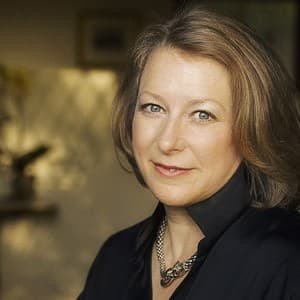
Deborah Harkness is a historian and author, best known for her bestselling All Souls trilogy, which includes 'A Discovery of Witches,' 'Shadow of Night,' and 'The Book of Life.' Her work masterfully blends historical research with elements of fantasy and romance, creating immersive worlds that captivate readers.
Similar books
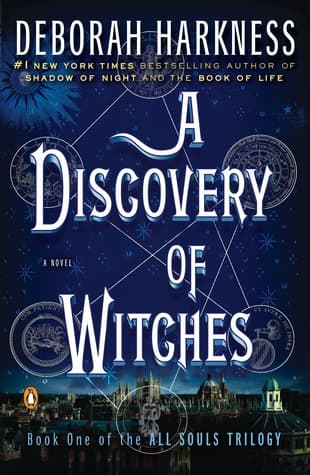
- A Discovery of Witches
Deborah Harkness
4.0 (369k) average on GoodreadsFantasyFirst book in the same series, essential for context.
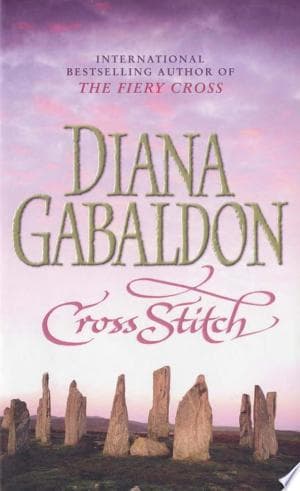
- Outlander
Diana Gabaldon
4.2 (824k) average on GoodreadsFantasyFeatures time travel, historical settings, and a strong romance between powerful characters.
- The Invisible Library
Genevieve Cogman
3.7 (41k) average on GoodreadsFantasyInvolves librarians, magical books, and interdimensional travel with a blend of fantasy and adventure.
- Jonathan Strange & Mr Norrell
Susanna Clarke
3.8 (198k) average on GoodreadsFantasyWhile both feature historical settings and magic, Harkness's The Book of Life offers a more accessible and faster-paced narrative, prioritizing romantic tension and immediate plot resolution. Clarke's work is more literary, with a slower pace and deeper exploration of magic's societal impact and historical context, appealing to different reader preferences.
- Harry Potter and the Sorcerer's Stone
J.K. Rowling
4.5 (7M) average on GoodreadsFantasyRescued from a miserable life under the stairs, an orphaned boy discovers he's a wizard destined for a magical school, where he uncovers a dangerous secret tied to the dark wizard who murdered his parents.
- The Hunger Games
Suzanne Collins
4.3 (6.4M) average on GoodreadsFantasyIn a future where children fight to the death on live television, Katniss Everdeen volunteers for the arena, turning a death sentence into a fight for survival and a spark of rebellion.



Enjoyed the summary?
A summary gives you the shape of the book. The book itself has the detail, the examples and the voice.
Find The Book of Life on AmazonAs an Amazon Associate, BookBrief earns from qualifying purchases. How we're funded