
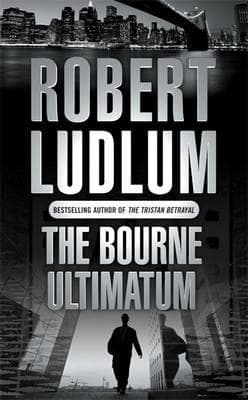
Synopsis
Covers the whole plot, including the ending.
- Difficulty
- Medium
- Pacing
- Variable
- Mood
- Suspenseful, Intense, Conspiratorial, Dangerous
- Read it if
- You love classic spy thrillers with complex plots, high stakes, and a protagonist constantly battling his past.
- Skip it if
- You prefer modern, fast-paced thrillers or dislike detailed political intrigue and lengthy descriptive passages.
The Bourne Ultimatum Plot Summary
Covers the whole plot, including the ending.
The Carnival Summons
Alexander Conklin, formerly of the CIA's Treadstone Seventy-One, and Morris Panov, a psychiatrist, are separately summoned to a carnival in rural Maryland by telegrams signed 'Jason Bourne.' There, they witness a bizarre assassination of a man who appears to be a foreign dignitary. Conklin, still traumatized by his past with Bourne, immediately recognizes the signature as a taunt from Carlos the Jackal, Bourne's legendary adversary. Panov, Bourne's former therapist, agrees, understanding that Carlos is using Bourne's name to set a trap, forcing David Webb back into his dangerous alter ego. The murder is a chilling sign of Carlos's return and his desire for a final confrontation with Bourne.
Webb's Reluctant Reawakening
David Webb, living a peaceful life as a professor at Georgetown University with his wife Marie and their children, is confronted by Conklin and Panov. They explain the carnival incident and the evidence that Carlos is back and targeting Bourne. Webb, who has worked to suppress the Jason Bourne persona, is horrified but understands the seriousness of the situation. He knows that Carlos will not stop until Bourne is engaged. With reluctance and a deep fear for his family's safety, Webb agrees to become Jason Bourne again, driven by the need to protect his loved ones and to end the threat of the Jackal.
The Medusan Connection
As Jason Bourne, Webb begins to investigate Carlos's return. His inquiries lead him to uncover a powerful global economic consortium called Medusa. This organization, made up of influential figures from banking, industry, and government, secretly controls financial networks and manipulates international markets. Bourne quickly realizes that Carlos the Jackal has infiltrated Medusa and is using its resources to further his terrorist agenda and to orchestrate his confrontation with Bourne. The scale of Carlos's ambition and his reach within Medusa becomes clear, making the stakes high.
Marie's Abduction and Bourne's Rage
Carlos, in a brutal move to draw Bourne out and exploit his greatest weakness, orchestrates the abduction of Marie St. Jacques, David Webb's wife. This act shatters Webb's peace and ignites Bourne's dormant fury. The kidnapping transforms the mission from a strategic hunt into a deeply personal quest for vengeance. Bourne, consumed by rage, vows to find Marie and make Carlos pay, pushing him to the limits of his training and endurance. This event makes their conflict personal, removing any detachment Bourne might have had.
Infiltrating Medusa
Bourne, using his espionage skills and multiple identities, begins to infiltrate Medusa. He uses existing rivalries and weaknesses within the organization, gaining access to high-level meetings and secure facilities. His objective is twofold: to gather information on Carlos's specific plans within Medusa and to position himself as bait, drawing the Jackal into a direct confrontation. Bourne navigates Medusa's treacherous world, encountering powerful figures who are either pawns of Carlos or collaborators in his scheme. He plants false leads and creates diversions to keep Carlos off balance while he closes in.
The Paris Rendezvous
The trail of Carlos and Marie leads Bourne to Paris, a city tied to his forgotten past and a previous hunting ground for the Jackal. In Paris, Bourne encounters familiar faces from his Treadstone days and navigates a maze of safe houses, dead drops, and informants. He narrowly escapes several assassination attempts by Carlos's network, confirming the Jackal's presence and his planning. The city becomes a tense battleground as Bourne moves closer to Carlos, each step dangerous. He realizes Carlos has laid elaborate traps, testing Bourne's endurance and tactical skill.
The Moscow Connection and Krupkin
Bourne's investigation reveals a link between Carlos and Yuri Krupkin, a high-ranking Soviet intelligence officer. It becomes clear that Krupkin has been a long-time supporter of Carlos's operations, providing him with resources, intelligence, and protection. This revelation exposes a deeper layer to Carlos's network, showing that the Jackal is not merely an independent terrorist but a tool, or partner, in a larger geopolitical game. Bourne must now contend not only with Carlos but with the Soviet intelligence apparatus through Krupkin.
The Trap is Set
Recognizing that Carlos will not rest until he has had his final confrontation, Bourne crafts an elaborate trap. He uses his knowledge of Carlos's psychological profile and operational patterns to create a scenario that the Jackal cannot resist. Bourne deliberately exposes himself in a vulnerable position, leaking fabricated intelligence to draw Carlos to a specific location. The plan is risky, relying on Bourne's ability to anticipate Carlos's every move and to survive long enough to spring the trap. He knows this is his one chance to end the threat, even if it means sacrificing himself.
The Showdown in Russia
The final, brutal confrontation between Jason Bourne and Carlos the Jackal takes place in a remote, fortified compound in the Soviet Union. Bourne, having lured Carlos into his trap, engages in a deadly game of cat and mouse within the compound. The battle shows both men's extraordinary skills, cunning, and endurance. Marie's life hangs in the balance, adding urgency to Bourne's every move. The fight is not just physical; it's a psychological war. Bourne confronts Krupkin, exposing his treachery and disrupting Carlos's support network.
Carlos's Demise and Marie's Rescue
In a struggle, Jason Bourne finally corners and defeats Carlos the Jackal. The fight shows Bourne's will and strategic brilliance, ending in Carlos's death or permanent incapacitation, effectively ending his reign of terror. Following the confrontation, Bourne successfully locates and rescues Marie, who has endured trauma but is alive. With Carlos eliminated and Marie safe, David Webb begins the process of shedding the Jason Bourne persona once more. He faces the task of healing from the ordeal and reintegrating into his life, hoping to leave the shadows of his past behind forever.
Principal Figures
Jason Bourne / David Webb
Protagonist
A former Treadstone Seventy-One assassin, now a professor, forced to reclaim his deadly alter ego.
David Webb is a brilliant professor of Oriental Studies at Georgetown University, a loving husband to Marie, and a devoted father. Beneath this peaceful facade lies Jason Bourne, a highly trained and lethal government assassin with a fragmented memory of his past, created by the Treadstone Seventy-One project. Webb constantly battles the resurfacing instincts and memories of Bourne, desperate to protect his family and maintain his sanity. He is intelligent, resourceful, and possesses extraordinary combat and espionage skills, which he reluctantly embraces when those he loves are threatened. His moral compass guides him, even as Bourne's ruthless efficiency takes over.
Relationships: Marie St. Jacques (Wife, deep love and protectorate); Carlos the Jackal (Mortal enemy, ultimate adversary); Alexander Conklin (Former CIA contact, uneasy ally); Morris Panov (Psychiatrist, confidant)
Carlos the Jackal
Antagonist
The world's deadliest and most elusive terrorist, obsessed with a final confrontation with Bourne.
Carlos the Jackal is an enigmatic and ruthlessly efficient international terrorist, known for his meticulous planning, multiple disguises, and unparalleled ability to evade capture. He is driven by a profound sense of self-importance and a desire to prove his superiority, particularly over Jason Bourne, whom he views as his only worthy adversary. Carlos is a master manipulator, capable of orchestrating complex international conspiracies and infiltrating powerful organizations like Medusa. He is devoid of empathy, using anyone and anything as a means to achieve his goals, including the abduction of Marie St. Jacques to lure Bourne into his trap. His ultimate goal is a definitive, public victory over Bourne.
Relationships: Jason Bourne (Mortal enemy, target of obsession); Yuri Krupkin (Soviet contact and facilitator); Medusa (Organization he infiltrates and manipulates)
Marie St. Jacques Webb
Supporting
David Webb's beloved wife, a strong and resilient woman who becomes a pawn in Carlos's game.
Marie St. Jacques Webb is David Webb's devoted wife, a former economist and a pillar of strength and stability in his life. She is fiercely protective of David and their children, understanding the immense internal struggle he faces with the Jason Bourne persona. Marie is intelligent, courageous, and capable of handling herself in dangerous situations, though she is not a trained operative. Her abduction by Carlos serves as the primary catalyst for Bourne's re-emergence and fuels his relentless pursuit. Despite the trauma, she remains resilient and a constant reminder to David of the life he is fighting to protect.
Relationships: David Webb / Jason Bourne (Husband, source of love and motivation); Carlos the Jackal (Captor, source of terror)
Alexander Conklin
Supporting
A former CIA operative from Treadstone Seventy-One, burdened by his past and Bourne's legacy.
Alexander Conklin is a former high-ranking CIA officer who was deeply involved in the Treadstone Seventy-One project, which created Jason Bourne. He carries the psychological scars of that experience and the guilt associated with Bourne's tormented existence. Conklin is cynical, pragmatic, and still possesses a vast network of intelligence contacts. He is one of the few who truly understands the threat posed by both Bourne and Carlos. While he has a complex relationship with Webb, often manipulating him, Conklin ultimately believes in the necessity of stopping Carlos, even if it means reactivating Bourne.
Relationships: Jason Bourne / David Webb (Former operative, uneasy ally); Morris Panov (Colleague, fellow confidant regarding Bourne)
Morris Panov
Supporting
A psychiatrist who treated Bourne, offering insights into his fractured psyche.
Morris Panov is a skilled and compassionate psychiatrist who was instrumental in David Webb's initial recovery and understanding of the Jason Bourne persona. He possesses a deep understanding of Webb's fractured mind and the psychological toll of his past. Panov acts as a moral compass and a voice of reason, often trying to protect Webb from the darker aspects of Bourne. He is a key ally, providing psychological insights and support, and helping Conklin convince Webb to embrace Bourne once more for the greater good. His expertise is crucial in understanding Carlos's psychological manipulation of Bourne.
Relationships: Jason Bourne / David Webb (Patient, confidant); Alexander Conklin (Colleague, fellow confidant regarding Bourne)
Yuri Krupkin
Supporting
A high-ranking Soviet intelligence officer secretly allied with Carlos the Jackal.
Yuri Krupkin is a powerful and cunning Soviet intelligence operative, operating within the highest echelons of the KGB. He is a shadowy figure who has secretly been a long-time supporter and facilitator of Carlos the Jackal's operations, providing him with resources, intelligence, and protection for reasons tied to Soviet geopolitical interests. Krupkin is ruthless and pragmatic, viewing Carlos as a valuable asset in his own clandestine power games. His involvement reveals the deeper, institutional backing that Carlos sometimes enjoys, making him a formidable secondary antagonist who Bourne must also contend with.
Relationships: Carlos the Jackal (Secret ally, facilitator); Jason Bourne (Adversary, target of his and Carlos's machinations)
Themes & Insights
Identity and Self-Discovery
The novel explores David Webb's struggle to reconcile his peaceful academic life with the violent, amnesiac past of Jason Bourne. Webb constantly battles the resurfacing instincts and memories of Bourne, questioning where one persona ends and the other begins. This theme is central as Webb is forced to consciously choose to become Bourne again, not out of memory, but out of necessity to protect his family. His journey is one of reclaiming a past he doesn't fully remember to ensure a future he desires, highlighting the psychological toll of a fragmented identity, as seen when he struggles to maintain control while Bourne takes over during his infiltration of Medusa.
“He was Jason Bourne, a killing machine without a conscience. No, he was David Webb, a man who loved his wife and children. The two were irreconcilable, yet intertwined.”
The Nature of Evil and Obsession
The showdown between Bourne and Carlos is fueled by a mutual, though different, obsession. Carlos is obsessed with proving his superiority and ending Bourne, whom he sees as his only worthy rival. His actions, like Marie's abduction, are calculated acts designed to torment Bourne. Bourne, conversely, becomes obsessed with stopping Carlos, not for glory, but out of a need to protect his family and eliminate a persistent threat. The narrative examines Carlos's malevolent genius and Bourne's desperate pursuit, showing how personal vendettas can escalate to global consequences, evident in Carlos's planning and infiltration of Medusa.
“Carlos was a disease, a malignancy that had to be excised, not merely contained.”
The Cost of Espionage and Violence
Ludlum portrays the personal and psychological toll of a life spent in espionage and violence. David Webb constantly grapples with the trauma of his past as Bourne, and the narrative emphasizes his deep desire to escape that world. Even when he re-assumes the Bourne persona, it comes at a cost to his mental well-being and his relationship with his family. The novel shows that while Bourne's skills are necessary to combat threats like Carlos, they are also a curse, leaving emotional scars. This is particularly evident in Marie's abduction, which highlights how the shadow of Bourne's past constantly endangers his loved ones and the life he has built.
“Every time he became Bourne, a piece of David Webb died. He feared there would be nothing left.”
Global Conspiracy and Power
The story uncovers a vast global conspiracy involving the organization Medusa, which secretly manipulates international finance and politics. Carlos the Jackal's infiltration of Medusa reveals how powerful, seemingly legitimate entities can be subverted for nefarious purposes. This theme highlights the vulnerability of global institutions to manipulation by individuals or groups with immense power and hidden agendas. It suggests that true power often operates behind the scenes, affecting the lives of millions, and that the fight against terrorism is often intertwined with exposing these deeper corruptions, as Bourne discovers when he unravels Krupkin's involvement.
“Medusa. A hydra of global finance, a monster with a thousand heads, each one controlling a vital artery of the world's wealth.”
Plot Devices & Literary Techniques
Amnesia as a Narrative Hook
Bourne's fragmented memory drives his internal conflict and the mystery of his past.
Bourne's amnesia, a foundational element of the series, continues to serve as a powerful narrative device. While he has recovered some memories, the lingering gaps and the psychological struggle to reconcile 'David Webb' with 'Jason Bourne' create constant internal tension. It also allows for the gradual revelation of his past skills and experiences, surprising both the character and the reader. This device reinforces the theme of identity and makes Bourne a more complex and sympathetic protagonist, as he is fighting not only an external enemy but also his own fragmented self.
The MacGuffin (Marie's Abduction)
Marie's kidnapping serves as the primary catalyst for Bourne's re-engagement and heightened motivation.
Marie St. Jacques Webb's abduction by Carlos the Jackal functions as a classic MacGuffin, a plot device that drives the protagonist's actions and gives him an intensely personal motivation. While her safety is paramount to Bourne, her kidnapping is primarily a means for Carlos to force Bourne out of hiding and into a confrontation. This device elevates the stakes from a geopolitical thriller to a deeply personal vendetta, making Bourne's pursuit more desperate and emotionally charged, transforming him from a reluctant operative into a man driven by love and vengeance.
The Double-Cross and Misdirection
Characters and organizations are not always as they seem, leading to constant twists and turns.
The narrative is rich with instances of double-crossing, hidden agendas, and strategic misdirection. Characters like Yuri Krupkin, who appears to be a legitimate Soviet official, are revealed to have deep, clandestine ties to Carlos. Organizations like Medusa, outwardly powerful and legitimate, are shown to be corrupted and manipulated. This device keeps the reader constantly guessing and reinforces the perilous, untrustworthy world of espionage. It forces Bourne to be perpetually suspicious, relying only on his instincts and training, as he navigates a landscape where alliances are fluid and betrayal is commonplace, making his mission far more complex.
The Unreliable Narrator (Internal Monologue)
Bourne's internal thoughts, colored by his fragmented identity, offer a subjective and sometimes conflicting perspective.
While not a full unreliable narrator in the traditional sense, Bourne's internal monologues often reflect his battle between David Webb and Jason Bourne. His thoughts are sometimes clouded by the trauma of his past, the resurgence of Bourne's violent instincts, or the sheer stress of his situation. This device allows the reader to experience his psychological turmoil firsthand, blurring the lines between sanity and the efficiency of a killer. It enhances the theme of identity, showing how his perception of events and his own capabilities can shift depending on which persona is dominant at a given moment.
The Bourne Ultimatum Quotes
“Jason Bourne was a name, a legend, and a lie.”
“He understood the game now, and understanding was the first step towards winning.”
“Memory was a weapon, and sometimes, a curse.”
“The past was never truly dead; it was merely waiting for the right moment to strike.”
“Every step he took was a calculated risk, every breath a testament to his will to survive.”
“There were no friends in this world, only temporary allies and permanent enemies.”
“He was a man without a country, without a past, and almost without a future.”
“The truth, when it finally emerged, would be more terrifying than any lie.”
“Power corrupted, and absolute power corrupted absolutely, even in the shadows.”
“He was a ghost in the machine, a glitch in the system, and they wanted him erased.”
“Sometimes, the only way out was to go deeper in.”
“The quiet moments were the most dangerous, for that was when the mind began to wander, to question.”
“He had to become the monster they thought he was, to defeat the monsters they truly were.”
“There was no finish line, only another beginning, another hunt.”
Quiz
10 questions on the plot and the characters. Each answer comes with a short explanation.
Question 1
Who signs the mysterious telegrams that summon the two men to the small-town carnival?
- David Webb
- Carlos
- Jason Bourne
- The Medusan Group
Show answer
C. Jason Bourne The telegrams are mysteriously signed Jason Bourne, even though they are actually from Carlos, the Jackal.
Question 2
What is Carlos also known as?
- The Professor
- The Assassin
- The Jackal
- The Chameleon
Show answer
C. The Jackal Carlos is referred to as 'the Jackal,' the world's deadliest and most elusive terrorist.
Question 3
What is David Webb's profession before he assumes the identity of Jason Bourne?
- Spy
- Military General
- Professor of Oriental studies
- Businessman
Show answer
C. Professor of Oriental studies David Webb is described as a 'professor of Oriental studies, husband, and father' before he becomes Jason Bourne again.
Question 4
Why do the two men know the telegram is a message from Carlos, despite being signed by Jason Bourne?
- They were informed by a mutual contact.
- They recognize Carlos's specific code in the message.
- They know Bourne's true identity and understand the telegram's true sender.
- They have surveillance on Carlos and saw him send it.
Show answer
C. They know Bourne's true identity and understand the telegram's true sender. The text states, 'Only they know Bourne's true identity and understand the telegram is really a message from Bourne's mortal enemy, Carlos.'
Question 5
What is the ultimate goal of Carlos, the Jackal, in sending the telegrams?
- To recruit new operatives.
- To cause global chaos.
- To arrange a final confrontation with Bourne.
- To expose the Medusan group.
Show answer
C. To arrange a final confrontation with Bourne. The text explicitly states that Carlos 'wants: a final confrontation with Bourne.'
Question 6
What is David Webb's plan to lure Carlos into a trap?
- He plans to publish a book exposing Carlos.
- He intends to infiltrate the Medusan group and use himself as bait.
- He will send out fake telegrams to confuse Carlos.
- He will contact the authorities to set up an ambush.
Show answer
B. He intends to infiltrate the Medusan group and use himself as bait. Webb's plan is 'to infiltrate the politically and economically Medusan group and use himself as bait to lure the cunning Jackal into a deadly trap.'
Question 7
What kind of organization is the 'Medusan group' that David Webb plans to infiltrate?
- A secret government agency.
- A religious cult.
- A politically and economically influential group.
- A rival terrorist organization.
Show answer
C. A politically and economically influential group. The Medusan group is described as 'politically and economically Medusan group,' indicating its influence in those spheres.
Question 8
What is the significance of the phrase 'a trap from which only one of them will escape' regarding Bourne's plan?
- It implies a rescue mission for a third party.
- It highlights the mutually destructive nature of their final confrontation.
- It suggests a competition where one will be captured.
- It refers to the escape route for an innocent bystander.
Show answer
B. It highlights the mutually destructive nature of their final confrontation. This phrase emphasizes the deadly, no-holds-barred nature of the final confrontation, where only one of the two adversaries is expected to survive.
Question 9
What internal conflict does David Webb face when deciding to become Jason Bourne again?
- He struggles with the financial cost of his mission.
- He fears losing his family if he re-enters the spy world.
- He doubts his physical abilities after years away from espionage.
- He is reluctant to leave his academic career behind.
Show answer
B. He fears losing his family if he re-enters the spy world. The description states David Webb 'must do what he hoped he would never have to do again: assume the terrible identity of Jason Bourne,' implying a deep personal reluctance related to his life as a husband and father.
Question 10
How does the bizarre killing at the small-town carnival serve as a catalyst for the plot?
- It directly leads to the capture of Carlos.
- It confirms that the telegrams are a serious threat from Carlos, forcing Webb's hand.
- It introduces a new antagonist to the story.
- It is a red herring designed to distract Bourne.
Show answer
B. It confirms that the telegrams are a serious threat from Carlos, forcing Webb's hand. The bizarre killing, witnessed by the two men summoned by Carlos's telegrams, serves as a stark confirmation of the threat and the Jackal's intentions, compelling David Webb to reassume his Bourne identity.
The Bourne Ultimatum FAQ
What is the primary conflict that forces David Webb to re-assume the identity of Jason Bourne?
David Webb is forced back into the Jason Bourne persona when he and General Norman Swayne are mysteriously summoned by telegrams signed 'Jason Bourne' to a small-town carnival, where they witness a bizarre killing. They correctly deduce that these telegrams are actually from Carlos the Jackal, aiming to draw Bourne out for a final confrontation.
Who is Carlos the Jackal and what is his motivation in this book?
Carlos the Jackal is the world's deadliest and most elusive terrorist, Bourne's long-standing mortal enemy. His primary motivation in 'The Bourne Ultimatum' is to orchestrate a final, definitive confrontation with Jason Bourne, believing he can finally defeat and eliminate his rival.
What is the Medusan group and why does Bourne plan to infiltrate it?
The Medusan group is a politically and economically powerful organization that Bourne plans to infiltrate. His strategy is to use himself as bait within this group to lure the cunning Carlos the Jackal into a deadly trap, hoping to isolate and eliminate him.
Who is General Norman Swayne and what is his initial role in the story?
General Norman Swayne is one of the two men, along with David Webb, who receives a mysterious telegram signed 'Jason Bourne' and witnesses the carnival killing. He understands the true sender is Carlos and that it signifies a renewed threat, initially collaborating with Webb due to their shared knowledge.
How does Marie St. Jacques, David Webb's wife, react to his re-assumption of the Bourne identity?
Marie St. Jacques, David Webb's wife and mother of his children, is deeply pained and fearful by his re-assumption of the Bourne identity. She understands the immense danger and the toll it takes on him, but ultimately supports him out of necessity and love, despite her profound reluctance.
What specific details about the carnival killing hint at Carlos's involvement or methods?
The carnival killing, orchestrated by Carlos, is designed to be bizarre and public, creating a spectacle that draws attention and signifies the Jackal's presence to those who understand. The specific victim and method might serve as a coded message or a demonstration of power, characteristic of Carlos's theatrical and manipulative style.
Are there any subtle clues early on that indicate the telegrams aren't actually from Bourne himself?
Yes, the key clue is that David Webb himself, the true Jason Bourne, receives one of these telegrams. Since he knows he didn't send it, and understanding Carlos's obsession, he immediately recognizes the deception and the true sender's identity, as does General Swayne who also knows Bourne's reality.
How does Bourne's plan to use himself as bait within the Medusan group connect to his past strategies against Carlos?
Bourne's strategy of using himself as bait within the Medusan group echoes his past methods of drawing Carlos out by inserting himself into the terrorist's networks or targets. It leverages Carlos's fixation on him, turning the hunter into the hunted by creating an irresistible lure within a complex organization.
What is the significance of the 'ultimatum' in the title for both Bourne and Carlos?
The 'ultimatum' signifies the finality desired by both Bourne and Carlos for their long-standing conflict. For Carlos, it's a demand for a conclusive battle. For Bourne (David Webb), it's the desperate, last-ditch effort to end the terror and reclaim his peaceful life, suggesting one of them will not survive this ultimate confrontation.
How does David Webb's identity as a professor of Oriental studies contrast with his Jason Bourne persona?
David Webb's identity as a professor of Oriental studies represents a life of intellect, peace, and domesticity, deeply contrasting with the brutal, calculating, and violent persona of Jason Bourne. This stark dichotomy highlights the internal struggle and the sacrifice Webb makes each time he must become Bourne.
What psychological toll does re-assuming the Jason Bourne identity take on David Webb?
Re-assuming the Jason Bourne identity inflicts a severe psychological toll on David Webb, forcing him to suppress his peaceful self and embrace a dormant, violent alter-ego. This struggle manifests as internal conflict, fear of losing himself, and the emotional burden of endangering his family, threatening his sanity and his future.
How does Carlos the Jackal's psychology contribute to his obsession with Bourne?
Carlos the Jackal's psychology is driven by an intense, almost pathological obsession with Bourne, viewing him as the ultimate rival and an obstacle to his own perceived supremacy. This obsession likely stems from a blend of professional rivalry, personal vendetta, and a need to prove himself as the world's most formidable operative, making Bourne his ultimate target.
In what ways do Bourne and Carlos mirror each other, despite being mortal enemies?
Bourne and Carlos mirror each other in their exceptional skills, tactical brilliance, and dedication to their respective paths, albeit for opposing ends. Both are master manipulators, highly intelligent, and capable of extreme violence, creating a dynamic where only someone of equal caliber can truly challenge the other.
Is there any ambiguity regarding who truly initiated the 'final confrontation' – Bourne or Carlos?
While the telegrams are from Carlos, indicating his clear intent to initiate a final confrontation, one could argue there's ambiguity in the broader sense. Bourne's very existence as a threat to Carlos, and his past actions, inherently set the stage for this 'ultimatum,' making it an inevitable culmination rather than a purely unilateral initiation.
How does the book explore the theme of identity, particularly through David Webb/Jason Bourne?
The book deeply explores the theme of identity through David Webb/Jason Bourne by showcasing the internal battle between the two personas. It questions whether one can truly escape their past, the nature of self when forced into an alter-ego, and the struggle to maintain one's core identity amidst extreme circumstances and violence.
What larger implications does the Medusan group's existence have on the story's themes?
The Medusan group's existence highlights themes of global power, political manipulation, and the pervasive nature of clandestine operations. It provides a complex backdrop against which the personal vendetta between Bourne and Carlos unfolds, suggesting that even their 'ultimate showdown' is intertwined with larger, shadowy world events.
Could the ending be interpreted as a definitive closure for David Webb, or does it leave room for future struggles?
While the narrative aims for a definitive closure to the Bourne/Carlos conflict, the psychological scars and the inherent nature of David Webb's past as Jason Bourne suggest that complete, untroubled peace might remain elusive. The ending might offer a resolution to this specific threat, but the 'room for future struggles' lies in the enduring impact on Webb's psyche and family.
How does Ludlum use the setting of a small-town carnival to heighten the initial mystery and tension?
Ludlum uses the incongruous setting of a small-town carnival, typically a place of innocent amusement, to heighten the initial mystery and tension by juxtaposing it with a bizarre, violent killing. This unexpected location makes the event more shocking and unsettling, immediately signaling that something deeply sinister and out of place is occurring.
About the author
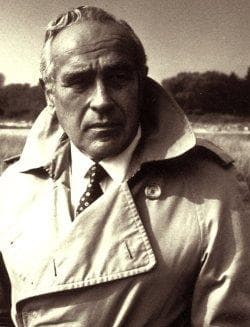
Robert Ludlum was an American author known for his espionage and thriller novels. His notable works include The Bourne Identity, The Bourne Supremacy, The Bourne Ultimatum, The Matarese Circle, and The Scarlatti Inheritance, which often feature intricate plots and complex characters. Ludlum's writing has had a significant impact on the thriller genre, particularly with the popular Bourne series.
Similar books
- The Day of the Jackal
Frederick Forsyth
4.3 (118k) average on GoodreadsThrillerFeatures a meticulous, elusive assassin and a high-stakes hunt.
- I Am Pilgrim
Terry Hayes
4.3 (126k) average on GoodreadsThrillerInvolves a former elite agent drawn back into a global pursuit of a dangerous terrorist.
- Tinker Tailor Soldier Spy
John le Carré
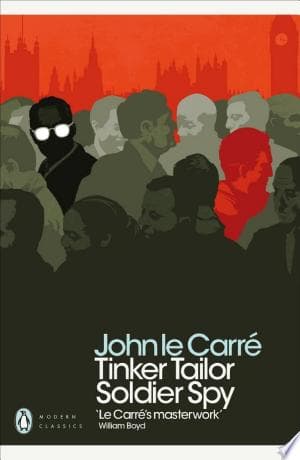
4.1 (107k) average on GoodreadsFictionLe Carré's Tinker Tailor Soldier Spy operates in a vastly different realm of espionage. It is a slow-burn, cerebral spy novel focused on the moral ambiguities and bureaucratic machinations within the intelligence world, emphasizing the psychological toll and ethical compromises of spycraft. Ludlum's Bourne Ultimatum is a high-octane action thriller, prioritizing rapid plot development, physical confrontations, and clear-cut hero-villain dynamics, even with Bourne's internal conflicts. Le Carré delves into the 'wilderness of mirrors' with understated realism, while Ludlum crafts a more sensational and overtly dramatic narrative.
- Angels & Demons
Dan Brown
3.9 (2.7M) average on GoodreadsThrillerA Harvard symbologist races through Rome's ancient sites, deciphering cryptic clues to unmask the Illuminati and stop a vengeful plot to destroy the Vatican with a stolen antimatter weapon.
- Gone Girl
Gillian Flynn
4.1 (2.3M) average on GoodreadsThrillerA wife's sudden disappearance on her fifth anniversary reveals a web of lies and psychological warfare, exposing the secrets within a seemingly perfect marriage.
- The Girl on the Train
Paula Hawkins
3.9 (2.1M) average on GoodreadsThrillerA woman’s fascination with a seemingly perfect couple she watches from her daily train commute leads her into a dark investigation when she witnesses something that shatters their idyllic image.





Enjoyed the summary?
A summary gives you the shape of the book. The book itself has the detail, the examples and the voice.
Find The Bourne Ultimatum on AmazonAs an Amazon Associate, BookBrief earns from qualifying purchases. How we're funded