
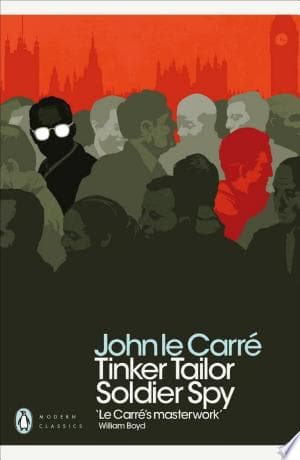
Synopsis
Covers the whole plot, including the ending.
- Difficulty
- Hard
- Pacing
- Slow
- Mood
- Atmospheric, Suspenseful, Melancholy, Cerebral, Cynical
- Read it if
- You enjoy complex, character-driven espionage thrillers with intricate plots, moral ambiguity, and a deep dive into the psychological toll of intelligence work.
- Skip it if
- You prefer fast-paced action, clear-cut heroes and villains, or straightforward narratives without much introspection or political maneuvering.
Tinker Tailor Soldier Spy Plot Summary
Covers the whole plot, including the ending.
The Fall of Control and Smiley's Return
The novel opens with George Smiley, a recently removed senior intelligence officer, living a quiet life. Peter Guillam, a former colleague from the 'Circus' (the British Secret Intelligence Service), visits him and delivers a secret message. Ricki Tarr, a British agent who defected, claims there is a deep-cover Soviet mole, codenamed 'Gerald,' at the highest level of the Circus. This information relates to the 'Testify' operation in Czechoslovakia, led by Smiley's former boss, Control. That operation ended with the capture and death of agent Jim Prideaux. Control had suspected a mole and started Testify to find them, but the mission failed, leading to his own forced retirement and death, and Smiley's later removal.
Unraveling Control's Legacy
Smiley, working secretly with Guillam and Mendel (a retired Special Branch officer), begins to reconstruct Control's final days and his hunt for a mole. Control had given code names to his four closest lieutenants – Percy Alleline ('Tinker'), Bill Haydon ('Tailor'), Roy Bland ('Soldier'), and Toby Esterhase ('Poorman') – believing one of them was the traitor. Smiley learns that Control had tried to identify the mole through a series of desperate operations, ending with Testify. Smiley's investigation is harder because the Circus has since been reorganized under Alleline, who has implemented a new, highly secret intelligence source called 'Witchcraft,' which has raised his standing.
Ricki Tarr's Story and the Witchcraft Deception
Ricki Tarr, the agent whose defection started the investigation, is found and questioned by Smiley. Tarr describes his affair with Irina, a Soviet agent in Hong Kong, who revealed a high-level mole inside the Circus, codenamed 'Gerald,' working for the Soviet spymaster Karla. Irina had tried to defect to Britain with this information but was sent back to Moscow. Tarr's attempts to report Irina's intelligence were blocked and twisted by the Circus, further convincing Smiley about the mole. Tarr's account also suggests the 'Witchcraft' operation is a deception designed by the mole to feed false intelligence to the British.
The Circus Hierarchy and Suspects
Smiley carefully reviews the careers, personal lives, and interactions of Alleline, Haydon, Bland, and Esterhase. He finds inconsistencies and suspicious promotions among them, especially Alleline's quick rise after Control left. He learns about the 'Witchcraft' operation, a supposed success of British intelligence receiving high-grade Soviet intelligence, handled only by the four suspects. Smiley understands that 'Witchcraft' is likely the mole's way of feeding disinformation to the British, gaining influence and protecting their identity. He begins to suspect that the mole is using the Circus's own structure to their advantage.
Jim Prideaux's Account of Testify
Smiley finds Jim Prideaux, the agent who survived the Testify operation in Czechoslovakia and now teaches at a prep school. Prideaux, deeply affected, at first resists speaking but eventually tells about the mission. He explains that he was sent to meet a Czech general who claimed to have information about the mole. However, the meeting was a trap. Prideaux was shot, captured, and tortured. He confirms that the general described the mole, and Prideaux recognized the description as Bill Haydon. Prideaux's testimony is the final, clear piece of evidence Smiley needs, confirming Haydon as 'Gerald' and showing the true nature of the Testify failure as a clean-up operation by Karla.
The Betrayal of Bill Haydon
The discovery that Bill Haydon is the mole is painful for Smiley. Haydon was a close colleague, a former friend, and the man who had an affair with Smiley's wife, Ann. Haydon's sophisticated betrayal involved using the 'Witchcraft' operation to feed believable but misleading intelligence to the Circus, while also passing genuine British secrets to Karla. His motive seems to be a complex mix of disillusionment, arrogance, and a desire to impose his own vision on the Cold War. He manipulated those around him, including Percy Alleline, to secure his position and protect his operation.
Setting the Trap for the Mole
Smiley, with Guillam and Mendel, plans to expose Haydon. They create an urgent message from Ricki Tarr, claiming to have vital intelligence he will deliver to a safe house in London, implying he has more damaging information about the mole. This message is leaked through a controlled channel, meant to reach Haydon. They expect Haydon will alert his Soviet contact, who will then send a courier to the safe house to silence Tarr or get the information, thus revealing themselves and providing undeniable proof of Haydon's treason.
The Safe House Operation and Capture
The trap is set at a safe house in Hampstead. Smiley and his team wait. As expected, a Soviet courier, Polyakov, arrives at the safe house, clearly sent by Karla in response to the fake leak. Polyakov is caught, and his capture provides the undeniable evidence needed to confirm Haydon's identity as the mole. The operation goes smoothly, showing Smiley's careful planning and understanding of both Haydon's and Karla's methods. Polyakov's capture collapses the entire 'Witchcraft' operation and exposes Haydon's years of betrayal.
The Confession and Aftermath
After Polyakov's capture, Bill Haydon is confronted by Smiley. Haydon, at first resistant, eventually confesses to being Karla's mole, 'Gerald.' He admits to the extensive betrayal, the manipulation of the Circus, and the feeding of disinformation through 'Witchcraft.' His confession shows his intellect and detachment. Afterward, the senior figures of the Circus involved in 'Witchcraft' – Alleline, Bland, and Esterhase – are questioned and removed. Smiley is reinstated as the head of the Circus, given the difficult job of rebuilding the shattered intelligence service from within, a task he accepts with quiet resignation.
Haydon's Death and Smiley's Burden
Before he can be exchanged or further questioned, Bill Haydon is found dead in his cell, likely murdered by Jim Prideaux, who had visited him shortly before. Prideaux's motive is revenge for his betrayal and the deaths of his colleagues during Testify, and perhaps an act of mercy. Haydon's death closes one chapter but leaves Smiley with the immense burden of leadership. The novel ends with Smiley, now back at the head of the Circus, facing the difficult task of cleaning the service of its corruption and restoring its integrity, a grim victory in the ongoing war against Karla.
Principal Figures
George Smiley
Protagonist
Retired spymaster, brought back to hunt a mole within the Circus
Smiley is a quiet, unassuming, and intellectually formidable former senior officer of the British Secret Intelligence Service. Dismissed after the disastrous 'Testify' operation, he is reluctantly drawn back into the world of espionage to uncover a high-level Soviet mole. He is methodical, patient, and possesses an uncanny ability to understand human nature and the intricacies of intelligence work. Despite his unassuming exterior, he is deeply principled and driven by a quiet patriotism, though often disillusioned by the moral compromises of his profession. His personal life is marked by the infidelity of his wife, Ann, which adds a layer of melancholy to his character.
Relationships: Ann Smiley (Estranged wife, frequently unfaithful); Control (Former mentor and boss); Peter Guillam (Loyal protégé and trusted assistant); Bill Haydon (Former friend and colleague, revealed as the mole); Karla (Arch-nemesis, Soviet spymaster)
Bill Haydon
Antagonist
Charismatic and brilliant senior officer, revealed as Karla's mole
Haydon is one of the four senior officers suspected by Control. He is depicted as charismatic, intellectual, and outwardly charming, a brilliant Oxford graduate with a reputation for unconventional thinking. He is a 'Tailor' in Control's list. His true identity as 'Gerald,' Karla's deep-cover mole, is the central revelation of the novel. His motives are complex, stemming from a mixture of ideological disillusionment with the West, a sense of intellectual superiority, and a desire to shape the Cold War according to his own cynical vision. He had an affair with Smiley's wife, Ann, adding a profound personal betrayal to his professional treason.
Relationships: George Smiley (Former friend and colleague, betrayed him professionally and personally); Ann Smiley (Lover); Percy Alleline (Colleague, manipulated into leadership); Jim Prideaux (Childhood friend, betrayed and nearly killed)
Control
Supporting
Former head of the Circus, obsessed with finding the mole before his death
Control was the enigmatic and brilliant head of the Circus, a man of immense intellect and paranoia. He became convinced there was a mole, codenamed 'Gerald,' at the highest level of his organization, planted by his Soviet counterpart, Karla. His final, desperate attempt to uncover the mole through the 'Testify' operation in Czechoslovakia failed catastrophically, leading to his forced retirement and subsequent death. Though deceased at the novel's start, his notes, suspicions, and the framework of his investigation (the 'Tinker, Tailor, Soldier, Poorman' list) guide Smiley's entire inquiry. He represents the old guard of British intelligence.
Relationships: George Smiley (Former protégé and trusted confidant); Karla (Arch-nemesis); Percy Alleline, Bill Haydon, Roy Bland, Toby Esterhase (His four senior lieutenants, one of whom he suspected as the mole)
Peter Guillam
Supporting
Loyal protégé of Smiley, assisting in the mole hunt
Guillam is a younger, more active intelligence officer who remains loyal to Smiley and the principles of the old Circus. He is the one who initially brings Ricki Tarr's mole accusations to Smiley and becomes Smiley's primary field assistant throughout the investigation. He is brave, resourceful, and morally conflicted by the corruption he sees. His role is crucial in navigating the treacherous internal politics of the Circus and providing practical support to Smiley's clandestine operations. He represents the lingering integrity within the compromised service.
Relationships: George Smiley (Loyal protégé and trusted assistant); Ricki Tarr (Colleague, source of the initial mole accusation)
Ricki Tarr
Supporting
Disgraced agent whose defection sparks the mole hunt
Tarr is a British intelligence operative who became entangled in an affair with a Soviet agent, Irina, in Hong Kong. Irina revealed the existence of 'Gerald,' Karla's mole, within the Circus. Tarr's attempts to report this vital intelligence were deliberately suppressed and distorted by the mole, forcing him to defect and eventually seek out Smiley. He is a morally ambiguous character, a 'scout' or 'scalp-hunter,' but his desperate need to expose the truth about Irina and the mole provides the catalyst for Smiley's investigation.
Relationships: Irina (Soviet agent and lover); George Smiley (His ultimate confidant for the mole information); Peter Guillam (Initial contact for relaying information)
Jim Prideaux
Supporting
Sole survivor of the Testify operation, holding key information about the mole
Prideaux is a large, imposing field agent and a former close friend of Bill Haydon. He was the lead agent on Control's ill-fated 'Testify' operation in Czechoslovakia, where he was shot, captured, and tortured. He survived but was subsequently disgraced and retired to teach at a prep school. His testimony about the events in Czechoslovakia, particularly his recognition of the mole's description as Bill Haydon, provides the definitive proof Smiley needs. Prideaux is a man profoundly scarred by his experience and the betrayal of his friend, leading to his eventual act of revenge.
Relationships: Bill Haydon (Childhood friend, betrayed and killed); George Smiley (Interrogator and solver of his trauma)
Percy Alleline
Supporting
Ambitious and mediocre head of the Circus after Control's ousting
Alleline is one of Control's 'Tinkers' and becomes the head of the Circus after Control's forced retirement. He is ambitious, bureaucratic, and somewhat pompous, lacking the strategic brilliance of Control or Smiley. He is largely a puppet of Bill Haydon, unknowingly used by the mole to consolidate power and facilitate the 'Witchcraft' operation, which he believes to be his greatest triumph. His eagerness for prestige and his lack of critical thinking make him an easy mark for Haydon's manipulations.
Relationships: Bill Haydon (Colleague, manipulated by him); George Smiley (Rival, later replaced by him)
Toby Esterhase
Supporting
Head of 'The Lamplighters' and Control's 'Poorman'
Esterhase is an Eastern European émigré and a member of Control's 'Poorman' list. He is a shrewd, somewhat opportunistic, and financially driven intelligence officer who heads the 'Lamplighters,' a surveillance and technical support unit. He is deeply involved in the 'Witchcraft' operation, believing it to be genuine. While not the mole, he is compromised by his ambition and his willingness to go along with the deception. Smiley skillfully manipulates Esterhase's anxieties and loyalties to gain information.
Relationships: George Smiley (Former colleague, manipulated by him for information); Bill Haydon (Colleague, unknowingly facilitated his deception)
Karla
Antagonist
Mysterious and brilliant Soviet spymaster, Smiley's ultimate adversary
Karla is the elusive and highly intelligent head of the Soviet intelligence service's 'Moscow Centre' and Smiley's ultimate antagonist. He is never seen directly in the novel but is a constant, shadowy presence, the architect of the 'Gerald' mole operation. Karla is Smiley's equal in strategic thinking and ruthlessness, embodying the cold, ideological precision of Soviet espionage. His long-running game against Smiley, and his successful infiltration of the Circus, establishes him as a formidable and almost mythical opponent.
Relationships: George Smiley (Arch-nemesis); Bill Haydon (His deep-cover mole)
Themes & Insights
Betrayal and Deception
The main theme is the deep betrayal within the British Secret Service. Bill Haydon's long treachery as Karla's mole, 'Gerald,' destroys the trust and integrity of the Circus. This betrayal goes beyond professional ties, as Haydon's affair with Smiley's wife, Ann, adds a personal layer to the deception. The 'Witchcraft' operation itself is a deception, designed to feed false intelligence to the British while taking genuine secrets. The novel explores how such deep deception affects people and institutions, showing the moral uncertainty in espionage.
“A mole is a man who betrays his country for money or for power or for ideals. Or for the love of a woman. Or for none of those things. For the hell of it, perhaps.”
Identity and Loyalty
The novel looks at questions of identity, both national and personal. Agents like Ricki Tarr and Toby Esterhase struggle with their loyalties and sense of belonging. The mole, Bill Haydon, effectively creates a false identity for years, living a double life. The members of the Circus define themselves by their service, and finding the mole makes them question who they are and where their loyalties lie. Smiley's own identity is linked to the Circus, and its corruption deeply affects his sense of self and purpose. He tries to connect the ideals of service with the harsh realities of espionage.
“He knew he was a spy. He was a spy because he was a man who lived in the dark, and what he did was done in the dark, and what he lived by was by the dark.”
The Decline of Institutions and Ideals
Le Carré shows the British Secret Service as an institution in decline, full of internal politics, ambition, and moral decay. Control's old-school, principled approach contrasts with the 'new breed' represented by Percy Alleline, who values appearances and bureaucratic advancement over real intelligence work. The mole's success is partly because of this institutional rot, as the Circus's internal weaknesses are used. The novel suggests that the Cold War itself corrupted the organizations meant to defend national interests, leaving behind a cynical and compromised situation.
“The Circus had become a looking-glass world, where loyalty was a game and betrayal the only certainty.”
Obsession and Pursuit
The story is driven by a constant sense of obsession and pursuit. Control's last days were spent hunting for the mole, an obsession that cost him his career and his life. Smiley, in turn, takes up this search, pursuing the truth with quiet, careful intensity. His pursuit is professional and personal, as he uncovers the layers of betrayal involving his friends and his wife. Karla also shows a cold, calculating obsession, carefully placing and protecting his mole for years. This theme shows the psychological cost of espionage and the relentless nature of the intelligence game.
“Smiley was an old hunter, and the mole was his quarry. He would track him down, no matter the cost.”
Plot Devices & Literary Techniques
The 'Tinker, Tailor...' Nomenclature
A mnemonic device used by Control to categorize his mole suspects.
Control, the former head of the Circus, assigned the nursery rhyme names 'Tinker, Tailor, Soldier, Poorman' to his four closest lieutenants: Percy Alleline, Bill Haydon, Roy Bland, and Toby Esterhase. This device serves as a crucial framework for Smiley's investigation, providing a clear list of suspects and a symbolic representation of the compromised inner circle. It reflects Control's methodical, almost obsessive, approach to identifying the mole, and its innocent origin contrasts sharply with the sinister reality it represents, adding a layer of ironic tension.
Flashbacks and Non-linear Narrative
Used to gradually reveal the past events leading to the present crisis.
The novel employs a non-linear narrative structure, frequently using flashbacks and recounted memories to piece together the complex history of the mole. Smiley's investigation involves interviewing various characters (e.g., Ricki Tarr, Jim Prideaux, Connie Sachs) who provide fragments of past events, particularly the disastrous 'Testify' operation and the origins of 'Witchcraft.' This fragmented approach mirrors Smiley's own process of assembling intelligence, gradually revealing the full picture of betrayal and deception rather than presenting it chronologically, building suspense and allowing for subtle foreshadowing.
'Witchcraft' Operation
A sophisticated disinformation channel used by the mole to manipulate the Circus.
'Witchcraft' is a seemingly highly successful intelligence operation, supposedly providing top-secret Soviet information to the British via a secret source. However, it is revealed to be a sophisticated deception orchestrated by the mole, Bill Haydon, under Karla's direction. It serves as a conduit for disinformation, allowing the mole to gain influence, divert suspicion, and feed genuine British secrets to Moscow Centre. This device highlights the mole's cunning and the vulnerability of the Circus, demonstrating how easily an intelligence service can be turned against itself by a well-placed traitor.
The Unseen Adversary (Karla)
A powerful antagonist who is never physically present but exerts immense influence.
Karla, the head of Moscow Centre, is Smiley's brilliant and ruthless Soviet counterpart. He never appears directly in the novel, yet his presence is felt throughout as the mastermind behind the mole operation. This makes him a more formidable and almost mythical figure, an intellectual equal to Smiley, whose shadow looms over every discovery. His unseen nature emphasizes the cold, impersonal nature of the Cold War and the psychological battle between the two spymasters, making his influence more pervasive and terrifying than if he were a visible character.
Tinker Tailor Soldier Spy Quotes
“There are moments, however, when a man has to close his eyes and jump, and this was one of them.”
“It was the oldest game of all, and the most dangerous: trust.”
“All that was left was the knowledge that a man, however humble, however lonely, however much a failure, could still be a man.”
“A man doesn't need to be a spy to feel alone.”
“The secret world was a mirror of the real one, only more distorted.”
“He hated the jargon of the Circus, the euphemisms that disguised the brutal facts.”
“One doesn't have to be a monster to betray, only human.”
“The more you knew, the less you understood.”
“There was a chill in the air, the chill of human knowledge.”
“You can't be a good spy unless you're a good listener.”
“The Circus had a way of consuming its own.”
“He had discovered that the only way to avoid being eaten was to be the eater.”
“It was the old story: the innocent suffer, the guilty go free.”
“He was a man who had lost his faith, but not his sense of duty.”
Quiz
10 questions on the plot and the characters. Each answer comes with a short explanation.
Question 1
Who is the protagonist brought out of retirement to hunt for the mole?
- Bill Haydon
- Peter Guillam
- George Smiley
- Control
Show answer
C. George Smiley George Smiley, a former spymaster, is explicitly stated as being brought out of retirement to hunt for the traitor within the Circus.
Question 2
What is the British Intelligence Service often referred to as in the book?
- The Office
- The Circus
- The Agency
- The Watchtower
Show answer
B. The Circus The book consistently refers to the British Intelligence Service by its internal nickname, 'the Circus.'
Question 3
Who is George Smiley's 'wily Soviet counterpart' mentioned in the description?
- General Polyakov
- Karla
- Boris
- Gleb
Show answer
B. Karla The description explicitly mentions 'his wily Soviet counterpart' and the book is the first part of the 'Karla Trilogy,' indicating Karla as the key adversary.
Question 4
What is the code name given to the operation that revealed the existence of the mole?
- Operation Testify
- Operation Witchcraft
- Operation Legacy
- Operation Sorcerer
Show answer
D. Operation Sorcerer The ill-fated mission to Czechoslovakia, led by Jim Prideaux, which ultimately exposed the mole's deep penetration, was known as Operation Sorcerer.
Question 5
Which of the following characters is NOT one of the suspects for the mole, known by the code names 'Tinker, Tailor, Soldier, Spy'?
- Toby Esterhase
- Ricki Tarr
- Roy Bland
- Percy Alleline
Show answer
B. Ricki Tarr The primary suspects for the mole are Percy Alleline (Tinker), Bill Haydon (Tailor), Roy Bland (Soldier), Toby Esterhase (Poor Man, or sometimes Spy), and Jim Prideaux (Sailor). Ricki Tarr is a field agent whose defection and story help expose the mole, but he is not a suspect in the traditional 'Tinker, Tailor' lineup.
Question 6
What is the primary motivation for the mole's betrayal, as revealed in the novel?
- Financial gain
- Ideological conviction
- Personal resentment and disillusionment
- Blackmail by Moscow Centre
Show answer
C. Personal resentment and disillusionment While elements of disillusionment exist, the mole's betrayal is deeply rooted in personal resentment, particularly towards George Smiley and the old guard, and a profound sense of self-importance and a desire for recognition that Karla expertly exploited.
Question 7
Which character is initially sent to Czechoslovakia on a mission that goes disastrously wrong, leading to his capture and the eventual exposure of the mole?
- Peter Guillam
- Jim Prideaux
- Control
- Jerry Westerby
Show answer
B. Jim Prideaux Jim Prideaux is the character who was sent to meet a Czech general in Czechoslovakia, an operation that was fatally compromised by the mole, resulting in Prideaux's capture and severe injury.
Question 8
What is the significance of the character 'Control' in the narrative, particularly concerning the mole hunt?
- He is the mole's primary handler within Moscow Centre.
- He was George Smiley's direct superior and the first to suspect the mole's existence.
- He is a former field agent who helps Smiley gather intelligence.
- He is the current head of the Circus, who obstructs Smiley's investigation.
Show answer
B. He was George Smiley's direct superior and the first to suspect the mole's existence. Control was the former head of the Circus who became obsessed with the idea of a deep-cover mole and initiated the investigation, giving the suspects their code names, before being forced out. His suspicions and groundwork are crucial to Smiley's later investigation.
Question 9
The novel explores the theme of moral ambiguity within espionage. How does George Smiley embody this theme while hunting the mole?
- He ruthlessly sacrifices innocent lives to achieve his objective.
- He struggles with the personal cost of betrayal and the necessity of deception, even against former friends.
- He believes firmly in the black-and-white morality of the Cold War.
- He enjoys the game of espionage and feels no personal conflict.
Show answer
B. He struggles with the personal cost of betrayal and the necessity of deception, even against former friends. Smiley is consistently portrayed as a man burdened by the moral compromises and personal betrayals inherent in espionage. He feels the weight of deceiving and exposing former colleagues and friends, highlighting the novel's core theme of moral ambiguity.
Question 10
What is the ultimate fate of the mole after being exposed by George Smiley?
- He is executed by Moscow Centre for his failure.
- He successfully defects to the Soviet Union and escapes.
- He is exchanged for captured Western agents.
- He commits suicide before facing justice.
Show answer
C. He is exchanged for captured Western agents. After his exposure, the mole, Bill Haydon, is ultimately used in a prisoner exchange, traded for a number of British agents captured by the Soviets, including Jim Prideaux. This exchange highlights the transactional and often cynical nature of Cold War espionage.
Tinker Tailor Soldier Spy FAQ
What is Tinker Tailor Soldier Spy about?
Tinker Tailor Soldier Spy centers on retired British intelligence agent George Smiley, who is brought back into the 'Circus' (MI6) to uncover a deep-cover Soviet mole. This mole, code-named 'Gerald', has infiltrated the highest echelons of British Intelligence, causing significant damage and nearly destroying the service from within. Smiley must meticulously sift through past operations and interrogate former colleagues to unmask the traitor among the top four suspects: Percy Alleline, Bill Haydon, Roy Bland, and Toby Esterhase.
Why should I read Tinker Tailor Soldier Spy?
You should read Tinker Tailor Soldier Spy for its intricate plot, masterful character development, and realistic portrayal of espionage. It's not a fast-paced action thriller, but a slow-burn psychological chess match, offering a deep dive into the moral ambiguities and personal sacrifices inherent in the world of Cold War intelligence. Le Carré's prose is elegant and his depiction of George Smiley as a quiet, observant, and deeply ethical man is captivating.
What is the background/setting of Tinker Tailor Soldier Spy?
The novel is set in the early 1970s, primarily in London, against the backdrop of the Cold War. The British Intelligence Service, known as 'The Circus', is reeling from a disastrous operation in Czechoslovakia and a perceived decline in its effectiveness compared to its Soviet counterparts. The setting emphasizes a period of disillusionment and paranoia within the Western intelligence community, where trust is a luxury few can afford.
What are the most memorable quotes?
One memorable quote is George Smiley's reflection: 'There are moments, of course, when I regret having been a man of longer vision than the people for whom I was working.' Another is his description of the Circus: 'A man in his position, a man with such a network, is capable of almost anything, provided he is not seen to be doing it.' These quotes encapsulate the moral landscape and clandestine nature of the intelligence world.
What writing style does the author use?
John le Carré employs a sophisticated, often dense, and highly descriptive prose style. He uses precise language, subtle irony, and a detached, almost journalistic tone that lends authenticity to the espionage world. The narrative often jumps between different timelines and perspectives, requiring careful attention from the reader, and is characterized by long, complex sentences and a rich vocabulary that builds atmosphere and psychological depth.
What minor details add significant meaning?
The constant references to Smiley's estranged wife, Ann, throughout the narrative are not just personal details but symbolize the profound sacrifices and emotional costs of his profession. Her infidelity, particularly with Bill Haydon, underscores the personal betrayals that mirror the professional ones. Similarly, the detailed descriptions of the Circus's internal politics and bureaucratic rivalries highlight how internal struggles can blind an organization to external threats.
What are some subtle foreshadowing moments?
Early in the novel, the narrative hints at Bill Haydon's enigmatic charm and his almost magnetic influence over others, which subtly foreshadows his ability to manipulate those around him, including Smiley's wife and his colleagues. Furthermore, the constant emphasis on the Circus's arrogance and its belief in its own invincibility subtly prepares the reader for the shocking reveal of the mole's deep penetration, indicating that their overconfidence made them vulnerable.
What unexpected character connections exist?
The most significant unexpected connection is the long-standing affair between George Smiley's wife, Ann, and Bill Haydon, one of the four suspects for the mole. This personal betrayal adds a deeply painful layer to Smiley's professional hunt, making the eventual revelation of Haydon as the mole a double-edged sword of vindication and profound personal anguish. It highlights how the personal and professional spheres are inextricably linked in this world.
What are unspoken character motivations?
Bill Haydon's ultimate motivation for becoming a mole is complex and largely unspoken, hinted at as a combination of disillusionment with the West, intellectual arrogance, and a desire to be 'on the winning side' of history, perhaps even a form of aesthetic appreciation for Karla's strategic genius. His betrayal isn't purely ideological but seems driven by a deeper, almost artistic, contempt for the mediocrity he perceives in the British establishment.
What psychological complexities do characters exhibit?
George Smiley exhibits immense psychological complexity through his quiet resilience, his capacity for profound sadness, and his methodical, almost obsessive dedication to truth, even when it means confronting painful personal betrayals. He carries the weight of his past and the moral ambiguities of his work, often appearing stoic but internally wrestling with the human cost of espionage. His intelligence is matched by a deep-seated melancholy.
What are the major emotional turning points?
A major emotional turning point is when Smiley realizes the full extent of the mole's penetration and the devastating impact it has had on individuals like Jim Prideaux, who was sacrificed. The most intense emotional climax, however, is the confrontation with Bill Haydon, where Smiley must reconcile his professional duty with the profound personal betrayal by a man who was once a colleague and lover of his wife, forcing him to confront the depths of human deceit.
How do relationship dynamics evolve?
Relationship dynamics primarily devolve through the novel's course, as trust erodes and past loyalties are questioned. Smiley's professional relationships with his former colleagues, once based on camaraderie, become strained and suspicious as he investigates them. Even his enduring, albeit broken, relationship with Ann is colored by the revelations of her affair with Haydon, demonstrating how the pervasive nature of espionage corrupts all forms of human connection.
Which parts remain ambiguous or open-ended?
While the mole is identified, the full extent of Karla's long-term strategy and the precise nature of his influence over Haydon remain somewhat ambiguous, setting the stage for the subsequent novels in the trilogy. The novel also leaves open the question of whether the Circus can truly recover from such a profound betrayal, or if its soul has been irrevocably damaged, highlighting the lasting scars of espionage.
What are controversial scenes or decisions?
One controversial decision is the Circus's initial handling of the 'Witchcraft' operation, where they knowingly allowed themselves to be manipulated by a Soviet double agent, believing they were controlling him, rather than the other way around. This decision led directly to the mole's success and the downfall of many agents, showcasing a shocking level of institutional arrogance and self-deception that sparked debate among readers about the competence and ethics of the intelligence service.
Tinker Tailor Soldier Spy ending explained: how it ends & what it means
The novel ends with George Smiley successfully unmasking Bill Haydon as the Soviet mole, 'Gerald'. Haydon is captured but later killed by Jim Prideaux, an agent Haydon had betrayed. Smiley is reinstated into the Circus as its new head, a bittersweet victory. The ending signifies not just the triumph of quiet diligence over treachery, but also the profound personal cost of such a victory. It means the Circus has purged its deepest corruption, but the scars remain, and Smiley, now at the helm, faces the immense challenge of rebuilding a shattered organization and confronting his formidable adversary, Karla, in future encounters.
About the author
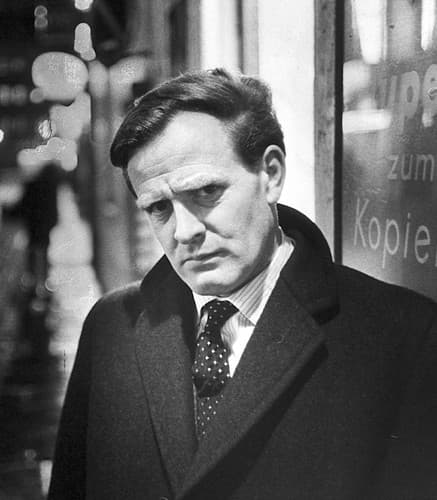
David John Moore Cornwell, better known by his pen name John le Carré, was a British and Irish author, best known for his espionage novels, many of which were successfully adapted for film or television. "A sophisticated, morally ambiguous writer", he is considered one of the greatest novelists of the postwar era. During the 1950s and 1960s he worked for both the Security Service (MI5) and the Secret Intelligence Service (MI6).
Similar books
- The Spy Who Came in from the Cold
John le Carré
4.1 (77k) average on GoodreadsThrillerAnother classic le Carré novel exploring the bleak realities of Cold War espionage and moral compromise.
- The Quiet American
Graham Greene
4.0 (50k) average on GoodreadsLiterary FictionExplores themes of political intrigue, idealism, and betrayal in a foreign setting, with a similar introspective tone.
- Casino Royale
Ian Fleming
3.7 (70k) average on GoodreadsThrillerFleming's Casino Royale represents the antithesis of le Carré's approach. James Bond is a glamorous, hyper-competent, and morally unambiguous hero operating in a world of clear good versus evil, exotic locations, and high-stakes action. Tinker Tailor Soldier Spy deliberately subverts these tropes, presenting a drab, morally compromised world where heroes are weary, betrayal is internal, and the 'glamour' is a dangerous illusion. Fleming prioritizes escapism and fantasy, while le Carré grounds his narrative in a bleak, often depressing, reality of intelligence work.
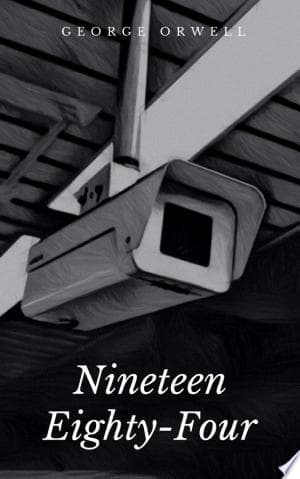
- Nineteen Eighty-Four
George Orwell
4.2 (5.5M) average on GoodreadsFictionWinston Smith dreams of truth and rebellion in a world where Big Brother watches all, but he confronts the terrifying power of a regime that controls not just actions, but thoughts.
- The Frozen River
Ariel Lawhon
4.4 (600k) average on GoodreadsFictionIn 1789 Maine, a heroic midwife's diary helps her expose a murder and get justice in a town that wants to silence her.
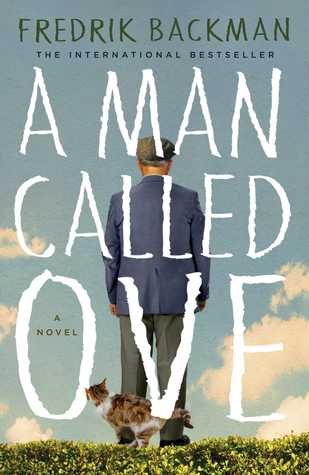
- A Man Called Ove
Fredrik Backman
4.4 (569k) average on GoodreadsFictionA stubborn widower, who lives by strict rules, finds his quiet world changed by a lively new family next door, making him face his past and find happiness in human connection.


Enjoyed the summary?
A summary gives you the shape of the book. The book itself has the detail, the examples and the voice.
Find Tinker Tailor Soldier Spy on AmazonAs an Amazon Associate, BookBrief earns from qualifying purchases. How we're funded