

Synopsis
Covers the whole plot, including the ending.
- Difficulty
- Medium
- Pacing
- Moderate
- Mood
- Suspenseful, Gritty, Intelligent, Intriguing
- Read it if
- You enjoy legal thrillers with a strong mystery element and want to see two iconic detective/lawyer characters from different series finally team up.
- Skip it if
- You prefer pure police procedurals or have no interest in legal drama, or dislike morally ambiguous protagonists.
The Brass Verdict Plot Summary
Covers the whole plot, including the ending.
The Unexpected Inheritance
After a two-year break from the courtroom due to personal and professional problems, Mickey Haller returns to work on small cases. His life changes suddenly when he learns fellow defense attorney Jerry Vincent has been murdered. To Mickey's surprise, Vincent's will names him as the inheritor of his entire caseload, including the defense of Walter Elliott, a wealthy Hollywood executive accused of murdering his wife and her lover. This sudden rush of complex cases, especially the Elliott trial, gives Mickey a chance to restart his career at a higher level, but it also pulls him into a dangerous world he barely understands.
The Interrogation and the Warning
Mickey is questioned by LAPD detectives, including Harry Bosch, who leads the investigation into Jerry Vincent's murder. Bosch's questions are direct, suggesting he suspects Mickey might know more about Vincent's death or even be involved. During the questioning, Bosch subtly warns Mickey that Vincent's killer might still be at large and could target anyone connected to Vincent or his cases. This is the first direct meeting between Mickey and his half-brother, Harry Bosch, though neither openly acknowledges their family link yet. The warning leaves Mickey uneasy, making him realize the true danger of the cases he has inherited.
Initial Case Assessment and Suspicions
Mickey begins reviewing the extensive files for the Walter Elliott murder trial. He finds that Jerry Vincent had done very little preparation for such a major case, and many key details seem to be missing or overlooked. Elliott himself is a difficult client, arrogant and seemingly unconcerned by the seriousness of his situation. Mickey's investigation leads him to suspect that Vincent might have been involved in something illegal, or that the Elliott case is not as simple as it seems. He starts to feel the weight of the inherited responsibility and the possibility of a setup, making him question Vincent's true intentions.
The Threat Escalates
As Mickey looks deeper into Jerry Vincent's past and the Elliott case, he receives an anonymous, threatening phone call. The caller clearly warns him to drop the Elliott case, indicating that the threat against Vincent was real and is now aimed at Mickey. This direct threat confirms Harry Bosch's earlier subtle warning and increases Mickey's fear. He realizes that he is not just inheriting a legal practice but also the dangerous enemies Jerry Vincent had made. The warning forces Mickey to consider his own safety and the possibility that he is being set up as the next victim.
Bosch's Strategic Alliance
Harry Bosch approaches Mickey again, this time more directly. He reveals that he suspects Vincent was murdered because he was about to expose a major conspiracy or someone powerful. Bosch believes that Vincent's killer is using Mickey to finish what Vincent started, or to silence him. He proposes a reluctant, unofficial alliance: Mickey will proceed with the Elliott trial, acting as bait, while Bosch uses him to find Vincent's killer. Mickey is hesitant but understands that working with Bosch might be his best chance for survival and for finding the truth behind Vincent's death, especially since Bosch has information Mickey lacks.
The Trial Begins
The trial of Walter Elliott begins, and Mickey finds himself in a high-stakes legal battle. The prosecution, led by Deputy District Attorney Ted Minton, presents a strong case, but Mickey, using his sharp legal instincts, begins to weaken their arguments. Elliott remains an uncooperative and arrogant client, making Mickey's job even harder. Mickey uses his inherited team, including his investigator Cisco and his ex-wife Lorna, to re-examine evidence and interview witnesses. Throughout the proceedings, Mickey is aware that he is not just defending Elliott but also potentially putting himself in the sights of Vincent's killer, making every legal move a personal risk.
Uncovering the Truth About Vincent
Through their combined efforts, Mickey and Bosch learn more about Jerry Vincent's actions before his murder. They discover that Vincent was involved in a plan to manipulate the Elliott trial, possibly for a large payment, and was also secretly working with the FBI. Vincent had been trying to expose corruption within the DA's office, specifically implicating Ted Minton. This information changes everything, suggesting Vincent was not just a victim but a participant in a much larger scheme. Mickey realizes that Vincent's murder was directly linked to his efforts to expose Minton, rather than just the Elliott case itself, significantly increasing the danger.
The Trap is Sprung
As the Elliott trial continues, Mickey, guided by Bosch, plans to expose Vincent's killer. He subtly plants misleading information and creates situations designed to provoke a reaction from the true culprit, who they now suspect is Ted Minton. Mickey's legal actions in court are carefully planned to serve a dual purpose: defend Elliott and lure Minton into a trap. The tension in the courtroom is clear, as Mickey makes calculated moves that appear to be part of the defense but are actually part of a larger, more dangerous game. He knows that one wrong move could cost him his life.
The Confrontation and Resolution
Mickey's plan works. Ted Minton, feeling trapped by the evidence and Mickey's questioning, makes a critical mistake. His actions during the trial confirm his guilt to Bosch and Mickey. Bosch, who has been secretly watching, moves in to arrest Minton. It is revealed that Minton murdered Vincent to prevent him from exposing Minton's corrupt dealings and his role in manipulating the Elliott case. The confrontation is tense, but Minton is apprehended, ending the immediate threat against Mickey and solving Vincent's murder.
The Aftermath and Loose Ends
With Minton exposed, the Elliott trial takes a dramatic turn. Walter Elliott, though not directly involved in Vincent's murder, is found guilty of his wife's murder, largely due to the overwhelming evidence against him. Mickey reflects on the events, the dangers he faced, and the unexpected partnership with Harry Bosch. Their shared experience builds a reluctant respect and understanding between the half-brothers, though their professional paths remain separate. Mickey, having survived the ordeal and successfully handled the high-profile case, is now firmly back in the legal game, changed by the 'brass verdict' and his brush with death.
The Brass Verdict Characters
Mickey Haller
Protagonist
A defense attorney who inherits a dangerous high-profile case.
Mickey Haller is a shrewd, street-smart defense attorney who operates out of the back of his Lincoln Town Car. Known for his ability to find loopholes and his deep understanding of the legal system's underbelly, Mickey is driven by a desire for justice, though often within the confines of the law. He is charming and manipulative, skilled at reading people and situations. Despite his past struggles with addiction and personal setbacks, he remains fiercely dedicated to his clients, even when they are unlikable. The sudden inheritance of Jerry Vincent's practice forces him to confront his past and redefine his future.
Relationships: Harry Bosch (Half-brother, reluctant investigative partner); Lorna Taylor (Second ex-wife, office manager, confidante); Cisco (Investigator, loyal employee); Jerry Vincent (Deceased colleague whose practice Mickey inherits)
Harry Bosch
Supporting
An LAPD homicide detective investigating Jerry Vincent's murder.
Harry Bosch is a veteran LAPD homicide detective, known for his relentless pursuit of truth and justice, often bending rules to achieve it. Haunted by his past and driven by a deep moral code, Bosch is methodical, observant, and deeply skeptical of authority and corruption. He initially views Mickey with suspicion but recognizes a shared determination for justice. His personal connection to Mickey (as his half-brother, though not immediately revealed) adds a layer of complexity to their professional interactions. Bosch uses Mickey as bait to draw out Vincent's killer, demonstrating his strategic and sometimes ruthless approach to investigations.
Relationships: Mickey Haller (Half-brother, reluctant investigative partner); Jerry Vincent (Murder victim he is investigating)
Walter Elliott
Supporting
A wealthy Hollywood studio executive accused of double murder, Mickey's high-profile client.
Walter Elliott is a powerful and arrogant Hollywood studio executive, accused of murdering his wife and her lover. He embodies the entitlement and self-importance often associated with the entertainment industry elite. Elliott is initially dismissive and uncooperative with Mickey, believing his wealth and status will protect him. He is a challenging client, more concerned with his public image than the legal intricacies of his defense. His guilt or innocence becomes a central question, but his character primarily serves as a catalyst for the larger conspiracy surrounding Jerry Vincent's death.
Relationships: Mickey Haller (Defense attorney); Jerry Vincent (Original defense attorney)
Jerry Vincent
Mentioned
The murdered defense attorney whose practice Mickey Haller inherits.
Jerry Vincent is the catalyst for the entire plot, a defense attorney whose murder and subsequent will thrust Mickey Haller into a dangerous, high-stakes world. Initially portrayed as a successful, if somewhat shady, lawyer, his true character and motivations are gradually revealed through Mickey and Bosch's investigation. Vincent was involved in a complex web of corruption, working both to expose a corrupt prosecutor and to potentially manipulate the Elliott trial for personal gain. His death is not random but a targeted act to silence him, making him a pivotal figure even in his absence.
Relationships: Mickey Haller (Successor to his practice); Harry Bosch (Victim whose murder Bosch investigates); Ted Minton (Antagonist, Vincent's killer)
Lorna Taylor
Supporting
Mickey Haller's second ex-wife and loyal office manager.
Lorna Taylor is Mickey Haller's second ex-wife, but more importantly, she is his indispensable office manager and a steadfast source of support. Practical, intelligent, and fiercely loyal, Lorna manages Mickey's chaotic professional life, keeping him organized and grounded. She understands Mickey better than almost anyone and is often the voice of reason. Her dedication to Mickey's success and well-being is evident throughout the novel, as she helps him navigate the complexities of Vincent's inherited cases and the personal dangers he faces. She represents a stable anchor in Mickey's often turbulent life.
Relationships: Mickey Haller (Ex-wife, boss, friend); Cisco (Colleague)
Cisco
Supporting
Mickey Haller's loyal and resourceful private investigator.
Cisco is Mickey Haller's private investigator, a former member of a motorcycle club who brings a unique set of skills and connections to Mickey's legal team. He is quiet, observant, and highly resourceful, capable of digging up difficult-to-find information and handling sensitive situations. Cisco's loyalty to Mickey is unwavering, and he plays a crucial role in re-investigating the Elliott case and uncovering details about Jerry Vincent's past. His streetwise knowledge and ability to navigate various social circles make him an invaluable asset to Mickey's defense strategy and personal safety.
Relationships: Mickey Haller (Boss); Lorna Taylor (Colleague)
Ted Minton
Antagonist
A corrupt Deputy District Attorney and Jerry Vincent's killer.
Ted Minton is a Deputy District Attorney prosecuting the Walter Elliott case. He initially appears as a formidable legal opponent to Mickey Haller, presenting a strong case against Elliott. However, as the story unfolds, Minton is revealed to be deeply corrupt, involved in manipulating trials and leveraging his position for illicit gain. He is the true antagonist, having murdered Jerry Vincent to prevent Vincent from exposing his schemes. Minton is cunning and ruthless, willing to eliminate anyone who threatens his carefully constructed world. His arrogance ultimately leads to his downfall when he underestimates Mickey and Bosch.
Relationships: Jerry Vincent (Victim, former associate); Mickey Haller (Legal opponent, instrumental in his exposure); Harry Bosch (Investigator who arrests him)
Judge Mary Barstow
Supporting
The presiding judge in the Walter Elliott murder trial.
Judge Mary Barstow presides over the high-profile Walter Elliott murder trial. She is portrayed as a fair but firm judge, committed to upholding the law and maintaining order in her courtroom. While she runs a tight ship, she is also observant and capable of discerning when lawyers are playing games. Her presence provides the formal structure for the legal proceedings, and her rulings significantly impact the flow and direction of the trial. She is an impartial figure who, despite the underlying conspiracy, maintains the integrity of the court.
Relationships: Mickey Haller (Defense attorney in her court); Ted Minton (Prosecutor in her court)
The Brass Verdict Themes
Justice vs. The Law
This theme explores the often-conflicting nature of what is legally allowed and what is morally right. Mickey Haller, as a defense attorney, must work within the law, even when he suspects his client's guilt or when the law seems to protect wrongdoers. Harry Bosch, on the other hand, often bends rules in his pursuit of true justice. The novel shows how systemic corruption (e.g., Ted Minton's actions) can distort the legal system, forcing characters like Mickey and Bosch to navigate a morally unclear situation to achieve some justice, even if it's not always 'by the book.' This is clear in Bosch's use of Mickey as bait, a legally questionable tactic for a greater good.
“I’m a lawyer, not a priest. I don’t believe in confession. I believe in the law.”
Corruption and Power
The novel examines how power, especially within the legal and political systems, can lead to widespread corruption. Jerry Vincent's murder is a direct result of his attempts to expose the corrupt practices of Deputy District Attorney Ted Minton, who manipulates trials and uses his position for personal gain. The influence of powerful figures like Walter Elliott, a wealthy studio executive, further illustrates how money and status can try to sway justice. The story reveals a network of illegal dealings, from jury tampering to murder, all stemming from individuals abusing their authority for self-preservation and illegal profit.
“The brass verdict. Sometimes it takes more than the law to find justice.”
Brotherhood and Reluctant Partnership
A central theme is the unexpected and complex relationship between half-brothers Mickey Haller and Harry Bosch. Despite their different professions and initial distrust, their shared lineage and drive for justice compel them to work together. Mickey's legal skill and Bosch's investigative ability create a strong, though reluctant, partnership. Their interactions show a mix of professional respect, family tension, and growing understanding. This theme explores how shared blood can form unexpected alliances, forcing individuals to put aside personal differences for a common, dangerous goal, ultimately strengthening their bond.
“We’re two halves of the same coin, you and I. Just on different sides of the law.”
Redemption and Second Chances
Mickey Haller's journey in 'The Brass Verdict' is largely about redemption. After a two-year break from the courtroom due to personal and professional problems, inheriting Jerry Vincent's cases offers him a second chance to revive his career and find his purpose again. He is initially hesitant, but the high stakes of the Elliott trial and the personal danger he faces force him to confront his past issues and meet the challenge. This theme highlights human resilience and the chance to rebuild one's life, even after significant failures, showing that every new case can be a fresh start.
“Sometimes you gotta go all the way to the bottom to find your way back up.”
Plot Devices & Literary Techniques
Inherited Caseload
Mickey Haller inherits a murdered lawyer's entire practice, including a high-profile murder trial.
This device serves as the primary catalyst for the entire plot. By inheriting Jerry Vincent's caseload, Mickey Haller is thrust into a complex and dangerous situation he would never have sought out. It immediately raises the stakes, not only for Mickey's career but also for his personal safety, as he inherits Vincent's enemies along with his clients. This device efficiently links Mickey to the central mystery of Vincent's murder and provides a plausible reason for him to become involved in a case far beyond his usual scope, forcing him into an alliance with his estranged half-brother, Harry Bosch.
The Bait and Switch
Mickey Haller is used as bait by Harry Bosch to draw out Jerry Vincent's killer.
The 'bait and switch' is a crucial plot device that drives the suspense and the interaction between Mickey and Bosch. Bosch, suspecting a deeper conspiracy, deliberately allows Mickey to proceed with the Elliott trial, knowing that Vincent's killer will likely target anyone who gets too close to the truth. Mickey, initially unaware, becomes a pawn in Bosch's larger game, but later becomes a knowing participant. This device creates constant tension, as Mickey's every move in court is not just for his client but also a calculated risk designed to expose a dangerous murderer, blurring the lines between legal defense and personal survival.
The Unseen Enemy
The killer's identity is unknown for much of the story, creating paranoia and suspense.
For a significant portion of the novel, Jerry Vincent's killer is an unseen, menacing force. This device generates pervasive paranoia for Mickey Haller, as he doesn't know who to trust or where the next threat will come from. The anonymity of the killer allows for red herrings and keeps the audience guessing, amplifying the sense of danger. It also forces Mickey to rely on his instincts and on Harry Bosch's investigative prowess, as they slowly piece together clues to unmask the powerful individual behind Vincent's murder and the ongoing threats.
Familial Connection as Leverage
The revelation of Mickey and Harry being half-brothers influences their reluctant partnership.
The shared familial connection between Mickey Haller and Harry Bosch is a powerful underlying plot device. While not immediately explicit, their brotherhood subtly influences their interactions and ultimately serves as a unique form of leverage for Bosch. It adds a layer of personal stakes to their professional alliance, making it more complex than a simple detective-lawyer collaboration. This connection allows for a deeper level of trust (and distrust) and understanding between them, enabling Bosch to push Mickey into a dangerous situation while also ensuring a degree of protection, as he is less likely to let his brother come to harm.
The Brass Verdict Quotes
“Everybody counts or nobody counts. That's the way I've always looked at things. All my clients are important. Some are just more important than others.”
“A lawyer with a briefcase can steal more than a hundred men with guns.”
“There is no client as scary as an innocent client.”
“The truth is a moving target, constantly shifting depending on who's looking and for what reason.”
“In the courtroom, there are no facts, only evidence.”
“The trick to being a good lawyer is to make sure you're always on the side of the winners.”
“Justice is what the law says it is, not what you or I think it should be.”
“Every case is a puzzle, and sometimes the pieces don't fit where you expect them to.”
“Hope is a dangerous thing for a lawyer. It makes you sloppy.”
“The system is designed to chew people up and spit them out. My job is to make sure it doesn't chew up my clients.”
“You can't buy justice, but you can certainly rent it for a while.”
“A good defense is an offense with a better strategy.”
“The law is a blunt instrument. It doesn't care about feelings, only about facts and precedent.”
“Sometimes you have to step into the darkness to find the light.”
“The greatest trick the devil ever pulled was convincing the world he didn't exist. The greatest trick a lawyer pulls is convincing the jury his client is a good guy.”
Quiz
10 questions on the plot and the characters. Each answer comes with a short explanation.
Question 1
What is the name of the Hollywood lawyer whose murder leads Mickey Haller to inherit his biggest case?
- Walter Elliott
- Jerry Vincent
- Harry Bosch
- Lankford
Show answer
B. Jerry Vincent Mickey Haller inherits the case after Jerry Vincent is murdered, as stated in the book's synopsis.
Question 2
Before inheriting Jerry Vincent's cases, how long had Mickey Haller been experiencing 'wrong turns' in his career?
- One year
- Two years
- Three years
- Six months
Show answer
B. Two years The synopsis mentions that 'After two years of wrong turns, Haller is back in the courtroom.'
Question 3
Who is the prominent studio executive accused of murdering his wife and her lover, whose defense Mickey Haller takes on?
- Jerry Vincent
- Harry Bosch
- Walter Elliott
- Lankford
Show answer
C. Walter Elliott Walter Elliott is the studio executive accused of the murders, becoming Haller's biggest case.
Question 4
What is Harry Bosch's primary motivation regarding Jerry Vincent's murder?
- To ensure Mickey Haller wins the Elliott case.
- To find Vincent's killer.
- To protect Mickey Haller from danger.
- To take over the Elliott murder investigation.
Show answer
B. To find Vincent's killer. The synopsis states, 'Determined to find Vincent's killer, he is not opposed to using Haller as bait.'
Question 5
What is the initial dynamic between Mickey Haller and Harry Bosch in their pursuit of Jerry Vincent's killer?
- They are immediate partners from the start.
- Bosch uses Haller as bait, leading to a reluctant collaboration.
- Haller hires Bosch as an investigator.
- They are rivals competing for the same information.
Show answer
B. Bosch uses Haller as bait, leading to a reluctant collaboration. Bosch is initially 'not opposed to using Haller as bait,' and they realize they 'only choice is to work together' as danger mounts.
Question 6
What is the potential consequence Mickey Haller faces as he prepares for the Walter Elliott case?
- He might lose his law license.
- He might be framed for another crime.
- Vincent's killer may be coming for him next.
- He might be disbarred for taking on the case.
Show answer
C. Vincent's killer may be coming for him next. The synopsis explicitly states, 'Vincent's killer may be coming for him next,' adding a personal danger to Haller.
Question 7
The synopsis describes both Mickey Haller and Harry Bosch as 'loners.' What theme does their eventual collaboration highlight?
- The importance of individual strength over teamwork.
- The necessity of cooperation when facing overwhelming danger.
- The futility of trying to work with others.
- That lone wolves are always more effective.
Show answer
B. The necessity of cooperation when facing overwhelming danger. Despite being 'loners,' they realize 'their only choice is to work together,' emphasizing cooperation in dire circumstances.
Question 8
How does Mickey Haller's inheritance of the Walter Elliott case specifically benefit his career?
- It allows him to retire early.
- It could launch him into the big time.
- It helps him clear his name from a past scandal.
- It provides him with a large sum of money immediately.
Show answer
B. It could launch him into the big time. The synopsis states, 'as Haller prepares for the case that could launch him into the big time,' indicating its career-boosting potential.
Question 9
What is the significance of the title 'The Brass Verdict' in the context of the story's themes?
- It refers to a specific legal term used in the courtroom.
- It symbolizes the harsh, undeniable truth or a judgment delivered by force or reality rather than pure justice.
- It is the name of the courthouse where the trial takes place.
- It represents the corrupt nature of the legal system.
Show answer
B. It symbolizes the harsh, undeniable truth or a judgment delivered by force or reality rather than pure justice. The 'brass verdict' often implies a judgment that is hard, unyielding, or delivered through the reality of power or consequences, rather than solely legal or moral principles, fitting the thriller genre and the dangerous stakes.
Question 10
How does the involvement of both Mickey Haller and Harry Bosch elevate the stakes of the narrative?
- It makes the story a romantic thriller.
- It combines a legal thriller with a police procedural, adding layers of investigation and personal danger.
- It simplifies the plot by having two protagonists.
- It reduces the overall threat level, as there are more people involved.
Show answer
B. It combines a legal thriller with a police procedural, adding layers of investigation and personal danger. Bringing together a defense attorney (Haller) and a detective (Bosch) merges the legal and investigative aspects, creating a more complex and high-stakes narrative with both courtroom drama and a hunt for a killer.
The Brass Verdict FAQ
What is the central premise that brings Mickey Haller back into the legal world after his hiatus?
Mickey Haller inherits the entire caseload of prominent Hollywood defense attorney Jerry Vincent, who is murdered. This sudden inheritance, particularly the high-profile Walter Elliott murder trial, thrusts Haller back into the courtroom after two years of struggling with his career and personal life following a surfing accident.
Who is Walter Elliott and what is he accused of?
Walter Elliott is a wealthy and influential Hollywood studio executive. He is accused of the double murder of his wife, Gloria Elliott, and her lover, a pool cleaner named George Maxie. This high-profile case is the centerpiece of the inherited caseload Haller takes on.
How does Harry Bosch become involved in the events surrounding Jerry Vincent's murder and Mickey Haller's case?
Harry Bosch, a homicide detective, is assigned to investigate Jerry Vincent's murder. His investigation leads him to Haller, as Vincent's caseload and potential secrets are now in Haller's possession. Bosch initially views Haller as a potential suspect or, at the very least, a person of interest who might inadvertently lead him to the killer.
What is the 'brass verdict' referred to in the title, and how does it relate to the book's themes?
The 'brass verdict' refers to a verdict delivered not by a jury, but by a bullet or an act of violence. It symbolizes the extra-legal justice or revenge that takes place outside the courtroom. This concept becomes crucial as Haller realizes the true nature of Vincent's death and the threats he faces, suggesting a 'verdict' was passed on Vincent by his killer.
What is the initial dynamic between Mickey Haller and Harry Bosch when they first interact?
Their initial dynamic is one of suspicion and antagonism. Bosch sees Haller as a shifty defense attorney possibly connected to Vincent's shady dealings, while Haller resents Bosch's aggressive investigative tactics and believes Bosch is trying to use him. They are forced into an uneasy alliance due to shared interests in finding Vincent's killer.
What is the significance of the 'Lincoln Lawyer' nickname for Mickey Haller in this book?
The 'Lincoln Lawyer' nickname highlights Haller's unconventional practice of working out of the back of his Lincoln Town Car, symbolizing his mobility, street smarts, and often less-than-glamorous clientele compared to Jerry Vincent's high-flying Hollywood practice. It distinguishes his style from the traditional, stationary law office.
How does the inherited investigator, Raul Levin, play a crucial role in uncovering details about Jerry Vincent's past?
Raul Levin, Vincent's long-time investigator, becomes an invaluable asset to Haller. Levin possesses intimate knowledge of Vincent's cases and methods, including the 'church money' scheme and Vincent's hidden files. His insights and loyalty to Vincent, even after his death, help Haller piece together the truth about Vincent's murder and his connections to powerful figures.
What hidden connection is revealed between Jerry Vincent and the character of Louis Ross Roulet from 'The Lincoln Lawyer'?
It is revealed that Jerry Vincent represented Louis Ross Roulet, the wealthy client Haller defended in 'The Lincoln Lawyer,' in a previous case. This connection suggests Vincent's involvement in a network of powerful and potentially corrupt individuals, further intertwining the two characters' universes and hinting at Vincent's own moral compromises.
What specific detail about Jerry Vincent's past reveals his involvement in illicit activities?
Haller discovers Vincent's involvement in a scheme known as 'church money,' where he laundered money for drug cartels and other criminals. This illicit activity is tied to his death, as Vincent was skimming money, leading to his murder by the people he was working for. This detail is crucial to understanding the motive behind his killing.
How does Mickey Haller's past personal struggles, particularly his surfing accident and subsequent depression, influence his approach to the Walter Elliott case?
Haller's past struggles make him more empathetic but also more determined to succeed. The accident left him feeling adrift and questioning his purpose, so taking on the Elliott case is not just about money, but about reclaiming his identity and proving his capabilities after a period of professional and personal decline. It fuels his resolve to not just win, but to understand the deeper truths.
Analyze Harry Bosch's psychological motivation for pursuing Jerry Vincent's killer with such intensity.
Bosch is driven by his inherent sense of justice and his deep-seated belief that 'everybody counts or nobody counts.' Vincent's murder, especially when it appears to be linked to powerful, untouchable figures, ignites Bosch's relentless pursuit of truth and accountability, echoing his own past experiences with corruption and injustice within the system. He views it as a personal mission.
How does the dynamic between Haller and Bosch evolve from initial distrust to a reluctant partnership, and what psychological factors contribute to this shift?
Their dynamic shifts as they realize they share a common enemy and goal: finding Vincent's true killer. Psychologically, both are loners who recognize a similar dedication to their respective crafts and a shared moral compass, despite their different roles. The escalating danger to Haller also forces Bosch to acknowledge the need for collaboration, fostering a grudging respect.
What internal conflict does Mickey Haller experience regarding the morality of defending a potentially guilty client like Walter Elliott, especially given Vincent's fate?
Haller grapples with the ethical dilemma of defending Elliott, knowing Vincent's death was tied to his illicit dealings and that Elliott might be guilty. He struggles with the 'brass verdict' concept, wondering if some individuals deserve a different kind of justice. This internal conflict forces him to confront his own moral boundaries as a defense attorney and question the system itself.
How does the resolution of the Walter Elliott case challenge traditional notions of justice and legal outcomes?
The resolution of the Elliott case challenges traditional justice by revealing that Elliott's 'innocence' was not entirely straightforward. While Haller secures an acquittal, the underlying truth about Elliott's character and potential involvement in other illicit activities remains ambiguous, suggesting that legal victories don't always equate to moral justice. The 'brass verdict' theme implies that true accountability might lie outside the courtroom.
Discuss the thematic significance of the 'church money' subplot in the broader narrative of corruption and moral ambiguity.
The 'church money' subplot is central to the theme of corruption, illustrating how even seemingly legitimate professionals like Jerry Vincent can be deeply entangled in illicit activities for personal gain. It blurs the lines between legal and illegal, showing how the powerful can operate above the law, and highlights the moral compromises individuals make, ultimately leading to Vincent's demise and Haller's peril.
How does 'The Brass Verdict' serve as a bridge between the worlds of Mickey Haller and Harry Bosch, establishing their relationship for future novels?
'The Brass Verdict' masterfully integrates the two characters, establishing their familial connection as half-brothers and setting the foundation for their complex, often contentious, yet ultimately cooperative relationship. It highlights their shared dedication to justice, albeit from different sides of the law, creating a compelling dynamic that fuels their future joint ventures and individual narratives.
What is the ultimate fate of the true killer of Jerry Vincent, and how does this reflect on the 'brass verdict' theme?
The true killer of Jerry Vincent, Louis Opparizio, is ultimately killed by Bosch. This outcome perfectly embodies the 'brass verdict' theme: justice is delivered not through legal proceedings but through violent retaliation. Opparizio receives a 'verdict' of a bullet, illustrating that for some criminals, the legal system is bypassed in favor of a more immediate, deadly form of accountability.
To what extent does the book suggest that the legal system is inherently flawed, even when justice is seemingly achieved?
The book strongly suggests the legal system's inherent flaws. While Haller secures an acquittal for Elliott, it's clear that Elliott is not entirely innocent, and Vincent's murder is outside the system's reach. The need for Bosch to deliver the 'brass verdict' to Vincent's killer highlights the system's limitations in dealing with powerful, corrupt individuals, implying that true justice often requires extra-legal intervention.
About the author

Michael Connelly is an American author known for his crime fiction novels. His notable works include The Lincoln Lawyer, The Black Echo, The Poet, The Gods of Guilt, The Black Ice, and The Brass Verdict, which often feature complex characters and intricate plots. Connelly's writing frequently explores themes of justice and morality within the legal system.
Similar books
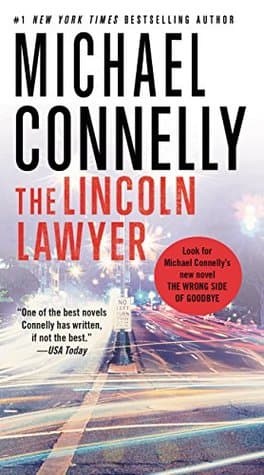
- The Lincoln Lawyer
Michael Connelly
4.2 (193k) average on GoodreadsThrillerIntroduces Mickey Haller and his world of defense law, setting the stage for this book.
- Presumed Innocent
Scott Turow
4.1 (107k) average on GoodreadsThrillerA classic legal thriller with complex characters and courtroom drama.
- The Firm
John Grisham
4.1 (43k) average on GoodreadsThrillerWhile Grisham's 'The Firm' excels in high-stakes corporate conspiracies and dramatic courtroom showdowns, Connelly's 'The Brass Verdict' offers a more grounded, gritty realism of the legal system and deeper internal moral struggles for its protagonists. Grisham's characters can sometimes serve more as plot vehicles, whereas Connelly's Haller and Bosch possess a more palpable interiority and complex moral compass.
- Angels & Demons
Dan Brown
3.9 (2.7M) average on GoodreadsThrillerA Harvard symbologist races through Rome's ancient sites, deciphering cryptic clues to unmask the Illuminati and stop a vengeful plot to destroy the Vatican with a stolen antimatter weapon.
- Gone Girl
Gillian Flynn
4.1 (2.3M) average on GoodreadsThrillerA wife's sudden disappearance on her fifth anniversary reveals a web of lies and psychological warfare, exposing the secrets within a seemingly perfect marriage.
- The Girl on the Train
Paula Hawkins
3.9 (2.1M) average on GoodreadsThrillerA woman’s fascination with a seemingly perfect couple she watches from her daily train commute leads her into a dark investigation when she witnesses something that shatters their idyllic image.





Enjoyed the summary?
A summary gives you the shape of the book. The book itself has the detail, the examples and the voice.
Find The Brass Verdict on AmazonAs an Amazon Associate, BookBrief earns from qualifying purchases. How we're funded