
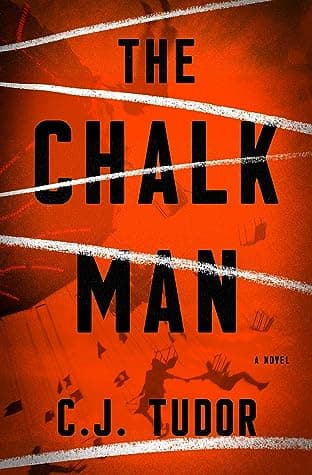
Synopsis
Covers the whole plot, including the ending.
- Difficulty
- Medium
- Pacing
- Moderate
- Mood
- Atmospheric, Suspenseful, Dark, Nostalgic
- Read it if
- You enjoy dark, twisty thrillers with dual timelines, a strong sense of nostalgia, and a focus on childhood secrets that haunt adulthood.
- Skip it if
- You prefer fast-paced action over atmospheric suspense and character-driven mystery, or are sensitive to themes of childhood trauma.
The Chalk Man Plot Summary
Covers the whole plot, including the ending.
A Gruesome Discovery in the Woods
In the summer of 1986, twelve-year-old Eddie Adams and his friends — Fat Gav, Metal Mickey, Hoppo, and Nicky — live in the quiet English village of Anderbury. They have a secret code using chalk men drawings to leave messages. One day, a mysterious chalk man drawing, different from their own, appears near the fairgrounds. Eddie and his friends follow its directions into the woods. There, they find the dismembered body of Elsie Newton, a local teenager who had gone missing days earlier. This event ends their innocent childhood and starts a dark chapter in their lives, linking them to the tragic death.
The Aftermath and Lingering Suspicions
After Elsie Newton's body is found, police arrive in Anderbury. Mr. Halloran, a new teacher at their school, is an early suspect because he is secretive and was near the fairgrounds. However, the investigation later focuses on a local fair worker, and the case remains unsolved, leaving the community uneasy. Eddie and his friends struggle with what they saw, having nightmares and feeling uneasy. They keep the detail about the mysterious chalk man drawing that led them to the body a secret, fearing they might be blamed. The incident causes problems in their friendships and creates suspicion among them.
A New Girl and a Tragic Accident
Later that summer, a new girl named Nicola, or 'Nicky', moves to Anderbury and quickly joins Eddie's group of friends. She is confident and adventurous, bringing a new energy to their interactions after the trauma. One evening, while playing 'truth or dare' at the local quarry, a dare goes wrong. Nicky dares Eddie to jump from a dangerous height into the water. He hesitates, but under pressure, he tries the jump. He hits his head on a rock during the fall and nearly drowns. It is revealed that Fat Gav, in a moment of panic, pushed him. The incident leaves Eddie with a severe head injury and a lifelong scar, further straining the group's relationships.
The Return of the Chalk Men
In 2016, Eddie Adams is a forty-two-year-old English teacher, living a quiet life in Anderbury, still affected by the events of 1986. He receives a mysterious package with a single chalk man drawing, identical to the one that led them to Elsie Newton's body decades earlier. This delivery immediately brings back his suppressed memories and anxieties. He soon finds that his childhood friends — Fat Gav, Metal Mickey, and Hoppo — have also received similar chalk man drawings. The reappearance of these symbols suggests that someone from their past is reaching out, or threatening them, forcing Eddie to confront the unresolved trauma and secrets of that summer.
A Friend's Suicide and Mounting Suspicion
The friends try to treat the chalk men as a joke, dismissing them as a macabre prank. However, their casual attitude quickly turns to fear when Hoppo, one of their childhood friends, is found dead in his home, an apparent suicide. The police call it a suicide, but Eddie and the others are convinced it is connected to the chalk men and the events of 1986. Hoppo's death increases the paranoia within the group, making them realize that the chalk men are not just a reminder but a sinister warning. Eddie begins to suspect that someone is targeting them, making him look deeper into the past to uncover the truth behind Elsie Newton's murder and the quarry accident.
Unraveling Old Secrets and New Suspects
Because of Hoppo's death and the threat, Eddie starts his own investigation, revisiting old acquaintances and places from 1986. He talks with Mrs. Halloran, the widow of Mr. Halloran, the teacher who was briefly suspected in Elsie's murder. He learns more about the fair that was in town, and the people connected to it. He also remembers details about Elsie Newton's life, her reputation, and her interactions with people in the village, including some of the fair workers. Each conversation uncovers fragmented memories and introduces new potential suspects or motives, blurring the lines between past and present and making Eddie question everything he thought he knew.
A Confrontation and a Confession
Eddie confronts Fat Gav about the quarry accident, the long-held secret in their friendship. Gav, visibly shaken, confesses that he did push Eddie, accidentally, out of fear and panic after Eddie hesitated on the ledge. He also reveals his own troubled past, including his abusive father, which explains his often aggressive and insecure behavior as a child. This confession, while painful, gives Eddie a piece of the puzzle, showing the deep guilt and secrets that have affected their group for decades. It also shows the complex dynamics and hidden trauma each friend carried.
The Truth About Elsie Newton's Murder
Eddie eventually uncovers the truth about Elsie Newton's murder. Mr. Halloran, the art teacher, was involved. Elsie was pregnant, and Mr. Halloran was the father. He had promised to help her get an abortion, but during a confrontation at the fairgrounds, Elsie threatened to expose him, leading to a struggle. Mr. Halloran accidentally pushed Elsie, causing her to fall and hit her head, killing her. He then dismembered her body to conceal her identity and the pregnancy, hoping to avoid scandal and protect his career. This revelation exposes the dark secrets in their quiet village.
The Identity of the Chalk Man and the Reckoning
Eddie eventually realizes that Nicky drew the chalk men in 2016. Nicky, still alive and seeking revenge, had planned everything. She had led them to Elsie's body in 1986, having seen Mr. Halloran's crime. She also knew about Fat Gav pushing Eddie at the quarry. Nicky, traumatized by these events and feeling abandoned by her friends, had returned to seek retribution for the injustices of the past. She believed her friends had failed to protect her and Elsie, and had allowed the truth to stay hidden for too long. Her chalk men were a symbol of her unresolved pain and her desire for justice.
The Final Confrontation and Resolution
The story ends with a tense confrontation between Eddie and Nicky, where all the remaining secrets are revealed. Nicky explains her full role in the events of both 1986 and 2016, including her use of the chalk men and her intent to make the others suffer for their past actions. Eddie, now understanding her deep pain and her twisted sense of justice, tries to reason with her. The confrontation forces both of them to face their shared trauma and the consequences of their childhood secrets. The full extent of the emotional damage from the past is revealed, leading to an unsettling resolution that affects Eddie.
Principal Figures
Eddie Adams (Adult)
Protagonist
A forty-two-year-old English teacher haunted by his childhood past.
Eddie is the central protagonist, narrating the story from both his adult and childhood perspectives. As an adult, he is a quiet, introspective English teacher living in Anderbury, still deeply affected by the traumatic events of 1986. He carries the weight of unresolved guilt and fear, manifesting in his cautious nature and reluctance to confront the past. The reappearance of the chalk men forces him to re-examine his memories and confront the secrets he and his friends buried. He is driven by a need for truth and a desire to protect his remaining friends, even as he suspects them.
Relationships: Nicky (Childhood friend, later revealed to be the antagonist); Fat Gav (Childhood friend, complicated by guilt and resentment); Metal Mickey (Childhood friend, often a voice of reason); Hoppo (Childhood friend, victim of the chalk man events)
Eddie Adams (Child)
Protagonist
A twelve-year-old boy whose innocence is shattered by a gruesome discovery.
As a child in 1986, Eddie is an imaginative and sensitive boy, the de facto leader of his group of friends. He is curious and adventurous, but also easily influenced by his peers. The discovery of Elsie Newton's body profoundly traumatizes him, making him withdrawn and secretive. He struggles with the moral complexities of their secrets and the guilt of his actions and inaction. His perspective as a child highlights the vulnerability and confusion of adolescence when confronted with extreme violence and adult secrets.
Relationships: Nicky (Close childhood friend, with a developing romantic interest); Fat Gav (Best friend, but their relationship is strained by rivalry and betrayal); Metal Mickey (Loyal friend, often the most sensible); Hoppo (Friend, often the quietest and most easily scared)
Nicky (Nicola) Davies
Antagonist/Supporting
The new girl in 1986, a confident and enigmatic figure who returns for revenge.
Nicky is introduced as a confident, slightly rebellious new girl in Anderbury in 1986, quickly becoming an integral part of Eddie's friend group. She is intelligent and perceptive, but also carries her own secrets and trauma. As an adult, she is revealed to be the mastermind behind the 2016 chalk men, orchestrating events to force her childhood friends to confront their past. Her motive is a complex mix of grief, betrayal, and a desire for justice, feeling that she and Elsie were abandoned and the truth was buried. She uses manipulation and fear to achieve her goals.
Relationships: Eddie Adams (Childhood friend and crush, later the target of her revenge); Elsie Newton (Victim whose death Nicky witnessed, fueling her desire for justice)
Fat Gav (Gavin)
Supporting
Eddie's childhood best friend, often aggressive and insecure, burdened by guilt.
Gav, known as 'Fat Gav' in childhood, is Eddie's best friend in 1986. He is portrayed as insecure and prone to bullying, often acting out due to his abusive home life. He struggles with guilt over pushing Eddie at the quarry, a secret that strains their friendship for decades. As an adult, he is still somewhat volatile and defensive, having never truly escaped the shadow of his past. He represents the corrosive effect of unaddressed trauma and guilt, and his eventual confession is a pivotal moment in Eddie's understanding.
Relationships: Eddie Adams (Best friend, complicated by a secret betrayal); Metal Mickey (Childhood friend)
Metal Mickey (Mickey)
Supporting
The loyal and sensible member of Eddie's childhood friend group.
Metal Mickey is the most grounded and sensible of Eddie's friends in 1986. He is often the voice of reason and less prone to the reckless behavior of the others. He acts as a loyal friend, though he too carries the burden of their shared secrets. As an adult, he remains a stable presence, though equally affected by the re-emergence of the chalk men. He provides a contrast to Gav's volatility and Hoppo's fear, representing a more resilient but still scarred individual.
Relationships: Eddie Adams (Close childhood friend); Fat Gav (Childhood friend)
Hoppo (Daniel)
Supporting
The timid and easily frightened member of the group, a victim of the chalk man events.
Hoppo is the most timid and fearful of Eddie's childhood friends. He is easily scared and often reluctant to participate in their more adventurous or dangerous games. The discovery of Elsie's body traumatizes him deeply, leaving him with lasting anxiety. As an adult, he is the first victim of the 2016 chalk man events, found dead in what appears to be a suicide. His death serves as the catalyst for Eddie's deeper investigation, highlighting the severe and lasting psychological impact of their shared trauma.
Relationships: Eddie Adams (Childhood friend); Fat Gav (Childhood friend)
Elsie Newton
Supporting/Victim
The local teenager whose murder in 1986 is the central mystery.
Elsie Newton is the victim whose dismembered body is discovered by Eddie and his friends in 1986. Her murder is the inciting incident that sets the entire plot in motion. She is initially portrayed as a local teenager with a complicated reputation, but through Eddie's investigation, her story unfolds. It is revealed that she was pregnant, and her death was a result of a desperate confrontation with the child's father, Mr. Halloran, who then dismembered her body to hide the truth. Her tragic story underpins the entire mystery and the desire for justice.
Relationships: Mr. Halloran (Her killer and the father of her unborn child); Nicky (Witness to her murder)
Mr. Halloran
Antagonist
The new art teacher in 1986, initially a suspect, later revealed as Elsie Newton's killer.
Mr. Halloran is the new art teacher at Eddie's school in 1986. He is portrayed as somewhat mysterious and aloof, making him an initial suspect in Elsie Newton's murder. He is a seemingly respectable figure, but his true character is much darker. He is revealed to be Elsie's lover and the father of her unborn child. In a desperate attempt to protect his reputation and career, he accidentally kills Elsie and then dismembers her body to cover up the crime. His actions are the root cause of the decades-long trauma experienced by Eddie and his friends.
Relationships: Elsie Newton (Lover and victim); Mrs. Halloran (Wife, oblivious to his true nature)
Mrs. Halloran
Mentioned
Mr. Halloran's widow, who provides Eddie with crucial information.
Mrs. Halloran is the wife of Mr. Halloran. As an adult, Eddie visits her during his investigation. She is a seemingly frail and grieving widow, still living in Anderbury. Her conversations with Eddie provide key details about her husband's past, his secretive nature, and his connection to the fair, inadvertently helping Eddie piece together the truth about Elsie Newton's murder. She represents the innocent bystander unknowingly living with a dark secret.
Relationships: Mr. Halloran (Husband)
Themes & Insights
The Enduring Impact of Childhood Trauma
The novel shows how a single traumatic event in childhood can shape and haunt individuals for decades. The discovery of Elsie Newton's body and the quarry accident change the lives of Eddie and his friends. As adults, they are all deeply affected: Eddie is withdrawn, Gav is volatile, Hoppo is afraid, and Nicky wants revenge. The chalk men are a symbol of this unaddressed trauma, forcing the characters to confront the past they've tried to bury, showing how unresolved psychological wounds worsen and eventually demand attention.
“Childhood trauma is like a chalk man. You draw it, you erase it, but the dust always remains. And sometimes, the dust rises again.”
Secrets, Lies, and Guilt
Secrets and lies are important to the story, both in 1986 and 2016. The children's decision to keep the mysterious chalk man a secret, Gav's lie about pushing Eddie, and Mr. Halloran's cover-up of Elsie's murder all show how secrets can damage relationships and lead to bad outcomes. The adult characters carry the guilt of their past actions and inactions, creating distrust and resentment. The novel shows how trying to hide the truth only delays its inevitable return, often with more destructive force.
“Secrets are like chalk. They get on everything. And they don't always wipe away clean.”
Justice and Revenge
The novel deals with the unclear line between justice and revenge. Nicky, driven by her trauma and the perceived injustice of Elsie's unsolved murder and her friends' involvement, takes matters into her own hands. Her plan with the chalk men is an attempt to force a reckoning and deliver her own form of justice. However, her methods are destructive and cause more pain, raising questions about whether her actions are right. The theme explores if true justice can come from revenge, or if it only continues a cycle of suffering.
“Sometimes, justice isn't about what's right. It's about what's owed.”
The Fragility of Childhood and Innocence Lost
The Chalk Man clearly contrasts the innocent world of childhood games and friendships with the harsh reality of adult evil. Eddie and his friends' summer is shattered by the discovery of Elsie Newton's body, ending their innocence. Their secret chalk code, initially a symbol of their bond and imagination, becomes a sign of death and fear. The novel shows how easily childhood can be corrupted by trauma, forcing children to face the darkest parts of humanity and taking away their carefree existence, leaving them scarred for life.
“That summer, we learned that monsters weren't just in stories. They were real. And they lived in Anderbury.”
Plot Devices & Literary Techniques
Dual Timeline Narrative
Alternating chapters between 1986 and 2016 to slowly reveal the mystery.
The novel employs a dual timeline structure, switching between Eddie's childhood experiences in 1986 and his adult life in 2016. This device effectively builds suspense by gradually revealing fragments of the past, mirroring Eddie's own fragmented memories and investigation. The alternating perspectives allow the reader to understand the origins of the trauma while simultaneously experiencing its present-day consequences, linking cause and effect across three decades. It also creates dramatic irony as the reader often knows more than the adult Eddie initially, but less than the child Eddie did at the time of certain events.
The Chalk Men
A recurring symbol representing communication, warning, and trauma.
The chalk men are the central symbolic motif of the novel. In 1986, they are a secret code among friends, representing childhood innocence and communication. However, the appearance of a mysterious chalk man leading them to Elsie Newton's body transforms them into a symbol of dread and foreboding. In 2016, their reappearance signifies the return of the past trauma and serves as a direct threat or warning. They are a powerful visual and narrative device, representing both shared secrets and the lingering, inescapable nature of unresolved events, ultimately becoming a tool for revenge.
First-Person Narration (Unreliable)
The story is told from Eddie's perspective, colored by memory and trauma.
The entire story is narrated from Eddie's first-person perspective, both as a child and an adult. This makes him an inherently unreliable narrator, as his memories are often fragmented, suppressed, or influenced by trauma and the passage of time. The reader experiences the mystery through his subjective lens, piecing together the truth alongside him. This device enhances the suspense and mystery, as the reader must question Eddie's recollections and interpretations, adding layers of psychological depth to the narrative and making the final revelations more impactful.
Red Herrings
Misleading clues and characters designed to distract from the true culprit.
The novel skillfully uses red herrings to mislead the reader and build suspense. Initially, Mr. Halloran is presented as a prime suspect due to his secretive nature and the circumstances of Elsie's death. Later, suspicion falls on various fair workers and even among Eddie's own friends regarding different aspects of the past. These misdirections keep the reader guessing and prevent them from identifying the true perpetrator and their complex motivations too early, making the final reveal more surprising and impactful. They highlight the difficulty of discerning truth when obscured by fear and fragmented memories.
The Chalk Man Quotes
“The past is a ghost, the future a dream, and all we ever have is now.”
“You can't change the past, but you can change the story you tell about it.”
“Sometimes the monsters are real, and sometimes they're just people.”
“We all have secrets. Some are just buried deeper than others.”
“The chalk men were our secret code, but secrets have a way of turning deadly.”
“Friendship is a fragile thing, easily broken by a single lie.”
“In a small town, everyone knows your business, but no one knows the truth.”
“Fear is a poison that seeps into your bones and never leaves.”
“The dead don't haunt us; it's the living who won't let go.”
“We draw our own monsters, then spend our lives running from them.”
“A single moment can change everything, and you never see it coming.”
“The truth doesn't set you free; it just shows you the cage you're in.”
“Childhood is supposed to be innocent, but ours was stained with blood.”
“You can leave a place, but you can't leave the memories behind.”
Quiz
10 questions on the plot and the characters. Each answer comes with a short explanation.
Question 1
What secret code do Eddie and his friends use in 1986 to communicate with each other?
- Invisible ink messages
- Chalk stick figures
- Whistled bird calls
- Coded text messages
Show answer
B. Chalk stick figures In the book, Eddie and his friends create a secret code using chalk stick figures that they leave for each other around their village. This becomes central to the plot when one leads them to a body.
Question 2
What traumatic event occurs when Eddie and his friends follow a mysterious chalk man in 1986?
- They discover a hidden treasure
- They find a dismembered body
- They get lost in the woods
- They witness a car accident
Show answer
B. They find a dismembered body The chalk man code takes a dark turn when a mysterious chalk figure leads the children to a dismembered body, marking the beginning of the traumatic events that haunt them into adulthood.
Question 3
What happens in 2016 that makes Eddie think his past is catching up with him?
- He receives a phone call from an old friend
- He finds a chalk stick figure drawn on his door
- He gets a letter containing a chalk stick figure
- He sees a news report about the old case
Show answer
C. He gets a letter containing a chalk stick figure In 2016, Eddie receives a letter in the mail containing a single chalk stick figure, which triggers memories of the traumatic events from 1986 and suggests someone is targeting him and his friends.
Question 4
How do Eddie and his friends initially react when they all receive the chalk figure messages in 2016?
- They immediately contact the police
- They think it could be a prank
- They assume it's from a fan of their childhood story
- They ignore it completely
Show answer
B. They think it could be a prank When Eddie and his friends all receive chalk figure messages in 2016, they initially dismiss it as a possible prank, showing their reluctance to confront their past trauma until events escalate.
Question 5
What event causes Eddie to realize that the chalk figure messages are a serious threat in 2016?
- He receives a threatening phone call
- One of his friends turns up dead
- He finds his house vandalized
- The police reopen the 1986 case
Show answer
B. One of his friends turns up dead The situation becomes deadly serious when one of Eddie's friends from 1986 turns up dead after receiving the chalk figure message, forcing Eddie to confront the past to save himself.
Question 6
What is Eddie's main motivation in 2016 as he investigates the chalk figure messages?
- To write a book about his experiences
- To finally figure out what really happened in 1986
- To prove his innocence to the police
- To find who is sending the messages as a game
Show answer
B. To finally figure out what really happened in 1986 Eddie realizes that to save himself from the present threat, he must uncover the truth about what actually happened in 1986, which has been haunting him and his friends for decades.
Question 7
Which theme is most prominently explored through the dual timeline structure of the book?
- The joy of childhood friendships
- The impact of past trauma on the present
- The efficiency of police investigations
- The benefits of modern technology
Show answer
B. The impact of past trauma on the present The book uses parallel narratives in 1986 and 2016 to show how childhood trauma continues to affect the characters' adult lives, with past events directly causing present danger.
Question 8
What does the chalk man symbol represent in the context of the story's themes?
- Innocence and childhood play
- A bridge between past and present trauma
- Police investigation techniques
- Artistic expression
Show answer
B. A bridge between past and present trauma The chalk man begins as innocent childhood play but becomes a symbol connecting the traumatic events of 1986 to the deadly threats in 2016, representing how the past refuses to stay buried.
Question 9
How does the setting of a 'sleepy English village' contribute to the story's tension?
- It provides comic relief from the dark plot
- It emphasizes the contrast between surface tranquility and hidden violence
- It makes police investigations easier
- It allows for more character development than a city would
Show answer
B. It emphasizes the contrast between surface tranquility and hidden violence The seemingly peaceful village setting creates dramatic irony - readers know violence lurks beneath the surface, making the discovery of the body and subsequent events more shocking and unsettling.
Question 10
What psychological insight does the book offer through Eddie's journey from 1986 to 2016?
- That childhood friendships always weaken over time
- That traumatic memories can be completely erased with effort
- That unresolved trauma inevitably resurfaces, demanding confrontation
- That small towns are psychologically healthier than cities
Show answer
C. That unresolved trauma inevitably resurfaces, demanding confrontation Through Eddie's experience, the book explores how traumatic events from childhood don't simply disappear with time, but remain buried until circumstances force individuals to confront and resolve them.
The Chalk Man FAQ
What is 'The Chalk Man' about?
'The Chalk Man' is a dual-timeline thriller about Eddie Adams and his childhood friends in 1986 who discover a dismembered body after following chalk stick figure messages. In 2016, adult Eddie receives a similar chalk figure, triggering a chain of events that forces him to confront the unsolved mysteries of his past, including the murder of their teacher Mr. Halloran and the disappearance of a girl named Elisa.
Why should I read 'The Chalk Man'?
You should read 'The Chalk Man' for its masterful blend of nostalgic 1980s childhood nostalgia with chilling suspense, its clever dual-timeline structure that gradually reveals hidden connections, and its exploration of how childhood trauma shapes adult lives. The novel keeps readers guessing with multiple twists, including the true identity of the killer and the fate of Elisa.
What is the background/setting of 'The Chalk Man'?
The story is set primarily in the sleepy English village of Anderbury, with timelines in 1986 and 2016. The 1986 setting captures the innocence and boredom of childhood summers, contrasted with the grim discovery of violence, while 2016 shows how the town and characters have decayed or changed, mirroring their unresolved past trauma.
What are the most memorable quotes from 'The Chalk Man'?
Memorable quotes include: 'The past is a chalk man, always waiting to be drawn again,' highlighting the theme of unresolved history. Also, 'You can't erase your mistakes. They're always there, just beneath the surface,' reflecting Eddie's guilt over the events of 1986 and his role in them.
What writing style does C.J. Tudor use in 'The Chalk Man'?
C.J. Tudor employs a first-person narrative from Eddie's perspective, alternating between 1986 and 2016 timelines to build suspense. The style is atmospheric and nostalgic, with vivid descriptions of childhood, but gradually darkens as secrets are uncovered, creating a tense, psychological thriller tone.
What minor details add significant meaning in 'The Chalk Man'?
Minor details like the recurring image of a pink bicycle, which belongs to Elisa and symbolizes lost innocence, and the chalk figures themselves, which evolve from innocent childhood games to sinister threats. Also, Eddie's collection of action figures in 1986 mirrors his desire to control a chaotic world.
What are some subtle foreshadowing moments in 'The Chalk Man'?
Foreshadowing includes early mentions of Mr. Halloran's interest in anatomy, hinting at his dark secrets, and the chalk man leading to the body in 1986, which prefigures the 2016 messages. Eddie's childhood fear of the fairground and its connection to violence also foreshadows later revelations.
What unexpected character connections exist in 'The Chalk Man'?
Unexpected connections include the reveal that Mr. Halloran, the teacher, was involved in Elisa's disappearance and murder, and that Gavin, one of Eddie's friends, is actually Elisa's brother seeking revenge. Also, Eddie's father, who seemed supportive, had hidden knowledge about the events.
What are unspoken character motivations in 'The Chalk Man'?
Unspoken motivations include Eddie's deep-seated guilt over not saving Elisa and his role in the chalk messages, driving his 2016 investigation. Gavin's motivation is revenge for his sister's death, masked by his friendship. Mr. Halloran's pedophilic urges and need for control underlie his actions.
What psychological complexities do characters exhibit in 'The Chalk Man'?
Eddie exhibits survivor's guilt and repression, burying memories to cope. Gavin shows trauma-induced obsession with justice. Mr. Halloran displays a manipulative duality, appearing kind while harboring violent tendencies. The friends' group dynamics reveal how shared trauma bonds and fractures relationships over time.
What are the major emotional turning points in 'The Chalk Man'?
Major emotional turning points include the discovery of the body in 1986, shattering the friends' innocence; Eddie receiving the chalk figure in 2016, reigniting fear; the death of one friend in 2016, confirming the threat is real; and the final reveal of Mr. Halloran's crimes and Gavin's revenge, forcing Eddie to confront his past fully.
How do relationship dynamics evolve in 'The Chalk Man'?
Relationship dynamics evolve from close childhood bonds in 1986, based on shared secrets and games, to strained, distrustful connections in 2016 as guilt and suspicion fester. Eddie's relationship with his father shifts from idolization to disillusionment, and his interactions with old friends become fraught with hidden agendas and fear.
Which parts of 'The Chalk Man' remain ambiguous or open-ended?
Ambiguous elements include the full extent of Mr. Halloran's victims beyond Elisa, and whether all the chalk messages in 2016 were from Gavin or if others were involved. The fate of some minor characters, like Mickey, is left somewhat open, and the long-term impact on Eddie's mental health is not fully resolved.
What are controversial scenes or decisions in 'The Chalk Man'?
Controversial scenes include the graphic depiction of Elisa's dismembered body, which some readers find disturbing. Eddie's decision as a child to keep secrets about Mr. Halloran, and Gavin's vigilante justice in 2016, blurring lines between right and wrong, spark debate about morality and responsibility.
'The Chalk Man' ending explained: how it ends & what it means
The ending reveals that Gavin was behind the 2016 chalk messages and murders to expose Mr. Halloran's crimes and avenge his sister Elisa. Eddie confronts and kills Mr. Halloran in self-defense, and Gavin dies in the process. It means that the past cannot be buried, and justice comes at a cost, with Eddie finally accepting his role and moving forward, albeit scarred.
Similar books
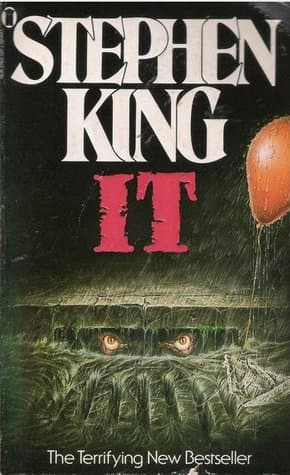
- It
Stephen King
3.5 (237) average on GoodreadsFictionFeatures a group of children facing a terrifying mystery that resurfaces in their adulthood.
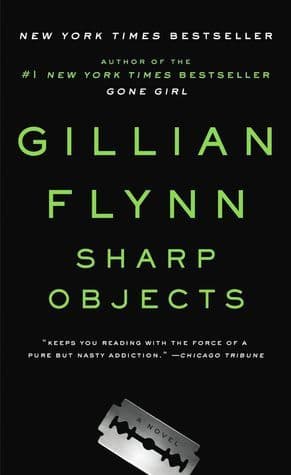
- Sharp Objects
Gillian Flynn
4.0 (678k) average on GoodreadsThrillerExplores a protagonist returning to her hometown to uncover dark secrets from her past, dealing with trauma and murder.
- The Silent Patient
Alex Michaelides
4.1 (507k) average on GoodreadsThrillerA psychological thriller with a complex mystery unraveling through a character's past actions and hidden motives.
- Gone Girl
Gillian Flynn
4.1 (2.3M) average on GoodreadsThrillerWhile both are psychological thrillers, Gone Girl excels in its profound psychological depth and truly unexpected, subversive twists, making its unreliable narration a masterful tool. The Chalk Man, while effective, offers a more conventional approach to its mystery and character motivations, with less intricate psychological manipulation.
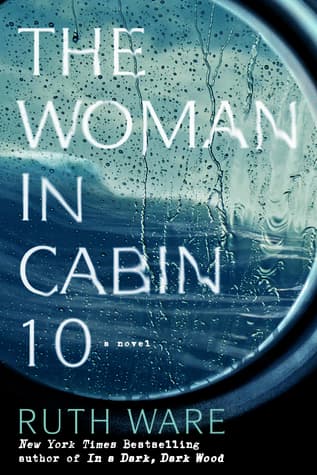
- The Woman in Cabin 10
Ruth Ware
3.7 (375k) average on GoodreadsThrillerBoth are contemporary mystery thrillers with a strong sense of atmosphere and a protagonist grappling with a traumatic event. Ware's novel often focuses on claustrophobic settings and an isolated protagonist's perspective, while Tudor's The Chalk Man broadens its scope to a wider cast and the enduring impact of a shared past, offering a more ensemble-driven mystery.
- Angels & Demons
Dan Brown
3.9 (2.7M) average on GoodreadsThrillerA Harvard symbologist races through Rome's ancient sites, deciphering cryptic clues to unmask the Illuminati and stop a vengeful plot to destroy the Vatican with a stolen antimatter weapon.



Enjoyed the summary?
A summary gives you the shape of the book. The book itself has the detail, the examples and the voice.
Find The Chalk Man on AmazonAs an Amazon Associate, BookBrief earns from qualifying purchases. How we're funded