

Synopsis
Covers the whole plot, including the ending.
- Difficulty
- Easy
- Pacing
- Moderate
- Mood
- Flirty, Romantic, Sweet, Humorous, Angsty
- Read it if
- You love a good college romance with a 'grumpy x sunshine' dynamic, a slow burn, and a touch of drama.
- Skip it if
- You dislike secret relationships or stories featuring a problematic professor subplot.
The Chase Plot Summary
Covers the whole plot, including the ending.
New Beginnings and Awkward Introductions
Summer Heyward-Di Laurentis, after being waitlisted from her dream fashion school, attends Briar University to study fashion and interior design. Her brother, Dean Di Laurentis, arranges for her to live with him and his three best friends: Colin Fitzgerald (Fitzy), Tucker Alston, and Hunter Davenport. Summer immediately clashes with Fitzy, a quiet, introverted hockey player who seems to judge her as superficial. Despite their initial dislike, a strong attraction sparks between them, which Fitzy tries to ignore while Summer, though intrigued, does not want to chase a man who doesn't want her.
Roommate Dynamics and Developing Friendships
As Summer settles into the house, she adapts to living with four college hockey players. She quickly befriends Tucker and Hunter, who are more welcoming than Fitzy. She also grows closer to her brother, Dean, who becomes more protective. Fitzy, however, stays distant, often retreating to his room. This distance frustrates Summer, especially as she notices the subtle glances and tension between them, making it clear that his disinterest might be a front.
Academic Pressures and a Creepy Professor
Summer's academic life at Briar is challenging, particularly her art history class. She struggles with the material. Her professor, Professor Ashton, initially seems helpful but soon develops an unsettling interest in Summer. He makes inappropriate comments and invites her to private study sessions that make her uncomfortable. Summer tries to ignore his behavior, but the situation becomes concerning, adding stress to her new life.
Fitzy's Vulnerability and a Shared Moment
One evening, Summer finds Fitzy working on his graphic design projects, a side of him she rarely sees. She learns about his passion for art and his dream of becoming a comic book artist, a contrast to his hockey persona. In this moment, Fitzy lets down his guard, revealing a more sensitive side. They share a brief, intense conversation where their attraction is clear. This interaction changes Summer's view of him, making her realize there's more to him.
The Halloween Party and a Jealous Dean
The house hosts a Halloween party. Summer, dressed as a devil, is drawn to Fitzy, who is unusually social. As the night progresses, they share charged glances. The tension between them peaks when they find themselves alone, about to kiss. However, Dean, the protective older brother, intervenes before anything can happen, causing Fitzy to retreat, leaving Summer frustrated.
Professor Ashton's Escalation
Professor Ashton's inappropriate advances intensify. He sends Summer suggestive emails and corners her after class, making her feel threatened. He implies that her grades depend on her compliance with his requests for private meetings. Summer, feeling trapped, initially keeps the situation to herself, fearing the effects on her academic future. She tries to avoid him, but his persistence makes it difficult, causing her anxiety.
Fitzy's Intervention and Support
The situation with Professor Ashton reaches a peak when Fitzy, noticing Summer's distress and overhearing a suspicious conversation, confronts her. Summer finally confides in him about the harassment. Enraged, Fitzy confronts Professor Ashton and ensures the university is informed. This act of protection shatters Fitzy's aloof facade, revealing his deep care for Summer, and solidifying their bond. Dean and the other roommates also support Summer.
Confessions and a Budding Romance
After the incident with Professor Ashton, the emotional walls between Summer and Fitzy crumble. Fitzy, no longer able to deny his feelings, confesses his attraction to Summer and explains his earlier reluctance was due to his insecurity and fear of being rejected. Summer, relieved and equally smitten, reciprocates. They share a passionate first kiss, starting their romantic relationship. They decide to keep their relationship a secret from Dean, knowing his protective nature might cause problems.
Navigating Secrecy and Dean's Suspicions
Summer and Fitzy begin a secret relationship, enjoying stolen moments and clandestine dates. The thrill of their hidden romance is exciting, but also stressful, as they fear being discovered by Dean. Dean, being Summer's brother and Fitzy's best friend, is observant and starts to notice subtle changes in their behavior. He becomes suspicious of their closeness, leading to several close calls that threaten to expose their secret.
The Truth Comes Out
The secret comes out. Dean walks in on Summer and Fitzy in a compromising position, leading to an explosive confrontation. Dean is furious, feeling betrayed by both his sister and his best friend. He sees Fitzy's actions as a betrayal of their friendship and his trust. The tension in the house becomes unbearable, threatening to fracture their friendships and family ties. Summer and Fitzy must face the consequences of their secrecy and the impact on their relationships.
Reconciliation and Forgiveness
Following the initial blow-up, Dean maintains a cold distance from both Summer and Fitzy. However, with the intervention of Tucker and Hunter, who vouch for Fitzy's sincerity, Dean slowly begins to soften. He realizes that Summer is happy with Fitzy and that Fitzy genuinely cares for her. After much thought and an apology from Fitzy, Dean reluctantly gives his blessing, accepting their relationship and beginning to heal their friendships.
Future Plans and Happily Ever After
With Dean's acceptance, Summer and Fitzy's relationship flourishes openly. Summer thrives in her studies, finding her voice and confidence, especially after the Professor Ashton scandal. Fitzy continues to pursue his graphic design aspirations alongside his hockey career. They openly express their love and commitment to each other, making plans for their future together. The book ends with Summer and Fitzy in love and supported by their friends and family, looking forward to their journey.
The Chase Characters
Summer Heyward-Di Laurentis
Protagonist
A vibrant, fashion-loving student who learns to embrace her true self and find love.
Summer is initially perceived as superficial due to her love for fashion, designer clothes, and outgoing personality. Beneath this exterior, she is intelligent, kind, and deeply insecure about her academic abilities and her place in the world. She craves genuine connection and struggles with self-doubt after being waitlisted from her dream school. Her journey involves standing up for herself, recognizing her own worth, and finding a partner who sees beyond her surface.
Relationships: Colin Fitzgerald (Love interest, roommate, eventual boyfriend); Dean Di Laurentis (Older brother, protective, roommate); Tucker Alston (Friend, roommate); Hunter Davenport (Friend, roommate)
Colin Fitzgerald (Fitzy)
Love Interest / Protagonist
A broody, introverted hockey player with a hidden passion for art and a deep insecurity.
Fitzy is initially portrayed as quiet, judgmental, and aloof, preferring video games and his art to social interaction. He is a talented hockey player but secretly dreams of becoming a comic book artist. His brooding exterior hides deep insecurities about his intelligence and his ability to be worthy of someone like Summer, whom he perceives as out of his league. His journey involves overcoming his fears, opening up emotionally, and embracing his true self and desires.
Relationships: Summer Heyward-Di Laurentis (Love interest, roommate, eventual boyfriend); Dean Di Laurentis (Best friend, roommate); Tucker Alston (Best friend, roommate); Hunter Davenport (Best friend, roommate)
Dean Di Laurentis
Supporting
Summer's protective older brother and Fitzy's best friend.
Dean is a charismatic, fun-loving, and fiercely protective older brother to Summer. He is also a loyal best friend to Fitzy, Tucker, and Hunter. While he means well, his overprotective nature often creates complications, especially when Summer starts dating. He struggles with the idea of Summer growing up and finding love, particularly with one of his closest friends. His arc involves learning to trust Summer's choices and accepting her independence.
Relationships: Summer Heyward-Di Laurentis (Sister); Colin Fitzgerald (Best friend); Tucker Alston (Best friend); Hunter Davenport (Best friend)
Tucker Alston
Supporting
One of the roommates and a kind, supportive friend.
Tucker is the kindest and most laid-back of the four hockey players. He is known for his calm demeanor and his role as the mediator in the group. He develops a crush on Summer, but his feelings are unrequited. Despite this, he remains a supportive friend to both Summer and Fitzy, offering advice and encouragement. He is often the voice of reason and compassion in the house.
Relationships: Summer Heyward-Di Laurentis (Friend, unrequited crush); Colin Fitzgerald (Best friend, roommate); Dean Di Laurentis (Best friend, roommate); Hunter Davenport (Best friend, roommate)
Hunter Davenport
Supporting
One of the roommates and a loyal, easygoing friend.
Hunter is another one of the hockey player roommates, known for his easygoing nature and loyalty. He quickly becomes friends with Summer and is always ready with a witty remark or a supportive gesture. He is a good listener and often provides a lighter, more humorous perspective to the group dynamics. He is a solid presence in the house and a reliable friend to everyone.
Relationships: Summer Heyward-Di Laurentis (Friend); Colin Fitzgerald (Best friend, roommate); Dean Di Laurentis (Best friend, roommate); Tucker Alston (Best friend, roommate)
Professor Ashton
Antagonist
A predatory art history professor who harasses Summer.
Professor Ashton is Summer's art history professor who initially appears helpful but quickly reveals a predatory nature. He abuses his position of power by making inappropriate advances and comments towards Summer, attempting to manipulate her academic standing. He represents a significant external conflict for Summer, forcing her to confront uncomfortable situations and find her voice. His actions highlight themes of power dynamics and harassment.
Relationships: Summer Heyward-Di Laurentis (Student/Professor, Harasser)
The Chase Themes
Judging a Book by Its Cover
This theme explores how first impressions can mislead and prevent deeper connections. Fitzy first judges Summer as superficial, while Summer sees Fitzy as merely broody. Their journey forces them to look beyond these surface assumptions and discover the complex individuals underneath. This is clear in early interactions where Fitzy's thoughts show his preconceived notions, and Summer's frustration with his coldness comes from his misjudgment of her.
“I hate that I’m attracted to him. He thinks I’m a shallow idiot who probably spends all her time shopping for designer handbags. Which I do, by the way. But I’m also a lot more than that.”
Insecurity and Self-Acceptance
Both Summer and Fitzy deal with insecurities. Summer doubts her academic abilities and feels pressure, leading her to question her worth. Fitzy, despite his talent, is insecure about his intelligence and fears rejection, especially from someone as confident as Summer. Their romance unfolds as they learn to accept themselves and find validation from within. Fitzy's revelation of his artistic dreams and Summer's struggle with her art history class are key examples.
“I’m not good enough for her. She’s sunshine and designer labels and I’m… I’m just me. A hockey player who draws comics in his spare time.”
The Power of Vulnerability
The story shows the importance of vulnerability in forming genuine connections. Initially, both Summer and Fitzy hide their true selves, leading to misunderstandings. Only when Fitzy reveals his passion for art and his insecurities, and when Summer confides in him about Professor Ashton, do their emotional walls break down. These moments of shared vulnerability are turning points, allowing them to truly see and connect, leading to trust and deeper intimacy.
“It’s terrifying, but also exhilarating, to let someone see the parts of you you usually keep hidden.”
Found Family and Friendship Loyalty
The house dynamic highlights the strong bonds of friendship and the idea of a 'found family.' Dean, Fitzy, Tucker, and Hunter share a deep brotherhood, and Summer's integration into this group solidifies their unit. Their loyalty is tested when Summer and Fitzy's relationship is revealed, but their friendships prove resilient. The support Summer gets from all the guys during the Professor Ashton crisis, and Dean's acceptance of Fitzy, show the strength of these chosen family ties.
“We’re more than just roommates. We’re family. And family looks out for each other, no matter what.”
Plot Devices & Literary Techniques
Opposites Attract Trope
The central premise that two characters with seemingly contrasting personalities fall in love.
This classic romance trope forms the foundation of Summer and Fitzy's relationship. Summer is outgoing, fashion-forward, and bubbly, while Fitzy is introverted, artistic, and broody. Their initial friction and perceived incompatibility drive much of the early plot, highlighting their distinct personalities. The device is used to create tension and demonstrate that deeper connections can form beyond surface differences, ultimately proving that their contrasting qualities complement each other, leading to a balanced and fulfilling relationship.
Forced Proximity (Roommates)
Characters are compelled to share living space, leading to increased interaction and romantic tension.
Summer moving into a house with her brother and his three best friends, including Fitzy, creates the perfect environment for this device. Their shared living situation forces them into constant interaction, from mundane daily routines to shared social events. This unavoidable closeness intensifies their attraction, breaks down their initial barriers, and makes it impossible for them to ignore the growing chemistry between them, despite their initial resistance and Fitzy's attempts to maintain distance. It accelerates their emotional and physical connection.
Secret Relationship
The protagonists conceal their romance from others, particularly from a protective figure.
After Summer and Fitzy begin dating, they choose to keep their relationship a secret from Dean, Summer's overprotective brother and Fitzy's best friend. This device generates significant tension and comedic moments as they navigate clandestine dates and try to hide their affection. It heightens the stakes of their romance, adding an element of forbidden love and inevitably leading to a dramatic confrontation when the secret is eventually exposed, forcing them to confront the consequences and seek acceptance.
The 'Creepy Professor' Antagonist
An authority figure who abuses their power to harass a student, creating external conflict.
Professor Ashton serves as a significant external antagonist, providing a serious conflict that goes beyond the romantic tension. His inappropriate advances towards Summer escalate, putting her in a vulnerable and distressing situation. This device not only highlights Summer's resilience and need for support but also serves as a crucial catalyst for Fitzy to drop his emotional guard and openly display his protective feelings for Summer, solidifying their bond and moving their relationship forward from mere attraction to genuine care and commitment.
The Chase Quotes
“If you want to be with someone, really be with them, then you have to be willing to be vulnerable. To let them in.”
“Sometimes the things you run from are exactly the things you need to run to.”
“I wasn't just attracted to him. I was drawn to him, like a moth to a flame, knowing full well I might get burned.”
“You can't force someone to feel something they don't, but you can definitely make them realize what they're missing.”
“He looked at me like I was the only thing that mattered, and for a girl who’d always felt like she was a little too much, it was everything.”
“Being happy isn't about having everything perfect. It's about finding joy in the imperfections.”
“He was quiet, brooding, and a little bit scary. Everything I shouldn't want, and everything I couldn't resist.”
“The greatest adventures are usually found outside your comfort zone.”
“Sometimes the best way to get what you want is to stop chasing it.”
“Love isn’t always fireworks and grand gestures. Sometimes it’s just quiet understanding and knowing someone’s got your back.”
“He didn't just see my pretty packaging; he saw the messy, complicated girl underneath, and he still wanted her.”
“You can't live your life waiting for someone else to make you happy. You have to find that within yourself first.”
“Every time I thought I had him figured out, he'd surprise me, and that was half the fun.”
Quiz
10 questions on the plot and the characters. Each answer comes with a short explanation.
Question 1
Why does Summer Di Laurentis initially believe Colin Fitzgerald is not interested in her?
- He explicitly told her he dislikes her personality.
- He thinks she is flighty and superficial.
- He is in a committed relationship with someone else.
- He avoids spending any time in the same room as her.
Show answer
B. He thinks she is flighty and superficial. The book description states that Colin 'thinks I’m flighty and superficial' and that 'Fitzy has made it clear he’s not interested in me'. This is the core of her initial belief.
Question 2
What is one of the living arrangements that complicates Summer and Colin's relationship?
- They are next-door neighbors in separate houses.
- They are assigned lab partners for a difficult class.
- Summer just moved in with Colin and her brother.
- They work together at the same part-time job.
Show answer
C. Summer just moved in with Colin and her brother. The description clearly states, 'And that I just moved in with them. Oh, did I not mention we’re roommates?'
Question 3
Which of the following describes Colin Fitzgerald's interests and appearance?
- Clean-cut, bookish, and a member of the debate team.
- Tattoo-covered, video-gaming, and hockey-playing.
- Musician, fashion-conscious, and a soccer player.
- Business major, always in a suit, and plays tennis.
Show answer
B. Tattoo-covered, video-gaming, and hockey-playing. Summer describes Colin as a 'tattoo-covered, video-gaming, hockey-playing nerd-jock'.
Question 4
What is a significant external conflict Summer is facing besides her feelings for Colin?
- A rival team trying to sabotage her hockey career.
- Dealing with a new school, a sleazy professor, and an uncertain future.
- Financial difficulties threatening her ability to stay in college.
- A family feud that has her estranged from her parents.
Show answer
B. Dealing with a new school, a sleazy professor, and an uncertain future. The description mentions, 'I’ve got my hands full dealing with a new school, a sleazy professor, and an uncertain future.'
Question 5
How does Summer characterize her own approach to relationships, specifically regarding chasing men?
- She is known for aggressively pursuing her interests.
- She believes in letting the man make the first move.
- She uses elaborate schemes to win over her crushes.
- She dates multiple people simultaneously to keep her options open.
Show answer
B. She believes in letting the man make the first move. Summer states, 'I’m not the kind of girl who chases after a man, though, and I’m not about to start.'
Question 6
What specific characteristic of Colin's does Summer find initially unappealing, despite her attraction?
- His excessive shyness.
- His narrow view of her as flighty and superficial.
- His constant bragging about his hockey skills.
- His habit of ignoring her completely when others are around.
Show answer
B. His narrow view of her as flighty and superficial. Summer explicitly states, 'His narrow view of me is the first strike against him.'
Question 7
What is one of the 'strikes' against Colin Fitzgerald from Summer's perspective, related to his social circle?
- He is frequently seen with her ex-boyfriend.
- He is buddy-buddy with her brother.
- He has a reputation for being a player among her friends.
- He constantly tries to set her up with his other friends.
Show answer
B. He is buddy-buddy with her brother. The description lists 'And that he’s buddy-buddy with my brother' as one of the complicating factors.
Question 8
The premise of 'The Chase' relies heavily on which common romance trope?
- Fake dating.
- Enemies-to-lovers.
- Opposites attract and forced proximity.
- Second chance romance.
Show answer
C. Opposites attract and forced proximity. The very first line is 'Everyone says opposites attract. And they must be right, because there’s no logical reason why I’m so drawn to Colin Fitzgerald.' Combined with them becoming roommates, forced proximity is also key.
Question 9
What specific detail about Colin's best friend adds another layer of complication to the dynamic between Summer and Colin?
- His best friend constantly tries to prank Summer.
- His best friend has a crush on Summer.
- His best friend is Summer's ex-boyfriend.
- His best friend openly dislikes Summer and tries to get her to move out.
Show answer
B. His best friend has a crush on Summer. The description lists 'And that his best friend has a crush on me' as a significant complication.
Question 10
What is the implied emotional state of Colin Fitzgerald, according to Summer's perception?
- He is consistently cheerful and outgoing.
- He is 'sexy brooding'.
- He is easily excitable and prone to fits of anger.
- He is indifferent and rarely shows any emotion.
Show answer
B. He is 'sexy brooding'. Summer refers to him as her 'sexy brooding roomie', indicating his perceived emotional demeanor.
The Chase FAQ
What is the central conflict in 'The Chase'?
The central conflict revolves around Summer Heyward-Di Laurentis's undeniable attraction to her new roommate, Colin Fitzgerald, despite his initial perception of her as superficial and flighty. This is complicated by their shared living situation, his friendship with her brother, and the fact that Colin's best friend has a crush on Summer, creating an intricate web of romantic tension and misunderstandings.
Who are the main characters in the story?
The main characters are Summer Heyward-Di Laurentis, a fashion-forward and seemingly carefree student, and Colin Fitzgerald, a brooding, tattoo-covered hockey player and avid video gamer. Their contrasting personalities and initial judgments of each other drive much of the romantic development and conflict within the narrative.
What significant challenge does Summer face academically?
Summer faces a significant academic challenge with a 'sleazy professor' who targets her, making her feel uncomfortable and threatened in her pursuit of higher education. This subplot adds external pressure to her life, highlighting her resilience and determination beyond her romantic entanglements.
How does their roommate situation impact Summer and Colin's relationship?
Living together as roommates intensifies the sparks and tension between Summer and Colin, forcing them into close proximity despite their initial resistance and misunderstandings. It creates opportunities for them to see beyond their preconceived notions of each other, leading to an inevitable confrontation of their mutual attraction.
What role does Summer's brother play in the story?
Summer's brother is a key connection to Colin Fitzgerald, as he is 'buddy-buddy' with him, which is how Summer ends up moving in with Colin and his friends. This familial tie adds another layer of complexity to the budding romance, as it means Colin is part of her existing social circle, making any romantic involvement more complicated.
What is the significance of Colin's best friend having a crush on Summer?
Colin's best friend having a crush on Summer creates an immediate love triangle and adds a layer of internal conflict for Colin. It tests his loyalty and complicates his feelings for Summer, as pursuing her would mean potentially betraying his friend, adding significant emotional stakes to the narrative.
How do tattoos and video gaming define Colin's character?
Colin's tattoos and passion for video gaming are key external indicators of his 'nerd-jock' persona, contrasting with Summer's more outwardly glamorous image. These details hint at a deeper, perhaps more introverted and complex personality beneath his athletic exterior, which Summer initially misjudges.
What 'sparks' are mentioned between Summer and Colin, and what do they signify?
The 'sparks' mentioned between Summer and Colin are an undeniable, intense chemistry and sexual tension that exists despite their initial reluctance and perceived incompatibility. They signify a powerful, underlying attraction that both characters try to ignore but ultimately cannot, hinting at the passionate nature of their eventual relationship.
Is there any symbolism in Summer's 'uncertain future'?
Summer's 'uncertain future' symbolizes her broader journey of self-discovery and finding her place, not just romantically but personally and professionally. It represents her transition into adulthood, grappling with academic pressures and defining her identity beyond societal expectations or her family's shadow.
How does Colin's initial perception of Summer as 'flighty and superficial' reflect his own psychological biases?
Colin's initial judgment of Summer as 'flighty and superficial' likely stems from his own biases about appearances and perhaps a defensive mechanism to protect himself from someone who seems 'out of his league' or too different. It reveals his tendency to make quick judgments based on surface-level observations rather than seeking deeper understanding, reflecting his introverted and perhaps guarded nature.
What psychological impact does the 'sleazy professor' subplot have on Summer?
The 'sleazy professor' subplot likely impacts Summer's self-confidence and sense of security, making her feel vulnerable and potentially questioning her place in academia. It adds a layer of stress and anxiety, forcing her to confront injustice and assert herself, which can be both challenging and ultimately empowering for her character development.
How does Summer's refusal to 'chase after a man' demonstrate her psychological independence?
Summer's declaration that she's 'not the kind of girl who chases after a man' demonstrates her strong sense of self-worth and psychological independence. It shows she values being chosen and pursued, rather than demeaning herself by constantly seeking validation, highlighting her confidence and refusal to compromise her dignity for romance.
What internal conflict does Colin likely experience regarding his feelings for Summer and his friendship?
Colin likely experiences significant internal conflict, torn between his growing attraction to Summer and his loyalty to his best friend who has a crush on her. This creates a moral dilemma, forcing him to weigh his desires against his principles and potentially confront the discomfort of hurting someone he cares about, revealing his struggle with conflicting emotions.
In what ways do Summer and Colin embody the 'opposites attract' trope, and what message does the book convey through this?
Summer and Colin embody 'opposites attract' through their contrasting styles, personalities, and initial perceptions – she's perceived as glamorous and social, he's a brooding, introverted jock. The book conveys that superficial differences can mask deep compatibility, and true connection often arises when individuals are willing to look beyond initial judgments and embrace someone for who they truly are, fostering growth in both partners.
What is the deeper meaning behind Colin thinking Summer is 'flighty and superficial'?
Colin's perception of Summer as 'flighty and superficial' speaks to the societal tendency to judge women based on their appearance and interests, particularly those in fashion. It's a commentary on how easily surface-level attributes can lead to misjudgments, and the narrative aims to dismantle this stereotype by revealing Summer's intelligence, resilience, and depth.
How does the 'sparks' metaphor contribute to the book's overarching theme of undeniable attraction?
The 'sparks' metaphor powerfully conveys the raw, visceral, and almost uncontrollable nature of Summer and Colin's attraction, suggesting it's an elemental force beyond their rational control. It reinforces the theme that genuine connection can't be denied or ignored, eventually leading to a passionate relationship that defies their initial intentions.
What statement does the book make about challenging preconceived notions?
The book strongly advocates for challenging preconceived notions, demonstrating how both Summer and Colin are initially trapped by their judgments of each other. Through their evolving relationship, it highlights the importance of looking past appearances and stereotypes to discover the true character and depth of individuals, ultimately leading to more meaningful connections.
Is the 'sleazy professor' subplot simply a plot device, or does it serve a larger thematic purpose?
The 'sleazy professor' subplot serves a larger thematic purpose beyond just a plot device; it underscores Summer's resilience, intelligence, and determination to succeed academically despite adversity. It also highlights issues of power dynamics and harassment, showcasing Summer's strength and providing a counterpoint to her romantic arc, proving she is more than just a love interest.
About the author

Elle Kennedy is a contemporary author known for her engaging fiction, particularly in the romance genre. Her notable works include "The Deal," "The Mistake," and "The Chase," which are part of the Off-Campus series, exploring themes of love and relationships among college students.
Similar books
- The Deal
Elle Kennedy
4.3 (140k) average on GoodreadsRomanceFirst book in the 'Off-Campus' series, shares characters and a similar college hockey romance vibe.
- It Ends with Us
Colleen Hoover
4.4 (212k) average on GoodreadsYoung Adult"The Chase" maintains a lighter tone and focuses primarily on the burgeoning romance, using external conflict as a catalyst. Hoover's It Ends With Us delves into significantly heavier themes of domestic abuse, prioritizing raw emotional depth and societal issues over a lighthearted romance.
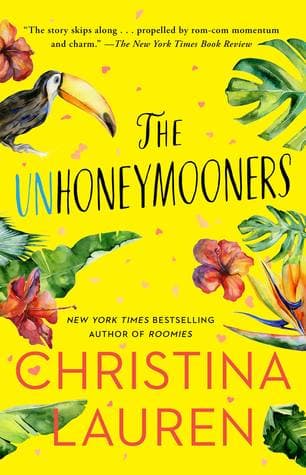
- The Unhoneymooners
Christina Lauren
4.0 (115k) average on GoodreadsRomanceWhile both offer engaging romance, "The Chase" leans into the 'will-they-won't-they' tension and the exploration of younger characters discovering themselves in a college setting. Lauren's The Unhoneymooners features more mature characters, excels in witty banter, and explores an established, albeit antagonistic, dynamic from the outset, often in a more fantastical setting.
- The Hunger Games
Suzanne Collins
4.3 (6.4M) average on GoodreadsFantasyIn a future where children fight to the death on live television, Katniss Everdeen volunteers for the arena, turning a death sentence into a fight for survival and a spark of rebellion.
- The Great Gatsby
F. Scott Fitzgerald
3.9 (3.8M) average on GoodreadsHistorical FictionIn the opulent Roaring Twenties, a mysterious millionaire's lavish parties hide his desperate, tragic pursuit of a lost love, exposing the emptiness within the American Dream.
- The Fault in Our Stars
John Green
4.2 (3.6M) average on GoodreadsYoung AdultA girl with a terminal illness finds her story rewritten when a charming boy with a similar past enters her life at a cancer support group, leading to a star-crossed romance.





Enjoyed the summary?
A summary gives you the shape of the book. The book itself has the detail, the examples and the voice.
Find The Chase on AmazonAs an Amazon Associate, BookBrief earns from qualifying purchases. How we're funded