

Synopsis
Covers the whole plot, including the ending.
- Difficulty
- Medium
- Pacing
- Moderate
- Mood
- Suspenseful, Resilient, Hopeful, Dark
- Read it if
- You're looking for a compelling, character-driven story about resilience and forbidden love within a restrictive community.
- Skip it if
- You prefer lighthearted reads or stories with minimal tension and conflict.
The Chosen One Plot Summary
Covers the whole plot, including the ending.
A Life Apart
Thirteen-year-old Kyra lives in a secluded, fundamentalist community called The Chosen, located in the desert. Her life is shaped by the Prophet's teachings, which include polygamy. She is one of many children in her large family, as her father has three wives. Despite the rules, Kyra secretly wants a different life. She finds escape through the Ironton County Mobile Library on Wheels, where she reads forbidden books, which fuels her curiosity about the outside world. She also secretly meets with Joshua, a boy her age from the community. They share affection and dream of a future where she can choose her own husband, a stark contrast to the community's practice of arranged marriages.
The Prophet's Decree
The Prophet, the leader of The Chosen, calls a meeting where he announces new marriage decrees. Kyra's heart sinks when her name is called, not for Joshua, but for her sixty-year-old Uncle Hyrum, who already has six wives and is known for his severity. The news devastates Kyra; she had hoped to be 'chosen' for Joshua. The community, including her family, expects her to accept the decree without question, seeing it as a divine command. This decree shatters Kyra's fragile sense of control over her own destiny and forces her to confront the harsh reality of her limited choices within the community.
Conflicting Loyalties
Kyra's mother, Sarah, tries to comfort her, explaining that accepting the Prophet's will is their duty and the only path to salvation. Kyra's younger sisters, especially Mary, look up to her, making Kyra feel the pressure to set an example. However, her older sister, Hannah, who had previously tried to escape the community and was brought back, gives Kyra a knowing, sorrowful look, hinting at the true cost of defiance. Kyra feels torn between her love for her family and her desperate need to escape a future she finds unacceptable. She confides in Joshua, who shares her despair but feels powerless to change the Prophet's decree, further isolating Kyra.
A Desperate Plan
Driven by desperation, Kyra decides she cannot marry Uncle Hyrum. She renews her secret meetings with Joshua, and together they plan to escape The Chosen. Their plan involves carefully saving supplies, identifying a route through the harsh desert, and timing their departure to coincide with a community event that would provide a distraction. Joshua, though fearful, is committed to helping Kyra, recognizing the injustice of her situation. They understand the immense risks involved, knowing that if caught, the consequences would be severe, potentially involving shunning or forced return. They know their escape would mean abandoning everything they've ever known.
The Escape Attempt
Under the cover of darkness, Kyra and Joshua begin their escape. They navigate the treacherous desert, relying on their limited knowledge and supplies. The journey is arduous, marked by extreme temperatures, scarce water, and the constant fear of being discovered. They encounter unexpected obstacles, testing their resolve and the strength of their bond. The harsh environment pushes them to their physical and emotional limits, forcing them to confront the realities of life outside their protected community and the true meaning of their pursuit of freedom. They begin to understand that freedom comes with its own challenges and dangers.
Discovery and Capture
Their freedom is short-lived. A search party from The Chosen, led by the Prophet's enforcers, tracks them down in the desert. Kyra and Joshua are captured and forcibly brought back to the community. The return is humiliating and terrifying, as they are paraded before the watchful, judgmental eyes of their community. The Prophet's authority is reasserted through their public failure, serving as a warning to anyone else contemplating defiance. Kyra feels despair and the weight of her failure, knowing the repercussions for both herself and Joshua will be severe.
The Prophet's Judgment
Upon their return, Kyra and Joshua are brought before the Prophet in a community gathering. The Prophet, his face stern, publicly condemns their actions as a grave sin against God and the community. He emphasizes the importance of obedience to divine will. Joshua is separated from Kyra, his fate left ambiguous but implied to be harsh. For Kyra, the Prophet reaffirms her marriage decree to Uncle Hyrum, but with an added punishment: she will be married immediately, and her access to the library and any contact with the outside world will be completely severed. The judgment leaves Kyra feeling hopeless and trapped.
A Glimmer of Hope
Despite the Prophet's harsh judgment, Kyra finds an unexpected source of strength in her mother, Sarah. Seeing Kyra's despair and the injustice of her situation, Sarah, for the first time, openly expresses her own silent struggles and regrets. She subtly encourages Kyra to hold onto her inner strength and not to lose hope, even if she cannot escape physically. This moment of connection with her mother reignites a spark of resistance within Kyra. She realizes that even if she is forced to marry Uncle Hyrum, she can still maintain her internal freedom and the lessons learned from her forbidden books.
The Wedding Day
The day of the forced wedding arrives. Kyra is dressed in the traditional, modest wedding attire, feeling the heavy weight of her fate. The community gathers, and Uncle Hyrum, grim and expectant, awaits her. However, Kyra is no longer the same girl who first heard the Prophet's decree. The failed escape and her mother's quiet support have hardened her resolve. She walks towards her future with a new, quiet strength, understanding that while her physical freedom might be denied, her spirit and her mind remain her own. She commits to finding ways to resist, even within the confines of her new life, holding onto the hope of an eventual, true escape.
An Uncertain Future
Kyra's marriage to Uncle Hyrum marks a new, difficult chapter in her life. She is now one of his many wives, living under stricter surveillance than ever before. However, her experiences have changed her. She carries the memory of her attempted escape, the knowledge gained from forbidden books, and the quiet defiance instilled by her mother. While her physical circumstances are bleak, her spirit is not broken. She understands that the struggle for freedom is ongoing and takes many forms. Kyra's future within The Chosen remains uncertain, but she is no longer a passive participant; instead, she vows to seek opportunities for intellectual and emotional liberation wherever she can find them.
Principal Figures
Kyra
Protagonist
A thirteen-year-old girl striving for autonomy in a repressive community.
Kyra is a bright, curious, and headstrong thirteen-year-old girl growing up in a fundamentalist, polygamous sect. She possesses an innate desire for freedom and knowledge, which she secretly feeds through forbidden books from the mobile library. Despite the community's strictures, she dreams of choosing her own path, particularly in love and marriage. Her internal conflict between loyalty to her family and her personal aspirations drives much of the narrative. She is resilient and brave, even in the face of overwhelming odds.
Relationships: Joshua (Secret romantic interest and fellow rebel); Sarah (Mother) (Supportive, though outwardly compliant, mother); Uncle Hyrum (Forced husband, antagonist); The Prophet (Authoritarian leader, main antagonist)
Joshua
Supporting
Kyra's secret love interest and partner in attempted escape.
Joshua is a young man from The Chosen community, around Kyra's age, who shares her longing for a life beyond its confines. He is kind, gentle, and deeply in love with Kyra. While initially hesitant and more outwardly conforming than Kyra, her determination inspires him to join her in a dangerous escape attempt. He represents the potential for individual agency and love within a restrictive system. His fate after their capture is left somewhat ambiguous, emphasizing the harsh consequences of defiance.
Relationships: Kyra (Secret romantic interest and partner in rebellion)
Sarah
Supporting
Kyra's mother, who provides quiet support and understanding.
Sarah is Kyra's mother and one of her father's three wives. She is outwardly compliant with the community's rules and the Prophet's decrees, embodying the expected role of women in The Chosen. However, beneath her submissive exterior, she harbors her own quiet regrets and a deep love for her children. She understands Kyra's struggles on an unspoken level, having likely faced similar challenges in her youth. Her quiet support and subtle acts of defiance provide crucial emotional sustenance for Kyra.
Relationships: Kyra (Mother-daughter bond, source of quiet strength for Kyra); Father (One of his three wives)
The Prophet
Antagonist
The authoritarian leader of The Chosen, who dictates all aspects of community life.
The Prophet is the supreme religious and political authority in The Chosen community. He wields absolute power, interpreting divine will and issuing decrees that govern every aspect of his followers' lives, from marriage to education. He represents the oppressive force of rigid dogma and patriarchal control. His character is unyielding and unforgiving, acting as the primary antagonist against Kyra's desire for autonomy. He uses fear and spiritual manipulation to maintain order and obedience within the community.
Relationships: Kyra (Authoritarian leader and enforcer of her forced marriage); Uncle Hyrum (Subordinate and recipient of a marriage decree)
Uncle Hyrum
Antagonist
Kyra's much older, sixty-year-old uncle and her forced husband.
Uncle Hyrum is a sixty-year-old man, already with six wives, to whom Kyra is decreed to marry. He embodies the patriarchal and polygamous practices of The Chosen. He is portrayed as a stern and unappealing figure, representing the personal cost of the community's traditions for young women like Kyra. His role is to serve as the immediate, physical manifestation of the Prophet's oppressive decrees and the future Kyra desperately tries to escape.
Relationships: Kyra (Forced husband); The Prophet (Subordinate who receives marriage decrees)
Hannah
Supporting
Kyra's older sister who previously attempted to escape.
Hannah is Kyra's older sister, who, prior to the events of the novel, attempted to escape The Chosen community and was forcibly brought back. Her experience serves as a cautionary tale and a silent warning to Kyra. Though she doesn't actively participate in Kyra's escape, her knowing glances and sorrowful expressions convey a deep understanding of Kyra's predicament and the crushing reality of their situation. She represents the tragic outcome of failed rebellion within the community.
Relationships: Kyra (Sister, provides a silent warning and understanding)
Father
Supporting
Kyra's father, a devoted follower of the Prophet with three wives.
Kyra's father is a devout member of The Chosen, adhering strictly to the Prophet's teachings, including polygamy. He has three wives and numerous children. He represents the typical male figure within the community, upholding its traditions without question. While he is not depicted as overtly cruel, his unwavering obedience to the Prophet's decrees, even when they cause distress to his daughters, highlights the systemic nature of the oppression Kyra faces.
Relationships: Kyra (Father-daughter bond, but strained by his adherence to community rules); Sarah (Husband to her and two other wives)
Mary
Mentioned
Kyra's younger sister who looks up to her.
Mary is Kyra's younger sister, who looks up to Kyra and sees her as a role model. She represents the younger generation growing up within The Chosen, influenced by the older girls. Her presence adds to Kyra's internal conflict, as Kyra feels the responsibility of setting an example while simultaneously yearning for escape.
Relationships: Kyra (Younger sister, admires Kyra)
Themes & Insights
Freedom vs. Control
This theme is central to Kyra's journey. She wants personal freedom, especially the right to choose her own spouse and destiny, which opposes the Prophet's absolute control and the community's rigid doctrines. Her secret library visits and attempted escape show her fight against this control. The story explores different kinds of freedom — physical, intellectual, and spiritual — and the devastating consequences of its absence, as seen in Kyra's forced marriage.
“Maybe if I could just read one more book, I would understand how to escape.”
Individuality vs. Community
The novel highlights the tension between an individual's desires and the demands of a close-knit community. Kyra's unique spirit and intellectual curiosity clash with The Chosen's expectation of conformity and unquestioning obedience. Her struggle to assert her individuality in a place where personal will is secondary to the group's 'divine' laws is a driving force. The community's pressure to conform, enforced through social ostracization and the threat of spiritual damnation, is a powerful force against Kyra's developing selfhood.
“We are all one in the Prophet's eyes, and in God's.”
The Power of Knowledge and Education
Forbidden books from the mobile library are Kyra's link to the outside world and a reason for her to question The Chosen's doctrines. These books give her alternative perspectives, fueling her desire for freedom and helping her imagine a different life. Knowledge becomes a form of rebellion and a source of hope, showing its power even in the most restrictive environments. The community's control over information is a key tool in maintaining its power.
“Each book was a window, and I pressed my face against the glass, trying to see all the way to a different world.”
Patriarchy and Gender Roles
The novel portrays a patriarchal society where women have little power. Polygamy is a central institution, and women are seen primarily as wives and mothers, with their lives dictated by male figures — fathers, husbands, and the Prophet. Kyra's forced marriage to Uncle Hyrum shows the extreme lack of choice for women. The story subtly explores the quiet resistance and resignation of women like Kyra's mother, Sarah, highlighting the systemic nature of gender inequality within such communities.
“A woman's place is to serve her husband and raise righteous children for the Lord.”
Plot Devices & Literary Techniques
The Mobile Library
A symbol of the outside world and forbidden knowledge.
The Ironton County Mobile Library on Wheels serves as a crucial plot device, representing Kyra's only tangible link to the outside world and a source of forbidden knowledge. It is a physical manifestation of the alternative life she yearns for. The books Kyra reads from the library provide her with ideas, inspiration, and the courage to question her community's rigid beliefs, directly fueling her desire for escape and personal autonomy. It acts as a catalyst for her rebellion.
The Prophet's Decree
A catalyst for the central conflict and Kyra's desperate actions.
The Prophet's decree that Kyra must marry her Uncle Hyrum is the primary inciting incident of the novel. It thrusts Kyra into a direct conflict with the community's authority and her own desires. This decree forces her to make a desperate choice between submission and rebellion, setting the entire plot in motion. It serves as a stark reminder of the absolute power held by the Prophet and the severe limitations placed on individual freedom within The Chosen.
The Desert Setting
A physical barrier and metaphor for isolation and danger.
The harsh desert landscape surrounding The Chosen community functions as both a physical barrier and a powerful metaphor. Physically, it makes escape incredibly difficult and dangerous, emphasizing the community's isolation. Metaphorically, the desert represents the spiritual and intellectual barrenness of the community's restrictive life, as well as the unforgiving nature of the challenges Kyra faces. It highlights the vast, unknown dangers of the world outside, making the decision to leave even more daunting.
Hannah's Past Escape Attempt
A cautionary tale and a source of silent understanding.
Hannah's previous, failed attempt to escape The Chosen serves as a significant plot device. It acts as a cautionary tale for Kyra, highlighting the severe consequences of defiance and the difficulty of truly breaking free. Her presence and silent, knowing glances provide Kyra with a sense of shared understanding and a glimpse into the potential outcomes of her own rebellion, adding layers of tension and realism to Kyra's journey. It underscores the pervasive control of the community.
The Chosen One Quotes
“It was the day I turned thirteen that I started to question everything.”
“The Prophet said we were chosen, but sometimes being chosen felt like being trapped.”
“The desert holds secrets, and some are best left buried.”
“When you have nothing left to lose, you have everything to gain.”
“They called it faith, but it felt like fear, binding us tighter than any chain.”
“The truth, once seen, cannot be unseen.”
“Sometimes the greatest love is letting go.”
“The dust of the past can choke the future if you let it.”
“Silence can be a weapon, or a shield, depending on who wields it.”
“Every step away was a step closer to myself.”
“The world outside was vast and terrifying, but so was staying put.”
“They built their paradise on sand, and the wind was coming.”
“To be truly free, you must first free your mind.”
“The hardest battles are fought not with fists, but with beliefs.”
Quiz
10 questions on the plot and the characters. Each answer comes with a short explanation.
Question 1
What is the primary reason Kyra visits the Ironton County Mobile Library on Wheels?
- To meet her secret boyfriend, Joshua.
- To read forbidden books that are not allowed in her community.
- To sell handmade crafts to people outside her community.
- To get medical supplies for her family.
Show answer
B. To read forbidden books that are not allowed in her community. Kyra visits the mobile library specifically to read forbidden books, indicating her curiosity and desire for knowledge beyond her community's restrictions.
Question 2
How many wives does Kyra's father have?
- One
- Two
- Three
- Six
Show answer
C. Three The book states that Kyra has grown up in an isolated community without questioning the fact that her father has three wives.
Question 3
What is Kyra's age at the beginning of the story?
- Eleven
- Thirteen
- Fifteen
- Seventeen
Show answer
B. Thirteen The description explicitly states that thirteen-year-old Kyra is the protagonist of the story.
Question 4
Who is Joshua to Kyra?
- Her brother
- The boy she hopes to choose for herself
- Her assigned husband
- The librarian on the Mobile Library
Show answer
B. The boy she hopes to choose for herself Joshua is described as the boy Kyra has secret meetings with and hopes to choose for herself, contrasting with the community's practice of arranged marriages.
Question 5
What central conflict does the Prophet's decree create for Kyra?
- She is forced to move to a new community.
- She must choose between two men she loves.
- She is decreed to marry her sixty-year-old uncle, forcing a desperate choice.
- She is commanded to stop visiting the mobile library.
Show answer
C. She is decreed to marry her sixty-year-old uncle, forcing a desperate choice. The core conflict arises when the Prophet decrees Kyra must marry her sixty-year-old uncle, pushing her to make a 'desperate choice' against her will.
Question 6
How many wives does Kyra's sixty-year-old uncle already have before the Prophet decrees she marry him?
- Three
- Four
- Five
- Six
Show answer
D. Six The description states that Kyra's uncle 'already has six wives' before the decree for Kyra to marry him.
Question 7
What is a major thematic tension explored in the novel regarding marriage?
- The economic benefits of polygamy versus monogamy.
- The conflict between individual choice in love versus communal arranged marriages.
- The challenges of inter-community marriages.
- The historical evolution of marriage customs.
Show answer
B. The conflict between individual choice in love versus communal arranged marriages. Kyra's desire to 'choose for herself' instead of having a man 'chosen for her' directly highlights the tension between personal autonomy and the community's tradition of arranged marriages.
Question 8
What is the primary fear Kyra faces if she defies the Prophet's decree?
- Being exiled from the country.
- Losing her family forever and facing violence.
- Being forced to stop reading books.
- Having to marry Joshua instead.
Show answer
B. Losing her family forever and facing violence. The text states that Kyra must make a desperate choice 'in the face of violence and her own fears of losing her family forever,' indicating the severe consequences of defiance.
Question 9
The community Kyra lives in is described as 'isolated'. What does this isolation primarily contribute to in the story's context?
- It makes farming difficult for the community members.
- It allows the community to maintain its unique and restrictive practices without outside influence.
- It fosters a strong sense of individuality among its members.
- It prevents the community from experiencing modern technology.
Show answer
B. It allows the community to maintain its unique and restrictive practices without outside influence. The isolation of Kyra's community is crucial for maintaining its unique social structures, like polygamy and arranged marriages, and for controlling information, as evidenced by the 'forbidden books' Kyra reads.
Question 10
What specific characteristic of Kyra's community's social structure is highlighted as a point of internal conflict for her?
- The lack of educational opportunities for girls.
- The practice of polygamy and arranged marriages.
- The strict dress code enforced by the Prophet.
- The communal sharing of all resources.
Show answer
B. The practice of polygamy and arranged marriages. Kyra's internal conflict stems from her desire to 'choose for herself' a husband, directly clashing with the community's practice of having a man 'chosen for her' and the prevalence of polygamy, as seen with her father and uncle.
The Chosen One FAQ
What is the central conflict Kyra faces at the beginning of 'The Chosen One'?
Kyra, a thirteen-year-old living in an isolated, polygamist community, struggles with the societal expectation that her marriage will be arranged by the Prophet. She secretly yearns to choose her own partner, Joshua, a desire directly at odds with the community's strict traditions and her family's adherence to them.
How does the Ironton County Mobile Library on Wheels contribute to Kyra's development?
The mobile library serves as Kyra's clandestine window to the outside world, providing her with forbidden books and alternative perspectives. These texts fuel her nascent independent thought and critical questioning of her community's rigid doctrines, directly influencing her desire for personal autonomy and a different future.
Who is Joshua and what is his significance to Kyra?
Joshua is a boy from outside Kyra's immediate community with whom she shares secret meetings and a mutual affection. He represents Kyra's hope for self-determination and romantic love, offering an alternative to the arranged marriages dictated by the Prophet and the elders.
What is the Prophet's decree that forces Kyra into a desperate situation?
The Prophet decrees that Kyra must marry her sixty-year-old uncle, who already has six wives. This pronouncement shatters her dreams of choosing Joshua and forces her to confront the harsh realities of her community's control over her life and body.
What are the immediate consequences for Kyra if she defies the Prophet's marriage decree?
Defying the Prophet's decree would lead to severe repercussions, including potential violence, ostracization, and the devastating loss of her family and community. Kyra faces the agonizing choice between her personal freedom and the very real threat of becoming an outcast.
Are there subtle hints early on that Kyra's father might be less devout than he appears, or more conflicted?
While the book doesn't explicitly state his conflict, Kyra's father's tolerance of her library visits, even if he doesn't openly approve, could be interpreted as a subtle indication of his own underlying doubts or a desire for Kyra to have some exposure beyond their isolated world. His ultimate actions reflect a complex loyalty.
Is there a specific historical event or real-world community that inspired the fictional setting?
While the book doesn't name a specific historical event, the isolated, polygamist community strongly evokes parallels with fundamentalist Mormon offshoots in the American West. The author likely drew inspiration from accounts of such groups, where religious doctrine dictates strict social structures and arranged marriages.
What is the significance of the number of wives Kyra's uncle already has (six) versus her father (three)?
The differing numbers highlight the hierarchy and power dynamics within the community; an older man with six wives like Kyra's uncle likely holds significant status and influence, making his demand for Kyra even more formidable. Her father's three wives, while still polygamous, might suggest a slightly lower tier of authority or wealth.
How does the community's isolation contribute to the psychological manipulation of its members, especially young girls like Kyra?
The extreme isolation limits exposure to alternative viewpoints, making the community's doctrines appear as the sole truth. This fosters a psychological environment where dissent is unthinkable, and fear of expulsion or divine punishment becomes a powerful tool for controlling individuals, subtly eroding their sense of self and personal agency from a young age.
Explore the psychological impact of Kyra's 'twenty brothers and sisters' on her sense of individual identity.
Being one of twenty children, all sharing the same father, likely contributes to a diminished sense of individual identity and personal importance within the family unit. Kyra's desire for self-determination and to choose her own partner can be seen as a direct psychological rebellion against this collective identity, asserting her unique self.
What role does fear play in the community's adherence to the Prophet's decrees, beyond just the fear of physical violence?
Beyond physical violence, members are psychologically controlled by the fear of spiritual damnation, social ostracization, and the unknown outside world. The community instills a deep-seated fear of losing one's eternal family and salvation, making compliance appear as the only path to safety and belonging.
How does Kyra's internal conflict between loyalty to her family and her personal desires reflect a common adolescent psychological struggle?
Kyra's struggle mirrors the universal adolescent quest for identity and autonomy, often clashing with familial expectations and traditions. Her internal battle between remaining loyal to her family and community, and asserting her individual will for love and freedom, is a heightened version of a typical teenage psychological challenge.
Is 'The Chosen One' primarily a critique of religious extremism, or a broader commentary on patriarchal control?
'The Chosen One' functions as both, though the emphasis leans heavily towards a broader commentary on patriarchal control, using religious extremism as its vehicle. The specific tenets of the faith are less explored than the power structures that enable older men (like the Prophet and Kyra's uncle) to dictate the lives and bodies of women and girls.
How might the title, 'The Chosen One,' be interpreted ironically in Kyra's situation?
The title is deeply ironic. While 'chosen' might imply special favor or destiny, Kyra is 'chosen' not for honor, but for a forced marriage to an old man, stripping her of agency. It highlights the community's definition of 'chosen' as being subject to the will of others, rather than having personal selection or power.
Does the book offer a definitive resolution to Kyra's predicament, or does it leave room for debate about her future?
The book aims for a resolution to Kyra's immediate predicament, focusing on her desperate choice and actions in the face of the decree. While it provides a path forward, it leaves room for readers to ponder the long-term challenges and implications of her decision, rather than a completely 'happily ever after' scenario.
Could Kyra's visits to the mobile library be considered a form of subtle rebellion even before the marriage decree?
Absolutely. Her library visits are a significant act of subtle rebellion, as she knowingly seeks out 'forbidden books' that offer perspectives outside her community's sanctioned knowledge. This demonstrates a nascent independent spirit and a willingness to defy norms, long before the ultimate crisis forces her hand.
How does the setting of 'Ironton County' contribute to the novel's atmosphere and themes?
The name 'Ironton County' evokes a sense of harshness, rigidity, and perhaps a past industrial or mining heritage, suggesting a place that is unyielding and isolated. This reinforces the oppressive atmosphere of Kyra's community and the 'iron' grip of its traditions, making her struggle for freedom even more pronounced.
What message does the author convey regarding the power of education and literacy in oppressive environments?
The author powerfully conveys that education and literacy are crucial tools for liberation in oppressive environments. Kyra's access to books, even limited, ignites her critical thinking and provides her with the knowledge and inspiration to question her circumstances and ultimately seek a different path, highlighting their transformative power.
Similar books
- Under the Banner of Heaven
Jon Krakauer
4.0 (157k) average on GoodreadsBiographyExplores the history and culture of fundamentalist Mormonism and its violent fringes.
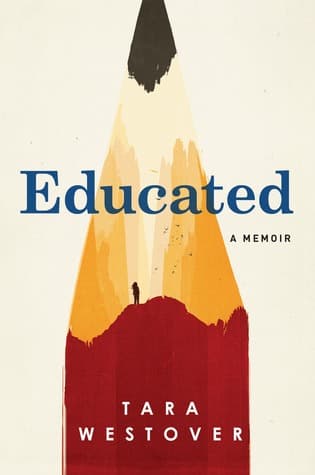
- Educated
Tara Westover
4.5 (796k) average on GoodreadsBiographyA memoir about a young woman's escape from an isolated, fundamentalist family and her pursuit of education.
- The Handmaid's Tale
Margaret Atwood
4.1 (1.5M) average on GoodreadsFantasyDepicts a dystopian society where women are subjugated and forced into roles, echoing themes of control and resistance.
- The Glass Castle
Jeannette Walls
4.3 (903k) average on GoodreadsBiographyWhile not a thriller, Walls's memoir shares a thematic resonance with 'The Chosen One' in its depiction of a young protagonist growing up in an unconventional, often challenging, family environment. Both books explore themes of resilience, the search for identity, and the complex relationship with one's upbringing. However, 'The Chosen One' fictionalizes the experience within a specific religious sect, introducing elements of mystery and direct physical danger that are distinct from Walls's more reflective, biographical account of poverty and unconventional parenting.
- When She Woke
Hillary Jordan
3.7 (26k) average on GoodreadsFantasy'When She Woke' offers a dystopian parallel to 'The Chosen One' by also exploring religious extremism and its impact on women, albeit in a futuristic setting where 'sinners' are color-coded. Both novels feature female protagonists who challenge the established religious order and face severe consequences. Jordan's novel, however, leans more heavily into speculative fiction and social commentary on justice systems, whereas Williams grounds her narrative more firmly in a contemporary, albeit isolated, historical fiction setting with thriller elements focused on escape and survival rather than systemic public punishment.
- 1984
George Orwell
4.2 (3.1M) average on GoodreadsPoliticsIn a future where surveillance and thought control are absolute, a man's search for truth clashes with the Party, showing that hope can be a form of rebellion.





Enjoyed the summary?
A summary gives you the shape of the book. The book itself has the detail, the examples and the voice.
Find The Chosen One on AmazonAs an Amazon Associate, BookBrief earns from qualifying purchases. How we're funded