

Synopsis
Covers the whole plot, including the ending.
- Difficulty
- Easy
- Pacing
- Fast
- Mood
- Humorous, Whimsical, Adventurous, Absurdist
- Read it if
- You enjoy satirical fantasy, absurd humor, and a world-building style that playfully subverts traditional fantasy tropes.
- Skip it if
- You prefer serious, plot-driven fantasy with deep character development and a straightforward narrative.
The Color of Magic Plot Summary
Covers the whole plot, including the ending.
A Tourist Arrives in Ankh-Morpork
The story begins in Ankh-Morpork, a sprawling city on the Discworld. Twoflower, a naive tourist from the Agatean Empire, arrives. He carries a sentient, multi-legged Luggage and is fascinated by everything. His presence, especially his seemingly endless gold 'rhinu,' causes a stir. The Patrician, Lord Vetinari, assigns the incompetent wizard Rincewind to be Twoflower's guide, hoping to stop the tourist from accidentally destroying the city's economy or himself. Rincewind, a failed student from Unseen University with only one spell in his head, reluctantly takes the job, mostly for the promise of more rhinu.
The Broken Drum and the Great Fire
Rincewind tries to show Twoflower the seedier side of Ankh-Morpork, leading him to 'The Broken Drum' tavern. Twoflower, not understanding local customs, tries to pay for drinks with a large gold coin. This display of wealth, plus his innocent questions about local 'heroes,' quickly attracts various unsavory characters. A brawl starts, growing fast. In the chaos, Twoflower's Luggage proves strong, defending its owner. However, the fight soon causes a fire that, fueled by the city's wooden buildings, quickly burns much of Ankh-Morpork, forcing Rincewind and Twoflower to flee.
Escape to the Wyrmberg
Fleeing the burning city, Rincewind and Twoflower find themselves in the wilderness. They meet Hrun the Barbarian, a strong warrior thinking about his career. Hrun, at first planning to rob them, is curious about Twoflower's Luggage and his 'picture box' (a camera). Before they can properly introduce themselves, the three are captured by dragon riders and taken to Wyrmberg, a mountain stronghold for dragon-riders and their mounts. Here, they discover a unique dragon: creatures that exist only as long as people believe in them, brought to life by the riders' minds.
The Dragonlord's Challenge
At Wyrmberg, the Dragonlord, Liessa Dragonlady, reveals her plan to secure her rule. Twoflower, misunderstanding customs, suggests Hrun become a hero by rescuing a 'damsel in distress' from the dragon. This challenge angers Liessa, who demands a duel to the death. Hrun, reluctantly pulled into this by Twoflower's well-meaning suggestions, agrees to fight for his life and to become a Dragonlord. Rincewind, always a coward, tries to stay out of the conflict, but is drawn into the drama and the strange logic of the Wyrmberg inhabitants.
Into the Upside-Down Forest
During the chaos of Hrun's duel, Rincewind and Twoflower escape Wyrmberg. They fall through a shimmering portal, landing in a strange, inverted forest. Here, trees grow downwards, and the sky is a vast, reflective surface, making a disorienting and dangerous place. They meet a dryad, who explains they are in a magical anomaly. Their journey through this strange land is full of danger and odd encounters, further testing Rincewind's nerves and Twoflower's optimism. The Luggage, as always, follows them.
The Temple of Bel-Shamharoth
Continuing their journey, Rincewind and Twoflower find an old temple for Bel-Shamharoth, a powerful, evil entity from the Dungeon Dimensions. The temple is a place of evil and illusion. Inside, they meet a terrifying eight-legged beast and face Bel-Shamharoth's reality-bending power. Rincewind, in a rare moment of accidental bravery, activates a magical device in the temple that destroys it, letting them escape the old evil, though Rincewind is shaken.
The Edge of the World
After the temple's destruction, Rincewind and Twoflower are rescued by a sentient tree named Ymper Trymon, who takes them through a series of strange places. Their journey eventually brings them to the very Edge of the Discworld, where the world ends in a waterfall of oceans. Here, they meet philosophers and astronomers studying the Great A'Tuin, the giant turtle that carries the Discworld through space. Twoflower is captivated by the sight, while Rincewind is terrified, sensing danger.
The Spell's Revelation
At the Edge, Rincewind finally understands the single spell trapped in his mind for years. It is one of the eight Great Spells of the Octavo, the most powerful magic book in the Discworld. The spell has protected him, refusing to be cast until it joins its brethren. The philosophers at the Edge say the Discworld is on a collision course with a red star, an event that will determine the sex of the Great A'Tuin. Twoflower, still eager for adventure, insists on seeing the 'final show,' to Rincewind's dismay.
Plunging Over the Edge
As the red star nears and the Discworld shakes, the ground beneath Rincewind and Twoflower breaks. They are thrown over the waterfall at the Edge of the world, falling into the cosmic void. The Luggage, loyal, follows them. This dramatic cliffhanger leaves their fate unknown, setting up their next adventures. Rincewind's last thoughts are of his coming doom, while Twoflower, perhaps, wonders if he can get a good 'picture' of the experience.
The Color of Magic Characters
Rincewind
Protagonist
A cowardly and incompetent wizard, cursed with a single, powerful spell.
Rincewind is an anti-heroic wizard, expelled from Unseen University for his utter lack of magical talent, save for one powerful spell that refuses to be cast. He is cynical, cowardly, and perpetually overwhelmed by the chaos of the Discworld. His primary motivation is self-preservation, and he constantly tries to avoid danger, often failing spectacularly. Despite his ineptitude, he possesses a surprising knack for accidental survival, frequently finding himself in the right place at the wrong time. He embodies the 'everyman' perspective in a world of epic fantasy.
Relationships: Twoflower (reluctant guide and exasperated companion); The Luggage (wary recipient of its loyalty and protection)
Twoflower
Supporting
The Discworld's first tourist, a naive and optimistic visitor from the Agatean Empire.
Twoflower is a relentlessly optimistic and incredibly naive individual from a distant, wealthier land. He views the Discworld through the lens of romantic adventure novels, constantly seeking 'experiences' and 'heroes'. He carries a magical 'picture box' (camera) and possesses an inexhaustible supply of gold, which he freely dispenses, causing economic havoc wherever he goes. His innocence and lack of understanding of local customs often land him and Rincewind in trouble, but his unwavering good nature and belief in the fantastical drive much of the plot. He represents the audience's fresh eyes on the Discworld.
Relationships: Rincewind (his assigned guide and unwitting partner in adventure); The Luggage (its owner and object of its fierce loyalty)
The Luggage
Supporting
Twoflower's sentient, multi-legged, and fiercely loyal travel chest.
The Luggage is a unique and mysterious entity, a large travel chest made of sapient pearwood, capable of locomotion on hundreds of small, hairy legs. It is fiercely loyal to Twoflower, often protecting him with surprising violence against anyone perceived as a threat. It has an insatiable appetite and a tendency to consume objects, or even people, that get in its way. Its origins are unknown, but its magical properties and unwavering devotion make it a constant, albeit silent, companion to Twoflower and a source of both fear and comic relief for Rincewind. It operates with its own inscrutable logic.
Relationships: Twoflower (owner and fiercely loyal servant); Rincewind (fellow traveler, often the victim of its protective instincts)
Hrun the Barbarian
Supporting
A muscular, somewhat dim-witted barbarian warrior seeking fame and fortune.
Hrun is a stereotypical barbarian warrior: incredibly strong, skilled in combat, but not particularly intelligent or introspective. He is more concerned with his reputation and acquiring 'magic swords' and 'damsels' than with deep philosophical thought. He finds himself caught up in Rincewind and Twoflower's adventures when they arrive at Wyrmberg. Despite his formidable appearance, he can be surprisingly easily swayed by the promise of heroism or a good fight, often acting as a blunt instrument for the plot's progression. He represents a common fantasy archetype, subverted by Pratchett's humor.
Relationships: Twoflower (naive instigator of his heroic endeavors); Rincewind (brief, uneasy traveling companion)
Liessa Dragonlady
Supporting
The ambitious and cunning Dragonlord of Wyrmberg.
Liessa Dragonlady is the formidable and ambitious leader of the dragon riders of Wyrmberg. She commands the loyalty of her people and her dragons, which are conjured into existence by belief. She is cunning, ruthless, and determined to solidify her power over the other Dragonlords. Her interactions with Twoflower and Hrun drive a significant portion of the Wyrmberg plotline, as she sees them as tools or obstacles to her ambitions. She represents a more traditional fantasy villain, albeit one operating within the Discworld's unique magical rules.
Relationships: Hrun (potential rival and romantic interest); Twoflower (unwitting catalyst for conflict)
Death
Supporting
The personification of Death, who appears when characters are close to dying.
Death is a recurring character in the Discworld series, appearing as a skeletal figure draped in a black robe, riding a white horse named Binky. He speaks in CAPITAL LETTERS and is generally polite and philosophical, often expressing a dry wit. He is not malevolent, but simply performs his duty of escorting souls to the afterlife. In 'The Color of Magic', he appears several times to Rincewind, who, due to his peculiar magical protection, constantly cheats Death, much to Death's mild annoyance. Death serves as a meta-commentary on mortality and the arbitrary nature of fate.
Relationships: Rincewind (a frequent, and frustratingly elusive, acquaintance)
Lord Vetinari
Mentioned
The Patrician of Ankh-Morpork, a cunning and pragmatic ruler.
Lord Vetinari is the ruler of Ankh-Morpork, a shrewd and calculating leader who maintains order through a delicate balance of power, manipulation, and sheer pragmatism. He is introduced early in the novel, tasking Rincewind with looking after Twoflower to prevent chaos. While his role in 'The Color of Magic' is brief, he establishes his character as a master manipulator who understands the intricate workings of his city, even if it means employing a useless wizard for a crucial diplomatic mission. He embodies the Discworld's unique approach to governance.
Relationships: Rincewind (his reluctant and manipulated employee)
The Color of Magic Themes
Naive Tourism vs. Gritty Reality
This theme is central, comparing Twoflower's romantic view of adventure with the Discworld's often harsh, dangerous, and absurd reality. Twoflower expects valiant heroes and noble quests, as seen when he tries to hire Hrun, or his interest in dragons. Rincewind, however, shows the cynical reality, constantly trying to avoid danger and seeing the terrifying truth behind Twoflower's fantasies. The burning of Ankh-Morpork after Twoflower's arrival shows how his innocent actions have devastating consequences, highlighting the difference between expectation and experience.
“He'd always wanted to see a hero. Now he'd seen one, and it was a bit like seeing a picture of a unicorn and then seeing a real horse. There were definite similarities, of course, but the horse was much bigger, and smelled, and had a nasty habit of biting.”
The Power of Belief and Imagination
The novel often explores how belief shapes reality on the Discworld. The main example is the dragons of Wyrmberg, which exist only because people believe in them. Liessa Dragonlady's power is tied to her ability to create and maintain these creatures of thought. Similarly, 'heroism' is often a construct of belief, as Hrun's actions are often guided by what he thinks a hero should do, influenced by Twoflower's expectations. This theme suggests that perception and shared imagination are strong forces, able to change existence itself.
“It was impossible to ride a dragon that didn't exist. Unless you were a dragon-rider, of course. Then it was merely difficult.”
The Absurdity of Heroism and Adventure
Pratchett often makes fun of traditional fantasy tropes. Rincewind is the opposite of a hero – a coward who succeeds only by accident or others' mistakes. Twoflower's quest for 'adventure' meets real danger and often ends in disaster, not glory. Hrun, though a capable warrior, is often driven by simple desires and easily manipulated. The whole journey is a series of misadventures and near-fatal errors, making fun of epic quests in other fantasy by showing the messy, unglamorous, and often silly reality of such efforts on the Discworld.
“Rincewind had always been happy to think of himself as a wizard, but it was a bit like being a plumber. You did a job, got paid, and went home. But there were always bigger jobs, and sometimes you got to be a hero, and sometimes you just got wet.”
The Nature of Magic and Knowledge
Magic on the Discworld is shown as a chaotic, often unpredictable force, not a systematic, controlled power. Rincewind's single, powerful spell is trapped in his mind, symbolizing magic's untamed nature. Unseen University is less about disciplined study and more about political maneuvering and old, often dangerous, texts. The Octavo, the source of Discworld magic, is a sentient entity with its own will. This theme suggests that magic is not just a tool but a fundamental, often dangerous, part of the universe that works beyond human understanding, showing its inherent wildness.
“The trouble with magic was that there was too much of it. It was like trying to drink the sea with a teaspoon. You got a lot of water, but it didn't really quench your thirst.”
Plot Devices & Literary Techniques
The Luggage
A sentient, loyal, and formidable multi-legged trunk.
The Luggage serves as a mobile plot device, providing comic relief, unexpected protection for Twoflower, and a means of transportation for their belongings. Its magical nature allows it to follow its owner anywhere, defying physical obstacles and even magical barriers. It often solves problems through brute force or by consuming threats, acting as a deus ex machina for minor perils. Its mysterious origins and unwavering loyalty also add a layer of whimsy and wonder to the narrative, embodying the Discworld's unique brand of magical absurdity.
The Picture Box
Twoflower's magical camera that captures images of reality.
Twoflower's 'picture box' (camera) acts as a device to highlight the theme of naive tourism. It allows him to capture the 'real' Discworld, which often clashes with his romanticized expectations. The pictures themselves are magical, reflecting the unique properties of light on the Discworld. It also serves as a catalyst for interactions, as characters are often fascinated or confused by its operation, leading to new plot developments or comedic misunderstandings, such as Hrun's initial awe or the general populace's bewilderment.
The Octavo Spell in Rincewind's Head
A powerful, trapped spell that protects Rincewind and drives his journey.
The single, powerful spell trapped in Rincewind's head is a crucial plot device. It explains his magical ineptitude while simultaneously providing him with a unique form of protection, preventing him from dying and allowing him to survive otherwise fatal encounters. This spell also serves as a long-term mystery, its true nature and purpose only revealed at the climax of the book, linking Rincewind directly to the most powerful magical artifact on the Discworld and giving his otherwise aimless wandering a grander, albeit unwilling, purpose.
The Edge of the Discworld
The literal end of the world, a geographical and philosophical climax.
The Edge of the Discworld functions as both a geographical destination and a symbolic climax. It represents the ultimate boundary of their known world, a place of profound philosophical contemplation and existential dread. Its dramatic waterfall into space provides a visually stunning backdrop for the story's concluding events and the revelation of the Discworld's cosmic purpose. The threat of falling over the Edge provides constant tension and serves as the ultimate danger that Rincewind and Twoflower face, literally pushing them off the known map.
The Color of Magic Quotes
“The world was of course only a small part of the great dance of the cosmos, but to the people who lived on it, it was home.”
“Most human beings, for example, wouldn't even think of carrying a dagger to a duel. They'd take a gun. Or a very large rock.”
“Rincewind had a mental block about magic. He was, in fact, the only wizard in the whole history of the university who had been thrown out of every class for consistently failing to understand the basic principles of thaumaturgy.”
“He just wanted to be somewhere else, and preferably somewhere where there weren't any dragons, or heroes, or dark lords, or people who wanted to give him things.”
“A man who has been soaked once has nothing to fear from being soaked again.”
“The Luggage was not just a trunk. It was a traveling companion, a protector, and a loyal friend. Albeit a very large, very hungry, very homicidal one.”
“The problem with being a hero is that it's just so much easier to be a villain.”
“Ignorance is not bliss. Ignorance is a blank sheet of paper and a very large pencil.”
“The tourist, Twoflower, was a walking disaster area. He attracted trouble like a magnet, and then photographed it.”
“It was a dark and stormy night, and the rain fell in sheets, and the wind howled like a banshee, and the hero was already regretting his choice of career.”
“There was a time when the world was flat, and the stars were just holes in the sky, and magic was real. And in some places, it still is.”
“The only thing that kept him going was the knowledge that, sooner or later, he would run out of things to be afraid of.”
“The universe was a much more interesting place if you didn't know everything about it.”
“He didn't want to be a hero. He just wanted to go home, have a nice cup of tea, and not get eaten by anything.”
Quiz
10 questions on the plot and the characters. Each answer comes with a short explanation.
Question 1
What is the name of the giant turtle upon whose back the Discworld rests?
- Great A'Tuin
- World Turtle
- Cosmic Chelonia
- Terra Tortoise
Show answer
A. Great A'Tuin The Discworld is famously carried through space on the back of the giant turtle, Great A'Tuin.
Question 2
What is the name of the main tourist character who arrives in Ankh-Morpork?
- Rincewind
- Broadman
- Twoflower
- Hrun
Show answer
C. Twoflower Twoflower is the naive tourist from the Agatean Empire who brings the concept of 'insurance' and 'tourism' to Ankh-Morpork.
Question 3
What unique characteristic does Twoflower's luggage possess?
- It can fly.
- It has hundreds of little legs and follows him everywhere.
- It is invisible to everyone but Twoflower.
- It can translate any language.
Show answer
B. It has hundreds of little legs and follows him everywhere. The Luggage is a sentient, sapient, and extremely dangerous chest made of sapient pearwood, which follows Twoflower on many tiny legs.
Question 4
What is Rincewind's primary magical ability, or rather, lack thereof?
- He can only cast one very powerful spell.
- He is incredibly adept at escaping danger, often by running away.
- He can summon demons at will.
- He can turn lead into gold.
Show answer
B. He is incredibly adept at escaping danger, often by running away. While Rincewind has 'the spell' stuck in his head, his true talent lies in his unparalleled ability to flee from danger, often surviving against all odds.
Question 5
What is the name of the city where Rincewind first encounters Twoflower?
- Bes Pelargic
- Genua
- Ankh-Morpork
- Quirm
Show answer
C. Ankh-Morpork Twoflower arrives in the bustling, chaotic, and often dangerous city of Ankh-Morpork, where he hires Rincewind as his guide.
Question 6
What happens to the dragons in the Wyrmberg that Hrun encounters?
- They are made of ice and melt in the sun.
- They only exist if people believe in them.
- They are mechanical constructs controlled by wizards.
- They are illusions cast by a powerful sorcerer.
Show answer
B. They only exist if people believe in them. The dragons of the Wyrmberg are 'imaginary' dragons, brought into existence by belief and thought, a concept central to the Discworld's unique magic system.
Question 7
What is the ultimate fate of the city of Ankh-Morpork early in the novel?
- It is conquered by barbarian hordes.
- It is flooded by the Ankh river.
- It is destroyed by a massive fire.
- It is swallowed by a rift in the fabric of reality.
Show answer
C. It is destroyed by a massive fire. Ankh-Morpork suffers a devastating fire, largely due to Twoflower's 'dragon-pictures' and the general chaos he inadvertently brings.
Question 8
What is the name of the magical concept that allows for the creation of new realities or dimensions, which Rincewind and Twoflower encounter?
- The Octarine Shift
- Intersystemic Collisions
- Dimensional Instability
- Cross-dimensional Drift (or Driftwood)
Show answer
D. Cross-dimensional Drift (or Driftwood) Rincewind and Twoflower often find themselves in other realities due to 'driftwood' or cross-dimensional drift, where parts of other dimensions temporarily overlap with Discworld.
Question 9
What is the 'eighth color' of the spectrum, visible only to wizards and cats, which represents magic itself?
- Indigo
- Octarine
- Violet
- Cerulean
Show answer
B. Octarine Octarine is the 'color of magic' itself, described as a greenish-yellow purple, and is a recurring motif throughout the Discworld series, particularly prominent in 'The Color of Magic'.
Question 10
What is the ultimate fate of Rincewind and Twoflower at the very end of 'The Color of Magic'?
- They settle down in a quiet village.
- They are rescued by the gods and returned to Ankh-Morpork.
- They fall off the Edge of the Discworld.
- They become powerful wizards and heroes.
Show answer
C. They fall off the Edge of the Discworld. The novel concludes with Rincewind and Twoflower, along with the Luggage, falling off the Edge of the Discworld, leaving their fate ambiguous for the next book, 'The Light Fantastic'.
The Color of Magic FAQ
What is the basic premise of 'The Color of Magic'?
'The Color of Magic' introduces readers to the Discworld, a flat planet carried through space on the backs of four elephants, who in turn stand on the shell of a giant turtle named Great A'Tuin. The story follows Rincewind, a cowardly and incompetent wizard, as he is forced to act as a guide for Twoflower, Discworld's first-ever tourist, who is incredibly naive but possesses an indestructible, sentient Luggage.
Who are the main protagonists and what are their defining traits?
The main protagonists are Rincewind and Twoflower. Rincewind is an anti-heroic wizard who only knows one spell (which he can't cast) and is primarily driven by self-preservation and fear. Twoflower is an optimistic, wealthy tourist from the Agatean Empire, fascinated by Discworld's wonders and dangers, often oblivious to the peril he brings upon himself and Rincewind.
What role does the Luggage play in the story?
The Luggage is Twoflower's magical, sentient, and extremely protective trunk, equipped with hundreds of little legs. It follows Twoflower everywhere, devouring threats and sometimes Rincewind's belongings, acting as a loyal, if terrifying, companion and a recurring source of both humor and plot resolution.
What significant locations do Rincewind and Twoflower visit?
Their journey takes them through various iconic Discworld locations, starting in Ankh-Morpork, the largest city, then to the city of Quirm, the forest of Skund, the mountain region of Wyrmberg (home of dragon riders), and finally to the Rimfall and the very Edge of the Discworld itself.
How does the novel satirize traditional fantasy tropes?
Pratchett satirizes numerous fantasy tropes through the lens of Discworld. He subverts the 'chosen one' narrative with Rincewind's ineptitude, pokes fun at heroic quests with Twoflower's tourist-like approach to danger, and deconstructs magical systems with the arbitrary and often absurd nature of Discworld's magic and deities.
What is Octarine, and why is it important?
Octarine is the eighth color of the spectrum, the 'color of magic' itself, visible only to wizards and cats. It represents the raw power of magic and is crucial for understanding the magical workings of the Discworld, including Rincewind's unique inability to properly cast spells due to his one powerful, trapped spell.
How does the concept of belief influence reality in Discworld, particularly with dragons?
The novel introduces the idea that belief can shape reality on the Discworld, most notably with dragons. Dragons in Wyrmberg only exist because people believe in them and imagine them into being, highlighting the power of collective consciousness and storytelling in this universe.
What is the significance of the Agatean Empire and Twoflower's origins?
Twoflower hails from the Agatean Empire, a distant, isolationist land that is technologically and culturally distinct from the rest of Discworld. His arrival signifies the first major cultural exchange, introducing concepts like 'insurance' and 'tourism' that profoundly impact Ankh-Morpork, foreshadowing future global interactions on the Discworld.
Are there any subtle allusions to real-world mythology or literature?
Pratchett frequently weaves in subtle allusions. The concept of a world on a turtle's back is a nod to various creation myths (e.g., Hindu mythology). The names of some characters and places, as well as the general structure of a journey through a fantastical land, playfully reference classic fantasy literature like 'The Lord of the Rings' and 'Dungeons & Dragons' without being direct parodies.
How does Rincewind's constant fear and cowardice serve his character arc?
Rincewind's overwhelming fear and cowardice are central to his character, yet paradoxically, they often lead him to survive impossible situations. His desperate attempts to flee inadvertently push the plot forward, making him an accidental hero who consistently fails upwards, highlighting the absurdity of heroism itself.
What psychological impact does Twoflower's naivety have on those around him?
Twoflower's unwavering optimism and naivety often bewilder and exasperate those he encounters, particularly the cynical Rincewind. His inability to grasp danger or malice can disarm villains and inadvertently inspire others, but also leads to dangerous misunderstandings and attracts trouble, forcing others to protect him.
How does the novel explore the concept of 'otherness' through Twoflower?
Through Twoflower, the novel explores 'otherness' by presenting a character who is completely alien to the Discworld's established norms. His different cultural values, financial concepts, and worldview create clashes and misunderstandings, forcing Discworld residents to confront their own assumptions and prejudices about outsiders.
In what ways do the gods of Discworld reflect human psychology?
The gods of Discworld are depicted as petty, squabbling, and often indifferent beings who gamble with mortal lives. They mirror human flaws like vanity, greed, and boredom, serving as a satirical commentary on anthropomorphic deities and the human tendency to project their own traits onto higher powers.
Is 'The Color of Magic' primarily a parody, or does it offer deeper commentary?
While undeniably a brilliant parody of the fantasy genre, 'The Color of Magic' also offers deeper commentary. It subtly critiques human nature, the absurdity of bureaucracy, the power of belief, and the impact of cultural exchange, laying the groundwork for the more profound philosophical themes explored in later Discworld novels.
How does the ending of the novel set up future Discworld installments?
The ending, with Rincewind and Twoflower falling off the Edge of the Discworld, is a cliffhanger that directly leads into the next book, 'The Light Fantastic'. It establishes the episodic nature of Rincewind's adventures and the ongoing exploration of the Discworld's unique cosmology and inhabitants, hinting at further mysteries and characters.
What is the significance of the Great A'Tuin's 'sex unknown'?
The 'sex unknown' of Great A'Tuin is a running gag and a philosophical point. It highlights the vast, unknowable mysteries of the universe, even to its inhabitants. The debate among the cosmographers about A'Tuin's gender and its implications for the universe's ultimate destination (collision with another turtle, or reproduction) underscores humanity's endless quest for meaning and origin.
How does Rincewind's relationship with his single spell evolve?
Rincewind's relationship with the spell trapped in his head is one of reluctant co-existence. He fears it, as it prevents him from learning other magic and frequently tries to escape. However, it also occasionally saves him, acting as a powerful, unpredictable force that is both a curse and an occasional blessing, hinting at its true, grander purpose.
About the author

Sir Terence David John Pratchett was an English humorist, satirist, and author of fantasy novels, especially comical works. He is best known for his Discworld series of 41 novels.
Similar books
- The Hitchhiker's Guide to the Galaxy
Douglas Adams
4.2 (1.4M) average on GoodreadsFantasyBoth feature bewildered protagonists on absurd, universe-spanning journeys with a strong sense of British humor.
- Guards! Guards!
Terry Pratchett
4.3 (165k) average on GoodreadsFantasyAnother Discworld novel, showcasing Pratchett's signature wit and world-building, but with a more developed narrative.
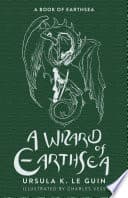
- A Wizard of Earthsea
Ursula K. Le Guin
4.0 (241k) average on GoodreadsFantasyLe Guin's A Wizard of Earthsea presents a meticulously crafted world with a profound exploration of magic, balance, and consequence. The Color of Magic, while creating an imaginative world, does not aim for the same philosophical depth or intricate magical system. Le Guin's prose is more lyrical and contemplative, whereas Pratchett prioritizes comedic timing and rapid-fire wit.
- Harry Potter and the Sorcerer's Stone
J.K. Rowling
4.5 (7M) average on GoodreadsFantasyRescued from a miserable life under the stairs, an orphaned boy discovers he's a wizard destined for a magical school, where he uncovers a dangerous secret tied to the dark wizard who murdered his parents.
- The Hunger Games
Suzanne Collins
4.3 (6.4M) average on GoodreadsFantasyIn a future where children fight to the death on live television, Katniss Everdeen volunteers for the arena, turning a death sentence into a fight for survival and a spark of rebellion.
- 1984
George Orwell
4.2 (3.1M) average on GoodreadsPoliticsIn a future where surveillance and thought control are absolute, a man's search for truth clashes with the Party, showing that hope can be a form of rebellion.





Enjoyed the summary?
A summary gives you the shape of the book. The book itself has the detail, the examples and the voice.
Find The Color of Magic on AmazonAs an Amazon Associate, BookBrief earns from qualifying purchases. How we're funded