
Synopsis
Covers the whole plot, including the ending.
- Difficulty
- Medium
- Pacing
- Fast
- Mood
- Witty, Satirical, Farcical, Cynical, Amusing
- Read it if
- You enjoy classic Restoration comedies, witty dialogue, social satire, and plays that explore themes of marriage, infidelity, and societal hypocrisy with a cynical edge.
- Skip it if
- You prefer morally upright characters, dislike themes of sexual promiscuity and deception, or find dated language and social mores difficult to engage with.
The Country Wife Plot Summary
Covers the whole plot, including the ending.
Horner's Deception
The play begins with Mr. Horner, a notorious rake, planning with his surgeon, Quack, and a matchmaker, Lucy. They spread a rumor that he became impotent from a venereal disease. His goal is to make husbands trust him and allow him free access to their wives, believing he poses no threat. Sir Jasper Fidget, a foolish cuckold, is the first to believe the deception, readily accepting Horner's 'condition' and promoting it to other husbands. Horner then begins his plan with Lady Fidget and Mrs. Dainty Fidget, who, despite their initial modesty, are intrigued by his supposed 'safe' company. This setup establishes Horner's cunning and the widespread hypocrisy in London society.
Pinchwife's Jealousy and Alithea's Predicament
Mr. Pinchwife, an older, intensely jealous man, arrives in London from the country with his young, naive wife, Margery, and his sister, Alithea. He is determined to protect Margery from the city's corrupting influences and rakes, especially Horner, whom he dislikes. He keeps Margery almost imprisoned, telling her to pretend to be ugly and avoid all male company. Meanwhile, Alithea is engaged to the dull and pretentious Mr. Sparkish, a fop who cares more about appearing witty and fashionable than about Alithea. Alithea, however, is secretly attracted to Mr. Harcourt, Sparkish's friend, who genuinely loves her. This scene shows Pinchwife's extreme possessiveness and sets up the contrasting romantic situations.
Margery's Curiosity and First Encounter
Margery Pinchwife, despite her husband's strict rules, is curious and quickly gets bored with her confinement. She watches the fashionable ladies and gentlemen from her window, especially intrigued by Horner. When Pinchwife takes her out, disguised as a boy, she meets Horner, who immediately recognizes her and flirts with her. Margery, new to such attention, is captivated. Pinchwife, unaware of Horner's true nature due to the rumors, only cares about keeping Margery away from other men. This interaction marks the start of Margery's awakening to the world beyond her husband's control and her growing interest in Horner.
Horner's 'China' Scheme
Horner's deception grows as he entertains Lady Fidget, Mrs. Dainty Fidget, and Mrs. Squeamish. These ladies, believing him harmless, visit his lodging often, supposedly to admire his 'china' collection. The 'china' is a euphemism for their sexual encounters with Horner. Their maids and even Sir Jasper Fidget are involved or willfully ignorant, maintaining the illusion of Horner's impotence. This scheme exposes the elaborate hypocrisy of upper-class women who pretend to be virtuous while secretly indulging desires, enabled by Horner's clever trick and the husbands' gullibility.
The Letter Exchange and Margery's Boldness
Margery, smitten with Horner, writes him a love letter expressing her feelings and a desire to meet. Pinchwife intercepts the letter, furious at her disobedience. He forces her to rewrite it as a letter of rejection, threatening to kill her if she does not comply. However, Margery, with surprising wit, secretly replaces the dictated letter with her original love letter, ensuring Horner receives her true message. This incident shows Margery's developing cunning and her growing defiance of her husband's control, hinting at her potential for liberation.
Harcourt's Pursuit of Alithea
Harcourt, determined to win Alithea, tries to persuade her not to marry Sparkish. He constantly points out Sparkish's vanity, superficiality, and lack of genuine affection. Sparkish, oblivious and self-absorbed, often helps Harcourt's cause by acting foolish, revealing his true character as a fop who values appearances above all else. Alithea, though initially resistant due to her honor and commitment, begins to see the truth in Harcourt's words and is drawn to his sincerity. This subplot provides a contrasting, more genuine romantic pursuit amid the play's comedic deceptions.
The Convent Visit and Horner's Access
Pinchwife, desperate to keep Margery away from Horner, decides to take her to a convent, believing it to be a safe, male-free environment. However, Horner, anticipating Pinchwife's moves, arranges to be there. Margery, seizing the chance, slips away from Pinchwife and meets Horner. Their encounter further strengthens their mutual attraction and Margery's growing desire for freedom. This scene shows the irony of Pinchwife's efforts; his attempts to control Margery only push her further towards Horner, highlighting his ineffectiveness.
The 'China' Closet Confrontation
A scene occurs in Horner's lodging when Lady Fidget, Mrs. Dainty Fidget, and Mrs. Squeamish arrive at the same time, each expecting an exclusive meeting with Horner. They discover each other, and realizing they have all been sharing Horner's 'china,' they have a heated, but suppressed, confrontation. To protect their reputations, they agree to a pact of silence, pretending ignorance of each other's activities. This scene exposes the collective hypocrisy of these 'virtuous' ladies and their willingness to prioritize social appearances over genuine morality, solidifying Horner's success.
Margery's Escape and Impersonation
Margery's desire for freedom and Horner grows stronger. She tricks Pinchwife into believing she is going to meet Alithea. Instead, she plans to meet Horner, having disguised herself in Alithea's clothes and veil. This impersonation is a bold move, showing her increasing assertiveness and cunning. The disguise also creates more confusion and comedic misunderstandings, especially when Pinchwife believes he has taken Alithea (who is actually Margery) to be married to Sparkish, while the real Alithea is elsewhere, pursuing her own romantic destiny with Harcourt.
The Double Wedding and Resolution
The play ends in chaotic events. Alithea, with Lucy's help, rejects Sparkish and marries Harcourt. Margery, still disguised as Alithea, is almost married to Sparkish but is reunited with Horner. Pinchwife is driven to near madness by his wife's perceived infidelity and his inability to control her. The truth about Horner's impotence deception is almost revealed by the enraged Pinchwife and Sir Jasper Fidget, but Quack and Lucy intervene. They successfully convince everyone (including the husbands) that Horner is indeed impotent, protecting his reputation and the ladies' honor. The play concludes with Horner triumphant, Margery free, and Alithea happily married.
Principal Figures
Mr. Horner
Protagonist/Antagonist
A cunning rake who feigns impotence to seduce married women.
Horner is the central figure of the play, a cynical and witty rake who orchestrates an elaborate deception to gain sexual access to the wives of London's gentry. He is intelligent, manipulative, and completely amoral, driven by a desire for conquest and a contempt for the hypocrisy he observes in society. He is not motivated by love or even genuine affection, but by the thrill of the chase and the satisfaction of exposing the moral failings of others, particularly the foolish husbands. His charm and strategic thinking allow him to navigate the complex social landscape with ease.
Relationships: Lady Fidget (sexual conquest); Mrs. Dainty Fidget (sexual conquest); Mrs. Squeamish (sexual conquest); Margery Pinchwife (sexual conquest and object of her affection); Quack (conspirator and accomplice); Lucy (conspirator and accomplice)
Margery Pinchwife
Protagonist
A naive country wife who awakens to the pleasures of London and defies her jealous husband.
Margery is initially presented as a simple, unworldly country girl, brought to London by her possessive husband, Mr. Pinchwife. Despite her innocence, she possesses a keen curiosity, a burgeoning wit, and a strong desire for freedom and experience. She quickly grows bored with her confinement and is fascinated by the fashionable world and its men, especially Horner. Her character arc involves a rapid transformation from a submissive wife to a cunning and assertive woman who uses deception to achieve her desires, ultimately finding a form of liberation from her oppressive marriage.
Relationships: Mr. Pinchwife (husband and oppressor); Horner (object of her affection and eventual lover)
Mr. Pinchwife
Antagonist
A pathologically jealous husband who tries to control his young wife.
Mr. Pinchwife is an older, intensely jealous, and possessive man who brings his young wife, Margery, to London from the country. He is obsessed with preventing her from being corrupted by the city's rakes, particularly Horner, and goes to extreme lengths to confine and control her. His efforts, however, are constantly thwarted by Margery's ingenuity and his own blindness. He represents the foolishness of trying to suppress natural human desires and the irony of his attempts only serving to push his wife into the very situations he fears. His character is a caricature of the cuckolded husband.
Relationships: Margery Pinchwife (wife and object of his control); Alithea (sister); Horner (rival and object of his hatred)
Alithea
Supporting
Pinchwife's sister, torn between honor and love for Harcourt.
Alithea is Mr. Pinchwife's sister, a woman of wit and good sense, but initially bound by a sense of honor to her engagement to the superficial Mr. Sparkish. She embodies the conflict between societal expectations and genuine affection. Despite her initial commitment, she is clearly drawn to the more sincere and intelligent Mr. Harcourt, who genuinely loves her. Her journey involves breaking free from a socially advantageous but loveless match to choose a partner based on true affection and compatibility. She serves as a moral contrast to the more cynical characters.
Relationships: Mr. Pinchwife (brother); Mr. Sparkish (fiancé (initially)); Mr. Harcourt (suitor and eventual husband); Lucy (maid and confidante)
Mr. Harcourt
Supporting
A sincere and witty gentleman who loves Alithea.
Mr. Harcourt is a friend of Sparkish and a genuine admirer of Alithea. In stark contrast to Horner's cynical manipulations and Sparkish's superficiality, Harcourt is portrayed as sincere, witty, and truly in love. He actively pursues Alithea, using his intelligence and charm to expose Sparkish's foolishness and win her affection. He represents a more admirable and traditional romantic hero, offering a counterpoint to the more libertine elements of the play. His honesty ultimately wins Alithea's heart.
Relationships: Alithea (object of his affection and eventual wife); Mr. Sparkish (acquaintance and rival)
Mr. Sparkish
Supporting
A vain and foolish fop, Alithea's original fiancé.
Mr. Sparkish is a quintessential Restoration fop – vain, superficial, and obsessed with appearing witty and fashionable. He is engaged to Alithea but cares more about the social status and appearance of having a beautiful wife than about Alithea herself. He is easily manipulated and often makes a fool of himself, particularly in his interactions with Harcourt. His character serves as a comedic foil and highlights the superficiality and false pretenses of much of London society, making Alithea's eventual choice of Harcourt all the more meaningful.
Relationships: Alithea (fiancé (initially)); Mr. Harcourt (friend and rival)
Lady Fidget
Supporting
A hypocritical married woman who secretly has an affair with Horner.
Lady Fidget is one of the married women who falls for Horner's deception. She is a prime example of the hypocrisy prevalent in Restoration society, publicly maintaining a facade of virtue and modesty while secretly indulging in an affair with Horner. She is vain, self-serving, and quick to defend her reputation, even when confronted with evidence of her own indiscretions. Her character, along with Mrs. Dainty Fidget and Mrs. Squeamish, represents the 'virtuous gang' who are secretly as licentious as the men they condemn.
Relationships: Sir Jasper Fidget (husband); Horner (lover); Mrs. Dainty Fidget (friend and fellow lover of Horner); Mrs. Squeamish (friend and fellow lover of Horner)
Sir Jasper Fidget
Supporting
A foolish, cuckolded husband who believes Horner is impotent.
Sir Jasper Fidget is a gullible and foolish husband, easily deceived by Horner's ruse of impotence. He actively promotes Horner's 'condition' to other husbands, believing him to be a safe companion for their wives. His blindness to his wife's infidelity and his enthusiastic endorsement of Horner as a 'safe' friend make him a prime example of the cuckold, a common figure in Restoration comedy. He is more concerned with appearing fashionable and accommodating than with the actual fidelity of his wife.
Relationships: Lady Fidget (wife); Horner (friend (believed to be impotent))
Lucy
Supporting
Alithea's maid and a clever accomplice in various schemes.
Lucy is Alithea's maid and a highly intelligent, pragmatic character who serves as an important go-between and confidante. She is instrumental in facilitating the romantic entanglements, particularly in aiding Alithea's eventual marriage to Harcourt and Margery's escapades. She is sharp-witted and morally ambiguous, willing to participate in deceptions for her own gain or out of loyalty to her mistress. She represents the often-overlooked intelligence and agency of servants in the Restoration era.
Relationships: Alithea (mistress); Horner (conspirator and accomplice); Margery Pinchwife (confidante and helper)
Quack
Supporting
Horner's surgeon and co-conspirator in the impotence ruse.
Quack is Horner's surgeon and his crucial accomplice in spreading the false rumor of his impotence. He provides the medical 'proof' for Horner's condition, lending credibility to the deception. He is a cynical and opportunistic character, willing to participate in the scheme for personal gain. His role highlights the corruptibility of professionals and the ease with which appearances can be manipulated in society.
Relationships: Horner (patient and co-conspirator)
Themes & Insights
Hypocrisy and Appearance vs. Reality
This is a central theme, present in almost every character. Horner's entire scheme relies on the difference between his feigned impotence (appearance) and his actual virility (reality). The 'virtuous gang' of ladies (Lady Fidget, Mrs. Dainty Fidget, Mrs. Squeamish) publicly denounce rakes and uphold moral standards while secretly having affairs with Horner, using 'china' as a euphemism for their activities. Mr. Sparkish cares only for the appearance of wit and fashion, not genuine affection. Even Pinchwife's attempts to control Margery are about maintaining the appearance of a chaste wife, rather than addressing her true desires. The play constantly shows the gap between what people say and what they do, and how society often accepts comforting lies over inconvenient truths.
“A pox on 'em, the jades! I cannot be civil to 'em, though I could wish 'em well, for they are my own sex. But I hate 'em, for they are my rivals, and I cannot bear to see 'em enjoy what I would fain have myself.”
Sexual Liberation and Repression
The play explores the tension between society's repression of female sexuality and the human desire for pleasure and freedom. Mr. Pinchwife's extreme efforts to repress Margery's sexuality ironically lead to her awakening and cunning pursuit of Horner. The married ladies, believing Horner is impotent, find a safe way to express their desires. Horner himself is a figure of male sexual liberation, challenging conventional morality. The play suggests that repression is useless and often counterproductive, and that desire will find a way to appear, often through deception. Margery's journey shows a woman breaking free from sexual repression.
“I will go abroad, that's certain; and I will see plays, and go to visits; and I will have fine clothes, and go to Court, and see the King, and the Queen, and all the fine things.”
The Folly of Jealousy and Possessiveness
Mr. Pinchwife embodies the destructive nature of extreme jealousy and possessiveness. His constant attempts to control Margery, to keep her ignorant and confined, are unsuccessful and actively push her towards the infidelity he fears. His jealousy makes him blind to his wife's intelligence and resourcefulness, and he becomes a figure of ridicule. The play shows that love and fidelity cannot be forced; true affection must be freely given. Pinchwife's paranoia contrasts with Horner's casual conquests, highlighting the ineffectiveness of his approach.
“A wife is like a fly, which you may keep in a glass, but she will buzz and flutter till she breaks her wings against it, and then dies.”
The Corruption of London Society
The play satirizes Restoration London society as superficial, morally corrupt, and obsessed with appearances. The characters, from fops like Sparkish to the hypocritical 'virtuous gang' of ladies, care more about maintaining their social standing and reputation than about genuine virtue or sincerity. Horner's success in his deception is a direct result of this societal corruption and gullibility. The city is portrayed as a place where innocence (like Margery's) is quickly lost, and where wit and cunning are valued above honesty. The play critiques the moral decay beneath the polished surface of urban gentility.
“He has a great deal of wit, and I love a man of wit, let him be never so ugly.”
The Power of Deception and Language
Deception drives the entire plot, primarily through Horner's feigned impotence. The play shows how carefully constructed lies and strategic language can manipulate perception and control outcomes. The euphemism of 'china' is a prime example of how language can hide illicit activities in plain sight. Margery's clever letter-swapping also shows her growing mastery of deception. The characters constantly engage in verbal sparring, using wit and double entendre to conceal their true intentions or to expose others. The play highlights language as a powerful tool for both control and liberation.
“I have been for the china, and am sure, if you had been in the next room, you might have heard the jingling of the china.”
Plot Devices & Literary Techniques
The Impotence Ruse
Horner's feigned impotence allows him unrestricted access to married women.
This is the central plot device, a master deception orchestrated by Horner. By spreading the rumor that he has been rendered impotent by venereal disease, Horner transforms himself from a notorious rake into a 'safe' companion in the eyes of jealous husbands. This ruse enables him to freely interact with and seduce married women without suspicion, as their husbands believe he poses no threat. It functions as the engine for most of the play's comedic situations and exposes the widespread hypocrisy and gullibility of society.
'China' as a Euphemism
The word 'china' serves as a code for sexual encounters with Horner.
The repeated use of 'china' as a euphemism is a brilliant comedic device. When the married ladies visit Horner, their stated purpose is to admire or acquire his 'china' collection. However, it quickly becomes clear that 'going for china' or 'breaking china' refers to their sexual liaisons with Horner. This device allows the characters to maintain a veneer of respectability while openly discussing their illicit activities, highlighting the hypocrisy and coded language prevalent in Restoration society. It creates a layer of knowing humor for the audience, who are privy to the true meaning.
Disguise and Mistaken Identity
Characters use disguises to achieve their goals, leading to comedic confusion.
Disguise and mistaken identity are employed for comedic effect and to advance the plot. Margery Pinchwife disguises herself as a boy to go out and later as Alithea to meet Horner, leading to humorous confusion, particularly for Pinchwife. Harcourt also uses a disguise (as a parson) to gain private access to Alithea and try to win her over. These devices create chaotic situations, allow characters to behave in ways they normally couldn't, and ultimately contribute to the resolution of the various romantic and sexual entanglements.
The Intercepted Letter
A letter written by Margery is intercepted by Pinchwife, leading to a clever substitution.
Margery's love letter to Horner, intercepted by Pinchwife, is a pivotal device that demonstrates her burgeoning cunning. Pinchwife forces her to rewrite it as a letter of rejection, but Margery cleverly substitutes the original, ensuring Horner receives her true message. This not only advances her relationship with Horner but also highlights her growing assertiveness and ability to outwit her oppressive husband. It's a moment where the seemingly naive character reveals unexpected depth and resourcefulness, turning a potential setback into a triumph.
The Country Wife Quotes
“He that marries a country wife, first, marries a fool, then marries a foe.”
“I have been so long kept up, I am e'en mouldy.”
“A pox of all that are so civil as to love me for my money!”
“I am resolved to be a rake and to love nothing but my pleasure.”
“Sure, 'tis a fine thing to be a lady!”
“We are like the ladies at a coronation, who, when the show is done, are ready to go home to bed.”
“I am not so young as to believe that virtue is always rewarded.”
“A husband is a necessary evil, but a lover is a delightful one.”
“The only way to be safe from women is to be out of the world, or to be a eunuch.”
“I love to be a little mischievous, to keep myself in countenance.”
“Ignorance is the best armor for a wife.”
“She's a country-girl, and thinks every man a husband that's civil to her.”
“To be a cuckold is to be a fashion.”
“I'll never marry a fool; for I know the price of 'em.”
Quiz
10 questions on the plot and the characters. Each answer comes with a short explanation.
Question 1
What is the primary motivation for Mr. Horner's feigned impotence?
- To avoid marriage proposals from eligible young women.
- To gain unrestricted access to married women without suspicion.
- To escape the demands of his current mistress, Lady Fidget.
- To win a bet with his friend, Mr. Dorilant.
Show answer
B. To gain unrestricted access to married women without suspicion. Horner spreads the rumor of his impotence to make husbands believe he is no threat, thereby allowing him free access to their wives.
Question 2
Which character is known for his naive and overly protective attitude towards his wife, Margery?
- Mr. Dorilant
- Sir Jasper Fidget
- Mr. Pinchwife
- Mr. Harcourt
Show answer
C. Mr. Pinchwife Mr. Pinchwife is infamously paranoid and attempts to keep his country wife, Margery, ignorant and secluded from London society.
Question 3
What is the main theme satirized by the 'china scene'?
- The value of exotic imports in 17th-century England.
- The hypocrisy and pretense of virtue among fashionable ladies.
- The difficulties of maintaining a household's inventory.
- The declining quality of English craftsmanship.
Show answer
B. The hypocrisy and pretense of virtue among fashionable ladies. The 'china scene' is a thinly veiled metaphor for sexual encounters, exposing the ladies' feigned modesty while they eagerly engage with Horner.
Question 4
How does Margery Pinchwife manage to communicate with Mr. Horner despite her husband's vigilance?
- She sends him secret messages through her maid.
- She writes letters and disguises them, often using her husband's own hand for a cover.
- She arranges clandestine meetings in public gardens.
- She uses a coded language during social gatherings.
Show answer
B. She writes letters and disguises them, often using her husband's own hand for a cover. Margery, despite her 'innocence,' proves remarkably cunning, particularly in manipulating letters, even tricking Pinchwife into delivering them.
Question 5
Which character does Alithea eventually marry, despite her initial engagement to Sparkish?
- Mr. Horner
- Mr. Dorilant
- Mr. Harcourt
- Sir Jasper Fidget
Show answer
C. Mr. Harcourt Alithea, weary of Sparkish's vanity, ultimately chooses the more sincere and witty Mr. Harcourt.
Question 6
What is the primary social critique implied by the behavior of Lady Fidget, Dainty Fidget, and Mrs. Squeamish?
- The lack of educational opportunities for women in society.
- The hypocrisy of women who outwardly profess virtue while secretly pursuing illicit affairs.
- The economic dependence of women on their husbands.
- The restrictive fashion trends of the Restoration period.
Show answer
B. The hypocrisy of women who outwardly profess virtue while secretly pursuing illicit affairs. These 'virtuous' ladies are the epitome of hypocrisy, constantly proclaiming their honor while actively engaging in affairs with Horner.
Question 7
Which specific detail about Margery Pinchwife's 'education' does her husband employ to keep her innocent?
- He forbids her from reading any books or plays.
- He tells her that London men are all 'eunuchs' or 'devils' to be avoided.
- He locks her in her room whenever he leaves the house.
- He forces her to wear unfashionable country clothes.
Show answer
B. He tells her that London men are all 'eunuchs' or 'devils' to be avoided. Pinchwife's desperate attempts to shield Margery include fabricating stories about the nature of London men, calling them 'eunuchs' or 'devils' to deter her.
Question 8
What is the ultimate fate of Horner's deception regarding his impotence?
- He is publicly exposed and shamed by the husbands.
- He is forced to marry one of the women he seduced.
- It is maintained until the end, with the husbands remaining oblivious to his true nature.
- He confesses his trickery to gain sympathy.
Show answer
C. It is maintained until the end, with the husbands remaining oblivious to his true nature. Despite close calls and suspicions, the play concludes with Horner's ruse still intact, a testament to the husbands' willful blindness and the women's complicity.
Question 9
How does Mr. Harcourt disguise himself to win Alithea's affection from Sparkish?
- He pretends to be a wealthy merchant from the East Indies.
- He poses as a French dancing master.
- He dresses as a parson and offers to tutor Alithea.
- He feigns illness to gain her sympathy.
Show answer
C. He dresses as a parson and offers to tutor Alithea. Harcourt cleverly disguises himself as a parson to gain private access to Alithea and expose Sparkish's superficiality.
Question 10
What is the significance of the play's Restoration-era setting in understanding its themes?
- It emphasizes a period of strict Puritanical morality and social conservatism.
- It reflects the relaxed moral standards, cynicism, and wit that emerged after the Puritan interregnum.
- It highlights the burgeoning industrial revolution and its impact on social classes.
- It focuses on the political unrest leading up to the Glorious Revolution.
Show answer
B. It reflects the relaxed moral standards, cynicism, and wit that emerged after the Puritan interregnum. The Restoration era (after the return of the monarchy) was characterized by a reaction against Puritanism, leading to a more permissive social climate and a flourishing of satirical comedy that critiqued manners and morals.
The Country Wife FAQ
What is the central premise of 'The Country Wife' and how does it introduce the main characters?
'The Country Wife' centers on Horner, a notorious rake who feigns impotence to gain unrestricted access to respectable ladies. This deception allows him to pursue affairs with married women like Lady Fidget and Mrs. Dainty Fidget, while their husbands remain blissfully unaware of his true intentions and capabilities.
Who is Margery Pinchwife and what role does her naivety play in the plot?
Margery Pinchwife is the young, unworldly wife of Mr. Pinchwife, brought from the country to London. Her innocence and lack of social graces, ironically, make her more susceptible to Horner's advances, as she doesn't understand the societal rules and deceptions that protect other women, leading to her blatant expressions of affection for him.
Describe the character of Mr. Pinchwife and his attempts to control his wife.
Mr. Pinchwife is an aging, possessive husband who tries to shield his young wife, Margery, from the corrupting influences of London society and other men. His extreme jealousy leads him to disguise her as a boy and even attempt to force her to write incriminating letters, ultimately highlighting his own paranoia and the futility of his control.
What is the 'china scene' and why is it a famous moment in the play?
The 'china scene' involves Lady Fidget's clandestine meetings with Horner, where she pretends to be discussing or acquiring valuable china. This euphemism cleverly masks their sexual encounters, making it a famous example of Restoration comedy's use of double entendre and satire to comment on societal hypocrisy regarding adultery.
How does the play resolve the various romantic entanglements and deceptions?
The play concludes with a grand deception where Dr. Quack and Alithea's maid confirm Horner's feigned impotence, convincing the husbands that their wives are safe. Margery Pinchwife ultimately escapes her husband's control, declaring her love for Horner, while Alithea marries Harcourt, leaving Horner to continue his libertine ways, albeit with renewed caution.
What is the significance of the title, 'The Country Wife,' beyond Margery Pinchwife?
While Margery is the literal 'country wife,' the title also subtly refers to the idea of innocence or naturalness being exposed to, and corrupted by, the sophisticated yet immoral city. It highlights the contrast between rural simplicity and urban artifice, suggesting that even 'country wives' can succumb to or embrace London's vices.
Are there any clues early in the play that hint at Horner's true intentions and the success of his deception?
Horner's opening soliloquy explicitly states his plan to feign impotence and mocks those who will believe it. His immediate success in gaining the trust of Sir Jaspar Fidget and Mr. Pinchwife, who openly discuss their wives' virtue in front of him, foreshadows how easily society will fall for his ruse.
What is the underlying connection between Mr. Pinchwife's jealousy and Horner's deception?
Mr. Pinchwife's excessive jealousy and attempts to isolate Margery inadvertently make her more curious and vulnerable to Horner. Horner's deception thrives on the very male paranoia exemplified by Pinchwife; by appearing harmless, he bypasses the defenses built by jealous husbands, proving their attempts at control are ultimately self-defeating.
How does the character of Sparkish function as a foil to other characters like Harcourt?
Sparkish, obsessed with appearing witty and fashionable, acts as a foil to Harcourt's genuine wit and sincere affection for Alithea. Sparkish's superficiality and eagerness to show off his fiancée actually help Harcourt win Alithea's heart, as Sparkish is too self-absorbed to notice Harcourt's advances or Alithea's growing disdain for him.
Analyze the psychological motivations behind Horner's elaborate deception.
Horner's deception is driven by a desire for sexual conquest and a cynical view of human nature, particularly the hypocrisy of London society. He seeks to expose the superficial morality of 'virtuous' ladies and the blindness of jealous husbands, gaining pleasure not just from the act itself, but from the successful manipulation and subversion of social norms.
Discuss the psychological impact of Mr. Pinchwife's possessiveness on Margery.
Mr. Pinchwife's extreme possessiveness and attempts to control Margery psychologically backfire. Instead of making her chaste, his actions ignite her curiosity and rebellion, pushing her directly into the arms of Horner. Her confinement makes the allure of freedom and forbidden pleasure even stronger, driving her to defiance rather than obedience.
What does the 'china scene' reveal about the psychology of the 'virtuous' ladies like Lady Fidget?
The 'china scene' reveals the profound hypocrisy and self-deception of the 'virtuous' ladies. Psychologically, they desire illicit pleasure but must maintain a facade of respectability. Their use of euphemism allows them to compartmentalize their actions, preserving their self-image as honorable while actively engaging in adultery, demonstrating a complex blend of desire and social anxiety.
How does Alithea's decision to marry Harcourt instead of Sparkish reflect a psychological shift?
Alithea's initial commitment to Sparkish, despite his flaws, is rooted in a sense of duty and perhaps a fear of social disapproval. Her eventual choice of Harcourt signifies a psychological shift towards valuing genuine affection, sincerity, and intellectual compatibility over superficial social standing and obligations, demonstrating a preference for true connection over societal expectations.
Is Horner a hero or a villain in the context of Restoration comedy?
Horner is typically viewed as an anti-hero. While his methods are morally dubious, he often serves as a satirical instrument, exposing the hypocrisy and foolishness of others. In the amoral landscape of Restoration comedy, his cleverness and success in navigating societal deceptions often position him as a character to be admired for his wit, even if not for his ethics.
Does the play ultimately condemn or condone the adulterous behavior it depicts?
The play largely satirizes rather than condemns adulterous behavior, particularly by the upper classes. It exposes the hypocrisy and folly of those who pretend to virtue while engaging in vice, and those who foolishly try to prevent it. While it doesn't explicitly condone adultery, it presents it as an inevitable outcome of societal repression and superficial morality, often rewarding the cleverest deceivers.
What is the play's message about female agency and freedom in 17th-century London society?
'The Country Wife' presents a complex view of female agency. While women like Lady Fidget find freedom in deception, and Margery eventually asserts her desires, their agency is often exercised within the confines of a patriarchal society, requiring cunning and manipulation. The play suggests that true freedom for women was severely limited, often only achievable through subversive means.
How does the play's ending contribute to its satirical commentary on marriage and societal norms?
The ending, with Horner's deception maintained and most characters either oblivious or accepting of the status quo, offers a cynical commentary on marriage and societal norms. It suggests that marriage is often a facade, built on delusion and deception, and that true virtue is less valued than the appearance of it. The social order is preserved, but only through a collective act of blindness.
Could Margery Pinchwife be considered a proto-feminist character despite her naivety?
Margery Pinchwife, despite her initial naivety, can be seen as having proto-feminist leanings. Her open defiance of Mr. Pinchwife's control and her unashamed pursuit of her desires, even if driven by innocence, challenge patriarchal authority and societal expectations for women. She ultimately asserts her own will and sexual agency, refusing to be a passive object.
About the author
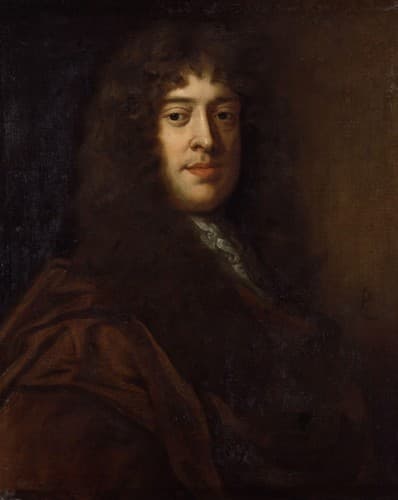
William Wycherley was an English playwright active during the Restoration period. He is best known for his comedic play "The Country Wife," which explores themes of love and deception in 17th-century society. Wycherley's works often reflect the social mores of his time and are notable for their wit and satirical elements.
Similar books
- She Stoops to Conquer
Oliver Goldsmith
3.6 (12k) average on GoodreadsFeatures mistaken identities, comedic misunderstandings, and a lively exploration of class and social expectations.
- Nineteen Eighty-Four
George Orwell
4.2 (5.5M) average on GoodreadsFictionWinston Smith dreams of truth and rebellion in a world where Big Brother watches all, but he confronts the terrifying power of a regime that controls not just actions, but thoughts.
- The Frozen River
Ariel Lawhon
4.4 (600k) average on GoodreadsFictionIn 1789 Maine, a heroic midwife's diary helps her expose a murder and get justice in a town that wants to silence her.
- A Man Called Ove
Fredrik Backman
4.4 (569k) average on GoodreadsFictionA stubborn widower, who lives by strict rules, finds his quiet world changed by a lively new family next door, making him face his past and find happiness in human connection.
- The Art of Racing in the Rain
Garth Stein
4.2 (452k) average on GoodreadsFictionThrough the eyes of Enzo, a wise and observant dog, a race car driver's family navigates a journey of love, loss, and resilience, learning that life's most important lessons often come in the curves, not just on the straightaways.
- The Colour of Magic
Terry Pratchett
4.0 (425k) average on GoodreadsFictionOn a discworld hurtling through space on the back of a giant turtle, an inept wizard and his naive, walking-luggage-toting tourist embark on a chaotic, belief-fueled journey to the very edge of their flat planet, encountering dragons that only exist if you believe in them.





Enjoyed the summary?
A summary gives you the shape of the book. The book itself has the detail, the examples and the voice.
Find The Country Wife on AmazonAs an Amazon Associate, BookBrief earns from qualifying purchases. How we're funded