
Synopsis
Covers the whole plot, including the ending.
- Difficulty
- Medium
- Pacing
- Moderate
- Mood
- Humorous, Witty, Charming, Lighthearted
- Read it if
- You enjoy classic comedies of manners, mistaken identity plots, and witty dialogue.
- Skip it if
- You prefer modern, fast-paced narratives or dislike period language and social conventions.
She Stoops to Conquer Plot Summary
Covers the whole plot, including the ending.
A Father's Plan and a Mother's Ambition
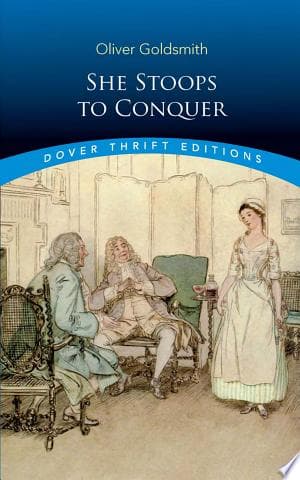
The play opens at Mr. Hardcastle's country house, where he complains about the decline of old-fashioned hospitality and his wife's obsession with urban fashions. He discusses his daughter Kate's future, hoping she will marry Charles Marlow, the son of his old friend Sir Charles Marlow. Mrs. Hardcastle, however, is more concerned with her son Tony Lumpkin's inheritance and his lack of interest in her plans for him to marry his cousin, Constance Neville. Tony is a boisterous, mischievous youth who prefers the company of the local tavern, 'The Three Pigeons', and enjoys pranks and singing. His mother constantly favors him, much to Mr. Hardcastle's annoyance. The scene shows the contrasting values and domestic tensions within the Hardcastle household.
The Mischievous Misdirection
Charles Marlow and his friend George Hastings are traveling to the Hardcastle estate. Marlow is known for his extreme shyness around women of his own class, yet is a notorious womanizer with women of lower social standing. Hastings is in love with Constance Neville, who is also traveling to the Hardcastle's. They stop at 'The Three Pigeons' to ask for directions. There, they encounter Tony Lumpkin, who, recognizing them as his stepfather's guests and always eager for a prank, tells them that Mr. Hardcastle's house is a dilapidated inn about a mile away. He assures them they will find good accommodation there, knowing the confusion this will cause. Marlow and Hastings, misled, set off for the 'inn' with high expectations of a comfortable stay.
The 'Inn' and the Mistaken Host
Marlow and Hastings arrive at the Hardcastle residence, completely convinced it is an inn. Mr. Hardcastle, eager to welcome his guests, tries to be hospitable, but his attempts are misinterpreted as the officiousness of an innkeeper. Marlow, accustomed to ordering servants, treats Mr. Hardcastle with disrespect and demands, while Hastings, though slightly more polite, also behaves as a guest at an inn. Mr. Hardcastle, initially bewildered by their rudeness, realizes they have mistaken his house for a public establishment. He decides to play along, hoping to teach Marlow a lesson in humility and good manners, while observing his future son-in-law's true character.
Kate's Observation and Marlow's Shyness
Kate Hardcastle, dressed in her fashionable town clothes, meets Marlow. As her father predicted, Marlow is so overcome with shyness that he can barely speak to her, stammering and avoiding eye contact. He finds her intimidating and reserved. Kate is initially disappointed by his awkwardness but is intrigued by her father's description of Marlow's dual personality. She resolves to discover the truth for herself. Meanwhile, Constance Neville and Hastings secretly discuss their plan to elope, as Constance fears her aunt, Mrs. Hardcastle, will force her to marry Tony to secure her inheritance of jewels.
The Serving Maid Disguise
Following her father's advice and her own curiosity, Kate changes into a plain, country-style dress, which she wears in the evenings, resembling a serving maid. She encounters Marlow again, who, believing her to be a lower-class servant, immediately sheds his shyness and becomes confident, charming, and even a little flirtatious. Kate is astonished by this transformation and realizes the extent of his social anxiety. She plays along with her disguise, allowing Marlow to court her freely, while learning more about his true character and intentions. This interaction is the central 'stooping to conquer' element of the play.
Constance's Jewels and Tony's Prank
Constance Neville's valuable jewels, which are her inheritance and the key to her financial independence, are kept in a casket by Mrs. Hardcastle. Hastings, eager to elope with Constance, persuades Tony Lumpkin to steal the jewels and help them escape. Tony, always ready for mischief and disliking the idea of marrying Constance himself, agrees. He takes the casket and pretends to dispose of it in the horse pond, but secretly gives it to Hastings. However, Mrs. Hardcastle later discovers the jewels missing and raises an alarm, leading to confusion and frantic searching. Tony's involvement in the scheme adds to the comedic chaos.
The Elopement Attempt and Discovery
Hastings and Constance prepare to elope, believing they have secured the jewels. They plan to meet a carriage and flee. However, Mrs. Hardcastle, alerted to the missing jewels and suspicious of Hastings, pursues them. She catches them just as they are about to depart. In anger and determination to keep Constance's inheritance within the family, Mrs. Hardcastle reclaims the jewels and prevents their escape. This dramatic interception highlights Mrs. Hardcastle's control over Constance and the obstacles facing the young lovers. Tony, despite his earlier help, remains somewhat detached, enjoying the unfolding drama.
Sir Charles Marlow Arrives
Sir Charles Marlow, Charles Marlow's father, arrives at the Hardcastle estate. He is a respected gentleman and an old friend of Mr. Hardcastle. His arrival adds scrutiny and expectation, particularly regarding his son's potential marriage to Kate. Sir Charles observes the strange goings-on, the mistaken identities, and his son's perplexing behavior. He is initially puzzled by Charles's apparent rudeness towards Mr. Hardcastle and his seemingly unchivalrous attitude towards Kate, whom he believes his son is meant to court. His presence creates pressure for the truth to be revealed and for misunderstandings to be resolved.
The Revelation of the Mistake
Mr. Hardcastle, deciding the charade has gone on long enough, finally reveals to Marlow that he is not an innkeeper and that Marlow has been staying in his intended's father's house. Marlow is mortified, realizing the extent of his rude behavior and the social blunder he has committed. He is deeply embarrassed, especially when he considers how he has treated Mr. Hardcastle and the implications for his courtship of Kate. This revelation marks a turning point, forcing Marlow to confront his own prejudices and the consequences of his social anxieties. His pride is wounded, and he feels immense shame.
Kate's Unmasking and Marlow's Love
Kate, still in her 'serving maid' disguise, confronts Marlow. She reveals her true identity as Miss Hardcastle, much to Marlow's shock and embarrassment. He is devastated by his mistaken behavior but also relieved to learn that the charming, confident woman he fell for was indeed Kate. Despite his initial mortification, Marlow realizes he has genuinely fallen in love with Kate's wit and charm, which he only saw when he believed her to be of a lower class. He confesses his love, acknowledging his earlier shyness and expressing his desire to overcome it for her sake. Kate, having successfully 'conquered' his shyness, accepts his proposal.
Tony's Coming of Age and Constance's Freedom
It is revealed that Tony Lumpkin is, in fact, of age and can therefore make his own decisions about his marriage and inheritance. Tony, always resistant to his mother's plans, declares he has no intention of marrying Constance Neville. This declaration frees Constance from the obligation to marry her cousin and allows her to claim her inheritance of jewels. With Tony's refusal, Mrs. Hardcastle loses her power over Constance's future and her jewels. Tony's unexpected maturity in this moment, though driven by self-interest, paves the way for Constance and Hastings to finally be together without familial opposition.
Resolutions and Happy Endings
With Tony's declaration, Constance Neville is free to marry Hastings, and her jewels are returned to her. Sir Charles Marlow, having witnessed his son's transformation and the genuine affection between Charles and Kate, gives his blessing to their union. The Hardcastles are pleased with the outcome, despite the initial chaos. The play concludes with the promise of two happy marriages, the resolution of all mistaken identities, and a general sense of comedic order restored. The characters have learned valuable lessons about appearance versus reality, social class, and the importance of genuine affection over superficial judgments. Everyone, even Mrs. Hardcastle, accepts the new arrangements.
Principal Figures
Kate Hardcastle
Protagonist
The clever, resourceful daughter of Mr. Hardcastle who 'stoops to conquer' Marlow's shyness.
Kate is intelligent, spirited, and practical. She is torn between her father's old-fashioned values and her mother's desire for town fashion. She possesses a keen understanding of human nature and a willingness to challenge social conventions. Her defining characteristic is her ability to adapt and strategize, particularly in her interactions with Marlow. She is not afraid to take initiative and manipulate situations to achieve her desired outcome, which is to understand and ultimately win Marlow's affection.
Relationships: Mr. Hardcastle (Loving father-daughter relationship, he trusts her judgment.); Mrs. Hardcastle (Often at odds due to differing views on fashion and marriage.); Charles Marlow (Her suitor, whom she cleverly tests and ultimately falls in love with.); Tony Lumpkin (Cousin, often annoyed by his antics but occasionally finds him useful.)
Charles Marlow
Protagonist
A highly educated gentleman, cripplingly shy with upper-class women but confident with lower-class women.
Marlow is a complex character defined by his extreme social anxiety. He is intelligent and well-educated, yet his shyness around women of his own social standing renders him awkward and tongue-tied. Conversely, he is remarkably confident, even flirtatious, with women he perceives as being of a lower class. This dual personality is the central comedic device surrounding him. He is generally good-hearted but his initial behavior at the 'inn' reveals a certain degree of snobbery and entitlement.
Relationships: Sir Charles Marlow (His father, whom he respects and seeks to impress.); George Hastings (His close friend and traveling companion.); Kate Hardcastle (His intended bride, whom he initially misjudges but eventually falls deeply in love with.); Mr. Hardcastle (His future father-in-law, whom he initially treats as an innkeeper.)
Mr. Hardcastle
Supporting
The traditional, hospitable country squire who sets up the central misunderstanding.
Mr. Hardcastle is a benevolent and old-fashioned country gentleman who values hospitality, tradition, and good manners. He is exasperated by his wife's urban pretensions and his stepson Tony's boisterous nature. He genuinely cares for his daughter Kate and seeks a good match for her. His decision to observe Marlow's true character by letting the 'inn' charade play out demonstrates his wisdom and a subtle sense of humor.
Relationships: Mrs. Hardcastle (Often in conflict over their differing values and Tony's upbringing.); Kate Hardcastle (A loving and supportive father.); Charles Marlow (His potential son-in-law, whom he initially tests and later approves.); Sir Charles Marlow (An old and trusted friend.)
Mrs. Hardcastle
Antagonist/Supporting
A vain, ambitious woman obsessed with fashion, social status, and her son Tony.
Mrs. Hardcastle is a comically self-absorbed character. She is obsessed with appearing fashionable and maintaining her social standing, often at the expense of common sense or the feelings of others. Her primary concerns are her son Tony's inheritance and ensuring Constance Neville marries Tony to keep the family jewels. She dotes excessively on Tony, spoiling him and making excuses for his behavior, while often being critical of Kate.
Relationships: Mr. Hardcastle (Often argues with him, particularly about Tony and social matters.); Tony Lumpkin (Overly doting and protective mother.); Constance Neville (Her niece, whom she wishes to control for her inheritance.); Kate Hardcastle (Her stepdaughter, whom she often criticizes.)
Tony Lumpkin
Supporting
The mischievous, boisterous stepson of Mr. Hardcastle, who loves pranks and tavern life.
Tony is a lively, uneducated, and perpetually mischievous character. He despises learning and prefers the company of stable boys and tavern-goers. He is a master of pranks and delights in causing confusion, as seen in his misdirection of Marlow and Hastings. Despite his lack of sophistication, he possesses a certain rustic cunning and a strong desire to avoid his mother's plans for his marriage to Constance, which inadvertently helps the other characters.
Relationships: Mrs. Hardcastle (His mother, whom he constantly frustrates and avoids.); Mr. Hardcastle (His stepfather, who is often exasperated by him.); Constance Neville (His cousin, whom he refuses to marry.); Marlow & Hastings (The targets of his initial prank.)
Constance Neville
Supporting
The niece of Mrs. Hardcastle, in love with Hastings and seeking her inheritance.
Constance is an intelligent and sensible young woman, but she is dependent on her aunt, Mrs. Hardcastle, for her valuable inheritance of jewels. She is deeply in love with George Hastings and is determined to marry him, but her aunt's schemes to marry her to Tony Lumpkin pose a significant obstacle. She is resourceful and resilient, working with Hastings to try and secure her future.
Relationships: Mrs. Hardcastle (Her aunt and guardian, who controls her inheritance.); George Hastings (Her beloved, whom she plans to elope with.); Tony Lumpkin (Her cousin, whom she is pressured to marry but doesn't love.); Kate Hardcastle (Friend and confidante.)
George Hastings
Supporting
Marlow's friend and Constance Neville's suitor.
Hastings is a well-mannered and practical gentleman, deeply in love with Constance Neville. He is more worldly and less socially awkward than Marlow. He is determined to marry Constance and is willing to go to great lengths, including attempting to elope and secure her jewels, to achieve their union. He serves as a foil to Marlow's shyness and often tries to guide him through social situations.
Relationships: Charles Marlow (Close friend and traveling companion.); Constance Neville (His beloved, whom he eventually marries.); Tony Lumpkin (An accomplice in the jewel theft and elopement plan.)
Sir Charles Marlow
Supporting
Charles Marlow's father and an old friend of Mr. Hardcastle.
Sir Charles Marlow is an honorable and respected gentleman. He is a voice of reason and authority, who comes to the Hardcastle estate to approve of his son's potential marriage. He is initially concerned by his son's perceived rudeness and lack of interest in Kate but is ultimately understanding and supportive once the truth is revealed.
Relationships: Charles Marlow (His son, whose character he is keen to assess.); Mr. Hardcastle (An old and trusted friend.); Kate Hardcastle (His potential daughter-in-law, whom he comes to admire.)
Themes & Insights
Appearance vs. Reality
This theme is central to the entire play, seen primarily through the mistaken identity of the Hardcastle home as an inn and Kate's disguise as a serving maid. Marlow's behavior drastically shifts based on his perception of a person's social standing, highlighting how outward appearances and assumed social roles can hide or show true character. The 'inn' deception lets Mr. Hardcastle see Marlow's true, unvarnished personality, while Kate's 'stooping' reveals Marlow's genuine affection and wit, which his shyness otherwise conceals. The play constantly challenges the audience to look beyond superficial judgments.
“I find that a good deal may be learned by stooping.”
Social Class and Prejudice
The play satirizes the rigid social distinctions and prejudices of 18th-century England. Marlow's inability to speak to women of his own class, contrasted with his flirtatious ease with those he perceives as lower class, directly addresses this theme. His behavior at the 'inn' also shows the entitlement and condescension that can arise from class snobbery. The humor often comes from the subversion of these class expectations, as characters behave in ways contrary to their assumed social stations. Goldsmith suggests that genuine character and affection should go beyond artificial social barriers.
“The very rich, the very poor, the very wise, or the very ignorant, are the only people that are never out of humour.”
Parental Control and Filial Duty
The struggle between parental authority and children's desires for autonomy is clear in several plotlines. Mrs. Hardcastle's efforts to force Constance to marry Tony for her inheritance, and her general control over Tony's life, represent oppressive parental control. In contrast, Mr. Hardcastle takes a more liberal approach, allowing Kate to form her own judgment of Marlow. The eventual triumph of the young lovers and Tony's assertion of his own will suggest a critique of overly strict or self-serving parental interference, advocating for children's right to choose their own partners and paths.
“I vow, Mr. Hardcastle, you’re for ever giving lessons of morality.”
The Country vs. The City
Goldsmith draws a clear distinction between the values of rural country life and urban city life. Mr. Hardcastle embodies traditional country hospitality and values, regretting the loss of these virtues to 'the town'. Mrs. Hardcastle, conversely, desires the fashion and perceived sophistication of the city. Marlow and Hastings, as city gentlemen, initially bring their urban prejudices and manners to the country. The play subtly suggests that while the city offers refinement, it can also breed affectation, snobbery, and a loss of genuine connection, while the country, despite its perceived rusticity, fosters sincerity and true character.
“I love everything that’s old: old friends, old times, old manners, old books, old wine.”
Plot Devices & Literary Techniques
Mistaken Identity
Characters are perceived as someone or something they are not, driving the plot.
The entire comedic engine of the play is powered by mistaken identity. The Hardcastle house is mistaken for an inn by Marlow and Hastings, leading to their rude behavior towards Mr. Hardcastle. Crucially, Kate Hardcastle is mistaken for a common serving maid by Marlow, which allows him to overcome his shyness and reveal his true personality. This device creates hilarious misunderstandings, allows for character development, and ultimately facilitates the central romance by enabling characters to interact outside of their usual social constraints.
Dramatic Irony
The audience is aware of information that characters within the play are not.
Dramatic irony is prevalent throughout the play, enhancing its comedic effect. The audience knows from the outset that the Hardcastle house is not an inn, and that Kate is not a serving maid, while Marlow and Hastings remain blissfully unaware for much of the play. This creates humor in their interactions, as the audience anticipates the eventual revelation and the characters' reactions. It also allows the audience to appreciate the cleverness of Mr. Hardcastle and Kate in playing along with the deception, and to observe Marlow's dual nature with a full understanding of the context.
Soliloquy/Aside
Characters speak their thoughts directly to the audience, revealing inner feelings.
While not as frequent as in earlier drama, characters occasionally deliver asides or short soliloquies to express their true feelings or plans, which they cannot voice to other characters. For instance, Mr. Hardcastle often comments on the rudeness of his 'guests' in an aside, revealing his amusement or exasperation. Kate uses asides to reflect on Marlow's contrasting behavior and to strategize her next move in her disguise. This device provides insight into character motivations and adds depth to their reactions, allowing the audience to be privy to their private thoughts.
The Comic Villain/Obstacle
A character whose self-serving actions inadvertently create humor and propel the plot.
Tony Lumpkin functions as a comic villain (or more accurately, a mischievous obstacle) in the play. His initial misdirection of Marlow and Hastings is a deliberate act of mischief that sets the entire plot in motion. His subsequent involvement in the jewel theft and the elopement attempt, while driven by his desire to avoid marrying Constance, also creates chaos and drives the secondary plotline. His actions are not truly malicious but are self-serving and prankish, leading to humorous complications that ultimately contribute to the happy resolution for other characters.
She Stoops to Conquer Quotes
“I was never in a house since I was born, where I had not the liberty of laughing when I pleased.”
“I love everything that's old: old friends, old times, old manners, old books, old wine.”
“The greatest triumph of art is to conceal art.”
“An inn, by my Lord, an inn! Why, this is my father's house, and I am his only child!”
“We are all of us a medley of foibles and virtues.”
“I'm a mere lump of inert matter, a log, a stock, a stone.”
“To be plain with you, sir, I am a man of few words; but I am a man of honour.”
“Our blunders are our chief instructors.”
“I find that I have been deceived, abused, ridiculed, and imposed upon.”
“Modesty seldom resides in a breast that is not enriched with nobler virtues.”
“He who refuses to choose, has chosen.”
“I wonder what any of them see in her. She's as ugly as an owl, and as proud as a peacock.”
“The very best in this house, and I hope you'll find it so.”
“I'm sure I don't know what to say. I was never so confused in my life.”
Quiz
10 questions on the plot and the characters. Each answer comes with a short explanation.
Question 1
What is the primary reason Charles Marlow is initially unable to properly court Kate Hardcastle?
- He believes she is too far beneath his social standing.
- He is excessively shy and awkward around women of his own class.
- He is secretly in love with another woman.
- He is trying to avoid an arranged marriage.
Show answer
B. He is excessively shy and awkward around women of his own class. Marlow's main impediment is his extreme bashfulness and inability to speak freely or confidently with 'modest women' (ladies of his own rank), contrasting sharply with his boldness towards 'barmaids' and 'chambermaids'.
Question 2
How does Tony Lumpkin trick Charles Marlow and George Hastings into believing Hardcastle's house is an inn?
- He writes a misleading sign for the house.
- He gives them incorrect directions, telling them the house is the local inn.
- He dresses as an innkeeper to greet them.
- He sends them a fake invitation to stay at an inn.
Show answer
B. He gives them incorrect directions, telling them the house is the local inn. Tony, seeking mischief, deliberately misdirects Marlow and Hastings, telling them that Hardcastle's country estate is actually the 'Buck's Head' inn, where they can find entertainment.
Question 3
What is the primary reason Kate Hardcastle decides to 'stoop to conquer'?
- To test Marlow's loyalty to his social class.
- To expose Marlow's hypocrisy.
- To overcome Marlow's shyness and allow him to express his true feelings.
- To prank her father and his guests.
Show answer
C. To overcome Marlow's shyness and allow him to express his true feelings. Kate realizes Marlow's shyness prevents him from seeing her true worth as a lady. By posing as a barmaid, she allows him to drop his inhibitions and reveal the charming, confident man beneath.
Question 4
What is the name of the 'elegant' London fashion that Mrs. Hardcastle insists on wearing, much to her husband's dismay?
- A rustic country gown
- A French 'sacque' and a 'negligee cap'
- A simple homespun dress
- A riding habit with breeches
Show answer
B. A French 'sacque' and a 'negligee cap' Mrs. Hardcastle is obsessed with appearing fashionable and constantly complains about her husband's 'antiquated' tastes, contrasting her 'French sacque' and 'negligee cap' with his preference for 'a plain, brown, honest stuff gown'.
Question 5
What is the main obstacle preventing Constance Neville and George Hastings from eloping?
- Mr. Hardcastle's disapproval of Hastings.
- Constance's refusal to leave without her jewels.
- Marlow's unexpected arrival.
- Tony Lumpkin's interference with their carriage.
Show answer
B. Constance's refusal to leave without her jewels. Constance insists on retrieving her valuable jewels, which are in Mrs. Hardcastle's possession, before she will agree to elope with Hastings. This delay creates further complications.
Question 6
What specific detail about Tony Lumpkin's age is crucial to Constance Neville's inheritance?
- He must be married by a certain age.
- He must be of legal age to refuse the marriage contract with Constance.
- He must be old enough to manage his own estate.
- He must be younger than Constance to inherit.
Show answer
B. He must be of legal age to refuse the marriage contract with Constance. Mrs. Hardcastle believes Tony is still a minor, which allows her to control Constance's inheritance (the jewels) by forcing her into a marriage with Tony. However, Tony is actually of age and can legally refuse the match, freeing Constance.
Question 7
What is the dramatic irony in Marlow's initial conversations with Kate when he believes she is a serving girl?
- He treats her with respect, unaware of her true status.
- He openly flirts with her and is confident, completely oblivious that she is his intended fiancée.
- He discusses his fear of her father, not realizing she is his daughter.
- He criticizes the Hardcastle family, unaware he is in their house.
Show answer
B. He openly flirts with her and is confident, completely oblivious that she is his intended fiancée. The audience knows Kate's true identity, making Marlow's bold, flirtatious, and even somewhat condescending behavior towards her as a supposed 'barmaid' dramatically ironic, especially given his paralyzing shyness with her as a lady.
Question 8
What specific characteristic does Mr. Hardcastle value most in his country lifestyle, which Marlow and Hastings initially mock?
- Modernity and innovation.
- Simplicity, tradition, and old-fashioned hospitality.
- Extravagant displays of wealth.
- Strict adherence to London social etiquette.
Show answer
B. Simplicity, tradition, and old-fashioned hospitality. Mr. Hardcastle prides himself on his 'old-fashioned' ways, his 'ancient' servants, and his simple, sincere country hospitality, which Marlow and Hastings mistake for the backwardness of an inn.
Question 9
How does Sir Charles Marlow, upon his arrival, confirm Kate's true character and Marlow's suitability?
- He overhears Marlow confessing his love for Kate as a lady.
- He witnesses Marlow's respectful and loving interaction with Kate, believing her to be a 'poor relation' rather than a servant or a lady.
- He is told by Mr. Hardcastle about Kate's virtuous nature.
- He observes Marlow's polite behavior towards Mr. Hardcastle.
Show answer
B. He witnesses Marlow's respectful and loving interaction with Kate, believing her to be a 'poor relation' rather than a servant or a lady. Sir Charles arrives to find Marlow doting on Kate, whom he believes to be a 'poor relation' of the family. Marlow's kindness and affection towards her in this humble guise convinces his father of his good character and sincere feelings.
Question 10
What is the ultimate resolution regarding Tony Lumpkin's marital situation and Constance Neville's inheritance?
- Tony is forced to marry Constance, and she loses her jewels.
- Tony refuses to marry Constance, and she gains control of her jewels, allowing her to marry Hastings.
- Tony runs away, and Constance's jewels are lost forever.
- Mrs. Hardcastle keeps the jewels, and Constance is disinherited.
Show answer
B. Tony refuses to marry Constance, and she gains control of her jewels, allowing her to marry Hastings. It is revealed that Tony is of age and thus legally able to refuse the arranged marriage with Constance. His refusal frees Constance from the obligation and allows her to claim her inheritance (the jewels) and marry Hastings.
She Stoops to Conquer FAQ
What is the central misunderstanding that drives the plot of 'She Stoops to Conquer'?
The core misunderstanding arises when Tony Lumpkin deliberately misdirects Marlow and Hastings, telling them that Hardcastle's manor is an inn. This deception leads Marlow, who is notoriously shy around upper-class women but confident with lower-class women, to treat Mr. Hardcastle as an innkeeper and Kate Hardcastle, whom he believes to be a barmaid, with a boldness he would never show a lady of her standing.
Who are the two main romantic couples in the play, and what are their primary obstacles?
The main couples are Charles Marlow and Kate Hardcastle, and George Hastings and Constance Neville. Marlow and Kate's obstacle is Marlow's extreme shyness with gentlewomen versus his forwardness with lower-class women, which Kate overcomes by 'stooping to conquer.' Hastings and Constance face the obstacle of Mrs. Hardcastle's covetousness of Constance's jewels and her desire for Constance to marry her son, Tony Lumpkin.
How does Tony Lumpkin contribute to the comedic elements and plot progression?
Tony Lumpkin is a mischievous country bumpkin whose pranks, particularly misdirecting Marlow and Hastings to believe Hardcastle's house is an inn, set the entire plot in motion. His refusal to marry Constance Neville, his step-sister, also frees her to pursue Hastings and ultimately helps ensure the happy resolution for both couples, while his antics provide much of the play's slapstick humor.
What is the significance of the play's subtitle, 'The Mistakes of a Night'?
The subtitle highlights that the majority of the play's comedic errors, misidentifications, and misunderstandings occur within a single evening. Marlow's initial confusion about the 'inn,' Kate's disguise, and the various schemes regarding Constance's jewels all unfold over one eventful night, emphasizing the rapid pace and concentrated humor of the plot.
What role does Mr. Hardcastle play in Kate's plan to win Marlow's affection?
Mr. Hardcastle, despite his initial indignation at being mistaken for an innkeeper, becomes an unwitting accomplice in Kate's plan. He observes Marlow's polite yet dismissive behavior towards him and his initial rudeness towards Kate (when she is dressed as a lady), which allows Kate to later demonstrate Marlow's true, kind nature when he believes her to be a serving girl, thus proving his worth.
Beyond the 'inn' deception, are there other subtle instances where characters misinterpret social cues or identities?
Yes, beyond the main deception, Marlow consistently misreads Mr. Hardcastle's attempts at hospitality as the overbearing familiarity of an innkeeper. Hastings also initially misinterprets Marlow's behavior, believing his friend is genuinely rude, rather than simply misguided by Tony's prank. Mrs. Hardcastle also misjudges Tony's willingness to marry Constance, constantly pushing a union he clearly despises.
How does Goldsmith use stage directions or character descriptions to hint at Marlow's dual personality before his arrival?
Goldsmith introduces Marlow through others' descriptions, notably Mr. Hardcastle's observation that Marlow is 'one of the most generous, best-natured fellows in the world; but then he’s a horrid rake among the girls.' This immediately sets up the dichotomy of his character: respectable in some circles, scandalous in others, foreshadowing his contrasting behavior towards Kate.
Is there any subtle foreshadowing of Tony Lumpkin's true paternity or his eventual rejection of Constance?
The play subtly hints at Tony's independence and aversion to Constance through his constant complaints about his mother's control and his preference for tavern life. While his paternity isn't directly foreshadowed, the revelation that he is of age and can refuse the marriage contract comes as a surprise to Mrs. Hardcastle, but aligns with his strong-willed, freedom-loving character established earlier.
How does Marlow's shyness with gentlewomen reflect a broader societal anxiety or expectation of the period?
Marlow's extreme shyness with gentlewomen reflects the rigid social etiquette and high expectations placed upon young men in 18th-century courtship. The fear of social blunders, rejection, or failing to meet the standards of wit and decorum in the presence of an educated lady could be paralyzing, highlighting the pressure to perform a specific 'gentlemanly' role.
Analyze Kate Hardcastle's psychological motivations for 'stooping to conquer.' What does it reveal about her character?
Kate's decision to 'stoop to conquer' reveals her intelligence, resourcefulness, and keen understanding of human psychology. Instead of being offended by Marlow's initial rudeness, she recognizes the underlying cause (his shyness) and devises a clever strategy to bring out his true, amiable self. This shows her as proactive, perceptive, and determined to find a partner who values her beyond superficial social graces.
What psychological effect does Mrs. Hardcastle's constant manipulation have on Tony Lumpkin?
Mrs. Hardcastle's relentless attempts to control Tony, particularly her insistence on his marriage to Constance and her keeping him ignorant of his age and inheritance, foster a deep resentment and rebellion in him. This manipulation backfires, making him even more determined to defy her and find his own path, manifesting in his mischievous pranks and desire for freedom.
How does the play subtly critique or comment on the nature of 'gentility' and 'breeding' in 18th-century society?
The play critiques superficial notions of gentility by showing how Marlow, a well-bred gentleman, can be uncouth and rude when he misidentifies social standing, while Mr. Hardcastle, a respected country squire, is mistaken for a common innkeeper. It suggests that true gentility lies not in birth or status, but in inherent kindness, good character, and genuine hospitality, regardless of perceived social rank.
Is 'She Stoops to Conquer' merely a lighthearted comedy, or does it carry deeper social commentary about class distinctions and marriage?
While undoubtedly a lighthearted comedy, the play carries significant social commentary. It satirizes the rigid class distinctions that dictate behavior, the superficiality of urban manners versus country sincerity, and the transactional nature of arranged marriages versus unions based on genuine affection. It champions authenticity over appearance and challenges societal norms of courtship.
Could Marlow's behavior be seen as genuinely problematic, or is it entirely excused by the comedic premise?
Marlow's initial behavior, particularly his rudeness to Mr. Hardcastle and his objectification of Kate when he believes her to be a serving girl, is genuinely problematic. While the comedic premise explains his motivations, the play doesn't entirely excuse it. Kate's 'stooping' forces him to confront his biases and grow, suggesting his initial actions were indeed flawed and required correction.
What is the play's stance on the importance of 'nature' versus 'nurture' in shaping character, especially concerning Tony Lumpkin?
The play leans towards 'nature' having a significant role, particularly with Tony Lumpkin. Despite Mrs. Hardcastle's attempts to 'nurture' him into a refined gentleman and suitable husband, Tony's inherent boisterous, freedom-loving, and mischievous nature consistently shines through. He resists all attempts at refinement, suggesting his core character is innate and unchangeable.
How does the setting of a country estate contribute to the themes of the play?
The setting of a secluded country estate is crucial. It isolates the characters from the strictures of London society, allowing for the initial misdirection to be believable. It also highlights the contrast between traditional country values (represented by Mr. Hardcastle) and the more affected, superficial manners of the city dwellers (Marlow and Hastings), creating a space where social norms can be playfully subverted.
Does the resolution of Constance Neville and Hastings' subplot feel as earned or satisfying as Kate and Marlow's?
While satisfying, Constance and Hastings' resolution often feels less 'earned' than Kate and Marlow's. Their primary obstacle is external (Mrs. Hardcastle's greed for the jewels and control over Tony), rather than an internal character flaw that needs to be overcome, as with Marlow. Their happy ending largely depends on Tony's unexpected revelation of his age, making it more a matter of circumstance than character development.
What is the significance of the 'old-fashioned' nature of Mr. Hardcastle and his household?
Mr. Hardcastle and his household represent traditional, honest, and unpretentious country values, standing in stark contrast to the fashionable, often superficial, ways of London. His love for 'everything that's old' highlights a nostalgia for simpler times and provides the perfect, unsuspecting backdrop for Marlow's mistaken identity, amplifying the humor through the clash of cultures.
How does Goldsmith use dramatic irony throughout the play?
Dramatic irony is a key comedic device. The audience is constantly aware that Marlow believes Mr. Hardcastle's house is an inn and Kate a barmaid, while the characters involved are oblivious to his mistake. This allows the audience to fully appreciate the humor in Marlow's rude demands and Kate's clever manipulation, as we know the true identities and intentions.
About the author
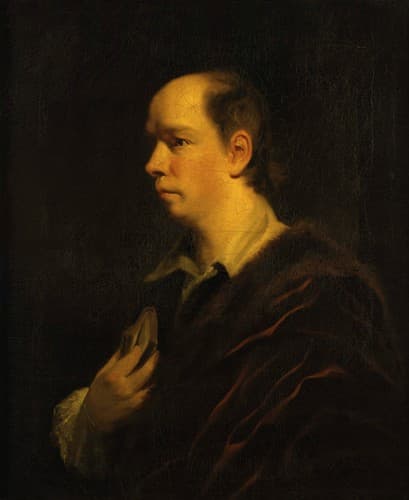
Oliver Goldsmith was a well known Anglo-Irish novelist, playwright, dramatist and poet, who is noted for his novel The Vicar of Wakefield (1766), his pastoral poem The Deserted Village (1770), and his plays The Good-Natur'd Man (1768) and She Stoops to Conquer. He is thought by some to have written the classic children's tale The History of Little Goody Two-Shoes (1765).
Similar books
- The Importance of Being Earnest
Oscar Wilde
4.2 (302k) average on GoodreadsHistoryFeatures witty dialogue, social satire, and humorous misunderstandings.
- Pride and Prejudice
Jane Austen
4.3 (3M) average on GoodreadsHistorical FictionExplores themes of social class, marriage, and initial misjudgments in romantic relationships.
- A Midsummer Night's Dream
William Shakespeare
4.0 (443k) average on GoodreadsFantasyInvolves mistaken identities, romantic complications, and comedic resolution.
- Harry Potter and the Sorcerer's Stone
J.K. Rowling
4.5 (7M) average on GoodreadsFantasyRescued from a miserable life under the stairs, an orphaned boy discovers he's a wizard destined for a magical school, where he uncovers a dangerous secret tied to the dark wizard who murdered his parents.
- The Hunger Games
Suzanne Collins
4.3 (6.4M) average on GoodreadsFantasyIn a future where children fight to the death on live television, Katniss Everdeen volunteers for the arena, turning a death sentence into a fight for survival and a spark of rebellion.
- Nineteen Eighty-Four
George Orwell
4.2 (5.5M) average on GoodreadsFictionWinston Smith dreams of truth and rebellion in a world where Big Brother watches all, but he confronts the terrifying power of a regime that controls not just actions, but thoughts.




Enjoyed the summary?
A summary gives you the shape of the book. The book itself has the detail, the examples and the voice.
Find She Stoops to Conquer on AmazonAs an Amazon Associate, BookBrief earns from qualifying purchases. How we're funded