
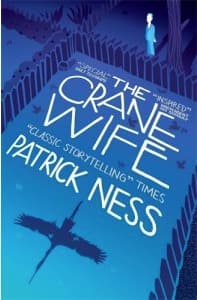
Synopsis
Covers the whole plot, including the ending.
- Difficulty
- Medium
- Pacing
- Moderate
- Mood
- Magical, Romantic, Reflective, Whimsical, Bittersweet
- Read it if
- You enjoy modern retellings of classic fairy tales with a mature, literary bent, focusing on themes of love, transformation, and the magic hidden in everyday life.
- Skip it if
- You prefer fast-paced plots, clear-cut fantasy rules, or a strictly realistic narrative.
The Crane Wife Plot Summary
Covers the whole plot, including the ending.
The Fallen Crane
George Duncan, a middle-aged man living a quiet life running a printing shop in London, wakes one night to noise in his garden. He finds a large white crane, shot with an arrow, struggling on the ground. Despite his shock, George feels compassion. He carefully removes the arrow, cleans the wound, and bandages the bird's wing. He brings the crane inside to recover, giving it water and a safe place. This act of kindness starts a series of changes in George's ordered life, bringing a sense of wonder he had not felt in years.
Kumiko's Arrival
The day after the crane incident, a beautiful and mysterious woman named Kumiko appears at George's printing shop. She speaks English with a slight accent and has a quiet determination. Kumiko says she is looking for work and, despite no obvious printing qualifications, seems skilled at understanding the craft. George, still affected by his encounter with the crane, is drawn to her unusual presence and hires her. Kumiko’s arrival feels connected to the previous night's events, though George cannot say why. Her quiet efficiency and the subtle magic she seems to carry begin to blend into his everyday life, hinting at deeper connections.
The Unspoken Connection
As Kumiko works at the printing shop, a deep, unspoken connection forms between her and George. They often communicate through glances, subtle gestures, and an intuitive understanding. Kumiko shows extraordinary sensitivity to the paper, ink, and printing process, almost as if she feels the stories in the pages. George is increasingly captivated by her quiet strength and the serene beauty she brings to his once drab workplace. Their relationship grows into a tender companionship, built on mutual respect and a growing sense of wonder, even as Kumiko remains private about her past, her presence a constant, gentle mystery.
The Crane's Song
One evening, as George and Kumiko share a quiet moment, Kumiko tells him the ancient Japanese folk tale of 'The Crane Wife.' She tells the story of a man who saves a wounded crane, which later transforms into a beautiful woman and marries him. This woman weaves exquisite cloth from her own feathers but warns her husband never to watch her. Driven by curiosity, he eventually spies on her, discovers her true nature, and she must return to her crane form and fly away. As Kumiko tells the story, George feels an intense familiarity and a deep connection to the narrative, seeing parallels to his recent experience with the wounded crane. The tale is both a beautiful myth and a subtle, poignant warning, hinting at the fragile nature of their growing relationship.
George's Transformation
Under Kumiko's gentle influence and the lingering magic of the crane incident, George changes. His previously rigid, cynical outlook softens, replaced by a new openness to wonder and vulnerability. He starts to notice the beauty in everyday things, appreciating the subtle textures of paper, the light, and the quiet rhythms of life he had long ignored. His interactions with others, including his brusque landlady, Mrs. Hemmings, and his close friend, George's son, Julian, become more genuine. George learns to trust his instincts and embrace the unpredictable, finding joy in the present moment and allowing himself to feel deeply, shedding the emotional armor he had worn for years. This change is a direct result of his encounter with the miraculous.
Julian's Concerns
Julian, George's adult son, sees his father's change with both hope and growing unease. While initially pleased to see George happier, he becomes suspicious of Kumiko. Julian, a pragmatic person, finds Kumiko's mysterious nature and lack of a clear past unsettling. He questions her motives and worries his father is being taken advantage of or is falling for a delusion. Julian's concerns, though out of love for his father, create a rift between them. He tries to subtly investigate Kumiko, seeking logical explanations for her presence and the strange events around George, unknowingly threatening the delicate magic that has taken root in George's life.
The Whispering of Others
While Julian remains skeptical, other characters react to Kumiko in different, often more intuitive ways. Mrs. Hemmings, George's elderly landlady, a woman with a sharp tongue and a keen eye, seems to sense something extraordinary about Kumiko. Though she keeps her usual gruff manner, her interactions with Kumiko show a peculiar respect and understanding, as if she recognizes a kindred spirit or an ancient presence. Other acquaintances and customers at the shop also respond to Kumiko's quiet aura, some finding her captivating, others subtly unnerved. These varied reactions highlight Kumiko's unique, almost otherworldly quality, reinforcing that she is not an ordinary woman and that her presence affects those around her.
The Loom of Feathers
As their bond grows, Kumiko shows increasingly unusual skills in the printing shop. She starts to produce a type of paper unlike anything George has seen—delicate, almost luminous, impossibly thin yet incredibly strong. It seems to shimmer with an inner light and has a texture that subtly evokes feathers. George is mesmerized by her artistry, though he does not question the impossibility of her technique. He notices that Kumiko often works late, her movements precise and almost ritualistic, and that she appears increasingly weary, as if her creative process demands a personal cost. This extraordinary paper is a tangible sign of her unique, magical essence, hinting at the true source of her abilities and the sacrifices she is making.
The Unveiling
Driven by concern for Kumiko's fading energy and a subconscious wish to understand her secrets, George, like the husband in the folk tale, accidentally observes Kumiko working late one night. He sees her engaged in a strange, arduous process, not just making paper but seemingly pulling threads of light and essence from her own being, from her very skin, to create the feather-like material. In a moment of shock, he sees glimpses of her true form—a magnificent white crane, its feathers shimmering, its movements graceful yet strained. This accidental witnessing breaks the delicate illusion between them, confirming the impossible truth of the Crane Wife story. George's discovery, though not malicious, invokes the ancient warning, foreshadowing the inevitable consequence of his intrusion.
The Departure
With her secret exposed, Kumiko's energy fades further, and the unspoken magic that sustained their relationship begins to disappear. She knows she cannot remain with George now that he has seen her true form. A deep sadness settles over them, a quiet acknowledgment of their lost future. Kumiko prepares for her departure, her movements filled with poignant grace. George is heartbroken, filled with regret and a desperate wish to fix things, but he understands that some boundaries, once crossed, cannot be uncrossed. The ancient tale has played out in their modern lives, showing the lasting power of its themes of trust, sacrifice, and the fragility of magical love. He knows he must let her go, even though it breaks his heart.
The Gift of Memory
Before her final departure, Kumiko gives George a lasting gift: not just the memory of their extraordinary love, but a renewed sense of wonder and a deeper understanding of the world's hidden magic. She has opened his eyes to possibilities he never imagined, showing him that the extraordinary can happen in everyday life. She has also left behind the exquisite, feather-like paper, a tangible reminder of their time together and the beauty she brought into his life. Though heartbroken by her absence, George is not empty. He is changed, carrying the imprint of her love and the lessons of her story. He has learned to appreciate the delicate balance between the mundane and the magical, and to live with an open heart, forever changed by his encounter with the Crane Wife.
Life After Kumiko
After Kumiko's departure, George's life resumes, but it is altered. He continues to run his printing shop, but his work is now infused with the quiet magic Kumiko gave him. He handles paper with new reverence, seeing the stories and possibilities within each sheet. His relationship with Julian slowly mends, as Julian comes to understand Kumiko's impact on his father, even if he does not fully grasp the magical elements. George lives with a bittersweet acceptance, cherishing the memories of Kumiko and their shared love. He embodies the lesson that while some magical encounters are fleeting, their transformative power can endure, leaving a permanent mark on the heart and soul, allowing one to see the extraordinary in the ordinary world.
The Crane Wife Characters
George Duncan
Protagonist
A cynical, middle-aged London printer whose life is transformed by a magical encounter.
George Duncan is a man in his fifties, running a small printing shop in London. Before Kumiko, he was set in his ways, cynical, and emotionally guarded, finding solace in routine and the predictable nature of his craft. He had a strained relationship with his son, Julian, and often felt disconnected from the world. His act of compassion towards the wounded crane is an unexpected break from his character, revealing a deeper capacity for empathy and wonder that he had suppressed. He is a quiet observer, initially resistant to change, but ultimately open to the magic that enters his life.
Relationships: Kumiko (Lover, muse, magical catalyst); Julian Duncan (Son, initially estranged, later reconciled); Mrs. Hemmings (Landlady, confidante, observer)
Kumiko
Love Interest / Magical Catalyst
A mysterious, beautiful woman with an otherworldly connection to cranes and paper.
Kumiko is an enigmatic and graceful woman who appears in George's life shortly after he helps the wounded crane. She possesses a quiet strength, an intuitive understanding of printing, and a deep connection to nature and ancient folklore. Her presence brings beauty, wonder, and a sense of the magical into George's mundane existence. She embodies the mythical 'Crane Wife,' sacrificing parts of herself to create extraordinary paper and to share a brief, profound love with George. She is gentle, wise, and carries a quiet sorrow, aware of the impermanence of her human form and her destined return.
Relationships: George Duncan (Lover, recipient of her magic and love)
Julian Duncan
Supporting
George's pragmatic son, initially skeptical and protective of his father.
Julian is George's adult son, a rational and grounded individual who represents the mundane, skeptical world. He is initially pleased by his father's newfound happiness but quickly becomes suspicious of Kumiko, viewing her as a potential threat or a delusion. Julian's actions are driven by a protective love for his father, but his inability to accept the extraordinary creates tension between them. He struggles to reconcile the magical elements of Kumiko's presence with his logical worldview, eventually coming to terms with the profound, if inexplicable, impact she had on George.
Relationships: George Duncan (Father-son, strained but loving); Kumiko (Object of suspicion and concern)
Mrs. Hemmings
Supporting
George's sharp-tongued, observant landlady with an unexpected depth.
Mrs. Hemmings is George's elderly landlady, a seemingly gruff and eccentric woman who frequently offers unsolicited advice and observations. Despite her outwardly abrasive demeanor, she possesses a keen intuition and a surprising capacity for understanding the unusual. She is one of the few characters who seems to intuitively grasp that there is something special about Kumiko, often making oblique comments that hint at a deeper awareness of the world's hidden magic. She acts as a grounded, yet subtly perceptive, witness to George's transformation, often providing moments of dry humor and unexpected wisdom.
Relationships: George Duncan (Landlady-tenant, platonic confidante); Kumiko (Object of her quiet observation and understanding)
The Crane Wife Themes
The Disruptive and Redemptive Power of Love
The central theme explores how love, especially love from an extraordinary encounter, can transform a person's life. George's cynical, predictable existence is broken and rebuilt by his kindness to the crane and his relationship with Kumiko. Love forces him to face his emotional barriers, embrace vulnerability, and rediscover wonder. Even after Kumiko leaves, their love leaves him changed and enriched, showing its lasting impact on his soul and how he sees the world. His initial act of compassion (saving the crane) starts this journey.
“He knew, with a certainty that reached into his bones, that he had lived a different life before her, and that this new life, though tinged with loss, was infinitely richer.”
The Intertwining of Myth and Reality
The novel blurs the lines between ancient folklore and contemporary life. The Japanese tale of 'The Crane Wife' is not just a story Kumiko tells; it becomes George's lived reality. This theme suggests that myths are not just fables but reflections of lasting truths and patterns that can appear unexpectedly. The impossible presence of the crane, Kumiko's mysterious nature, and her feather-like paper all connect the ancient myth to a modern London setting, inviting the reader to consider the magic hidden in the mundane world and the cyclical nature of storytelling and destiny.
“Some stories, he thought, were not just stories. They were maps to places you didn't know you needed to go.”
The Fragility of Trust and the Cost of Curiosity
Based on the traditional 'Crane Wife' story, this theme highlights the delicate balance needed in relationships, especially those involving the extraordinary. Kumiko's love for George depends on his acceptance of her mystery and his trust in her unspoken truth. George's accidental witnessing of her true form, from concern and a human wish to understand, mirrors the husband's fatal curiosity in the folk tale. This act, though not malicious, breaks the sacred boundary and leads to her inevitable departure, showing how even well-meaning curiosity can destroy fragile magic and the deep trust it requires.
“He had looked, and in looking, had broken something that could not be mended.”
Transformation and Self-Discovery
George's journey is one of personal transformation and self-discovery. His encounter with the crane and Kumiko forces him to shed the cynicism and routine he had built around himself. He learns to open his heart, embrace vulnerability, and rediscover a capacity for wonder and joy he thought lost. This transformation is not just about finding love; it is about finding a truer version of himself, one able to see and appreciate the extraordinary in everyday life. Even after Kumiko leaves, the changed George remains, showing the lasting power of his self-discovery.
“He was not the man he had been, and he knew, with a quiet certainty, that he never would be again.”
Plot Devices & Literary Techniques
The Wounded Crane
A literal manifestation of an ancient myth that acts as a catalyst for George's transformation.
The discovery of the wounded crane in George's garden serves as the inciting incident and a direct, tangible link to the 'Crane Wife' myth. It is an impossible event that shatters George's mundane reality, forcing him to act with compassion and opening him up to the extraordinary. This device immediately establishes the magical realism of the story and foreshadows Kumiko's arrival, subtly preparing both George and the reader for the unfolding of a legendary tale in a modern setting. It represents the intrusion of the mythical into the everyday, disrupting routine and initiating profound change.
The Crane Wife Folk Tale
An embedded narrative that functions as both foreshadowing and a structural blueprint for the plot.
The ancient Japanese folk tale of 'The Crane Wife' is not merely referenced; it is recounted within the story by Kumiko herself. This serves as a powerful plot device, acting as both explicit foreshadowing and a structural framework for George and Kumiko's relationship. It clearly lays out the parameters of their love, the warnings, and the inevitable consequences of breaking trust. By presenting the myth directly, the novel invites the reader to anticipate and recognize the parallels as they unfold, deepening the emotional impact when the tragic elements of the folk tale are realized in George's modern life.
Kumiko's Paper
A tangible manifestation of Kumiko's magic, sacrifice, and the beauty of their love.
The exquisite, feather-like paper Kumiko creates in George's shop is a central symbolic and plot device. It is a physical manifestation of her true nature, her sacrifice (as it's implied she draws from herself to create it), and the unique magic she brings into George's life. The paper's impossible delicacy and beauty represent the ephemeral nature of their love and the magic that sustains it. It also serves as the 'proof' of her extraordinary abilities and ultimately, the catalyst for George's accidental discovery of her true form, leading to the story's tragic climax. After her departure, it becomes a lasting memento of their time together.
George's Printing Shop
A setting that symbolizes George's character and becomes a crucible for transformation.
George's printing shop, with its focus on paper, stories, and the meticulous craft of creating, functions as more than just a setting. Initially, it reflects George's ordered, somewhat sterile life. However, with Kumiko's arrival, it transforms into a space where the mundane meets the magical. The act of printing, which involves transforming blank paper into something meaningful, mirrors George's own transformation. It's within these walls that their love blossoms, Kumiko's magic manifests through her paper, and the ancient story is re-enacted, making the shop a crucible for profound personal and supernatural events.
The Crane Wife Quotes
“Love isn't a thing. It's a quality. It's a way of looking at the world, a way of being in it.”
“The world is full of things we don't understand, and most of them are beautiful.”
“There are always two stories. Always. The one you tell, and the one that is true.”
“Sometimes you have to break things to make them new.”
“He knew, with a certainty that chilled him, that he had just seen something impossible.”
“The hardest part of loving someone is knowing when to let them go.”
“Every secret has a weight. Every hidden thing pulls you down.”
“He wanted to believe in the impossible. He just didn't know how.”
“The wind carries stories. If you listen closely, you can hear them.”
“To truly love someone, you have to see them, really see them, even the parts they try to hide.”
“Grief is a landscape you have to walk through, not a door you can close.”
“Sometimes the greatest kindness is to be honest, even if it hurts.”
“The world doesn't care about your plans. It has its own.”
“He found himself wondering how many other miracles he had simply walked past, oblivious.”
Quiz
10 questions on the plot and the characters. Each answer comes with a short explanation.
Question 1
What kind of animal does George Duncan find injured in his garden?
- A blackbird
- A great white crane
- A dove
- An owl
Show answer
B. A great white crane George is woken by a noise and discovers a great white crane in his garden, shot through its wing.
Question 2
What is the name of the beautiful woman who walks into George's shop the day after he helps the crane?
- Sakura
- Aya
- Kumiko
- Yuki
Show answer
C. Kumiko The next day, a beautiful woman named Kumiko walks into George's shop and begins to tell him a story.
Question 3
How is the crane injured when George finds it?
- It has a broken leg
- It is tangled in a net
- It has been shot through its wing by an arrow
- It has fallen from a great height and is dazed
Show answer
C. It has been shot through its wing by an arrow The crane has tumbled to earth, shot through its wing by an arrow, which prompts George to help it.
Question 4
What is George Duncan's occupation?
- A baker
- A bookseller
- A shop owner (implied general shop)
- A gardener
Show answer
C. A shop owner (implied general shop) The book states Kumiko walks into 'his shop,' implying George is a shop owner, though the specific type isn't detailed in the synopsis.
Question 5
What is the primary theme that 'The Crane Wife' celebrates, according to the description?
- The stability of routine
- The disruptive and redemptive power of love
- The importance of solitude
- The beauty of nature's indifference
Show answer
B. The disruptive and redemptive power of love The synopsis explicitly states, 'The Crane Wife is a celebration of the disruptive and redemptive power of love.'
Question 6
How does George's life change after he helps the crane?
- He becomes fearful of nature
- His life is transformed
- He gains a new hobby in bird watching
- He experiences a series of misfortunes
Show answer
B. His life is transformed From the moment he watches it fly away, his life is transformed, setting the stage for the extraordinary events that follow.
Question 7
What literary genre does 'The Crane Wife' belong to, according to the provided information?
- Historical Fiction and Mystery
- Science Fiction and Thriller
- Fantasy and Romance
- Literary Fiction and Drama
Show answer
C. Fantasy and Romance The genre is explicitly stated as 'Fantasy, Romance' in the book's description.
Question 8
The phrase 'The extraordinary happens everyday' suggests what about the novel's tone or perspective?
- It's a straightforward, realistic account of daily life.
- It embraces the magical and unusual as part of the mundane.
- It implies that only rare, grand events are significant.
- It is a cautionary tale against unexpected occurrences.
Show answer
B. It embraces the magical and unusual as part of the mundane. This phrase, combined with the discovery of an injured crane and a magical story, indicates the book's embrace of the fantastical interwoven with everyday life.
Question 9
Based on the synopsis, what is the most significant consequence of George's act of kindness towards the crane?
- He becomes a local hero in his community.
- He is rewarded with financial prosperity.
- It directly leads to his encounter with Kumiko and her story, transforming his life.
- He develops a deep understanding of avian biology.
Show answer
C. It directly leads to his encounter with Kumiko and her story, transforming his life. His act of helping the crane 'transforms his life,' and 'The next day, a beautiful woman called Kumiko walks into his shop and begins to tell him the most extraordinary story,' directly linking the two events.
Question 10
Considering the title 'The Crane Wife' and the plot summary, what traditional folklore element is this story likely drawing upon?
- A trickster god who plays pranks on humans.
- A tale of a magical animal transforming into a human spouse.
- A prophecy foretelling a great natural disaster.
- A quest for a hidden magical artifact.
Show answer
B. A tale of a magical animal transforming into a human spouse. The title 'The Crane Wife' directly references a well-known Japanese folktale where a crane, saved by a man, transforms into a woman and marries him.
The Crane Wife FAQ
What is the central premise of 'The Crane Wife'?
The story centers on George Duncan, a printer in London, whose mundane life is upended after he helps a wounded white crane in his garden. This act of kindness leads to the arrival of Kumiko, a mysterious Japanese woman who claims to be the crane and begins a transformative, magical relationship with George, challenging his perceptions of reality and love.
Who are the main characters in the book?
The primary characters are George Duncan, a middle-aged printer who is kind but somewhat lost; Kumiko, the enigmatic woman who claims to be the crane; and George's mother, who provides a grounded, often humorous counterpoint to the unfolding magic. Other significant figures include George's friend and employee, Ben, and his ex-wife, Amanda.
How does the traditional Japanese folk tale 'The Crane Wife' influence this novel?
Ness's novel reimagines the classic tale where a man marries a crane in human form, who weaves beautiful cloth from her own feathers but must leave if her true nature is discovered. The book explores themes of sacrifice, hidden identities, and the fragility of love when secrets are kept, mirroring the original's core emotional conflicts while updating its setting and character motivations.
What kind of transformation does George undergo throughout the story?
George begins as a man living a life of quiet routine and unspoken melancholy, still somewhat adrift after his divorce. Through his relationship with Kumiko and the magical events, he becomes more open, courageous, and capable of deep, unconditional love, ultimately finding a profound connection and purpose that he lacked before.
What role does George's printing shop play in the narrative?
George's printing shop, with its antique presses and the tactile nature of its work, serves as a grounded, real-world contrast to the magical elements introduced by Kumiko. It also becomes a place where stories are literally made and preserved, mirroring the way George's own story is being written and transformed by extraordinary events.
Are there any subtle clues about Kumiko's true nature before her explicit revelation?
Yes, Kumiko exhibits several subtle crane-like traits, such as her unusual elegance, her discomfort with confined spaces, her preference for silence, and her occasional fleeting expressions of wildness or longing. Her precise, almost bird-like movements and her deep connection to nature also hint at her non-human origins.
What is the significance of the arrows in both the crane's wing and Kumiko's story?
The arrow in the crane's wing is the catalyst for George's initial act of kindness and the entire story. Symbolically, arrows represent injury, but also direction and fate. The repeated motif suggests that Kumiko carries a deep, internal wound or burden from her past, which is intrinsically linked to her identity as a crane and her reason for seeking George.
How does the book connect the magical realism with the mundane aspects of London life?
The novel seamlessly blends the extraordinary with the everyday by grounding the magical events in ordinary settings like George's suburban garden, his printing shop, and London streets. The characters' reactions, especially George's initial disbelief and eventual acceptance, normalize the magic within their familiar world, making the fantastical feel genuinely possible.
Is there a symbolic meaning behind Kumiko's weaving and the 'cloth' she creates?
Kumiko's 'weaving' is metaphorical, representing the stories she tells and the way she intricately reweaves the fabric of George's life with magic and love. It symbolizes the creation of beauty and meaning from sacrifice, much like the original crane wife's weaving from her own feathers, suggesting that true connection requires giving a part of oneself.
How does George's past relationship with Amanda impact his ability to connect with Kumiko?
George's divorce from Amanda left him emotionally guarded and somewhat cynical about love, making him initially hesitant to embrace the extraordinary. However, the pain of that past relationship also makes him more appreciative of the profound and unconditional love Kumiko offers, allowing him to ultimately open his heart more fully than before.
What psychological journey does Kumiko undertake as she adapts to human life?
Kumiko experiences a complex psychological journey, grappling with the limitations and complexities of human emotions and social interactions. She struggles with her hidden nature, the pain of her past, and the sacrifice involved in her love for George, oscillating between her wild, free spirit and her desire for human connection and belonging.
How does the novel explore themes of sacrifice and selflessness through its characters?
The book deeply explores sacrifice through Kumiko, who gives up her crane form and perhaps a part of her essence for love, mirroring the original tale. George also makes significant sacrifices, letting go of his mundane life and embracing the unknown, demonstrating that true love often demands vulnerability and a willingness to give without expectation.
What is the psychological impact of knowing a loved one has a secret, as George experiences?
George experiences a mix of wonder, confusion, and a subtle anxiety knowing Kumiko's true nature. This secret creates a unique dynamic of trust and vulnerability, where he must choose to believe in the unbelievable and accept the unknown, highlighting the psychological challenge of loving someone who is fundamentally 'other.'
Is Kumiko's presence in George's life meant to be interpreted literally or as a metaphor for profound love?
The novel invites both interpretations. While the magical elements are presented literally within the story's world, Kumiko can also be seen as a powerful metaphor for the transformative, disruptive, and often unbelievable nature of true love. Her story emphasizes how love can make the impossible seem real and utterly change one's perception of the world.
Does the ending provide a definitive closure, or is it open to interpretation regarding George and Kumiko's future?
The ending offers a sense of profound resolution and peace for George, suggesting he has found a lasting and extraordinary love. While Kumiko's ultimate fate or the specifics of their future are left somewhat open to the reader's imagination, the narrative emphasizes the enduring power of their connection, implying a hopeful, if unconventional, continuation of their story.
How does the book challenge conventional notions of reality and belief?
The book consistently challenges reality by presenting magical events as integral to the characters' lives, forcing George and the reader to question what is possible. It suggests that belief, particularly in love and the extraordinary, can reshape one's perception of the world, implying that reality is more expansive than typically understood.
What is the overarching message about love that 'The Crane Wife' conveys?
The novel conveys that love is a powerful, transformative force that can disrupt the mundane, demand sacrifice, and transcend conventional boundaries of reality and species. It suggests that true love requires acceptance of the 'other,' a willingness to embrace the unknown, and a belief in the extraordinary nature of connection, ultimately leading to profound personal growth and fulfillment.
How does the setting of modern London interact with the ancient folk tale elements?
The juxtaposition of modern London with the ancient folk tale elements creates a unique atmosphere, highlighting the timelessness of the story's themes. It suggests that magic and myth can still exist and thrive in contemporary urban environments, bridging the gap between an old, mystical world and a new, often cynical one, making the extraordinary feel intimately present.
About the author

Patrick Ness is a British author known for his contributions to young adult fiction. His notable works include "A Monster Calls," "The Knife of Never Letting Go," "The Ask and the Answer," "Monsters of Men," "The Rest of Us Just Live Here," and "More Than This." Ness's writing often explores complex themes and emotional depth, earning him recognition in the literary community.
Similar books
- Uprooted
Naomi Novik
4.1 (167k) average on GoodreadsFantasyBoth are literary fantasies with strong fairytale influences and a focus on magical romance.
- The Ocean at the End of the Lane
Neil Gaiman
4.0 (481k) average on GoodreadsFantasyExplores the blend of mundane reality with subtle, ancient magic and a sense of nostalgic wonder.
- Jonathan Strange & Mr Norrell
Susanna Clarke
3.8 (198k) average on GoodreadsFantasyFeatures a unique, literary voice and a slow-burn narrative rich in atmosphere and magical realism.
- Kafka on the Shore
Haruki Murakami
4.1 (306k) average on GoodreadsLiterary FictionNess's approach is less surreal and more grounded in emotional realism, focusing intensely on the internal landscape of its protagonist, whereas Murakami often uses myth to explore broader philosophical questions. Ness illuminates the very personal experience of love and loss.
- The Time Traveler's Wife
Audrey Niffenegger
4.0 (1.6M) average on GoodreadsFantasyNess's narrative prioritizes the internal transformation of the mundane individual (George) in response to the extraordinary, rather than focusing solely on the mechanics or implications of the fantastical element itself. It highlights the quiet miracles and sacrifices in human relationships.
- Harry Potter and the Sorcerer's Stone
J.K. Rowling
4.5 (7M) average on GoodreadsFantasyRescued from a miserable life under the stairs, an orphaned boy discovers he's a wizard destined for a magical school, where he uncovers a dangerous secret tied to the dark wizard who murdered his parents.





Enjoyed the summary?
A summary gives you the shape of the book. The book itself has the detail, the examples and the voice.
Find The Crane Wife on AmazonAs an Amazon Associate, BookBrief earns from qualifying purchases. How we're funded