

Core Idea
- Difficulty
- Medium
- Read it if
- You are a fan of Robert Greene's work and want a daily dose of his strategic wisdom, or if you are looking for practical, actionable advice on power, human nature, and self-mastery in a digestible format.
- Skip it if
- You are new to Robert Greene and prefer a more in-depth, single-topic exploration, or if you find his Machiavellian approach to human interaction cynical or manipulative.
Key Takeaways from The Daily Laws
Master Your Inner Citadel
Achieve self-control by understanding and managing your emotional responses.
Greene consistently stresses that controlling emotions is the basis of strategic thinking and action. Uncontrolled emotions—fear, anger, excitement, even love—can cloud judgment, lead to quick decisions, and show weaknesses. By taking a detached view of one's feelings, people can stop these emotions from controlling their reactions to outside events. This does not mean suppressing emotions completely, but acknowledging them without letting them take over rational thought. The goal is to keep an inner balance, an 'inner fortress,' that stays steady despite outside changes, allowing for planned and deliberate responses.
“The first step in mastering your environment is to master yourself. Your emotions are the greatest impediment to power.”
In the book: Greene frequently references historical figures like Napoleon or Machiavelli, whose strategic brilliance often stemmed from their ability to remain cool and calculating under immense pressure, not letting personal feelings interfere with their objectives.
Try this: Practice mindfulness and self-awareness daily. When confronted with a triggering situation, pause before reacting. Ask yourself: 'What emotion am I feeling? Is this reaction serving my long-term goals?' Develop a habit of journaling to observe emotional patterns without judgment.
Related ideas: emotional-intelligence, self-awareness, stoicism
The Art of Calculated Seduction
Understand human desires and vulnerabilities to influence and persuade subtly.
Influence, in Greene's terms, goes beyond romance; it is a strong tool for affecting any area. It involves understanding human psychology, identifying unspoken desires, insecurities, and needs, and then skillfully using them. The key is indirectness: never showing your true intentions directly, but instead creating an atmosphere of appeal, mystery, and pleasure that draws others in. This needs patience, observation, and the ability to adjust your approach to the specific person or group. It is about creating an experience, a story, that makes your target feel special, understood, and ultimately, ready to follow your lead.
“Seduction is a game of psychology, not beauty, and it is always played through indirection and charm.”
In the book: Greene details historical figures like Cleopatra, whose legendary power was often attributed to her masterful use of seduction to sway powerful men like Caesar and Antony, not through force, but through charm and psychological manipulation.
Try this: In professional settings, identify the core desires of your colleagues or clients. Instead of direct demands, frame your proposals in terms of how they fulfill those desires. Cultivate an air of intrigue and listen more than you speak to understand underlying motivations.
Related ideas: influence, persuasion, psychology-of-desire
Cultivate an Aura of Power
Project an image of authority and competence through deliberate actions and presence.
Power is often perceived more than it is real. Greene argues that developing a powerful presence requires careful attention to one's reputation, behavior, and planned actions. This means consistently showing competence, self-control, and a clear sense of purpose. It is about managing perceptions: appearing decisive, even when unsure; keeping a sense of mystery, never showing all your cards; and strategically using silence and absence to boost your presence. A strong presence discourages opponents, attracts allies, and can make others more cooperative, often without needing direct conflict. It is a psychological tool that, once established, can precede and amplify your actual abilities.
“Your reputation is the cornerstone of your power. Through it alone, you can intimidate and win.”
In the book: The concept of 'The Prince' in Machiavelli's writings, which Greene frequently references, embodies the idea of a ruler who carefully manages public perception to maintain and expand power, often through calculated displays of strength and wisdom.
Try this: Dress impeccably, speak concisely and with conviction, and avoid excessive emotional displays. In meetings, maintain strong eye contact and a composed posture. Never complain or make excuses. Let your actions and results speak for themselves, reinforcing your reputation.
Related ideas: reputation-management, gravitas, nonverbal-communication
Know Your Enemy (and Yourself)
Gain strategic advantage by understanding human nature, both yours and others'.
Greene suggests that all human interactions follow predictable patterns of behavior based on basic human nature. To navigate the world well, one must become a keen observer and analyst of these patterns, in others and, importantly, in oneself. Understanding your own biases, insecurities, and emotional triggers is the first step to avoiding self-sabotage. At the same time, by studying the motivations, fears, and weaknesses of others, you can anticipate their actions, use their weaknesses, and avoid being manipulated. This analytical approach turns social interactions into a strategic game, where knowledge is the most valuable asset for power and survival.
“The greatest danger you face comes from within. You must know your own dark side before you can truly know others'.”
In the book: Greene often cites Sun Tzu's 'Art of War,' which emphasizes the critical importance of knowing both yourself and your enemy to achieve victory. He applies this ancient wisdom to modern social and professional contexts, illustrating how understanding motivations drives strategic success.
Try this: Conduct a brutally honest self-assessment of your weaknesses and blind spots. When dealing with others, observe their non-verbal cues, listen to what they don't say, and analyze their past behavior to predict future actions. Don't take things at face value.
Related ideas: human-psychology, self-reflection, strategic-thinking
Learn to Play the Long Game
Prioritize patience and strategic foresight over immediate gratification.
In a world focused on quick results, Greene supports the value of patience and long-term strategic planning. He argues that many failures come from not being able to delay satisfaction, rushing into actions, or showing intentions too soon. The 'long game' involves setting ambitious, distant goals and then carefully planning a series of indirect steps to reach them. This often means enduring temporary setbacks, pretending to be weak, or waiting for the right moment to act. It requires great self-control and a detached view of immediate emotional responses, allowing one to manage situations over time instead of reacting impulsively.
“Impatience is a great danger. It can lead to errors and expose your true intentions.”
In the book: Greene frequently references historical campaigns and political maneuvers where leaders like Otto von Bismarck patiently maneuvered for years, setting traps and exploiting rivalries, to achieve their ultimate strategic objectives.
Try this: Before embarking on any significant endeavor, map out a multi-stage plan, considering potential obstacles and alternative paths. Practice delaying your reactions and responses. For example, when faced with a challenge, force yourself to wait 24 hours before making a decision.
Related ideas: strategic-planning, patience, foresight
Mastery Through Deliberate Practice
Achieve true expertise by dedicating years to focused, intensive learning and application.
Greene rejects the idea of instant genius, stating that true skill in any field comes from relentless, focused practice over many years. This is not just about putting in hours, but about doing focused, challenging work that pushes one beyond their comfort zone. It involves deep learning, getting guidance from mentors, seeing failure as a chance to learn, and constantly improving one's skills. The path to skill is often solitary and demanding, requiring an almost obsessive dedication to one's craft. Greene encourages readers to find their 'life's task' and commit to the hard journey of becoming an expert, understanding that the greatest rewards come from overcoming significant challenges.
“Mastery is not a question of innate talent, but of deep and sustained immersion, of following the path of resistance.”
In the book: Greene's book 'Mastery' is replete with examples, such as Charles Darwin's painstaking, decades-long observation and documentation, or Leonardo da Vinci's relentless curiosity and experimentation across disciplines, all demonstrating the process of profound mastery.
Try this: Identify a skill you want to master. Dedicate a specific amount of time each day to deliberate practice, focusing on your weakest areas. Seek out mentors and actively solicit feedback. Embrace challenging projects that push your current capabilities.
Related ideas: deliberate-practice, expertise, skill-acquisition
Beware of Toxic People
Protect your energy and focus by identifying and disengaging from destructive individuals.
Greene is clear about the harmful effect of difficult people on one's life and goals. He urges readers to develop sharp observation skills to identify people who drain energy, manipulate, complain constantly, and other destructive personality types. These individuals, whether knowingly or not, try to take your time, attention, and emotional resources, often through drama, negativity, or subtle sabotage. The key is not to try and 'fix' them, but to recognize their patterns and strategically keep your distance. Protecting your mental and emotional space is essential for staying focused, creative, and healthy, allowing you to direct your energy towards productive efforts.
“There are people who will infect you with their misery and drain your energy. Learn to identify and cut them off.”
In the book: Greene often provides archetypes of toxic individuals—the 'Passive Aggressive,' the 'Envious,' the 'Tyrant'—and illustrates through historical anecdotes how prolonged association with such figures can lead to personal and professional downfall.
Try this: Regularly evaluate your social circle and professional relationships. If someone consistently leaves you feeling drained or negative, establish clear boundaries or, if necessary, sever ties. Learn to say 'no' without guilt.
Related ideas: boundaries, negative-influence, self-preservation
Embrace Adversity as Opportunity
Transform challenges and failures into sources of strength and strategic advantage.
Greene sees challenges not as obstacles to avoid, but as necessary tests for growth and resilience. He advocates for a mindset that actively seeks to find lessons and opportunities in setbacks, failures, and difficult situations. True power, he suggests, is not found in a life without challenges, but in the ability to face them directly, adapt, and become stronger and wiser. This involves developing mental toughness, refusing to feel sorry for oneself, and strategically re-framing negative experiences as valuable learning curves. Challenges, when accepted, reveal hidden strengths and force innovative solutions that might otherwise remain dormant.
“Adversity is not a curse, but a disguised blessing. It forces you to adapt, innovate, and reveal your true strength.”
In the book: Greene frequently highlights figures like Abraham Lincoln, who faced immense personal and political failures throughout his life but used each setback to refine his character, leadership, and strategic thinking, ultimately leading him to the presidency and saving the Union.
Try this: When faced with a setback, resist the urge to blame or despair. Instead, analyze what went wrong, identify key lessons, and brainstorm creative solutions. View every challenge as a training exercise for your resilience and problem-solving skills.
Related ideas: resilience, growth-mindset, problem-solving
Cultivate Social Intelligence
Navigate complex social landscapes by understanding unspoken rules and human motivations.
Social intelligence, for Greene, is the ability to see and understand the subtle, often unspoken, aspects of human interaction. It means looking beyond surface conversations to understand underlying motivations, power structures, and emotional currents. This skill allows one to anticipate reactions, avoid mistakes, and effectively influence others without direct demands. It is about noticing non-verbal cues, understanding group psychology, and adjusting one's behavior to different social situations. Developing this intelligence changes social interactions from confusing complexities into understandable systems, allowing one to move smoothly and strategically through any human environment.
“The ability to read people, to understand their unspoken desires and fears, is the most valuable social skill you can possess.”
In the book: Greene often refers to historical courtiers and diplomats who thrived in complex political environments by mastering the art of reading intentions, navigating rivalries, and subtly influencing powerful figures through keen social observation.
Try this: Practice active listening, paying attention not just to words, but to tone, body language, and context. Observe social hierarchies and unspoken rules in new environments before acting. Ask open-ended questions to uncover deeper motivations.
Related ideas: social-dynamics, nonverbal-communication, empathy
Maintain an Element of Mystery
Keep others guessing about your true intentions and capabilities to enhance your power.
Greene advises against revealing too much about oneself, one's plans, or one's abilities. A bit of mystery keeps others engaged, curious, and slightly off-balance, preventing them from fully anticipating your moves or finding your weaknesses. When people know everything about you, they tend to take you for granted, and your power lessens. By carefully controlling the information you share, you maintain an unpredictable and deep presence, making you more formidable and interesting. This does not mean being deceptive, but rather being strategic in what you choose to share, fostering an image of hidden power and unused potential.
“Too much familiarity breeds contempt. Keep people guessing, and you keep them intrigued and slightly intimidated.”
In the book: Greene cites historical examples like Queen Elizabeth I, who famously used ambiguity and strategic silence to maintain control over her court and foreign powers, always keeping her true intentions veiled.
Try this: Avoid oversharing on social media or in casual conversations. In professional settings, present your ideas with confidence but don't reveal all your tactical plans upfront. Let your actions speak louder than your words, and allow others to wonder about your next move.
Related ideas: unpredictability, strategic-silence, allure
The Daily Laws Quotes
“Every day, you must fight for your mind, for the ability to direct your attention and thoughts, to not be a slave to the random images and desires that come your way.”
“The feeling that you are a victim of circumstances is a poison that will slowly eat away at your ambition and will to act.”
“True learning is not about accumulating facts, but about transforming yourself.”
“Your greatest power is your ability to choose your attitude in any given set of circumstances.”
“The greatest danger you face is not failure, but succumbing to the comfort of the familiar.”
“When you are constantly reacting to others, you lose your own center and become a pawn in their games.”
“The secret to mastery is not genius, but endless, focused practice.”
“Never mistake activity for accomplishment. Focus on what truly moves you forward.”
“The world is not waiting for you to be perfect. It's waiting for you to be real.”
“Your character is revealed not in how you start, but in how you finish.”
“To conquer yourself is the greatest of all victories.”
“Observe people as if they were specimens. Without judgment, without emotion, just pure observation.”
“Learn to suffer. There is no growth without some form of pain or discomfort.”
“Your biggest enemy is not others, but your own emotionality, your impatience, your lack of self-control.”
Quiz
10 questions on the main ideas. Each answer comes with a short explanation.
Question 1
According to the description of 'The Daily Laws,' what is the primary purpose of the 'Daily Law' featured each day?
- To provide a historical anecdote for context.
- To offer a prescription that readers cannot afford to ignore in the battle of life.
- To summarize the previous day's lesson.
- To introduce a new philosophical concept.
Show answer
B. To offer a prescription that readers cannot afford to ignore in the battle of life. The book description explicitly states, 'Each day features a Daily Law as well—a prescription that readers cannot afford to ignore in the battle of life.'
Question 2
Which of Robert Greene's books are the entries in 'The Daily Laws' drawn from?
- Only 'The 48 Laws of Power' and 'The Art of Seduction'.
- His five books, plus never-before-published works.
- Only 'Mastery' and 'The Laws of Human Nature'.
- Exclusively new material written for this book.
Show answer
B. His five books, plus never-before-published works. The description clearly states that the entries are 'drawn from his five books, plus never-before-published works.'
Question 3
According to the book description, how often should 'The Daily Laws' be read to achieve its intended effect?
- Once a week, for reflection.
- Every day.
- Only when facing a specific challenge.
- Occasionally, as a reference.
Show answer
B. Every day. The text directly asks, 'The secret: Read this book every day.'
Question 4
The book organizes its content around major monthly themes. Which of the following is NOT listed as one of these themes?
- Seduction
- Finance
- Creativity
- Toxic People
Show answer
B. Finance The listed themes include power, seduction, persuasion, strategy, human nature, toxic people, self-control, mastery, psychology, leadership, adversity, or creativity. Finance is not mentioned.
Question 5
What is the intended benefit of the 'easy-to-digest lesson that will only take a few minutes to absorb' each day?
- To allow readers to quickly move on to other daily tasks without deep thought.
- To make the wisdom accessible and manageable for daily study, as suggested by Leo Tolstoy.
- To replace the need for reading Robert Greene's full-length books.
- To provide a superficial overview without requiring practical application.
Show answer
B. To make the wisdom accessible and manageable for daily study, as suggested by Leo Tolstoy. The daily, concise format is designed for 'daily study,' a concept supported by the quote from Leo Tolstoy, emphasizing the accessibility and consistency of learning.
Question 6
The description refers to Robert Greene as the 'consigliere to millions.' What does this term imply about his role for readers?
- He provides legal advice to his readers.
- He is a trusted advisor offering strategic guidance and wisdom.
- He acts as a personal assistant to his most dedicated followers.
- He is a financial consultant helping with wealth management.
Show answer
B. He is a trusted advisor offering strategic guidance and wisdom. A 'consigliere' is typically an advisor, especially one who offers counsel and strategy, often in a position of trust, aligning with Greene's role as an expert on power and strategy.
Question 7
Leo Tolstoy's quote, 'Daily study is necessary for all people,' is included to support which aspect of 'The Daily Laws'?
- The breadth of topics covered in the book.
- The importance of consistent, everyday engagement with wisdom and learning.
- The historical context of the laws presented.
- The academic rigor of Robert Greene's research.
Show answer
B. The importance of consistent, everyday engagement with wisdom and learning. The quote directly follows the statement 'The secret: Read this book every day,' emphasizing the value of daily, consistent study for personal growth and destiny seizing, which is central to the book's premise.
Question 8
The description positions 'The Daily Laws' as a 'Rosetta stone for internalizing the many lessons that fill Greene’s books.' What specific challenge does this metaphor suggest the book aims to solve for readers of Greene's other works?
- The difficulty in finding physical copies of his earlier books.
- The challenge of translating Greene's complex historical examples into modern applications.
- The difficulty in fully grasping, remembering, and applying the vast amount of strategic wisdom from his extensive works.
- The problem of identifying which of his books to read first.
Show answer
C. The difficulty in fully grasping, remembering, and applying the vast amount of strategic wisdom from his extensive works. A Rosetta Stone helps decipher and understand complex languages or texts. In this context, it implies that 'The Daily Laws' provides a key to better comprehending, remembering, and integrating the broad and deep lessons from Greene's larger body of work into daily life.
Question 9
Given the book's stated goal to 'help you seize your destiny' and the focus on themes like power, strategy, and self-control, what core belief about individual agency and self-improvement does 'The Daily Laws' implicitly promote?
- That destiny is predetermined and largely unchangeable by individual effort.
- That continuous self-education and strategic application of wisdom can significantly shape one's life outcomes.
- That external circumstances and luck are the primary determinants of success.
- That only those in positions of existing power can truly 'seize their destiny.'
Show answer
B. That continuous self-education and strategic application of wisdom can significantly shape one's life outcomes. The entire premise of the book, with its daily lessons, practical laws, and themes of mastery and self-control, strongly suggests that individuals can actively influence and 'seize their destiny' through consistent learning and strategic action.
Question 10
The description highlights that 'The Daily Laws' includes 'never-before-published works.' What is the strategic implication of including this new material in a daily devotional drawn primarily from existing books?
- It suggests that Robert Greene has shifted his focus entirely to new philosophical areas.
- It serves as an incentive for existing fans, offering fresh insights and deeper dives into his established frameworks.
- It indicates a departure from his previous writing style and thematic concerns.
- It implies that the previously published works were incomplete without these additions.
Show answer
B. It serves as an incentive for existing fans, offering fresh insights and deeper dives into his established frameworks. For an author with a dedicated following, including 'never-before-published works' alongside compiled wisdom is a strong draw, providing new value and further enriching the established themes for readers already familiar with his previous books, making it 'More than just an introduction for new fans.'
The Daily Laws FAQ
What is 'The Daily Laws' about?
'The Daily Laws' is a daily devotional by Robert Greene, offering a page of refined wisdom for each day of the year. It draws from his five bestselling books and includes never-before-published works, designed to help readers internalize lessons on power, strategy, human nature, and more.
Does 'The Daily Laws' offer practical advice for everyday life?
Yes, each day features a 'Daily Law' which is a prescription for readers to apply in their lives. The monthly themes, such as self-control, leadership, and creativity, are designed to provide actionable insights for personal growth and strategic thinking.
How is 'The Daily Laws' different from Robert Greene's other books?
Unlike his other extensive works, 'The Daily Laws' condenses Greene's core wisdom into concise, daily lessons. It serves as a 'Rosetta stone' for understanding and internalizing the themes from his larger books, making his teachings accessible in a few minutes each day.
What is a 'Daily Law' as presented in the book?
A 'Daily Law' is a specific prescription or piece of advice offered each day within the book. These laws are meant to be direct, actionable guidance that readers can apply to navigate challenges and achieve their goals in various aspects of life.
Who should read 'The Daily Laws'?
'The Daily Laws' is ideal for anyone seeking to be more powerful, in control, or excel in their field. It's beneficial for both new fans looking for an introduction to Robert Greene's work and existing readers wanting to deepen their understanding and daily application of his principles.
What are some of the monthly themes covered in 'The Daily Laws'?
The book organizes its daily lessons around major monthly themes such as power, seduction, persuasion, strategy, human nature, toxic people, self-control, mastery, psychology, leadership, adversity, and creativity. Each month focuses on a different area of personal and strategic development.
Is 'The Daily Laws' suitable for someone new to Robert Greene's work?
Absolutely. While it complements his other books, 'The Daily Laws' is designed to be an excellent introduction for new readers. Its concise, daily format makes Greene's complex ideas digestible and provides a foundational understanding of his core philosophies.
Does reading 'The Daily Laws' every day actually help?
Yes, the book explicitly states that daily study is the secret to internalizing its lessons and achieving greater power and control. By dedicating a few minutes each day, readers can consistently absorb and apply the wisdom, fostering long-term personal and strategic development.
What does Robert Greene mean by 'seize your destiny'?
To 'seize your destiny' in the context of 'The Daily Laws' means to actively take control of your life's direction and outcomes. Through understanding and applying the principles of power, strategy, and human nature, readers are encouraged to shape their future rather than passively letting it unfold.
About the author

Robert Greene is an American author known for his works on strategy, power, and human behavior. His notable books include The 48 Laws of Power, Mastery, The Art of Seduction, The 33 Strategies of War, The Daily Laws, and The Laws of Human Nature, which explore themes of manipulation, influence, and personal development. Greene's writing combines historical examples with practical advice, appealing to a wide audience interested in self-improvement and strategic thinking.
Similar books
- The 48 Laws of Power
Robert Greene
4.2 (79k) average on GoodreadsBusinessThe foundational text from which many daily lessons are drawn, offering in-depth case studies for each law.
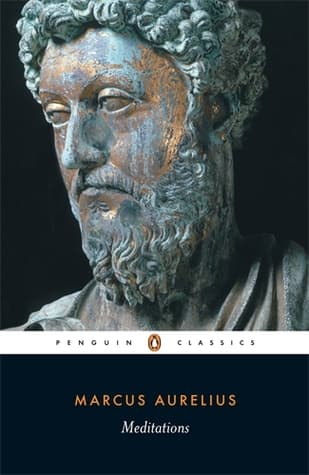
- Meditations
Marcus Aurelius
4.2 (124k) average on GoodreadsLeadershipA classic daily philosophical guide for self-mastery, inner strength, and navigating life's challenges, though from a Stoic perspective.
- Atomic Habits: An Easy & Proven Way to Build Good Habits & Break Bad Ones
James Clear
4.3 (126k) average on GoodreadsBusinessFocuses on the power of small, consistent actions to build mastery and achieve long-term goals, aligning with the daily practice theme.
- The 7 Habits of Highly Effective People: Powerful Lessons in Personal Change
Stephen R. Covey
4.1 (524k) average on GoodreadsBusinessCovey emphasizes character ethics, proactive behavior, and win-win solutions, focusing on internal principles and interdependent success. Greene's work often presents a more competitive, sometimes adversarial, perspective on power and human relationships, emphasizing self-preservation and strategic maneuvering rather than collaborative efforts. While Covey aims for effectiveness through integrity, Greene often suggests effectiveness through calculated influence and understanding power structures, which can sometimes be perceived as amoral.
- The Diary of a Young Girl
Anne Frank
4.2 (2.7M) average on GoodreadsBiographyDuring the Nazi occupation, a teenage girl's diary, written from a secret annex, shares observations on humanity, hope, and the wait for freedom.
- Twisted 1. Twisted love
Ana Huang
3.7 (1.7M) average on GoodreadsA quiet billionaire with a difficult past finds his guarded heart opening to the woman he must protect, but their growing passion uncovers dangerous secrets and a shared, traumatic history.




Enjoyed the summary?
A summary gives you the shape of the book. The book itself has the detail, the examples and the voice.
Find The Daily Laws on AmazonAs an Amazon Associate, BookBrief earns from qualifying purchases. How we're funded