

Synopsis
Covers the whole plot, including the ending.
- Difficulty
- Medium
- Pacing
- Moderate
- Mood
- Dark, Suspenseful, Psychological, Terrifying
- Read it if
- You enjoy psychological thrillers with a supernatural twist, Stephen King's exploration of the author-creation relationship, or stories about doppelgängers and split personalities.
- Skip it if
- You dislike graphic violence, find stories about mental breakdown unsettling, or prefer purely realistic thrillers without fantasy elements.
The Dark Half Plot Summary
Covers the whole plot, including the ending.
The Discovery and The Tombstone
When nine-year-old Thad Beaumont suffers from severe headaches and strange visions, doctors discover a growth in his brain. During surgery, they find not a tumor, but the remains of an eye and teeth—the parasitic twin Thad absorbed before birth. Doctors remove the mass, and Thad's mother, Helga, buries it in a pet cemetery, naming the grave 'George Stark.' Thad represses this traumatic event, though it subtly affects his future.
The Pen Name's Demise
Decades later, Thad Beaumont is a successful, acclaimed literary novelist, and also a popular author of violent thrillers under the name George Stark. After a journalist, Fred Clawson, threatens to reveal his dual identity, Thad and his agent decide to get ahead of the story. They stage a mock funeral for George Stark, complete with a New York Times obituary and a photoshoot for People magazine, where Thad poses with a prop tombstone engraved with Stark's name. This public 'death' is meant to free Thad from his pulp-fiction past.
The Rebirth of Stark
Soon after the staged funeral, a series of brutal murders begins. The first victim is Fred Clawson, the journalist who tried to expose Thad. The scene is gruesome, and the killer leaves a message in blood: 'The sparrows are flying again.' Sheriff Alan Pangborn investigates, and fingerprints at the scene are identified as Thad Beaumont's. However, Thad has an alibi. Thad does not know that the symbolic 'death' of George Stark has somehow given the parasitic twin a physical form, bringing him to life with murderous intent.
Stark's Vengeance Unfolds
George Stark, now a real, malicious entity, continues his killing spree. He murders Homer Gamache, Thad's literary agent, and later Rick Cowley, the photographer for People magazine, always leaving Thad's fingerprints and the 'sparrows' message. Stark is a physically imposing figure, dressed in black leather, driven by rage and a need to exist. He uses a straight razor, inflicting horrific wounds. His goal is to force Thad to write under the Stark name again and eliminate anyone who gets in his way.
Thad's Growing Fear and Connection
As the murders increase, Thad is repeatedly questioned by Sheriff Pangborn. Despite the fingerprint evidence, Pangborn begins to suspect something stranger is happening due to Thad's genuine confusion and clear alibis. Thad starts having vivid, disturbing dreams and visions, feeling Stark's presence and hearing his thoughts. He realizes that Stark is not just an outside threat but a part of him, a dark reflection. This connection terrifies Thad, especially when Stark begins sending menacing messages to his wife, Liz, and their twin children, William and Matthew, subtly threatening their safety.
The Confrontation at the Lake House
Stark, after brutally murdering pathologist Dr. Vinnie Frank and a deputy, drives toward Thad's secluded lake house in Ludlow, Maine, where Thad, Liz, and the children are staying. He plans to force Thad to resume writing as George Stark, believing his existence depends on Thad's creative work. Stark reveals his decaying physical state, which he blames on Thad's refusal to write for him. He confronts Thad, demanding cooperation and threatening his family if he refuses. Thad's psychological torment intensifies as he faces the monstrous reality of his parasitic twin.
Liz's Struggle and the Children's Danger
Liz Beaumont, at first doubtful of Thad's claims about a living pseudonym, faces the terrifying truth when Stark breaks into their lake house. She tries to protect her twin sons, William and Matthew. Stark, wanting to fully replace Thad, tries to manipulate and harm the children, sensing their vulnerability and connection to Thad. Liz's desperate efforts to shield her family show the threat Stark poses, not just to Thad's life, but to his entire identity.
The Sparrows' Arrival
As the confrontation at the lake house grows, a strange event occurs: hundreds, then thousands, of sparrows gather around the property. These are not ordinary birds; they have bright, malevolent eyes and an almost supernatural intelligence. Stark reveals that these sparrows are his 'familiars,' his connection to the world, drawn to him and serving as his eyes and ears. Their presence creates a claustrophobic and menacing atmosphere, signaling the climax of Stark's terror.
The Final Battle and Thad's Choice
Thad, armed with a gun but knowing normal weapons are useless, understands that his unique connection to Stark is both his curse and his only weapon. He confronts Stark, who is growing weaker and more desperate as his physical form deteriorates. Thad, remembering the original 'tombstone' and Stark's parasitic nature, realizes he must fully reject and re-absorb his dark side. He appeals to the sparrows, who, sensing Stark's fading power and Thad's rightful claim, turn on their 'master.' They swarm Stark, pecking and tearing at him, dismembering him.
The Aftermath
Afterward, George Stark is gone, consumed by the sparrows. Sheriff Alan Pangborn arrives to find a traumatized Thad, Liz, and the children, and the remnants of the gruesome battle. While physical evidence of Stark's existence is almost gone, the psychological scars remain deep. Thad is left with the terrifying knowledge of what he was capable of, and the dark half that once resided within him. The family tries to rebuild their lives, forever changed by the encounter with a literal manifestation of Thad's inner demons, and the blurred line between fiction and reality.
The Dark Half Characters
Thad Beaumont
Protagonist
A mild-mannered literary author haunted by his violent alter ego.
Thad Beaumont is a college professor and a respected, if not commercially successful, literary writer. He also secretly writes hyper-violent thrillers under the pseudonym George Stark, which are immensely popular. Thad is intelligent, sensitive, and deeply devoted to his wife, Liz, and their twin children. He struggles with his past, particularly the suppressed memory of his parasitic twin, and the moral implications of the violent fiction he creates. His primary drive is to protect his family and reclaim his identity from the monstrous Stark.
Relationships: Liz Beaumont (Wife, supportive but initially skeptical of his claims); William Beaumont (Son, twin); Matthew Beaumont (Son, twin); George Stark (Parasitic twin, alter ego, antagonist); Alan Pangborn (Sheriff, investigator, eventually an ally)
George Stark
Antagonist
Thad Beaumont's resurrected, murderous parasitic twin and pseudonym.
George Stark is the physical manifestation of Thad Beaumont's parasitic twin and the violent persona he used for his pulp thrillers. Stark is pure id, a creature of primal rage, sadism, and a desperate need for existence. He is physically imposing, always dressed in black leather, and wields a straight razor. His primary drive is to force Thad to continue writing for him, believing his life depends on it, and to eliminate anyone who stands in his way. He represents Thad's darkest impulses, given horrifying, tangible form.
Relationships: Thad Beaumont (His 'host' and literary creator, target of his rage); The Sparrows (His 'familiars' and eventual destroyers)
Liz Beaumont
Supporting
Thad's loving wife, who initially struggles to believe his terrifying story.
Liz Beaumont is Thad's devoted wife and the mother of their twin sons. She is intelligent, pragmatic, and initially finds Thad's claims about George Stark unbelievable, attributing his distress to stress or mental breakdown. However, as the evidence mounts and her family is directly threatened, she becomes a fierce protector of her children and a reluctant believer in the supernatural horror unfolding. Her primary drive is to keep her family safe, even if it means confronting the impossible.
Relationships: Thad Beaumont (Husband); William Beaumont (Son); Matthew Beaumont (Son)
Sheriff Alan Pangborn
Supporting
The astute local sheriff investigating the murders, caught between reality and the bizarre.
Sheriff Alan Pangborn is the chief law enforcement officer in Castle Rock, Maine. He is intelligent, observant, and possesses a strong sense of duty. Initially, he views Thad Beaumont as the prime suspect due to the overwhelming fingerprint evidence. However, his keen investigative instincts and Thad's consistent alibis lead him to question conventional explanations. Pangborn is a man of reason trying to make sense of increasingly illogical and horrifying events, eventually accepting the possibility of something beyond human understanding. His primary drive is to solve the murders and protect his community.
Relationships: Thad Beaumont (Initial suspect, then reluctant ally); George Stark (The elusive and terrifying killer he hunts)
Fred Clawson
Mentioned
The journalist who threatened to expose Thad Beaumont's pseudonym.
Fred Clawson is the opportunistic journalist who discovers Thad Beaumont's secret identity as George Stark and attempts to use this information for his own gain. His actions inadvertently set in motion the events of the novel, as Thad's public 'killing off' of Stark leads to the pseudonym's physical manifestation. Clawson is portrayed as somewhat sleazy and driven by professional ambition. He becomes the first victim of the resurrected George Stark, marking the beginning of the murder spree.
Relationships: Thad Beaumont (Source of his scoop); George Stark (His first victim)
Dr. Vinnie Frank
Mentioned
The medical examiner whose findings hint at the impossible.
Dr. Vinnie Frank is the medical examiner who performs the autopsies on George Stark's victims. He is a meticulous professional whose findings, particularly the lack of matching blood types and the peculiar nature of the wounds, begin to suggest that the killer is not entirely human. His scientific observations serve to further complicate Sheriff Pangborn's investigation and subtly push the narrative towards the supernatural. He becomes another victim of Stark, brutally murdered to prevent him from uncovering more inconvenient truths.
Relationships: Alan Pangborn (Professional colleague); George Stark (His killer)
Homer Gamache
Mentioned
Thad Beaumont's literary agent.
Homer Gamache is Thad Beaumont's long-time literary agent, responsible for managing both Thad's serious literary works and his George Stark thrillers. He is depicted as a shrewd businessman who supports Thad's decision to publicly 'kill off' Stark, believing it will benefit Thad's literary career. Gamache is a practical man, completely unaware of the supernatural implications of their actions. He becomes the second victim of George Stark, a symbolic revenge for his role in the pseudonym's 'death.'
Relationships: Thad Beaumont (Client); George Stark (His killer)
William Beaumont
Supporting
One of Thad and Liz's twin sons, who shares a psychic link with Thad.
William is one of Thad and Liz Beaumont's twin sons. He and his brother, Matthew, share a special, almost telepathic bond, a characteristic often observed in twins. William, like his brother, also seems to possess a subconscious connection to his father's inner turmoil and the presence of George Stark. His innocence and vulnerability highlight the stakes of Thad's struggle, as Stark targets the children to torment Thad. He represents the future Thad is fighting to protect.
Relationships: Thad Beaumont (Father); Liz Beaumont (Mother); Matthew Beaumont (Twin brother)
Matthew Beaumont
Supporting
One of Thad and Liz's twin sons, who shares a psychic link with Thad.
Matthew is Thad and Liz Beaumont's other twin son. Like William, he exhibits a strong, empathetic connection to his father, sensing Thad's fear and distress, and the sinister presence of George Stark. The twins' safety becomes a central motivation for Thad in his battle against Stark. Matthew's youthful innocence and the danger he faces underscore the horrific nature of Stark's threat, as the entity seeks to inflict maximum pain on Thad by targeting his beloved children.
Relationships: Thad Beaumont (Father); Liz Beaumont (Mother); William Beaumont (Twin brother)
Helga Beaumont
Mentioned
Thad Beaumont's mother, who buried the parasitic twin.
Helga Beaumont is Thad's mother, who plays a crucial role in his early life. After the surgical removal of Thad's parasitic twin, she is the one who, out of a combination of grief and a strange need for closure, buries the grotesque remains in a pet cemetery and marks the spot with a tombstone reading 'George Stark.' Her act, though well-intentioned, unknowingly lays the groundwork for Stark's eventual resurrection. She is only seen in flashbacks and memories, representing the origin point of Thad's trauma.
Relationships: Thad Beaumont (Son)
The Dark Half Themes
The Duality of Human Nature
The main theme explores the good and evil, or creative and destructive impulses, within one person. Thad Beaumont shows this duality: his literary persona is thoughtful and artistic, while George Stark represents his violent, primal side. The novel suggests that repressing one aspect of oneself can lead to its monstrous appearance. This is clear when Stark, Thad's dark half, literally comes to life after Thad tries to discard him, leading to the brutal murders committed by Stark, which are psychologically linked to Thad.
“'He's part of me, Alan. He's the dark half.”
The Power of Creation and Imagination
The novel explores the idea that imagination and creative acts can have real, even dangerous, power. Thad's creation of George Stark, and then symbolically 'killing' him, accidentally gives the parasitic twin a physical form. Stark's existence depends on Thad's willingness to write for him, showing how a writer's creations can become real. This is clear from Stark's decaying form when Thad refuses to write, and his demand for Thad to 'feed' him with new stories, highlighting the strong link between creator and creation.
“'You made me, Thad. You gave me life, and now you want to take it away. I won't let you.”
Identity and Self-Acceptance
Thad's journey involves struggling with and finally accepting his complete identity, including his darker aspects. He first tries to separate his life, keeping his George Stark persona distinct from his 'real' self. Stark's appearance forces him to face the fact that this violent, primal side is an intrinsic, though suppressed, part of him. The climax, where Thad must engage with and re-absorb Stark rather than just defeat him, signifies his acceptance of his full self, both light and dark. This is essential for his survival and eventual peace.
“'You can't get rid of me, Thad. I'm you.”
The Nature of Evil
The book explores whether evil is an outside force, an inherent part of human nature, or a result of suppression. Stark is pure, destructive evil. However, his origin as Thad's parasitic twin suggests this evil came from within Thad himself. The story questions if such evil can ever truly be removed, or if it simply changes form. The sparrows, Stark's familiars and eventually his destroyers, symbolize an ancient form of justice or nature's way of rebalancing the unnatural manifestation of evil.
“'He was the part of me that wrote about blood and guts and torture. And he was real. He was real, Alan.”
Trauma and Repression
The novel shows the lasting impact of childhood trauma and the dangers of repressing painful memories. Thad's traumatic surgery at age nine, when his parasitic twin was removed, is almost entirely repressed from his conscious mind. However, this event directly leads to the creation of George Stark as a pseudonym and eventually as a physical entity. The repressed memory appears as a real-world horror, suggesting that unresolved psychological wounds can fester and erupt destructively, demanding to be acknowledged.
“'He'd been inside me all along. Just waiting for his chance to get out.”
Plot Devices & Literary Techniques
The Parasitic Twin
A rare medical condition that becomes the literal foundation of the antagonist.
The discovery of a vestigial parasitic twin inside young Thad Beaumont's brain serves as the story's foundational plot device. This medical anomaly, named 'George Stark' by Thad's mother, provides a biological and symbolic origin for the antagonist. It grounds the supernatural horror in a grotesque reality, giving a plausible (within the story's context) reason for Stark's physical manifestation later. It also provides the inherent, unbreakable link between Thad and Stark, making their conflict deeply personal and existential.
The Pen Name as a Manifested Entity
A literary pseudonym that gains physical form and malevolent sentience.
The central plot device is the transformation of George Stark from a literary pseudonym into a living, breathing, murderous entity. This device blurs the lines between fiction and reality, suggesting that creative acts can have unforeseen and dangerous consequences. The public 'funeral' for the pseudonym acts as a catalyst, inadvertently providing the symbolic 'death' necessary for Stark's physical rebirth. This device drives the entire conflict, as Stark's existence is tied to Thad's creation and acknowledgment of him.
The Sparrows
Supernaturally drawn birds that serve as Stark's familiars and ultimate destroyers.
The sparrows are a unique and unsettling plot device. Initially appearing as a motif in Stark's blood-written messages ('The sparrows are flying again'), they later manifest as a literal swarm of birds with malevolent intelligence. They function as Stark's 'familiars,' his eyes and ears in the world, and are drawn to his presence. Crucially, they also serve as the instrument of Stark's final destruction, turning on him when Thad asserts his rightful claim, symbolizing a natural, primal force that rectifies an unnatural imbalance. They add an element of gothic horror and cosmic justice.
Psychic Link/Shared Consciousness
The mental and emotional connection between Thad and Stark.
Thad and Stark share a profound psychic and emotional link, a direct consequence of their origin as parasitic twins. This device allows Thad to experience Stark's thoughts, visions, and even physical sensations, albeit painfully and involuntarily. It also means Stark can sense Thad's emotional state and locate him. This connection is vital for both the suspense and the resolution. It heightens Thad's torment, makes him question his sanity, and ultimately provides him with the unique insight needed to understand and defeat Stark.
The Dark Half Quotes
“The only difference between a madman and me is that I am not mad.”
“He knew it was the sound of something tearing, something that had been whole and now was not.”
“Sometimes dead is better. But not always.”
“The birds are flying south now, aren't they? And the sparrows are flying north.”
“He was an arrow loosed from a bow, and the target was Thad Beaumont.”
“There are no ghosts in this house. Only me.”
“He was the dark half, the secret sharer, the one who knew all the bad things.”
“The pen is mightier than the sword, but sometimes the pen needs a little help from the sword.”
“He had created a monster, and the monster was hungry.”
“The words were his lifeblood, and now they were tainted.”
“There was a part of him that was still a child, afraid of the dark, afraid of what might be lurking there.”
“It was like looking into a funhouse mirror, only the reflection was more real than the original.”
“The sparrows were watching, always watching.”
“You can't get rid of me, Thad. I'm you.”
Quiz
10 questions on the plot and the characters. Each answer comes with a short explanation.
Question 1
What is the name of the pseudonym Thad Beaumont used for his violent thrillers?
- Richard Bachman
- George Stark
- John Swinton
- Frank D. Long
Show answer
B. George Stark Thad Beaumont's violent thrillers were published under the pseudonym George Stark, which later manifests as a physical entity.
Question 2
What medical condition did Thad Beaumont have as a child that resulted in brain surgery?
- A benign tumor
- Hydrocephalus
- A teratoma containing an eye and teeth
- An aneurysm
Show answer
C. A teratoma containing an eye and teeth As a child, Thad had brain surgery to remove a teratoma, which was later revealed to be the 'twin' of George Stark.
Question 3
What is the name of the sheriff investigating the murders attributed to Thad Beaumont?
- Sheriff Bannerman
- Sheriff Pangborn
- Sheriff Alan Pangborn
- Sheriff Norris Ridgewick
Show answer
B. Sheriff Pangborn Sheriff Alan Pangborn is the law enforcement officer who investigates the series of gruesome murders in Castle Rock.
Question 4
What specific type of birds are drawn to George Stark and act as his 'eyes and ears'?
- Crows
- Ravens
- Sparrows
- Owls
Show answer
C. Sparrows George Stark is associated with sparrows, which gather around him and seem to be under his control, acting as his agents.
Question 5
Why does Thad Beaumont decide to 'kill off' George Stark?
- His publisher demanded it for a new creative direction.
- He wanted to focus solely on his literary novels under his own name.
- His wife pressured him to stop writing violent stories.
- He ran out of ideas for George Stark novels.
Show answer
B. He wanted to focus solely on his literary novels under his own name. Thad 'kills off' George Stark because he wants to shed the violent persona and dedicate himself to writing more serious, literary fiction under his own name.
Question 6
What object is used in the symbolic 'burial' of George Stark, photographed for a magazine article?
- A replica of a gravestone
- A coffin with a dummy inside
- A headstone with Stark's name and dates
- A stack of his George Stark novels
Show answer
C. A headstone with Stark's name and dates A headstone bearing George Stark's name and birth/death dates is used in the staged 'burial' for a People magazine article.
Question 7
What is the primary thematic conflict explored in 'The Dark Half'?
- The struggle between creativity and commercialism in writing.
- The battle between good and evil residing within a single individual.
- The impact of childhood trauma on adult identity.
- The corruption of power in a small town.
Show answer
B. The battle between good and evil residing within a single individual. The core theme is the literal manifestation of Thad Beaumont's darker, violent creative self (George Stark) and the ensuing battle between these two halves of his personality.
Question 8
How does George Stark primarily sustain his physical existence?
- By consuming the blood of his victims.
- By drawing life force directly from Thad Beaumont.
- Through a pact with a supernatural entity.
- By absorbing negative emotions from others.
Show answer
B. By drawing life force directly from Thad Beaumont. George Stark's physical manifestation is directly tied to Thad Beaumont's life force; as Stark gains strength, Thad weakens.
Question 9
What is the ultimate fate of George Stark?
- He is captured and imprisoned by Sheriff Pangborn.
- He is destroyed by Thad Beaumont using the sparrows.
- He vanishes, leaving Thad forever haunted.
- He merges back with Thad, making him whole but changed.
Show answer
B. He is destroyed by Thad Beaumont using the sparrows. George Stark is ultimately torn apart and consumed by the sparrows, which Thad is able to turn against him, signifying the triumph of Thad's 'good' self over his 'dark half'.
Question 10
What specific event triggers George Stark's physical manifestation and escape from his 'grave'?
- Thad Beaumont having a vivid nightmare about him.
- The article in People magazine announcing his 'death'.
- Thad beginning to write a new, non-Stark novel.
- A lightning strike near his symbolic burial site.
Show answer
B. The article in People magazine announcing his 'death'. The public 'death' and burial of George Stark, publicized in People magazine, serves as the catalyst for his literal resurrection and violent rampage.
The Dark Half FAQ
What is the central premise of 'The Dark Half'?
The novel centers on Thad Beaumont, a mild-mannered writer who publishes serious literary fiction under his own name and violent thrillers under the pseudonym George Stark. When Thad decides to 'bury' Stark publicly, the alter ego mysteriously manifests as a physical entity, a sadistic doppelgänger who begins a murderous rampage, framing Thad and seeking to reclaim his existence.
Who is George Stark and what is his connection to Thad Beaumont?
George Stark is Thad Beaumont's pseudonym, under which he writes extremely violent and successful crime thrillers. Initially a creative outlet, Stark becomes a literal, flesh-and-blood entity after Thad stages a mock funeral for him, emerging as a cruel, psychopathic doppelgänger intent on preserving his own existence and punishing Thad for trying to kill him off.
What kind of murders does George Stark commit and why?
George Stark commits a series of brutal, highly violent murders, targeting individuals involved in the 'death' of his pseudonym, such as Thad's editor, agent, and even the photographer from the 'People' magazine shoot. His motive is pure vengeance and a desperate, bloodthirsty need to sustain his own physical manifestation by draining the life force of those who conspired against his existence.
How does Sheriff Alan Pangborn get involved in the investigation?
Sheriff Alan Pangborn, a recurring character in King's Castle Rock universe, becomes the lead investigator in the murders attributed to Thad Beaumont. He initially suspects Thad due to the overwhelming evidence, including Thad's fingerprints and motive, but as the crimes escalate and become more bizarre, Pangborn begins to question the conventional explanation and delves into the supernatural.
What role do Thad's wife, Liz, and their children play in the story?
Liz Beaumont is Thad's supportive but increasingly terrified wife, who initially struggles to believe Thad's impossible story but ultimately becomes his fierce protector. Their young twin children, William and Matthew, are particularly vulnerable as Stark targets them, seeing them as a connection to Thad's life and a means to exert control, adding immense psychological pressure on Thad.
What is the significance of the sparrows in the novel?
The sparrows represent the 'psychopomps,' ancient beings that guide souls to the afterlife, and also serve as the 'sparrow-flesh' that forms George Stark's physical body. They are drawn to Stark, eventually turning on him and tearing him apart at the climax, symbolizing the natural order reclaiming what was unnaturally brought to life and returning him to the void.
Are there any references to King's other works or the wider 'Castle Rock' universe?
Yes, Sheriff Alan Pangborn is a central character from 'Needful Things' and also appears in 'The Sun Dog.' The novel is set in Castle Rock, a frequent setting for King's stories, firmly placing it within his shared fictional universe. These connections provide a sense of continuity and familiarity for long-time King readers.
What caused George Stark to manifest physically?
George Stark's physical manifestation is rooted in a childhood brain tumor Thad had, which was surgically removed. The tumor was revealed to contain vestigial eye and tooth matter, implying that Stark was a parasitic twin or a latent, malevolent entity that had been literally part of Thad's brain. The 'funeral' acted as a catalyst, giving this suppressed entity a path to full materialization.
How does the novel explore the concept of the 'dark half' within human nature?
'The Dark Half' explicitly explores the Jungian concept of the shadow self, the repressed, darker aspects of an individual's personality. George Stark is a literalization of Thad's violent impulses, his ambition, and the morally unconstrained parts of his creative mind, suggesting that everyone harbors a potential for malevolence that can, under certain circumstances, break free.
What psychological toll does Stark's existence take on Thad Beaumont?
Thad experiences immense psychological torment, including severe anxiety, paranoia, and a profound sense of guilt and responsibility for Stark's actions. He grapples with his sanity, as his life is systematically dismantled, and he is forced to confront the horrifying reality that a part of him, an evil part, is literally out there committing atrocities, blurring the lines of his own identity.
How does Thad's relationship with his writing change throughout the story?
Initially, writing under both names allows Thad a creative outlet for different aspects of his personality. However, as Stark materializes, Thad's writing becomes a source of terror and a battleground for his identity. He struggles to write his literary fiction, while Stark demands to be written, making Thad a prisoner to his own creative process and the monster it spawned.
What does the ending of the novel imply about Thad's future and his 'dark half'?
The ending suggests that while George Stark is physically destroyed, the experience leaves Thad deeply scarred and forever changed. The psychological trauma of confronting his 'dark half' and the potential for evil within himself will likely haunt him. While Stark is gone, the novel implies that the struggle with one's inner demons is an ongoing battle, even if the external manifestation is vanquished.
Is George Stark purely evil, or is there any nuance to his character?
George Stark is largely depicted as a force of pure, unadulterated evil, driven by self-preservation, sadism, and a desire to dominate. However, his very existence as a creative product of Thad's mind, and his desperate fight for life, could be seen as a twisted form of artistic will, albeit one devoid of morality. He embodies the dangerous allure of unchecked ambition and primal urges.
What is the novel's commentary on authorship and literary identity?
The novel offers a dark commentary on authorship, suggesting that a writer's creations can take on a life of their own, sometimes independent and even hostile to their creator. It explores the idea that different pseudonyms or genres can represent distinct facets of a writer's personality, and that suppressing one might lead to unforeseen and dangerous consequences, blurring the lines between writer and creation.
How does the novel balance its thriller elements with its supernatural aspects?
'The Dark Half' masterfully blends a grounded police procedural thriller with overt supernatural horror. It starts with a seemingly conventional murder mystery, gradually introducing increasingly bizarre and impossible elements, forcing both the characters and the reader to confront the reality of the fantastic. The escalating stakes maintain suspense while the supernatural elements provide the core horror.
About the author

Stephen Edwin King is an American author of horror, supernatural fiction, suspense, crime, science-fiction, and fantasy novels. Described as the "King of Horror", his books have sold more than 350 million copies as of 2006, and many have been adapted into films, television series, miniseries, and comic books. King has published over 65 novels/novellas, including seven under the pen name Richard Bachman, and five non-fiction books. He has also written approximately 200 short stories, most of which have been published in book collections.
Similar books
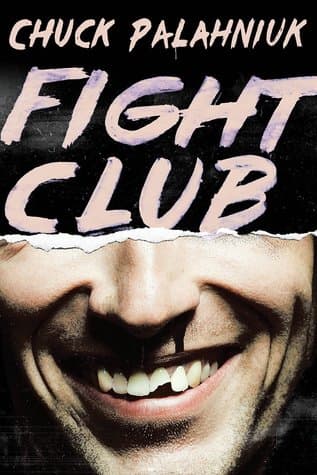
- Fight Club
Chuck Palahniuk
4.2 (499k) average on GoodreadsThrillerFeatures a protagonist grappling with an anarchic alter ego that takes on a life of its own.
- Misery
Stephen King
4.2 (499k) average on GoodreadsThrillerBoth The Dark Half and Misery explore the dark side of authorship, but from different angles. Misery focuses on an author held captive by an obsessive fan, externalizing the threat. The Dark Half, in contrast, internalizes the threat, making the author's own creation the antagonist. While Misery is a taut, claustrophobic psychological thriller about physical and mental torture, The Dark Half leans into supernatural horror and a broader exploration of identity fragmentation. Both effectively convey authorial dread, but Misery's horror is more grounded in human depravity, whereas The Dark Half's is rooted in the fantastic.
- Angels & Demons
Dan Brown
3.9 (2.7M) average on GoodreadsThrillerA Harvard symbologist races through Rome's ancient sites, deciphering cryptic clues to unmask the Illuminati and stop a vengeful plot to destroy the Vatican with a stolen antimatter weapon.
- Gone Girl
Gillian Flynn
4.1 (2.3M) average on GoodreadsThrillerA wife's sudden disappearance on her fifth anniversary reveals a web of lies and psychological warfare, exposing the secrets within a seemingly perfect marriage.
- The Girl on the Train
Paula Hawkins
3.9 (2.1M) average on GoodreadsThrillerA woman’s fascination with a seemingly perfect couple she watches from her daily train commute leads her into a dark investigation when she witnesses something that shatters their idyllic image.
- The Da Vinci Code
Dan Brown
3.9 (1.9M) average on GoodreadsThrillerA symbologist and a cryptologist race through European landmarks, deciphering ancient codes and uncovering a conspiracy that could rewrite the foundations of Christianity.





Enjoyed the summary?
A summary gives you the shape of the book. The book itself has the detail, the examples and the voice.
Find The Dark Half on AmazonAs an Amazon Associate, BookBrief earns from qualifying purchases. How we're funded