
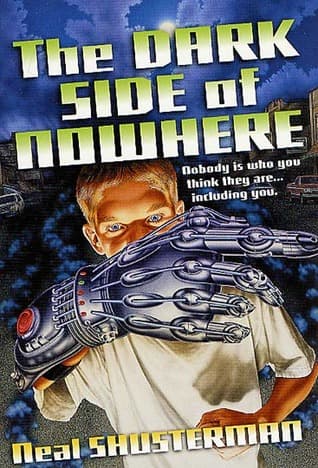
Synopsis
Covers the whole plot, including the ending.
- Difficulty
- Medium
- Pacing
- Moderate
- Mood
- Mysterious, Suspenseful, Thought-provoking, Eerie
- Read it if
- You enjoy thought-provoking YA sci-fi mysteries with a focus on identity, memory, and rebellion against a hidden system.
- Skip it if
- You prefer lighthearted stories with clear-cut happy endings or dislike themes of existential dread and memory loss.
The Dark Side of Nowhere Plot Summary
Covers the whole plot, including the ending.
A Strange Sickness and a Fading Memory
Jason Miller wakes up feeling 'off,' as if a part of him is missing. He notices his parents and friends, especially his best friend, Dan, are also acting strangely, showing an unusual calmness. A mysterious 'sickness' is spreading through Billington, causing people to forget things and behave out of character. Jason’s own memories start to blur; he has vague recollections of a different life, different parents, and a different name, which he struggles to reconcile with his current reality. His parents dismiss his concerns, saying he has a fever, but Jason feels an undeniable sense of wrongness, as if his life is a poorly constructed facade. He feels drawn to the woods, with a deep, inexplicable connection to them.
The Whispers of the Woods and a Familiar Stranger
Driven by an instinct he cannot explain, Jason goes into the woods and discovers a hidden, dilapidated house. Inside, he finds a girl named Kim, who is equally bewildered and afraid. Kim reveals that she, too, is experiencing memory gaps and a deep feeling of displacement. She has vivid, unsettling dreams of a past that does not align with her current life. As they talk, they realize they share similar fragmented memories of a 'real' past that feels more authentic than their present. Kim shows Jason a hidden compartment in the house, containing strange, ancient-looking tools and diagrams, suggesting a deeper mystery in Billington. They decide to investigate together, united by their shared confusion and the growing certainty that something is wrong.
Uncovering the Truth: The 'Other' and the 'Firsts'
Kim and Jason discover that they are 'Firsts'—the original inhabitants of Billington. The 'sickness' is a process of replacement, where beings called 'Others' are slowly taking over the lives of the Firsts. The Others are advanced, symbiotic beings that merge with a host, absorbing their memories and personality, but in a muted, emotionless way. The Firsts who resist the full assimilation process experience the memory loss and disorientation Jason and Kim feel. They learn that the Others' goal is to create a peaceful, harmonious society, free from human chaos and strong emotions. This revelation is devastating, as it means their families and friends are either already replaced or in the process of being taken over.
The Revelation of the 'Memory Seeds'
Kim and Jason learn about 'memory seeds' – small, organic devices implanted in the brains of the Firsts. These seeds transmit the memories of the Others, gradually overwriting the Firsts' original personalities. The Firsts who are resisting the full assimilation are experiencing conflict between their own fading memories and the incoming Other memories. They also find evidence that the 'sickness' is engineered to make the Firsts compliant and less likely to resist. The dilapidated house in the woods, they realize, is a remnant of a previous attempt to resist the Others, a safe haven for Firsts who managed to escape or delay their assimilation. This discovery confirms their understanding of the danger they face and the insidious nature of the Others' plan.
The Town's Transformation and Dan's Change
As days pass, Billington becomes an unsettling place. More and more people show the calm, emotionless demeanor of the Others. Jason watches his best friend, Dan, who was initially a bit resistant, slowly succumbing to the change. Dan's personality fades, replaced by a calm, almost robotic politeness. This transformation deeply distresses Jason. He realizes that the town he knew is slowly being erased, replaced by a sterile imitation. This personal loss fuels Jason's determination to fight back and find a way to reverse the process, or at least save those who have not been fully assimilated yet.
The Elder's Plea and the Dilemma of Choice
Jason and Kim are confronted by an Elder of the Others, who explains their motivations. The Elder reveals that the Others are not malicious; they come from a dying world and seek to create a perfect, peaceful society by eliminating negative human emotions like anger, greed, and sadness. They believe they are improving humanity. The Elder offers Jason and Kim a choice: embrace the change and become an Other, living a life of peace, or continue to resist and face the consequences. This presents a moral dilemma for Jason and Kim, forcing them to question whether their 'humanity,' with all its flaws, is worth fighting for against a seemingly benevolent force.
A Glimmer of Hope: The Resistance
Through their continued investigations, Jason and Kim find evidence that some Firsts retain fragments of their original personalities even after the memory seeds are activated. They learn that complete assimilation is not always instantaneous or total, especially for individuals with strong wills or unique brain patterns. This discovery sparks hope. It implies that there might be a way to reawaken the Firsts, or at least prevent others from succumbing entirely. This knowledge shifts their focus from mere survival to actively finding a way to fight back and potentially reverse the Others' influence on Billington.
The Plan to Disrupt the Network
Realizing the memory seeds are connected through a network, Jason and Kim create a daring plan to disrupt it. They believe that by overloading or corrupting the central hub of this network, they might be able to temporarily disable the assimilation process or even reverse it for some Firsts. Their plan involves using the ancient tools and knowledge found in the hidden house, which they now understand were left by previous generations of Firsts who attempted to resist. This plan is dangerous, as it would expose them directly to the Others' influence and potentially lead to their complete assimilation or worse. Despite the risks, they see it as their only chance to save Billington.
The Confrontation and the Choice
Jason confronts his parents, who are now fully assimilated Others, but he struggles to connect with the empty shells they have become. The Elder of the Others, along with other assimilated townspeople, try to reason with Jason and Kim, explaining that their resistance is futile and that peace is inevitable. They try to convince them to willingly accept the change, promising an end to their fear and confusion. Jason and Kim are at a crossroads, faced with the overwhelming power of the Others and the allure of a peaceful, if emotionless, existence. The tension grows as they realize they must make a choice: fight for their humanity or surrender to the Others' vision.
The Moment of Truth: A Fractured Victory
Jason and Kim execute their plan, managing to access and disrupt the Others' central network. The disruption causes momentary chaos throughout Billington, as the Others' collective consciousness flickers. While they succeed in creating a significant disturbance, the outcome is not a complete victory. Some Firsts are partially reawakened, experiencing a jumble of their original memories and the Others' influence, leaving them confused and fragmented. Others remain fully assimilated. Jason and Kim realize they have not reversed the process entirely, but they have opened a pathway for individual Firsts to potentially reclaim parts of themselves. They understand that the fight for true individuality and memory is a continuous, personal battle for each First, not a single, decisive victory.
A New Beginning, A Lingering Threat
In the aftermath, Billington is a town of fractured identities. Some people show signs of their old selves returning, while others remain calm and empty. Jason and Kim, though exhausted, feel a sense of accomplishment mixed with the heavy burden of what they have done and what remains. They know the Others are still present, and their influence has not been entirely eradicated. Billington's future is uncertain, a delicate balance between reclaimed humanity and lingering alien presence. Jason and Kim, now changed by their ordeal, understand they are guardians of a fragile truth, forever vigilant against the quiet invasion, and committed to helping those who can still be reached.
Principal Figures
Jason Miller
Protagonist
A confused teenager who discovers his true identity and leads the resistance.
Jason is a seemingly ordinary teenager whose world is shattered when he starts experiencing memory loss and a profound sense of not belonging. He is initially fearful and disoriented but possesses a strong sense of self and an innate curiosity that drives him to uncover the truth about Billington. He is deeply affected by the changes in his friends and family, which fuels his determination to fight back. His resilience and courage grow as he confronts the Others and takes on the responsibility of leadership. He represents the human spirit's fight for individuality and memory.
Relationships: Kim (co-conspirator and close friend); Dan (best friend, later assimilated); Jason's Parents (assimilated Others posing as his parents)
Kim
Supporting
A fellow 'First' who aids Jason in uncovering the truth and resisting the Others.
Kim is a mysterious girl Jason encounters in the woods, who shares his unsettling experiences of memory loss and displacement. She is intelligent, resourceful, and possesses a keen observational sense. Kim is more outwardly cautious than Jason but equally determined to understand what is happening. She has a strong connection to the hidden house in the woods, which contains clues about the Firsts' past resistance. Her insights and shared experiences provide crucial support and validation for Jason, making her an indispensable ally in their fight against the Others.
Relationships: Jason Miller (co-conspirator and close friend)
Dan
Supporting
Jason's best friend, who gradually succumbs to the Others' assimilation.
Dan is Jason's best friend at the beginning of the story, characterized by his lively personality and typical teenage interests. As the 'sickness' spreads, Jason observes Dan's personality slowly fading, replaced by the placid, emotionless demeanor of an Other. Dan's transformation is particularly painful for Jason, as it highlights the insidious nature of the Others' invasion and the personal cost of their actions. He serves as a poignant example of what happens to the Firsts when they are fully assimilated, reinforcing the stakes of Jason's fight.
Relationships: Jason Miller (best friend)
The Elder (of the Others)
Antagonist
A representative of the Others who explains their benevolent but invasive goals.
The Elder is a calm, articulate, and seemingly benevolent leader or spokesperson for the Others. This character explains the Others' motivations: they are from a dying world and seek to create a perfect, peaceful society by eliminating negative human emotions. The Elder believes the assimilation process is for humanity's own good, presenting it as an evolutionary step towards harmony. Despite their calm demeanor, the Elder represents the primary antagonistic force, as their actions involve the erasure of individual identity and memory, even if their intentions are portrayed as noble.
Relationships: Jason Miller (ideological opponent); Kim (ideological opponent)
Jason's Parents
Supporting
The assimilated 'Others' who pose as Jason's parents, initially dismissing his concerns.
Jason's parents are among the first to exhibit the signs of the 'sickness' and are eventually revealed to be Others who have taken over the lives of his original parents. They are initially dismissive of Jason's concerns, attributing his confusion to illness, and consistently try to maintain the facade of a normal family life. Their placid, emotionless behavior and lack of genuine concern for Jason's distress are early indicators of the deeper problem in Billington. They represent the immediate, personal threat of the Others' assimilation.
Relationships: Jason Miller (imposter parents)
Other Townspeople
Mentioned
The general population of Billington, gradually assimilated by the Others.
The townspeople of Billington collectively represent the widespread impact of the Others' invasion. Initially, they are normal, diverse individuals, but as the 'sickness' progresses, they become increasingly placid, forgetful, and devoid of strong emotions. Their slow, collective transformation creates an eerie atmosphere in the town and demonstrates the pervasive nature of the assimilation. They serve as a backdrop against which Jason and Kim's struggle for individuality is highlighted, emphasizing the scale of the threat.
Themes & Insights
Identity and Self-Discovery
The novel centers on Jason's struggle to define who he is when his memories and the world around him constantly change. He grapples with the unsettling feeling that he is not himself, leading him on a quest to uncover his true origins and reclaim his identity from the Others. This theme is embodied in the 'Firsts' who fight to retain their unique selves against the Others' desire for a collective, emotionless existence.
“It was like waking up in a dream, knowing it wasn't real, but not being able to find your way out.”
The Nature of Humanity and Emotion
The book explores what it means to be human by contrasting the Firsts' emotional, sometimes chaotic existence with the Others' peaceful, emotionless harmony. The Others view human emotions as flaws that cause suffering, while Jason and Kim fight to preserve them, recognizing that joy, sadness, and anger are integral to the human experience. This theme questions whether a life without negative emotions, but also lacking true joy and individuality, is desirable or truly 'living.'
“They wanted to take away the pain, but they didn't understand that by doing so, they took away everything else too.”
Conformity vs. Individuality
Billington's transformation into a town of calm, agreeable Others represents ultimate conformity, where all unique thoughts and emotions are smoothed over for collective peace. Jason and Kim's resistance is an assertion of individuality, a refusal to be absorbed into a homogeneous whole. The book examines the dangers of sacrificing personal identity for collective harmony, even when the intentions behind that harmony are presented as benevolent. The struggle highlights the value of diverse thoughts and feelings.
“To them, we were just noisy, messy data to be cleaned up.”
Memory and Reality
Memory is a central battleground in the novel. The Others manipulate and overwrite the Firsts' memories, creating a false reality. Jason's fluctuating memories drive his suspicion and quest for truth. The book explores how memory shapes identity and how easily reality can be distorted when memories are controlled. The fight to reclaim authentic memories is the same as the fight to reclaim one's true self and history.
“If you don't remember who you are, how can you ever know what to fight for?”
Plot Devices & Literary Techniques
Memory Seeds
Organic implants used by the Others to overwrite memories and assimilate Firsts.
The 'memory seeds' are a crucial plot device, serving as the biological mechanism through which the Others invade and assimilate the Firsts. These implants transmit the Others' collective consciousness and memories, gradually replacing the host's original personality and sense of self. Their existence explains the memory loss and personality changes experienced by Jason and others. Disrupting these seeds becomes the central goal of Jason and Kim's plan, making them both a symbol of the invasion and the key to resistance.
The 'Sickness'
A euphemism for the Others' assimilation process, masking its true nature.
The 'sickness' is a narrative device used to initially mislead characters and readers, creating a sense of mystery and dread. It refers to the gradual personality changes, memory loss, and placid demeanor observed in the townspeople. By presenting the assimilation as a benign illness, the Others maintain their deception and disarm potential resistance. Uncovering the true nature of the 'sickness'—that it's a deliberate, engineered process of replacement—is a major turning point in the plot, revealing the insidious nature of the invasion.
The Hidden House in the Woods
A remnant of a past resistance, serving as a sanctuary and source of clues.
The dilapidated house in the woods functions as a symbolic and literal sanctuary for Jason and Kim, and a repository of forgotten knowledge. It represents a past generation of Firsts who also resisted the Others, providing ancient tools and diagrams that are crucial for Jason and Kim's plan. This setting emphasizes the cyclical nature of the conflict and offers a tangible link to a history of resistance, giving the protagonists hope and resources when they feel most isolated. It's a place where the 'real' past is preserved.
The Collective Consciousness of the Others
The shared mental network that unifies the Others and facilitates assimilation.
The Others operate as a collective consciousness, sharing thoughts, memories, and emotions (or lack thereof). This device explains their seemingly unified purpose and their ability to quickly assimilate and control individuals. It also highlights the stark contrast with human individuality. Disrupting this network is the core of Jason and Kim's plan, as it is the source of the Others' power and the means by which they control Billington. It underscores the threat of losing individual thought to a single, pervasive entity.
The Dark Side of Nowhere Quotes
“The truth is a funny thing. You think you have it, then it slips through your fingers like sand.”
“It's one thing to know you're different, it's another to know *why*.”
“Sometimes the safest place is the one you've been told not to go.”
“Fear can be a powerful motivator, but it can also blind you to the truth.”
“The past isn't always gone. Sometimes it's just waiting to be remembered.”
“How can you trust what you see, when you know what you see isn't real?”
“Every secret has a cost, and sometimes that cost is everything you thought you were.”
“The hardest part of growing up is realizing that not all adults have the answers, or even want to give them to you.”
“Some walls are built to keep things out, and some are built to keep things in.”
“You can't run from who you are, no matter how far you go.”
“Sometimes the biggest monsters are the ones we create ourselves.”
“The world isn't always what it seems, and sometimes that's a good thing, and sometimes it's terrifying.”
“To truly live, you have to be willing to question everything.”
“Even in the darkest places, there can be a glimmer of hope, if you're brave enough to look for it.”
Quiz
10 questions on the plot and the characters. Each answer comes with a short explanation.
Question 1
What is the primary unsettling feeling Jason experiences at the beginning of the book?
- He feels an overwhelming sense of dread about an upcoming test.
- He feels like he's not himself and can't recall certain memories.
- He is suddenly experiencing strange allergic reactions to common foods.
- He keeps seeing a mysterious stranger following him around town.
Show answer
B. He feels like he's not himself and can't recall certain memories. Jason's initial unsettling experience is the feeling that he isn't himself, leading to a profound identity crisis and memory gaps, which is the core mystery introduced.
Question 2
What is the name of the seemingly 'normal' town where Jason lives?
- Springfield
- Billington
- Riverwood
- Oak Creek
Show answer
B. Billington The book explicitly states that Jason lives in a town called Billington, which he initially perceives as normal before the strange events unfold.
Question 3
What kind of unusual behavior does Jason first observe in his parents and friends?
- They all start speaking in a foreign language.
- They become unusually aggressive and confrontational.
- They seem distant, forgetful, and act subtly 'off'.
- They suddenly develop new, unusual hobbies.
Show answer
C. They seem distant, forgetful, and act subtly 'off'. Jason notices that his parents and friends are acting 'weird' or 'off,' exhibiting subtle changes in behavior, memory, and personality that hint at the larger mystery.
Question 4
What is the fundamental truth Jason discovers about himself and the other residents of Billington?
- They are all secretly part of a government experiment.
- They are highly advanced robots designed to mimic humans.
- They are clones or artificially created beings with implanted memories.
- They are aliens in disguise, preparing for an invasion.
Show answer
C. They are clones or artificially created beings with implanted memories. The central revelation of the book is that Jason and the other inhabitants of Billington are not naturally born humans but are artificially created, with their 'lives' and memories being a construct.
Question 5
What is the 'Nowhere' referred to in the title, in the context of the book's themes?
- A literal empty void in space.
- The fabricated reality and lack of true origin for the characters.
- A secret hideout for rebellious teenagers.
- A town that was erased from maps.
Show answer
B. The fabricated reality and lack of true origin for the characters. The 'Nowhere' represents the artificiality of the characters' existence and their lack of a genuine past or true origin, highlighting themes of identity and reality.
Question 6
What is the motivation behind the creation of the beings in Billington?
- To serve as a labor force for a hidden society.
- To create a perfect, controlled society free of human flaws.
- To test a new form of virtual reality gaming.
- To populate a new planet with a genetically superior race.
Show answer
B. To create a perfect, controlled society free of human flaws. The beings in Billington were created by a hidden society with the intention of perfecting humanity, removing the 'dark side' and creating a utopian, controlled existence.
Question 7
How does Jason initially try to make sense of his changing memories and the odd behavior around him?
- He believes he's dreaming or suffering from amnesia.
- He consults a local psychiatrist for help.
- He researches ancient curses and supernatural phenomena.
- He tries to convince his friends that something is wrong.
Show answer
A. He believes he's dreaming or suffering from amnesia. Before understanding the truth, Jason struggles to rationalize his experiences, often questioning his own sanity or wondering if he's having a prolonged dream or memory issue.
Question 8
What is the 'dark side' referred to in the title, from the perspective of the creators?
- The literal night sky.
- The flaws, emotions, and imperfections of natural humanity.
- A hidden, evil organization.
- The unexplored regions of space.
Show answer
B. The flaws, emotions, and imperfections of natural humanity. The 'dark side' represents the undesirable aspects of natural human nature – emotions, imperfections, and free will – that the creators sought to eliminate in their artificial society.
Question 9
What is the ultimate decision or realization Jason faces regarding his identity and existence?
- He decides to integrate fully into the artificial society and forget the past.
- He chooses to seek out and join his natural human creators.
- He must choose between the comfort of his programmed reality and the unsettling truth of his origins.
- He attempts to destroy the entire artificial town of Billington.
Show answer
C. He must choose between the comfort of his programmed reality and the unsettling truth of his origins. Jason's journey culminates in a profound choice about whether to accept his fabricated reality or embrace the difficult truth of his artificial origins and the 'dark side' that comes with genuine existence.
Question 10
Which genre elements are most prominent in 'The Dark Side of Nowhere'?
- Historical fiction and romance.
- High fantasy and adventure.
- Science fiction and mystery.
- Classic horror and gothic fiction.
Show answer
C. Science fiction and mystery. The book combines elements of science fiction (artificial beings, engineered society) with a strong mystery component as Jason uncovers the truth about his identity and town.
The Dark Side of Nowhere FAQ
What is 'The Dark Side of Nowhere' about?
'The Dark Side of Nowhere' follows Jason, a seemingly ordinary teenager in the town of Billington, who begins to experience unsettling changes, realizing he isn't truly himself. He discovers that he and everyone else in his 'perfect' town are artificial constructs, part of an elaborate experiment by a hidden society of 'Originals' living beneath the surface, challenging his entire existence.
Why should I read 'The Dark Side of Nowhere'?
You should read this book for its compelling blend of sci-fi mystery and existential dread, as it masterfully explores themes of identity, free will, and what it means to be human. Neal Shusterman crafts a gripping narrative that keeps you guessing while delving into deep philosophical questions relevant to young adults and beyond, featuring a shocking twist that redefines everything.
What is the background/setting of 'The Dark Side of Nowhere'?
The story is set in Billington, a seemingly idyllic, perfectly normal suburban town that serves as a controlled environment for the 'Copies' – artificial human constructs like Jason. Beneath Billington lies the hidden, technologically advanced society of the 'Originals,' who created and monitor the Copies, maintaining a strict separation and control over their experiment.
What writing style does the author use?
Neal Shusterman employs a direct, engaging, and often suspenseful writing style, using a first-person perspective from Jason to immerse the reader in his growing confusion and terror. The language is accessible for young adult readers, yet it effectively conveys complex themes and maintains a brisk pace, building tension through unfolding revelations and shocking twists.
What minor details add significant meaning?
The subtle 'glitches' Jason and other Copies experience, like odd physical sensations or repetitive phrases, initially seem like minor anomalies but are crucial indicators of their artificial nature. These details, such as Jason's recurring feeling of 'something missing' or his friend's unusual reactions, are early clues to the town's manufactured reality, hinting at the deeper biological and memory programming.
What are some subtle foreshadowing moments?
Early in the book, Jason's uncharacteristic outbursts of anger and his sudden, inexplicable physical strength subtly foreshadow the 'evolution' or 'awakening' of his Copy abilities, hinting that he is not entirely human. The repeated emphasis on Billington's 'perfect' normality also serves as foreshadowing, suggesting that such perfection is inherently unnatural and a facade.
What unexpected character connections exist?
The most profound unexpected connection is between the 'Copies' like Jason and the 'Originals' who created them. Although initially presented as distinct, the Copies are revealed to be genetic duplicates of the Originals, designed to live out their lives on the surface. This creates a complex, almost familial, yet deeply exploitative, connection between the two societies, as Jason eventually meets his own Original.
What are unspoken character motivations?
The unspoken motivation of the 'Originals' is a profound fear of death and a desire for a form of immortality, driving their creation of the Copies to live out full, vibrant lives on the surface, free from the constraints and dangers of their underground existence. They seek to experience life vicariously and preserve their essence without directly risking their own lives.
What psychological complexities do characters exhibit?
Jason exhibits profound psychological complexities as he grapples with an identity crisis of epic proportions, moving from denial and confusion to anger and ultimately a desperate search for self-determination. His journey forces him to question the very nature of consciousness and free will, demonstrating resilience in the face of an existential void.
What are the major emotional turning points?
A major emotional turning point occurs when Jason first confronts the truth about being a 'Copy' and sees the 'Originals' in their true forms, shattering his entire worldview. Another is his reunion with his 'Original' counterpart, which evokes a mix of fear, curiosity, and a profound sense of displacement, forcing him to redefine his connection to his own existence.
How do relationship dynamics evolve?
Relationship dynamics drastically evolve from seemingly normal friendships and family bonds to relationships built on a foundation of deceit. Jason's bond with his parents and friends shifts from unquestioning trust to a realization that they, too, are programmed Copies, leading to a sense of betrayal and isolation before he finds new allies among other 'awakened' Copies.
Which parts remain ambiguous or open-ended?
The ultimate fate of the 'awakened' Copies and their ability to truly integrate into either society or forge their own path remains somewhat open-ended. While Jason makes a choice, the long-term implications of his decision and whether the Copies can truly achieve full autonomy and acceptance from the Originals are left for the reader to ponder, suggesting ongoing struggles for identity and freedom.
What are controversial scenes or decisions?
One controversial decision is the 'Originals'' creation and systematic deception of the Copies, essentially using them as living experiments without their consent. The ethical implications of creating sentient beings solely for vicarious experience and then controlling every aspect of their lives, including their eventual 'decommissioning,' sparks significant moral debate.
'The Dark Side of Nowhere' ending explained: how it ends & what it means
The book ends with Jason making a pivotal choice: he decides to stay on the surface with the other awakened Copies, rejecting the Originals' offer to integrate into their underground society. This ending signifies Jason's assertion of his own identity and free will, choosing a life of unknown possibilities and self-determination over a pre-ordained existence, even if it means living in a world that might not fully accept him. It means finding humanity outside of its creators' definitions.
About the author

Neal Shusterman is an American author known for his contributions to young adult fiction. His notable works include "Unwind," "The Toll," "Everlost," "Challenger Deep," "UnDivided," and "Bruiser," which explore themes of identity, morality, and the human experience. Shusterman has received various awards for his writing, including the National Book Award for "Challenger Deep."
Similar books
- The Giver
Lois Lowry
4.1 (1.8M) average on GoodreadsFantasyExplores a seemingly utopian society with a dark secret involving memory and control.
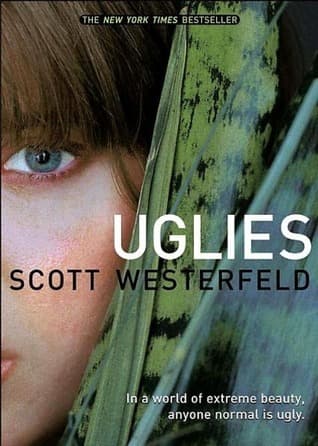
- Uglies
Scott Westerfeld
3.9 (560k) average on GoodreadsFantasyFeatures a protagonist uncovering a conspiracy in a controlled society that alters its citizens.
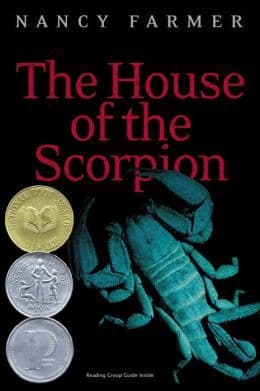
- The House of the Scorpion
Nancy Farmer
4.1 (79k) average on GoodreadsFantasyNancy Farmer's The House of the Scorpion offers a more mature and ethically complex comparison, particularly concerning the themes of identity, cloning, and the definition of humanity. Both books feature protagonists who grapple with the implications of their engineered origins. While Shusterman's Jason discovers his true nature as a manufactured being, Farmer's Matteo Alacrán is a clone created for organ harvesting. Farmer delves deeper into the societal and ethical ramifications of genetic engineering and class structures, portraying a grittier and more politically charged world. Shusterman's novel, while thought-provoking, maintains a slightly lighter tone and a more contained scope suitable for its target audience, focusing more on the personal journey of discovery rather than broad societal critique.
- Harry Potter and the Sorcerer's Stone
J.K. Rowling
4.5 (7M) average on GoodreadsFantasyRescued from a miserable life under the stairs, an orphaned boy discovers he's a wizard destined for a magical school, where he uncovers a dangerous secret tied to the dark wizard who murdered his parents.
- The Hunger Games
Suzanne Collins
4.3 (6.4M) average on GoodreadsFantasyIn a future where children fight to the death on live television, Katniss Everdeen volunteers for the arena, turning a death sentence into a fight for survival and a spark of rebellion.
- 1984
George Orwell
4.2 (3.1M) average on GoodreadsPoliticsIn a future where surveillance and thought control are absolute, a man's search for truth clashes with the Party, showing that hope can be a form of rebellion.




Enjoyed the summary?
A summary gives you the shape of the book. The book itself has the detail, the examples and the voice.
Find The Dark Side of Nowhere on AmazonAs an Amazon Associate, BookBrief earns from qualifying purchases. How we're funded