

Synopsis
Covers the whole plot, including the ending.
- Difficulty
- Medium
- Pacing
- Fast
- Mood
- Suspenseful, Urgent, Resilient, Hopeful
- Read it if
- You enjoy fast-paced YA sci-fi thrillers with political intrigue, a strong female protagonist, and themes of prejudice and resistance.
- Skip it if
- You prefer standalone novels or dislike series that build on established lore from previous books.
The Darkest Legacy Plot Summary
Covers the whole plot, including the ending.
A New Role and a Sudden Betrayal
Five years after the events of 'In the Afterlight,' Suzume 'Zu' Kimura, now seventeen, is a spokesperson for the interim government, advocating for Psi rights. She attends a summit in Philadelphia, pushing for the Psi Civil Rights Act. During the summit, an explosion rocks the building, killing Senator Dale and injuring many others. Zu is immediately implicated due to her ability to manipulate electronics, and a fabricated recording of her confessing is broadcast. Forced to go on the run, she is rescued by two mysterious Psi, Roman and Priyanka, who claim to be part of a network that can help her. Zu remains suspicious of their motives.
On the Run with Unlikely Allies
Zu is on the run with Roman, a telekinetic, and Priyanka, a mind reader (Opal). Federal agents and a new, aggressive Psi enforcement group known as the Gray pursue them. Roman is stoic and guarded, while Priyanka is more friendly but still mysterious. Zu struggles to trust them, given her rescue and the lack of clear information about their organization. They travel through various safe houses and underground networks, constantly evading capture. Zu tries to figure out who framed her and why, all while dealing with her growing anxiety and public condemnation.
Whispers of the Gray and a Hidden Agenda
As they travel, Roman and Priyanka reveal more about the Gray, a paramilitary group formed by General Montgomery. The Gray hunts Psi, not just for rehabilitation but for a more sinister purpose. They find evidence of the Gray's brutality, including Psi being experimented on or disappearing. Zu begins to understand that her framing is part of a larger conspiracy aimed at discrediting and eradicating Psi, pushing them back into the shadows or worse. The story suggests a powerful, unseen hand orchestrating these events, beyond General Montgomery.
Confronting the Past and New Revelations
Zu, Roman, and Priyanka eventually contact Liam Stewart and Cole, two of Zu's former Black Betty crew, who are now part of a resistance network. Liam, still a leader, is cautious but trusts Zu. Through their combined efforts, they discover that the explosion was caused by a highly unstable new Psi ability, not Zu's. They also uncover evidence suggesting that the Psi program, initially designed to help Psi, was secretly experimenting on them, creating unstable abilities and potentially manipulating individuals. This revelation casts a shadow on past efforts to integrate Psi into society.
The True Architect of the Conspiracy
The investigation leads Zu and her allies to the realization that the mastermind behind the conspiracy is President Gray himself. He has been secretly developing a method to control and weaponize Psi abilities, not just for military use but to consolidate his own power. Senator Dale's death was a calculated move to frame Zu and ignite public fear, justifying the aggressive actions of the Gray. President Gray aims to create a compliant Psi force, eliminating those he cannot control, and using public fear as a political tool to maintain his authority and solidify his anti-Psi agenda.
A Dangerous Alliance and a Risky Plan
With the truth revealed, Zu, Liam, Cole, Roman, and Priyanka plan to expose President Gray to the public. They aim to gather irrefutable evidence of his experiments and his role in the Philadelphia attack. Roman, it is revealed, has a complicated past tied to the Psi program and President Gray, making his loyalty a point of tension. He struggles with his allegiance, torn between his past and his growing connection to Zu and the cause. The plan involves infiltrating a high-security facility where President Gray's experiments are being conducted, a perilous undertaking that could cost them their lives.
Infiltration and Discovery
The team infiltrates President Gray's secret facility. Inside, they discover horrifying evidence of human experimentation on Psi children, including the creation of unstable abilities and the manipulation of their minds. They find records detailing the development of a device designed to suppress or control Psi powers, turning Psi into obedient weapons or powerless individuals. They also uncover the truth about the specific, unstable Psi ability used in the Philadelphia bombing, confirming Zu's innocence and President Gray's direct involvement in orchestrating the attack to further his agenda.
A Confrontation and a Sacrifice
During their infiltration, the team is discovered, leading to a direct confrontation with President Gray and his Gray forces. A fierce battle ensues, showing the diverse Psi abilities of Zu's allies. Roman makes a difficult choice, ultimately siding with Zu and the resistance. In a tense moment, Priyanka uses her Opal ability to project images of the horrific experiments to the Gray soldiers, causing some to question their orders. A key character makes a significant sacrifice to ensure the escape of others and the dissemination of the evidence.
The Truth Revealed and Public Uproar
Zu, using her ability to manipulate electronics, broadcasts the collected evidence of President Gray's crimes and the truth about the Philadelphia bombing to the entire nation. The broadcast includes footage of the experiments, President Gray's own incriminating statements, and Zu's clear exoneration. The public reacts with shock and outrage, leading to widespread protests and a demand for President Gray's impeachment and arrest. The revelation galvanizes the Psi community and their allies, creating a powerful wave of resistance against the oppressive government.
Aftermath and a New Beginning
After the broadcast, President Gray is overthrown and arrested, facing charges of treason and crimes against humanity. The Gray organization is dismantled, and efforts begin to undo the damage caused by his regime. Zu, now fully exonerated and a symbol of hope, continues her work as a spokesperson, advocating for the rights and safety of all Psi. The novel concludes with Zu, Liam, Roman, and Priyanka looking towards an uncertain but hopeful future. They know that while the fight for true equality is far from over, they have taken a significant step forward. Zu reflects on her journey and the power of her own voice.
The Darkest Legacy Characters
Suzume "Zu" Kimura
Protagonist
A powerful Psi spokesperson framed for a terrorist attack.
Zu is a seventeen-year-old Orange Psi with the ability to manipulate electronics. Once a timid child, she has grown into a confident and articulate spokesperson for Psi rights, using her platform to advocate for equality and justice. Despite her public role, she carries the trauma of her past experiences in the Psi camps and struggles with self-doubt when accused of a heinous crime. Her core drive is to protect other Psi and ensure a safe future for her community. She is intelligent, resourceful, and possesses a strong moral compass.
Relationships: Roman (Initially suspicious ally, developing romantic interest); Priyanka (Initially mysterious ally, becoming trusted friend); Liam Stewart (Long-time friend and mentor figure); Cole (Friend and ally from the Black Betty crew)
Roman
Supporting
A mysterious and stoic telekinetic with a complicated past.
Roman is a powerful Blue Psi (telekinetic) who initially appears as an enigmatic figure, rescuing Zu from federal agents. He is reserved, often stoic, and fiercely protective of his allies, though his true loyalties are initially ambiguous. He has a troubled past connected to the Psi program and President Gray, which fuels his internal conflict. Despite his guarded nature, he possesses a strong sense of justice and a deep capacity for loyalty, especially as he grows closer to Zu. His combat skills and strategic thinking are invaluable to the team.
Relationships: Suzume "Zu" Kimura (Initially suspicious ally, developing romantic interest); Priyanka (Close working relationship, almost like siblings); President Gray (Complicated, adversarial past connection)
Priyanka
Supporting
An enigmatic Opal Psi with the ability to read and project minds.
Priyanka is an Opal Psi, a rare and powerful ability that allows her to read minds and project thoughts and images directly into others' minds. She is initially presented as Roman's partner, equally mysterious but with a more outwardly friendly demeanor. Priyanka is sharp-witted, perceptive, and often uses her abilities to gather information or influence situations subtly. She acts as a crucial emotional support for Zu, helping her navigate the psychological toll of being on the run. Her ability to discern truth and project reality becomes a vital tool in exposing the conspiracy.
Relationships: Suzume "Zu" Kimura (Initially mysterious ally, becoming trusted friend); Roman (Close working relationship, almost like siblings)
Liam Stewart
Supporting
Zu's former protector and a leader in the Psi resistance.
Liam is a Green Psi (super-intelligent) and one of Zu's oldest friends and protectors from her time with the Black Betty crew. He is a natural leader, intelligent, strategic, and deeply committed to the welfare of all Psi. He has been instrumental in establishing a network of safe houses and resistance cells. While initially cautious due to the gravity of the accusations against Zu, his loyalty and trust in her quickly resurface. He provides invaluable resources, tactical advice, and a sense of continuity and stability for Zu amidst the chaos.
Relationships: Suzume "Zu" Kimura (Long-time friend and mentor figure); Cole (Close friend and ally); Ruby Daly (Mentioned as a past leader and friend)
Cole
Supporting
A loyal Red Psi and a skilled fighter.
Cole is a Red Psi (fire manipulation) and another member of Zu's original Black Betty crew. He is fiercely loyal, impulsive, and a skilled fighter, providing crucial protection and combat support to the group. Despite his sometimes hot-headed nature, he has a good heart and is dedicated to the cause of Psi freedom. He brings levity and a sense of familiarity to Zu, reminding her of her past and the enduring bonds of friendship. His abilities are essential in direct confrontations with the Gray.
Relationships: Suzume "Zu" Kimura (Friend and ally from the Black Betty crew); Liam Stewart (Close friend and ally)
President Gray
Antagonist
The corrupt President orchestrating a conspiracy against Psi.
President Gray is the primary antagonist of the novel, a calculating and ruthless politician who exploits public fear to consolidate his power. He is the architect of the conspiracy to frame Zu and suppress Psi rights, secretly developing a program to control and weaponize Psi abilities. He presents a facade of concern for national security while secretly committing heinous acts of human experimentation. His ambition and xenophobia drive his actions, making him a formidable and morally bankrupt foe.
Relationships: Roman (Past connection, adversarial); Suzume "Zu" Kimura (Primary target and adversary)
General Montgomery
Supporting
The leader of the Gray, enforcing President Gray's agenda.
General Montgomery is the commanding officer of the Gray, the paramilitary force tasked with hunting down Psi. He is a rigid, authoritarian figure who faithfully carries out President Gray's orders, believing in the necessity of controlling or eliminating Psi for national security. While not the mastermind, he is a key enforcer of the oppressive regime, embodying the military might behind the conspiracy. He is relentless in his pursuit of Zu and other Psi, showcasing the brutal efficiency of the Gray.
Relationships: President Gray (Subordinate, loyal enforcer); Suzume "Zu" Kimura (Antagonistic, hunter)
Senator Dale
Mentioned
A senator whose death is used to frame Zu and ignite public fear.
Senator Dale is a political figure whose death in the Philadelphia summit explosion is the catalyst for Zu's framing and the subsequent events of the novel. He is presented as a victim, and his demise is strategically manipulated by President Gray to create public outrage and justify the crackdown on Psi. While not a living character, his death is central to the plot's initial conflict and the unraveling of the conspiracy.
The Darkest Legacy Themes
The Power of Voice and Advocacy
This theme is central to Zu's character and the entire story. Zu, as a spokesperson, understands the power of words and public perception. When she is framed, her voice is used against her through manipulated broadcasts, highlighting how information can be weaponized. Her ultimate triumph comes from reclaiming her voice and using it to broadcast the truth, exposing President Gray and rallying public support. The novel emphasizes that true change comes not just from physical resistance but from speaking truth to power, as seen when Zu broadcasts the evidence to the entire nation.
“The truth was a weapon, and I was finally ready to wield it.”
Prejudice and Xenophobia
The novel explores the deep-seated prejudice against Psi, even years after the camps were supposedly dismantled. President Gray manipulates public fear and misinformation to turn people against Psi, portraying them as dangerous and uncontrollable. This xenophobia fuels the actions of the Gray and justifies the horrific experiments conducted on Psi. The story shows how easily a society can be manipulated into fearing and persecuting an 'other,' reflecting real-world issues of discrimination and scapegoating. The struggle of Zu and her allies is not just for survival, but for acceptance and the right to exist peacefully.
“Fear was a powerful tool, sharper than any blade, and they were experts at wielding it.”
Government Corruption and Abuse of Power
A core theme is the corruption within the highest levels of government, shown by President Gray. He abuses his authority to conduct illegal experiments, orchestrate terrorist attacks, and suppress civil liberties, all for personal gain and to maintain control. The story reveals how power can corrupt even those meant to protect their citizens, turning them into oppressors. The existence of the Gray, a state-sanctioned force committing atrocities, highlights the dangers of unchecked governmental power and the erosion of democratic principles. The story is a cautionary tale about vigilance against tyranny.
“Power wasn’t meant to be hoarded; it was meant to be shared, to uplift, not to crush.”
Trust and Betrayal
Zu's journey is full of questions of trust. She is betrayed by the government she served, framed by powerful forces, and forced to rely on mysterious strangers like Roman and Priyanka, whose loyalties are initially unclear. The novel constantly explores how difficult it is to tell friend from foe, especially when past traumas and hidden agendas are involved. Roman's internal conflict regarding his past ties to President Gray is a prime example. The gradual building of trust among the core group is crucial to their success, showing that true alliances are forged through shared purpose and vulnerability.
“In a world built on lies, trust was the most dangerous gamble of all.”
Plot Devices & Literary Techniques
Red Herring
Zu's framing as the Philadelphia bomber diverts attention from the true antagonist.
The initial accusation against Zu for the Philadelphia bombing serves as a major red herring. Her known ability to manipulate electronics makes her a plausible, albeit innocent, suspect. This misdirection is deliberately orchestrated by President Gray to create public outrage against Psi and to divert suspicion from his own involvement. It forces Zu to go on the run, setting the main plot in motion, while the audience and characters slowly uncover the real perpetrator and the deeper conspiracy, revealing the calculated nature of the antagonist's plan.
Unreliable Narrator (Public Perception)
The public's perception of Zu is manipulated through false media, creating a distorted reality.
While Zu herself is a reliable narrator, the public's perception of her functions as an unreliable narrator device. The fabricated recording and propaganda spread by President Gray's regime create a false narrative about Zu being a terrorist. This demonstrates how easily public opinion can be swayed by manipulated media and how difficult it is to combat a well-orchestrated smear campaign. The discrepancy between Zu's reality and the public's perception of her drives much of the initial conflict, forcing her to not only prove her innocence but also to reclaim her own story.
MacGuffin (The Psi Civil Rights Act)
The proposed Psi Civil Rights Act acts as a catalyst for the initial conflict and the antagonist's schemes.
The Psi Civil Rights Act, meant to grant full rights to Psi individuals, serves as a MacGuffin early in the story. Its impending passage at the Philadelphia summit provides the perfect opportunity for President Gray to stage the bombing and frame Zu. While the Act itself is a goal for Zu, its immediate importance is less about its content and more about its role as the event that triggers the antagonist's plan. It symbolizes the progress Psi have made, making its disruption a powerful statement and a clear threat to their future.
Deus ex Machina (Priyanka's Opal Ability)
Priyanka's mind-projection ability provides a crucial, timely solution to expose the truth.
Priyanka's rare Opal ability, allowing her to project thoughts and images directly into others' minds, functions as a form of deus ex machina during the climax. When the team is cornered and needs to expose President Gray's crimes to his own soldiers, Priyanka uses her power to project the horrific images of the experiments, causing the soldiers to falter and question their orders. While her ability is established earlier, its precise and powerful application at such a critical, seemingly unwinnable moment provides a convenient and decisive turning point, enabling the heroes' escape and the dissemination of the truth.
The Darkest Legacy Quotes
“Every time I think I've reached the bottom, there's always another trap door.”
“The greatest weapon isn't a power, it's hope.”
“We're not just fighting for ourselves; we're fighting for the idea of a future where kids like us can just be kids.”
“Sometimes the hardest battles are the ones we fight within ourselves.”
“Fear can be a powerful motivator, but it can also be a paralyzing poison.”
“You can't save everyone, but you can fight for the ones you can.”
“The world isn't black and white, Ruby. It's a thousand shades of grey, and we're all just trying to navigate them.”
“Even in the darkest night, there are stars. You just have to remember to look up.”
“Our past doesn't define us, but it does shape us. It's what we do with that shape that matters.”
“Love isn't a weakness, Ruby. It's the only thing strong enough to keep us human.”
“Sometimes, the right choice is the hardest one to make.”
“We carry the scars, but they remind us we survived.”
“You can't outrun your past, but you can choose how you face it.”
“The greatest burden is the secret you keep to protect others.”
Quiz
10 questions on the plot and the characters. Each answer comes with a short explanation.
Question 1
What is Suzume 'Zu' Kimura's primary role at the beginning of 'The Darkest Legacy'?
- A leader of an underground Psi resistance movement.
- A spokesperson for the interim government, advocating for Psi kids.
- A scientist researching the origins of Psi abilities.
- A security operative tracking down rogue Psi.
Show answer
B. A spokesperson for the interim government, advocating for Psi kids. At the start of the book, Zu is the spokesperson for the interim government, fighting for Psi kids' rights.
Question 2
How long has passed since the destruction of the rehabilitation camps at the start of the novel?
- One year
- Three years
- Five years
- Ten years
Show answer
C. Five years The synopsis states that five years have passed since the destruction of the rehabilitation camps.
Question 3
What is the immediate catalyst that forces Zu to go on the run once more?
- She uncovers a government conspiracy.
- She is accused of committing a horrifying act.
- Her Psi abilities suddenly manifest out of control.
- She is targeted by a rogue Psi faction.
Show answer
B. She is accused of committing a horrifying act. Zu is forced to go on the run after being accused of committing a horrifying act.
Question 4
Which two mysterious Psi characters does Zu form an 'uncomfortable alliance' with?
- Liam and Chubs
- Ruby and Vida
- Roman and Priyanka
- Nico and Sam
Show answer
C. Roman and Priyanka Zu forms an alliance with Roman and Priyanka, two mysterious Psi.
Question 5
What is one of the main challenges Zu faces in her role as a spokesperson?
- Lack of funding for Psi programs.
- Internal conflicts within the Psi community.
- A growing tide of misinformation and prejudice against Psi kids.
- Resistance from the interim government itself.
Show answer
C. A growing tide of misinformation and prejudice against Psi kids. Zu fights against a 'growing tide of misinformation and prejudice' towards Psi kids.
Question 6
What is Zu's primary goal after being forced to go on the run?
- To find a new hidden sanctuary for Psi kids.
- To clear her name and prove her innocence.
- To expose the corruption within the interim government.
- To develop a cure for Psi abilities.
Show answer
B. To clear her name and prove her innocence. Her determination is to clear her name after being accused.
Question 7
What is revealed to be 'roiling beneath the veneer of the country's recovery' as Zu and her allies travel?
- Ancient Psi artifacts.
- Even darker things.
- A new strain of the Psi virus.
- A secret society of non-Psi humans.
Show answer
B. Even darker things. As they travel, they uncover 'even darker things roiling beneath the veneer of the country's recovery.'
Question 8
What is the significance of Zu's 'powerful voice' as mentioned in the synopsis?
- It refers to her unique vocal Psi ability that can manipulate sound waves.
- It symbolizes her role as a spokesperson and her ability to advocate and speak out for Psi rights.
- It literally means her singing voice, which has a calming effect on other Psi.
- It is a metaphor for her strong political connections within the interim government.
Show answer
B. It symbolizes her role as a spokesperson and her ability to advocate and speak out for Psi rights. Her 'powerful voice' refers to her ability to speak out and advocate for the Psi, especially in her role as a spokesperson.
Question 9
The synopsis mentions that Zu must 'fight back against forces that seek to drive the Psi into the shadows.' What does this imply about the current state of Psi integration into society?
- Psi are fully integrated and accepted, but a small extremist group wants to reverse this.
- Despite efforts, there's still significant prejudice, and powerful groups want to re-marginalize Psi.
- Psi are naturally reclusive and prefer to live in hiding, which these 'forces' are helping them do.
- The interim government is secretly working to force all Psi into designated 'shadow zones'.
Show answer
B. Despite efforts, there's still significant prejudice, and powerful groups want to re-marginalize Psi. The phrase 'drive the Psi into the shadows' combined with 'growing tide of misinformation and prejudice' implies that despite the camps' destruction, powerful forces still seek to marginalize and hide the Psi, reversing any progress towards acceptance.
Question 10
What is ultimately at stake for Zu, beyond just clearing her own name?
- The discovery of a new continent inhabited by other Psi.
- Her future—and the future of all Psi—is on the line.
- The return of the destroyed rehabilitation camps.
- A personal vendetta against the person who framed her.
Show answer
B. Her future—and the future of all Psi—is on the line. The synopsis explicitly states, 'With her future—and the future of all Psi—on the line.'
The Darkest Legacy FAQ
What is Suzume 'Zu' Kimura's primary role at the beginning of 'The Darkest Legacy'?
At the start of the book, Zu is seventeen and serves as the spokesperson for the interim government five years after the destruction of the rehabilitation camps. She advocates for Psi kids' rights, combating misinformation and prejudice against them in the post-camp era.
What major event forces Zu to go on the run early in the story?
Zu is accused of committing a horrifying act, which immediately forces her to flee and become a fugitive. This accusation sets off the main conflict, pushing her to clear her name and uncover the truth behind the charges.
Who are Roman and Priyanka, and what is their initial relationship with Zu?
Roman and Priyanka are two mysterious Psi who form an uncomfortable alliance with Zu. They become her companions on the run, and Zu is uncertain whether they will help her prove her innocence or ultimately betray her to the authorities.
What is the central conflict or quest Zu undertakes throughout the book?
Zu's central quest is to clear her name from the false accusation and uncover the truth behind the forces attempting to discredit her and all Psi. This involves navigating dangerous alliances and exposing deeper conspiracies within the country's recovery efforts.
How does 'The Darkest Legacy' connect to the broader 'The Darkest Minds' series?
This book is set five years after the events of the original trilogy, continuing the narrative in a world where the Psi kids have gained some freedom but still face significant prejudice and political manipulation. It explores the aftermath of the camps and the ongoing struggle for Psi rights, with Zu, a returning character, taking center stage.
What specific 'horrifying act' is Zu accused of, and how does it relate to her unique Psi ability?
Zu is accused of instigating a mass riot that resulted in significant destruction and casualties. This accusation is particularly potent because of her powerful voice-based Psi ability, which makes her a plausible, albeit innocent, scapegoat for such an event.
Are there any subtle clues early on that Roman and Priyanka might not be entirely trustworthy, or conversely, more reliable than Zu initially believes?
Yes, their initial evasiveness about their pasts and affiliations, coupled with their unique Psi abilities that could be used for manipulation, are subtle clues. However, their willingness to protect Zu in dangerous situations also hints at a deeper, more complicated loyalty.
How does the 'growing tide of misinformation and prejudice' manifest specifically, beyond just public sentiment?
The misinformation is actively spread through government-controlled media and propaganda campaigns, painting Psi kids as dangerous and unstable. This is not just public opinion but a deliberate political strategy to undermine Psi rights and justify further control.
What deeper 'darker things' do Zu and her allies uncover beneath the country's veneer of recovery?
They uncover a clandestine organization, possibly linked to the former government or a new extremist faction, actively working to destabilize the interim government and re-establish control over Psi. This involves manipulating events and framing innocent Psi like Zu.
How does Zu's past experience in the camps and her role as a spokesperson impact her emotional resilience and decision-making?
Her past in the camps has hardened her, making her fiercely determined but also wary of authority and betrayal. Her experience as a spokesperson has honed her ability to think critically and speak out, yet it also makes her acutely aware of the weight of public perception and the consequences of her actions.
Analyze the psychological impact of being falsely accused and hunted on Zu's sense of identity and trust.
Being falsely accused profoundly shatters Zu's sense of identity, as her public persona as a trusted advocate is destroyed. This betrayal forces her to question everyone, including herself, leading to heightened paranoia but also a fierce resolve to reclaim her truth and rebuild trust.
How do Roman and Priyanka's motivations and loyalties evolve as they spend more time with Zu?
Initially, their motivations might be self-preservation or a hidden agenda. However, as they witness Zu's integrity and the true scope of the conspiracy, their loyalty shifts towards her and the broader cause of Psi freedom, moving beyond individual gain to a shared purpose.
Discuss the psychological toll of leadership and being a 'voice' for an entire oppressed group, especially for someone so young.
The psychological toll is immense, burdened by the expectations of thousands and the constant threat of failure. Zu experiences isolation, immense pressure, and the fear that any mistake could jeopardize the future of all Psi, forcing her to mature rapidly and make difficult choices.
Is Zu's alliance with Roman and Priyanka primarily a pragmatic choice, or does it develop into genuine friendship/trust, and why?
Initially, it's pragmatic, driven by necessity for survival. However, as they face life-threatening situations together and share vulnerabilities, their alliance deepens into genuine trust and friendship, forged in the crucible of shared danger and a common enemy.
To what extent is the 'interim government' truly working for the Psi, or are they just a temporary facade for continued control?
The interim government is depicted as a complex entity; some factions genuinely strive for Psi rights, while others are either corrupt or manipulated by external forces. It acts as a fragile buffer, constantly battling internal and external pressures that threaten to revert to old oppressive systems.
What does the ending suggest about the future of Psi rights and the stability of the world Zu lives in?
The ending suggests that while a significant battle may be won, the war for Psi rights is far from over. It implies ongoing struggles, political instability, and the need for constant vigilance and advocacy. The path to true equality remains long and arduous.
How does the book explore the themes of identity, belonging, and prejudice in a post-conflict society?
The book deeply explores these themes through Zu's personal struggle to reclaim her identity after being framed, and the broader Psi community's fight for belonging in a society still riddled with prejudice. It highlights how past traumas and societal biases continue to shape individual and collective experiences.
Could Zu have chosen a different path to clear her name, and what might have been the consequences?
Zu's options were severely limited given the immediate accusation and the power of her accusers. Had she attempted to stay and fight legally, she likely would have been silenced or imprisoned, making her flight a necessary, albeit dangerous, path to uncover the truth and rally support.
What is the significance of Zu's 'powerful voice' as both a literal Psi ability and a metaphorical symbol?
Literally, her voice is a potent Psi ability capable of immense influence and destruction. Metaphorically, it symbolizes her role as an advocate and leader, representing the collective voice of the oppressed Psi. It underscores the power of speaking truth to power and the danger in silencing dissenting voices.
About the author

Alexandra Bracken is a "New York Times" bestselling author of "The Darkest Minds" series, which was adapted into a feature film. Her other notable works include the "Passenger" series and "In Time." Bracken's fiction often explores themes of power, identity, and survival within fantastical or dystopian settings.
Similar books
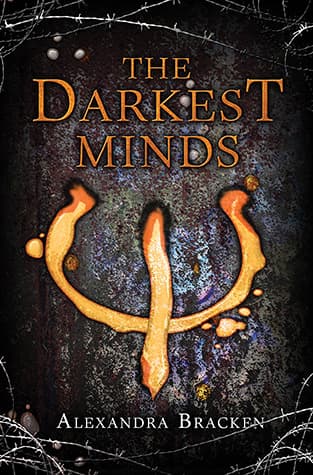
- The Darkest Minds
Alexandra Bracken
4.2 (148k) average on GoodreadsFantasyPrequel in the same series, sharing characters and world-building.
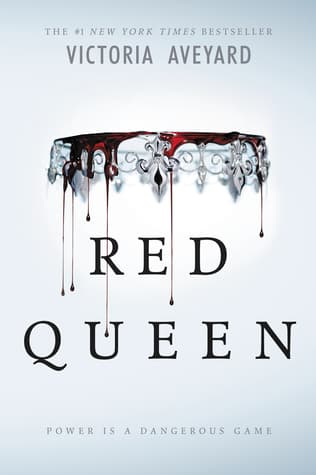
- Red Queen
Victoria Aveyard
4.0 (565k) average on GoodreadsFantasyFeatures a protagonist with special abilities fighting against an oppressive system and social hierarchy.
- Shatter Me
Tahereh Mafi
4.0 (291k) average on GoodreadsFantasyExplores a dystopian world where individuals with powers are feared and controlled, with a focus on a unique female lead.
- The Hunger Games
Suzanne Collins
4.3 (6.4M) average on GoodreadsFantasySimilar in its post-apocalyptic setting and the rise of an unexpected hero from marginalized youth. Collins's narrative, however, often maintains a more relentless pace and direct plot progression, whereas 'The Darkest Legacy' occasionally delves into more intricate political machinations.
- Divergent
Veronica Roth
4.2 (2.9M) average on GoodreadsFantasyBoth series feature complex societal structures and governmental control. Roth's 'Divergent' tends to present its factional conflicts and societal mechanics with a more streamlined approach, making the underlying system arguably easier for readers to grasp compared to the sometimes dense political intrigue in 'The Darkest Legacy'.
- Legend
Marie Lu
4.0 (7k) average on GoodreadsFantasyLike 'The Darkest Legacy,' 'Legend' involves a dystopian society, a protagonist on the run, and uncovering government conspiracies. Lu's series often maintains a stronger sense of urgency and directness in its world-building and reveals, which can make its narrative more immediately accessible and propulsive than some of the more complex expositions in Bracken's novel.




Enjoyed the summary?
A summary gives you the shape of the book. The book itself has the detail, the examples and the voice.
Find The Darkest Legacy on AmazonAs an Amazon Associate, BookBrief earns from qualifying purchases. How we're funded