
Synopsis
Covers the whole plot, including the ending.
- Difficulty
- Medium
- Pacing
- Variable
- Mood
- Dark, Suspenseful, Unsettling, Mysterious
- Read it if
- You enjoy psychological thrillers with a strong mystery element, unreliable narrators, and a unique multi-media format.
- Skip it if
- You prefer straightforward narratives, are sensitive to themes of bullying and abuse, or dislike ambiguity in endings.
The Dead House Plot Summary
Covers the whole plot, including the ending.
The Discovery of Kaitlyn's Diary
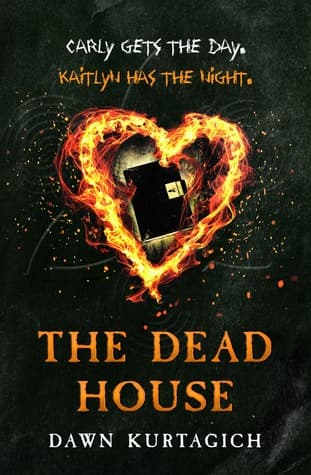
Twenty-five years after the fire at Elmbridge High School, which killed three people and left student Carly Johnson missing, a discovery reopens the cold case. A diary, seemingly belonging to Kaitlyn Johnson, is found in the charred remains of the school. This discovery is puzzling, as Carly Johnson was officially known to be an only child. The diary entries, written in a distinctive voice, hint at a secret life and a shared existence, suggesting that Kaitlyn was Carly's identical twin, a fact never before acknowledged by authorities or Carly's family. This finding sets the stage for a re-examination of 'the Johnson Incident,' challenging the established narrative and raising questions about identity, memory, and the supernatural.
Introduction to the Johnson Twins
The narrative quickly establishes Carly and Kaitlyn Johnson, identical twins whose lives are intertwined in an unsettling way. Through Kaitlyn's diary entries, supplemented by psychiatric reports and police transcripts, readers learn that Kaitlyn is a mysterious figure who appears mostly at night or when Carly is in distress. Carly often dismisses Kaitlyn's existence or attributes her behavior to a psychological condition, adding to the ambiguity surrounding Kaitlyn's reality. Their mother, Mrs. Johnson, seems aware of Kaitlyn but struggles to cope, often medicating Carly. The twins' relationship is marked by dependency, jealousy, and a shared history of trauma, which begins to unfold through the fragmented evidence presented.
The Elmbridge High Environment
Elmbridge High School is a troubled institution, far from a typical learning environment. The school has severe bullying, especially targeting Carly, and becomes a breeding ground for dark, illicit rituals involving a group of students led by the charismatic and manipulative 'King' – David Miller. These rituals, often described in Kaitlyn's diary, involve the occult and a fascination with death, creating a sinister atmosphere. The isolation felt by the Johnson twins is worsened by this hostile environment, pushing them further into their own world and making them targets for the malevolent forces at play within the school. Teachers and staff seem largely unaware or complicit, failing to provide a safe space for the students.
The Emergence of the 'Shadow Man'
Kaitlyn's diary entries increasingly describe a terrifying entity she calls the 'Shadow Man.' This figure appears to her in moments of vulnerability, whispering dark suggestions and exerting a malevolent influence. The 'Shadow Man' is a source of immense fear and a catalyst for some of Kaitlyn's more disturbing actions. The narrative cleverly leaves the reader questioning whether this entity is a genuine supernatural presence, a manifestation of Kaitlyn's deteriorating mental state, or a symbolic representation of the abuse and manipulation she endures. This ambiguity is central to the novel's psychological horror, as the 'Shadow Man' becomes a recurring motif, intensifying the dread and confusion surrounding the events at Elmbridge High.
The Escalation of Rituals and Bullying
As the school year progresses, the illicit rituals orchestrated by David Miller and his followers escalate in frequency and severity. These rituals, often involving a secluded part of the school grounds or the abandoned 'dead house' nearby, begin to focus more on the Johnson twins, particularly Carly. The bullying she experiences from her peers becomes more targeted and cruel, often with a psychological dimension. Kaitlyn's diary entries detail the twins' growing involvement with these dark practices, hinting at forced participation and a loss of agency. The lines between victim and accomplice begin to blur as the twins are drawn deeper into the cult-like atmosphere, making their escape seem increasingly impossible.
The Mystery of Carly's Disappearance
The main mystery of the novel is Carly Johnson's disappearance during the Elmbridge High fire. The fragmented evidence—police reports, witness statements, and Kaitlyn's diary—offers conflicting accounts of that night. While the official record states Carly vanished, Kaitlyn's entries suggest a more complex scenario, hinting at a deliberate act or a tragic accident intertwined with the rituals. The narrative meticulously pieces together the hours before the fire, revealing the heightened tensions, the culmination of the bullying, and the final, desperate ritual that took place. The question of whether Carly was a victim, a participant, or somehow transformed, remains at the forefront, driving the unfolding mystery.
The Fire at Elmbridge High
The night of the Elmbridge High fire is the terrifying culmination of all the preceding events. The fire itself is a chaotic and destructive force, consuming the school and taking lives. The narrative pieces together various accounts: fire department reports, police interviews with survivors, and Kaitlyn's frantic diary entries. These documents reveal the desperate attempts to escape, the confusion, and the tragic loss of life, including David Miller and two other students. Crucially, Carly Johnson is never found in the wreckage, leading to her official designation as 'missing.' The fire effectively erases much of the physical evidence, leaving investigators and readers alike to grapple with the conflicting testimonies and the lingering sense of a truth deliberately obscured.
The Police Investigation and Cover-up
After the fire, the police investigation struggles to piece together the truth, hampered by conflicting testimonies, destroyed evidence, and the unusual nature of the events. The narrative suggests incompetence or even a deliberate cover-up by authorities, particularly concerning the strange details surrounding the Johnson twins and the occult rituals. Psychiatric reports on Carly are dismissed or misinterpreted, and Kaitlyn's existence is largely ignored or attributed to Carly's mental illness. The official conclusion is unsatisfying, leaving the fates of Carly and Kaitlyn unresolved, contributing to the enduring mystery and the sense that justice was never fully served for the victims of Elmbridge High.
The Lingering Presence of Kaitlyn
Despite the official narrative downplaying or denying Kaitlyn's existence, her presence continues to permeate the story even after the fire. The discovery of her diary decades later is proof of her material, if not physical, impact. Furthermore, fragmented accounts and psychological analyses hint at a deep-seated connection between the twins that transcends conventional understanding. The book subtly suggests that Kaitlyn may not have been merely a delusion or an alter ego, but a distinct entity, perhaps even a supernatural one, whose fate is inextricably linked to Carly's. This lingering presence reinforces the novel's exploration of identity, memory, and the blurred lines between reality and the supernatural.
Unraveling the Truth: The Johnson Incident
As the various documents are cross-referenced and analyzed, the horrifying truth behind 'the Johnson Incident' slowly emerges. It becomes clear that Carly and Kaitlyn were not just victims of bullying but were deeply involved in the occult rituals at Elmbridge High, particularly those orchestrated by David Miller, who sought to exploit their unique bond. The fire was not merely an accident but a chaotic event connected to a final, desperate ritual. The central revelation is that Carly, in an act of psychological or even supernatural transformation, merged with or became Kaitlyn, or vice-versa, as a means of survival or escape from the horrors of Elmbridge. The diary is proof of this merging and the complex identity that emerged from the ashes.
Principal Figures
Carly Johnson
Protagonist
The shy, bullied twin who officially disappeared in the Elmbridge High fire.
Carly is initially portrayed as the more fragile and vulnerable of the twins. She is an easy target for bullies at Elmbridge High and struggles with social anxiety. Carly is often medicated by her mother, possibly to suppress the presence of Kaitlyn or to manage her own psychological distress. Her diary entries, when present, are often more conventional than Kaitlyn's, reflecting a desire for normalcy. She is deeply reliant on Kaitlyn, even while fearing her, and her disappearance is the central mystery of the novel.
Relationships: Kaitlyn Johnson (Identical twin, alter ego, or separate entity; deeply intertwined and interdependent.); Mrs. Johnson (Mother, overprotective and possibly complicit in suppressing Kaitlyn's existence.); David Miller (Bully and manipulator, leader of the occult rituals, who targets Carly.)
Kaitlyn Johnson
Protagonist/Mysterious Figure
Carly's identical twin, whose existence is largely unknown and who emerges primarily at night or in times of distress.
Kaitlyn is the more assertive, protective, and often disturbing twin. Her diary entries are vivid, poetic, and filled with dark imagery, detailing her encounters with the 'Shadow Man' and her understanding of the occult rituals. She seems to possess a heightened awareness of the supernatural and a fierce loyalty to Carly, often acting as her protector, albeit in violent or unsettling ways. The ambiguity of her existence—whether she is a separate person, an alter ego, or a manifestation of Carly's trauma—is a core element of the novel.
Relationships: Carly Johnson (Identical twin, alter ego, or separate entity; deeply intertwined and interdependent.); Mrs. Johnson (Mother, who struggles to acknowledge or accept Kaitlyn's existence.); The Shadow Man (A malevolent entity or psychological manifestation that influences Kaitlyn.)
Mrs. Johnson
Supporting
The twins' mother, who attempts to manage Carly's perceived psychological issues and suppress the truth about Kaitlyn.
Mrs. Johnson is a complex and tragic figure. She is depicted as a mother struggling to cope with the unusual circumstances surrounding her daughters. She frequently medicates Carly, seemingly to control what she believes is a psychological disorder, rather than acknowledging Kaitlyn's potential reality. Her actions, while perhaps born of love and a desire to protect Carly, ultimately contribute to the twins' isolation and the obfuscation of the truth. She is a figure of denial and a symbol of the societal failure to understand and protect the twins.
Relationships: Carly Johnson (Daughter, whom she tries to protect and 'normalize'.); Kaitlyn Johnson (Daughter, whose existence she largely denies or attributes to mental illness.)
David Miller ('King')
Antagonist
The charismatic and manipulative leader of the occult group at Elmbridge High.
David Miller is the primary antagonist, a charismatic and deeply disturbing student who leads a group involved in dark, occult rituals at Elmbridge High. He wields significant influence over his peers and specifically targets Carly and Kaitlyn, exploiting their vulnerabilities and unique bond for his own ends. He is fascinated by the supernatural and uses his knowledge to manipulate others, creating a dangerous and toxic environment. His actions are a major catalyst for the tragic events of 'the Johnson Incident.'
Relationships: Carly Johnson (Victim of his bullying and manipulation, targeted for his rituals.); Kaitlyn Johnson (Perceived as a tool or an obstacle in his rituals, also manipulated.)
The Shadow Man
Antagonist/Supernatural Entity
A malevolent, possibly supernatural entity that appears to Kaitlyn and influences her actions.
The Shadow Man is a terrifying and ambiguous figure. Described in Kaitlyn's diary entries, he is a dark, whispering presence that appears to her, particularly in moments of vulnerability. He seems to feed on fear and despair, urging Kaitlyn towards disturbing actions and reinforcing her isolation. Whether he is a literal supernatural entity, a manifestation of Kaitlyn's burgeoning mental illness, or a symbolic representation of the evil forces at play within Elmbridge High, his influence is profound and malevolent, driving much of the psychological horror in the novel.
Relationships: Kaitlyn Johnson (Influencer and tormentor, a source of fear and dark inspiration.)
Detective Davies
Supporting
The lead detective on the Elmbridge High fire case, whose investigation is re-examined years later.
Detective Davies is the original lead investigator of the Elmbridge High fire and Carly Johnson's disappearance. His reports and interviews form a significant portion of the archival evidence. While initially thorough, his investigation ultimately fails to uncover the full truth, particularly regarding the occult rituals and the complex nature of the Johnson twins. He represents the limitations of conventional police work in the face of psychological and potentially supernatural phenomena, and his original conclusions are challenged by the later discovery of Kaitlyn's diary.
Relationships: Carly Johnson (Missing person in his original case.); Kaitlyn Johnson (An unknown factor that eluded his investigation.)
Dr. Albright
Supporting
A psychiatrist whose reports on Carly Johnson contribute to the understanding of her mental state.
Dr. Albright is a psychiatrist who evaluates Carly Johnson, and her reports are included in the compilation of evidence. Her assessments provide a clinical perspective on Carly's behavior, often diagnosing her with psychological disorders and attributing Kaitlyn's existence to a delusion or dissociative identity disorder. While her insights are valuable for understanding the medical interpretation of Carly's condition, they also highlight the limitations of a purely scientific approach in explaining the full scope of what was happening to the twins, particularly in light of the supernatural undertones.
Relationships: Carly Johnson (Patient, whose mental state she attempts to diagnose and treat.)
The Elmbridge Students (general)
Supporting/Mentioned
The student body of Elmbridge High, many of whom are involved in bullying or the occult rituals.
The general student body of Elmbridge High plays a crucial role in creating the toxic environment that engulfs the Johnson twins. Many students are either active bullies, particularly towards Carly, or passive participants/witnesses to the escalating occult rituals led by David Miller. Their collective behavior contributes to the twins' isolation and fear, and their fragmented testimonies after the fire add layers of confusion and conflicting information to the investigation. They represent the peer pressure and societal cruelty that can lead to tragic consequences.
Relationships: Carly Johnson (Bullies or indifferent peers.); David Miller (Followers or victims of his influence.)
Themes & Insights
Identity and Self
The novel explores the fluid and fragmented nature of identity, particularly through the lens of the Johnson twins. The central question of whether Carly and Kaitlyn are two distinct individuals, an alter ego, or a merged entity challenges conventional understandings of self. Kaitlyn's diary entries often blur the lines, with 'we' and 'I' interchanging, reflecting a shared consciousness. This theme is portrayed in scenes where Carly's actions are attributed to Kaitlyn or vice-versa, suggesting a single, complex identity struggling to manifest. The ultimate merging or transformation at the end of the narrative shows that identity can be forged through trauma and survival, becoming something entirely new and undefinable.
“We are two halves of a terrible whole. One cannot exist without the other, not truly.”
The Supernatural vs. Psychological Illness
A core tension in the narrative is the ambiguity between genuine supernatural phenomena and severe psychological illness. The 'Shadow Man' could be a demonic entity or a manifestation of Kaitlyn's psychosis. The occult rituals might be genuinely powerful or merely a vehicle for manipulation and group hysteria. Psychiatric reports consistently diagnose Carly with mental health issues, while Kaitlyn's diary insists on the reality of the supernatural. This ambiguity forces the reader to constantly question what is real, what is imagined, and whether the two can even be separated when dealing with profound trauma. The novel never fully resolves this, leaving the unsettling feeling that both explanations might be true.
“They say I'm mad. They say we're mad. But the darkness is real. I feel it, breathing.”
Abuse, Bullying, and Isolation
The devastating impact of abuse and bullying is a pervasive theme, particularly on the vulnerable Johnson twins. Carly is relentlessly targeted by her peers, leading to her profound isolation and reliance on Kaitlyn. The occult rituals, orchestrated by David Miller, are a form of psychological manipulation and abuse, trapping the twins in a cycle of fear and exploitation. The school environment itself is depicted as failing to protect its students, contributing to the twins' sense of being utterly alone against malevolent forces. This theme highlights how neglect and cruelty can create a fertile ground for further darkness, pushing individuals to extreme measures for survival.
“They pick at her, like crows at a wound. And I, I watch, and I plot.”
Memory and Truth
The novel's structure, composed of fragmented documents, emphasizes the unreliable and subjective nature of memory and the elusive quest for truth. Police reports, witness testimonies, and psychiatric evaluations offer differing perspectives, often contradicting each other or overlooking crucial details. Kaitlyn's diary, while intimate, is also filtered through her unique and potentially disturbed perception. The passage of 25 years further distorts memories. The reader is tasked with piecing together the 'truth' from these disparate sources, highlighting how history can be rewritten, forgotten, or deliberately obscured, and that a single, objective truth may not even exist.
“The past is not a straight line, but a shattered mirror, reflecting a thousand different truths.”
Plot Devices & Literary Techniques
Epistolary Format
The story is told through a collection of fragmented documents.
The novel employs an epistolary format, presenting the story through a dossier of police reports, psychiatric evaluations, fire department records, witness statements, and, most crucially, Kaitlyn Johnson's diary entries. This fragmented structure mirrors the broken memories and conflicting accounts surrounding the Elmbridge High fire. It creates a sense of realism, as if the reader is an investigator piecing together a cold case, and allows for multiple, often unreliable, perspectives on the events. This device also heightens suspense and ambiguity, as no single narrator provides a complete or definitive truth, forcing the reader to actively participate in constructing the narrative.
Unreliable Narrator
Kaitlyn Johnson's diary entries are subjective and potentially influenced by mental illness or supernatural forces.
Kaitlyn Johnson serves as a primary unreliable narrator. Her diary entries are vivid and emotionally charged, but her perception of reality is constantly in question. She describes supernatural encounters with the 'Shadow Man' and experiences that could be interpreted as delusions or dissociative episodes. This unreliability is central to the novel's mystery, as the reader must constantly weigh whether Kaitlyn's accounts are literal truths, symbolic representations, or manifestations of a disturbed mind. This device fosters psychological tension and keeps the reader guessing about the true nature of the events at Elmbridge High and the twins' shared identity.
The 'Dead House' as a Setting
An abandoned, dilapidated house near the school serves as a focal point for dark rituals.
The 'Dead House' is a significant setting and a powerful symbol within the novel. It is an abandoned, dilapidated house located near Elmbridge High School, which becomes the primary site for the occult rituals conducted by David Miller and his followers. Its decaying state and isolated location contribute to the eerie atmosphere of the story. The house acts as a crucible for the dark forces at play, a place where the boundaries between the living and the dead, and reality and the supernatural, become dangerously thin. Its very presence amplifies the sense of dread and foreshadows the tragic events that unfold at the school.
The Twin Motif
The identical twin sisters, Carly and Kaitlyn, form the core of the novel's mystery and psychological depth.
The motif of identical twins, Carly and Kaitlyn, is central to the novel's exploration of identity, self, and the supernatural. Their shared appearance but distinct personalities, and the ambiguity surrounding Kaitlyn's very existence, drive the main conflict. The twin motif allows for a deep dive into themes of codependency, protective instincts, and the blurring of individual boundaries. It also serves as a vehicle for the supernatural elements, hinting at a connection that transcends normal human understanding, potentially enabling a merging of consciousness or a shared vulnerability to malevolent forces. This device creates a constant tension between individuality and a shared, complex identity.
The Dead House Quotes
“There are some things you can't undo, no matter how much you wish you could.”
“The house was a living thing, breathing in the darkness, waiting.”
“We are all broken, some just show it more than others.”
“Memories are not always reliable. Sometimes they lie.”
“Fear has a smell, and it was thick in the air.”
“The truth is a dangerous thing, especially when you don't want to hear it.”
“Some secrets are better left buried.”
“The past isn't dead. It isn't even past.”
“Madness is a relative term, isn't it? What's sane to one might be utterly insane to another.”
“Sometimes the monster isn't under your bed. Sometimes it's inside you.”
“The silence was heavier than any sound.”
“We build our own cages, sometimes, without even realizing it.”
“There are ghosts, and then there are echoes. And sometimes, the echoes are louder.”
“What you don't know can hurt you, but what you do know can hurt you even more.”
Quiz
10 questions on the plot and the characters. Each answer comes with a short explanation.
Question 1
What significant event happened at Elmbridge High twenty-five years before the discovery of the diary?
- A new library was opened.
- The school burned down, killing three people.
- A major sporting event was held.
- The school was renovated.
Show answer
B. The school burned down, killing three people. The premise of the book states that Elmbridge High burned down twenty-five years ago, resulting in three deaths.
Question 2
Who is the owner of the diary found in the ruins of Elmbridge High?
- Carly Johnson
- Kaitlyn Johnson
- An unknown student
- A former teacher
Show answer
B. Kaitlyn Johnson The book explicitly states that the diary belongs to Kaitlyn Johnson, Carly's identical twin sister.
Question 3
What is the primary mystery surrounding Carly Johnson, besides her disappearance?
- Her academic achievements.
- Her previously unknown identical twin sister, Kaitlyn.
- Her involvement in a local club.
- Her family's wealth.
Show answer
B. Her previously unknown identical twin sister, Kaitlyn. The central mystery is the existence of Kaitlyn, Carly's identical twin, as Carly was not known to have a twin.
Question 4
The narrative of 'The Dead House' is presented through what type of documents?
- Traditional prose chapters.
- Police records, psychiatric reports, video transcripts, and diary fragments.
- Newspaper articles and interviews.
- Letters and emails.
Show answer
B. Police records, psychiatric reports, video transcripts, and diary fragments. The book uses an epistolary format, compiling re-opened police records, psychiatric reports, transcripts of video footage, and diary fragments to tell the story.
Question 5
What is the main question raised about Kaitlyn Johnson's existence?
- Whether she was a good student.
- If she was a real person or a figment of a disturbed mind.
- Her choice of friends.
- Her favorite subjects.
Show answer
B. If she was a real person or a figment of a disturbed mind. A key question posed in the book's description is whether Kaitlyn was real or 'a figment of a disturbed mind'.
Question 6
What type of activities are hinted to have been taking place at Elmbridge High before 'the Johnson Incident'?
- After-school study groups.
- Illicit rituals.
- Charity fundraising events.
- Regular sports practices.
Show answer
B. Illicit rituals. The summary mentions questions about 'illicit rituals taking place at the school'.
Question 7
The term 'the Johnson Incident' refers to what specific event?
- A school dance.
- The events leading up to the burning of Elmbridge High and Carly Johnson's disappearance.
- A student protest.
- A school play.
Show answer
B. The events leading up to the burning of Elmbridge High and Carly Johnson's disappearance. The phrase 'the Johnson Incident' refers to the sequence of events at Elmbridge leading up to the fire and Carly's disappearance, which are central to the mystery.
Question 8
What characteristic is specifically mentioned about Kaitlyn Johnson's appearances?
- She only appeared during the day.
- She only appeared at night.
- She only appeared on weekends.
- She only appeared in photographs.
Show answer
B. She only appeared at night. One of the questions posed in the description is 'why did she only appear at night?' regarding Kaitlyn.
Question 9
The overall tone and outcome of the investigation, as suggested by the book's description, is one of:
- Clear resolution and closure.
- A web of deceit, intrigue, violence, and murder, raising more questions than answers.
- A simple misunderstanding.
- A heartwarming tale of sisterly bond.
Show answer
B. A web of deceit, intrigue, violence, and murder, raising more questions than answers. The description explicitly states that the documents 'reveal a web of deceit and intrigue, violence and murder, raising a whole lot more questions than it answers.'
Question 10
Beyond the physical burning of the school and the deaths, what underlying elements are revealed by the found documents?
- The successful academic programs of the school.
- A history of community service and philanthropy.
- A web of deceit, intrigue, violence, and murder.
- The development of new architectural designs.
Show answer
C. A web of deceit, intrigue, violence, and murder. The summary indicates that the re-opened records and fragments 'reveal a web of deceit and intrigue, violence and murder,' suggesting deeper, darker issues beyond the immediate tragedy.
The Dead House FAQ
What is the central mystery surrounding Carly Johnson and the Elmbridge High fire?
The central mystery revolves around Carly Johnson's disappearance after the Elmbridge High fire, which killed three people. The discovery of a diary belonging to her identical twin, Kaitlyn Johnson, complicates matters, as Carly was not known to have a twin, leading to questions about Kaitlyn's existence and connection to the tragic events.
Who is Kaitlyn Johnson and what role does her diary play in uncovering the past?
Kaitlyn Johnson is presented as Carly Johnson's identical twin, whose diary is found in the ruins of Elmbridge High. Her diary serves as a fragmented, first-person account, offering insights into the events leading up to 'the Johnson Incident,' but its reliability is constantly questioned due to the unusual circumstances of her existence and the nature of the narrative.
What kind of documents are used to piece together the narrative, and how do they contribute to the sense of mystery?
The narrative is constructed from a variety of documents including re-opened police records, psychiatric reports, transcripts of video footage, and fragments of Kaitlyn's diary. This multi-media approach creates an epistolary novel style, presenting conflicting perspectives and unreliable narrators, which deepens the mystery and forces the reader to interpret the truth.
What is 'the Johnson Incident' and what are its immediate consequences mentioned in the book's premise?
'The Johnson Incident' refers to the fire at Elmbridge High twenty-five years ago, which resulted in three deaths and the disappearance of Carly Johnson. The immediate consequences include the closure of the school, ongoing police investigations, and the long-term mystery surrounding Carly's fate and the role of her supposed twin, Kaitlyn.
How do the 'illicit rituals' mentioned in the premise connect to the events at Elmbridge High?
The 'illicit rituals' are hinted to be a significant underlying factor contributing to the dark atmosphere and tragic events at Elmbridge High. These rituals likely involve some form of occult or dangerous practices, potentially influencing the mental states of the students involved and culminating in 'the Johnson Incident' and the fire.
What is the significance of Kaitlyn only appearing at night?
Kaitlyn's nocturnal appearances are a crucial detail that fuels the ambiguity of her existence. It suggests she might be a manifestation of a psychological condition, a ghost, or involved in activities that require secrecy, deeply intertwining with the themes of mental illness, the supernatural, and hidden truths within the story.
Are there any subtle clues in the psychiatric reports that hint at Carly's true psychological state or her connection to Kaitlyn?
The psychiatric reports are likely to contain subtle inconsistencies or diagnoses that could hint at dissociative identity disorder, psychosis, or extreme trauma in Carly. These reports would provide a medical lens through which to interpret Kaitlyn's existence, suggesting she might be an alter ego, a delusion, or a manifestation of Carly's fractured mind.
How do the video footage transcripts offer a different perspective compared to the diary entries?
The video footage transcripts provide an external, more objective (though still potentially manipulated) view of events, contrasting with Kaitlyn's subjective diary entries. They might capture interactions or behaviors not described in the diary, reveal discrepancies in Kaitlyn's account, or show events that directly contradict her narrative, highlighting the unreliability of her perspective.
What role does the setting of the 'dead house' (Elmbridge High ruins) play beyond just being a location?
The 'dead house' of Elmbridge High functions as a character itself, embodying the past and its unresolved trauma. Its decaying state and the discovery of the diary within its ruins symbolize the unearthed secrets and the lingering psychological impact of the fire, creating an oppressive atmosphere that permeates the narrative.
How does the narrative structure, using multiple document types, contribute to the psychological tension?
The fragmented, multi-document narrative structure creates psychological tension by forcing the reader to constantly question what is real and who is trustworthy. The conflicting accounts and unreliable narrators mimic a disturbed mental state, reflecting the confusion and paranoia that might be experienced by characters like Carly, blurring the lines between reality and delusion.
What psychological theories might explain Kaitlyn's existence if she is not a real person?
If Kaitlyn is not a real person, her existence could be explained by psychological theories such as Dissociative Identity Disorder (DID), where Carly developed an alter personality to cope with trauma. Alternatively, it could be a manifestation of psychosis, delusion, or extreme grief, where Carly created an imaginary twin as a coping mechanism or a symptom of a severe mental break.
How do the themes of identity and self-deception manifest in Carly/Kaitlyn's story?
Themes of identity and self-deception are central, particularly if Kaitlyn is a product of Carly's mind. Carly might be deceiving herself about her past, her actions, or even her own sanity. The blurred lines between the two 'sisters' highlight the struggle for a singular identity and the destructive potential of denying uncomfortable truths about oneself.
In what ways might the story explore the psychological impact of trauma on memory and perception?
The story likely delves into how trauma distorts memory, leading to unreliable narration and fragmented recollections. Carly's perception of reality could be severely altered by the events at Elmbridge, causing her to block out painful memories, create false ones, or experience hallucinations, making it difficult for both characters and readers to discern the truth.
Is Kaitlyn a supernatural entity, a psychological manifestation, or a real person who was deliberately hidden?
This is the core interpretive debate. Kaitlyn could be a supernatural entity tied to the 'dead house,' a psychological manifestation of Carly's trauma (e.g., an alter ego or delusion), or a real person whose existence was deliberately concealed due to the illicit activities or the dark secrets of Elmbridge High. The ambiguity is intentionally maintained.
How much of the 'truth' presented in the documents is reliable, and how much is fabricated or distorted?
The reliability of the 'truth' is constantly questioned, as the documents come from various, potentially biased sources. Kaitlyn's diary is inherently subjective, psychiatric reports can be misinterpreted, and police records might contain incomplete information or witness biases. The reader must actively discern which fragments of information are credible and piece together their own version of events.
Does the book lean more towards a psychological thriller explanation or a supernatural horror one?
The book skillfully blends elements of both, making it difficult to definitively categorize. While the premise strongly suggests a psychological thriller with themes of mental illness and unreliable narration, the 'illicit rituals' and the mystery of Kaitlyn's nocturnal appearances also open the door to supernatural interpretations, allowing for reader debate.
What is the author's purpose in presenting such a fragmented and ambiguous narrative?
The author's purpose in using a fragmented and ambiguous narrative is to immerse the reader in the characters' confusion and psychological distress. It challenges the reader to actively participate in constructing the story, mirroring the process of piecing together a complex mystery, and heightens the sense of dread and uncertainty inherent in the thriller genre.
Could the 'illicit rituals' be a metaphor for something else, rather than literal occult practices?
Yes, the 'illicit rituals' could be a metaphor. They might symbolize the destructive social dynamics, peer pressure, or extreme bullying prevalent at Elmbridge High, or even the psychological 'rituals' of self-harm or unhealthy coping mechanisms. This metaphorical interpretation would deepen the psychological impact of the story.
About the author

Dawn Kurtagich is a British author known for her gripping young adult horror novels. Her debut, "The Dead House," garnered critical acclaim for its unsettling atmosphere and clever narrative structure. Kurtagich's work often explores themes of psychological horror and the darker aspects of human nature, drawing readers into suspenseful and thought-provoking stories.
Similar books
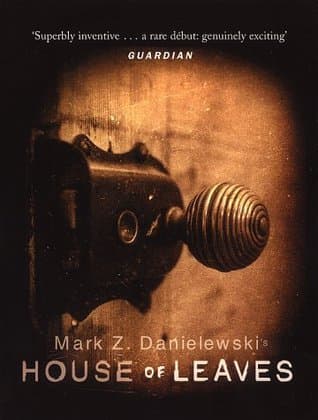
- House of Leaves
Mark Z. Danielewski
4.1 (131k) average on GoodreadsThrillerFeatures an unconventional, multi-media format that enhances the unsettling atmosphere and mystery.
- Miss Peregrine's Home for Peculiar Children
Ransom Riggs
3.9 (977k) average on GoodreadsFantasyIncorporates found photographs and documents to build a unique and mysterious world.
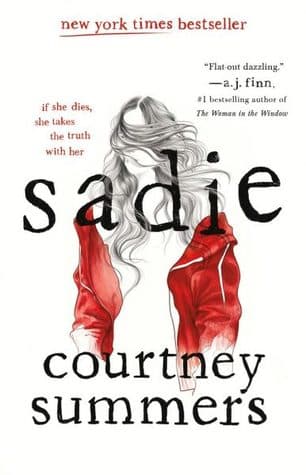
- Sadie
Courtney Summers
4.1 (64k) average on GoodreadsThrillerExplores a dark mystery surrounding a missing girl and features a compelling, unreliable narrative voice.
- Angels & Demons
Dan Brown
3.9 (2.7M) average on GoodreadsThrillerA Harvard symbologist races through Rome's ancient sites, deciphering cryptic clues to unmask the Illuminati and stop a vengeful plot to destroy the Vatican with a stolen antimatter weapon.
- Gone Girl
Gillian Flynn
4.1 (2.3M) average on GoodreadsThrillerA wife's sudden disappearance on her fifth anniversary reveals a web of lies and psychological warfare, exposing the secrets within a seemingly perfect marriage.
- The Girl on the Train
Paula Hawkins
3.9 (2.1M) average on GoodreadsThrillerA woman’s fascination with a seemingly perfect couple she watches from her daily train commute leads her into a dark investigation when she witnesses something that shatters their idyllic image.




Enjoyed the summary?
A summary gives you the shape of the book. The book itself has the detail, the examples and the voice.
Find The Dead House on AmazonAs an Amazon Associate, BookBrief earns from qualifying purchases. How we're funded