
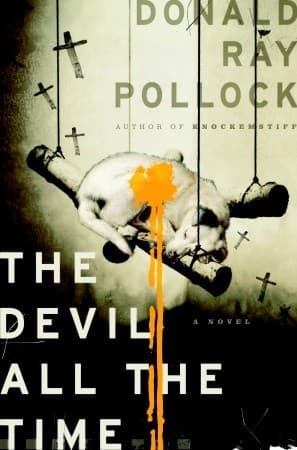
Synopsis
Covers the whole plot, including the ending.
- Difficulty
- Medium
- Pacing
- Moderate
- Mood
- Dark, Gritty, Bleak, Violent, Atmospheric
- Read it if
- You enjoy dark, unflinching Southern Gothic narratives with a strong sense of place and morally complex characters.
- Skip it if
- You are sensitive to graphic violence, sexual abuse, and bleak themes, or prefer stories with clear-cut heroes and happy endings.
The Devil All the Time Plot Summary
Covers the whole plot, including the ending.
The Prayer Log
Willard Russell, a veteran scarred by World War II, returns to Coal Creek, West Virginia. He marries Charlotte, and they have a son, Arvin. When Charlotte gets terminal cancer, Willard's already strong faith becomes a desperate obsession. He builds a 'prayer log' in the woods, where he sacrifices animals—squirrels, dogs, and his own pet dog Jack—believing these blood offerings will make God save Charlotte. Despite his increasingly violent rituals, Charlotte dies, leaving Willard devastated and Arvin orphaned and traumatized by his father's actions.
Sandy and Carl Henderson's 'Models'
In Meade, Ohio, Carl and Sandy Henderson are a husband-and-wife serial killer team. Carl, a photographer, picks up male hitchhikers, often ex-military, pretending to offer a ride. Sandy, who seems quiet, goes with him. In a secluded spot, Sandy seduces the victims, and Carl photographs them in compromising positions before they are brutally murdered. Their ritual includes a final photo of the dead person, a grim trophy. They clean their crime scenes carefully, leaving no trace, and continue their deadly journey, driven by an unspoken hunger.
Roy LaRoue and Theodore
Roy LaRoue, a traveling preacher who handles spiders during sermons, travels the rural South with his crippled, guitar-playing companion, Theodore. Roy's sermons are fiery and unpredictable, often featuring his belief that he can bring the dead back to life. After a sermon where he tries to resurrect a dead woman, he accidentally kills his wife, Helen, by pouring a jar of spiders over her head in a misguided attempt at faith healing. Fleeing the law, Roy and Theodore continue their strange journey, with Theodore's quiet loyalty bordering on obsession for the unstable preacher.
Arvin's Childhood in Knockemstiff
After Willard's suicide following Charlotte's death, Arvin moves in with his paternal grandmother, Emma Russell, in Knockemstiff, Ohio. Emma also takes in Lenora LaRoue, the orphaned daughter of Roy and Helen LaRoue, after Roy abandons her. Arvin and Lenora grow up together, forming a deep, sibling-like bond. Arvin, still affected by his father's extreme faith and violence, often protects Lenora from bullies and the harshness of their poor surroundings, showing a simmering aggression.
The New Preacher, Preston Teagardin
A new preacher, Preston Teagardin, arrives in Knockemstiff, quickly charming the religious community with his looks and smooth sermons. Preston is a predatory and manipulative man who targets vulnerable young women. Lenora, deeply religious and naive, becomes fond of Preston and helps him at the church. Preston exploits her innocence, convincing her that their secret meetings are part of a divine plan. He sexually abuses her, destroying her faith and spirit, believing he can act without consequences due to his perceived holy status.
Lenora's Despair and Arvin's Vengeance
Overwhelmed by guilt, shame, and Preston Teagardin's betrayal, Lenora's fragile world collapses. She believes she is tainted and, unable to reconcile her faith with the injustice she suffered, she takes her own life. Her death devastates Arvin, who sees it as a direct result of Preston's wickedness. Fueled by quiet, burning rage and a deep sense of justice, Arvin decides to avenge Lenora. He confronts Preston Teagardin, shoots him dead in the church, and then flees, becoming a fugitive.
Sheriff Bodecker's Corrupt Pursuit
Sheriff Lee Bodecker, Sandy Henderson's brother, is a corrupt lawman who has taken bribes and ignored various illegal activities in Meade for years. He is also involved in his sister's murders, though he claims not to know the full extent. After Arvin kills Preston Teagardin, Bodecker, already under pressure from an upcoming election and scrutiny of his ethics, pursues Arvin. He sees catching Arvin as a way to improve his image and distract from his own worsening corruption, unknowingly leading him toward his family's dark secrets.
The Path Crosses: Carl and Arvin
As Arvin flees through the rural landscape, he hitchhikes to avoid capture. Carl Henderson picks him up, unaware of Arvin's identity or his recent act of violence, seeing him as another potential victim. Carl starts his usual routine, trying to lure Arvin to a secluded area. However, Arvin, hardened by his past and suspicious, senses the danger. The encounter quickly turns violent. Arvin, in self-defense, kills Carl Henderson, unknowingly ending the serial killer's reign of terror.
Sandy's Revenge and Bodecker's Fate
Upon finding Carl's body, Sandy Henderson is consumed by grief and a desire for revenge. She learns Arvin Russell is responsible for her husband's death and sets out to find him. Meanwhile, Sheriff Bodecker, still pursuing Arvin, tries to cover up his involvement in his sister's crimes and his general corruption. Sandy, Arvin, and Bodecker meet in a tense, violent confrontation in the woods. Sandy tries to kill Arvin, but Arvin, again in self-defense, kills Sandy. Sheriff Bodecker then arrives, confronts Arvin, but Arvin also kills Bodecker, ending the corrupt line.
Arvin's Reckoning
Having killed Carl and Sandy Henderson, and Sheriff Bodecker, Arvin is left alone, covered in blood, and deeply conflicted. He thinks about the cycle of violence that has marked his life and the lives of those around him, from his father's extreme sacrifices to the predators he met. He recognizes the darkness within himself, the capacity for violence he has inherited and developed. With no clear path forward, Arvin continues to drift, a survivor haunted by his past, carrying the weight of his actions, and wondering if he can ever escape the 'devil all the time' that seems to fill his world.
Principal Figures
Arvin Eugene Russell
Protagonist
An orphan shaped by violence, seeking justice in a corrupt world.
Arvin is a quiet, observant boy who grows into a stoic and righteous young man. Traumatized by his father's extreme religious practices and his mother's death, he carries a deep-seated anger and a strong moral compass. He is fiercely protective of those he loves, particularly Lenora, and is willing to resort to violence when he perceives injustice. His journey is marked by a constant struggle against the inherent evil and corruption he encounters, often making him a reluctant agent of retribution.
Relationships: Willard Russell (Father; his extreme faith and violence deeply impact Arvin.); Charlotte Russell (Mother; her death leaves Arvin orphaned and traumatized.); Lenora LaRoue (Adopted sister/friend; Arvin is deeply protective of her.); Emma Russell (Grandmother; provides a home and stability after his parents' deaths.)
Willard Russell
Supporting
A World War II veteran whose faith turns to extreme, sacrificial obsession.
Willard is a deeply religious man whose experiences in the South Pacific during WWII leave him profoundly scarred. His faith, initially a source of comfort, devolves into a desperate, violent obsession as he tries to bargain with God for his wife's life. He believes that extreme sacrifice and blood offerings will appease a vengeful deity, ultimately leading him to commit disturbing acts that traumatize his son and culminate in his own tragic end.
Relationships: Charlotte Russell (Wife; his desperate love for her drives his extreme actions.); Arvin Russell (Son; Willard's actions profoundly shape Arvin's early life.)
Carl Henderson
Antagonist
A serial killer who photographs his victims with his wife.
Carl is one half of a depraved serial killer duo. He is the more calculating and dominant partner, using his photography hobby as a cover for his gruesome acts. He preys on hitchhikers, particularly young men, and finds a perverse satisfaction in documenting their final moments. His motivations are never fully explained, hinting at a deep-seated pathology that he shares with his wife, Sandy, in their ritualistic murders.
Relationships: Sandy Henderson (Wife and accomplice; they share a twisted, co-dependent relationship built on murder.); Lee Bodecker (Brother-in-law; Bodecker is aware of their activities but looks the other way.)
Sandy Henderson
Antagonist
A seductive serial killer who assists her husband in their gruesome ritual.
Sandy is Carl Henderson's wife and accomplice, equally complicit in their serial killings. She uses her femininity to lure victims, participating actively in their murders. While seemingly more outwardly 'normal' than Carl, her capacity for violence and lack of remorse are chilling. Her loyalty to Carl is absolute, and his death drives her to seek revenge, revealing a fierce, vengeful side beneath her seemingly passive exterior. She is also Sheriff Bodecker's sister.
Relationships: Carl Henderson (Husband and accomplice; their relationship is built on their shared murderous ritual.); Lee Bodecker (Brother; he covers for her and Carl's activities.)
Roy LaRoue
Supporting
A charismatic but unhinged preacher who abandons his daughter.
Roy is an itinerant preacher known for his dramatic, often disturbing sermons, particularly his use of spiders and his belief in resurrection. He is charismatic but deeply delusional, mistaking his own violent actions for acts of divine intervention. His misguided faith leads to the accidental death of his wife, Helen, and his subsequent abandonment of his daughter, Lenora, highlighting his profound irresponsibility and self-delusion.
Relationships: Helen LaRoue (Wife; accidentally killed by Roy.); Lenora LaRoue (Daughter; abandoned by Roy.); Theodore (Loyal, crippled musical companion.)
Lenora LaRoue
Supporting
A devout and innocent girl, orphaned and tragically exploited.
Lenora is Roy and Helen LaRoue's daughter, orphaned and raised alongside Arvin by Emma Russell. She is deeply religious, pure-hearted, and naive, seeking solace and meaning in her faith. Her innocence makes her particularly vulnerable to the predatory Preston Teagardin, whose exploitation shatters her spirit and leads to her tragic suicide. She represents the fragile hope and goodness in a world often consumed by darkness.
Relationships: Arvin Russell (Adopted brother/friend; Arvin is her protector.); Emma Russell (Adoptive grandmother.); Preston Teagardin (Her abuser and the cause of her despair.)
Preston Teagardin
Antagonist
A handsome, corrupt preacher who exploits the vulnerable.
Preston Teagardin is a new preacher in Knockemstiff who quickly gains the trust and admiration of the religious community. Beneath his charming facade, however, he is a manipulative and predatory individual who uses his position of authority to sexually exploit young, vulnerable women, particularly Lenora. He embodies the hypocrisy and corruption that can fester within institutions of faith, believing himself untouchable due to his holy office.
Relationships: Lenora LaRoue (His victim of abuse.); Arvin Russell (His killer, seeking vengeance for Lenora.)
Sheriff Lee Bodecker
Antagonist
A corrupt sheriff entangled in his sister's crimes and his own moral decay.
Lee Bodecker is the sheriff of Meade, Ohio, and Sandy Henderson's brother. He is deeply corrupt, accepting bribes and turning a blind eye to various illicit activities. While not directly involved in his sister's murders, he is aware of their general depravity and covers for them, demonstrating his profound moral compromise. His pursuit of Arvin is driven by a desire to salvage his reputation and distract from his own corruption, ultimately leading him to a confrontation with his family's dark legacy.
Relationships: Sandy Henderson (Sister; he covers for her and Carl.); Arvin Russell (His target, who ultimately kills him.)
Emma Russell
Supporting
Arvin's strong, devout grandmother who provides a home for orphans.
Emma Russell is Willard's mother and Arvin's paternal grandmother. After Willard and Charlotte's deaths, she takes in Arvin and later Lenora, providing them with a stable, albeit strict and religious, home. She is a woman of unwavering faith and resilience, doing her best to raise the orphaned children in a morally upright manner, despite the pervasive darkness of their surroundings. She represents a grounding force amidst the chaos and violence.
Relationships: Arvin Russell (Grandson; she raises him.); Lenora LaRoue (Adoptive granddaughter; she raises her.)
Themes & Insights
The Corrupting Nature of Faith
The novel shows how religious devotion, taken to extremes or twisted by human depravity, can lead to violence, exploitation, and moral decay. Willard Russell's sacrificial prayers become gruesome acts of animal cruelty, while Roy LaRoue's sermons lead to his wife's accidental death. Most chillingly, Preston Teagardin uses his position as a preacher to manipulate and abuse Lenora, showing how faith can be perverted to justify terrible acts. The story suggests that even the desire for salvation can be a source of deep evil.
“Some people were just born to be buried.”
The Cycle of Violence
Violence is common throughout the novel, often inherited or repeated in a seemingly endless cycle. Willard's wartime trauma and extreme acts of faith influence Arvin's own capacity for violence. Arvin, while often acting out of justice or self-preservation, becomes part of this cycle, killing those who have wronged him or others. The serial killers Carl and Sandy Henderson represent senseless, predatory violence, while Sheriff Bodecker's corruption is maintained through intimidation. The story suggests that escaping this cycle is nearly impossible in the bleak rural South.
“He always said that there was a lot of good in people, but you had to kill a lot of them to find it.”
Predation and Innocence
A main theme is the constant threat predators pose to the innocent and vulnerable. Lenora LaRoue, with her strong faith and naive nature, becomes a tragic victim of Preston Teagardin's sexual exploitation. The hitchhikers picked up by Carl and Sandy Henderson are innocent people seeking passage, only to be brutally murdered. Arvin, though hardened, often finds himself in situations where he must defend himself against those who want to harm him. The novel paints a grim picture where innocence is rarely protected and often becomes a target for the inherent evil in the world.
“He knew that the world was full of evil, and that it was a constant struggle to keep it from taking over.”
Moral Ambiguity and Redemption
The characters in the novel rarely fit neatly into good or evil categories. Arvin, despite committing multiple murders, is often driven by a strong, though violent, sense of justice. Even the 'good' characters are flawed and capable of extreme acts. The story challenges the reader to consider the complexities of morality in a world where survival often demands difficult choices. True redemption seems rare, as characters are constantly pulled back into cycles of violence and despair, and their actions often have unintended, devastating results.
“You could pray to God and still wind up in the ditch.”
The Weight of the Past
The novel is set after World War II, showing how the trauma of war, seen in Willard Russell's experiences, directly affects future generations. The bleak, poor setting of rural Ohio and West Virginia also contributes to a sense of inherited hardship and desperation. Characters are often haunted by their parents' actions or the decay around them, suggesting that the past is not just a background but an active force that dictates their present and limits their future. The wrongs of the parents are passed down to the children.
“He would never understand the devil that was in his father, nor the one that seemed to follow him wherever he went.”
Plot Devices & Literary Techniques
Interweaving Narratives
Multiple character storylines converge over time.
The novel employs a non-linear narrative structure, following several distinct character arcs across different locations and time periods before gradually bringing them together. This device creates suspense as the reader anticipates how these seemingly disparate lives will eventually intersect. It emphasizes the interconnectedness of fate and the pervasive nature of evil within the story's world, highlighting how seemingly unrelated acts of violence and faith ultimately converge into a single, tragic tapestry.
Symbolism of the 'Prayer Log'
A physical manifestation of twisted faith and sacrifice.
Willard Russell's 'prayer log' serves as a powerful symbol of his perverted faith and the extreme lengths to which he goes in his desperate attempt to save his wife. The log, initially a place of fervent prayer, becomes a site of brutal animal sacrifices, representing the dark, violent underbelly of religious extremism. It foreshadows the cycle of violence and the corrupting nature of faith that will permeate Arvin's life and the wider narrative, becoming a physical reminder of inherited trauma and misguided devotion.
The Narrator's Omniscience
An all-knowing, often detached, and cynical narrative voice.
The novel uses an omniscient narrator who possesses complete knowledge of all characters' thoughts, actions, and fates. This narrative voice is often detached, bleak, and infused with a sense of fatalism and cynicism, particularly regarding human nature and the pervasive presence of evil. This allows the story to shift perspectives seamlessly, providing insights into the motivations of both protagonists and antagonists, and reinforcing the novel's overarching themes of moral decay and the inescapable nature of violence.
Foreshadowing through Atmosphere
A pervasive sense of dread and impending doom.
Pollock masterfully uses atmospheric descriptions of the desolate, impoverished landscapes of rural Ohio and West Virginia to create a constant sense of dread and foreshadowing. The grim settings, coupled with the characters' troubled inner lives, contribute to an oppressive mood that hints at the tragic events to come. This pervasive darkness suggests that violence and despair are inherent to the environment, making the characters' struggles seem almost predetermined and their fates inevitable.
The Devil All the Time Quotes
“Some people are just born to be buried.”
“Arvin understood that his father had been trying to buy God's love, but it was just like trying to buy the love of a woman who didn't want you.”
“He knew that God didn't care about the good or bad in people, only whether they believed.”
“There was a lot of sin in the world, and most of it wasn't even fun.”
“It seemed to Arvin that the world was nothing but a series of traps.”
“He often thought that the difference between a good man and a bad one was not much at all.”
“The devil all the time.”
“He was a man who believed in the power of prayer, but only if you prayed with a gun in your hand.”
“Every day was a struggle, a fight against the devil, and sometimes the devil won.”
“There were too many ghosts in the world, and most of them were still alive.”
“He just wanted to do what was right, but what was right seemed to change with every sunrise.”
“The truth was, he didn't care about anybody but himself, and maybe that was the only way to survive.”
“God would forgive him, he was sure of that, because God always forgave the faithful, no matter what they did.”
“The dead don't care about justice, only the living do.”
Quiz
10 questions on the plot and the characters. Each answer comes with a short explanation.
Question 1
What is the name of the object Willard Russell uses for his sacrificial prayers to save his wife?
- A crucifix
- A prayer log
- A bloody altar
- A bible
Show answer
B. A prayer log Willard Russell believes that by pouring sacrificial blood on a specific log, which he calls his 'prayer log,' he can appease God and save his wife, Charlotte.
Question 2
Who are the husband-and-wife serial killers who pick up hitchhikers and take their photos before killing them?
- Willard and Charlotte Russell
- Roy and Theodore
- Carl and Sandy Henderson
- Arvin and Lenora
Show answer
C. Carl and Sandy Henderson Carl and Sandy Henderson are the depraved couple who engage in a cross-country murder spree, picking up unsuspecting hitchhikers.
Question 3
What kind of animal does Preacher Roy Laferty famously handle during his sermons?
- Snakes
- Spiders
- Rats
- Scorpions
Show answer
B. Spiders Preacher Roy Laferty is known for his unusual and disturbing practice of handling spiders during his sermons, a detail that highlights his eccentric and dangerous nature.
Question 4
What significant event in Willard Russell's past deeply affects his religious zeal and subsequent actions?
- Winning the lottery
- His combat experience in the South Pacific during World War II
- A near-death experience in a car crash
- Meeting a charismatic evangelist
Show answer
B. His combat experience in the South Pacific during World War II Willard Russell's traumatic experiences and the horrors he witnessed as a soldier in the South Pacific during WWII deeply impact his psyche and fuel his extreme religious practices.
Question 5
How is Arvin Eugene Russell related to Willard and Charlotte Russell?
- He is their nephew
- He is their adopted son
- He is their biological son
- He is a family friend
Show answer
C. He is their biological son Arvin Eugene Russell is the biological son of Willard and Charlotte Russell, whose story forms the central thread connecting many of the novel's characters.
Question 6
What is a recurring theme explored through the various characters' lives in 'The Devil All the Time'?
- The triumph of good over evil
- The corrupting nature of religious extremism and violence
- The power of forgiveness and redemption
- The pursuit of the American Dream
Show answer
B. The corrupting nature of religious extremism and violence A central theme of the novel is how religious fervor, particularly when taken to extremes, can lead to violence, delusion, and destruction among its characters.
Question 7
What is the primary motivation for Carl and Sandy Henderson's serial killings?
- Financial gain
- Religious fanaticism
- A twisted desire for art and a thrill, often involving photography
- Revenge against society
Show answer
C. A twisted desire for art and a thrill, often involving photography Carl and Sandy Henderson are driven by a perverse need to photograph their victims in various poses, which they consider a form of 'art,' before killing them, indicating a deep psychological disturbance rather than a practical motive.
Question 8
How does Arvin Russell's character development reflect the novel's overarching themes of inherited violence and moral ambiguity?
- He completely rejects violence and becomes a pacifist.
- He becomes a preacher, spreading a message of peace.
- He struggles with his innate goodness while also resorting to violence to protect those he loves, mirroring the darkness around him.
- He succumbs entirely to evil, becoming a villain himself.
Show answer
C. He struggles with his innate goodness while also resorting to violence to protect those he loves, mirroring the darkness around him. Arvin embodies the struggle between good and evil; despite his inherent decency, he is repeatedly drawn into violent acts, often in defense of others, showing how the cycle of violence perpetuates even in those trying to be good.
Question 9
What role does Sheriff Lee Bodecker play in the intertwining narratives of the characters?
- He is an honest lawman trying to bring justice to the region.
- He is Sandy Henderson's brother, and his corruption often complicates the pursuit of justice.
- He is a former victim of Carl and Sandy Henderson.
- He is a devout religious man who tries to guide the community.
Show answer
B. He is Sandy Henderson's brother, and his corruption often complicates the pursuit of justice. Sheriff Lee Bodecker is a corrupt law enforcement officer, and his familial connection to Sandy Henderson (as her brother) further illustrates the deep-seated corruption and moral decay within the community, often obstructing justice.
Question 10
The setting of rural southern Ohio and West Virginia is crucial to the novel's atmosphere. What does this specific geographical and cultural context primarily contribute to the story?
- A sense of bustling metropolitan life and progress.
- An isolated, often desperate environment where extreme beliefs and violence can fester unchecked.
- A backdrop for a typical coming-of-age story.
- A vibrant, diverse community that embraces outsiders.
Show answer
B. An isolated, often desperate environment where extreme beliefs and violence can fester unchecked. The isolated, poverty-stricken, and religiously fervent setting of rural southern Ohio and West Virginia provides a fertile ground for the extreme behaviors, violence, and moral ambiguity that define the characters and their intertwined fates.
The Devil All the Time FAQ
What is the central premise of 'The Devil All the Time'?
The novel interweaves the lives of several morally compromised characters in rural southern Ohio and West Virginia from post-WWII to the 1960s. It explores themes of faith, violence, and inherited trauma through the experiences of Willard Russell, the serial killer couple Carl and Sandy Henderson, the preacher Roy LaRue, and ultimately, Arvin Eugene Russell, who links many of their stories.
Who is Arvin Eugene Russell and what is his role in the narrative?
Arvin Eugene Russell is the orphaned son of Willard and Charlotte Russell, raised by his grandmother and then by Emma and Jesse. He becomes a central figure, connecting many of the story's violent threads as he grows into a man who, despite his inherent goodness, is prone to decisive and often fatal acts of violence in defense of others or himself.
How do Willard Russell's wartime experiences influence his actions?
Willard Russell's traumatic experiences in the South Pacific during World War II leave him deeply scarred and obsessed with a twisted form of religious devotion. He believes he can bargain with God through increasingly violent animal sacrifices on his 'prayer log' to save his wife, Charlotte, from cancer, demonstrating his desperate and ultimately futile attempts to control fate.
What is the nature of Carl and Sandy Henderson's relationship and their crimes?
Carl and Sandy Henderson are a husband-and-wife serial killer duo who cruise highways, picking up hitchhikers or luring men to their car. Sandy seduces the victims, Carl photographs them in compromising positions before they are murdered, often by Sandy. Their killings are driven by a perverse desire for control and a shared dark pathology, fueled by Sandy's incestuous past with her brother, Deputy Lee Bodecker.
What role does religion play in the lives of the characters?
Religion is a pervasive and often corrupting force, manifesting as fervent, fundamentalist, and often violent interpretations of faith. Characters like Willard Russell, Roy LaRue, and even Arvin, are deeply influenced by their understanding of God's will, using it to justify their actions, seek redemption, or inflict suffering, highlighting the dark underbelly of religious extremism.
How does Arvin's upbringing contribute to his violent tendencies?
Arvin's early life is marked by profound loss and exposure to violence, first with his father's extreme religious acts and then his parents' deaths. He is taught by his father to fight back against bullies, a lesson he internalizes. This, combined with witnessing various injustices and cruelties, shapes him into a protector who resorts to violence when pushed, seeing it as the only effective solution.
What is the significance of the 'prayer log' in Willard Russell's story?
The 'prayer log' is a physical manifestation of Willard Russell's desperate and misguided faith, where he performs increasingly gruesome animal sacrifices. It symbolizes his conviction that he can bargain with God and control outcomes, but ultimately represents the futility and tragic delusion of his efforts to save Charlotte, driving him further into madness and despair.
How are Roy LaRue and Theodore connected to the broader narrative?
Roy LaRue is a charismatic but delusional preacher who handles spiders and eventually murders his wife, Helen, convinced he can resurrect her. He travels with his virtuoso-guitar-playing, crippled sidekick Theodore. Their path eventually crosses with Arvin's when Arvin picks up Theodore hitchhiking, leading to a fatal confrontation that further solidifies Arvin's violent trajectory.
What is the connection between Deputy Lee Bodecker and the Henderson couple?
Deputy Lee Bodecker is Sandy Henderson's brother, and they share a dark, incestuous past. This connection explains Lee's complicity and efforts to cover up his sister and brother-in-law's serial killings. His eventual confrontation with Arvin reveals the depth of his corruption and his intertwined fate with the Hendersons' horrific crimes.
How does the author use the setting of rural Ohio and West Virginia to enhance the story?
The isolated, impoverished, and religiously fervent setting of rural southern Ohio and West Virginia amplifies the sense of despair, moral decay, and limited opportunities for the characters. The landscape itself becomes a character, mirroring the characters' internal struggles and providing a backdrop where their dark deeds can unfold with minimal scrutiny, fostering a cycle of violence and desperation.
Is Arvin Russell a hero or an anti-hero?
Arvin Russell is best described as an anti-hero. While his actions are often driven by a desire to protect the innocent or avenge wrongs, he consistently resorts to extreme violence, including murder. He embodies a flawed moral compass, acting as a force of retribution in a world devoid of conventional justice, making him a complex figure rather than a traditional hero.
What is the significance of the recurring motif of 'dust' and 'dirt' throughout the novel?
The motifs of 'dust' and 'dirt' symbolize the pervasive grime, decay, and moral corruption that cling to the characters and the landscape. They represent the inescapable nature of sin, poverty, and death, suggesting that no matter how much one tries to cleanse themselves, the 'devil all the time' leaves an indelible mark, dragging everyone down into the earth.
How does the narrative structure contribute to the story's impact?
The novel employs a non-linear, episodic narrative that jumps between different characters and time periods, slowly revealing their interconnectedness. This fragmented structure heightens suspense, allows for multiple perspectives on similar themes of violence and faith, and ultimately converges to show how fate and inherited trauma inexorably link the characters' destinies.
What psychological factors drive Sandy Henderson's participation in the killings?
Sandy Henderson's participation in the killings is deeply rooted in her abusive past, particularly the incestuous relationship with her brother, Lee Bodecker. This trauma has warped her sense of self and morality, leading her to seek a perverse form of power and control alongside Carl, where she can enact violence and feel a sense of agency, however twisted.
How does the book explore the concept of inherited trauma?
The book vividly explores inherited trauma through characters like Arvin, who is deeply affected by his father Willard's violent religious fervor and the subsequent loss of his parents. The cycles of violence, abuse, and misguided faith are passed down through generations, demonstrating how the past continues to haunt and shape the present lives of the characters, perpetuating a dark legacy.
What is the ultimate message or commentary on human nature presented in the novel?
The novel offers a bleak commentary on human nature, suggesting that in a world devoid of genuine justice or divine intervention, individuals are often left to grapple with their own violent impulses and misguided beliefs. It highlights the pervasive nature of evil and the struggle to maintain goodness in the face of overwhelming corruption, suggesting that humanity is perpetually 'in the devil all the time.'
Are there any characters who represent pure good or evil?
The novel deliberately blurs the lines between good and evil, depicting most characters as morally ambiguous. While figures like Carl and Sandy Henderson are undeniably evil, even Arvin, who acts with good intentions, commits violent acts. Conversely, characters who might seem 'good' often harbor dark secrets or contribute to the cycle of suffering, suggesting a complex and often compromised human condition.
How does the author use violence in the narrative?
Donald Ray Pollock uses violence graphically and unflinchingly, not for gratuitous shock, but to depict the harsh realities of the characters' lives and the brutal consequences of their actions and beliefs. It serves as a catalyst for plot development, a manifestation of psychological torment, and a commentary on the pervasive darkness that permeates the isolated communities, highlighting its cyclical nature.
About the author

Donald Ray Pollock is an American author known for his gritty, darkly humorous fiction often set in the rural American South. His debut short story collection, "Knockemstiff," won the PEN/Bingham Prize for Debut Fiction. Pollock's first novel, "The Devil All the Time," was adapted into a film and cemented his reputation for visceral storytelling and unflinching portrayals of troubled characters.
Similar books
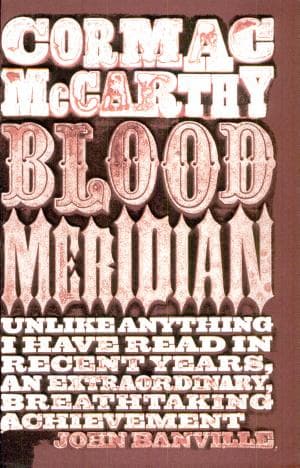
- Blood Meridian
Cormac McCarthy
4.2 (227k) average on GoodreadsFictionShares a brutal, unflinching portrayal of violence and the darker aspects of human nature in a historical setting.
- Winter's Bone
Daniel Woodrell
3.9 (29k) average on GoodreadsLiterary FictionFeatures a similar impoverished, rural setting and a protagonist fighting against a backdrop of crime and desperation.
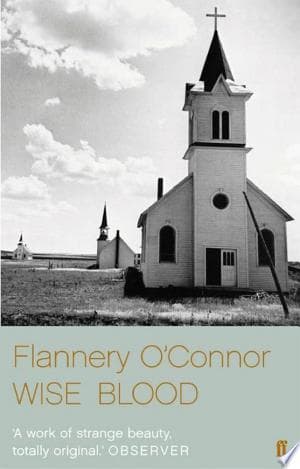
- Wise Blood
Flannery O'Connor
3.9 (26k) average on GoodreadsLiterary FictionExplores themes of corrupted faith, religious fanaticism, and grotesque characters in a Southern context.
- Angels & Demons
Dan Brown
3.9 (2.7M) average on GoodreadsThrillerA Harvard symbologist races through Rome's ancient sites, deciphering cryptic clues to unmask the Illuminati and stop a vengeful plot to destroy the Vatican with a stolen antimatter weapon.
- Gone Girl
Gillian Flynn
4.1 (2.3M) average on GoodreadsThrillerA wife's sudden disappearance on her fifth anniversary reveals a web of lies and psychological warfare, exposing the secrets within a seemingly perfect marriage.
- The Girl on the Train
Paula Hawkins
3.9 (2.1M) average on GoodreadsThrillerA woman’s fascination with a seemingly perfect couple she watches from her daily train commute leads her into a dark investigation when she witnesses something that shatters their idyllic image.




Enjoyed the summary?
A summary gives you the shape of the book. The book itself has the detail, the examples and the voice.
Find The Devil All the Time on AmazonAs an Amazon Associate, BookBrief earns from qualifying purchases. How we're funded