
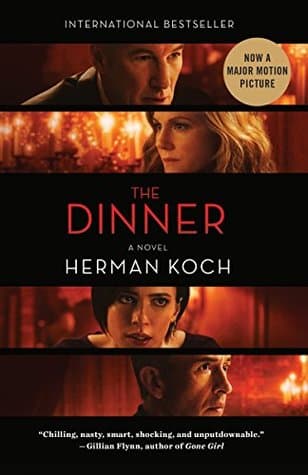
Synopsis
Covers the whole plot, including the ending.
- Difficulty
- Medium
- Pacing
- Moderate
- Mood
- Dark, Suspenseful, Provocative, Unsettling
- Read it if
- You enjoy morally ambiguous characters and intense psychological drama.
- Skip it if
- You prefer clear-cut heroes and villains or are sensitive to dark themes involving youth violence.
The Dinner Plot Summary
Covers the whole plot, including the ending.
Arrival at the Restaurant
Paul Lohman, the narrator, and his wife Claire arrive at an expensive restaurant in Amsterdam. Paul immediately expresses his dislike for the place, its staff, and the pretentious menu, a feeling that continues through the evening. They are there to meet Paul's brother, Serge Lohman, a prominent politician running for Prime Minister, and Serge's wife, Babette. The initial interactions show Paul's cynical view of society, his brother's public image, and the superficiality around them. Tension is present, though unspoken, as Paul hints at a serious reason for this dinner, which he calls 'the talk'.
Appetizers and Small Talk
As appetizers are served, conversation covers everyday topics: Serge's political campaign, upcoming vacations, and polite pleasantries. Paul, however, constantly makes sarcastic remarks and internal criticisms, especially about Serge's public image and social conventions. Claire and Babette try to act normal, but anxiety is clear in their forced smiles and polite questions. Paul's observations about his brother's political ambitions and his own past mental health struggles offer early clues about his character and the family dynamics. The true, dark reason for the dinner hangs, unspoken, over every polite exchange.
The Main Course and Escalating Tension
During the main course, the dinner continues its slow, difficult pace. Paul's internal thoughts reveal more about his past, including his history of violence and temper issues. He thinks about his son, Michel, and his nephew, Rick, hinting at their close, sometimes troubling, relationship. Serge, the politician, tries to keep the conversation on safe, public topics, but Paul's pointed remarks about parenting and responsibility begin to crack the facade. The wives, Claire and Babette, grow more uneasy, exchanging knowing glances. The weight of the upcoming 'talk' becomes almost unbearable, as the parents subtly try to gauge each other's readiness to confront the truth about their children's actions.
The ATM Incident Revealed
The moment comes when Serge's phone gets a news alert, showing a video of two boys assaulting a homeless man at an ATM, leaving him for dead. The boys' faces are partly hidden, but the parents immediately recognize their sons, Michel and Rick. This public revelation shatters the dinner's pretense. The conversation now directly addresses the horrific act. Serge worries about the political effects of the video, while Babette expresses shock and fear. Paul, however, shows a detached, almost analytical, response, focusing on the video's technical details rather than the moral implications, hinting at his own complex and perhaps involved nature.
Serge's Dilemma and Proposed Solution
After the video is revealed, Serge, the politician, outlines his plan. He plans to hold a press conference the next day, confessing his son's involvement and taking responsibility. He believes this public act, even if it means losing his chance at becoming Prime Minister, is the only honorable path. Babette supports him, though with clear distress. Serge hopes Paul and Claire will do the same, urging them to consider the moral implications and the need for their sons to face consequences. This proposal immediately creates a rift, as Paul and Claire have a very different, and much darker, way of protecting their son, setting the stage for the family's conflict.
Paul and Claire's Protective Instincts
Paul and Claire reject Serge's proposal. They show their unwavering, almost ruthless, determination to protect Michel from legal trouble or public scrutiny. Paul's narrative highlights his own history of violence and his belief that some actions, even horrific ones, are justified when defending family. Claire, who at first seems more calm, reveals an equally fierce, if more subtle, resolve. They discuss ways to hide Michel's involvement, including destroying evidence and changing the story. This section strongly contrasts their moral compass with Serge's, showing the deep difference between the brothers on parental responsibility and justice.
The Truth About Michel's Violence
Paul discusses Michel's past, recounting several disturbing incidents that show his son's capacity for cruelty and lack of empathy. He remembers how Michel, as a child, set a cat on fire and later pushed a classmate down stairs, causing serious injury. Paul's accounts show a chilling lack of moral judgment, almost as if he sees these acts as natural expressions of a strong will. Claire also knows about these incidents and has helped cover them up or downplay them. These revelations show a pattern of behavior for Michel and expose the parents' long history of enabling or excusing his violent actions, making their current protective stance more morally ambiguous.
Claire's Extreme Measures
As the dinner goes on, Claire's gentle manner gives way to a shocking display of resolve. She reveals that she has already taken steps to ensure Michel's safety. When Babette's son, Rick, threatens to confess to the police, potentially implicating Michel, Claire confronts him. Paul recounts how Claire, without his direct knowledge at the time, visited Rick and, pretending to offer comfort, subtly coerced him into silence. She then takes an even more extreme measure, hitting Rick over the head with a heavy object, causing a concussion and memory loss, effectively silencing him and destroying his credibility as a witness. This act solidifies Claire's role as a formidable, ruthless protector of her son.
The Lohman Brothers' Confrontation
The tension between Serge and Paul finally erupts. Their conversation becomes a bitter argument, revealing years of sibling rivalry, resentment, and different views on life, morality, and parenthood. Paul resents Serge's public success and perceived moral superiority, while Serge is appalled by Paul's cynicism and lack of ethical concern. Serge accuses Paul of enabling Michel's behavior, and Paul criticizes Serge's political ambitions and perceived hypocrisy. This confrontation shows the novel's core conflict: the clash between societal expectations and personal morality, and how far people will go to protect their own, even when faced with clear wrongdoing.
The Aftermath and Unresolved Endings
As the dinner ends, the couples have made their choices. Serge, devastated but determined, still plans to hold his press conference, though his political future is now uncertain. Paul and Claire remain firm in their decision to protect Michel at all costs, having successfully removed Rick as a threat. The homeless man's fate remains unclear, and the boys' guilt is effectively hidden, at least for now. Paul, in his final thoughts, expresses a chilling sense of satisfaction and justification, believing he has done what is necessary for his family. The novel ends without a clear resolution, leaving the reader to deal with the moral implications of the characters' actions and the unsettling reality of their choices.
The Dinner Characters
Paul Lohman
Protagonist/Unreliable Narrator
A cynical, intelligent, and morally ambiguous former history teacher with a violent past.
Paul Lohman is a deeply cynical and misanthropic individual who narrates the entire story. He is a former history teacher who struggles with a neurological condition, though its precise nature is kept vague. He holds a strong disdain for social conventions, pretentiousness, and his brother Serge's public persona. Paul is fiercely protective of his son, Michel, and demonstrates a disturbing lack of empathy for others, particularly those outside his immediate family. His past reveals a history of violence and a willingness to rationalize morally questionable actions. He is driven by a desire to shield his family from external judgment and consequences, often at the expense of ethical considerations.
Relationships: Claire Lohman (Wife; shares a deep, protective bond and moral complicity.); Michel Lohman (Son; fiercely protective and enabling parent.); Serge Lohman (Brother; strained, competitive, and morally opposed relationship.); Babette Lohman (Sister-in-law; polite but distant, often a target of Paul's internal criticisms.)
Claire Lohman
Supporting Character/Co-conspirator
Paul's seemingly gentle wife, who reveals a shocking capacity for ruthless protection.
Claire Lohman is Paul's wife, initially appearing as a calm, supportive, and somewhat fragile figure. However, as the dinner progresses, her true nature as a fiercely protective and morally ambiguous mother is revealed. She is the quiet force behind many of the decisions to shield Michel, demonstrating a cold, calculated resolve that rivals Paul's. Claire is willing to take extreme measures, including physical violence, to ensure her son's freedom and well-being, showing a disturbing lack of remorse for her actions. Her loyalty to Michel and Paul is absolute, suggesting a shared, unspoken understanding of their family's dark code.
Relationships: Paul Lohman (Husband; shares a deep, protective bond and moral complicity.); Michel Lohman (Son; fiercely protective and enabling parent.)
Serge Lohman
Antagonist/Supporting Character
Paul's brother, a prominent politician facing a moral dilemma.
Serge Lohman is Paul's older brother, a successful and charismatic politician on the verge of becoming Prime Minister. He represents the public face of morality and responsibility, yet is also deeply concerned with his public image and career. Serge initially believes in confronting the truth about his son Rick's actions, even if it means sacrificing his political ambitions. He tries to appeal to Paul's sense of ethics and parental responsibility. Despite his public persona, Serge is shown to be somewhat naive about the true depths of human depravity, particularly within his own family, and struggles to reconcile his moral ideals with the harsh realities presented by his brother and wife.
Relationships: Paul Lohman (Brother; strained, competitive, and morally opposed relationship.); Babette Lohman (Wife; supportive but increasingly distressed.); Rick Lohman (Son; attempts to guide and protect, but ultimately outmaneuvered.)
Babette Lohman
Supporting Character
Serge's wife, a kind but ultimately passive figure who struggles with the moral implications.
Babette Lohman is Serge's wife, a seemingly kind and empathetic woman. She is initially distraught by the revelation of her son Rick's involvement in the crime and supports Serge's decision to confess. However, she is less forceful than Claire and ultimately succumbs to the pressure to protect her son, even if it means compromising her morals. Babette represents a more conventional sense of decency and maternal concern, but her inability to stand firm against the darker forces at play within the family highlights the novel's exploration of moral compromise. She is largely overshadowed by the stronger personalities of Paul and Claire.
Relationships: Serge Lohman (Husband; supportive but increasingly distressed.); Rick Lohman (Son; deeply concerned and protective.)
Michel Lohman
Mentioned Character
Paul and Claire's fifteen-year-old son, responsible for the central crime.
Michel Lohman is Paul and Claire's fifteen-year-old son, though he never appears directly in the narrative. He is the central figure in the crime that drives the plot: the brutal assault of a homeless man. Paul's recollections reveal Michel to be a child with a history of disturbing violent tendencies and a lack of remorse, which his parents have consistently covered up or rationalized. He is portrayed as cunning and manipulative, capable of influencing his cousin Rick. Michel embodies the novel's exploration of inherited traits and the consequences of unchecked aggression, as well as the dark side of parental protection.
Relationships: Paul Lohman (Son; fiercely protected and enabled.); Claire Lohman (Son; fiercely protected and enabled.); Rick Lohman (Cousin and accomplice; often the follower in their destructive dynamic.)
Rick Lohman
Mentioned Character
Serge and Babette's fifteen-year-old son, accomplice to Michel.
Rick Lohman is Serge and Babette's fifteen-year-old son and Michel's cousin and accomplice in the assault. Unlike Michel, Rick appears to have a semblance of conscience and is more susceptible to guilt and the idea of confessing. He is portrayed as the weaker, more easily influenced of the two boys, often following Michel's lead. Rick's vulnerability makes him a target for Claire's manipulative tactics, as she silences him to protect her own son. His character serves to highlight the differing moral compasses of the two families and the varying degrees of their children's culpability and remorse.
Relationships: Serge Lohman (Son; concerned and protective.); Babette Lohman (Son; concerned and protective.); Michel Lohman (Cousin and accomplice; often the leader in their destructive dynamic.)
The Homeless Man
Mentioned Character
The victim of the boys' brutal assault.
The homeless man is the anonymous victim of Michel and Rick's unprovoked and brutal assault at an ATM. He never appears directly and is only seen in the grainy video footage. His suffering and potential death serve as the catalyst for the entire dinner and the moral crisis faced by the two families. He represents the innocent victim, the collateral damage of the boys' violence and the parents' subsequent attempts to cover it up. His fate remains largely unaddressed and unresolved by the end of the novel, emphasizing the self-centered perspective of the main characters.
The Dinner Themes
Parental Love and Protection
This theme explores the extreme and often morally compromising lengths parents will go to protect their children, regardless of what their children do. Paul and Claire show this, justifying Michel's violence and actively covering up his crimes, even using violence themselves to silence witnesses. Serge and Babette, while at first more conventional, also ultimately put their son's well-being over strict justice. The novel questions where the line between unconditional love and enabling destructive behavior lies, as seen when Paul rationalizes Michel's cruelty as a 'strong will' and Claire physically attacks Rick to protect Michel's freedom.
“You can't choose your children. They're just there. Your job is to protect them.”
Morality and Justice
The novel deeply looks at the relativity of morality and the elusive nature of justice, especially when personal stakes are high. Serge, the public figure, initially champions a moral stance, advocating for confession and consequences. However, Paul and Claire operate on a different moral code, one where family loyalty is more important than societal laws and ethical considerations. The discussion around the boys' crime, the homeless man's fate, and the eventual cover-up forces the reader to confront uncomfortable questions about what is 'right' and 'wrong' when faced with familial love and self-preservation. The lack of true justice for the victim highlights the novel's cynical view of legal and moral systems.
“There are things you do for your children that you would never do for anyone else, not even yourself.”
Social Hypocrisy and Class
Herman Koch criticizes the pretensions and hypocrisy of the upper-middle class. The entire dinner, set in an expensive restaurant, illustrates this theme. Paul's biting internal commentary constantly points out the absurdities of fine dining, polite conversation, and superficial social rituals. Serge's political career, built on a carefully constructed public image, is another example of this hypocrisy. The characters' desperate attempts to maintain their comfortable lives and reputations, even after their children commit a crime, expose the veneer of civility that often hides darker truths in affluent society. Their concern is often more about appearances and consequences for themselves than with the actual victim.
“We're all animals, Paul. But some of us are better at hiding it than others.”
The Unreliable Narrator
Paul Lohman's narration is biased, subjective, and self-serving, making him an unreliable narrator. He filters events through his cynical worldview, often misinterpreting others' intentions, rationalizing his own and his family's actions, and holding back information from the reader. His neurological condition is sometimes used as a possible excuse for his behavior or to cast doubt on his perceptions. This narrative technique forces the reader to constantly question the truth of events and the characters' motivations, creating suspense and ambiguity. Paul's selective memory and justifications prevent a straightforward understanding of the plot and the moral landscape.
“I can only tell you what I saw, and what I thought I saw.”
Nature vs. Nurture
The novel explores the origins of Michel's violent tendencies, asking whether his behavior is innate or a product of his upbringing. Paul's own history of aggression, along with his and Claire's consistent enabling and covering up of Michel's past misdeeds (like the cat incident or pushing a classmate), suggests a complex mix. While Paul hints at a 'dark side' in Michel, the parents' fierce protection and lack of moral guidance seem to have encouraged, rather than stopped, these tendencies. The contrast with Rick, who shows more remorse, further complicates the question of whether environment or inherent disposition is more influential in shaping character.
“Some children are born with a darkness inside them, a little black seed that grows.”
Plot Devices & Literary Techniques
Unreliable Narrator
Paul Lohman's biased and subjective perspective shapes the entire narrative.
The story is told entirely from Paul Lohman's first-person perspective, making him an unreliable narrator. Paul's cynical worldview, personal biases, and mental state (he references a 'condition' and past violence) color his interpretation of events, dialogue, and other characters' motivations. He often withholds information, rationalizes morally reprehensible actions, and presents a distorted view of reality. This device forces the reader to question everything, creating suspense and ambiguity about the true nature of the characters and the events, and ultimately leaving the reader to form their own moral judgments.
Setting as Metaphor
The high-end restaurant symbolizes the superficiality and moral decay of the characters' world.
The exclusive, pretentious, and meticulously described restaurant serves as more than just a backdrop; it's a powerful metaphor for the social class and moral hypocrisy of the characters. The elaborate, often absurd, descriptions of the food, wine, and service highlight the superficiality and detachment of the wealthy, who can afford to ignore the harsh realities of the world outside its doors. The sterile, controlled environment of the restaurant starkly contrasts with the raw, violent, and morally bankrupt discussions taking place, emphasizing the characters' attempts to maintain an outward appearance of civility while their inner lives are in turmoil.
Dinner as Structural Framework
The progression of the meal mirrors the escalation of tension and revelation.
The novel's structure is neatly divided by the courses of the dinner: appetizers, main course, dessert, and coffee/digestifs. This seemingly innocuous framework belies the escalating tension and the gradual unveiling of disturbing truths. Each course marks a significant shift in the conversation, moving from polite small talk to the full, horrifying revelation of the boys' crime, and finally to the families' desperate attempts to deal with the aftermath. The slow, deliberate pace of the meal mirrors the agonizing psychological unraveling of the characters, building suspense and allowing the moral dilemmas to simmer before boiling over.
Flashbacks and Internal Monologue
Paul's memories and thoughts provide crucial background and character insight.
Paul's narration is replete with extensive internal monologues and flashbacks to past events. These provide crucial background information about his own violent history, Michel's disturbing childhood incidents, and the complex sibling rivalry between him and Serge. The flashbacks reveal the long-standing patterns of behavior and the deep-seated motivations that drive the characters' present actions. The internal monologue allows the reader direct access to Paul's cynical and often disturbing thought process, revealing his true nature and his justifications for his family's morally ambiguous decisions, without the filter of external dialogue.
The Dinner Quotes
“I’m not a monster. I’m a human being. And I’m going to make sure that my son doesn’t suffer for something he did when he was too young to understand.”
“There are some things you just don't talk about. Not even with your wife. Especially not with your wife.”
“People always want to believe the best about others, especially if those others are famous. It’s a comfort, a delusion.”
“How far would you go to protect your child? That’s the real question, isn’t it?”
“Sometimes, the most shocking things happen in the most ordinary places.”
“It’s amazing how quickly you can get used to a lie, how it can become your truth.”
“We were all sitting there, pretending to be civilized, while our lives were falling apart.”
“A good meal can make you forget almost anything. Almost.”
“The truth is a tricky thing. Sometimes it’s better left buried.”
“You can’t just erase what happened. It’s always there, under the surface, waiting.”
“What good is a conscience if you don't use it to protect the people you love?”
“There’s a thin line between protecting your children and condoning their monstrous behavior.”
“It was a beautiful evening, really. The kind of evening where you almost forget what kind of monsters lurk beneath the surface.”
Quiz
10 questions on the plot and the characters. Each answer comes with a short explanation.
Question 1
What is the name of the restaurant where the two couples meet for dinner?
- The Golden Spoon
- Haute Cuisine
- Chefs
- The Gourmet Table
Show answer
C. Chefs The restaurant where the dinner takes place is called 'Chefs', a detail frequently mentioned and critiqued by Paul.
Question 2
Who is the primary narrator of 'The Dinner'?
- Serge Lohman
- Claire Lohman
- Paul Lohman
- Babette Schrimer
Show answer
C. Paul Lohman The story is told from the perspective of Paul Lohman, a former history teacher, whose internal monologues and observations drive the narrative.
Question 3
What is the 'horrific act' that the two fifteen-year-old boys are accountable for?
- Arson at a local school
- The brutal murder of a homeless person
- A high-profile bank robbery
- Severe assault on a classmate
Show answer
B. The brutal murder of a homeless person The central conflict revolves around the boys' involvement in the murder of a homeless person, which was caught on security camera footage.
Question 4
What is Serge Lohman's profession?
- A successful lawyer
- A popular television personality and politician
- A renowned chef
- A respected doctor
Show answer
B. A popular television personality and politician Serge Lohman is a prominent politician running for Prime Minister, a fact that significantly influences the families' decisions regarding their sons' crime.
Question 5
What recurring physical ailment does Paul Lohman experience?
- Severe migraines
- A mysterious skin rash
- Violent outbursts and blackouts
- Chronic back pain
Show answer
C. Violent outbursts and blackouts Paul suffers from a neurological condition that causes him to have unpredictable, violent episodes, often leading to blackouts and memory gaps, which adds to his unreliable narration.
Question 6
Which character suggests that the boys should turn themselves in to the police?
- Claire Lohman
- Babette Schrimer
- Paul Lohman
- Serge Lohman
Show answer
B. Babette Schrimer Babette Schrimer, Serge's wife, is the one who initially advocates for the boys to confess, believing it's the right thing to do, despite the potential damage to Serge's career.
Question 7
What is the primary theme explored through the parents' reactions to their sons' crime?
- The importance of civic duty and justice
- The destructive nature of ambition and greed
- The moral compromises made for familial love and self-preservation
- The societal pressure to maintain appearances
Show answer
C. The moral compromises made for familial love and self-preservation A central theme is the lengths to which parents will go to protect their children, even when those children are guilty of horrific acts, highlighting the ethical dilemmas of unconditional love versus justice.
Question 8
What specific action does Claire Lohman take to protect her son, Michel, from the consequences of his actions?
- She bribes a police officer to drop the investigation.
- She attempts to physically harm Serge's brother, Rick, who has evidence against the boys.
- She publicly denies her son's involvement in the crime.
- She orchestrates a plan for Michel to flee the country.
Show answer
B. She attempts to physically harm Serge's brother, Rick, who has evidence against the boys. Claire takes extreme measures, attacking Rick Lohman with a rock to prevent him from exposing the boys' crime, demonstrating her fierce loyalty and willingness to commit violence to protect her son.
Question 9
What is the significance of the restaurant's elaborate and often pretentious menu and service as described by Paul?
- It symbolizes the family's genuine appreciation for fine dining.
- It serves as a stark contrast to the dark and disturbing conversation, highlighting the superficiality of their polite society.
- It distracts the characters from the real issues they need to discuss.
- It represents Serge's success and status.
Show answer
B. It serves as a stark contrast to the dark and disturbing conversation, highlighting the superficiality of their polite society. Paul's detailed, often sarcastic descriptions of the gourmet food and overly attentive service underscore the superficiality and hypocrisy of the upper-class world the characters inhabit, providing a stark, ironic counterpoint to the horrific subject of their dinner.
Question 10
How does the novel conclude regarding the consequences for the boys' actions?
- Both boys are arrested and face trial.
- The families agree to send the boys to a strict boarding school abroad.
- The families successfully cover up the crime, and Serge's political career is saved.
- One boy confesses, leading to the other's arrest.
Show answer
C. The families successfully cover up the crime, and Serge's political career is saved. By the end of the dinner, the families, particularly Paul and Claire, have taken drastic steps to ensure the crime remains hidden, preserving Serge's political future and their own comfortable lives, at a significant moral cost.
The Dinner FAQ
What is the central conflict driving the plot of 'The Dinner'?
The central conflict revolves around two sets of parents, Paul and Claire Lohman, and Serge and Babette Lohman, meeting for dinner to discuss a heinous crime committed by their respective teenage sons, Michel and Rick. They must decide how to handle the situation before the police identify the boys, forcing them to confront their moral boundaries and the lengths they will go to protect their children.
Who is the narrator of the story, and what is his initial impression of the dinner?
Paul Lohman, the brother of Serge, narrates the story. He initially dismisses the dinner as a pretentious and unnecessary formality, focusing his disdain on the restaurant's elaborate menu and Serge's political ambitions, rather than the true purpose of their gathering. Paul's internal monologue reveals his cynical and often misanthropic worldview.
What horrific act did the two sons, Michel and Rick, commit?
Michel and Rick, along with Beau, brutally assaulted and killed a homeless woman after she confronted them for trying to use her ATM card. They filmed the act and posted it online, which eventually led to the police investigation and the parents' urgent need to decide on a course of action.
How does the structure of the dinner, specifically the courses, relate to the unfolding of the plot?
The novel is structured around the five courses of the dinner: aperitif, starter, main course, dessert, and digestif. As each course is served, the conversation at the table gradually shifts from superficial pleasantries to the increasingly dark and disturbing truth about the boys' crime, mirroring the escalating tension and revelations.
What is Serge Lohman's profession, and how does it complicate the situation?
Serge Lohman is a prominent politician, currently a leading candidate for Prime Minister. His public image and career are directly threatened by the scandal of his son's involvement in the murder, adding immense pressure to the family's decision-making process and influencing his desire to keep the matter quiet.
What is the significance of the 'Château de Montfollet' wine mentioned during the dinner?
The Château de Montfollet is a specific, expensive wine that Paul consistently orders, despite his general disdain for the restaurant. It serves as a subtle symbol of the upper-class environment and the characters' attempts to maintain an air of sophistication, even as their lives unravel. Paul's focus on the wine also highlights his escapism and avoidance of the real issues.
How does Paul's past violent incident, revealed later in the book, foreshadow his reaction to Michel's crime?
Paul reveals that he once violently assaulted a teacher who disciplined Michel, resulting in his forced resignation from his own teaching job. This incident foreshadows his unwavering loyalty and willingness to resort to violence to protect his son, suggesting a deeper psychological predisposition that mirrors, and perhaps even influenced, Michel's own violent tendencies.
What is the role of Beau, Rick's friend, in the crime, and how does his fate differ from Michel and Rick's?
Beau was actively involved in the murder of the homeless woman, recording the act on his phone. Unlike Michel and Rick, Beau's parents are not present at the dinner, and he ultimately becomes the scapegoat, with the Lohman families conspiring to ensure he is the only one who faces legal consequences for the crime.
How does Paul's neurological condition (possibly ADHD or a similar disorder) influence his narration and perception of events?
Paul's condition, described as a difficulty filtering stimuli and a tendency for violent outbursts when overwhelmed, significantly impacts his narration. It explains his often tangential thoughts, his focus on seemingly trivial details, and his extreme reactions, shaping his biased perspective and making him an unreliable narrator whose internal world is as chaotic as the events unfolding.
Analyze Claire Lohman's character. Is she genuinely protective or manipulative?
Claire Lohman is a complex character who appears fiercely protective of Michel, but her methods are highly manipulative. She orchestrated the removal of the homeless woman's body, and later, she physically assaults Beau to prevent him from implicating Michel and Rick. Her actions demonstrate a cold, calculated determination to safeguard her son at any cost, regardless of moral implications.
How do Serge and Babette Lohman's reactions to the crime differ from Paul and Claire's?
Serge and Babette are initially more concerned with the damage to Serge's political career and reputation, although Babette shows moments of genuine anguish over the crime itself. They lean towards a solution that involves public confession and taking responsibility, albeit in a controlled manner, contrasting sharply with Paul and Claire's absolute determination to conceal the truth and protect their sons at any cost.
What does the novel suggest about the nature of 'good parenting' in extreme circumstances?
The novel provocatively suggests that 'good parenting' can be twisted into a destructive force when parents prioritize their children's well-being above all else, even moral and legal boundaries. It explores the darker side of unconditional love, questioning whether protecting a child from consequences, especially for a heinous crime, is truly an act of love or a profound moral failure.
Is Paul Lohman a sympathetic character despite his flaws and actions?
Paul Lohman is highly debatable as a sympathetic character. While his love for Michel is clear, his misanthropy, violent tendencies, and willingness to enable his son's horrific actions make him deeply problematic. Readers might sympathize with his struggle against societal pretense, but his moral compass is severely skewed, making him difficult to fully root for.
How does the novel critique upper-class society and its values?
The novel critiques upper-class society by exposing the hypocrisy and moral relativism that can exist beneath a veneer of civility and sophistication. The characters, particularly Serge, are more concerned with appearances, social standing, and political careers than with genuine moral accountability, highlighting how privilege can insulate individuals from the consequences of their actions.
What is the ultimate 'solution' reached by the families regarding the crime, and what does it reveal about their morality?
The ultimate solution is to ensure Beau takes the fall for the crime, while Michel and Rick remain protected. This is achieved through Claire's physical assault on Beau, which prevents him from confessing and implicating the other boys. This reveals a chillingly pragmatic and utterly amoral stance, where self-preservation and familial loyalty completely override justice and ethical conduct.
Does the novel offer any hope for redemption or justice?
The novel offers very little hope for traditional redemption or justice. The ending sees the perpetrators largely unpunished, with an innocent (or at least less culpable) party taking the blame. The 'justice' served is a perversion of the concept, suggesting a bleak outlook on human nature and the ability of privilege to circumvent true accountability.
How does the author use the setting of the 'fashionable restaurant' to enhance the novel's themes?
The fashionable restaurant setting, with its elaborate courses and performative politeness, serves as a stark contrast to the barbarity of the crime and the characters' internal turmoil. It highlights the superficiality of their world and the way genteel society often conceals dark truths, making the gradual breakdown of decorum all the more impactful.
What is the significance of the deleted online video of the crime?
The deleted online video is crucial because it is the primary piece of evidence linking the boys to the crime and the catalyst for the police investigation. Its existence and subsequent removal underscore the parents' frantic attempts to control the narrative and eliminate proof, highlighting their desperation to protect their sons from public exposure and legal repercussions.
About the author
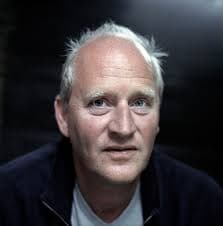
Herman Koch is a Dutch author known for his fiction, particularly exploring moral dilemmas and human behavior. His notable work, The Dinner, delves into the complexities of family relationships and societal norms. Koch's writing often combines dark humor with psychological insight, making his narratives thought-provoking and engaging.
Similar books
- We Need to Talk About Kevin
Lionel Shriver
4.0 (162k) average on GoodreadsLiterary FictionExplores the dark side of parenthood and the nature of evil in a child.
- Gone Girl
Gillian Flynn
4.1 (2.3M) average on GoodreadsThrillerFeatures an unreliable narrator and dark psychological twists.
- Angels & Demons
Dan Brown
3.9 (2.7M) average on GoodreadsThrillerA Harvard symbologist races through Rome's ancient sites, deciphering cryptic clues to unmask the Illuminati and stop a vengeful plot to destroy the Vatican with a stolen antimatter weapon.
- The Girl on the Train
Paula Hawkins
3.9 (2.1M) average on GoodreadsThrillerA woman’s fascination with a seemingly perfect couple she watches from her daily train commute leads her into a dark investigation when she witnesses something that shatters their idyllic image.
- The Da Vinci Code
Dan Brown
3.9 (1.9M) average on GoodreadsThrillerA symbologist and a cryptologist race through European landmarks, deciphering ancient codes and uncovering a conspiracy that could rewrite the foundations of Christianity.
- The Guest List
Lucy Foley
3.8 (1.3M) average on GoodreadsThrillerOn a remote Irish island, a glamorous wedding descends into a deadly whodunnit when a guest is found murdered, trapping everyone with their secrets as a storm rages.






Enjoyed the summary?
A summary gives you the shape of the book. The book itself has the detail, the examples and the voice.
Find The Dinner on AmazonAs an Amazon Associate, BookBrief earns from qualifying purchases. How we're funded