

Synopsis
Covers the whole plot, including the ending.
- Difficulty
- Medium
- Pacing
- Moderate
- Mood
- Gritty, suspenseful, dark, adventurous, surprising
The Drawing of the Three Plot Summary
Covers the whole plot, including the ending.
The Prisoner
Roland wakes on a desolate beach in an alternate reality, having barely escaped death in the Mohaine Desert. He finds three mysterious doors. The first door, labeled 'The Prisoner,' opens into the mind of Eddie Dean, a young heroin addict on a trans-Atlantic flight. Roland can only partially appear, showing up as a phantom hand to move objects. He helps Eddie smuggle a large amount of cocaine past customs by guiding his actions and giving him courage. Roland learns about Eddie's life, his addiction, and his brother Henry's influence, while Eddie deals with the hallucination of a disembodied voice helping him.
The Drawing of the Three
After successfully getting the cocaine through customs, Eddie is confronted by Balazar's men. Roland, now able to partially materialize, helps Eddie fight them off, using his gunslinger skills to disarm and intimidate the thugs. Roland realizes he needs to fully enter Eddie's world to survive and get ammunition and supplies. Through a painful, disorienting process of 'drawing,' Roland pulls Eddie through the door to his own world. Eddie, disoriented and suffering from withdrawal, is initially hostile but slowly begins to trust Roland as they face Balazar's remaining enforcers on the beach.
Eddie's Withdrawal and Roland's Education
On the beach, Roland guides Eddie through heroin withdrawal. He uses natural remedies and his stoic endurance to help Eddie through the physical and psychological pain. During this time, Roland learns about Eddie's world, including addiction, modern technology, and New York City's social structures. Eddie, despite his suffering, begins to see Roland as a real, if strange, companion, not just a hallucination. Their bond strengthens through this shared experience, with Roland offering a mix of sternness and understanding.
The Lady of Shadows
Roland discovers the second door, labeled 'The Lady of Shadows.' Looking through it, he sees Odetta Holmes, a wealthy, educated Black woman who is a double amputee, confined to a wheelchair. He watches her life in 1960s New York, noting her strength, intelligence, and involvement in the civil rights movement. However, he also senses a darker, more volatile side to her personality. Roland realizes Odetta is one of the three he must draw. He begins to plan how to bring her into his world, anticipating the challenges of her physical limitations and complex character.
The Drawing of Odetta
Roland and Eddie work together to draw Odetta through the second door. The process is complicated by Odetta's strong will and her two distinct personalities: the kind, intelligent Odetta Holmes and the violent, malevolent Detta Walker. As she is drawn, Detta Walker emerges, immediately hostile and dangerous. Detta tries to harm Roland and Eddie, forcing them to restrain her. They quickly realize that Odetta/Detta is a single individual with severe dissociative identity disorder, a result of deep trauma, and that both personalities must be integrated for her to be whole.
Detta's Rage
Once fully in Roland's world, Detta Walker's full rage is unleashed. She is cunning, manipulative, and dangerous, using her limited mobility to her advantage and trying to kill Roland and Eddie. She tries to steal Roland's guns, setting traps and verbally abusing them. Roland and Eddie struggle to contain her, realizing the immense challenge of dealing with her violent personality. This period shows Detta's deep-seated trauma and her cynical view of the world, contrasting sharply with Odetta's more benevolent nature, and forces Roland and Eddie to confront a new kind of enemy.
The Pusher
Roland discovers the third door, labeled 'The Pusher.' Through it, he sees Jack Mort, a seemingly ordinary man who is, in fact, a serial killer responsible for the accidents that led to Odetta's amputation and the head injury that fractured her personality. Roland learns that Mort is a malevolent force, a 'pusher' who subtly influences people to commit acts of violence. Roland realizes that Mort is not just a random individual but a significant figure in Odetta's past and an agent of chaos, possibly connected to the Dark Tower's enemies. Drawing him will be the most dangerous yet.
Confronting Jack Mort
Roland and Eddie plan how to confront Jack Mort. Roland needs to go through the door and prevent Mort from continuing his destructive path, as well as to acquire the necessary antibiotics for his infected wounds. They understand that Mort is not just physically dangerous but psychologically manipulative. Roland, with Eddie's help, plans to enter Mort's world, knowing he must act decisively to stop him and prevent further harm to Odetta/Detta's future. The stakes are incredibly high, as Roland's health is rapidly deteriorating due to the infection.
Roland's Sacrifice and Mort's Demise
Roland, despite his worsening infection, enters Jack Mort's world. He confronts Mort on a subway platform, preventing him from pushing a child in front of a train. Roland then forces Mort to confess his crimes and, in a desperate act, pushes Mort in front of an oncoming train, mirroring Mort's own method. This act is a heavy moral burden for Roland, but necessary to stop Mort's evil and to secure the medical supplies he desperately needs. He manages to acquire the necessary antibiotics and some ammunition before returning to his world.
The Integration of Odetta and Detta
Upon Roland's return, the shock of his actions and the urgency of his condition, combined with the presence of both Eddie and Roland, helps Odetta and Detta. The two personalities, Odetta Holmes and Detta Walker, begin a painful and intense process of integration. They merge into a new, unified personality named Susannah Dean. Susannah retains Odetta's intelligence and grace but also Detta's fierce resilience and street smarts, creating a powerful and complete individual, ready to join Roland and Eddie on their quest.
Healing and New Beginnings
With the antibiotics acquired from Mort's world, Roland's infection slowly begins to heal. Susannah, now a whole person, fully embraces her new identity and her role within the nascent ka-tet. Eddie, having overcome his addiction and faced the horrors of his past, is a changed man, more confident and resilient. The three companions, now bound by shared experiences and a common purpose, prepare to leave the beach and continue their journey towards the Dark Tower. They have faced their individual demons and are now a strong team, ready for the challenges ahead.
Principal Figures
Roland Deschain
Protagonist
The last gunslinger, burdened by his quest for the Dark Tower.
Roland is a stoic, determined, and often ruthless gunslinger from a dying world. His entire existence is consumed by his quest for the Dark Tower, a mythical nexus of all realities. He possesses incredible marksmanship, an unshakeable will, and a deep understanding of ka (fate). Despite his harsh exterior, he harbors a profound sense of duty and a capacity for compassion, particularly for those he draws into his ka-tet. He is pragmatic to a fault, often making difficult choices for the greater good of his quest.
Relationships: Eddie Dean (Mentor/Mentee, friend, ka-tet member); Odetta Holmes/Detta Walker/Susannah Dean (Companion, ka-tet member); Jack Mort (Adversary)
Eddie Dean
Supporting
A quick-witted heroin addict drawn into Roland's world.
Eddie is a young, intelligent, and sarcastic heroin addict from New York City in the late 1980s. He is deeply entangled in the drug trade due to his brother Henry. Despite his addiction and self-destructive tendencies, Eddie possesses a sharp mind, a good heart, and a surprising capacity for courage. He is initially resentful of Roland, viewing him as a hallucination, but gradually comes to accept his role in the ka-tet. His humor and modern perspective often clash with Roland's old-world sensibilities, but he proves to be a loyal and valuable companion.
Relationships: Roland Deschain (Mentee/Mentor, friend, ka-tet member); Odetta Holmes/Detta Walker/Susannah Dean (Lover, friend, ka-tet member); Henry Dean (Older brother, drug partner (deceased))
Odetta Holmes
Supporting
A brilliant, compassionate civil rights activist with a hidden dark side.
Odetta Holmes is a wealthy, educated Black woman from 1960s New York City. She is a double amputee, confined to a wheelchair, and a prominent figure in the civil rights movement. She is kind, intelligent, and possesses a strong moral compass. However, she shares her body with a violent, hateful personality named Detta Walker. Odetta's past trauma, inflicted by Jack Mort, led to the creation of Detta, a protective but destructive alter ego. She represents resilience and dignity in the face of immense suffering.
Relationships: Roland Deschain (Companion, ka-tet member); Eddie Dean (Lover, friend, ka-tet member); Detta Walker (Alter ego); Jack Mort (Attacker)
Detta Walker
Antagonist/Supporting
Odetta's malevolent, street-smart alter ego.
Detta Walker is the violent, cynical, and utterly ruthless alter ego of Odetta Holmes. She is a product of Odetta's deep trauma and anger, acting as a protector who lashes out at anyone she perceives as a threat. Detta is cunning, manipulative, and uses her disability to disarm and surprise her victims. She harbors immense racial prejudice and a deep distrust of men, particularly white men. Her presence creates significant conflict for Roland and Eddie, as they must contend with her dangerous unpredictable nature.
Relationships: Roland Deschain (Adversary, eventual ka-tet member (through integration)); Eddie Dean (Adversary, eventual ka-tet member (through integration)); Odetta Holmes (Alter ego)
Susannah Dean
Supporting
The integrated personality of Odetta Holmes and Detta Walker.
Susannah Dean is the unified personality that emerges from the integration of Odetta Holmes and Detta Walker. She embodies the best qualities of both: Odetta's intelligence, compassion, and grace, combined with Detta's fierce resilience, street smarts, and unwavering will. Susannah is a formidable woman, capable of great love and great ferocity. She accepts her new identity and her role in Roland's ka-tet, becoming a powerful and essential member of the quest for the Dark Tower. Her creation signifies healing and wholeness.
Relationships: Roland Deschain (Companion, ka-tet member); Eddie Dean (Husband, ka-tet member)
Jack Mort
Antagonist
A malevolent 'pusher' responsible for Odetta's trauma.
Jack Mort is a seemingly ordinary, meticulous man from 1970s New York who secretly harbors a deeply sadistic and evil nature. He is a 'pusher,' someone who subtly influences others to commit acts of violence or causes 'accidents' that lead to tragedy. He is directly responsible for Odetta Holmes's leg amputation and the head injury that led to her dissociative identity disorder. Mort represents a mundane, yet profoundly insidious, form of evil, acting as a puppet of the larger forces working against the Dark Tower. He takes perverse pleasure in others' suffering.
Relationships: Roland Deschain (Adversary); Odetta Holmes (Victim)
Balazar
Supporting
A ruthless New York drug lord.
Balazar is a powerful and ruthless drug lord in Eddie Dean's New York. He is a dangerous figure, unforgiving and quick to violence. He is the one to whom Eddie owes a significant amount of cocaine, and his enforcers pose a direct threat to Eddie and, by extension, Roland. Balazar represents the immediate, tangible danger of Eddie's past life, a force that Roland must quickly and decisively neutralize to secure Eddie's freedom and safety. He is a symbol of the corrupt world Eddie is trying to escape.
Relationships: Eddie Dean (Drug dealer/client)
Henry Dean
Supporting
Eddie's older brother and drug-addicted mentor.
Henry Dean is Eddie's older brother and a fellow heroin addict. He is largely responsible for introducing Eddie to drugs and involving him in the drug trade. While Henry cares for Eddie in his own way, he is a manipulative and self-serving individual, often exploiting Eddie's loyalty. He represents the destructive cycle of addiction and the toxic relationships that can trap individuals. Although he dies before the main events of the book, his influence on Eddie's life and psyche is profound and lasting.
Relationships: Eddie Dean (Brother)
Themes & Insights
Addiction and Redemption
The novel explores addiction, primarily through Eddie Dean's struggle with heroin. It shows the physical and psychological pain of withdrawal, the drug's grip, and societal factors that contribute to it. However, it also presents a powerful story of redemption, as Eddie, with Roland's support, fights to overcome his addiction and find a new, purposeful life. His journey symbolizes breaking free from destructive cycles and finding meaning.
“The world had moved on, and it had left him behind, a junkie in a New York City airport, carrying a sack of drugs and a head full of ghosts.”
The Nature of Evil
The book explores various forms of evil, from the ordinary but destructive acts of Jack Mort, a 'pusher' who enjoys causing suffering, to the more open violence of drug lords like Balazar. It also explores the internal evil of Detta Walker, born from trauma and prejudice, and the societal evils of racism and systemic injustice. This theme shows that evil isn't always grand or supernatural; it can be subtle, manipulative, and deeply human, yet equally devastating.
“There was a kind of evil that was so quiet, so unassuming, that it could pass for normal. And that was the most dangerous kind of all.”
Identity and Integration
A central theme is the fragmented and evolving nature of identity, particularly through Odetta Holmes/Detta Walker. Her dissociative identity disorder, a direct result of trauma, represents a fractured self. The journey of her two personalities, Odetta and Detta, towards integration into Susannah Dean is a powerful metaphor for healing, self-acceptance, and reconciling conflicting aspects of one's being. This theme suggests that true strength comes from embracing and integrating all parts of oneself, both light and dark.
“Two minds, two souls, two wills, locked in the same flesh. And one of them was trying to kill the other.”
Ka and Destiny
The concept of 'ka' (fate or destiny) is a core element, guiding Roland's quest and the drawing of his companions. Roland believes in ka, seeing the doors and the people he encounters as part of a predetermined path towards the Dark Tower. This theme explores the tension between free will and destiny, suggesting that while individuals have agency, larger forces are at play orchestrating events. The formation of the ka-tet reinforces the idea that certain individuals are bound together by an inescapable destiny.
“Ka is a wheel, sai. It always comes around.”
The Burden of the Past
Each of the drawn companions carries significant burdens from their pasts: Eddie's addiction and his brother's influence, Odetta's trauma and the resulting split personality, and Roland's own losses and the weight of his quest. The novel shows how these past experiences shape their present actions and personalities. Drawing them out of their respective worlds is not just a physical transition but a metaphorical breaking free from the shackles of their pasts, allowing them to confront their demons and move towards a new future.
“The past was a living thing, a shadow that stretched out behind him, always threatening to catch up.”
Plot Devices & Literary Techniques
The Doors
Portals to other worlds, drawing the ka-tet.
The three mysterious doors on the beach serve as the primary plot device, allowing Roland to travel to and interact with different realities. Each door is labeled with a cryptic title ('The Prisoner,' 'The Lady of Shadows,' 'The Pusher') that hints at the character Roland will encounter. These doors are not merely transport mechanisms but also symbolic representations of the individuals themselves, forcing Roland to confront their realities and draw them into his own. They are the catalyst for the formation of his ka-tet and the progression of his quest.
Roland's Infection
A ticking clock, forcing immediate action.
Roland's severe infection, caused by lobster-like creatures, acts as a powerful ticking clock throughout the narrative. It rapidly deteriorates his physical condition, making him weak and vulnerable, and creating immense urgency for him to find the third door and acquire antibiotics. This device heightens the stakes, forcing Roland to make difficult decisions and take extreme risks. It also humanizes Roland, showing his physical limitations despite his gunslinger prowess, and makes his reliance on Eddie and later Susannah more profound.
Ka-tet
A group bound by fate.
The concept of 'ka-tet' is a central plot device, referring to a group of individuals bound together by ka (fate) for a shared purpose. Roland's quest is to form a ka-tet to reach the Dark Tower. The drawing of Eddie, Odetta/Detta, and their eventual integration into Susannah represents the deliberate formation of this fated group. This device establishes the core dynamic of the story, emphasizing themes of companionship, shared destiny, and the idea that individuals are stronger together when united by a common goal. It foreshadows their future adventures.
Alternate Realities/Worlds
Juxtaposing Roland's world with contemporary Earth.
The use of alternate realities, specifically 1980s and 1960s New York City, juxtaposed with Roland's desolate, post-apocalyptic world, is a crucial plot device. It allows for cultural clashes, providing moments of humor and insight as Roland grapples with modern technology and societal norms. More importantly, it highlights the interconnectedness of all worlds and the idea that the Dark Tower is the nexus of them all. These doorways into other times and places are essential for gathering Roland's companions and acquiring necessary resources for his quest.
Quiz
10 questions on the plot and the characters. Each answer comes with a short explanation.
Question 1
What is the name of the protagonist, the last gunslinger?
- Eddie Dean
- Odetta Holmes
- Roland
- Stephen King
Show answer
C. Roland Roland is the name of the last gunslinger, the protagonist of the story.
Question 2
What object does Roland encounter on the beach that leads him to other worlds?
- A magical sword
- Three mysterious doorways
- A portal to the past
- A talking raven
Show answer
B. Three mysterious doorways Roland encounters three mysterious doorways on the beach, each leading to a different person's life.
Question 3
In which contemporary city does Roland find Eddie Dean and Odetta Holmes?
- Los Angeles
- Chicago
- New York
- Miami
Show answer
C. New York Roland encounters Eddie Dean and Odetta Holmes in contemporary New York.
Question 4
What is the primary goal Roland is pursuing?
- To find a cure for his illness
- To conquer the underworld evil
- To find the Dark Tower
- To return to his own world
Show answer
C. To find the Dark Tower Roland is pursuing his quest for the Dark Tower.
Question 5
Which of the following best describes the world Roland is traveling through?
- A utopian paradise
- A medieval kingdom
- A vibrant, bustling metropolis
- A nightmarishly distorted mirror image of our own
Show answer
D. A nightmarishly distorted mirror image of our own The text describes the world as 'a nightmarishly distorted mirror image of our own'.
Question 6
What are the primary genres associated with 'The Drawing of the Three'?
- Romance, Comedy, Mystery
- Thriller, Fantasy, Science Fiction
- Historical Fiction, Western, Horror
- Adventure, Drama, Tragedy
Show answer
B. Thriller, Fantasy, Science Fiction The provided description explicitly lists the genres as Thriller, Fantasy, and Science Fiction.
Question 7
What is the nature of the struggle Roland, Eddie, and Odetta face?
- A political campaign
- A battle against nature
- A savage struggle against underworld evil and otherworldly enemies
- A competition for wealth
Show answer
C. A savage struggle against underworld evil and otherworldly enemies The text states they are in a 'savage struggle against underworld evil and otherworldly enemies'.
Question 8
How does the text describe Odetta Holmes?
- Shy, timid, and fearful
- Beautiful, brilliant, and brave
- Cunning, deceitful, and selfish
- Ordinary, average, and unremarkable
Show answer
B. Beautiful, brilliant, and brave Odetta Holmes is described as 'the beautiful, brilliant, and brave Odetta Holmes'.
Question 9
What literary technique does Stephen King masterfully use in this book, according to the description?
- Humor and satire
- Melodrama and sentimentality
- Dark, evocative fantasy and icy realism
- Surrealism and abstract imagery
Show answer
C. Dark, evocative fantasy and icy realism The description states King has 'masterfully interwoven dark, evocative fantasy and icy realism'.
Question 10
Which character is described as 'defiant'?
- Roland
- Odetta Holmes
- Eddie Dean
- None of the above
Show answer
C. Eddie Dean Eddie Dean is described as 'the defiant young Eddie Dean'.
The Drawing of the Three FAQ
What is The Drawing of the Three about?
The Drawing of the Three continues Roland Deschain's quest for the Dark Tower. He opens three mysterious doors on a beach, each leading to a different person in contemporary New York, whom he must draw into his world to aid him.
Who are the main characters in The Drawing of the Three?
The main characters are Roland Deschain, the last gunslinger, and the two individuals he draws from our world: Eddie Dean, a young man with a drug addiction, and Odetta Holmes, a brilliant but physically challenged woman.
What genres does The Drawing of the Three belong to?
The book blends elements of thriller, fantasy, and science fiction, with a strong narrative driven by suspense and otherworldly elements.
What is the significance of the 'doors' in the book?
The doors are portals that Roland uses to transport individuals from our world into his dying world. These individuals are crucial to his quest for the Dark Tower.
How does The Drawing of the Three connect to the Dark Tower series?
This book is the second installment in Stephen King's Dark Tower series and is essential for understanding Roland's journey and the development of his ka-tet (his group of companions).
What kind of enemies does Roland face in this book?
Roland faces both underworld evils from our world, particularly those connected to Eddie Dean's life, and otherworldly enemies who seek to thwart his quest for the Dark Tower.
Is The Drawing of the Three a standalone novel?
No, The Drawing of the Three is not a standalone novel. It is the second book in The Dark Tower series and should ideally be read after The Gunslinger to fully appreciate the story and characters.
What is the tone of The Drawing of the Three?
The book is known for its blend of dark, evocative fantasy with icy realism, creating a suspenseful and often grim atmosphere as Roland navigates dangerous situations.
What challenges do Eddie Dean and Odetta Holmes face?
Eddie struggles with his drug addiction and the shock of being transported to Roland's world. Odetta, who is also known as Detta Walker, faces her own internal and external demons, and their two personalities eventually merge.
Where does the majority of the action take place in The Drawing of the Three?
While Roland's quest is for the Dark Tower, a significant portion of The Drawing of the Three takes place in contemporary New York City, as Roland draws Eddie and Odetta from that setting.
About the author

Stephen Edwin King is an American author of horror, supernatural fiction, suspense, crime, science-fiction, and fantasy novels. Described as the "King of Horror", his books have sold more than 350 million copies as of 2006, and many have been adapted into films, television series, miniseries, and comic books. King has published over 65 novels/novellas, including seven under the pen name Richard Bachman, and five non-fiction books. He has also written approximately 200 short stories, most of which have been published in book collections.
Similar books
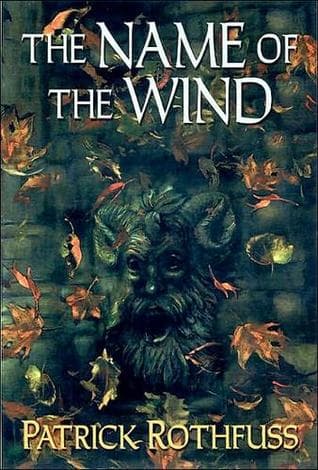
- The Name of the Wind
Patrick Rothfuss
4.5 (716k) average on GoodreadsFantasyWhile both "The Drawing of the Three" and "The Name of the Wind" are foundational second books in their respective fantasy series and feature compelling protagonists, King's novel is far more eclectic in its genre blending, incorporating distinct thriller and science fiction elements. Rothfuss's work, by contrast, is a more traditional epic fantasy, focusing on a single character's coming-of-age and magical education within a consistent fantasy world. King's narrative is fractured by interdimensional travel and immediate, life-or-death confrontations, whereas Rothfuss's is a more reflective, framed narrative of Kvothe recounting his past. King's characters are often broken and morally ambiguous from the outset, forced into cooperation, while Kvothe's journey is one of self-discovery and mastery.
- American Gods
Neil Gaiman
4.1 (758k) average on GoodreadsFantasyBoth "The Drawing of the Three" and "American Gods" feature protagonists traversing a surreal version of America, encountering fantastical elements hidden within the mundane. However, King's novel focuses on a quest to gather specific individuals across dimensions for a singular purpose, with the American settings serving as distinct, dangerous challenges. Gaiman's work, conversely, is a broader exploration of belief, immigration, and the clash of old and new mythologies across the entire American landscape, with Shadow Moon's journey being more about understanding the nature of gods and faith. King's tone is often more visceral and action-oriented, driven by Roland's immediate needs, while Gaiman's is more contemplative and allegorical, building a rich tapestry of forgotten deities and their struggles.
- Angels & Demons
Dan Brown
3.9 (2.7M) average on GoodreadsThrillerA Harvard symbologist races through Rome's ancient sites, deciphering cryptic clues to unmask the Illuminati and stop a vengeful plot to destroy the Vatican with a stolen antimatter weapon.
- Gone Girl
Gillian Flynn
4.1 (2.3M) average on GoodreadsThrillerA wife's sudden disappearance on her fifth anniversary reveals a web of lies and psychological warfare, exposing the secrets within a seemingly perfect marriage.
- The Girl on the Train
Paula Hawkins
3.9 (2.1M) average on GoodreadsThrillerA woman’s fascination with a seemingly perfect couple she watches from her daily train commute leads her into a dark investigation when she witnesses something that shatters their idyllic image.
- The Da Vinci Code
Dan Brown
3.9 (1.9M) average on GoodreadsThrillerA symbologist and a cryptologist race through European landmarks, deciphering ancient codes and uncovering a conspiracy that could rewrite the foundations of Christianity.





Enjoyed the summary?
A summary gives you the shape of the book. The book itself has the detail, the examples and the voice.
Find The Drawing of the Three on AmazonAs an Amazon Associate, BookBrief earns from qualifying purchases. How we're funded