
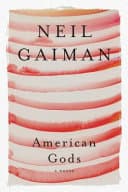
Synopsis
Covers the whole plot, including the ending.
- Difficulty
- Medium
- Pacing
- Variable
- Mood
- Mythic, Ephemeral, Darkly Humorous, Existential, Americana
- Read it if
- You love rich, sprawling mythological tales, enjoy road trips across America, and are fascinated by the clash of ancient beliefs with modern society.
- Skip it if
- You prefer fast-paced, action-driven plots, or are uncomfortable with morally ambiguous characters and graphic content.
American Gods Plot Summary
Covers the whole plot, including the ending.
Shadow Moon's Release and Laura's Death
Shadow Moon, a quiet and imposing ex-convict, is released from prison a few days early after serving a three-year sentence for aggravated assault. His early release is because his wife, Laura Moon, and his best friend, Robbie, died in a car accident. On his flight home to Eagle Point, Indiana, he meets a mysterious, one-eyed old man who introduces himself as Mr. Wednesday. Wednesday offers Shadow a job as his bodyguard and driver, hinting at a larger, more dangerous world than Shadow ever imagined. Despite his initial doubts and desire to return to a normal life, Shadow, with nothing left, accepts Wednesday's offer. He soon learns that Laura's death was not as simple as it seemed, and her ghost begins to appear, complicating his new, strange life.
The Road Trip Begins and Ancient Gods Revealed
Shadow's journey with Mr. Wednesday begins, taking them across America. Wednesday, a charismatic con artist, constantly recruits and haggles, his true nature slowly becoming clear. Shadow meets a variety of peculiar individuals: Czernobog, a grumpy Slavic god of darkness; the Zorya sisters, ancient Slavic goddesses of the stars; and a leprechaun named Mad Sweeney, who claims to have given Shadow a magic coin. Wednesday reveals that he is an old god, Odin, and that many other ancient deities, brought to America by immigrants, are still alive, though forgotten and diminished. Their goal is to gather these Old Gods for a war against the New Gods, who represent modern things like media, technology, and globalization. Shadow tries to understand this new reality, constantly questioning his sanity.
Laura's Resurrection and Shadow's Loyalty
Laura Moon's ghost appears to Shadow, saying Mad Sweeney's coin resurrected her after her death. She confesses she was having an affair with Robbie, Shadow's best friend, and that their car crash was due to a sexual act. Her love for Shadow, however, seems to have intensified in death, and she becomes his protector, with supernatural strength and a decaying body. Her presence creates a dilemma for Shadow, as she continues to follow him, sometimes saving him from danger. This further involves Shadow in Wednesday's world, as Laura's resurrection is tied to the magical forces, and she tries to understand her purpose in this spectral existence, often clashing with Wednesday and his plans.
Encounters with the New Gods and a Failed Heist
Wednesday's recruitment efforts lead him and Shadow to meet the New Gods. Technical Boy, the internet and technology god, and Media, the television god, confront them. These New Gods try to recruit Shadow, offering him a comfortable life if he leaves Wednesday. Shadow refuses, deepening his commitment to the Old Gods' cause. Wednesday plans a heist to get Gungnir, Odin's spear, from a heavily guarded vault. The plan involves Shadow breaking in, but it goes wrong. Shadow is captured by the New Gods, who believe he is Wednesday's accomplice in bank robberies. He is interrogated and tortured, but Laura rescues him, brutally dispatching his captors. This shows her supernatural abilities and loyalty to Shadow.
Shadow's Imprisonment and the Town of Lakeside
After his escape, Wednesday tells Shadow to hide in the quiet, snowy town of Lakeside, Wisconsin, using the name 'Mike Ainsel.' Shadow finds temporary peace, getting a job at a hardware store and befriending local residents like Hinzelmann, an elderly German man, and Chad Mulligan, the sheriff. But Lakeside has a dark secret: a child goes missing every year, at the start of spring. Shadow, despite trying to stay hidden, becomes involved in the mystery, noticing strange things and the town's odd isolation. He also continues to receive cryptic messages and visits from various entities, reminding him that he cannot escape the coming war between the gods, even in this seemingly peaceful place.
The Revelation of Hinzelmann and Lakeside's Sacrifice
Shadow, while living in Lakeside, becomes more suspicious of the town's annual disappearances and the strange behavior of its residents. He eventually confronts Hinzelmann, who says he is a kobold, an ancient German house spirit. Hinzelmann confesses that he has been sacrificing a child each year to ensure the town's prosperity and keep himself strong. This ritual has been happening for decades, with the townspeople involved, either actively or through their silence, in exchange for good fortune. Shadow is horrified by this and the human cruelty he has seen, further understanding that the world is full of ancient, powerful beings who demand sacrifice and worship, regardless of morals.
The Gathering of the Gods at Rock City
Wednesday summons Shadow to Rock City, a tourist attraction in Georgia, for a large meeting of the Old Gods. Here, Shadow meets many deities from various mythologies — Norse, Egyptian, Slavic, African, and more — all diminished but still powerful. The atmosphere is tense, filled with ancient grudges and fading faith. The New Gods also arrive, represented by Media, Technical Boy, and Mr. World, the leader of the New Gods. They attempt a fragile truce, but Mr. World, a master manipulator, shows his knowledge of Wednesday's past and tries to cause trouble among the Old Gods. The meeting ends with no resolution, only a deeper sense of dread and the certainty of conflict, with both sides preparing for the final battle.
Wednesday's Death and the Call to War
The tension grows as Wednesday continues to rally the Old Gods. During a confrontation with the New Gods, a shadowy figure brutally murders Wednesday with a spear. His death energizes the Old Gods, who see it as a declaration of war. Shadow, devastated by the loss of his employer and mentor, feels a deep sense of responsibility. He realizes that Wednesday's death was a planned move, a sacrifice meant to start the war he had been planning. This act puts Shadow in a central role, as he is now bound by Wednesday's will and the ancient traditions of sacrifice and vengeance, making him accept his destiny among the gods.
Shadow's Sacrifice and Journey to the World Tree
After Wednesday's death, the remaining Old Gods tell Shadow to undergo a ritualistic hanging from the World Tree, Yggdrasil, for nine days and nights, like Odin's own sacrifice to gain knowledge. This act is to honor Wednesday, revive him, and ensure spring's arrival. During his ordeal, Shadow has visions, meets various entities, and journeys through different realms, including the land of the dead where he briefly reunites with Laura. He endures great suffering, cold, and hunger, his body slowly dying. This spiritual journey helps him understand the gods, their power, and his connection to their world, shedding his human limits.
The Revelation of the Trick and Shadow's True Identity
After his nine-day ordeal, Shadow is rescued and revived. He realizes that the war between the Old Gods and New Gods was a deception. Mr. World is Loki, and he, along with Wednesday (Odin), planned the entire conflict. Wednesday's death was a necessary sacrifice, an illusion to draw power from the belief of both sides. Shadow also learns his true parentage: he is Wednesday's son, making him a demigod. This explains his connection to the gods' world and his role in their schemes. The entire conflict was a con, meant to empower Odin and Loki through the belief and sacrifice from the 'war'.
The Aftermath and Shadow's New Path
With the deception exposed, the war between the Old Gods and New Gods is stopped. Loki is trapped, and the remaining gods, both old and new, disperse, their power lessened by the truth of the fraud. Shadow confronts Mr. Nancy and Czernobog, who explain the gods' existence and their reliance on human belief and sacrifice. Laura, having found peace after getting revenge on Loki for his role in her death, leaves. Shadow, now fully aware of his heritage and the world's true nature, travels to Iceland. There, he offers a prayer to his father, Odin, and begins to explore his new identity as a son of a god, finding a quiet purpose in his existence, no longer just a pawn but an active part of the hidden world of the divine.
Principal Figures
Shadow Moon
Protagonist
An ex-convict thrust into a war between ancient and modern gods.
Shadow is a quiet, stoic, and physically imposing man who begins the story fresh out of prison. He is initially a man with no direction, grieving the loss of his wife and best friend. Throughout the narrative, he is a reluctant participant in Wednesday's schemes, constantly questioning the reality of the gods. He is fiercely loyal once committed, though often bewildered. His journey is one of self-discovery, from a passive observer to an active participant, eventually embracing his divine heritage. He is driven by a deep sense of responsibility and a desire for meaning in a chaotic world.
Relationships: Mr. Wednesday (Employer, mentor, father figure, eventually revealed as his biological father); Laura Moon (Wife, resurrected ghost, protector); Mad Sweeney (Fellow Old God, initial antagonist, later ally); Mr. World (Antagonist, leader of the New Gods, co-conspirator)
Mr. Wednesday
Major Supporting / Antagonist (initially disguised)
A charismatic, manipulative old god, revealed to be Odin.
Mr. Wednesday is a charming, cunning, and often infuriating old man who recruits Shadow as his bodyguard. He is revealed to be Odin, the Norse All-Father, and is tirelessly working to gather the Old Gods for a war against the New Gods. He is a master con artist, capable of inspiring loyalty and fear. Wednesday embodies the faded glory and desperate struggle of the ancient deities, relying on trickery and manipulation to regain power. His motives are complex, driven by a desire for worship and a deep-seated resentment of the modern world. He orchestrates many events, including his own death, for a larger, self-serving purpose.
Relationships: Shadow Moon (Employee, pawn, biological son); Laura Moon (Antagonist, target of her revenge); Mr. World (Apparent antagonist, revealed as co-conspirator (Loki)); Czernobog (Reluctant ally, fellow Old God)
Laura Moon
Supporting
Shadow's deceased wife, resurrected as a powerful ghost.
Laura Moon dies in a car accident with Shadow's best friend, Robbie, shortly before Shadow's release from prison. She is resurrected by Mad Sweeney's magic coin, returning as a ghost with supernatural strength and a decaying body. Laura is cynical, foul-mouthed, and fiercely protective of Shadow, despite having cheated on him. Her existence is a constant reminder of Shadow's past and the bizarre new reality he inhabits. She seeks to understand her purpose and often acts as Shadow's guardian angel, brutally dispatching anyone who threatens him, particularly the New Gods. She ultimately finds peace by fulfilling her desire for revenge.
Relationships: Shadow Moon (Wife, deep love and protection); Mad Sweeney (Resurrector, source of her initial power); Mr. Wednesday (Antagonist, target of her anger); Robbie (Lover, died with her)
Mad Sweeney
Supporting
A boisterous, unlucky leprechaun who grants Shadow a magic coin.
Mad Sweeney is a foul-mouthed, red-haired leprechaun who claims to be a king. He is initially antagonistic towards Shadow, losing his magic coin to him, which inadvertently resurrects Laura. Despite his bluster and bad luck, he is an ancient being with a deep understanding of the Old Gods' world. He is a tragic figure, a king in a diminished form, yearning for his past glory. Sweeney provides crucial information to Shadow and Laura, often reluctantly, and ultimately sacrifices himself to aid Laura in her quest, revealing his underlying loyalty to the Old Gods and a sense of responsibility for Laura's resurrection.
Relationships: Shadow Moon (Initial antagonist, later provides assistance); Laura Moon (Resurrector, reluctant ally); Mr. Wednesday (Fellow Old God, often at odds)
Mr. World
Antagonist
The enigmatic leader of the New Gods, a master of information and manipulation.
Mr. World is the elusive and powerful leader of the New Gods, embodying globalization, information, and control. He is a chillingly calm and intelligent figure, capable of appearing in various forms and manipulating events from behind the scenes. He is the mastermind behind the New Gods' operations, seeking to absorb or destroy the Old Gods. Mr. World's true identity is eventually revealed to be Loki, the Norse god of mischief, who has been working in concert with Odin (Wednesday) to orchestrate the entire conflict for their own gain. He represents the insidious power of modern systems and the way they can obscure ancient truths.
Relationships: Shadow Moon (Antagonist, target of his manipulations); Mr. Wednesday (Apparent antagonist, revealed as co-conspirator (Odin)); Media (Subordinate, fellow New God); Technical Boy (Subordinate, fellow New God)
Media
Antagonist
The New God of television and media, able to appear as various celebrities.
Media is a New God who embodies the power and pervasive influence of television, celebrity, and mass communication. She can shift her appearance to resemble famous figures from pop culture, such as Lucy Ricardo or Marilyn Monroe, using their personas to deliver her messages. She is seductive and manipulative, representing how modern media shapes perception and belief. Media attempts to lure Shadow to the New Gods' side, promising him comfort and power. She is a key figure in the New Gods' attempts to assert dominance, using her ability to control narratives and public opinion to their advantage.
Relationships: Shadow Moon (Antagonist, attempts to recruit him); Mr. World (Leader, fellow New God); Technical Boy (Fellow New God)
Technical Boy
Antagonist
The New God of the internet, technology, and all things digital.
Technical Boy is a New God representing the internet, computers, and all forms of digital technology. He is depicted as a corpulent, acne-scarred young man with a penchant for crude language and a distinct lack of social graces. He is arrogant, impatient, and believes in the superiority of the New Gods. Technical Boy is a force of digital chaos and innovation, constantly evolving and adapting. He is one of the first New Gods to directly confront Shadow, attempting to intimidate and recruit him, showcasing the aggressive and pervasive nature of modern technological influence.
Relationships: Shadow Moon (Antagonist, attempts to intimidate him); Mr. World (Leader, fellow New God); Media (Fellow New God)
Czernobog
Supporting
A grumpy Slavic god of darkness and evil, skilled with a hammer.
Czernobog is an ancient Slavic god of darkness, evil, and misfortune, living in a dilapidated apartment with the Zorya sisters. He is grumpy, cynical, and initially hostile towards Shadow, challenging him to a game of checkers with the stake of a hammer blow to the head. Despite his gruff exterior and his role as a god of darkness, he is bound by ancient customs and a sense of duty to the Old Gods. He is a powerful, albeit diminished, entity, representing the raw, destructive power of older deities. He eventually becomes a reluctant ally to Shadow, offering his strength in the looming war.
Relationships: Shadow Moon (Initial adversary, later ally); Mr. Wednesday (Fellow Old God, often at odds but bound by ancient ties); Zorya sisters (Housemates, fellow Old Gods)
Mr. Nancy
Supporting
Anansi, the African trickster god, a master storyteller.
Mr. Nancy is the African trickster god Anansi, a charismatic and eloquent storyteller who uses fables and anecdotes to convey deeper truths and rally the Old Gods. He is witty, charming, and often provides comic relief, but his wisdom is profound. Mr. Nancy represents the resilience and adaptability of ancient myths, showing how stories can keep gods alive even in new lands. He is a powerful orator and a crucial voice in the gatherings of the Old Gods, offering both insight and a sense of the grandeur that once defined them. He is fiercely loyal to the Old Gods' cause.
Relationships: Shadow Moon (Ally, mentor through stories); Mr. Wednesday (Fellow Old God, ally); Mr. Ibis (Fellow Old God, often seen together)
Mr. Ibis
Supporting
Thoth, the Egyptian god of writing and knowledge, a meticulous undertaker.
Mr. Ibis is the Egyptian god Thoth, known for writing and knowledge, who operates a funeral parlor in Cairo, Illinois, with Mr. Jacquel. He is meticulous, scholarly, and often provides context for the history and nature of the gods through his writings and observations. Ibis represents the enduring power of history and record-keeping, even for forgotten deities. He is a calm, intellectual presence among the often-volatile Old Gods, offering a sense of gravity and ancient wisdom. His role as an undertaker symbolically connects him to death and the past, perfectly fitting for a god who preserves knowledge.
Relationships: Shadow Moon (Ally, source of information); Mr. Jacquel (Partner, fellow Old God); Mr. Nancy (Fellow Old God, often seen together)
Themes & Insights
Faith, Belief, and Worship
The main theme of 'American Gods' explores the link between human belief and the power of deities. Old Gods, brought to America by immigrants, are dying because their followers have forgotten them or stopped believing. The New Gods, representing modern things like media and technology, thrive because humans implicitly 'worship' them through their attention and reliance. The book shows how even mundane acts can be worship, and how the loss of faith lessens the gods. This is clear in Wednesday's desperate attempts to gather belief and the New Gods' thriving existence.
“You're going to have to make a decision, Shadow. Are you going to believe, or are you going to not believe?”
Old World vs. New World / Tradition vs. Modernity
This theme drives the plot: the coming war between the Old Gods (ancient mythologies, nature, tradition) and the New Gods (technology, media, globalization). The Old Gods struggle to survive in a land that has little memory or respect for their origins, while the New Gods embody the changing nature of modern society. The conflict shows the tension between preserving cultural heritage and embracing progress, and the sacrifices made on both sides. The novel suggests that while the old may fade, the new is often built on similar foundations of human desire and attention.
“This is a bad land for Gods. It isn't the land that's bad, it's the people. Or the lack of people. The people are all stuck in their boxes, and they don't look up, and they don't look out.”
Identity and Self-Discovery
Shadow's journey is one of identity. He begins as a man without a past or purpose, a 'shadow' of his former self. As he travels with Wednesday, he must face strange realities, question his sanity, and eventually learn about his own divine parentage. His hanging on the World Tree is a symbolic and literal act of self-sacrifice and rebirth, leading to the truth of his nature as a son of Odin. This theme is also in the gods themselves, who struggle with their fading identities in a land that no longer recognizes them, forcing them to adapt or perish.
“You are a god. You were always a god. And I was always your father.”
Sacrifice and Rebirth
Sacrifice appears repeatedly, from Wednesday's ritualistic death to Shadow's hanging from the World Tree. The book explores the idea that sacrifice, whether literal or metaphorical, is needed for power, knowledge, and rebirth. Odin's original sacrifice to gain wisdom is mirrored in Shadow's ordeal, which ultimately reveals his true identity and purpose. The gods themselves demand sacrifice, either as worship or offerings, to sustain their existence. The theme suggests that endings are often necessary for new beginnings, and that big change often costs a lot.
“All sacrifice is a gift. All gifts are a form of worship.”
The Nature of America
Gaiman uses America's landscape, particularly its forgotten towns and roadside attractions, as a character. The novel explores the idea that America is a mix of cultures and beliefs, but also a land that quickly forgets its past. The Old Gods are immigrants; their stories and powers lessened by the vastness and indifference of the new world. The book critiques American consumerism, materialism, and the fleeting nature of modern attention. It suggests that beneath modernity lies a complex history, populated by the lingering echoes of ancient beliefs and the sacrifices made to build a nation.
“America is a bad land for gods. It's a land of immigrants, and they don't remember their gods.”
Plot Devices & Literary Techniques
Road Trip Narrative
A journey across America used to explore its hidden mythological landscape.
The novel is structured as a road trip, with Shadow and Wednesday traveling across the diverse landscapes of America. This device allows Gaiman to introduce a wide array of Old Gods from various mythologies, each residing in a place that reflects their origins or the beliefs of their immigrant followers. The constant movement prevents Shadow from settling, mirroring his internal state of displacement and forcing him to confront the strangeness of the world. It also highlights the vastness and cultural patchwork of America, showing both its forgotten corners and its bustling modern centers where the New Gods thrive.
In Media Res / Gradual Revelation
The story begins abruptly, with information revealed slowly to the protagonist and reader.
The novel drops the reader directly into Shadow's life just as he is released from prison, with no prior explanation of his past or the world he is about to enter. Information about the gods, their existence, and the impending war is revealed gradually, mirroring Shadow's own bewilderment and slow acceptance. This technique creates a sense of mystery and keeps the reader engaged in piecing together the larger narrative. It allows the fantastical elements to unfold organically from Shadow's perspective, making the transition from mundane reality to mythological warfare more impactful and believable.
Interludes / Coming to America Snippets
Short, standalone chapters detailing how various gods arrived in America.
Throughout the book, Gaiman intersperses the main narrative with short, standalone chapters titled 'Coming to America.' These vignettes recount the arrival of different deities (e.g., Bilquis, Anansi, a band of Vikings carrying Odin) to the new continent, often detailing the hardships faced by their human followers and the initial struggles of the gods themselves. This device provides crucial background, illustrating the central theme of how belief fuels divine power and how various cultures contributed to America's mythological tapestry. It broadens the scope of the novel beyond Shadow's immediate journey, reinforcing the idea of a hidden, ancient history beneath modern America.
The World Tree (Yggdrasil)
A symbolic and literal link between worlds, representing sacrifice and knowledge.
The World Tree, Yggdrasil, serves as a powerful symbol and a literal plot device. It is the tree from which Odin hung himself to gain knowledge, and Shadow's ritualistic hanging from a symbolic Yggdrasil in America mirrors this sacrifice. This act is central to his transformation and the revelation of his true identity. The tree represents the interconnectedness of all things, the cycle of death and rebirth, and the ultimate source of ancient wisdom. It is the place where profound changes occur and where the boundaries between life, death, and different realms become permeable, allowing Shadow to access deeper truths.
The Magic Coin
A seemingly simple object with profound consequences, representing fate and divine intervention.
Mad Sweeney's magic coin, initially presented as a mundane trinket, becomes a pivotal plot device. Shadow inadvertently keeps it, and it is this coin that resurrects Laura, bringing her back as a ghost. The coin represents the unpredictable nature of fate and the subtle ways in which divine power can alter human lives. It is a catalyst for many events, linking Shadow's personal tragedy to the larger conflict of the gods. Its loss by Sweeney and its subsequent use highlight the interweaving of human and divine actions, and how seemingly small magical objects can have monumental consequences.
American Gods Quotes
“All gods are born from the needs and beliefs of people. They are as real as you or I, and as mortal.”
“Everywhere in America, there are gods. They have been brought here by the immigrants, and they have been forgotten. And they have been changed.”
“The thing about America is, it’s like a dog. You can teach it to do all sorts of tricks, but it’s still a dog. And it’ll still bite you if you get too close.”
“And the point is, if you are a god, and you’re in America, then you’re not really a god anymore. You’re just a forgotten dream.”
“What are the new gods, you ask? They are the gods of media, of the internet, of celebrity, of credit cards and highways.”
“The land remembers. The land remembers everything. And the people remember nothing.”
“You're a god, Shadow. You just haven't figured out what kind yet.”
“There are no good guys and bad guys. There are just guys. And they all want something.”
“It’s not a war, not really. It’s a sacrifice. And someone has to be the sacrifice.”
“The safest place for a god is in the minds of people. Once they're out, they're vulnerable.”
“To die is to wake up from the dream of life.”
“Gods don't die. They just... fade. Or they get forgotten.”
“Every town has its share of secrets, and its share of gods.”
“The future is a thing that is about to happen. It is not something that is waiting for you.”
Quiz
10 questions on the plot and the characters. Each answer comes with a short explanation.
Question 1
What is Shadow Moon's job immediately before he is released from prison?
- He was a former police detective.
- He was a bouncer at a casino.
- He was a security guard for a museum.
- He was a small-time criminal involved in a robbery.
Show answer
D. He was a small-time criminal involved in a robbery. Shadow Moon was imprisoned for aggravated assault after a failed attempt to rob a casino, leading directly to his release and the start of the novel's events.
Question 2
What is Mr. Wednesday's true identity?
- Loki, the Norse god of mischief.
- Anansi, the African trickster god.
- Odin, the Norse All-Father.
- Thoth, the Egyptian god of wisdom.
Show answer
C. Odin, the Norse All-Father. Mr. Wednesday is revealed to be Odin, the Norse god of war, wisdom, and death, who brought his worship to America with the Vikings and now seeks to rally the Old Gods against the New.
Question 3
Which of the following New Gods represents the internet and global communication?
- Mr. World
- Technical Boy
- Media
- Mr. Stone
Show answer
B. Technical Boy Technical Boy embodies the internet, technology, and the digital age. He is often depicted with a youthful, albeit unsettling, appearance and a connection to all things virtual.
Question 4
What significant event happens to Shadow Moon's wife, Laura, just before his release?
- She gets a new job offer in a different state.
- She is killed in a car accident.
- She decides to leave him for another man.
- She wins a large sum of money in the lottery.
Show answer
B. She is killed in a car accident. Shadow learns that Laura died in a car accident just days before his release, a tragedy that profoundly impacts him and sets the stage for her later reappearance as a revenant.
Question 5
What is the primary reason the Old Gods are losing power in America?
- They are being systematically hunted and killed by humans.
- Humans no longer believe in them or worship them.
- They are fighting amongst themselves too much.
- Their magical artifacts have been lost or destroyed.
Show answer
B. Humans no longer believe in them or worship them. The central theme of 'American Gods' is that gods derive their power from human belief and worship. As immigrants assimilate and new technologies emerge, the old gods are forgotten, and their power wanes.
Question 6
Who is Czernobog, and what is his primary characteristic?
- A Slavic god of the sun, known for his warmth.
- A Slavic god of darkness and evil, known for his mallet.
- A Native American spirit of the forest, known for shapeshifting.
- An Egyptian god of the dead, known for mummification.
Show answer
B. A Slavic god of darkness and evil, known for his mallet. Czernobog is the Slavic god of darkness and evil. He is often depicted as grumpy and violent, wielding a large hammer, and is initially reluctant to join Wednesday's cause.
Question 7
What is the significance of the town of Lakeside?
- It is the ancient burial ground of the Old Gods.
- It is a peaceful, seemingly idyllic town where Shadow hides out during winter, but has a dark secret.
- It is the main headquarters of the New Gods.
- It is where Shadow Moon was originally born and raised.
Show answer
B. It is a peaceful, seemingly idyllic town where Shadow hides out during winter, but has a dark secret. Shadow spends the winter in Lakeside, a seemingly perfect small town that serves as a temporary refuge. However, it harbors a sinister secret of recurring child disappearances, creating a contrast between its appearance and its hidden darkness.
Question 8
What is the true nature of the impending war that Mr. Wednesday is trying to incite?
- A war between humans and mythical creatures.
- A war between the Old Gods and the New Gods for dominance and survival.
- A war between different pantheons of Old Gods.
- A war between the living and the dead.
Show answer
B. A war between the Old Gods and the New Gods for dominance and survival. Wednesday is orchestrating a grand conflict between the ancient gods brought to America by immigrants and the 'New Gods' who embody modern concepts like technology, media, and globalization. This war is about which set of deities will receive human belief and worship.
Question 9
How does Shadow Moon ultimately become involved in the grand scheme of the gods?
- He is a long-lost god himself, unknowingly.
- He is hired as Wednesday's bodyguard and driver, becoming a pawn in a larger game.
- He accidentally stumbles upon their secret meetings and is forced to join.
- He seeks out the gods to avenge his wife's death.
Show answer
B. He is hired as Wednesday's bodyguard and driver, becoming a pawn in a larger game. Shadow is initially hired by Mr. Wednesday as a driver and 'gofer.' He is gradually drawn deeper into the world of the gods, unknowingly becoming a central figure and a sacrifice in Wednesday's elaborate plan.
Question 10
What is the ultimate revelation about Shadow Moon's parentage?
- He is the son of Anansi.
- He is the son of Loki.
- He is the son of Odin (Mr. Wednesday).
- He is a mortal chosen by the gods to be their champion.
Show answer
C. He is the son of Odin (Mr. Wednesday). It is revealed that Shadow Moon is the son of Mr. Wednesday (Odin), making him a demigod. This parentage is crucial to Wednesday's plan, as Shadow is intended to be a sacrifice that will empower the old gods.
American Gods FAQ
What is American Gods about?
American Gods follows Shadow Moon, an ex-convict whose wife dies just before his release. He's hired by the enigmatic Mr. Wednesday, who turns out to be the Norse god Odin, to be his bodyguard and chauffeur. Shadow is soon drawn into a hidden world where Old Gods, brought to America by immigrants, are losing power to New Gods representing technology, media, and globalization, leading to an inevitable war.
Why should I read American Gods?
You should read American Gods for its unique blend of mythology, fantasy, and road trip adventure across a vividly depicted America. It explores profound themes of belief, immigration, the nature of divinity, and the clash between tradition and modernity, all wrapped in Gaiman's signature lyrical prose and imaginative storytelling.
What is the background/setting of American Gods?
The story is set primarily in contemporary America, but not the America seen on postcards. It's a landscape of forgotten towns, roadside attractions, and hidden places where the Old Gods reside, struggling to survive. The setting itself, with its diners, motels, and diverse cultural touchstones, becomes a character, reflecting the patchwork nature of American identity and belief.
What are the most memorable quotes?
Memorable quotes include, "All gods are born from people's stories," encapsulating the book's core theme. Another is, "You're a good man, Shadow Moon. You have a good heart. But you're a fool to trust anyone in this game," spoken by Mr. Wednesday, highlighting the deceit inherent in the gods' world.
What writing style does the author use?
Neil Gaiman employs a rich, evocative, and often poetic writing style, blending gritty realism with fantastical elements. He uses vivid descriptions, intersperses the main narrative with 'Coming to America' vignettes detailing how various gods arrived, and infuses the dialogue with a mythic, often archaic, quality that suits the divine characters.
What minor details add significant meaning?
The recurring motif of snow and cold around Shadow often signifies his internal state of numbness and his connection to the Norse myths of winter and death. Also, the various small towns and roadside attractions Mr. Wednesday insists on visiting are often places where Old Gods have their last vestiges of power or where belief once flourished, highlighting their fading influence.
What are some subtle foreshadowing moments?
Shadow's recurring dreams and encounters with a buffalo-headed man subtly foreshadow his connection to the buffalo god and the land itself, indicating his role as a sacrifice. Mr. Wednesday's constant manipulation and his seemingly random detours also hint at his larger, deceptive plan for the war, especially his insistence on gathering specific artifacts or meeting certain gods.
What unexpected character connections exist?
The most significant unexpected connection is revealed at the climax: Mr. Wednesday is Shadow's father, Odin, and Laura Moon, Shadow's deceased wife, was brought back to 'life' by Mad Sweeney's lucky coin, linking her fate directly to the leprechaun's sacrifice and Wednesday's grand scheme.
What are unspoken character motivations?
Mr. Wednesday's unspoken motivation is not just to win the war, but to be remembered and worshipped through a magnificent sacrifice, specifically his own, to reclaim the glory he believes he deserves. Laura Moon's unspoken motivation for staying with Shadow, even as a revenant, is a complex mix of guilt over her infidelity and a deep, possessive love that transcends death, driving her to protect him at all costs.
What psychological complexities do characters exhibit?
Shadow Moon exhibits profound psychological complexity, grappling with identity, grief, and the nature of belief. He initially feels like an empty vessel, a 'shadow,' but his journey forces him to confront his passivity and find his own agency. Laura, as a revenant, struggles with her decaying body and the moral implications of her undead existence, making her fiercely protective and often brutally honest.
What are the major emotional turning points?
A major emotional turning point is when Shadow discovers Laura is alive, forcing him to confront his grief and the strange reality of her return. Another is when he realizes Mr. Wednesday's ultimate betrayal and his own intended role as a sacrifice, leading to a profound sense of disillusionment and a search for his true purpose beyond the gods' conflicts.
How do relationship dynamics evolve?
Shadow and Mr. Wednesday's dynamic evolves from a simple boss-employee relationship to a complex, paternal-filial bond fraught with manipulation and eventual betrayal. Shadow's relationship with Laura transforms from a conventional marriage to a strange, almost symbiotic connection after her death, where her love is fierce and protective, yet also a constant reminder of his past and her unnatural state.
Which parts remain ambiguous or open-ended?
The ultimate future of the New Gods and Old Gods remains somewhat ambiguous; while the immediate conflict is resolved, the question of whether humanity will ever truly return to worshipping the Old Gods, or if the New Gods will truly fade, is left open. Shadow's long-term role as a new kind of deity or guardian of the land also has an open-ended interpretation.
What are controversial scenes or decisions?
The sexual encounter between Shadow and the goddess Bast, despite its mythical context, is sometimes seen as controversial due to its abruptness and the power dynamics involved. Also, the casual violence and morally grey actions of many gods, including Mr. Wednesday's deceptive schemes and Laura's brutal revenge, spark debate about the nature of divinity and morality.
American Gods ending explained: how it ends & what it means
The book ends with Shadow realizing he was meant to be the sacrifice, a stand-in for Odin, to empower the Old Gods. He undergoes a vigil on the World Tree, eventually dying and being reborn, becoming a new kind of god himself. He then travels to Iceland, meeting his 'mother' Ostara and discovering he is the son of Odin. The war between the Old and New Gods was ultimately a trick by Odin and Loki to gain power through their own 'sacrifice' and the ensuing chaos, but Shadow's actions disrupt their full plan. The ending suggests that belief is fluid, and true power lies in the stories and the land itself, with Shadow embracing a role as a silent guardian, embodying the spirit of America's forgotten places.
About the author
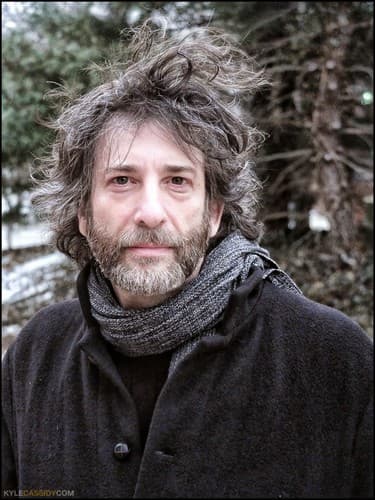
Neil Richard MacKinnon Gaiman is an English author of short fiction, novels, comic books, graphic novels, audio theatre, and a screenwriter. His works include the comic book series The Sandman and the novels Good Omens, Stardust, Anansi Boys, American Gods, Coraline, and The Graveyard Book. He has won numerous awards, including the Hugo, Nebula, and Bram Stoker awards, as well as the Newbery and Carnegie medals. He is the first author to win both the Newbery and the Carnegie medals for the same work, The Graveyard Book (2008). In 2013, The Ocean at the End of the Lane was voted Book of the Year in the British National Book Awards. It was later adapted into a critically acclaimed stage play at the Royal National Theatre in London.
Similar books
- Neverwhere
Neil Gaiman
4.2 (430k) average on GoodreadsFantasyExplores a hidden, magical world coexisting with our own, much like the hidden gods in America.
- Jonathan Strange & Mr Norrell
Susanna Clarke
3.8 (198k) average on GoodreadsFantasyFeatures a detailed, immersive alternate history with a deep dive into magic and mythology.
- Circe
Madeline Miller
4.3 (343k) average on GoodreadsFantasyMiller's Circe also delves into mythology, but focuses on a single, well-established figure from Greek myth, offering a deep character study and feminist reinterpretation. American Gods, by contrast, presents a broad pantheon of diverse, often obscure, deities from multiple cultures, using their collective struggle to critique modern society rather than focusing on one character's personal journey.
- Harry Potter and the Sorcerer's Stone
J.K. Rowling
4.5 (7M) average on GoodreadsFantasyRescued from a miserable life under the stairs, an orphaned boy discovers he's a wizard destined for a magical school, where he uncovers a dangerous secret tied to the dark wizard who murdered his parents.
- The Hunger Games
Suzanne Collins
4.3 (6.4M) average on GoodreadsFantasyIn a future where children fight to the death on live television, Katniss Everdeen volunteers for the arena, turning a death sentence into a fight for survival and a spark of rebellion.
- 1984
George Orwell
4.2 (3.1M) average on GoodreadsPoliticsIn a future where surveillance and thought control are absolute, a man's search for truth clashes with the Party, showing that hope can be a form of rebellion.




Enjoyed the summary?
A summary gives you the shape of the book. The book itself has the detail, the examples and the voice.
Find American Gods on AmazonAs an Amazon Associate, BookBrief earns from qualifying purchases. How we're funded