
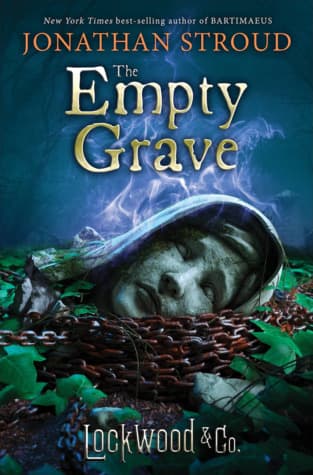
Synopsis
Covers the whole plot, including the ending.
- Difficulty
- Medium
- Pacing
- Fast
- Mood
- Suspenseful, Adventurous, Humorous, Dark, Emotional
- Read it if
- You love ghost stories, witty banter, and a good mystery with high stakes and strong character development, especially if you've been following the Lockwood & Co. series.
- Skip it if
- You prefer standalone novels, dislike supernatural elements, or are looking for something lighthearted without any dark themes.
The Empty Grave Plot Summary
Covers the whole plot, including the ending.
The Heist at Fittes Mausoleum
Five months after 'The Creeping Shadow,' Lockwood & Co., with Quill Kipps, break into the Fittes Mausoleum. They want to investigate Marissa Fittes's grave, suspecting her death was faked. They get past booby traps and spectral defenses, including a powerful Type Three ghost, to reach the coffin. Inside, they find silver items and a note suggesting Marissa is alive. The team escapes as Fittes agents arrive, led by Penelope Fittes, who is angry about their intrusion.
The Whispering Skull's Warning
Back at Portland Row, the team questions the Whispering Skull, which confirms their suspicions: Marissa Fittes is alive and connected to the Problem, the hauntings in England. The Skull says Marissa has been manipulating events for decades, using the 'Source' of the Problem for her own ends. It also hints at a larger, more dangerous plan involving agencies and artifacts. This news makes the team realize the true size of their enemy.
A Partnership with the Golden Blade
After the mausoleum raid, Lockwood & Co. are targeted by Penelope Fittes and remnants of the 'Cult of the Bones.' Needing allies, they reluctantly seek out the Golden Blade, a ruthless independent agency run by Steve Rotwell. Rotwell, interested in their findings about Marissa Fittes, agrees to an uneasy alliance. He provides resources and information, but his motives are unclear, and Lucy is wary of his methods.
The Night of the Whispering Vaults
London experiences powerful psychic attacks, with ghost-locks appearing across the city. Lockwood & Co., with the Golden Blade, investigate. They find these attacks are organized and stronger than typical hauntings, suggesting a coordinated effort. George realizes these are tests for a larger event, and Marissa Fittes is somehow making the Problem worse. Lucy's listening abilities are pushed to their limits as she senses the immense psychic energy.
The Skull's True Origin and the Other Side
The Whispering Skull, under pressure, reveals its true identity: it is the ghost of an ancient psychic, who was involved in the initial discovery of the 'Source' of the Problem with Marissa Fittes. It explains that Marissa plans to unleash the Source, merging the worlds of the living and the dead. To stop her, they must enter the Other Side, the realm of the dead, to confront her at the Source. This is a dangerous task, needing great psychic strength and a willingness to risk their souls.
Into the Heart of the Problem
Lockwood, Lucy, and Kipps, guided by the Whispering Skull, use a psychic artifact to open a gateway to the Other Side. They leave George and Holly to guard their physical bodies. The Other Side is a desolate, terrifying place, a vortex of lost souls and psychic energy, where reality is distorted. They face despair and the constant threat of being consumed by spectral entities. Lucy's listening talent guides them to the Source.
The Revelation of the Source
Deep within the Other Side, they reach the 'Source' of the Problem. It is not an artifact or a place, but a colossal, ancient psychic entity that Marissa Fittes has been manipulating for decades. They confront Marissa Fittes, who is now a powerful, almost spectral figure, sustained by the Source's energy. She reveals her plan: to 'reset' humanity by unleashing the Source's full power, believing it will purge the world of flaws and create a new society, even if it means widespread death and chaos.
The Confrontation with Marissa Fittes
A fierce battle starts between Lockwood, Lucy, Kipps, and the powerful Marissa Fittes. Marissa uses her amplified psychic abilities, channeling the Source, to create illusions and attack them. Lucy's talent lets her see Marissa's manipulations and counter them, while Lockwood's determination keeps them fighting. Kipps provides support. They realize that defeating Marissa is not enough; they must sever her connection to the Source without destroying it, or the consequences could be catastrophic.
The Sacrifice and the Severing
In a moment, Lockwood realizes the only way to sever Marissa's connection to the Source without destroying it and causing chaos is to use himself as a conduit. He lets the Source flow through him, overwhelming Marissa's control. This act almost costs him his life, pushing his psychic abilities to their limit. Lucy, seeing Lockwood's sacrifice, is devastated but understands. Marissa Fittes is separated from the Source, her power fading as she is consumed by the forces she sought to control.
Return and Reckoning
Lockwood, Lucy, and Kipps barely make it back to their physical bodies, weakened and traumatized. They find George and Holly waiting. Penelope Fittes and the other agencies deal with the aftermath of Marissa's plan and the destabilized Source. The world has changed, with the Problem still present but altered. Lockwood & Co. are seen as heroes by some, while others, like Penelope, view them with suspicion. The experience leaves a mark on Lockwood and Lucy, deepening their bond and changing their understanding of life, death, and the supernatural.
The Truth About Lockwood's Family
After things settle, Lockwood talks to Lucy about his past. He says his parents were brilliant, but reckless, psychic researchers who experimented with artifacts. His sister, Jessica, died during one of their experiments, a death Lockwood blames himself for. This trauma led him to suppress his own psychic abilities and hide his family's secrets. Lucy comforts him, understanding his burden, and this shared vulnerability deepens their relationship, leading to a more honest future for Lockwood & Co.
A New Beginning, A Lingering Threat
Lockwood & Co. return to Portland Row, their agency changed but stronger. They faced humanity's greatest threat and won, though at personal cost. The Problem remains, but its nature is better understood. Penelope Fittes, though defeated in her mother's schemes, still has power, meaning Lockwood & Co.'s fight is not over. The team, now more united, prepares for an uncertain future, knowing their talents and bond will be essential in challenges ahead.
Principal Figures
Lucy Carlyle
Protagonist
A highly talented Listener and a crucial member of Lockwood & Co.
Lucy is the primary narrator and a gifted psychic, possessing an exceptional 'Listener' talent that allows her to hear and interpret the voices of ghosts. She also has a burgeoning 'Touch' talent, enabling her to sense the history of objects. Throughout the series, she grapples with the traumatic loss of her previous team and her evolving relationship with Anthony Lockwood. In 'The Empty Grave,' her abilities are pushed to their absolute limits as she ventures into the Other Side, and she faces profound emotional challenges, particularly regarding Lockwood's safety. She is fiercely loyal, brave, and often the moral compass of the group.
Relationships: Anthony Lockwood (Complicated, deep friendship and unspoken romantic tension, partner); George Cubbins (Close friend, colleague, intellectual sparring partner); Holly Munro (Colleague, initially contentious, later respectful); The Whispering Skull (Reluctant confidante, psychic connection)
Anthony Lockwood
Protagonist
Charismatic leader of Lockwood & Co., haunted by his past.
Anthony Lockwood is the enigmatic and charismatic leader of Lockwood & Co. He possesses exceptional sword-fighting skills, a keen intellect, and a mysterious past. He is fiercely independent and often reckless, driven by a desire to prove his agency's worth and to uncover the truth behind the Problem. In 'The Empty Grave,' his hidden psychic talents are revealed to be far greater than previously suspected, and he makes a profound sacrifice to save humanity. He finally confronts and shares the tragic truth about his family, revealing the deep emotional scars he carries.
Relationships: Lucy Carlyle (Complicated, deep friendship and unspoken romantic tension, partner); George Cubbins (Close friend, colleague, intellectual sparring partner); Holly Munro (Colleague, respectful); Jessica Lockwood (Deceased sister, source of his deep trauma)
George Cubbins
Supporting
Brilliant researcher and the brains behind Lockwood & Co.'s operations.
George is the intellectual powerhouse of Lockwood & Co., responsible for research, planning, and tactical analysis. He is highly intelligent, meticulous, and often cynical, but possesses a deep loyalty to his friends. His 'Touch' talent allows him to rapidly process information from objects and spectral traces. In 'The Empty Grave,' George's research is crucial in understanding Marissa Fittes's plan and the nature of the Source. He provides the grounding logic and strategic thinking necessary for the team's survival, often offering a dose of reality to Lockwood's impulsiveness.
Relationships: Anthony Lockwood (Close friend, colleague, intellectual sparring partner); Lucy Carlyle (Close friend, colleague, intellectual sparring partner); Holly Munro (Colleague, respectful, sometimes exasperated)
Holly Munro
Supporting
Efficient administrator and essential support for Lockwood & Co.
Holly is the highly organized and efficient administrator for Lockwood & Co. Initially working for Kipps's agency, she joins Lockwood & Co. and brings a much-needed sense of order to their chaotic lives. While not a field agent, her organizational skills, calm demeanor, and ability to handle paperwork and logistics are invaluable. In 'The Empty Grave,' she provides crucial support from the home base, managing communications and ensuring the smooth running of the agency while the others are on dangerous missions. She represents the practical, grounded aspect of the team.
Relationships: Anthony Lockwood (Colleague, respectful); Lucy Carlyle (Colleague, initially competitive, later friendly); George Cubbins (Colleague, respectful)
Quill Kipps
Supporting
Former rival, now an uneasy ally and mentor to Lockwood & Co.
Quill Kipps is a former agent from the Fittes Agency, initially a rival to Lockwood & Co. After being 'cut' from his agency, he becomes an uneasy ally, often acting as a mentor figure to the younger agents. He is experienced, cynical, and highly skilled, though sometimes prone to pessimism. In 'The Empty Grave,' Kipps plays a significant role, joining Lockwood and Lucy on their perilous journey into the Other Side. His combat experience and pragmatic approach are crucial for their survival, and he demonstrates a surprising depth of loyalty and courage.
Relationships: Anthony Lockwood (Former rival, now an uneasy but respectful ally); Lucy Carlyle (Former rival, now a cautious but appreciative ally)
Marissa Fittes
Antagonist
Legendary psychic, secretly alive and orchestrating the Problem.
Marissa Fittes is the legendary founder of the Fittes Agency, believed to be dead for decades. In reality, she is the primary antagonist of 'The Empty Grave,' revealed to be alive and secretly manipulating the Problem. She is an incredibly powerful and ancient psychic, driven by a twisted vision of 'purifying' humanity by unleashing the Source. Her intellect and cunning are immense, and she uses her influence and resources to control events from the shadows. Her actions are rooted in a profound disillusionment with humanity, leading her to believe that only drastic measures can save it.
Relationships: Penelope Fittes (Daughter, manipulated and used); The Source (Ancient psychic entity, which she controls and draws power from)
Penelope Fittes
Antagonist/Supporting
Current head of the Fittes Agency, unaware of her mother's schemes.
Penelope Fittes is the current formidable head of the Fittes Agency and Marissa's daughter. She is a powerful and respected figure in the ghost-hunting world, dedicated to her agency and maintaining order. Initially, she is an adversary to Lockwood & Co., viewing them as reckless and disruptive. She is unaware of her mother's true nature and schemes, acting as an unwitting pawn in Marissa's grand plan. Her character embodies the established order and the challenges Lockwood & Co. face from within the system.
Relationships: Marissa Fittes (Mother, revered but secretly manipulated by her); Anthony Lockwood (Rival, seen as a nuisance and threat to her agency)
The Whispering Skull
Supporting
A powerful, sarcastic Type Three ghost trapped in a jar, an unwilling ally.
The Whispering Skull is a highly sarcastic, cynical, and immensely powerful Type Three ghost, trapped within a sealed iron jar at Portland Row. It possesses vast knowledge of the supernatural world and is capable of profound psychic insights. Despite its often mocking and uncooperative nature, it serves as an invaluable, albeit reluctant, source of information for Lockwood & Co. In 'The Empty Grave,' the Skull's true identity and its connection to the ancient history of the Problem are revealed, making it a pivotal guide for the team's journey into the Other Side.
Relationships: Lucy Carlyle (Primary communicator, often verbally sparring); Anthony Lockwood (Reluctant master, target of its sarcasm); Marissa Fittes (Ancient rival, enemy)
Steve Rotwell (The Golden Blade)
Supporting
Ruthless leader of an independent agency, an uneasy and pragmatic ally.
Steve Rotwell, also known as 'The Golden Blade,' is the highly effective but morally ambiguous leader of a powerful independent ghost-hunting agency. He is a pragmatic and ruthless individual, focused on results, often at any cost. He operates outside the established agency system, making him a formidable, if untrustworthy, ally. In 'The Empty Grave,' he forms an uneasy alliance with Lockwood & Co., providing resources and information, but his motives are always suspect. His presence highlights the complex moral landscape of the ghost-hunting world.
Relationships: Anthony Lockwood (Uneasy, pragmatic ally); Lucy Carlyle (Viewed with suspicion)
Jessica Lockwood
Mentioned
Anthony Lockwood's deceased sister, whose death profoundly shaped him.
Jessica Lockwood is Anthony Lockwood's older sister, whose tragic death years prior deeply affected him and led to his secretive nature. She was also a talented psychic, involved in her parents' dangerous experiments. Her death, caused by a powerful psychic artifact, is the root of Lockwood's guilt and his determination to keep his past hidden. Her memory serves as a key motivator for Lockwood, and the revelation of her story provides crucial insight into his character.
Relationships: Anthony Lockwood (Brother, deeply loved and mourned)
Themes & Insights
Identity and Self-Discovery
The novel explores the characters' understanding of themselves, especially Lucy and Lockwood. Lucy deals with her talents, learning to trust her instincts and abilities, particularly when she goes to the Other Side. Lockwood confronts his facade, revealing the truth about his family and his hidden psychic potential, leading to a more authentic self. Their journey to the Other Side is an internal and external exploration, forcing them to face their fears and true selves.
“Maybe it was only by going to the darkest places that you found the brightest parts of yourself.”
The Nature of Life and Death
'The Empty Grave' explores the lines between life and death more directly than previous books, especially through the journey into the Other Side. The Source represents an ancient, powerful entity connected to both realms. The book questions what it means to be alive, what happens after death, and the ethics of manipulating these boundaries. Marissa Fittes's desire to 'reset' humanity by merging the worlds of the living and the dead makes characters and readers think about the sanctity of life and the natural order.
“The world of the living and the world of the dead… they’re not so separate as you think. Not anymore.”
Sacrifice and Consequence
Sacrifice is a main theme, most notably with Lockwood's act of letting the Source flow through him to sever Marissa's connection. This shows that heroism often demands personal cost. The characters constantly face dangerous choices, and the novel explores the consequences of their actions for themselves and the world. Even small decisions, like breaking into the mausoleum, start a chain of events with global effects, showing the weight of responsibility.
“Some things are worth dying for, Lucy. Some things are worth living for, too.”
Truth vs. Deception
Deception is a theme, from Marissa Fittes's faked death and manipulation of the Problem to Lockwood's secrets about his family. The story constantly challenges what characters (and readers) believe, making them look deeper. The search for truth drives the plot, as Lockwood & Co. uncover lies and the real history of the Problem and its orchestrators. This theme shows the danger of unquestioning belief and the importance of critical inquiry.
“The world is full of lies, Lucy. Some of them are very old indeed.”
Found Family and Loyalty
Despite dangers and disagreements, the bond between Lockwood, Lucy, and George (and later Holly and Kipps) is the series' emotional center. 'The Empty Grave' strengthens this theme as they face their greatest challenge, relying on each other for survival and emotional support. Lockwood's revelation of his past to Lucy solidifies their deep, familial connection, showing that true family is built on trust, shared experience, and loyalty, even in the face of death. Their collective strength allows them to confront Marissa Fittes.
“We're a team, Lucy. Always. Whatever happens.”
Plot Devices & Literary Techniques
The Other Side (The Veil)
A terrifying, psychic dimension that is the source of the Problem.
The Other Side is a crucial plot device, representing the spiritual realm where ghosts reside and where the 'Source' of the Problem is located. Its introduction and the characters' journey into it elevate the stakes significantly, moving beyond typical ghost-hunting into existential horror. It serves as the ultimate arena for the climax, a place where psychic abilities are amplified, and the boundaries of life and death are blurred. The descriptions of the Other Side are vivid and terrifying, enhancing the sense of danger and the profound impact on the characters who experience it.
The Whispering Skull
An intelligent, sardonic Type Three ghost providing crucial exposition and guidance.
The Whispering Skull is a unique and indispensable plot device. Trapped in a jar, it acts as both a source of exposition, revealing ancient secrets about the Problem and Marissa Fittes, and a sardonic, often unhelpful, guide. Its direct communication with Lucy, and its eventual revelation of its true identity and history, are pivotal to understanding the antagonist's motives and the path to defeating her. The Skull's cynical voice also provides moments of dark humor, balancing the novel's intense suspense.
Marissa Fittes's Faked Death
The central mystery that drives the entire plot.
The deception of Marissa Fittes's death is the inciting incident and central mystery that propels the narrative. It establishes her as a formidable, manipulative antagonist operating from the shadows, and her 'resurrection' (or rather, her continued existence) completely upends the established understanding of the ghost-hunting world. This device creates a sense of betrayal and forces the characters to question everything they thought they knew about the agencies and the Problem itself, raising the stakes to a global level.
Lockwood's Hidden Past and Psychic Powers
A long-standing mystery that provides character depth and a crucial plot twist.
Lockwood's secretive past, particularly the tragic death of his sister and his suppressed psychic abilities, is a running plot device throughout the series that culminates in 'The Empty Grave.' The slow reveal of these details adds layers to his character, explaining his recklessness and charisma. His hidden psychic power becomes a crucial element in the climax, enabling him to make the ultimate sacrifice. This device provides a satisfying resolution to a long-standing mystery while also showcasing the profound impact of trauma on his character.
The Source
The ancient, living psychic entity responsible for the Problem.
The Source is the ultimate MacGuffin and the core of the Problem itself. It's not a simple artifact but a living, ancient psychic entity that Marissa Fittes has been manipulating. The quest to find and understand the Source drives the latter half of the plot, culminating in the journey to the Other Side. Its nature as a powerful, near-sentient being elevates the conflict beyond mere ghost-hunting to a cosmic struggle, giving the characters a truly formidable and existential threat to overcome.
The Empty Grave Quotes
“It was not a ghost that had killed the girl. It was something else. Something far worse.”
“The problem with being a ghost-hunter is that you spend an awful lot of time around ghosts. And ghosts are, by and large, incredibly irritating.”
“We were a team. A small, slightly dysfunctional, but ultimately effective team.”
“Some secrets are best left buried. But some, it turns out, refuse to stay down.”
“Fear is a weapon. And sometimes, it's the only one you've got.”
“The dead don't care about your feelings. They just want what they want.”
“There are always choices, even when it feels like there aren't any.”
“The truth, like a ghost, has a way of finding you, no matter how fast you run.”
“It's not about being brave all the time. It's about being brave when it counts.”
“The greatest dangers are often those you can't see, or those you refuse to believe in.”
“We were just kids, really. Kids with swords and salt-bombs, facing down the impossible.”
“Sometimes, the only way to move forward is to dig up the past, no matter how grim it might be.”
“The empty grave wasn't empty at all. It was full of answers, and a terrible kind of silence.”
“There's a thin line between obsession and dedication. George, as always, danced along it with gusto.”
“You can't save everyone. But you can try. And sometimes, trying is enough.”
Quiz
10 questions on the plot and the characters. Each answer comes with a short explanation.
Question 1
What is the primary objective of Lockwood & Co.'s initial perilous mission in 'The Empty Grave'?
- To retrieve a powerful psychic artifact from the Fittes family vault.
- To investigate whether Marissa Fittes's body is actually in her mausoleum.
- To rescue a captured agent believed to be held within the Fittes Mausoleum.
- To plant false evidence implicating Penelope Fittes in a ghost-trafficking ring.
Show answer
B. To investigate whether Marissa Fittes's body is actually in her mausoleum. The book opens with Lockwood & Co. breaking into the Fittes Mausoleum to verify if the body of Marissa Fittes is truly interred there, which is a central mystery of the plot.
Question 2
Which character is mentioned as an 'associate' joining Lockwood & Co. on their initial mission into the Fittes Mausoleum?
- Barnes
- Flo Bones
- Quill Kipps
- The Skull
Show answer
C. Quill Kipps The synopsis explicitly states that Lockwood, Lucy, George, Holly, and their associate Quill Kipps are on the perilous night mission.
Question 3
What is one of the key questions the book promises to answer regarding Lockwood's past?
- Will Lockwood ever reveal the true nature of his parents' deaths to Lucy?
- Will Lockwood ever reveal more about his family's past to Lucy?
- Will Lockwood ever reveal the location of his hidden family fortune?
- Will Lockwood ever reveal his true feelings for Lucy?
Show answer
B. Will Lockwood ever reveal more about his family's past to Lucy? The summary directly asks, 'Will Lockwood ever reveal more about his family's past to Lucy?', indicating this as a central mystery of the book.
Question 4
What significant event from a previous book is mentioned as having occurred five months prior to 'The Empty Grave'?
- The discovery of the bone glass.
- The events in 'The Creeping Shadow'.
- The battle at the Chelsea mausoleum.
- The destruction of the rotwell.
Show answer
B. The events in 'The Creeping Shadow'. The synopsis states, 'Five months after the events in THE CREEPING SHADOW, we join Lockwood, Lucy, George, Holly, and their associate Quill Kipps on a perilous night mission.'
Question 5
What potential consequence is highlighted for Lucy and Lockwood's trip to the Other Side?
- They might gain new psychic abilities.
- They might become permanently scarred or changed.
- They might discover a cure for the Problem.
- They might lose their connection to each other.
Show answer
B. They might become permanently scarred or changed. The summary poses the question: 'Will their trip to the Other Side leave Lucy and Lockwood forever changed?', suggesting a lasting impact.
Question 6
Who is presented as a potential antagonist seeking to shut down Lockwood & Co.?
- Inspector Barnes
- The Golden Blade
- Penelope Fittes
- The Spirit-Glass Guild
Show answer
C. Penelope Fittes The synopsis asks, 'Will Penelope Fittes succeed in shutting down their agency forever?', clearly identifying her as a major threat to the agency's existence.
Question 7
What type of allies are the young agents expected to rely on to prevail against their greatest enemy?
- High-ranking Fittes agents.
- Government officials and military forces.
- Surprising—and shadowy—allies.
- Ancient psychic orders.
Show answer
C. Surprising—and shadowy—allies. The summary explicitly states that 'they will have to rely on help from some surprising—and shadowy—allies' to prevail.
Question 8
What is the ultimate promise of the revelations in 'The Empty Grave' for readers?
- They will solve all remaining mysteries of the Problem.
- They will lead readers to start the series over again from Book 1.
- They will introduce a new spin-off series.
- They will confirm the true identity of the Visitor.
Show answer
B. They will lead readers to start the series over again from Book 1. The final sentence of the synopsis states, 'The revelations will send readers back to Book 1 to start the series all over again,' implying significant connections and new understanding of prior events.
Question 9
The book describes the final conflict as a 'climactic and chaotic battle'. What types of foes are the young agents expected to survive attacks from before this ultimate confrontation?
- Just spectral foes.
- Just human foes.
- Both spectral and human foes.
- Only booby traps and environmental hazards.
Show answer
C. Both spectral and human foes. The summary states, 'The young agents must survive attacks from foes both spectral and human before they can take on their greatest enemy.'
Question 10
Marissa Fittes is described as a 'legendary psychic heroine'. What specific detail about her is central to the initial mystery of the book?
- The location of her hidden psychic diary.
- The true identity of her successor.
- Whether her body is actually in her mausoleum.
- The source of her unique psychic abilities.
Show answer
C. Whether her body is actually in her mausoleum. The core mystery introduced at the beginning is about the Fittes Mausoleum and the question: 'Or does it?', referring to whether Marissa Fittes's body is truly there.
The Empty Grave FAQ
What is 'The Empty Grave' about?
'The Empty Grave' is the fifth and final book in the Lockwood & Co. series. It follows Lockwood, Lucy, George, Holly, and Quill Kipps on their most dangerous mission yet: breaking into the Fittes Mausoleum to investigate the supposed body of Marissa Fittes, which kicks off a series of revelations about the true nature of the Problem and the origins of the most powerful psychics. The team faces spectral and human foes, uncovering long-buried secrets that tie back to the very beginning of the series.
Why should I read 'The Empty Grave'?
You should read 'The Empty Grave' for its thrilling conclusion to the Lockwood & Co. series, offering answers to long-standing mysteries such as Lockwood's family past, the true identity of Marissa Fittes, and the ultimate fate of the Problem. It delivers a perfect blend of danger, humor, emotional depth, and shocking twists, culminating in a climactic battle that redefines everything readers thought they knew about the series. The character development, especially between Lucy and Lockwood, reaches its peak.
What is the background/setting of 'The Empty Grave'?
The story is set in an alternate, present-day London plagued by 'the Problem,' where dangerous ghosts roam after dark, and only psychic children and teenagers can detect and fight them. The primary setting shifts between the familiar Lockwood & Co. agency, the heavily booby-trapped Fittes Mausoleum, and various other haunted locations as the team uncovers the conspiracy surrounding Marissa Fittes and the organization's true goals.
What are the most memorable quotes?
While specific quotes are not provided in the summary, Jonathan Stroud's writing is known for its witty banter, particularly between Lucy and Lockwood, George's dry observations, and moments of profound bravery. Readers often highlight lines that capture Lucy's internal struggles, Lockwood's enigmatic charm, and the camaraderie of the team amidst terrifying encounters with Visitors.
What writing style does the author use?
Jonathan Stroud employs a first-person narrative, primarily from Lucy Carlyle's perspective, which allows for deep insight into her thoughts, fears, and developing psychic abilities. His style is characterized by a blend of suspenseful horror, sharp wit, clever dialogue, and vivid descriptions of both the spectral world and the gritty, ghost-haunted London. He masterfully balances terrifying encounters with moments of humor and genuine emotional connection.
What minor details add significant meaning?
One minor detail that adds significant meaning is the recurring mention of certain historical psychic researchers or specific types of ghostly phenomena, which often turn out to be crucial pieces of the puzzle regarding Marissa Fittes's true identity and the origins of the Problem. Small observations Lucy makes about Lockwood's habits or George's research often hint at larger revelations to come, underscoring the depth of the world-building.
What are some subtle foreshadowing moments?
Subtle foreshadowing includes early hints about Lockwood's reluctance to discuss his family, certain inconsistencies in the Fittes Agency's history, and the unusual power dynamics between psychic agencies. For instance, the sheer number of powerful Visitors and the specific ways they manifest sometimes subtly foreshadow the artificial nature of some high-level psychic phenomena and the manipulation behind the scenes.
What unexpected character connections exist?
The most significant unexpected character connection is the revelation concerning Marissa Fittes herself, which fundamentally alters the understanding of her relationship with other key figures in the psychic world and even with the origins of the Problem. Furthermore, the alliance with Quill Kipps, initially a rival, becomes crucial, showcasing an unexpected professional bond forged through shared danger and mutual respect.
What are unspoken character motivations?
Lockwood's unspoken motivation throughout the series has been his desperate need to uncover the truth about his family's tragedy and to redeem their name, which drives his recklessness and secrecy. Lucy's unspoken motivation, beyond fighting ghosts, is her deep desire for belonging and acceptance, which she finds with Lockwood and George, and her struggle with her powerful, often overwhelming, psychic gifts.
What psychological complexities do characters exhibit?
Lucy exhibits psychological complexities through her struggle with her unique 'Listener' ability, which sometimes overwhelms her with the voices of the dead, leading to emotional distress and a fear of losing control. Lockwood grapples with the psychological burden of his past, manifesting as a charming but guarded demeanor, a need for perfection, and a deep-seated fear of vulnerability, especially with Lucy.
What are the major emotional turning points?
Major emotional turning points include the discovery within the Fittes Mausoleum that shatters long-held beliefs, leading to a profound sense of betrayal and urgency for the team. Another is the moment Lucy and Lockwood's relationship reaches a critical juncture, forcing them to confront their feelings and the immense dangers they face, solidifying their bond amidst chaos and peril.
How do relationship dynamics evolve?
The relationship dynamics evolve significantly, particularly between Lucy and Lockwood, moving from a professional partnership with underlying tension to a deeply intertwined emotional bond, where their unspoken feelings become increasingly apparent and crucial to their survival. The dynamic with Quill Kipps also transforms from rivalry to a reluctant but vital alliance, showcasing growth and mutual respect among former adversaries.
Which parts remain ambiguous or open-ended?
While 'The Empty Grave' provides significant closure, some readers might find the ultimate, long-term implications of the Problem's resolution slightly open-ended, pondering how society will adapt and whether the threat is truly gone forever. The personal futures of the characters, while hinted at, also leave room for imagination regarding their post-agency lives.
What are controversial scenes or decisions?
A potentially controversial aspect could be the nature of the ultimate antagonist's motivations and the ethical implications of their actions, which force readers to question the line between good intentions and destructive means. The reveal regarding Marissa Fittes might also be controversial for some, challenging established lore and the very foundation of the psychic agencies.
'The Empty Grave' ending explained: how it ends & what it means
The ending of 'The Empty Grave' reveals that Marissa Fittes was not who she claimed to be; she was a manufactured persona, and the true mastermind behind the Problem and the Fittes Agency's hidden agenda is uncovered. The team, with surprising allies, confronts this ultimate enemy in a chaotic battle, leading to the dismantling of the conspiracy and a significant shift in the understanding of ghosts. It means the end of an era for Lockwood & Co. as they achieve their greatest victory, but also the beginning of a new chapter for each character, having faced the truth and survived the greatest dangers, forever changed by their experiences.
About the author
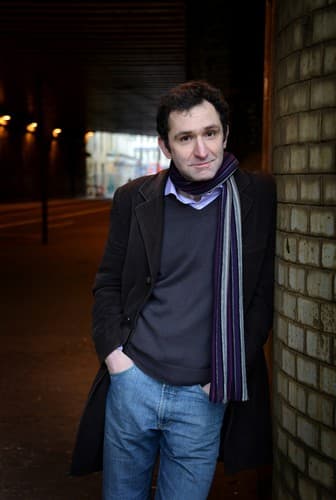
Jonathan Stroud is a British author known for his work in children's and young adult fiction. His notable books include "Lockwood & Co.: The Empty Grave," "The Whispering Skull," and "The Amulet of Samarkand," which is part of the Bartimaeus series. Stroud's writing often features elements of fantasy and adventure, appealing to a wide range of readers.
Similar books
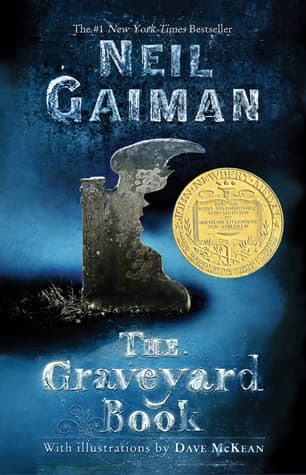
- The Graveyard Book
Neil Gaiman
4.1 (438k) average on GoodreadsFantasyFeatures a young protagonist growing up among supernatural entities and facing dark threats.
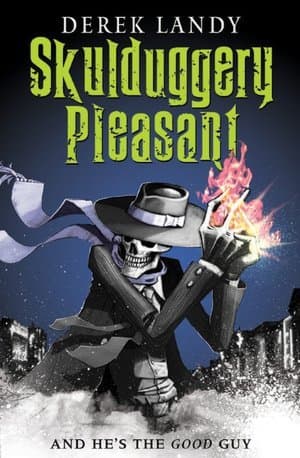
- Skulduggery Pleasant
Derek Landy
4.1 (55k) average on GoodreadsFantasyCombines a dynamic duo solving supernatural mysteries with humor and action.
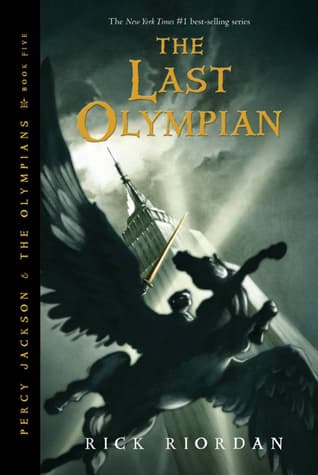
- The Last Olympian
Rick Riordan
4.5 (668k) average on GoodreadsFantasyWhile both feature young protagonists battling supernatural threats to save the world, Riordan's 'The Last Olympian' (and the Percy Jackson series as a whole) focuses more on mythological adventure with a lighter, more humorous tone. Stroud's 'The Empty Grave' delves deeper into genuine horror and a gothic atmosphere, creating a more palpable sense of dread and danger, appealing to a slightly older YA audience that appreciates darker themes alongside humor.
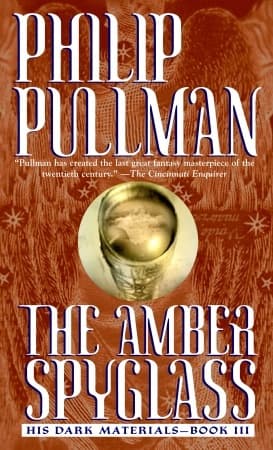
- The Amber Spyglass
Philip Pullman
4.1 (298k) average on GoodreadsFantasyPullman's 'The Amber Spyglass' (and the His Dark Materials trilogy) is renowned for its philosophical depth, intricate allegorical world-building, and exploration of complex theological themes. In contrast, 'The Empty Grave' prioritizes a more direct, fast-paced narrative focused on solving a supernatural mystery with immediate, visceral horror elements. While both offer rich worlds, Stroud's work is less overtly philosophical and more grounded in the specific mechanics and terror of its ghost-haunted setting, offering a different kind of intellectual and emotional engagement.
- Harry Potter and the Sorcerer's Stone
J.K. Rowling
4.5 (7M) average on GoodreadsFantasyRescued from a miserable life under the stairs, an orphaned boy discovers he's a wizard destined for a magical school, where he uncovers a dangerous secret tied to the dark wizard who murdered his parents.
- The Hunger Games
Suzanne Collins
4.3 (6.4M) average on GoodreadsFantasyIn a future where children fight to the death on live television, Katniss Everdeen volunteers for the arena, turning a death sentence into a fight for survival and a spark of rebellion.


Enjoyed the summary?
A summary gives you the shape of the book. The book itself has the detail, the examples and the voice.
Find The Empty Grave on AmazonAs an Amazon Associate, BookBrief earns from qualifying purchases. How we're funded