
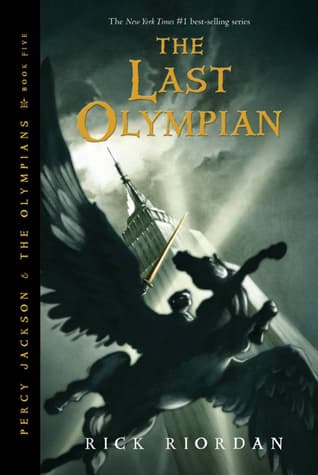
Synopsis
Covers the whole plot, including the ending.
- Difficulty
- Easy
- Pacing
- Fast
- Mood
- Epic, Heroic, Action-packed, Bittersweet, Triumphant
- Read it if
- You love epic fantasy battles, coming-of-age stories with a touch of humor, and Greek mythology brought to life in a modern setting. Perfect for fans of a satisfying series conclusion.
- Skip it if
- You dislike urban fantasy, stories with a teenage protagonist, or prefer more grimdark fantasy without humor.
The Last Olympian Plot Summary
Covers the whole plot, including the ending.
Percy's Underwater Ultimatum and the Prophecy's Shadow
The story starts with Percy Jackson and Rachel Elizabeth Dare on a beach. They talk about Percy's upcoming sixteenth birthday and the scary Great Prophecy. Suddenly, Percy's father, Poseidon, pulls him into the ocean. Poseidon's underwater kingdom is under attack by the Titan Oceanus, and the monster Typhon has escaped from Tartarus. Typhon is destroying America, pulling the gods away from Olympus to fight him. Poseidon tells Percy to warn the Olympians and get ready for battle, because Kronos is expected to attack New York City, where Mount Olympus is, while the gods are busy. Percy goes back to Camp Half-Blood, where he sees the camp preparing for war. New demigods arrive, and old friends like Annabeth Chase and Grover Underwood are ready for the last fight.
The Styx River's Embrace and Achilles' Weakness
After returning to Camp Half-Blood, Percy learns that Luke Castellan, taken over by Kronos, is leading his forces towards Manhattan. Remembering the prophecy's line about a hero's curse, Percy decides he must become unkillable, just like Luke. He goes to the Underworld with Nico di Angelo, who leads him to the River Styx. Nico warns him about the pain and the risk of losing his humanity, but Percy still jumps into the toxic river. He focuses on Annabeth to stay connected to the mortal world. The process is very painful, and he comes out with only one mortal spot: a small area on his lower back, like Achilles' heel. This new ability to resist harm, however, makes him more distant and powerful.
Manhattan Under Siege: The Battle Begins
With the gods fighting Typhon across the country, Kronos begins his attack on New York City. He puts a strong sleeping spell on all mortals in Manhattan, making the whole island eerily quiet. Percy, Annabeth, Grover, Thalia Grace, and the other demigods, along with the Hunters of Artemis and the Party Ponies (centaurs), set up defenses around the Empire State Building, the entrance to Olympus. They face a large army of monsters, demigods loyal to Kronos, and even Titans. The battle is harsh and continuous, with many losses on both sides. Percy, now almost unkillable, becomes a strong fighter, but Kronos's army might overwhelm them with its numbers.
The Golden Fleece's Betrayal and a Hero's Sacrifice
During the battle, the Ares cabin, led by Clarisse La Rue, first refuses to join the fight. This is because of an old argument with Apollo's cabin over a stolen chariot. This leaves the demigods badly outnumbered. However, at a critical moment when a drakon is about to destroy the defenders, Silena Beauregard, pretending to be Clarisse, bravely attacks the monster. She gets a fatal wound, but her sacrifice inspires the Ares cabin. They arrive in full force, led by the real Clarisse, to get revenge for Silena. Before she dies, Silena reveals that she was Kronos's spy, forced into it by Luke. Her death, though sad, brings the demigods together and helps them win that part of the fight.
The Labyrinth's Legacy and Daedalus's Device
As the battle continues, Annabeth remembers something from Daedalus's workshop in the Labyrinth. She realizes that Daedalus had a laptop with all his inventions and plans. They get the laptop and find designs for automatons and other devices. Using this information, Charles Beckendorf's siblings from the Hephaestus cabin manage to restart some of Daedalus's automatons, turning them against Kronos's forces. This gives them a needed advantage, helping to reduce enemy numbers and protect key spots around Olympus. It shows how old knowledge and cleverness are important in modern war.
Rachel's Oracle Revelation and the Path to Olympus
In the middle of the fighting, Rachel Elizabeth Dare reappears, drawn to the conflict. She tells Percy that she has a deeper connection to old powers than she knew before. She says that she is a clear-sighted mortal and could become the next Oracle of Delphi, a role currently held by a mummified spirit. This news adds another layer to the prophecy. It suggests that the future is not completely set and that new paths can appear even in the worst times. Her presence shows a change in how prophecy works and in the demigod world.
The Gods' Return and Typhon's Defeat
Just as the demigods are about to be defeated, the gods, led by Poseidon, finally beat Typhon. Poseidon, recovered from his fight with Oceanus, delivers the final blow. Their return to New York City changes the course of the battle for Manhattan. The arrival of all the Olympian gods, though late, provides important help. Their combined power starts to push back Kronos's forces, giving the tired demigods a break and new hope. However, Kronos himself, still in Luke's body, remains a strong danger, having reached the throne room of Olympus.
Clash in the Throne Room: Percy vs. Kronos
Percy, Annabeth, Grover, and Thalia rush to the Olympus throne room, where Kronos is already causing destruction. Kronos, in Luke's body, is very powerful, using his scythe and breaking the old thrones. Percy, using his ability to resist harm, fights Kronos in a desperate duel. During the fight, Annabeth steps in, reminding Luke of his true self and their past. This brief distraction gives Percy a chance to try and talk to the bit of Luke's mind still inside Kronos. The fight is not just physical; it is also a fight for Luke's soul, as Kronos tries to fully take over his host.
Luke's Redemption and the Prophecy's Fulfillment
In the final fight, as Kronos gets ready to hit Percy, Annabeth jumps in front of Percy, taking a painful hit. Seeing Annabeth hurt, and hearing her pleas for him to remember who he is, Luke's true self briefly returns. He realizes how much he was used and how terrible he has become. In a brave act of self-sacrifice, Luke grabs Annabeth's knife, which Percy had given him, and stabs himself in his mortal point – the same spot Percy had chosen on his back. This act destroys Kronos, completing the prophecy's unclear line about the hero's curse and saving Olympus, but it costs Luke his life.
The Gods' Reward and a New Era
With Kronos defeated, the Olympians return to a damaged but safe Olympus. They offer Percy Jackson godhood and eternal life as a reward for his bravery. However, Percy, remembering Luke's sad fate and his wish for the gods to pay more attention to their demigod children, politely declines. Instead, he asks the gods to claim all their demigod children, build new cabins for the minor gods, and pardon peaceful Titans and their children. He also asks that Hades and other minor gods be recognized properly. The gods, humbled by the war and Percy's lack of selfishness, agree to his terms. This begins a new time of greater fairness and recognition for all demigods.
Rachel's Destiny and Percy's Future
After Percy refuses eternal life, Rachel Elizabeth Dare accepts the role of the Oracle of Delphi. She performs the ritual, and the spirit of the Oracle enters her, making her the new voice of prophecy. Her first prophecy speaks of a new quest involving the children of the 'Big Three,' setting the stage for future stories. With the war over and Olympus safe, Percy and Annabeth finally show their feelings for each other. They share a long-awaited kiss, symbolizing the start of their relationship and a hopeful future for the demigod world, free from Kronos's immediate danger.
The Last Olympian Characters
Percy Jackson
Protagonist
Son of Poseidon, a powerful demigod destined to fulfill the Great Prophecy
Percy is a brave, loyal, and often sarcastic demigod, who, despite his immense power, remains humble and deeply compassionate. Throughout the book, he grapples with the weight of the Great Prophecy and the responsibility of leading the demigods against Kronos. His decision to bathe in the River Styx, making him nearly invulnerable, showcases his determination to protect his friends and Olympus. He is driven by his loyalty to his friends, particularly Annabeth, and his desire for the gods to treat their demigod children better. He ultimately rejects immortality, choosing a mortal life to advocate for demigods.
Relationships: Annabeth Chase (Best friend and romantic interest); Grover Underwood (Best friend and satyr companion); Poseidon (Father); Luke Castellan (Former friend, now enemy/host of Kronos); Rachel Elizabeth Dare (Friend and potential romantic interest (briefly))
Annabeth Chase
Supporting
Daughter of Athena, Percy's strategic and intelligent best friend and romantic interest
Annabeth is an incredibly intelligent and strategic demigod, often serving as the brains behind Percy's brawn. She is fiercely loyal, brave, and deeply cares for her friends, especially Percy and Luke. Her architectural knowledge is crucial in defending Olympus, and her understanding of Luke's past plays a pivotal role in his redemption. She often struggles with her feelings for Percy and her past connection to Luke, but her unwavering support for Percy is a constant throughout the final battle. Her willingness to put herself in harm's way for Percy demonstrates the depth of her affection.
Relationships: Percy Jackson (Best friend and romantic interest); Luke Castellan (Childhood friend, unrequited crush, later enemy); Athena (Mother); Grover Underwood (Friend)
Luke Castellan / Kronos
Antagonist
Son of Hermes, host of the Titan Lord Kronos, and the ultimate antagonist
Luke is a complex character, initially a disillusioned demigod who felt abandoned by the gods, leading him to join Kronos. He embodies the 'hero's curse' from the prophecy, having bathed in the River Styx and become invulnerable, but at the cost of his soul. As the host for Kronos, he is the primary physical threat to Olympus. Beneath Kronos's influence, glimpses of Luke's true self, his pain, and his past loyalty to his friends, particularly Annabeth, remain. His ultimate act of self-sacrifice to defeat Kronos is a moment of profound redemption, proving that even a corrupted hero can choose good.
Relationships: Hermes (Father); Kronos (Host/Manipulator); Annabeth Chase (Childhood friend, unrequited affection); Thalia Grace (Childhood friend)
Grover Underwood
Supporting
Percy's best friend and satyr companion, a Lord of the Wild
Grover is a loyal and often anxious satyr who serves as Percy's protector and best friend. In this book, he has achieved the title of Lord of the Wild, giving him significant power over nature and the ability to inspire powerful fear in Kronos's monsters. His empathy and connection to the natural world are vital in the defense of Olympus, as he uses his panic abilities to sow discord among the enemy ranks. He provides comic relief and emotional support, reminding Percy of his humanity and the importance of hope, even in the darkest hours. His growth from a timid satyr to a powerful nature spirit is fully realized.
Relationships: Percy Jackson (Best friend and protector); Annabeth Chase (Friend); Juniper (Girlfriend (dryad))
Rachel Elizabeth Dare
Supporting
Clear-sighted mortal who becomes the new Oracle of Delphi
Rachel is a spirited, artistic, and clear-sighted mortal who can see through the Mist, allowing her to perceive gods and monsters. Her unique ability to interact with the demigod world without being a demigod herself provides an outside perspective. She is brave and unwavering, even in the face of immense danger. In this book, she fully embraces her destiny as the next Oracle of Delphi, accepting the great responsibility that comes with it. Her decision to become the Oracle is a significant turning point, ensuring that prophecy will continue in a more accessible and perhaps more human way.
Relationships: Percy Jackson (Friend, brief romantic tension); Apollo (God who recognizes her potential)
Nico di Angelo
Supporting
Son of Hades, a powerful demigod struggling with his identity and loyalty
Nico is a brooding and complex son of Hades, still grappling with the loss of his sister and his place in the demigod world. Initially resentful of Percy, he gradually becomes a crucial ally. His knowledge of the Underworld and his shadow-travel abilities are essential in helping Percy bathe in the River Styx. He is fiercely independent but ultimately chooses to fight for Olympus, demonstrating his underlying loyalty and sense of justice. He also plays a key role in convincing his father, Hades, to join the fight, showcasing his growing influence and power.
Relationships: Percy Jackson (Reluctant ally, later friend); Hades (Father); Bianca di Angelo (Deceased sister)
Thalia Grace
Supporting
Daughter of Zeus and lieutenant of Artemis's Hunters
Thalia is a strong, independent, and fierce daughter of Zeus, who chose to become a Hunter of Artemis to avoid the Great Prophecy. She is a skilled warrior and a natural leader, commanding the Hunters in the defense of Olympus. Her history with Luke and Annabeth adds an emotional layer to the conflict, as she struggles with the betrayal of her former friend. Despite her loyalty to Artemis, she remains deeply committed to protecting Camp Half-Blood and her friends, proving to be a formidable force against Kronos's army.
Relationships: Artemis (Goddess she serves); Luke Castellan (Childhood friend); Annabeth Chase (Childhood friend); Zeus (Father)
Silena Beauregard
Supporting
Daughter of Aphrodite and the spy for Kronos
Silena is a kind and gentle daughter of Aphrodite, known for her beauty and compassion. She is revealed to be the spy within Camp Half-Blood, coerced by Luke due to her affection for Charles Beckendorf. Her betrayal weighs heavily on her, but in a moment of ultimate courage and redemption, she sacrifices herself to fight the drakon while disguised as Clarisse. Her death not only unites the Ares cabin but also highlights the tragic consequences of loyalty and manipulation, proving that even those who make mistakes can find a heroic end.
Relationships: Charles Beckendorf (Boyfriend); Luke Castellan (Manipulator); Aphrodite (Mother)
Clarisse La Rue
Supporting
Daughter of Ares and head counselor of the Ares cabin
Clarisse is a tough, aggressive, and often abrasive daughter of Ares. Despite her gruff exterior, she possesses a strong sense of loyalty and honor. Her initial refusal to join the battle due to a petty feud nearly costs the demigods dearly, but Silena's sacrifice shames her into action. Once committed, she leads her cabin with ferocity and effectiveness, proving to be a formidable warrior. Her arc highlights the importance of setting aside personal grievances for the greater good and the powerful bond of camaraderie among demigods.
Relationships: Ares (Father); Silena Beauregard (Friend, whose death she avenges)
The Last Olympian Themes
Identity and Self-Sacrifice
This theme looks at how characters define themselves by their choices and their willingness to give things up for others. Percy deals with the prophecy and the offer of eternal life. He chooses a mortal life to speak up for demigods, showing his identity through his kindness. Luke's sad story is central; he takes back his identity from Kronos through a heroic act of self-sacrifice, showing that even bad people can choose to do good. Silena Beauregard's sacrifice, where she is revealed as the spy, shows how past mistakes can be made right through selfless acts. This proves that who you truly are is found in your final choices.
“He was a hero. He just made a bad choice.”
The Nature of Prophecy and Destiny
The Great Prophecy drives the whole series, and 'The Last Olympian' shows how it is fulfilled in complex and often unclear ways. The prophecy is not a fixed future but a set of possibilities influenced by choices. Percy's decision to refuse godhood, Rachel's acceptance of the Oracle, and Luke's final act of redemption all show that destiny is not fully set. It can be shaped by free will. The 'hero's curse' eventually refers to Luke's ability to resist harm and his self-inflicted wound, showing how prophecies often have unexpected meanings. This highlights human action over rigid fate.
“You are not your father, Percy. You are not your destiny. You are you.”
Family, Loyalty, and Betrayal
Loyalty is a main value among the demigods, especially between Percy, Annabeth, and Grover. The war tests these bonds, with Luke's betrayal being a main conflict. This theme also applies to the gods' difficult family, whose neglect of their children fuels Luke's anger. Percy's demand for the gods to recognize all their children shows how important family responsibility is. Silena's forced betrayal and later sacrifice, driven by love and loyalty to Beckendorf, show how these themes interact and how choosing loyalty in the end can lead to good.
“Family. You promised you would never let me go.”
Mortality vs. Immortality
The choice between living a normal life and living forever is a central theme, especially for Percy. The gods offer him eternal life, a tempting way to avoid pain and loss. However, Percy sees the gods' distance and Luke's sad path, driven by the wish for endless fame. This leads him to choose a normal life. He believes that true heroism and connection are found in human experience, including its limits. His choice to stay mortal and speak for the ignored demigods suggests that a meaningful, limited life dedicated to fairness can be more effective than eternal, distant power. This challenges common ideas of heroism.
“No, I want things to change... I want you to properly claim your children. All of them, at an age no older than thirteen.”
Environmentalism and the Natural World
Grover's role as the Lord of the Wild brings environmental worries to the front. The destruction caused by Typhon and Kronos's forces shows how fragile the natural world is. Grover's panic attack ability, which comes from nature's power, becomes a weapon against the Titans, showing nature fighting back. Percy's connection to the ocean and his father Poseidon further shows the need to protect the environment. The war acts as a symbol for humanity's disregard for nature, and the demigods' fight for Olympus is also a fight to keep the balance of the planet, which is tied to the gods' power.
“The wild is not just trees and animals, Percy. It's the spirit of the world, and it's suffering.”
Plot Devices & Literary Techniques
The Great Prophecy
The overarching prophecy that drives the entire series' plot
The Great Prophecy is a cryptic verse delivered by the Oracle of Delphi that foretells a demigod of the Big Three reaching sixteen, making a choice, and either saving or dooming Olympus. In 'The Last Olympian,' it acts as the central plot device, dictating events and character motivations. Its ambiguity allows for multiple interpretations, ultimately being fulfilled in an unexpected way through Luke's self-sacrifice rather than Percy's direct action, highlighting the nuances of fate and free will. It serves to build suspense and provide a narrative framework for the entire series' climax.
The River Styx Invulnerability
A magical bath granting near-invulnerability, with a single mortal point
This plot device is directly inspired by the myth of Achilles. Percy's decision to bathe in the River Styx makes him almost invincible, but leaves one tiny, vulnerable spot on his lower back. This creates high stakes in every combat scene, as Percy must protect his weak point. It also serves as a parallel to Luke's similar act, highlighting their shared path and the 'hero's curse.' The physical power comes with a mental detachment, adding a psychological layer to Percy's character and making his final confrontation with Kronos more dangerous.
The Sleeping Spell over Manhattan
Kronos's magical enchantment that incapacitates all mortals in New York City
This device effectively removes mortals from the battlefield, allowing the demigods and monsters to wage war openly in a major urban center without massive civilian casualties or widespread mortal panic. It isolates the conflict to the supernatural realm, creating an eerie, deserted backdrop for the final battle. This also emphasizes the gods' power and their disregard for mortal lives, as they are unable (or unwilling) to lift the spell, leaving the demigods as humanity's sole protectors. It heightens the sense of urgency and the scale of the threat.
The Oracle of Delphi
The source of prophecies, represented by a mummified spirit and later Rachel Dare
The Oracle provides the prophecies that guide and often confuse the demigods. Its initial state as a mummified spirit emphasizes the ancient, unchanging nature of fate. Rachel Elizabeth Dare becoming the new Oracle signifies a shift: a more human, accessible, and potentially more hopeful future for prophecy. This device allows for the introduction of new narrative directions for future series, as Rachel's first prophecy sets up the next major quest, acting as a bridge to new adventures and a symbol of evolving tradition.
The Olympian Council's Indifference/Neglect
The gods' consistent failure to acknowledge and care for their demigod children
While not a physical object, the gods' neglect is a pervasive plot device that drives much of the conflict. Luke's resentment, the understaffing of Camp Half-Blood, and the general vulnerability of demigods all stem from this. Percy's refusal of godhood and his subsequent demands for the gods to claim all their children directly addresses this systemic issue. It serves as a strong moral argument within the narrative, highlighting the consequences of parental abandonment and advocating for greater empathy and responsibility from those in power.
The Last Olympian Quotes
“The end of the world started when a pegasus landed on the hood of my car.”
“Even strength must bow to wisdom sometimes.”
“Families are messy. Immortal families are eternally messy.”
“If my life is going to mean anything, I have to live it myself.”
“Being a hero doesn't mean you're invincible. It just means that you're brave enough to stand up and do what's needed.”
“The real world is where the monsters are.”
“Love is no game! It is no flowery softness! It is hard work—it demands everything from you—especially the truth.”
“Sometimes you have to do something even if it's dangerous. Otherwise you're not really living, you're just waiting to die.”
“A single thread in a tapestry, though its color brightly shines, can never see its purpose in the pattern of the grand design.”
“We're staying together. You're not getting away from me. Never again.”
“The gods are immortal. They can afford to wait. We can't.”
“Hope survives best at the hearth.”
“You deal with mythological stuff for a few years, you learn that paradises are usually places where you get killed.”
“I am never, ever going to make things easy for you, Seaweed Brain. Get used to it.”
Quiz
10 questions on the plot and the characters. Each answer comes with a short explanation.
Question 1
What is the primary reason the Olympian gods are unable to defend Mount Olympus directly during Kronos's attack on New York City?
- They are trapped in Tartarus by Kronos's magic
- They are distracted by internal conflicts among themselves
- They are fighting the monster Typhon in the Midwest
- They have been weakened by a curse from an ancient oracle
Show answer
C. They are fighting the monster Typhon in the Midwest In the book, the gods are occupied battling Typhon, a monstrous storm giant who is rampaging across the United States, which leaves Mount Olympus in New York City vulnerable to Kronos's assault.
Question 2
Who is revealed to be the spy for Kronos within Camp Half-Blood, betraying the demigods' plans?
- Clarisse La Rue
- Silena Beauregard
- Charles Beckendorf
- Travis Stoll
Show answer
B. Silena Beauregard Silena Beauregard is exposed as the spy, having been blackmailed by Luke (possessed by Kronos) due to her relationship with Beckendorf, who died earlier in the series.
Question 3
What crucial decision does Percy Jackson make regarding the Great Prophecy on his sixteenth birthday?
- He chooses to sacrifice himself to destroy Kronos
- He gives up his immortality to save Annabeth
- He refuses the gods' offer of immortality, asking for better treatment of demigods instead
- He accepts the throne of Olympus to rule as a new god
Show answer
C. He refuses the gods' offer of immortality, asking for better treatment of demigods instead After the battle, the gods offer Percy immortality, but he declines and instead requests that they recognize all their children, including minor gods, and treat demigods with more respect, leading to changes at Camp Half-Blood.
Question 4
Which character ultimately defeats Kronos by convincing Luke Castellan to regain control of his body?
- Percy Jackson
- Annabeth Chase
- Nico di Angelo
- Rachel Elizabeth Dare
Show answer
B. Annabeth Chase Annabeth appeals to Luke's remaining humanity, reminding him of their past friendship and his promise to protect her, which allows Luke to momentarily overcome Kronos's possession and sacrifice himself to defeat the Titan.
Question 5
What strategic advantage do the demigods gain by using the Labyrinth during the battle in Manhattan?
- It allows them to teleport reinforcements instantly across the city
- It provides a hidden base to store weapons and ambush enemies
- It lets them trap Kronos in an inescapable maze
- It enables them to communicate secretly with the gods
Show answer
B. It provides a hidden base to store weapons and ambush enemies The demigods utilize Daedalus's workshop in the Labyrinth as a secret headquarters, allowing them to move troops, launch surprise attacks, and protect key locations like the Empire State Building.
Question 6
How does Rachel Elizabeth Dare prove her worth as the new Oracle of Delphi in this book?
- She heals wounded demigods with prophetic visions
- She uses her artistic skills to map out battle strategies
- She breaks the curse on the Oracle by speaking a prophecy that guides Percy
- She fights directly in the battle using a magical paintbrush
Show answer
C. She breaks the curse on the Oracle by speaking a prophecy that guides Percy Rachel accepts the spirit of the Oracle, ending the curse that had plagued it since Hades's betrayal, and delivers a new prophecy that helps Percy understand his role in defeating Kronos.
Question 7
What is the significance of the River Styx bath that Percy takes before the final battle?
- It grants him temporary invisibility to sneak past enemy lines
- It makes him invulnerable except for one small spot on his body
- It allows him to communicate with the dead for advice
- It cures him of a fatal wound inflicted by Kronos
Show answer
B. It makes him invulnerable except for one small spot on his body Following the myth of Achilles, Percy bathes in the River Styx to gain invulnerability, with his weak point being the small of his back, which he uses to enhance his combat abilities against Kronos's forces.
Question 8
Which theme is most prominently explored through Percy's internal conflict about the Great Prophecy?
- The importance of academic success in a magical world
- The struggle between free will and destiny
- The dangers of technology in ancient myths
- The value of secrecy in protecting magical communities
Show answer
B. The struggle between free will and destiny Percy grapples with the prophecy that he will either save or destroy Olympus, questioning whether he can change his fate or if he is doomed to fulfill it, highlighting the book's focus on choice versus predestination.
Question 9
What role do the minor gods and their children play in the Battle of Manhattan?
- They refuse to fight, leading to tensions among the demigods
- They betray the Olympians and join Kronos's army
- They provide crucial reinforcements after being ignored by the Olympians
- They act as healers but avoid direct combat
Show answer
C. They provide crucial reinforcements after being ignored by the Olympians Demigods from minor gods, such as those of Hecate and Nemesis, join the fight after Percy advocates for their inclusion, strengthening the defenses and turning the tide in key moments.
Question 10
How does the book resolve the romantic tension between Percy and Annabeth?
- They decide to remain just friends to focus on their duties
- They share a kiss after the battle, confirming their relationship
- Annabeth rejects Percy because of his dangerous lifestyle
- Percy leaves Camp Half-Blood to avoid complicating things
Show answer
B. They share a kiss after the battle, confirming their relationship In the aftermath of the battle, Percy and Annabeth finally acknowledge their feelings for each other with a kiss at the campfire, marking a key development in their relationship throughout the series.
The Last Olympian FAQ
What is 'The Last Olympian' about?
The book centers on the final battle between the Olympian gods and the Titan army led by Kronos, who attacks New York City while the gods are distracted fighting Typhon. Percy Jackson leads the demigod defense of Mount Olympus, located atop the Empire State Building, while grappling with a prophecy about his sixteenth birthday that suggests he may have to make a terrible sacrifice to save Olympus.
Why should I read 'The Last Olympian'?
As the epic conclusion to the Percy Jackson and the Olympians series, it delivers satisfying resolutions to five books' worth of character arcs and plot threads. The novel features massive battle sequences, emotional character moments, and clever twists that pay off long-established foreshadowing, making it a rewarding read for fans invested in Percy's journey.
What is the background/setting of 'The Last Olympian'?
The primary setting is modern-day Manhattan, where Mount Olympus physically exists atop the Empire State Building. The entire island becomes a battlefield as Kronos's forces invade from the rivers, with key locations including the Williamsburg Bridge, Central Park, and the Underworld entrance at DOA Recording Studios playing crucial roles in the conflict.
What are the most memorable quotes?
Notable quotes include Percy's declaration 'I will never be your pawn' to Kronos, Rachel Elizabeth Dare's 'You will be betrayed by one who calls you a friend' prophecy, and Annabeth's emotional 'Seaweed Brain' moments that reveal her deepening feelings. The final line 'And for once, I didn't look back' perfectly captures Percy's character growth.
What writing style does Rick Riordan use?
Riordan employs Percy's first-person narration with his signature sarcastic, humorous voice even during intense battle scenes. The style blends modern teenage dialogue with mythological epic storytelling, creating accessible yet dramatic prose that balances action sequences with character-driven moments and witty observations about Greek mythology intersecting with contemporary life.
What minor details add significant meaning?
Small details like Percy keeping Annabeth's broken dagger, the blue birthday cake Sally Jackson makes, and Beckendorf's unfinished shield carry emotional weight. The constant presence of Rachel's blue hairbrush becomes a symbol of her connection to Percy, while the subtle references to Luke's childhood experiences with May Castellan foreshadow his ultimate redemption.
What are some subtle foreshadowing moments?
Early mentions of Luke's mother May Castellan and her prophetic fits hint at his tragic backstory. Percy's dreams showing Luke's childhood trauma with Hermes prepare for their final confrontation. The repeated emphasis on Percy's 'fatal flaw' of personal loyalty directly connects to the prophecy's requirement that he must make an impossible choice to save his friends.
What unexpected character connections exist?
The revelation that Rachel Elizabeth Dare is the new Oracle of Delphi connects her seemingly random appearances throughout the series. Silena Beauregard's secret relationship with Beckendorf and her subsequent betrayal as the spy 'Princess Andromeda' creates tragic layers to her character. The connection between Ethan Nakamura's mother and Nemesis explains his motivations beyond simple Titan allegiance.
What are unspoken character motivations?
Luke's deep-seated resentment toward Hermes for abandoning him and his mother drives his initial alliance with Kronos, though his underlying desire for a family ultimately leads to his redemption. Annabeth's fierce protection of Percy stems not just from friendship but unacknowledged romantic feelings she struggles to express amidst the war. Clarisse's refusal to fight initially comes from grief over Beckendorf's death rather than stubbornness.
What psychological complexities do characters exhibit?
Percy grapples with the burden of leadership while fearing he might become a pawn in the gods' schemes. Luke experiences severe internal conflict between his hatred for the gods and his lingering humanity, manifested through Kronos's possession. Annabeth struggles with divided loyalties between her mother Athena's wisdom and her emotional connection to Percy and Luke.
What are the major emotional turning points?
Silena's death while pretending to be Clarisse to rally the campers marks a tragic turning point. Percy's underwater conversation with his father Poseidon where he learns about the true nature of the prophecy creates emotional tension. The climax when Luke reasserts control over his body to defeat Kronos represents the series' most powerful redemption moment.
How do relationship dynamics evolve?
Percy and Annabeth's relationship shifts from competitive friendship to acknowledged romantic feelings, culminating in their kiss after the battle. Percy and Poseidon develop mutual respect as father and son rather than distant god and worshipper. The demigods collectively mature from scattered individuals into a cohesive army, with former rivals like Clarisse and Percy achieving hard-won understanding.
Which parts remain ambiguous or open-ended?
The exact mechanics of how Luke contained Kronos's essence within his body and regained control remain partially unexplained. The gods' promise to better acknowledge their children leaves how this will actually manifest uncertain. Rachel's new role as Oracle and how this affects her relationship with Percy presents unresolved possibilities for future stories.
What are controversial scenes or decisions?
Percy's decision to give Luke Annabeth's dagger proves controversial as it enables Luke's redemption but could have backfired disastrously. The gods' offer to make Percy a god divides readers on whether he should have accepted immortality. Silena's betrayal as the spy and subsequent heroic death creates moral complexity about forgiveness and redemption.
'The Last Olympian' ending explained: how it ends & what it means
The ending sees Luke Castellan sacrificing himself by taking back control of his body and using Annabeth's dagger to destroy Kronos from within. Percy refuses godhood but negotiates better treatment for demigods from the gods. The conclusion emphasizes that heroes are defined by choices rather than heritage, with Percy choosing mortality and his relationship with Annabeth over power.
What symbolism is present in the final battle?
The Empire State Building represents both the vulnerability and resilience of Olympus. The River Styx blessing makes Percy literally 'invincible' but his true strength comes from emotional connections. Luke's scar, a mark of his failed quest, becomes the precise spot where he must strike to defeat Kronos, transforming his greatest failure into his redemption.
How does the prophecy play out differently than expected?
The Great Prophecy's 'hero's soul, cursed blade shall reap' refers not to Percy dying but to Luke using the cursed blade (Annabeth's dagger) to sacrifice his own soul. 'A single choice shall end his days' applies to Luke choosing redemption rather than Percy choosing to fight. This subversion emphasizes that prophecies in this world are about interpretation rather than literal fulfillment.
About the author

Rick Riordan is an American author known for his young adult fiction, particularly in the fantasy genre. He is best known for the "Percy Jackson & the Olympians" series, which includes "The Lightning Thief," "The Sea of Monsters," "The Titan's Curse," "The Battle of the Labyrinth," and "The Last Olympian," as well as "The Lost Hero," part of the subsequent Heroes of Olympus series. His works often blend mythology with contemporary themes, appealing to a wide audience.
Similar books
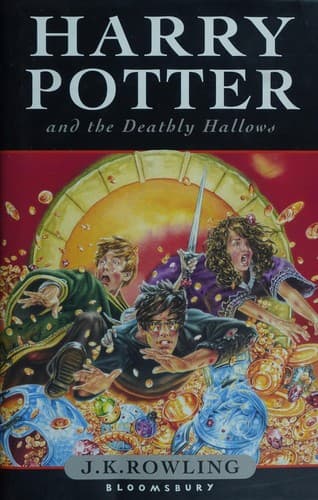
- Harry Potter and the Deathly Hallows
J.K. Rowling
A climactic final book in a beloved series, featuring a young hero facing a dark lord and making a world-changing choice.
- The Hobbit, or There and Back Again
J.R.R. Tolkien
4.3 (2.9M) average on GoodreadsFantasyA classic adventure story with a young protagonist embarking on a perilous quest, facing mythical creatures, and growing into a hero.
- Mockingjay
Suzanne Collins
4.0 (2.3M) average on GoodreadsFantasyBoth books serve as the final installment in popular YA series and deal with large-scale conflict, rebellion, and the costs of war. However, 'The Last Olympian' is firmly rooted in urban fantasy and mythology, with a focus on ancient gods and monsters. 'Mockingjay' is a dystopian science-fiction novel, exploring themes of media manipulation, totalitarianism, and the moral ambiguities of revolution in a futuristic setting. Riordan's tone is generally more optimistic and adventurous, while Collins's is grittier and more somber.
- Harry Potter and the Sorcerer's Stone
J.K. Rowling
4.5 (7M) average on GoodreadsFantasyRescued from a miserable life under the stairs, an orphaned boy discovers he's a wizard destined for a magical school, where he uncovers a dangerous secret tied to the dark wizard who murdered his parents.
- The Hunger Games
Suzanne Collins
4.3 (6.4M) average on GoodreadsFantasyIn a future where children fight to the death on live television, Katniss Everdeen volunteers for the arena, turning a death sentence into a fight for survival and a spark of rebellion.
- 1984
George Orwell
4.2 (3.1M) average on GoodreadsPoliticsIn a future where surveillance and thought control are absolute, a man's search for truth clashes with the Party, showing that hope can be a form of rebellion.





Enjoyed the summary?
A summary gives you the shape of the book. The book itself has the detail, the examples and the voice.
Find The Last Olympian on AmazonAs an Amazon Associate, BookBrief earns from qualifying purchases. How we're funded