
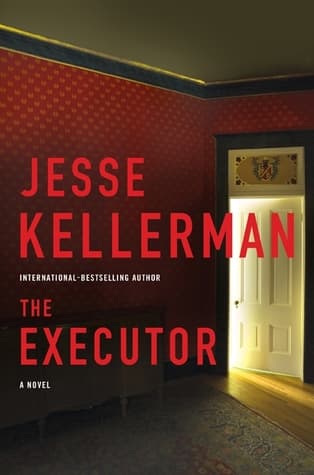
Synopsis
Covers the whole plot, including the ending.
- Difficulty
- Medium
- Pacing
- Moderate
- Mood
- Intriguing, Suspenseful, Philosophical, Dark
- Read it if
- You enjoy thrillers that blend intellectual puzzles with high stakes, and appreciate a protagonist grappling with moral philosophy.
- Skip it if
- You prefer straightforward action thrillers without much introspection or a morally ambiguous plot.
The Executor Plot Summary
Covers the whole plot, including the ending.
A Life in Shambles
Joseph Geist, a struggling philosophy graduate student, is evicted from his apartment with his girlfriend, Sarah. Homeless and jobless, his dissertation on Nietzsche stuck, and his funding cut, Joseph is at a turning point. His only valuable possession is a Nietzsche bust. Desperate for money, he looks through newspaper classifieds. He finds a strange ad seeking a 'Conversationalist,' which interests him. With no other options, Joseph calls the number, hoping for a simple job to solve his money problems, unaware of the deep and dangerous path he is about to take.
The Mysterious Alma Spielman
Joseph calls the number from the ad and gets an interview. He meets Alma Spielman, an elderly woman with a sharp mind and old-world charm, who lives in a grand, somewhat isolated house. Alma explains that she is dying and wants intellectual company, someone to have deep philosophical talks with. Despite the unusual job, Joseph, drawn by Alma's intelligence and the promise of good pay, accepts. Their conversations quickly become a stimulating escape for Joseph, a sharp contrast to his chaotic life, and he becomes more and more fascinated by Alma.
A Pact with the Dying
During their talks, Alma Spielman tells Joseph about her terminal illness, saying she has little time left. She then suggests a surprising arrangement: she wants Joseph to be her executor. Beyond just managing her estate, Alma asks Joseph to carry out a series of specific, morally difficult requests after her death, hinting at secrets and unfinished business. Joseph is hesitant at first, struggling with the ethics and odd nature of the demands, but Alma's persuasive mind and his own financial need eventually lead him to agree to her terms, tying him to her final wishes.
Alma's Death and the First Task
Alma Spielman dies peacefully, leaving Joseph a detailed will and a list of instructions. As promised, her will names him executor, giving him a large inheritance, but only if he successfully completes her tasks. Joseph's first instruction is to find a specific, obscure philosophical text and deliver it to an unknown person. This first task seems harmless, but the unusual circumstances around the book and the recipient make Joseph suspicious, making him realize that Alma's will is far more complex and possibly dangerous than he first thought.
The Mysterious Package and the Watcher
As Joseph tries to complete Alma's second instruction — delivering a mysterious package to a specific place — he notices a shadowy figure watching him. This unsettling presence makes him realize he is not alone and that Alma's will involves more than just philosophical deliveries. The package itself holds a cryptic meaning, and its transfer feels less like a simple errand and more like a secret operation. Joseph's initial confusion turns into a growing sense of paranoia and danger, as he understands that Alma's legacy is pulling him into a world of secrets and potential threats.
Unraveling the Past
Alarmed by the surveillance and the increasing strangeness of his tasks, Joseph decides to investigate Alma Spielman's past. He looks through old records, archives, and makes quiet inquiries, slowly putting together pieces of her life. He finds hints of a life far more complex and politically charged than the calm, intellectual woman he knew. He learns about her family's history, their possible connections to wartime events, and a hidden group of people she seemed linked to. This research deepens the mystery, suggesting that Alma's will is not just about personal wishes but about correcting historical wrongs or settling old scores.
A Confrontation and a Warning
Joseph's investigations attract unwanted attention. An intimidating person confronts him directly, warning him to stop his inquiries and abandon Alma's will. The encounter is threatening, making it clear that powerful forces are involved and that Joseph's life is in danger. This direct threat confirms his suspicions that Alma's estate is tied to something much bigger and more dangerous than he could have imagined. He now faces a moral choice: continue to honor Alma's wishes and risk his life, or abandon the will and possibly lose the promised inheritance and fail Alma.
The Revelation of the Network
Through clues left by Alma and his own research, Joseph uncovers the truth: Alma Spielman was a key person in a secret network dedicated to finding and bringing to justice individuals who escaped punishment for crimes committed during World War II. Her 'will' is not just personal requests, but a carefully planned final operation to settle old scores and ensure justice where official channels failed. Joseph realizes he has become an unwitting part of a complex, decades-long pursuit of justice, and the 'tasks' are crucial steps in this grand plan.
The Final Target
As Joseph deciphers Alma's remaining instructions, he realizes that all the seemingly different tasks are leading to one high-profile target: a seemingly respectable and influential figure who has lived without punishment since the war. This person is the ultimate goal of Alma's elaborate revenge and justice plan. The final task requires Joseph to expose this person's past, bringing their hidden crimes to light. The stakes are very high, as this figure has significant power and resources, making the final stages of Alma's will the most dangerous for Joseph.
The Execution and its Aftermath
Joseph, using his intelligence and Alma's carefully planned steps, successfully completes the final task, exposing the target's dark past to the world. The revelation causes a public scandal and brings the long-delayed justice Alma sought. However, completing the will comes with a personal cost. Joseph deals with the moral and psychological effects of his involvement, grappling with the violence and manipulation he took part in, even if for a cause he now understands. He receives his inheritance, but his life is forever changed by his time as Alma Spielman's executor, a man who became an instrument of historical reckoning.
The Executor Characters
Joseph Geist
Protagonist
A struggling philosophy graduate student thrust into a dangerous legacy.
Joseph Geist is a highly intelligent but perpetually unmotivated philosophy Ph.D. candidate, specializing in Nietzsche. He's adrift, facing homelessness and unemployment, and lacks practical skills or ambition beyond his academic pursuits. He is initially naive and somewhat passive, easily swayed by intellectual challenges and financial incentives. His moral compass is generally strong, but it's often tested by circumstance and the allure of Alma's intellect and promises. He possesses a keen analytical mind, which serves him well in deciphering Alma's complex instructions.
Relationships: Alma Spielman (Employer/mentor/manipulator, intellectual soulmate); Sarah (Ex-girlfriend, represents his 'normal' life)
Alma Spielman
Catalyst/Antagonist (posthumous)
An enigmatic, dying intellectual with a hidden agenda and a powerful will.
Alma Spielman is an elderly, highly intelligent, and manipulative woman with a razor-sharp mind and an old-world demeanor. She presents herself as a lonely, dying intellectual seeking companionship, but she is, in fact, a master strategist with a decades-long plan for justice. Her past is shrouded in secrecy, hinting at profound personal losses and a deep-seated commitment to rectifying historical wrongs. She uses her intellect and charm to draw Joseph into her intricate web, orchestrating events from beyond the grave. She represents both a mentor and a powerful, controlling force in Joseph's life.
Relationships: Joseph Geist (Her chosen executor and instrument of her final plan)
Sarah
Supporting
Joseph's practical and exasperated ex-girlfriend.
Sarah is Joseph's former girlfriend, a practical and grounded individual who represents the stability and normalcy Joseph has lost. She is frustrated by Joseph's lack of ambition and his inability to function in the real world. Though she cares for him, she ultimately kicks him out due to his chronic irresponsibility and their unsustainable living situation. She serves as a reminder of the life Joseph is leaving behind and the stark contrast between his academic pursuits and the demands of everyday existence. Her presence highlights Joseph's initial helplessness.
Relationships: Joseph Geist (Ex-girlfriend, represents his past domestic life)
The Watcher/Enforcer
Antagonist
A shadowy figure tracking Joseph, connected to Alma's targets.
This character is a menacing, unnamed individual or group who monitors Joseph's actions and attempts to obstruct his progress. They are connected to the powerful figures Alma is targeting, acting as their protectors or enforcers. Their presence signifies the real danger Joseph is in and the powerful forces he is unwittingly challenging. They are a physical manifestation of the resistance to Alma's posthumous justice, representing the hidden power and ruthlessness of those who wish to keep their past secrets buried. They embody the immediate threat to Joseph's safety.
Relationships: Joseph Geist (Adversary, attempting to stop his actions); Alma's Targets (Protector/enforcer of the hidden past)
The Final Target
Antagonist
A powerful, seemingly respectable figure with a hidden, heinous past.
The Final Target is the ultimate object of Alma's elaborate revenge scheme. This individual is a highly influential and seemingly respectable public figure who has successfully concealed a heinous past, likely involving war crimes or atrocities, for decades. They represent the injustice Alma is fighting against – the idea that some criminals escape punishment and live privileged lives. Though not directly interacting with Joseph for much of the story, their hidden existence and the power they wield drive much of the plot's suspense and danger. Their exposure is the climax of Alma's will.
Relationships: Alma Spielman (Long-standing victim/target of her justice); Joseph Geist (The unwitting instrument of their exposure)
The Executor Themes
Justice vs. Vengeance
The novel looks at the unclear line between seeking justice for past crimes and personal revenge. Alma's detailed plan, while aiming to expose war criminals, comes from a deep personal loss and a desire for payback. Joseph struggles with whether his actions, though meant to expose evil, are truly just or simply tools for Alma's long-held grudge. The story questions if the outcome justifies the methods, especially when those methods involve manipulation and danger, as seen in Alma's use of Joseph to fulfill her complex, posthumous agenda.
“Justice, Joseph, is not always delivered by the law. Sometimes, it must be earned, even extracted, by those who remember.”
The Weight of the Past
The story shows how historical events, especially the crimes of World War II, still affect the present. Alma's entire life and her plan after death are shaped by her experiences and the unpunished crimes of the past. Joseph, initially separate from history, becomes deeply involved in its results, realizing that the past is not gone but a living force that demands attention. The theme highlights the lasting impact of trauma and the constant search for historical truth, showing how secrets can linger for decades.
“History is not a book to be closed, Joseph. It is a wound that continues to bleed until it is properly cauterized.”
Intellect vs. Action
Joseph Geist, a philosopher, is initially comfortable only with abstract ideas. The novel contrasts his academic, theoretical world with the harsh realities of Alma's practical, dangerous mission. Joseph is forced to move beyond intellectual thought and take real action, facing physical threats and moral problems his philosophy studies never prepared him for. This theme examines the limits of pure intellect when faced with real evil and the need for action, even if morally unclear, to achieve a greater purpose. His journey forces him to connect thought and deed.
“You can write about Nietzsche until your fingers bleed, Joseph, but that will not change the world. Action, however small, can.”
Manipulation and Free Will
The story centers on Alma's skillful manipulation of Joseph. She uses his intelligence, financial desperation, and philosophical curiosity to turn him into an unwitting participant in her grand plan. Joseph initially believes he is making his own choices, but he slowly realizes how much Alma has controlled his every move, even after her death. This raises questions about free will, especially when choices are guided by strong incentives and carefully set traps. The story explores the ethics of using another person as a tool to achieve a goal.
“You thought you chose, Joseph. But some choices are merely the next step on a path already laid out for you.”
Plot Devices & Literary Techniques
The Posthumous Will
Alma's will dictates a series of tasks to be completed after her death.
This is the central plot device. Alma Spielman's will is not merely a distribution of assets but a meticulously crafted set of instructions and challenges that Joseph must complete posthumously. Each task serves a specific purpose in her larger plan for justice, acting as a stepping stone that gradually reveals the true nature of her mission. This device drives the narrative forward, providing a clear structure for Joseph's journey and creating suspense as each new instruction is unveiled. It allows Alma to remain a controlling force even after her death.
The Enigmatic Advertisement
A cryptic newspaper ad draws Joseph into Alma's orbit.
The 'Conversationalist Sought' advertisement is the initial hook that pulls Joseph Geist into the story. Its unusual wording and the specific requirements immediately establish the eccentric nature of Alma Spielman and her world. This device serves to introduce the protagonist to the central conflict, acting as a seemingly innocuous gateway to a much deeper and more dangerous plot. It plays on Joseph's intellectual curiosity and desperation, ensuring he takes the bait and sets the entire narrative in motion.
Philosophical Allusions and Metaphors
References to philosophers, particularly Nietzsche, enrich the narrative.
Given Joseph's academic background, the novel frequently uses philosophical concepts, allusions, and metaphors, especially those related to Nietzsche. These are not just decorative but often mirror the moral and existential dilemmas Joseph faces. For instance, discussions of 'will to power' or 'good and evil beyond good and evil' reflect Alma's relentless pursuit and the ambiguous morality of her actions. This device adds intellectual depth, provides character insight into Joseph, and subtly foreshadows themes and plot developments, blurring the lines between abstract thought and concrete action.
The MacGuffin (Specific Items)
Obscure books and mysterious packages serve as immediate objectives.
Throughout his tasks, Joseph is often required to locate or deliver specific, seemingly innocuous items – an obscure philosophical text, a sealed package, a coded message. These items function as MacGuffins, driving Joseph's immediate actions and creating short-term goals within Alma's larger plan. While the items themselves might not hold intrinsic plot value, their acquisition or delivery is crucial for advancing the narrative and revealing the next piece of Alma's puzzle. They serve to keep the plot moving and introduce new characters or threats.
The Executor Quotes
“The past is a foreign country; they do things differently there.”
“Every man has his secrets. The trick is to keep them buried deep enough.”
“Justice, I've found, is rarely about right or wrong. It's about who tells the more convincing story.”
“There's a fine line between genius and madness, and I've spent my life dancing on it.”
“The most dangerous lies are the ones we tell ourselves.”
“Sometimes, the only way to move forward is to burn the bridges behind you.”
“Memory is a treacherous thing. It shapes itself to fit our desires, not the facts.”
“We are all prisoners of our own making, bound by the choices we've made.”
“The greatest weapon in any conflict is understanding your opponent's fears.”
“Redemption is not given; it is earned, often through suffering.”
“The silence between words often speaks louder than the words themselves.”
“To truly know someone, you must witness their reaction when everything is taken from them.”
“Every secret has a shelf life. Eventually, it spoils.”
“The world isn't fair, but sometimes, for a brief moment, it feels like it tries to be.”
Quiz
10 questions on the plot and the characters. Each answer comes with a short explanation.
Question 1
What is Joseph Geist's primary academic pursuit, which he is struggling to complete?
- His master's thesis in literature
- His doctoral dissertation in philosophy
- His undergraduate capstone project in history
- His post-doctoral research in linguistics
Show answer
B. His doctoral dissertation in philosophy Joseph Geist is identified as a 'perpetual graduate student' who has 'hit a dead end on his dissertation,' indicating his pursuit of a doctorate.
Question 2
What unusual item does Joseph Geist possess after being kicked out by his girlfriend?
- A full statue of Plato
- A half bust of Nietzsche's head
- A complete collection of Kant's works
- An antique globe
Show answer
B. A half bust of Nietzsche's head The text explicitly states he is 'left with little more than a half bust of Nietzsche's head' after the breakup.
Question 3
What is the specific phrasing of the advertisement Joseph finds in the newspaper?
- TUTOR SOUGHT. ACADEMIC BACKGROUND ESSENTIAL.
- COMPANION REQUIRED. ELDERLY GENTLEMAN.
- CONVERSATIONALIST SOUGHT. SERIOUS APPLICANTS ONLY.
- RESEARCH ASSISTANT WANTED. PHILOSOPHY PREFERRED.
Show answer
C. CONVERSATIONALIST SOUGHT. SERIOUS APPLICANTS ONLY. The ad is quoted directly in the synopsis as 'CONVERSATIONALIST SOUGHT. SERIOUS APPLICANTS ONLY.'
Question 4
What is Joseph's financial and living situation immediately before finding the advertisement?
- He is comfortably living with his girlfriend and receiving full funding.
- He is homeless, unemployed, and his academic funding has been cut off.
- He has a temporary job but is looking for better academic prospects.
- He is living with family and seeking part-time work.
Show answer
B. He is homeless, unemployed, and his academic funding has been cut off. The synopsis states he was 'kicked out of their shared apartment,' 'homeless and unemployed,' and 'his funding has been cut off.'
Question 5
What is the initial impression Joseph forms of Alma Spielman?
- She is a demanding and unapproachable employer.
- She is an intellectual soul mate with old-world ways and a sharp mind.
- She is a kind but intellectually simple woman.
- She is suspicious and immediately distrustful of him.
Show answer
B. She is an intellectual soul mate with old-world ways and a sharp mind. The text describes Alma as 'a woman who, with her old-world ways and razor-sharp mind, is his intellectual soul mate.'
Question 6
Why is Joseph initially desperate for income?
- He wants to buy a new car.
- His academic funding was cut, and he is homeless and unemployed.
- He needs to pay for an expensive medical procedure.
- He is saving up for a trip abroad.
Show answer
B. His academic funding was cut, and he is homeless and unemployed. The synopsis explicitly states, 'His funding has been cut off... Desperate for some source of income,' directly linking his need for money to his academic and living situation.
Question 7
What does the synopsis imply about Joseph's decision to answer Alma Spielman's ad?
- It will lead to a successful academic career.
- It is the best decision of his life, leading to great happiness.
- It will seal his fate in an unforeseen and potentially negative way.
- It will be a temporary solution to his financial woes.
Show answer
C. It will seal his fate in an unforeseen and potentially negative way. The synopsis ends with the ominous line, 'How is he to know that what seems to be the best decision of his life is the one that seals his fate?' implying a significant, and likely negative, turning point.
Question 8
What philosophical figure's bust does Joseph possess, hinting at his intellectual background?
- Socrates
- Descartes
- Nietzsche
- Aristotle
Show answer
C. Nietzsche Joseph is 'left with little more than a half bust of Nietzsche's head,' directly naming the philosopher.
Question 9
What specific time frame is given for calling the number in the advertisement?
- Between nine A.M. and five P.M.
- Anytime, twenty-four hours a day.
- Between seven A.M. and two P.M.
- Weekends only, from noon to four P.M.
Show answer
C. Between seven A.M. and two P.M. The ad specifically states: 'PLEASE CALL 617-XXX-XXXX BETWEEN SEVEN A.M. AND TWO P.M.'
Question 10
The title 'The Executor' combined with the synopsis's hint about Joseph's fate suggests what thematic element will likely be central to the story?
- A lighthearted romantic comedy.
- A legal drama about inheritance and wills.
- A philosophical debate on free will versus determinism.
- A coming-of-age story about finding purpose.
Show answer
B. A legal drama about inheritance and wills. The title 'The Executor' strongly implies a role related to managing an estate or a will, which, combined with the mystery/thriller genre and the hint about his 'fate' being sealed by meeting Alma, points to a plot involving legal or financial execution of some kind, likely related to Alma's affairs.
The Executor FAQ
What is the initial premise of 'The Executor' and Joseph Geist's situation?
Joseph Geist, a perpetual graduate student, finds himself homeless and unemployed after his girlfriend kicks him out. With his dissertation stalled and funding cut, he's desperate for income, leading him to answer a cryptic newspaper ad for a 'conversationalist.' This ad introduces him to Alma Spielman, setting the stage for the novel's central mystery.
Who is Alma Spielman and what is her initial role in Joseph Geist's life?
Alma Spielman is an elderly woman of old-world charm and formidable intellect who hires Joseph Geist as a conversationalist. She quickly becomes his intellectual soul mate, engaging him in deep discussions, primarily about philosophy and ethics. This seemingly benign relationship, however, gradually pulls Joseph into her complex and dangerous world.
What kind of 'executor' does the title refer to, and what is Joseph's primary task?
The title refers to Joseph's role as the executor of Alma Spielman's will, but it's not a typical legal execution. His primary task is to fulfill a series of highly unconventional and ethically ambiguous instructions laid out in her will, which involve confronting individuals and orchestrating events based on Alma's meticulous planning and desire for a specific kind of justice.
What philosophical themes are explored through Joseph and Alma's conversations?
Their conversations delve deeply into themes of justice, revenge, morality, free will, and the nature of good and evil. Alma, with her Nietzschean leanings, often challenges Joseph's conventional moral framework, pushing him to consider more radical interpretations of justice and personal accountability, which later inform the 'tasks' he must perform.
How does Joseph Geist's academic background in philosophy influence his actions throughout the book?
Joseph's background provides him with the tools to intellectualize Alma's complex ethical dilemmas and justify his own increasingly questionable actions. His familiarity with philosophical concepts, particularly Nietzsche, allows him to engage with Alma on her level, but also makes him susceptible to her manipulative logic as he attempts to rationalize the morally ambiguous tasks she assigns him.
What is the significance of the Nietzsche bust Joseph possesses at the beginning of the story?
The half-bust of Nietzsche's head is a symbolic foreshadowing of Alma Spielman's philosophical influence on Joseph. It represents his academic pursuits and initial intellectual alignment, which Alma later exploits and deepens. Nietzsche's ideas, particularly regarding the will to power and the re-evaluation of values, become central to Alma's worldview and the justification for her elaborate schemes.
Are there any subtle clues early on that suggest Alma Spielman's true intentions or background?
Yes, Alma's meticulous nature, her profound knowledge of specific historical events, her detached discussion of justice and retribution, and her insistence on Joseph's precise adherence to her instructions all subtly hint at a deeper, more calculated agenda. Her 'old-world ways' also mask a past marked by significant trauma and a long-held desire for specific outcomes.
How does Alma's past connect to the specific individuals Joseph is tasked with confronting?
Alma's past reveals her as a Holocaust survivor who meticulously tracked down individuals she believed were complicit or directly responsible for injustices against her and her family during the war. Each person Joseph confronts is linked to a specific grievance or crime from Alma's history, making his 'executor' duties a form of delayed, elaborate retribution.
What psychological transformation does Joseph Geist undergo as he fulfills Alma's wishes?
Joseph transforms from a passive, intellectually adrift student into an active, morally compromised agent. Initially driven by financial desperation and intellectual curiosity, he gradually internalizes Alma's worldview, becoming increasingly detached from conventional morality and more adept at rationalizing his involvement in her intricate schemes of 'justice.'
Is Joseph Geist a willing participant, or is he manipulated into his role by Alma Spielman?
Joseph is a complex mix of both. He is undoubtedly manipulated by Alma, who skillfully preys on his financial vulnerability and intellectual vanity. However, he also makes conscious choices to continue, often finding a perverse satisfaction or intellectual justification in his actions, suggesting a degree of complicity beyond mere coercion.
To what extent does Alma Spielman represent a 'hero' or 'villain' in the narrative?
Alma defies easy categorization. She can be seen as a victim seeking justice for unspeakable wrongs, making her actions understandable from a certain perspective. However, her calculated manipulation, her willingness to sacrifice Joseph, and the extreme nature of her revenge also cast her as a villain, blurring the lines between victim and perpetrator.
Does the book ultimately endorse Alma's form of 'justice' or critique it?
The book presents Alma's 'justice' as deeply ambiguous, offering no clear endorsement. It meticulously details the psychological toll on Joseph and the moral complexities of her actions, forcing the reader to grapple with the ethical implications of personal vengeance, even when stemming from profound historical trauma. It critiques the idea of an individual taking the law into their own hands.
How does the author use the thriller genre to explore philosophical questions?
The author ingeniously uses the suspense and escalating stakes of the thriller genre to make abstract philosophical questions intensely personal and visceral. Joseph's increasingly dangerous tasks force him and the reader to confront real-world applications of ethical dilemmas, making the philosophical debate an integral part of the plot's tension and mystery.
What is the significance of the novel's ending for Joseph Geist's character arc?
The ending solidifies Joseph's complete transformation, leaving him irrevocably altered by his experiences. It suggests that he has either fully embraced Alma's worldview, become a successor to her intricate planning, or is forever haunted by the moral compromises he made. His future remains ambiguous, but his innocence is undeniably lost.
Could Joseph have escaped his fate, or was he always destined to be Alma's 'executor'?
While Joseph made choices that led him deeper into Alma's schemes, the narrative strongly suggests a certain inevitability. Alma's meticulous planning and psychological manipulation made it exceedingly difficult for him to escape once he was entangled. His initial desperation and intellectual susceptibility also played a crucial role, almost predestining him for her specific requirements.
What role does the setting of Boston play in the narrative?
Boston's academic environment, with its prestigious universities and intellectual circles, provides a credible backdrop for Joseph's graduate student life and Alma's sophisticated, philosophical discussions. Its historical depth also subtly echoes the long-reaching historical grievances that drive Alma's quest for justice, connecting the present-day mystery to a distant, painful past.
Are there any red herrings or misleading plot points designed to surprise the reader?
Yes, the initial presentation of Alma as merely an eccentric, lonely old woman seeking intellectual companionship is a significant red herring. The reader, like Joseph, is drawn into a seemingly innocuous situation, only to gradually uncover the sinister and complex layers of her true intentions and the dark nature of her 'will.'
How does the book explore the concept of inherited trauma or the lasting impact of historical events?
The novel powerfully explores the lasting impact of historical trauma, specifically the Holocaust, through Alma's character. Her elaborate plans are a direct consequence of her past suffering, demonstrating how such events can shape an individual's entire life and drive them to extreme measures, even decades later, in pursuit of belated justice or closure.
Similar books
- The Silent Patient
Alex Michaelides
4.1 (507k) average on GoodreadsThrillerFeatures a complex psychological puzzle and a twisty plot driven by a protagonist uncovering hidden truths.
- The Secret History
Donna Tartt
3.9 (2k) average on GoodreadsPoliticsExplores philosophical themes and moral dilemmas within a group of intellectually intense characters, leading to dark consequences.
- Gone Girl
Gillian Flynn
4.1 (2.3M) average on GoodreadsThriller"The Executor" delves deeper into the justification of morally reprehensible acts and the systemic nature of injustice, whereas "Gone Girl" primarily focuses on the psychological impact of moral ambiguity and the unraveling of personal relationships and identity. Kellerman's scope is broader, exploring vigilante justice and societal failures.
- Angels & Demons
Dan Brown
3.9 (2.7M) average on GoodreadsThrillerA Harvard symbologist races through Rome's ancient sites, deciphering cryptic clues to unmask the Illuminati and stop a vengeful plot to destroy the Vatican with a stolen antimatter weapon.
- The Girl on the Train
Paula Hawkins
3.9 (2.1M) average on GoodreadsThrillerA woman’s fascination with a seemingly perfect couple she watches from her daily train commute leads her into a dark investigation when she witnesses something that shatters their idyllic image.
- The Da Vinci Code
Dan Brown
3.9 (1.9M) average on GoodreadsThrillerA symbologist and a cryptologist race through European landmarks, deciphering ancient codes and uncovering a conspiracy that could rewrite the foundations of Christianity.






Enjoyed the summary?
A summary gives you the shape of the book. The book itself has the detail, the examples and the voice.
Find The Executor on AmazonAs an Amazon Associate, BookBrief earns from qualifying purchases. How we're funded