

Synopsis
Covers the whole plot, including the ending.
- Difficulty
- Medium
- Pacing
- Variable
- Mood
- Epic, Mythic, Adventurous, Perilous, Hopeful
- Read it if
- You love classic high fantasy, epic quests, richly detailed world-building, and stories about unlikely heroes facing overwhelming odds. Perfect for those who enjoy a foundational fantasy narrative with deep lore and moral complexities.
- Skip it if
- You prefer fast-paced, action-driven plots without much descriptive prose or extensive world-building, or if you dislike stories with multiple point-of-view characters or a slower initial build-up.
The Fellowship of the Ring Plot Summary
Covers the whole plot, including the ending.
A Long-Expected Party and a Sudden Departure
The novel begins in the Shire with Bilbo Baggins's eleventy-first birthday party, celebrated with his nephew and heir, Frodo Baggins, who turns thirty-three. During his farewell speech, Bilbo puts on a magical ring and vanishes, surprising the hobbits. Gandalf the Grey, a wizard and long-time friend, talks to Bilbo about the Ring, telling him to leave it for Frodo. Bilbo reluctantly agrees, feeling an unusual possessiveness. Frodo inherits Bag End and the Ring. For seventeen years, life in the Shire is peaceful, but Gandalf, suspicious of the Ring, researches its history. He eventually confirms it is the One Ring made by the Dark Lord Sauron, a powerful, evil artifact.
Shadows Stir in the Shire
Gandalf returns to Bag End and tells Frodo the Ring's true identity, explaining its power and the danger it poses. He tells Frodo to leave the Shire immediately and take the Ring to Rivendell, an Elven stronghold. Frodo, with his loyal gardener Samwise Gamgee, starts this dangerous journey. They are soon joined by Frodo's cousins, Merry Brandybuck and Pippin Took. The hobbits realize they are being hunted by Black Riders, later identified as the Nazgûl, Sauron's terrifying servants, who are looking for the Ring. Their journey through the Shire has many close calls, forcing them to learn caution and how to adapt.
Escape to Bree and the Strider's Aid
The hobbits eventually reach the village of Bree, where they plan to meet Gandalf at The Prancing Pony inn. Gandalf is not there, but they meet a grim-looking ranger known as Strider (Aragorn), who has been expecting them. After Frodo accidentally puts on the Ring in the common room, Strider reveals he is a friend of Gandalf and offers to guide them. The Nazgûl attack their rooms at the inn that night, but the hobbits, warned by Strider, escape unharmed. Strider becomes their protector, guiding them through the wild and dangerous lands beyond Bree, showing his skill as a tracker and warrior.
On Weathertop and Flight to Rivendell
The journey continues towards Weathertop, an old ruined watchtower. Strider warns them that the Nazgûl are still pursuing them. On Weathertop, five Black Riders ambush them. Frodo, influenced by the Ring, puts it on and sees the Nazgûl in their spectral forms. The Witch-king of Angmar, their leader, stabs Frodo with a Morgul-blade, leaving a shard in his shoulder. Strider fights off the attackers. Frodo's wound is serious and slowly turning him into a wraith. A desperate race against time begins to reach Rivendell, where Elven healing might save him. Glorfindel, an Elf-lord from Rivendell, finds them and puts Frodo on his horse, Asfaloth, sending him ahead.
The Council of Elrond
Frodo barely reaches Rivendell and is healed by Lord Elrond. A council is held, with representatives from all free peoples of Middle-earth: Elrond, Gandalf, Aragorn, Boromir (from Gondor), Legolas (from Mirkwood), Gimli (from the Lonely Mountain), and hobbits Frodo, Sam, Merry, and Pippin. The Ring's history is told, and Sauron's growing threat is discussed. The council debates what to do with the Ring, as its power is too great for anyone good to use, and it cannot be hidden or used against Sauron. Frodo volunteers to take the Ring to Mordor to destroy it in the fires of Mount Doom.
The Fellowship Departs
The Council of Elrond decides the Ring must be destroyed in the fires of Mount Doom, where it was made. Frodo volunteers to carry the Ring, and a 'Fellowship of the Ring' forms to help and protect him. The nine companions are Frodo Baggins (Ring-bearer), Samwise Gamgee, Merry Brandybuck, Pippin Took (the hobbits), Gandalf the Grey (the wizard), Aragorn (the ranger and heir of Gondor), Legolas Greenleaf (the Elven prince), Gimli, son of Glóin (the Dwarf warrior), and Boromir (the son of the Steward of Gondor). They leave Rivendell, heading south, facing the big challenge ahead, united in their goal to stop Sauron.
Through Caradhras and into Moria
The Fellowship tries to cross the Misty Mountains via the Caradhras Pass. However, a blizzard, possibly influenced by Sauron or Saruman's magic, forces them to turn back. Gandalf then suggests a dangerous alternative: going through the old Dwarf mines of Moria, a place now rumored to have unknown terrors. Despite Gimli's initial excitement and Boromir's worry, they agree. At Moria's western gate, they face a Watcher in the Water, a monster that attacks them and seals the entrance after they pass. They are now trapped within the dark, sprawling mines.
The Bridge of Khazad-dûm
Inside Moria, the Fellowship finds the tomb of Balin, a Dwarf lord who tried to reclaim the mines, and learns that the colony was destroyed by Orcs. Orcs and a monster Cave-troll ambush them in the Chamber of Mazarbul. After a battle, they escape and are pursued through the large, dark caverns. As they cross the Bridge of Khazad-dûm, a terrifying Balrog of Morgoth, an ancient demon of fire and shadow, confronts them. Gandalf sacrifices himself to let the others escape, fighting the Balrog and falling into the abyss with it, shouting, 'Fly, you fools!'
Lórien and the Lady Galadriel
Sad about Gandalf's loss, the remaining eight members of the Fellowship leave Moria and are guided by Legolas into the Elven realm of Lothlórien, the Golden Wood. Haldir and other Mirkwood Elves meet them, blindfolding Gimli until he agrees to be blindfolded with the others. In Lórien, they find refuge and healing, both physical and spiritual. They meet the Lord and Lady of the Galadhrim, Celeborn and Galadriel. Galadriel tests Frodo by letting him look into her Mirror, which shows visions of possible futures or pasts. She also offers him help and advice, seeing the big burden he carries.
The Temptation of Boromir and the Breaking of the Fellowship
After resting in Lórien, the Fellowship prepares to leave, given Elven cloaks, lembas bread, and boats. They travel down the River Anduin. As they approach the Falls of Rauros, a decision must be made: whether to go east towards Mordor or west towards Minas Tirith. Frodo, feeling the Ring's increasing influence and the growing tension in the group, retreats to consider his options. Boromir, overwhelmed by the Ring's power and his wish to use it for Gondor's defense, tries to take the Ring from Frodo by force. Frodo escapes by putting on the Ring, realizing he must continue the quest alone.
The Ambush at Amon Hen
After Boromir's failed attempt to take the Ring, Frodo decides he must leave the Fellowship and go to Mordor alone to protect his companions from the Ring's corrupting influence. As he prepares to leave, Samwise Gamgee, having guessed Frodo's move, races after him and insists on going with him. Meanwhile, the Uruk-hai, a new kind of Orcs sent by Saruman and Sauron, attack the rest of the Fellowship at Amon Hen. Boromir bravely defends Merry and Pippin, but is badly wounded by arrows while fighting many Orcs. Merry and Pippin are captured by the Uruk-hai.
The Fellowship of the Ring Characters
Frodo Baggins
Protagonist
The hobbit Ring-bearer, burdened by the One Ring's immense power.
Frodo is a kind, gentle, and thoughtful hobbit from the Shire, adopted heir to Bilbo Baggins. He inherits the One Ring and, despite his simple nature, accepts the monumental task of destroying it. He is characterized by his increasing resilience, empathy, and moral fortitude, even as the Ring's corrupting influence weighs heavily on him. His journey transforms him from an innocent hobbit into a world-weary hero, constantly battling the internal and external pressures of the Ring. He feels the Ring's pull more acutely than others, often experiencing visions and temptations.
Relationships: Bilbo Baggins (adoptive uncle and mentor); Samwise Gamgee (loyal companion and servant); Gandalf (guide and protector)
Gandalf the Grey
Supporting
A powerful Istari wizard, guide, and mentor to the Fellowship.
Gandalf is an ancient and powerful wizard, one of the Istari sent to Middle-earth to combat Sauron. He is wise, often enigmatic, and possesses vast knowledge of Middle-earth's history and lore. He plays a crucial role in discovering the Ring's true nature and guiding Frodo. Though immensely powerful, he often acts through counsel and encouragement, only using his full might when absolutely necessary. His leadership and strategic mind are indispensable to the Fellowship, and his apparent death in Moria is a devastating blow.
Relationships: Frodo Baggins (mentor and friend); Bilbo Baggins (long-time friend); Aragorn (ally and fellow leader)
Samwise Gamgee
Supporting
Frodo's loyal gardener and steadfast companion on the quest.
Samwise, or Sam, is Frodo's devoted gardener and the most loyal member of the Fellowship. He is practical, resilient, and possesses a simple, unwavering courage. His steadfast loyalty to Frodo is a cornerstone of the story, as he continually supports and protects his master, even when faced with overwhelming fear and danger. Sam's common sense and deep affection for Frodo provide much-needed grounding and emotional support throughout their perilous journey. He represents the simple, enduring goodness of the Shire.
Relationships: Frodo Baggins (master and closest friend)
Aragorn (Strider)
Supporting
The rightful heir to the throne of Gondor, a skilled ranger and warrior.
Aragorn is introduced as Strider, a mysterious and grim ranger from the North, but is later revealed to be Isildur's heir and the rightful King of Gondor. He is a skilled tracker, warrior, and healer, carrying the weight of his lineage and the responsibility to reclaim his throne. Despite his royal blood, he lives a humble life, protecting the free peoples. He is courageous, wise, and deeply committed to fighting Sauron, but struggles with the doubt and weariness of his long vigil. He becomes a vital protector for the hobbits.
Relationships: Gandalf (ally and trusted friend); Frodo Baggins (protector and ally); Boromir (fellow heir and rival)
Boromir
Supporting
A proud and valiant warrior from Gondor, tragically tempted by the Ring.
Boromir is the valiant, proud son of Denethor, the Steward of Gondor. He is a formidable warrior, noble in spirit, and deeply devoted to his people and city. He journeys to Rivendell seeking counsel on how to defeat Sauron and is eager to use the Ring as a weapon to defend Gondor. His desire to save his people makes him vulnerable to the Ring's corrupting influence, leading to his tragic fall and eventual redemption through sacrifice. He embodies the struggle between good intentions and the Ring's insidious power.
Relationships: Aragorn (fellow heir and rival); Frodo Baggins (fellow Ring-bearer, whom he attempts to dispossess)
Legolas Greenleaf
Supporting
An Elven prince from Mirkwood and a skilled archer.
Legolas is an Elven prince from the Woodland Realm of Mirkwood, chosen to represent the Elves in the Fellowship. He is graceful, agile, and an exceptionally skilled archer with keen eyesight and hearing. He embodies the elegance and ancient wisdom of his people, often providing a different perspective to the more practical or earth-bound members of the Fellowship. He forms an unlikely but strong friendship with Gimli, bridging the long-standing animosity between Elves and Dwarves.
Relationships: Gimli (initially wary, then close friend)
Gimli, son of Glóin
Supporting
A proud Dwarf warrior from the Lonely Mountain.
Gimli is a proud and stout-hearted Dwarf warrior from the Lonely Mountain, representing his people in the Fellowship. He is fiercely loyal, brave, and skilled with an axe. Initially prejudiced against Elves, particularly Legolas, his journey with the Fellowship allows him to overcome these biases and forge a deep, respectful friendship with the Elf. He is a steadfast and reliable companion, often providing comic relief with his gruff demeanor and unwavering Dwarf pride. His desire to see Moria reclaimed by Dwarves is a personal subplot.
Relationships: Legolas (initially wary, then close friend)
Meriadoc 'Merry' Brandybuck
Supporting
A clever and resourceful hobbit, Frodo's cousin and friend.
Merry is one of Frodo's closest friends and cousins, a clever and observant hobbit. He is more mature and thoughtful than Pippin, often taking on a leadership role among the hobbits when Frodo is unavailable. He possesses a keen intellect and a surprising amount of resourcefulness, which proves invaluable during their journey. He is fiercely loyal to Frodo and eager to contribute to the quest, despite the dangers. He represents the growing courage of the hobbits in the face of the larger world.
Relationships: Frodo Baggins (cousin and friend); Pippin Took (best friend and cousin)
Peregrin 'Pippin' Took
Supporting
A young, good-natured, and sometimes foolish hobbit.
Pippin is the youngest and most naive of the hobbits in the Fellowship. He is good-natured, curious, and often prone to making impulsive decisions or getting into trouble, providing moments of levity amidst the grim journey. Despite his initial lack of experience and occasional foolishness, he demonstrates growing courage and loyalty as the quest progresses. He represents the innocence of the Shire and its gradual loss as the hobbits face the harsh realities of Middle-earth.
Relationships: Frodo Baggins (cousin and friend); Merry Brandybuck (best friend and cousin)
Bilbo Baggins
Mentioned
Frodo's adoptive uncle, the original Ring-bearer, who departs for Rivendell.
Bilbo is Frodo's adoptive uncle and the original discoverer of the One Ring, as recounted in 'The Hobbit.' He is a respectable, if eccentric, hobbit who loves comfort and adventure in equal measure. At the beginning of 'The Fellowship of the Ring,' he is aged and weary, but still possesses a sharp wit. His long possession of the Ring has made him unnaturally long-lived but also subtly influenced his mind, making him reluctant to part with it. He eventually leaves the Shire for Rivendell, seeking peace.
Relationships: Frodo Baggins (adoptive nephew and heir); Gandalf (long-time friend)
The Fellowship of the Ring Themes
The Corrupting Power of Absolute Power
The One Ring is the main symbol of this idea. It is not just a tool of power but an evil thing that tries to control and corrupt its wielder, no matter their initial goals. Boromir's sad fall, as he tries to take the Ring from Frodo to 'save' Gondor, clearly shows how even good intentions can be twisted by its influence. Frodo's constant inner fight against the Ring's whispers and its growing weight on his spirit shows how power can slowly change someone's will and moral sense, making even the best people vulnerable to its appeal.
“The Ring is trying to get back to its master. It wants to be found.”
Friendship and Loyalty
The strong loyalty among the Fellowship members, especially between Frodo and Sam, is a key part of the story. Sam's steady devotion to Frodo, his refusal to leave him even when facing great danger, shows the strength and importance of true friendship. The bonds made within the Fellowship, like the growing friendship between Legolas and Gimli despite their peoples' old hatred, show how a shared purpose and respect can overcome old biases. These relationships provide emotional support and strength against evil.
“I can't carry it for you, but I can carry you!”
The Strength of the Ordinary
This idea is shown by the hobbits, especially Frodo. Despite their small size, lack of fighting skill, and love for simple comforts, they have a strong resilience, courage, and pure heart that makes them uniquely able to resist the Ring's full corruption. While powerful kings and wizards might want to use the Ring, the humble hobbits can carry it because of their basic goodness and lack of grand ambition. Their journey proves that even the smallest individuals can play the most important roles in the biggest conflicts, challenging old ideas of heroism.
“Such a little thing to bear so great a burden.”
Fate vs. Free Will
The story often explores how predetermined fate and individual choice interact. Characters like Aragorn deal with their family line and the expectation to reclaim their throne, while Frodo initially feels chosen by fate to carry the Ring. However, the story stresses that while some events might be fated, the choices individuals make in those situations are most important. Frodo's voluntary acceptance of the quest, Gandalf's decision to sacrifice himself, and Boromir's choice to defend the hobbits all show the power of free will and personal responsibility in shaping history, even against seemingly overwhelming forces.
“All that we have to decide is what to do with the time that is given us.”
The Loss of Innocence and the Call to Adventure
The hobbits' journey from the peaceful, safe Shire into the large and dangerous world of Middle-earth represents a loss of innocence. Their comfortable lives are broken by the Ring's discovery, forcing them to face evil, suffering, and the harsh realities beyond their familiar borders. Merry and Pippin's capture, Frodo's constant fear, and Sam's growing understanding of the world's dangers all mark this change. The call to adventure, at first scary, ultimately changes them, strengthening their resolve and opening their eyes to the bigger world and its struggles, leaving their old lives forever changed.
“The world is indeed full of peril, and in it there are many dark places; but still there is much that is fair, and though in all lands love is now mingled with grief, it grows perhaps the greater.”
Plot Devices & Literary Techniques
The One Ring
The central MacGuffin and symbol of corrupting power.
The One Ring is the primary object that drives the entire plot. Forged by Sauron, it embodies his will and power, acting as a sentient artifact that actively seeks to return to its master. It corrupts almost all who possess or desire it, making it an irresistible temptation for powerful figures like Gandalf, Galadriel, and Boromir. As a MacGuffin, its destruction is the ultimate goal, but its true function is as a powerful symbol of absolute power's corrupting influence and the immense burden it places on its bearer, Frodo.
The Journey/Quest Narrative
The foundational structure of the story, following a perilous expedition.
The entire novel is structured as a quest narrative, where the protagonists embark on a perilous journey to achieve a crucial goal: destroying the One Ring. This device allows for exploration of diverse landscapes, encounters with various cultures and creatures, and the testing and development of the characters. Each stage of the journey (Shire to Bree, Bree to Rivendell, Rivendell to Moria, etc.) presents new challenges, forcing the Fellowship to adapt and grow, while steadily building suspense and a sense of encroaching danger.
Foreshadowing
Hints of future events and dangers, building suspense.
Tolkien masterfully uses foreshadowing to build tension and a sense of impending doom. Gandalf's initial warnings about the Ring, his secretive research, and his later comments about its power all hint at the immense peril Frodo faces. The appearance of the Black Riders, their relentless pursuit, and the wound Frodo receives on Weathertop are early indicators of Sauron's growing power and the escalating stakes. Boromir's internal struggles and his fascination with the Ring also foreshadow his eventual attempt to seize it, setting up the tragic breaking of the Fellowship.
The Council of Elrond
A narrative device for exposition and plot consolidation.
This council serves as a crucial plot device to bring together various characters and narrative threads. It allows for extensive exposition, where the history of the Ring, the return of Sauron, and the current state of Middle-earth are thoroughly explained. More importantly, it consolidates the disparate elements of the plot, formally establishing the quest to destroy the Ring and forming the Fellowship. It's a moment of unified purpose before the group disperses, setting the stage for the wider conflict.
Symbolism (Light vs. Dark)
Representing moral and spiritual conflict through imagery.
Throughout the book, light and darkness are used extensively as symbols. The Shire represents light, innocence, and peace, contrasted with the encroaching darkness of Mordor and the Nazgûl. Gandalf is often associated with light, while Sauron and his servants are creatures of shadow. Places like Lothlórien are described with radiant beauty and light, offering refuge, while Moria is a realm of oppressive darkness. This symbolism reinforces the moral and spiritual conflict at the heart of the story, making the stakes clear and tangible for the reader.
The Fellowship of the Ring Quotes
“All that is gold does not glitter, Not all those who wander are lost; The old that is strong does not wither, Deep roots are not reached by the frost.”
“I wish it need not have happened in my time.”
“Even the smallest person can change the course of the future.”
“Faithless is he that says farewell when the road darkens.”
“The world is indeed full of peril, and in it there are many dark places; but still there is much that is fair, and though in all lands love is now mingled with grief, it grows perhaps the greater.”
“He that breaks a thing to find out what it is has left the path of wisdom.”
“I will take the Ring, though I do not know the way.”
“All we have to decide is what to do with the time that is given us.”
“Deserves it! I daresay he does. Many that live deserve death. And some that die deserve life. Can you give it to them? Then do not be too eager to deal out death in judgement.”
“The road goes ever on and on, Down from the door where it began. Now far ahead the Road has gone, And I must follow, if I can.”
“It's a dangerous business, Frodo, going out your door. You step onto the road, and if you don't keep your feet, there's no knowing where you might be swept off to.”
“I would rather share one lifetime with you than face all the ages of this world alone.”
“The wide world is all about you: you can fence yourselves in, but you cannot for ever fence it out.”
“Short cuts make long delays.”
Quiz
10 questions on the plot and the characters. Each answer comes with a short explanation.
Question 1
Who originally forged the One Ring?
- The Elven-smiths of Eregion
- Sauron, the Dark Lord
- The Dwarves of Moria
- Gandalf the Grey
Show answer
B. Sauron, the Dark Lord Sauron, the Dark Lord, secretly forged the One Ring in the fires of Mount Doom to dominate the other Rings of Power and control Middle-earth. The Elven-smiths crafted the other Rings, but Sauron created the One Ring alone.
Question 2
How did Bilbo Baggins originally acquire the One Ring?
- He found it in the ruins of an ancient fortress
- It was given to him by Gandalf as a protective charm
- He won it in a riddle contest with Gollum
- He inherited it from his adventurous uncle
Show answer
C. He won it in a riddle contest with Gollum As told in 'The Hobbit,' Bilbo found the Ring in Gollum's cave and won it through a game of riddles. This event is referenced in 'The Fellowship of the Ring' as the beginning of the Ring's journey to the Shire.
Question 3
What is Frodo Baggins's ultimate mission with the Ring?
- To hide it in the deepest vaults of Rivendell
- To use its power to defeat Sauron in battle
- To destroy it in the Cracks of Doom in Mordor
- To return it to the Elves for safekeeping
Show answer
C. To destroy it in the Cracks of Doom in Mordor Frodo's task, assigned by the Council of Elrond, is to journey to Mount Doom in Mordor and cast the Ring into its fiery Cracks of Doom, the only place it can be destroyed, thus defeating Sauron.
Question 4
Why does Gandalf advise Frodo to leave the Shire quickly after inheriting the Ring?
- To avoid paying taxes on the valuable heirloom
- Because the Ring's power is attracting dark creatures like the Nazgûl
- To join Bilbo on another adventure
- To prevent the other hobbits from discovering its magic
Show answer
B. Because the Ring's power is attracting dark creatures like the Nazgûl Gandalf learns that Sauron's servants, the Nazgûl (Ringwraiths), are searching for the Ring and heading toward the Shire. He urges Frodo to depart immediately to evade them and protect the Ring.
Question 5
Which member of the Fellowship is a descendant of Isildur?
- Boromir
- Legolas
- Aragorn
- Gimli
Show answer
C. Aragorn Aragorn, also known as Strider, is the heir of Isildur, who originally cut the Ring from Sauron's hand. This lineage gives him a claim to the throne of Gondor and a personal connection to the Ring's history.
Question 6
What critical weakness does the One Ring exploit in its bearers?
- It causes physical illness and fatigue over time
- It amplifies their greed and desire for power, corrupting them
- It makes them invisible only to their closest friends
- It weakens their magical abilities if they are wizards
Show answer
B. It amplifies their greed and desire for power, corrupting them The Ring preys on the bearer's ambitions and weaknesses, tempting them with promises of power and control. This corruption is a central theme, seen in characters like Boromir and Gollum.
Question 7
At the Council of Elrond, what is decided about the Ring's fate?
- To use it as a weapon against Sauron's armies
- To send a Fellowship of nine companions to destroy it in Mordor
- To entrust it to Tom Bombadil for safekeeping
- To break it with the hammer of the Dwarves
Show answer
B. To send a Fellowship of nine companions to destroy it in Mordor The Council agrees that the Ring must be destroyed to defeat Sauron. Frodo volunteers to bear it, and a Fellowship is formed—nine members representing free peoples—to aid him on the quest to Mordor.
Question 8
What significant event occurs in the Mines of Moria that impacts the Fellowship?
- Frodo is captured by Orcs and must be rescued
- Gandalf falls into an abyss while battling a Balrog
- The Ring is temporarily lost in a underground lake
- Aragorn reveals his true identity as king to the others
Show answer
B. Gandalf falls into an abyss while battling a Balrog In Moria, the Fellowship is attacked by a Balrog, a demon of the ancient world. Gandalf confronts it on the Bridge of Khazad-dûm and falls into the abyss, seemingly sacrificing himself, which leaves the group leaderless and grieving.
Question 9
How does Boromir's interaction with the Ring demonstrate its corrupting influence?
- He becomes physically ill and unable to continue the journey
- He tries to take the Ring from Frodo by force, driven by a desire to save Gondor
- He abandons the Fellowship to seek power in Rohan
- He uses the Ring to become invisible and spy on Sauron
Show answer
B. He tries to take the Ring from Frodo by force, driven by a desire to save Gondor Boromir, motivated by his love for Gondor and fear of its downfall, succumbs to the Ring's temptation. He attempts to seize it from Frodo at Amon Hen, leading to Frodo's decision to continue the quest alone and Boromir's subsequent redemption in death.
Question 10
What is the significance of the phrase 'One Ring to rule them all, One Ring to find them' in the book's lore?
- It is a children's rhyme hobbits sing about magical jewelry
- It describes the Elven-smiths' process for crafting the Rings of Power
- It is part of the inscription on the One Ring, revealing its purpose to dominate the other Rings
- It is a prophecy foretelling the Ring's destruction by a hobbit
Show answer
C. It is part of the inscription on the One Ring, revealing its purpose to dominate the other Rings This phrase is from the Ring's inscription, written in the Black Speech of Mordor. It summarizes Sauron's intent: the One Ring was forged to control the other Rings (three for Elves, seven for Dwarves, nine for Men) and bind their bearers to his will.
The Fellowship of the Ring FAQ
What is 'The Fellowship of the Ring' about?
The story follows Frodo Baggins, a hobbit from the Shire who inherits the One Ring from his cousin Bilbo. He must embark on a perilous journey to Mount Doom in Mordor to destroy the Ring and prevent the Dark Lord Sauron from reclaiming it and enslaving Middle-earth. Along the way, he's joined by eight companions forming the Fellowship: Gandalf, Aragorn, Legolas, Gimli, Boromir, and three other hobbits.
Why should I read 'The Fellowship of the Ring'?
It's the foundational volume of Tolkien's epic fantasy that established modern high fantasy, featuring rich world-building, memorable characters, and profound themes of friendship, sacrifice, and the corrupting nature of power. The journey from the peaceful Shire to the dark realms of Middle-earth creates an immersive experience that has captivated readers for generations.
What is the background/setting of 'The Fellowship of the Ring'?
The story is set in Middle-earth, a fictional world with diverse regions including the peaceful Shire (home to hobbits), the elven realms of Rivendell and Lothlórien, the dwarven mines of Moria, and the dark lands of Mordor. The setting spans from the Third Age of Middle-earth, thousands of years after Sauron first forged the One Ring.
What are the most memorable quotes?
Key quotes include Gandalf's warning 'All we have to decide is what to do with the time that is given us,' Bilbo's admission 'I feel thin, sort of stretched, like butter scraped over too much bread,' and the Ring's inscription 'One Ring to rule them all, One Ring to find them, One Ring to bring them all and in the darkness bind them.'
What writing style does the author use?
Tolkien employs a formal, descriptive style with extensive world-building, incorporating songs, poems, and fictional languages. His prose blends epic narration with intimate character moments, creating a mythic tone that reflects the story's grand scale while maintaining emotional depth through the hobbits' perspectives.
What minor details add significant meaning?
The giving of gifts in Lothlórien—such as Galadriel's phial of light and the elven cloaks—provides practical help but also symbolizes hope and protection. The detail that hobbits are resistant to the Ring's corruption (compared to more powerful beings) becomes crucial to the quest's success.
What are some subtle foreshadowing moments?
Gandalf's hesitation to touch the Ring in Bag End foreshadows its corrupting power. Boromir's increasing obsession with the Ring during the journey hints at his eventual betrayal. The Watcher in the Water attacking the Fellowship at Moria's gates foreshadows the dangers within.
What unexpected character connections exist?
Aragorn is revealed as Isildur's heir, connecting him directly to the Ring's history. Bilbo's finding of the Ring in Gollum's cave (from 'The Hobbit') creates an unexpected link between the Shire and Middle-earth's darker history. Gandalf's relationship with the Balrog in Moria suggests ancient conflicts.
What are unspoken character motivations?
Boromir desires the Ring to save Gondor from Sauron's forces, masking his ambition with patriotism. Aragorn avoids claiming his kingship due to self-doubt and Isildur's legacy. Frodo's quiet determination hides his growing fear and the Ring's psychological toll.
What psychological complexities do characters exhibit?
Frodo shows resilience but also increasing vulnerability as the Ring's burden weighs on him. Boromir embodies the conflict between noble intentions and corrupting power. Gollum's dual personality (Sméagol vs. Gollum) illustrates addiction and moral decay from prolonged Ring exposure.
What are the major emotional turning points?
The Council of Elrond where Frodo volunteers to carry the Ring marks a shift from reluctance to commitment. Gandalf's fall in Moria creates grief and forces leadership onto Aragorn. Boromir's attempt to take the Ring and subsequent death fractures the Fellowship, leading to Frodo's decision to continue alone.
How do relationship dynamics evolve?
Frodo and Sam's bond deepens from servant-master to inseparable companions. The initial tension between Legolas (elf) and Gimli (dwarf) evolves into mutual respect during their journey. Aragorn grows into his leadership role as Gandalf's absence forces him to guide the Fellowship.
Which parts remain ambiguous or open-ended?
The exact nature of Tom Bombadil's power and why the Ring has no effect on him is never fully explained. The fate of the Entwives remains a mystery mentioned by Treebeard. Whether Frodo will ever fully recover from his burden is left uncertain at the book's end.
What are controversial scenes or decisions?
Gandalf's decision to lead the Fellowship through Moria instead of over the mountains is debated, as it leads to his apparent death. Frodo's choice to leave the Fellowship and continue to Mordor alone (with only Sam) divides the group. Elrond's council allowing the hobbits to join the quest is questioned given their vulnerability.
'The Fellowship of the Ring' ending explained: how it ends & what it means
The book ends with the Fellowship broken: Boromir dead, Merry and Pippin captured by orcs, and Frodo and Sam departing for Mordor alone. Aragorn, Legolas, and Gimli pursue the orcs to rescue the hobbits. This fragmentation represents the spreading of the quest's burden and sets up multiple parallel journeys in subsequent volumes.
What symbolism is present in the Ring itself?
The Ring symbolizes absolute power and its corrupting influence—it amplifies the bearer's desires while draining their morality. Its physical weight increasing for Frodo represents psychological burden. The impossibility of using it for good (as Boromir hopes) reflects Tolkien's theme that some evils cannot be controlled.
About the author
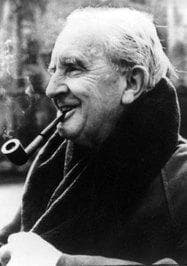
J.R.R. Tolkien was an English writer and philologist, best known for his high-fantasy works. His notable books include "The Hobbit, or There and Back Again," "The Fellowship of the Ring," and "The Return of the King," which are foundational texts in the fantasy genre. He also authored "The Silmarillion" and a boxed set featuring "The Hobbit" and "The Lord of the Rings."
Similar books
- The Hobbit, or There and Back Again
J.R.R. Tolkien
4.3 (2.9M) average on GoodreadsFantasyPrequel to The Lord of the Rings, sharing the same world and some characters.
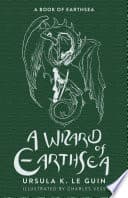
- A Wizard of Earthsea
Ursula K. Le Guin
4.0 (241k) average on GoodreadsFantasyClassic fantasy with a deep moral core and a journey of self-discovery.
- Eragon
Christopher Paolini
3.9 (1.4M) average on GoodreadsFantasyYoung protagonist embarks on an epic quest in a high fantasy world with magical elements.
- A Game of Thrones
George R.R. Martin
4.5 (2M) average on GoodreadsFantasyMartin's A Game of Thrones shares Tolkien's scope and intricate world-building but diverges significantly in tone and theme. Martin presents a morally ambiguous world where good and evil are blurred, and political intrigue, betrayal, and violence are central. Unlike Tolkien's more archetypal characters, Martin's protagonists are often flawed and face grim realities, and the narrative frequently subverts heroic expectations. While both create vast secondary worlds, Martin's is grittier and more 'realistic' in its portrayal of human nature and power dynamics, contrasting with Tolkien's more mythic and romantic approach.
- Harry Potter and the Sorcerer's Stone
J.K. Rowling
4.5 (7M) average on GoodreadsFantasyRescued from a miserable life under the stairs, an orphaned boy discovers he's a wizard destined for a magical school, where he uncovers a dangerous secret tied to the dark wizard who murdered his parents.
- The Hunger Games
Suzanne Collins
4.3 (6.4M) average on GoodreadsFantasyIn a future where children fight to the death on live television, Katniss Everdeen volunteers for the arena, turning a death sentence into a fight for survival and a spark of rebellion.





Enjoyed the summary?
A summary gives you the shape of the book. The book itself has the detail, the examples and the voice.
Find The Fellowship of the Ring on AmazonAs an Amazon Associate, BookBrief earns from qualifying purchases. How we're funded