

Synopsis
Covers the whole plot, including the ending.
- Difficulty
- Medium
- Pacing
- Moderate
- Mood
- Tense, Suspenseful, Patriotic, Resilient
- Read it if
- You enjoy post-apocalyptic thrillers focused on political and military strategy, moral dilemmas, and the fight for freedom against an authoritarian government. Perfect for fans of 'Red Dawn' meets 'Jericho'.
- Skip it if
- You prefer character-driven dramas over plot-driven military and political thrillers, or if you're looking for a standalone story rather than a continuation of a series.
The Final Day Plot Summary
Covers the whole plot, including the ending.
A Fragile New Normal in Black Mountain
Life in Black Mountain, North Carolina, has a routine three years after the EMP attack. John Matherson, the leader, oversees efforts to rebuild infrastructure, including a sawmill and a small electrical grid powered by a salvaged hydro turbine. His daughter, Jennifer, studies medicine, and Elizabeth grows up in this harsh world. The community has a local militia for defense against raiders, but the biggest threat comes from the distant federal government in Washington, D.C. Rumors persist about new policies and attempts to reassert control. John remains wary, remembering the previous year's confrontation with federal agents. He focuses on local self-sufficiency, knowing their survival depends on it.
The President's Dire Broadcast and Cession of Territory
A nationwide broadcast, transmitted via new, low-power federal radio stations and amplified by Black Mountain's equipment, delivers a message from President Caldwell. He explains the nation's dire state, the inability to rebuild, and the need for 'unpopular decisions' for the 'greater good.' The most contentious part of his address is the announcement that parts of the former United States are given to China and Mexico for aid and stability. Specifically, the West Coast goes to China, and the Southwest to Mexico. This news shocks Black Mountain and other communities, causing anger and a sense of betrayal, as the Constitution is suspended and martial law is threatened.
General Scales's Arrival and John's Dilemma
Weeks after the President's broadcast, federal troops arrive in Black Mountain, led by General Bob Scales. Scales is John Matherson's closest friend and former commanding officer from their pre-EMP military days. Their reunion is bittersweet, marked by their past bond and their present opposing roles. Scales explains that he has been tasked by the President to visit self-sufficient communities like Black Mountain, assess their capabilities, and integrate them into the new federal structure, by force if necessary. John is torn between his loyalty to his friend and his commitment to his community's independence and the original Constitution.
The Unveiling of Federal Intentions
During his stay, General Scales tells John and the Black Mountain leadership council the federal government's true intentions. The plan involves forced relocation of populations from 'non-strategic' areas to federally controlled 'reconstruction zones,' confiscation of all privately held resources (food, fuel, weapons), and a new, authoritarian social order under the guise of national unity. Scales expresses his discomfort with these orders, revealing that he and many others within the military struggle with their consciences. He hints at the moral dilemma he faces: follow unlawful orders or betray his oath and risk everything.
A Plea for Defiance and a Secret Alliance
John Matherson pleads with General Scales, reminding him of their shared values and the oath they took to defend the Constitution, not a tyrannical regime. He argues that the current federal government is illegitimate and that Scales has a moral obligation to resist. Scales is conflicted but reveals that he is not alone in his doubts. He discloses a secret network of high-ranking military officers, disillusioned with the President's actions, who are quietly planning resistance. This revelation changes the dynamic, making Scales a potential ally, though a cautious one operating under extreme duress.
The Federal Ultimatum and Black Mountain's Stand
After Scales leaves, a formal ultimatum arrives from the federal government, demanding Black Mountain's immediate surrender, disarmament, and integration into the new federal system. The message is clear: comply or face military intervention. John convenes the town council and the militia leaders. Despite the odds, the community unanimously decides to resist. They reaffirm their commitment to self-governance and the original Constitution. Preparations for defense intensify, and a desperate hope rests on the possibility that General Scales and his network might intervene or at least delay the federal assault.
The March of the Northern Brigade
Reports confirm that a federal military force, the 'Northern Brigade,' is moving south, headed for Black Mountain. John learns that General Scales commands this brigade. The community prepares for the worst, knowing they are outmatched in numbers and modern weaponry. The sight of Scales leading the federal forces disheartens many, casting doubt on his earlier promises of defiance. However, John holds onto hope, trusting his friend's character and the hints Scales had dropped about a deeper plan.
A Strategic Retreat and a Calculated Risk
As the Northern Brigade approaches, John devises a risky strategy. Instead of a direct confrontation, he orders a feigned retreat from Black Mountain, drawing the federal forces into an ambush point in the mountains. The plan relies heavily on General Scales's cooperation, hoping he will interpret the retreat not as weakness, but as an opportunity to execute a pre-arranged maneuver that benefits the resistance. John's forces set up defensive positions, preparing for guerrilla warfare if Scales's defection doesn't happen, but hoping for a different outcome, one that might turn the tide without mass bloodshed.
The Coup de Grâce: Scales's Defection and the Northern Brigade's Turn
As the Northern Brigade advances into the ambush zone, General Scales makes his move. Instead of ordering his troops to engage John's militia, he orchestrates a defection. A signal is given, and a portion of the Northern Brigade, loyal to Scales and the Constitution, turns their weapons on the federal loyalists within their own ranks. A brief but intense firefight erupts among the federal troops. Scales, with the support of his trusted officers, secures control of the brigade, declaring their allegiance to the original Constitution and joining forces with John Matherson and the Black Mountain resistance. This moment changes the conflict.
The Road to a Constitutional Convention
With the Northern Brigade allied with Black Mountain, John and Scales consolidate their position. They send broadcasts to other communities, explaining the defection and calling for a return to constitutional governance. The combined forces, now an army, march towards Washington D.C., gathering support and other disillusioned military units. Their goal is not just to overthrow the Caldwell administration, but to convene a new constitutional convention, to restore the rule of law, and to rebuild the United States on its founding principles, free from the tyranny that nearly destroyed it. The fight, however, is not over.
Principal Figures
John Matherson
Protagonist
Former history professor and leader of Black Mountain, fighting for constitutional liberty.
John Matherson is the central figure of Black Mountain, having transitioned from a college history professor to a resourceful and respected leader after the EMP. He is driven by an unwavering commitment to the US Constitution and the survival of his community. He is pragmatic, intelligent, and capable of both strategic thinking and direct action. His experiences in the previous books have hardened him, but he retains a deep sense of moral integrity and loyalty to his friends and family. He constantly grapples with the immense responsibility of protecting his people against both external threats and the insidious creep of tyranny.
Relationships: Jennifer Matherson (Daughter, aspiring doctor); Elizabeth Matherson (Younger daughter); General Bob Scales (Closest friend and former commanding officer); President Caldwell (Antagonist, illegitimate federal leader)
General Bob Scales
Supporting/Conflicted Ally
John's old friend and a high-ranking military officer torn between duty and conscience.
General Bob Scales is a decorated career military officer and John Matherson's closest friend from their pre-EMP days. He represents the moral dilemma faced by many within the federal military. Initially tasked with enforcing President Caldwell's authoritarian policies, Scales is deeply conflicted. He believes in the Constitution and his oath but is also bound by military discipline. His internal struggle drives a significant portion of the plot, as he secretly works to undermine the corrupt government while appearing to comply. His loyalty to John and his country ultimately guides his actions.
Relationships: John Matherson (Closest friend and former subordinate); President Caldwell (Superior officer, whom he ultimately betrays); Colonel Randall (Trusted subordinate in the Northern Brigade)
Jennifer Matherson
Supporting
John's eldest daughter, dedicated to healing and rebuilding her community.
Jennifer is John Matherson's eldest daughter, now a young adult actively pursuing medical knowledge to serve her community. She embodies the resilience and hope for the future. Having witnessed the devastation firsthand, she is pragmatic and strong, but also deeply caring. She supports her father's decisions and contributes significantly to Black Mountain's well-being through her medical skills, which are invaluable in a post-EMP world without modern hospitals or medicines. Her presence reminds John of what he is fighting for.
Relationships: John Matherson (Father); Elizabeth Matherson (Younger sister)
Elizabeth Matherson
Supporting
John's younger daughter, growing up in the harsh reality of the post-EMP world.
Elizabeth is John Matherson's younger daughter, representing the generation born into or raised entirely within the post-EMP world. She is adaptable and resilient, her childhood shaped by scarcity and the constant need for vigilance. While less prominent in the direct political conflict, her perspective offers a glimpse into the future of this new America. Her innocence and her need for a stable, free world are a constant motivation for John.
Relationships: John Matherson (Father); Jennifer Matherson (Older sister)
President Caldwell
Antagonist
The authoritarian President of the remnants of the US government, ceding territory and suspending the Constitution.
President Caldwell is the primary antagonist, leading the remnants of the federal government in Washington D.C. He is portrayed as a leader who, under immense pressure, has abandoned constitutional principles in favor of authoritarian control and politically expedient deals. He believes his actions, including ceding territory to foreign powers and suspending individual liberties, are necessary to save a fractured nation, even if it means sacrificing its founding ideals. He views self-sufficient communities like Black Mountain as threats to his authority and seeks to crush any dissent.
Relationships: General Bob Scales (Subordinate, whom he trusts but who ultimately betrays him); John Matherson (Opponent, leader of the constitutional resistance)
Sheriff Randall
Supporting
The local sheriff of Black Mountain and a key member of John's leadership council.
Sheriff Randall is a stalwart member of the Black Mountain community and a trusted ally of John Matherson. He oversees the town's security and militia, ensuring order and defense against raiders and external threats. He is practical, loyal, and committed to the survival and independence of Black Mountain. His unwavering support and experience in law enforcement are crucial to the community's stability and John's ability to lead effectively.
Relationships: John Matherson (Close ally and fellow leader)
Colonel Randall
Supporting
A trusted subordinate of General Scales, instrumental in the military defection.
Colonel Randall is a key officer within the Northern Brigade and a loyal subordinate to General Bob Scales. He is part of the secret network of disillusioned officers planning resistance against President Caldwell's regime. His role is critical in ensuring the success of Scales's defection, as he helps to organize and lead the loyalist elements within the brigade to turn against the federal government. He represents the principled military professionals who refuse to violate their oaths to the Constitution.
Relationships: General Bob Scales (Superior officer and co-conspirator)
Themes & Insights
Constitutionalism vs. Authoritarianism
The central conflict of 'The Final Day' is between the US Constitution and the authoritarian rule of President Caldwell's federal government. John Matherson and his community defend individual liberties, states' rights, and the original constitutional framework. Caldwell supports a centralized, dictatorial power structure, suspending the Constitution for 'national unity.' This theme is clear when Caldwell gives US territory away and when Scales struggles with his oath to the Constitution versus his orders, ultimately choosing the former.
“We took an oath to defend the Constitution, Bob. Not a man, not a government, but the document itself. And that document is being shredded.”
Loyalty and Betrayal
This theme explores loyalty—to friends, family, community, and country—and betrayal. General Scales's internal conflict is an example, torn between his loyalty to John Matherson, his military oath, and his perceived duty to a corrupt President. The federal government's cession of US territory is seen as a betrayal of its citizens. Scales's decision to betray Caldwell for the Constitution shows that true loyalty is with principles, not necessarily with individuals or regimes.
“How do you serve a nation when its leaders betray everything it stands for?”
The Price of Survival and Sovereignty
The novel examines the extreme measures leaders take for survival and the cost of maintaining sovereignty, individual and national. President Caldwell's decision to give territory to foreign powers and impose martial law is presented as his desperate attempt to ensure the survival of a remnant of the nation, but at the cost of its sovereignty and liberty. John Matherson's community is willing to fight and die to maintain their local sovereignty and freedom, showing that for some, survival without liberty is not worth living.
“They want us to surrender our freedom for their version of peace. That’s not a bargain, it’s a capitulation.”
Rebuilding and Resilience
Despite constant threats, the theme of rebuilding and human resilience is strong. Black Mountain's efforts to restore basic infrastructure, generate electricity, and establish local governance show humanity's drive to rebuild from catastrophe. Jennifer's pursuit of medical knowledge and the community's efforts to grow food and develop skills illustrate the practical resilience needed to survive in a post-technological world. This theme contrasts with the political struggle, showing the grassroots efforts to forge a new future.
“Every nail hammered, every seed planted, every wound healed… that’s us rebuilding. That’s us refusing to give up.”
Plot Devices & Literary Techniques
The Federal Broadcast
A rare, low-power nationwide radio transmission used by the federal government.
The federal broadcast serves as a crucial plot device to deliver critical, often shocking, information from the distant federal government to isolated communities. Because it's a rare event, its content carries immense weight and immediately impacts the plot, such as President Caldwell's announcement of territorial cession. It creates a sense of a larger, external world impacting Black Mountain, even as the community strives for self-sufficiency. It also highlights the fragility of communication in the post-EMP world and the government's limited reach.
The Friend/Foe Dynamic (John & Scales)
A narrative device where a close personal relationship is tested by opposing political/military allegiances.
This device is central to the novel's tension and resolution. John Matherson and General Bob Scales's deep pre-EMP friendship creates a powerful moral dilemma for both characters and for the reader. It humanizes the conflict, making the federal threat more personal and the potential for resolution more complex. Scales's internal struggle and eventual defection are made more impactful because of his personal connection to John, turning a military confrontation into a story of personal loyalty and shared values overcoming political division.
The Secret Military Network
A covert alliance of principled military officers planning resistance from within the federal structure.
This plot device provides a credible mechanism for General Scales's eventual defection and the broader military uprising. It suggests that not all federal forces are blindly loyal to the tyrannical government, adding complexity to the antagonist side and offering a glimmer of hope for the resistance. It allows for a more strategic and less suicidal confrontation than a simple militia-versus-army scenario, making the eventual coup more plausible and impactful. It serves as a narrative 'deus ex machina' for the resistance, but one that is foreshadowed and built upon Scales's internal conflict.
The Constitutional Oath
A recurring verbal motif emphasizing the core principles at stake.
The oath to defend the US Constitution is repeatedly referenced by John Matherson and General Scales. It serves as a powerful moral compass and a reminder of the foundational principles that the federal government has abandoned. By framing the conflict as a defense of the Constitution, the novel elevates the stakes beyond mere survival to a fight for the very soul of the nation. It justifies the rebellion in moral and legal terms, appealing to a sense of patriotic duty that transcends loyalty to a specific leader or regime.
The Final Day Quotes
“When the lights go out, everything changes. Not just the physical world, but the rules, the assumptions, the very fabric of society.”
“The greatest enemy, in the end, wasn't the Russians or the Chinese. It was ourselves. Our inability to prepare, to adapt, to truly understand the fragility of our world.”
“Food. Water. Security. These weren't luxuries anymore. They were the currency of survival, and the price was often higher than anyone was willing to pay.”
“Hope was a dangerous thing. It could keep you going, or it could break you when it finally ran out.”
“The roar of a generator, once a symbol of progress, now sounded like a siren song to predators.”
“You learn quickly what you can live without. The surprising part is how much of it you never really needed in the first place.”
“Every sunrise was a victory. Every sunset, a reminder of what could be lost by dawn.”
“The silence was the loudest sound. The silence of dead engines, dead phones, dead cities.”
“We were all just a few meals away from becoming something we never thought we could be.”
“The world hadn't ended. It had just reset, and we were all playing by new, brutal rules.”
“Trust became a luxury few could afford, and even fewer dared to give.”
“The greatest strength wasn't in weapons, but in community. And that was the hardest thing to rebuild.”
“Before, we worried about what was on the news. Now, we worried about what was just beyond the fence.”
“There were no heroes anymore, just survivors. And the line between them was often blurred by desperation.”
Quiz
10 questions on the plot and the characters. Each answer comes with a short explanation.
Question 1
What major announcement does the 'federal government' make regarding U.S. territory?
- It is annexing Canada and parts of Central America.
- It is ceding large portions of the country to China and Mexico.
- It is establishing new states in the Pacific and Caribbean.
- It is selling Alaska to Russia to pay off national debt.
Show answer
B. It is ceding large portions of the country to China and Mexico. The 'federal government' announces that it is ceding large portions of the country to China and Mexico, a move that deeply upsets the remaining American populace and directly leads to the conflict in the book.
Question 2
Who is the 'federal government' official sent to confront John Matherson?
- President Thompson, the acting commander-in-chief.
- General Robert Lee, a new military leader.
- General Bob Scales, John's old commanding officer and friend.
- Secretary of State Eleanor Vance, a political envoy.
Show answer
C. General Bob Scales, John's old commanding officer and friend. General Bob Scales, John Matherson's old commanding officer and closest friend from prewar days, is the man sent to confront John, creating a significant personal and moral dilemma for both characters.
Question 3
What is the primary goal of John Matherson and his community at the beginning of 'The Final Day'?
- To establish an independent nation separate from the U.S.
- To restore pre-EMP technologies and social order.
- To negotiate peace treaties with China and Mexico.
- To launch a counter-EMP attack against foreign adversaries.
Show answer
B. To restore pre-EMP technologies and social order. After previous conflicts, John Matherson and his community are focused on restoring the technologies and social order that existed prior to the EMP attack, aiming for a return to normalcy and stability.
Question 4
What is the status of the U.S. Constitution as declared by the 'federal government'?
- It is being rewritten to include new amendments.
- It is no longer in effect.
- It is being strictly enforced by the remaining military.
- It has been replaced by an international charter.
Show answer
B. It is no longer in effect. The 'federal government' explicitly states that the Constitution is no longer in effect, signaling a fundamental shift away from the principles of liberty and self-governance that previously defined the United States.
Question 5
What is the primary reason the 'federal government' deploys the remaining U.S. Army?
- To defend against new foreign invasions.
- To assist with disaster relief efforts across the country.
- To suppress rebellion in the remaining states.
- To rebuild critical infrastructure in ceded territories.
Show answer
C. To suppress rebellion in the remaining states. The remaining U.S. Army is deployed to suppress rebellion in the remaining states, indicating the government's authoritarian response to dissent and its efforts to maintain control over a fracturing nation.
Question 6
What major theme is explored through the 'federal government's' actions in 'The Final Day'?
- The importance of international cooperation in crisis.
- The dangers of authoritarianism and the erosion of liberty.
- The resilience of democratic institutions under pressure.
- The necessity of sacrificing individual rights for global peace.
Show answer
B. The dangers of authoritarianism and the erosion of liberty. The 'federal government's' actions, such as ceding territory, suspending the Constitution, and suppressing rebellion, highlight the dangers of authoritarianism and the erosion of liberty, a central theme of the novel.
Question 7
What is the core dilemma faced by General Bob Scales when confronting John Matherson?
- Whether to betray his family for the sake of his career.
- Whether to follow orders or side with his old friend and the principles of a united America.
- Whether to accept a promotion or retire from military service.
- Whether to lead a foreign invasion or defend U.S. borders.
Show answer
B. Whether to follow orders or side with his old friend and the principles of a united America. General Scales faces a profound moral dilemma: obey the orders of the dubious 'federal government' or align with his closest friend, John Matherson, and the ideals of a truly united America, potentially sparking a revolution.
Question 8
What is the ultimate consequence the 'dubious Federal government' fears most?
- A renewed EMP attack from a foreign power.
- The complete collapse of the global economy.
- A widespread revolution by the American people.
- The loss of all remaining technological capabilities.
Show answer
C. A widespread revolution by the American people. The book states that as the government 'increasingly curtails liberty and trades away sovereignty, it might just get exactly what it fears: revolution.' This indicates their deep-seated fear of popular uprising against their illegitimate authority.
Question 9
How does 'The Final Day' build upon the previous books, 'One Second After' and 'One Year After'?
- By focusing on a new cast of characters in a different post-EMP setting.
- By shifting from a survival narrative to a political and ideological conflict over the future of the nation.
- By detailing the specific technical challenges of rebuilding the national power grid.
- By exploring the origins of the EMP attack and the responsible parties.
Show answer
B. By shifting from a survival narrative to a political and ideological conflict over the future of the nation. While 'One Second After' and 'One Year After' focused on immediate survival and local rebuilding, 'The Final Day' escalates the conflict to a national level, dealing with the political and ideological struggle for the soul of America against a corrupt 'federal government'.
Question 10
What does the phrase 'dubious Federal government' imply about the authority John Matherson and his community are facing?
- That it is financially unstable and facing bankruptcy.
- That its legitimacy, intentions, and right to govern are questionable.
- That it is secretly controlled by foreign powers.
- That its policies are generally beneficial but misunderstood.
Show answer
B. That its legitimacy, intentions, and right to govern are questionable. The term 'dubious' implies that the 'federal government' lacks true legitimacy, its motives are suspect, and its actions are not in the best interest of the American people, justifying the community's potential rebellion.
The Final Day FAQ
What is 'The Final Day' about?
'The Final Day' continues the story of John Matherson and his community in Black Mountain, North Carolina, as they strive to rebuild after an EMP attack. Their progress is threatened when a new, dubious federal government emerges, ceding U.S. territory to China and Mexico, suspending the Constitution, and deploying the military to suppress dissent, forcing John to confront his former commanding officer and friend, General Bob Scales.
Why should I read 'The Final Day'?
You should read 'The Final Day' for its gripping exploration of a post-EMP America grappling with political betrayal and the erosion of freedom. It offers a thought-provoking look at the difficult choices individuals and communities face when their government turns against them, featuring a deeply personal conflict between John Matherson and his old friend, General Scales, that raises questions about loyalty and duty.
What is the background/setting of 'The Final Day'?
The book is set several years after an electromagnetic pulse (EMP) attack devastated the United States, plunging it into a pre-industrial state. The primary setting is Black Mountain, North Carolina, a community that has achieved significant recovery, contrasted with the dystopian vision of a new federal government attempting to exert control over the remaining states while ceding large portions of territory to foreign powers.
What are the most memorable quotes?
While specific quotes are not provided in the summary, memorable lines often revolve around themes of liberty, sacrifice, and the definition of patriotism, especially during the confrontations between John Matherson and General Scales as they debate their loyalties and the future of America.
What writing style does the author use?
William R. Forstchen employs a direct and often urgent writing style, characteristic of a thriller, to convey the high stakes and tension of a nation on the brink. He blends detailed descriptions of survival and societal collapse with intense character-driven drama, particularly focusing on John Matherson's internal struggles and external conflicts.
What minor details add significant meaning?
The detail of the alleged federal government ceding U.S. territory to China and Mexico is a crucial minor detail that signifies the complete abandonment of national sovereignty and constitutional principles. This act serves as the ultimate catalyst for the community's decision to resist, underscoring the deep betrayal felt by characters like John Matherson.
What are some subtle foreshadowing moments?
The previous books, 'One Second After' and 'One Year After', subtly foreshadowed the potential for a tyrannical government to emerge from the chaos, as communities were left to fend for themselves without central authority. 'The Final Day' brings this premonition to fruition, with the 'alleged federal government' acting exactly as many feared, setting the stage for the inevitable conflict.
What unexpected character connections exist?
The most significant unexpected connection is between John Matherson and General Bob Scales, who was John's old commanding officer and closest friend from prewar days. This pre-existing deep personal bond transforms what could be a straightforward military confrontation into a profound moral and emotional dilemma for both characters.
What are unspoken character motivations?
General Bob Scales' unspoken motivation likely involves a deep internal conflict between his duty to follow orders from the current government, however corrupt, and his personal loyalty to John Matherson and the ideals of the pre-EMP America they both fought for. His decision will reveal whether his primary drive is obedience to authority or a higher moral code.
What psychological complexities do characters exhibit?
John Matherson exhibits the psychological complexity of a reluctant leader forced to become a revolutionary, torn between his desire for peaceful rebuilding and the necessity of defending his community's freedom. General Scales, on the other hand, embodies the complexity of a military officer grappling with conflicting loyalties: to his oath, to his friend, and to the true spirit of his country.
What are the major emotional turning points?
A major emotional turning point is the announcement that the federal government is ceding U.S. territory and suspending the Constitution, which shifts the community's focus from rebuilding to active resistance. Another is the moment John Matherson realizes he must confront his old friend, General Scales, transforming a political struggle into a deeply personal one.
How do relationship dynamics evolve?
The relationship dynamics between John Matherson and the 'alleged federal government' evolve from cautious observation and distrust to outright opposition and revolution. More critically, the long-standing friendship between John Matherson and General Bob Scales is pushed to its breaking point, evolving into a confrontation where their past bond clashes with their present duties and beliefs.
Which parts remain ambiguous or open-ended?
The ultimate outcome of the confrontation between John Matherson's community and General Scales' forces, and the broader fate of the 'new' America and its 'alleged federal government,' remain open-ended. The summary concludes with the question of whether General Scales will follow orders or become a 'crucial turning point,' leaving the resolution of this conflict ambiguous.
What are controversial scenes or decisions?
The most controversial decision is the 'alleged federal government's' choice to cede large portions of the country to China and Mexico and suspend the Constitution. This act is a direct betrayal of national sovereignty and foundational principles, intended to provoke outrage and rebellion among the remaining American populace, making it a highly contentious plot point.
'The Final Day' ending explained: how it ends & what it means
The provided summary ends on a cliffhanger, posing the question of whether General Bob Scales will follow the orders of the dubious federal government or choose to side with John Matherson and the rebellion. This unresolved ending signifies that the future of America, its unity, and its constitutional integrity hang in the balance, dependent on the moral choices of key characters like Scales.
About the author

William R. Forstchen is an American author primarily known for his works of fiction that explore themes of survival and societal collapse. His notable books include "One Second After," which depicts the aftermath of an electromagnetic pulse attack, and "The Final Day," a sequel that continues the story of survival in a dystopian world.
Similar books
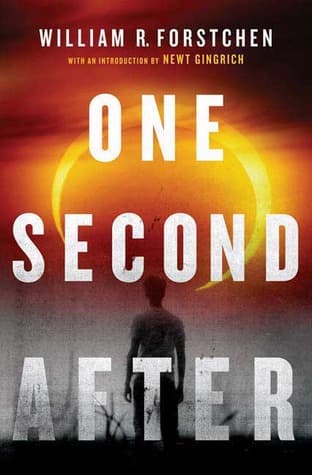
- One Second After
William R. Forstchen
3.9 (49k) average on GoodreadsThrillerDirect prequel, shares characters and post-EMP setting.
- The Road
Cormac McCarthy
4.0 (716k) average on GoodreadsScience FictionExplores a post-apocalyptic world with a focus on survival and the breakdown of society, albeit with a much darker tone.
- Angels & Demons
Dan Brown
3.9 (2.7M) average on GoodreadsThrillerA Harvard symbologist races through Rome's ancient sites, deciphering cryptic clues to unmask the Illuminati and stop a vengeful plot to destroy the Vatican with a stolen antimatter weapon.
- Gone Girl
Gillian Flynn
4.1 (2.3M) average on GoodreadsThrillerA wife's sudden disappearance on her fifth anniversary reveals a web of lies and psychological warfare, exposing the secrets within a seemingly perfect marriage.
- The Girl on the Train
Paula Hawkins
3.9 (2.1M) average on GoodreadsThrillerA woman’s fascination with a seemingly perfect couple she watches from her daily train commute leads her into a dark investigation when she witnesses something that shatters their idyllic image.
- The Da Vinci Code
Dan Brown
3.9 (1.9M) average on GoodreadsThrillerA symbologist and a cryptologist race through European landmarks, deciphering ancient codes and uncovering a conspiracy that could rewrite the foundations of Christianity.





Enjoyed the summary?
A summary gives you the shape of the book. The book itself has the detail, the examples and the voice.
Find The Final Day on AmazonAs an Amazon Associate, BookBrief earns from qualifying purchases. How we're funded