
Estimated read time: 4 min read
One Sentence Summary
A man reflects on his life and contemplates suicide in this philosophical novel.
Table of Contents
Introduction
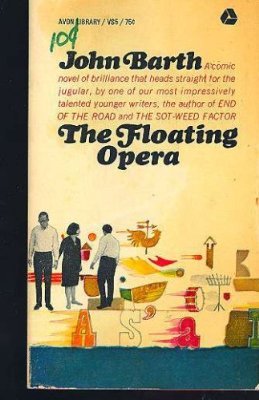
"The Floating Opera" is a thought-provoking philosophical novel written by John Barth. This groundbreaking work of fiction delves into the complexities of human existence and the search for meaning in life. Set in a small town in Maryland, the novel explores the inner workings of the mind of its protagonist, Todd Andrews, as he grapples with the fundamental questions of life, death, and the nature of reality.
Brief Synopsis
Plot Overview
The novel unfolds as Todd Andrews, the protagonist, contemplates the events that led to his decision to commit suicide. As he revisits his past, the narrative delves into his experiences, relationships, and the pivotal moments that shaped his worldview.
Setting
"The Floating Opera" is primarily set in the fictional town of Watermouth, Maryland, during the 1930s. The small-town atmosphere serves as a backdrop for Todd Andrews' introspective journey and provides a rich context for exploring the complexities of human existence.
Main Characters
The novel features several significant characters who play essential roles in Todd Andrews' life and the unfolding of the narrative.
| Character | Description |
|---|---|
| Todd Andrews | The protagonist and narrator of the novel, Todd is a deeply introspective and philosophical individual. |
| Magnus | Todd's enigmatic friend, who challenges his perceptions and beliefs. |
| Doris | Todd's former lover, whose influence lingers throughout the narrative. |
Summary of Story Points Over Chapters
Chapter 1: The Decision
Todd Andrews makes the decision to take his own life, setting the stage for a retrospective exploration of his past and the events that led him to this pivotal moment.
Chapter 2: Reflections on Existence
Todd reflects on the nature of existence, mortality, and the purpose of life, setting the philosophical tone of the novel.
Chapter 3: Recollections of Relationships
The narrative delves into Todd's past relationships, particularly his tumultuous love affair with Doris, shedding light on the emotional complexities that have shaped his worldview.
Chapter 4: Encounters with Magnus
Todd's encounters with Magnus, a mysterious and enigmatic figure, challenge his beliefs and perceptions, leading to profound philosophical discussions.
Chapter 5: Confronting the Past
As Todd delves deeper into his past, he confronts pivotal moments and decisions that have shaped the trajectory of his life, prompting him to question the very fabric of reality.
Main Events
- Todd's decision to commit suicide sets the stage for a retrospective exploration of his life and experiences.
- Reflecting on his past relationships, particularly his tumultuous love affair with Doris, sheds light on the emotional complexities that have shaped Todd's worldview.
- Encounters with Magnus challenge Todd's beliefs and perceptions, leading to profound philosophical discussions that delve into the nature of existence.
Themes and Insights
Themes
- Existentialism: The novel delves into the existential crisis faced by Todd Andrews, as he grapples with the fundamental questions of existence, meaning, and purpose.
- Mortality and Legacy: The exploration of mortality and the desire to leave a meaningful legacy are recurring themes that drive Todd's introspective journey.
- Reality and Perception: The novel challenges the conventional notions of reality and perception, inviting readers to question the nature of truth and existence.
Insights
"The Floating Opera" offers profound insights into the human experience, prompting readers to contemplate their own existence and the pursuit of meaning in life. Through Todd Andrews' introspective journey, the novel invites readers to confront the complexities of existence and the universal quest for purpose and understanding.
Reader's Takeaway
Readers of "The Floating Opera" are presented with a thought-provoking exploration of existential themes, philosophical inquiries, and the intricacies of human consciousness. The novel's introspective narrative encourages readers to contemplate their own existence and grapple with the profound questions that define the human experience.
Conclusion
In "The Floating Opera," John Barth delivers a compelling and introspective narrative that delves into the depths of human consciousness and the pursuit of meaning in life. Through the protagonist's philosophical journey, the novel offers profound insights and challenges readers to confront the complexities of existence and the universal quest for purpose and understanding. As Todd Andrews navigates his introspective odyssey, readers are invited to embark on their own contemplative exploration of the human experience.
The Floating Opera FAQ
What is the genre of 'The Floating Opera'?
The Floating Opera is a philosophical novel that falls under the genres of literary fiction and existentialism.
Who is the author of 'The Floating Opera'?
The Floating Opera was written by John Barth, an American novelist and short story writer known for his postmodern and metafictional style.
What is the main theme of 'The Floating Opera'?
The main themes of 'The Floating Opera' revolve around existentialism, the nature of reality, and the search for meaning in life.
What is the setting of 'The Floating Opera'?
The novel is set in a small town in the United States, and it primarily takes place in the mind of the protagonist, Todd Andrews.
Is 'The Floating Opera' suitable for young readers?
The novel contains complex philosophical themes and is more suited for mature readers who are interested in exploring existentialist ideas and the nature of human existence.



