
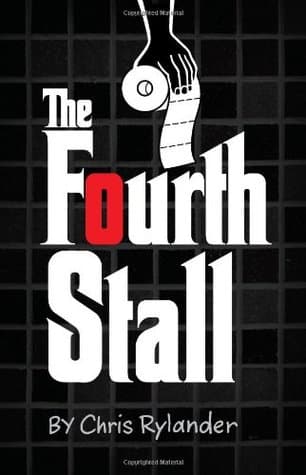
Synopsis
Covers the whole plot, including the ending.
- Difficulty
- Easy
- Pacing
- Fast
- Mood
- Humorous, Clever, Suspenseful, Engaging
- Read it if
- You enjoy clever, humorous middle-grade mysteries with a 'Ferris Bueller' vibe and a focus on friendship and problem-solving.
- Skip it if
- You prefer fantasy or sci-fi over realistic fiction, or dislike stories where protagonists bend the rules.
The Fourth Stall Plot Summary
Covers the whole plot, including the ending.
Mac's Thriving Business and a New Threat
Mac, a sixth-grade entrepreneur, runs a business from the fourth stall of the East Wing boys' bathroom, providing services and items for a fee, with his best friend Vince acting as his business manager. Their operation is meticulous, with a complex filing system and a network of contacts. One Monday, their usual routine is disrupted when a third-grader named Fred requests protection from a bully named Bart, who is extorting his lunch money. Mac quickly plans to handle Bart, but an anonymous note left in his stall warns him to back off. This marks the beginning of a turf war with a new rival known only as 'The Owl,' who seems to be targeting Mac's clients and undermining his authority.
The Owl's Escalating Attacks and the Search for Clues
The Owl's attacks become more direct and personal. They steal Mac's organized files, leaving chaos in his stall, and then sabotage his business by replacing his inventory with useless items like broken pencils and empty candy wrappers. The Owl also starts leaving cryptic notes, referencing a legendary high school crime boss named Staples, which unnerves Mac. Vince, ever the pragmatist, suggests they focus on identifying The Owl. Mac begins interviewing his clients and contacts, looking for anyone who might have a motive or the means to orchestrate such an attack. He also enlists the help of his network, including the school's resident graffiti artist, The Ghost, to gather intelligence.
The Intramural Gambling Ring and Bart's Involvement
Mac discovers that a new intramural gambling ring has emerged, taking bets on school sports and activities. This directly competes with Mac's own, smaller-scale operations. He learns that Bart, the bully from the first incident, is involved in collecting money for this new ring. This connection raises Mac's suspicions, as Bart seems to have gained influence and resources quickly. Mac realizes that The Owl is not just trying to put him out of business, but is attempting to establish a new criminal enterprise within the school. He and Vince strategize on how to infiltrate the gambling ring to gather more information about its leader and The Owl's identity.
The Cubs Game and the High Stakes Bet
The intramural gambling ring's climax revolves around a high-stakes bet on the Chicago Cubs World Series game, which is significant as it's the first in almost seventy years. Mac, realizing this is his best chance to expose The Owl, decides to place a massive bet on the game, using his remaining funds and leveraging his reputation. He intentionally makes his involvement known, hoping to draw The Owl out into the open. Vince is nervous about the high risk, but Mac is determined. He believes that by controlling such a large sum of money and the outcome of the bet, he can force The Owl to reveal themselves during the collection process.
Unmasking The Owl: Fred's Deception
Through careful observation and a clever trap involving the Cubs game bet, Mac and Vince finally unmask The Owl. To their shock, The Owl is Fred, the seemingly innocent third-grader who initially sought Mac's protection from Bart. Fred confesses to orchestrating the entire scheme, including manipulating Bart, stealing Mac's files, and setting up the intramural gambling ring. He explains that he admired Mac's business but believed he could run a more efficient and profitable operation, using Mac's own tactics against him. Fred's intelligence and ruthlessness are a contrast to his youthful appearance, leaving Mac and Vince stunned by his cunning.
Fred's Motivation and the Shadow of Staples
Fred, now unmasked, reveals his motivation: he seeks to emulate and surpass Staples, the legendary high school crime boss, whom he has researched. He sees Mac as a stepping stone, a smaller rival to overcome before he can truly ascend to the top of the school's underworld. Fred's knowledge of Staples' methods and history is extensive, showing a deep obsession. He explains how he used the legend of Staples to intimidate Mac and create an air of mystery around his own identity. Mac realizes that Fred isn't just a competitor, but a dangerous, ambitious prodigy with a clear long-term goal to dominate the school's illicit economy.
The Confrontation and Resolution
Mac, recovering from the shock, confronts Fred not with anger, but with a surprising offer. Recognizing Fred's intelligence and ambition, Mac proposes a collaboration rather than continued rivalry. He acknowledges Fred's skill but points out the flaws in his current approach, emphasizing the importance of trust and a reliable network. Fred, initially resistant, eventually agrees to a truce and a partnership, recognizing the benefits of Mac's experience and established connections. The gambling ring is dismantled, and the school's illicit operations are brought back under a more controlled, albeit still unofficial, system. Mac and Vince, though wary, see potential in Fred's capabilities, under strict supervision.
The Aftermath and Lessons Learned
Afterward, Mac and Vince reflect on the events. Mac's business is re-established, but with new protocols and more caution. The experience with Fred forces Mac to re-evaluate his own methods and the vulnerabilities of his operation. He realizes that even a well-run machine can be disrupted by unexpected genius. The legend of Staples takes on a new, more immediate meaning, as Mac understands the long-term game of power and influence. While his business continues to thrive, Mac is now aware that new, formidable challengers can emerge from unlikely places, always keeping him on his toes and forcing him to adapt.
Principal Figures
Mac
Protagonist
Sixth-grade entrepreneur and problem-solver, running a business from the fourth stall.
Mac is the resourceful and intelligent protagonist, a sixth-grader who operates a thriving business empire from the boys' bathroom. He possesses keen observational skills, a strategic mind, and a strong sense of loyalty to his clients, provided they can pay. Mac is highly organized, meticulous in his planning, and adept at navigating the complex social dynamics of his middle school. His primary motivation is to maintain his business and reputation, which he views as a service to the student body. He is initially confident and perhaps a bit overconfident, but the challenge from The Owl forces him to grow and adapt.
Relationships: Vince (Best friend and business partner); Fred (Initial client, then rival (The Owl), then reluctant partner); Bart (Bully and pawn in Fred's scheme)
Vince
Supporting
Mac's best friend and pragmatic business manager.
Vince is Mac's loyal best friend and the analytical brains behind their operation's finances and logistics. He is more cautious and pragmatic than Mac, often serving as a voice of reason and a sounding board for Mac's schemes. Vince handles the books, manages inventory, and helps Mac strategize. His loyalty to Mac is unwavering, and he is willing to go to great lengths to protect their business and friendship. While not as outwardly charismatic as Mac, Vince's meticulous nature and quick thinking are indispensable to their success. He often worries about the risks involved, providing a necessary counterpoint to Mac's bolder tendencies.
Relationships: Mac (Best friend and business partner)
Fred
Antagonist/Supporting
A cunning third-grader who becomes Mac's arch-rival, 'The Owl.'
Fred initially appears as a vulnerable third-grader seeking Mac's protection, but he is later revealed to be 'The Owl,' the mastermind behind the attacks on Mac's business. Fred is incredibly intelligent, ambitious, and manipulative, possessing a deep understanding of strategy and human nature beyond his years. He is obsessed with the legend of Staples and aims to surpass Mac and eventually become the dominant force in the school's underworld. His youthful appearance masks a ruthless and calculating mind, making him a formidable and surprising antagonist. He represents a new generation of criminal prodigy, challenging Mac's established order.
Relationships: Mac (Initial client, then rival, then reluctant partner); Bart (Pawn in his scheme)
Bart
Supporting
A school bully manipulated by Fred.
Bart is a typical school bully, initially extorting lunch money from Fred. He is physically imposing but lacks the strategic intelligence of Mac or Fred. Bart is easily manipulated and becomes a key pawn in Fred's plan to disrupt Mac's business and establish the intramural gambling ring. He serves as the muscle and enforcer, unknowingly working for Fred. His involvement highlights Fred's cunning in using existing school dynamics to his advantage. Bart's role demonstrates how even seemingly powerful figures can be controlled by a sharper mind.
Relationships: Fred (Victim (initially), then unwitting subordinate); Mac (Target of Mac's initial problem-solving)
The Ghost
Supporting
The school's anonymous graffiti artist and informant.
The Ghost is a mysterious character known for their artistic graffiti around the school and their ability to gather information discreetly. They operate outside the typical social structures, making them a valuable, albeit unconventional, contact for Mac. The Ghost provides Mac with crucial intelligence about school happenings and the movements of rivals, often communicating through their art or subtle messages. Their anonymity and unique perspective make them an invaluable asset in Mac's network, representing the hidden eyes and ears of the school.
Relationships: Mac (Informant and occasional collaborator)
Staples
Mentioned
A legendary, almost mythical high school crime boss.
Staples is a legendary figure from the high school, a former student who established a formidable criminal enterprise years ago. Though never seen, his reputation and methods are frequently referenced by Mac and become a source of inspiration for Fred. Staples represents the pinnacle of school-based illicit operations, serving as a benchmark for ambition and a cautionary tale of power. His legend looms large over the narrative, influencing the characters' aspirations and fears, and highlighting the cyclical nature of power struggles within the school environment.
Relationships: Mac (Predecessor and standard of excellence); Fred (Inspiration and role model)
The Nine
Supporting
A group of the nine most dangerous bullies in school.
The Nine are a formidable group of bullies who operate within the school, representing a significant physical threat. They are not a unified force in the same way Mac's or Fred's organizations are, but rather a collection of individuals known for their intimidation tactics. Mac occasionally deals with them, either by avoiding them or using his network to circumvent their influence. Their presence underscores the inherent dangers and power dynamics within the school, and their collective reputation adds to the challenges Mac faces in maintaining order and his business.
Relationships: Mac (Obstacle/Threat)
Themes & Insights
Entrepreneurship and Business Ethics
The novel explores the world of business through Mac's eyes, showing the principles of supply and demand, customer service, and strategic planning within a school setting. Mac operates with a clear code of conduct, even if his services are illicit. The theme covers the ethics of his operations, especially when confronted by Fred's more ruthless approach, forcing Mac to reflect on the balance between profit and integrity. It shows the challenges of competition and the need for adaptation in a dynamic market.
“The first rule of business: know your market. The second rule: know your competition.”
Power and Control
The struggle between Mac and Fred is about who controls the flow of goods, services, and influence within the school. Mac seeks to maintain his established order, while Fred aims to take it over and build his own empire. The theme examines the forms of power, strategic, physical (through bullies), and informational (through networks), and how they are used. It also touches upon the corrupting nature of power and how far individuals will go to attain or maintain it, echoing the legend of Staples.
“In this school, power wasn't about who could throw the hardest punch. It was about who knew the most and who could get things done.”
Loyalty and Friendship
The friendship between Mac and Vince is the emotional core of the story. Vince's loyalty and support are important to Mac's success and survival against The Owl. The theme explores the importance of trust and camaraderie in the face of adversity, contrasting it with Fred's more solitary and manipulative approach to building influence. It shows how genuine relationships provide strength and resilience, offering a counterpoint to the cutthroat world of schoolyard commerce and crime.
“Vince was more than just a business partner. He was the only one who truly understood the weight Mac carried.”
Identity and Reputation
Mac's reputation as the school's problem solver is central to his identity and business. The Owl's attacks are not just on his operations, but on his standing and the perception of his competence. Fred, in turn, seeks to establish his own identity, even adopting the moniker of 'The Owl.' The theme explores how identity is built through actions, reputation, and the stories people tell about themselves and others, showing its fragile yet powerful nature in the social hierarchy of the school.
“Your reputation was everything. It was currency, protection, and a warning all rolled into one.”
The Nature of Good and Bad
The novel explores the blurred lines between 'good' and 'bad' in middle school. Mac's business, while providing services, operates outside official rules. Fred's actions are clearly antagonistic, yet his ambition and intelligence are almost admirable. The theme questions whether intentions or outcomes define morality, and how 'justice' is served in a world without official enforcement. It challenges the reader to consider the moral complexities of characters who operate in a gray area.
“Sometimes, the only way to do something good was to do something a little bit bad first.”
Plot Devices & Literary Techniques
The Fourth Stall
Mac's hidden office and symbol of his enterprise.
The fourth stall in the East Wing boys' bathroom serves as Mac's headquarters and a central motif. It is a literal hidden space, symbolizing the clandestine nature of his business and his ability to operate beneath the radar of authority figures. It also represents a sanctuary where problems are solved and deals are made. The stall is not just a location; it's an extension of Mac's identity and the nerve center of his operations, making its disruption by The Owl a deeply personal attack on Mac's control and security.
The Legend of Staples
A mythical figure influencing the characters' ambitions.
Staples, a legendary former high school student, functions as an unseen but powerful influence. His story serves as a benchmark for criminal enterprise within the school, inspiring Fred's ambition and providing a historical context for Mac's own operation. The legend acts as a cautionary tale of power and a goal for those who seek to dominate the school's unofficial economy. It adds a layer of depth and continuity to the narrative, suggesting that the struggles for power are cyclical and enduring.
Anonymous Notes and Messages
A method of communication and intimidation.
Anonymous notes are a recurring plot device used by The Owl to communicate with and intimidate Mac. These notes build suspense and mystery around The Owl's identity, forcing Mac to deduce who his rival is. They also serve as a way to deliver cryptic warnings and reveal information gradually, escalating the conflict without direct confrontation. This device highlights the secretive and strategic nature of the conflict, where information and psychological warfare are as important as direct action.
The Intramural Gambling Ring
A plot driver escalating the conflict and revealing The Owl.
The intramural gambling ring is a key plot device that serves multiple functions. It provides a direct financial threat to Mac's business, creating a clear point of conflict. More importantly, it acts as a mechanism through which The Owl can consolidate power and reveal their true identity. The high-stakes bet on the Cubs game becomes the ultimate trap, forcing The Owl to expose themselves during the collection process. It's a tangible manifestation of the power struggle and a strategic tool for Mac to outmaneuver his rival.
The Fourth Stall Quotes
“It was impossible to be a kid and not know about the Fourth Stall. It was like not knowing about recess or lunch or that the principal was a monster.”
“You got a problem, you come to me. I got a problem, I come to me. We all got problems, we all come to me.”
“The Fourth Stall wasn't just a business; it was an institution. It was the glue that held the school together, the oil that greased the gears of childhood.”
“Every good empire needs a good second-in-command. And every good second-in-command needs a good boss to make them look good.”
“Sometimes the best way to solve a problem is to make it someone else's problem.”
“Fear is a powerful motivator, but loyalty is a lasting one.”
“There are three kinds of people in this world: those who make things happen, those who watch things happen, and those who wonder what happened.”
“Even the toughest kid in school had a weakness. You just had to know where to look, and what to exploit.”
“Being a boss wasn't about being the strongest or the loudest. It was about being the smartest, the most resourceful, and knowing how to get what you needed.”
“A good reputation is like money in the bank. You don't always need it, but it's good to know it's there.”
“The greatest trick the devil ever pulled was convincing the world he didn't exist. The second greatest was convincing kids that adults knew everything.”
“Sometimes, the biggest threats come from the places you least expect them. And sometimes, the solutions do too.”
“It wasn't about right or wrong in the traditional sense. It was about balance. About keeping the peace, even if you had to bend the rules a little.”
“Every kid had a secret. Some were small, some were huge, but they were all valuable. Because secrets meant leverage.”
Quiz
10 questions on the plot and the characters. Each answer comes with a short explanation.
Question 1
Where is Mac's office located within the school?
- The library's back corner
- The East Wing boys' bathroom, fourth stall
- Behind the gym bleachers
- In an unused locker in the West Hall
Show answer
B. The East Wing boys' bathroom, fourth stall The book explicitly states that Mac's office is in the East Wing boys' bathroom, specifically the fourth stall from the high window, which is where he conducts his business.
Question 2
Who is Mac's best friend and business manager?
- Staples
- Vince
- The graffiti ninja
- A third grader
Show answer
B. Vince The synopsis introduces Vince as Mac's best friend and business manager, working alongside him to run their 'services'.
Question 3
What kind of game is involved in the intramural gambling ring mentioned in the book?
- Basketball
- Chess
- A Chicago Cubs World Series game
- Video games
Show answer
C. A Chicago Cubs World Series game The plot description specifically mentions that the ordeal will involve 'the first Chicago Cubs World Series game in almost seventy years' as part of the intramural gambling ring.
Question 4
What is the primary service Mac provides to his clients?
- Tutoring for difficult subjects
- Finding lost items and pets
- Getting things done or solving problems for a fee
- Organizing school events and parties
Show answer
C. Getting things done or solving problems for a fee Mac's role is described as someone who 'can get it for you' and if 'you have a problem, if no one else can help, and if you can pay him, Mac is on your side.' This implies he solves problems and provides various services for a price.
Question 5
Who is Staples in the context of the story?
- A new student Mac is trying to recruit
- A legendary high school crime boss
- The school principal
- Mac's main supplier for his business
Show answer
B. A legendary high school crime boss The summary clearly identifies Staples as 'a legendary high school crime boss,' indicating a significant antagonist or figure in the school's underworld.
Question 6
What initial event triggers the major 'ordeal' that Mac and Vince face?
- A challenge from Staples
- A third grader in need of protection
- The discovery of the gambling ring
- A demand from the nine most dangerous bullies
Show answer
B. A third grader in need of protection The book description states, 'It starts with a third grader in need of protection,' implying this is the catalyst for the unfolding events.
Question 7
What is the central irony or conflict Mac and Vince realize as their problems escalate?
- They are making too much money to handle.
- Their methods are too ethical for their business.
- They are solving everyone else's problems but have no one left to solve their own.
- Their office location is too public for their clandestine operations.
Show answer
C. They are solving everyone else's problems but have no one left to solve their own. The concluding sentence of the synopsis highlights this theme: 'Mac and Vince soon realize that the trouble with solving everyone else's problems is that there's no one left to solve yours.'
Question 8
Which of the following is NOT listed as an element involved in Mac's escalating problems?
- A legendary high school crime boss named Staples
- An underground fight club
- A graffiti ninja
- The nine most dangerous bullies in school
Show answer
B. An underground fight club While all other options are explicitly listed, an 'underground fight club' is not mentioned in the book's description of the elements involved in Mac's ordeal.
Question 9
How does the book's style compare to 'Ferris Bueller's Day Off'?
- It features a group of friends skipping school.
- It has a similar tone of clever, rule-bending, and resourceful problem-solving.
- The main character directly addresses the audience.
- It focuses on avoiding a strict principal.
Show answer
B. It has a similar tone of clever, rule-bending, and resourceful problem-solving. The introduction states, 'Chris Rylander delivers a funny Ferris Bueler-style middle grade novel,' implying a shared tone of cleverness, resourcefulness, and navigating authority with wit, rather than specific plot points.
Question 10
What is the general nature of the 'methods' Mac and Vince employ?
- Strictly adhering to school rules and policies.
- Often bending or breaking school rules, or even the law.
- Relying heavily on adult intervention and support.
- Using physical intimidation to solve problems.
Show answer
B. Often bending or breaking school rules, or even the law. The text explicitly states their methods 'might sometimes run afoul of the law, or at least the school code of conduct,' indicating a willingness to operate outside established rules.
The Fourth Stall FAQ
What is 'The Fourth Stall' about?
'The Fourth Stall' is about Mac, a sixth-grade entrepreneur who runs a booming business from the boys' bathroom, providing anything students need for a price. With his best friend and business manager Vince, Mac navigates the complex world of elementary school problems until a seemingly simple protection job for a third grader spirals into a high-stakes conflict involving legendary high school crime bosses, gambling rings, and a threat to his entire operation.
Why should I read 'The Fourth Stall'?
You should read 'The Fourth Stall' for its witty, fast-paced narrative reminiscent of 'Ferris Bueller's Day Off' but set in a middle school. It offers a unique blend of humor, mystery, and adventure, featuring clever characters like Mac and Vince who outsmart bullies and navigate the intricate social hierarchy of their school with surprising resourcefulness and loyalty.
What is the background/setting of 'The Fourth Stall'?
The story is primarily set within the confines of an elementary school, with Mac's 'office' famously located in the East Wing boys' bathroom, fourth stall from the high window. The backdrop includes various school locations like the playground, classrooms, and cafeteria, but also expands to encompass the broader Chicago setting, especially with the mention of the Chicago Cubs World Series, adding a touch of local flavor.
What writing style does the author use?
Chris Rylander employs a humorous, engaging, and fast-paced writing style, characterized by witty dialogue, internal monologues from Mac, and a narrative voice that balances the seriousness of Mac's 'business' with the inherent absurdity of elementary school life. The prose is accessible for middle-grade readers but sophisticated enough to entertain adults, often using clever analogies and pop culture references.
What minor details add significant meaning?
The specific location of Mac's 'office' – the fourth stall – is a minor detail that becomes central to his identity and legend, symbolizing his secretive yet accessible nature. Also, the repeated mention of the Chicago Cubs' long-standing losing streak subtly grounds the story in a real-world context, adding a layer of authenticity and a looming sense of anticipation that mirrors the high stakes of Mac's own problems.
What are some subtle foreshadowing moments?
Early mentions of the legendary high school crime boss, Staples, initially seem like distant lore but subtly foreshadow his eventual direct involvement and the escalation of Mac's problems beyond the elementary school's boundaries. The escalating demands and unusual nature of the third grader's protection request also hint that this particular job is far more complex and dangerous than Mac's usual assignments.
What unexpected character connections exist?
An unexpected connection is revealed between the seemingly untouchable high school crime boss Staples and elements within Mac's own school, suggesting a deeper, more interconnected criminal underworld than Mac initially perceived. This link forces Mac to confront a formidable opponent whose reach extends far beyond what a typical sixth grader could imagine.
What are unspoken character motivations?
Beyond profit, Mac's unspoken motivation is often a desire for control and order in a chaotic school environment, and a deep-seated loyalty to his clients and, especially, Vince. Vince, while acting as Mac's business manager, is driven by a strong protective instinct for Mac and a desire to maintain their unique partnership, often pushing Mac to consider the moral implications of their actions.
What psychological complexities do characters exhibit?
Mac exhibits a complex blend of entrepreneurial ruthlessness and a strong moral compass. He struggles with the ethical dilemmas of his business, often questioning where to draw the line between helping and exploiting. Vince, on the other hand, grapples with the anxieties of managing Mac's risky ventures, often acting as Mac's conscience and the voice of caution, revealing his underlying fear of losing their friendship or seeing Mac get hurt.
What are the major emotional turning points?
A major emotional turning point occurs when Mac realizes the true extent of the threat posed by Staples, moving beyond simple schoolyard disputes to genuine danger. Another is when Mac and Vince's friendship is tested, forcing them to confront their differing approaches to risk and loyalty, ultimately strengthening their bond as they face adversity together.
How do relationship dynamics evolve?
The relationship between Mac and Vince, initially a well-oiled business partnership, evolves into a deeper, more tested friendship as they face unprecedented challenges. Their dynamic shifts from purely transactional to one built on mutual trust, sacrifice, and understanding, highlighting the strength of their bond beyond just their entrepreneurial ventures.
Which parts remain ambiguous or open-ended?
While the immediate conflict with Staples is resolved, the long-term implications of Mac's 'business' and his reputation as a fixer remain somewhat open-ended. The book leaves readers to ponder whether Mac will continue his operations, or if the intense experience will lead him to seek a more conventional path, especially as he grows older and moves to middle school.
What are controversial scenes or decisions?
One controversial aspect could be Mac's willingness to bend (or break) school rules and even minor laws to run his business, which some might see as promoting questionable ethics to young readers. His decision to confront Staples, a much older and more dangerous individual, also stands out as a risky and potentially reckless choice, despite its ultimate success.
'The Fourth Stall' ending explained: how it ends & what it means
The book ends with Mac and Vince successfully outsmarting Staples and dismantling his operation, securing their school from the larger criminal influence. They manage to resolve the various intertwined conflicts, from the gambling ring to the graffiti ninja, and emerge stronger, though perhaps a little wiser about the true cost of their 'business.' It signifies their growth from clever elementary school entrepreneurs to resilient friends capable of handling serious challenges, solidifying their legend within the school.
Similar books
- Holes
Louis Sachar
4.0 (970k) average on GoodreadsChildren'sHas a unique premise, clever problem-solving, and a strong sense of friendship amidst adversity.
- Swindle
Gordon Korman
4.0 (17k) average on GoodreadsChildren'sInvolves a group of kids executing elaborate plans to solve a problem, often against adult authority.
- The Westing Game
Ellen Raskin
4.0 (165k) average on GoodreadsChildren's"The Fourth Stall" is less about intellectual puzzle-solving and intricate clue-following than Raskin's masterpiece. Rylander focuses more on the mechanics of power, organization, and social dynamics within a school setting, rather than a purely intellectual mystery riddle. Raskin's novel excels in its complex interweaving of character motives and clues for a purely intellectual challenge.
- Harry Potter and the Sorcerer's Stone
J.K. Rowling
4.5 (7M) average on GoodreadsFantasyRescued from a miserable life under the stairs, an orphaned boy discovers he's a wizard destined for a magical school, where he uncovers a dangerous secret tied to the dark wizard who murdered his parents.
- The Hobbit, or There and Back Again
J.R.R. Tolkien
4.3 (2.9M) average on GoodreadsFantasyA comfort-loving hobbit named Bilbo Baggins is whisked away by a mischievous wizard and a band of dwarves on an unexpected journey to reclaim stolen treasure from a fearsome dragon, discovering courage and a magical ring along the way.
- Harry Potter and the Goblet of Fire
J.K. Rowling
4.6 (2.6M) average on GoodreadsFantasyA bewildered Harry Potter, underage and thrust into a deadly Triwizard Tournament, must brave dragons, mermaids, and a resurgent dark magic to survive a year that will forever alter the wizarding world.



Enjoyed the summary?
A summary gives you the shape of the book. The book itself has the detail, the examples and the voice.
Find The Fourth Stall on AmazonAs an Amazon Associate, BookBrief earns from qualifying purchases. How we're funded