
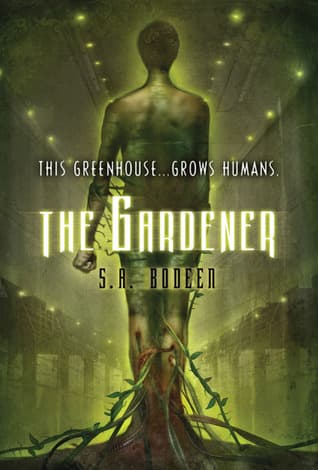
Synopsis
Covers the whole plot, including the ending.
- Difficulty
- Medium
- Pacing
- Fast
- Mood
- Suspenseful, Thrilling, Mysterious, Dark
- Read it if
- You enjoy fast-paced sci-fi thrillers with a strong moral dilemma and a touch of mystery.
- Skip it if
- You prefer character-driven dramas over plot-heavy action, or find genetic experimentation themes disturbing.
The Gardener Plot Summary
Covers the whole plot, including the ending.
The Mysterious DVD and the Nursing Home
Mason, a teenager living with his mother, Mrs. Miller, who works at the Serenity Hills nursing home, longs for his absent father. His only link to his father is a worn DVD showing a man, whose face is never seen, reading a children's book. One day, at his mother's work, Mason plays this DVD for comatose teenage patients in a special ward. A beautiful, seemingly unresponsive girl named Lily stirs, showing a faint reaction to the video. This response sparks Mason's interest and a connection to Lily, starting a series of events beyond his understanding.
Lily's Awakening and the 'Autotroph' Revelation
After Lily's first reaction, Mason continues to visit her, playing the DVD and watching her gradual awakening. As Lily slowly regains consciousness and some ability to communicate, she reveals parts of a frightening truth. She explains that she and the other comatose teens are not just sick; they are subjects of a grotesque scientific experiment. They have been genetically engineered into 'autotrophs' – a state where their bodies photosynthesize and sustain themselves without food or water, turning them into human-plant hybrids. This shocking news deeply disturbs Mason, who realizes Lily is in great danger.
The Escape from Serenity Hills
The more Lily tells Mason about the 'autotroph' project, the clearer it becomes that Serenity Hills is not a place of healing but a prison for these experimental subjects. Lily's returning awareness makes her a risk to the project's unseen leader. Fearing for her life and wanting to protect her, Mason decides they must escape. He plans their breakout carefully, navigating the nursing home's security, which now seems more sinister. Their escape is tense with narrow misses, but Mason's quick thinking and Lily's desperate will to survive allow them to slip away into the night, becoming fugitives.
On the Run and the Hunt Begins
Outside Serenity Hills, Mason and Lily find themselves in a dangerous world where they are hunted. They quickly learn their escape has been noticed. Mysterious figures, later identified as operatives working for 'the Gardener,' begin a relentless pursuit. Mason and Lily constantly move, seeking refuge in abandoned buildings, forests, and crowded cities. The stress of being fugitives, along with Lily's unique needs and lingering trauma, creates a difficult existence, forcing Mason to grow up fast and make hard choices to survive.
Unraveling the Gardener's Identity
As Mason and Lily avoid their pursuers, they start to figure out who 'the Gardener' is. Lily's fragmented memories of the experiments, combined with Mason's repeated viewing of the mysterious DVD, begin to show unsettling connections. The voice on the DVD, once comforting, now sounds sinister. Lily remembers parts of conversations and faces that match subtle details Mason sees in the video. A chilling realization slowly dawns on Mason: the man on the DVD, the father he has wanted, might be linked to, or even be, the monster who created Lily – the Gardener.
The Father's Connection
The evidence becomes clear. Through Lily's recovered memories and a deeper look at the DVD, Mason uncovers the painful truth: his own father is 'the Gardener.' The man who read children's stories on the DVD, the voice he associated with warmth and longing, is the brilliant, yet immoral, scientist behind the autotroph experiments. This revelation shatters Mason's world, turning his lifelong longing for a father into deep betrayal and horror. He deals with the emotional impact of this discovery, understanding that the man he sought is a villain responsible for great suffering.
The Gardener's Motivation Revealed
Mason eventually confronts, or learns through intercepted messages, the Gardener's twisted reasons. His father, a scientific genius, believes humanity is headed for self-destruction due to resource depletion and environmental damage. He sees the autotroph project not as an atrocity, but as humanity's next evolutionary step – a way to create a self-sustaining human species able to survive any ecological disaster. He sees himself as a visionary, a savior, not a monster, completely ignoring the ethical problems and suffering he causes. This warped idealism makes him even more dangerous, as he thinks his cause justifies any method.
Lily's Deterioration and the Moral Dilemma
As their flight continues, Lily's condition worsens. The autotroph process, while meant for self-sustenance, is unstable and incomplete. She begins to show signs of severe stress, her skin becoming unnaturally pale, and her energy fading. She struggles to keep her human form, sometimes showing more plant-like traits. Mason realizes that the experiment, far from making her immortal, is slowly killing her. He faces a terrible moral problem: if the autotroph process is irreversible and ultimately fatal, what is the most humane thing to do? The very thing that makes Lily unique is also her curse, and Mason worries over her fading life.
The Confrontation and the Choice
The pursuit ends in a direct confrontation between Mason and his father, the Gardener. This meeting is filled with bitter emotion, as Mason deals with the man who is both his father and Lily's tormentor. The Gardener remains unrepentant, arguing for his work's necessity. Mason, seeing Lily's rapid decline, understands she cannot survive in her current state. He must make the final, heartbreaking choice: allow Lily to keep suffering as a failed experiment or act to end her pain, even if it means destroying the person he has grown to care for deeply. This choice means destroying his father's work and, in a way, the last bit of his own connection to his father.
The Resolution and its Aftermath
In a climactic, emotional moment, Mason makes his choice. The specific action he takes to destroy the 'autotroph' aspect within Lily, or to end her suffering, is a definitive act of love and mercy. This act also dismantles his father's horrific project, either by destroying key research, revealing it to authorities, or ensuring its termination. The Gardener's work is undone, and his control over the experimental subjects ends. Mason emerges from this ordeal forever changed, scarred by his father's betrayal and the loss he endured, but also stronger from his courage and unwavering commitment to protecting Lily, even if it meant letting her go.
Principal Figures
Mason Miller
Protagonist
A teenage boy longing for his father, thrust into a dangerous world.
Mason is initially a somewhat introverted and emotionally vulnerable teenager, defined by his longing for a father he has never known. This yearning shapes much of his early actions and internal world. He is observant, empathetic, and possesses an inherent sense of justice. Despite his youth, he displays remarkable courage and resourcefulness when faced with extreme danger, prioritizing Lily's safety above his own. His journey forces him to confront unimaginable betrayal and make devastating choices.
Relationships: Lily (Protective, romantic bond, deep empathy); The Gardener (Father) (Complex mix of longing, idealization, horror, and betrayal); Mrs. Miller (Mother) (Supportive, loving, but somewhat distant due to her work)
Lily
Supporting/Love Interest
A victim of the autotroph experiment, awakening to a terrifying reality.
Lily is initially encountered as a beautiful but comatose patient, a silent victim of a horrific genetic experiment. As she awakens, she is vulnerable, traumatized, and struggles with fragmented memories and a deteriorating physical state due to her 'autotroph' transformation. Despite her suffering, she possesses an inner strength and a yearning for freedom and connection. Her unique physiology and tragic circumstances make her both a source of wonder and profound sorrow for Mason.
Relationships: Mason Miller (Deep emotional bond, trust, and mutual reliance); The Gardener (Her creator and tormentor)
The Gardener (Mason's Father)
Antagonist
Mason's brilliant but morally bankrupt father, the mastermind of the autotroph project.
The Gardener is a figure of immense scientific intellect and chilling moral detachment. He is driven by a radical, almost messianic vision of human evolution, believing he can 'save' humanity from itself by creating a self-sustaining species. He sees his experimental subjects, including Lily, not as individuals but as means to an end. His absence from Mason's life is a deliberate choice, reflecting his singular focus on his work. He embodies the danger of unchecked scientific ambition, devoid of empathy or ethical boundaries.
Relationships: Mason Miller (Biological father, but emotionally distant and adversarial); Lily (Creator and captor, views her as a scientific specimen)
Mrs. Miller
Supporting
Mason's loving but often preoccupied mother, a nurse at Serenity Hills.
Mrs. Miller is Mason's mother and a dedicated nurse at the Serenity Hills nursing home. She is caring and supportive of Mason, though her demanding job often keeps her preoccupied. She is initially unaware of the sinister nature of the specialized ward where Lily is kept, believing it to be a legitimate medical facility. Her character highlights the insidious way the Gardener's operations are hidden in plain sight, and her concern for Mason underscores the emotional stakes of his dangerous quest.
Relationships: Mason Miller (Mother-son bond, caring and supportive); The Gardener (Past romantic partner, now estranged and likely unaware of his true activities)
Operatives
Mentioned/Supporting
The Gardener's shadowy agents who pursue Mason and Lily.
These are the anonymous, highly trained individuals who work for the Gardener, tasked with tracking down and recapturing Mason and Lily. They are relentless, efficient, and seemingly without remorse, acting as the physical manifestation of the Gardener's power and reach. Their presence creates constant tension and danger for the fugitives, forcing Mason to constantly think on his feet and employ evasive tactics. They represent the immediate threat Mason and Lily face on the run.
Relationships: The Gardener (Subordinates, loyal enforcers); Mason and Lily (Adversaries, pursuers)
Themes & Insights
The Peril of Unchecked Scientific Ambition
This theme explores the moral dangers when scientific pursuit ignores human compassion and ethics. The Gardener's project, aiming to create 'autotrophs' to 'save' humanity, shows this. His disregard for his test subjects' well-being, turning teenagers into experimental hybrids, illustrates how a grand goal can become monstrous when separated from human principles. The story shows the disastrous results of playing God, where 'progress' leads to suffering and dehumanization, as seen in Lily's tragic state.
“He saw not children, but the future. Not suffering, but necessary evolution.”
The Search for Identity and Belonging
Mason's main motivation early in the story is his longing for his unknown father, a search for identity and belonging. The mysterious DVD is his only link, representing a potential connection to his past. However, this search turns dark when his father is the antagonist, forcing Mason to define his identity by his actions and moral choices, not his biological parent. Lily, as an autotroph, also struggles with her identity, being neither fully human nor plant, struggling to belong.
“For years, that voice was a bridge to a man I didn't know. Now, it's a chasm.”
Love, Sacrifice, and Betrayal
The story is rich with these intertwined themes. Mason's growing love for Lily drives his courageous actions and ultimate sacrifice. He betrays the memory of his idealized father to protect Lily, showing a higher form of love. The betrayal comes from the Gardener, who abandoned Mason and harms others, including Lily, for his twisted vision. Mason's decision to potentially destroy the 'autotroph' aspect within Lily, or end her suffering, is the ultimate act of sacrificial love, prioritizing her peace over his own desires or her continued tormented existence.
“Sometimes, the greatest love is letting go, even when it tears you apart.”
Humanity vs. Nature (or 'Unnatural' Evolution)
This theme explores the blurred lines between humanity and nature through the 'autotrophs.' The Gardener wants to merge human biology with plant-like self-sustenance, creating an 'unnatural' evolution. The story questions what it means to be human when basic biological needs are changed. Lily's struggle to stay human while her body transforms highlights the conflict. The narrative suggests that altering core human existence, even with 'good' intentions, can lead to monstrous outcomes that diminish, rather than enhance, humanity.
“To become self-sustaining is not to ascend, but to lose the very essence of what makes us live.”
Plot Devices & Literary Techniques
The Mysterious DVD
A seemingly innocent artifact that holds the key to the protagonist's past and the antagonist's identity.
The DVD serves as a central MacGuffin and a crucial plot device. Initially, it represents Mason's only tangible connection to his absent father, symbolizing his longing and driving his initial actions. Its seemingly innocuous content—a man reading a children's book—masks a sinister truth. As the story progresses, the DVD becomes a source of clues, its voice and subtle visual details revealing the Gardener's identity. It acts as a powerful symbol of both hope and ultimate betrayal, transforming from a cherished memento into a terrifying piece of evidence.
The 'Autotroph' Concept
A unique genetic modification central to the antagonist's plan and the victim's suffering.
The concept of 'autotrophs' is the core speculative element and a primary plot device. It provides the unique horror and scientific premise of the story. This genetic engineering, designed to create self-sustaining human-plant hybrids, is the driving force behind the Gardener's villainy and Lily's tragic condition. It establishes the high stakes, the moral dilemma, and the extraordinary nature of the conflict. The unstable nature of the autotroph process also introduces the ticking clock element as Lily's health deteriorates, forcing Mason's hand.
The 'Gardener' Moniker
An ironic and symbolic alias for the antagonist, highlighting his controlling nature.
The antagonist's alias, 'the Gardener,' is a significant plot device, rich with irony and symbolism. A gardener typically nurtures life, but this 'Gardener' manipulates and twists it for his own ends. The name evokes a sense of control over nature and growth, perfectly reflecting his ambition to 'cultivate' a new human species. It also initially obscures his true identity, adding to the mystery, while later highlighting the chilling contrast between the gentle imagery and his ruthless actions. The moniker emphasizes his view of humans as specimens to be managed.
The Gardener Quotes
“My life will open in a hundred little buds of delight and send them forth in a shower of beauty when you come, my love.”
“The world has kissed my soul with its pain, asking for its return in songs.”
“I came to your door in the evening. You were weaving a garland of flowers. I stood by and watched. I did not speak.”
“You smiled and talked to me of nothing and I felt that for this I had been waiting long.”
“My heart, the bird of the wilderness, has found its sky in your eyes.”
“Leave your great lore and your wisdom, and take my hand, for my heart is full.”
“I have loved her for a thousand years and shall love her for a thousand more.”
“We are the birds of a feather, we are the two shores of the same river.”
“Love's gift cannot be given, it waits to be accepted.”
“The night is black, the forest is deep, the road is long.”
“My love, you are the cloud that floats in my life's sky, the one cloud that I cannot leave.”
“I have my songs and dreams and my world is in them.”
“Let your love be like the misty rain, coming softly, but flooding the river.”
“The flower that has opened knows that it will fade, but it has had its moment.”
Quiz
10 questions on the plot and the characters. Each answer comes with a short explanation.
Question 1
What is the only item Mason has that connects him to his father?
- A worn photograph
- A DVD of a man reading a children's book
- A locket with an inscription
- A letter detailing his father's life
Show answer
B. A DVD of a man reading a children's book Mason's only connection to his father is a DVD where a man, whose face is never shown, reads a children's book.
Question 2
Where does Mason first play the DVD for the group of comatose teens?
- At a local library
- In his own home
- At the nursing home where his mother works
- At a community center
Show answer
C. At the nursing home where his mother works Mason plays the DVD for the comatose teens at the nursing home where his mother is employed.
Question 3
What is the primary goal of the experiment the beautiful girl is part of?
- To enhance cognitive abilities
- To create autotrophs who don't need food or water
- To induce prolonged sleep states
- To develop advanced communication methods
Show answer
B. To create autotrophs who don't need food or water The experiment aims to transform teenagers into autotrophs, genetically engineered life-forms that can survive without food or water.
Question 4
What is the name given to the mastermind behind the gruesome experiment?
- The Professor
- The Director
- The Gardener
- The Scientist
Show answer
C. The Gardener The mysterious mastermind orchestrating the experiment is referred to only as 'The Gardener'.
Question 5
What is Mason's immediate predicament after the girl responds to the DVD?
- He is offered a job at the nursing home.
- He is on the run with the girl and wanted by the Gardener.
- He is tasked with caring for all the comatose teens.
- He is praised for his therapeutic intervention.
Show answer
B. He is on the run with the girl and wanted by the Gardener. After the girl responds, Mason quickly finds himself on the run with her, targeted by the Gardener.
Question 6
What does the term 'autotrophs' imply about the teenagers in the experiment?
- They are capable of advanced telepathy.
- They can generate their own nourishment and don't require external food/water.
- They have enhanced physical strength.
- They are immune to all known diseases.
Show answer
B. They can generate their own nourishment and don't require external food/water. Autotrophs are described as genetically engineered, self-sustaining life-forms who don't need food or water to survive.
Question 7
What is the significance of Mason's father's face never being seen on the DVD?
- It suggests his father was a private person who avoided cameras.
- It heightens Mason's longing and makes his connection to his father more mysterious and incomplete.
- It indicates the DVD was of poor quality.
- It implies his father was disfigured.
Show answer
B. It heightens Mason's longing and makes his connection to his father more mysterious and incomplete. The fact that his father's face is never seen emphasizes Mason's deep longing and the incomplete nature of his connection to his unknown father.
Question 8
What is the central internal conflict Mason faces by the end of the synopsis?
- Whether to expose his mother's involvement in the experiment.
- Whether to destroy the thing he's longed for most, possibly referring to a connection with his father or the girl.
- Whether to return the girl to the Gardener for his own safety.
- Whether to join the Gardener's experiment.
Show answer
B. Whether to destroy the thing he's longed for most, possibly referring to a connection with his father or the girl. The final sentence poses the question: 'Will Mason be forced to destroy the thing he's longed for most?', indicating a significant internal struggle related to his desire for a connection, possibly linked to his father or the girl.
Question 9
What is the primary motivation for Mason playing the DVD for the comatose teens?
- He was specifically asked to do so by his mother.
- He was conducting his own informal experiment.
- It was done on a whim, without a specific plan.
- He believed it would cure their comatose state.
Show answer
C. It was done on a whim, without a specific plan. The text states Mason plays the DVD 'on a whim,' implying it was an impulsive decision rather than a planned one.
Question 10
How is the Gardener's desire for Mason and the girl described?
- He wants them for further observation.
- He wants them 'dead or alive'.
- He wants to offer them a deal.
- He wants to apologize for the experiment.
Show answer
B. He wants them 'dead or alive'. The Gardener is described as wanting Mason and the girl 'dead or alive,' indicating a ruthless and determined pursuit.
The Gardener FAQ
What is the central premise of 'The Gardener'?
The Gardener centers on Mason, a young man who discovers a hidden connection to his absent father through a mysterious DVD. This connection leads him to a comatose girl who is part of a horrific experiment to transform teenagers into autotrophs, forcing Mason to go on the run from the shadowy figure known only as 'The Gardener'.
Who is Mason and what is his primary motivation at the beginning of the story?
Mason is the protagonist, a young man who has never known his father but deeply longs for a connection to him. His primary motivation is to understand his father's identity and legacy, which he tries to piece together from the single DVD he possesses.
How does the DVD featuring Mason's father become a pivotal plot device?
The DVD, showing a man (presumably Mason's father) reading a children's book, acts as a catalyst when Mason plays it for comatose teens. It elicits a response from one particular girl, setting in motion the entire sequence of events that unravels the autotroph experiment and puts Mason in danger.
What are 'autotrophs' in the context of this novel and what is their purpose?
In 'The Gardener', autotrophs are genetically engineered human beings who are self-sustaining, meaning they do not require food or water to survive. The experiment's purpose is to create these life-forms, presumably for some grand, unspecified vision held by The Gardener.
Who is 'The Gardener' and what role does this character play?
The Gardener is the mysterious mastermind behind the gruesome autotroph experiment. This character acts as the primary antagonist, relentlessly pursuing Mason and the girl, wanting them 'dead or alive' to prevent the exposure or disruption of their plans.
What is the significance of the children's book being read on the DVD?
The specific children's book read on the DVD might contain subtle clues or metaphors related to the autotroph experiment or The Gardener's motivations. It could also be a key used by Mason's father to communicate a warning or message that only Mason, or perhaps the engineered teens, can understand.
Are there any clues to the identity of Mason's father beyond the DVD?
While the synopsis doesn't explicitly state other clues, Mason's mother's employment at the nursing home and her potential knowledge of the experiment or its origins could provide further hints. The father's involvement in creating the DVD suggests a deliberate act, possibly as a breadcrumb trail for Mason.
What is the nature of the 'response' the beautiful girl has to the DVD?
The nature of her response is crucial; it could be a physical reaction like movement or eye-opening, or a more subtle, neurological change. This response likely indicates a deep-seated connection to the DVD's content or the reader, perhaps even a pre-programmed trigger related to her autotroph conditioning.
Is there a connection between Mason's father and The Gardener or the autotroph experiment?
It is highly probable that Mason's father is deeply connected to The Gardener or the autotroph experiment, possibly as a former researcher, a victim, or even a dissident within the project. The DVD might be his attempt to expose the truth or warn his son.
How does Mason's longing for a father figure influence his decision to help the girl?
Mason's deep longing for a father figure likely makes him more empathetic and protective towards the vulnerable girl. He might see in her a reflection of his own vulnerability or a chance to act on the protective instincts he never had a chance to express towards a paternal figure, projecting that need onto her.
What psychological impact does the revelation of the autotroph experiment have on Mason?
The revelation of the autotroph experiment likely shatters Mason's worldview, forcing him to confront the dark side of scientific ambition and human cruelty. This could lead to a rapid maturation, increased paranoia, and a profound sense of responsibility for the girl's safety.
How does the girl's comatose state and subsequent awakening affect her psychological development?
Her comatose state means she likely has a severely stunted or interrupted psychological development. Her awakening, especially into a terrifying situation on the run, would force her to rapidly process trauma and new information, potentially leading to identity confusion or an intense bond with Mason as her primary caregiver.
What internal conflict might Mason face regarding the girl's autotroph nature?
Mason might face a profound internal conflict between seeing the girl as a victim he needs to protect and grappling with the implications of her being a genetically engineered autotroph. He may struggle with the ethics of her existence and whether her 'natural' state has been irrevocably altered, impacting his perception of her humanity.
What does the title 'The Gardener' symbolize in relation to the antagonist's goals?
The title 'The Gardener' strongly symbolizes the antagonist's desire to cultivate and control life, viewing the engineered teenagers as plants or crops to be grown and shaped to their will. It suggests a god-like complex and a cold, detached approach to human life.
What ethical questions does the autotroph experiment raise about genetic engineering and human identity?
The experiment raises critical questions about the ethics of altering human genetics to fundamentally change basic needs, blurring the lines of what constitutes 'human.' It challenges ideas of natural existence, free will, and whether humanity should be 'improved' to this extent, especially without consent.
Will Mason be forced to 'destroy the thing he's longed for most'? What could 'the thing' refer to?
This phrase is ambiguous and could refer to several things: the girl (if she embodies his longing for connection/family), the truth about his father (if it's too painful), or even his idealized image of his father. He might have to destroy a part of his hope or a person to save others or himself.
Could Mason's father be 'The Gardener' or a former associate who turned against him?
It is a strong possibility that Mason's father was either directly 'The Gardener' or a key figure who became disillusioned with the project and tried to sabotage it or warn Mason. The DVD's existence suggests a deliberate, perhaps desperate, attempt to communicate, which points away from him being the current antagonist.
What kind of world-building is implied by the existence of autotrophs and advanced genetic engineering?
The existence of autotrophs implies a world with highly advanced, yet ethically questionable, genetic engineering capabilities. It suggests a society where such experiments can be conducted in secret, possibly indicating a powerful, shadowy organization or a future where scientific ethics are severely compromised or ignored.
About the authors
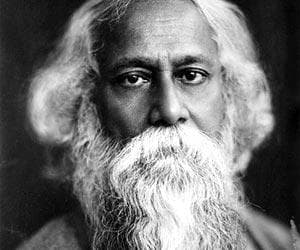
Rabindranath Tagore was a Bengali poet, writer, playwright, composer, philosopher, social reformer and painter. He reshaped Bengali literature and music as well as Indian art with Contextual Modernism in the late 19th and early 20th centuries. Author of the "profoundly sensitive, fresh and beautiful" poetry of Gitanjali, he became in 1913 the first non-European and the first lyricist to win the Nobel Prize in Literature. Tagore's poetic songs were viewed as spiritual and mercurial; however, his "elegant prose and magical poetry" remain largely unknown outside Bengal. He was a fellow of the Royal Asiatic Society. Referred to as "the Bard of Bengal", Tagore was known by sobriquets: Gurudeb, Kobiguru, Biswokobi.

S.A. Bodeen is an author known for her works of fiction, particularly in the young adult genre. Her notable books include The Compound, a gripping tale of survival, The Raft, which explores themes of isolation and resilience, The Fallout, a sequel to The Compound, and The Gardener, a story that intertwines mystery and personal growth.
Similar books
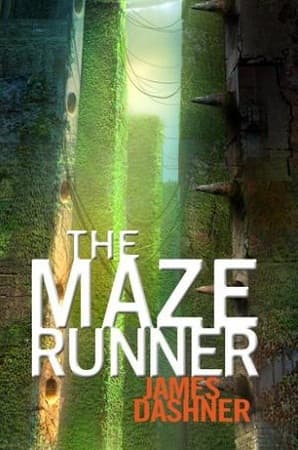
- The Maze Runner
James Dashner
4.0 (1.1M) average on GoodreadsFantasyFeatures teenagers trapped in a mysterious experiment, on the run from an unknown antagonist.
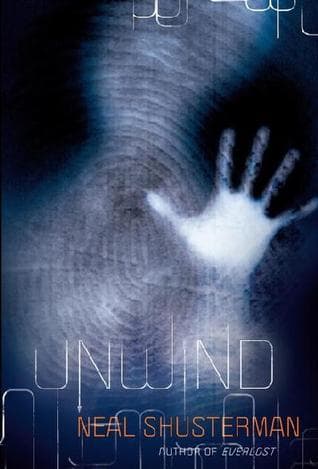
- Unwind
Neal Shusterman
4.2 (192k) average on GoodreadsThrillerDeals with controversial body autonomy and the dark side of scientific advancement in a dystopian setting.
- The Road
Cormac McCarthy
4.0 (716k) average on GoodreadsScience FictionUnlike 'The Road,' which explores philosophical themes through a grim, post-apocalyptic survival narrative with stark realism, Tagore's 'The Gardener' offers solace and beauty through lyrical prose, focusing on spiritual and emotional landscapes rather than physical endurance and despair.
- The Handmaid's Tale
Margaret Atwood
4.1 (1.5M) average on GoodreadsFantasyWhile 'The Handmaid's Tale' critically examines societal control and freedom through a direct, dystopian narrative, Tagore's 'The Gardener' explores freedom through spiritual and emotional liberation, using subtle imagery and metaphorical language rather than overt political or social commentary. Atwood's prose is often unsettling and plot-driven, whereas Tagore's is contemplative and poetic.
- Nineteen Eighty-Four
George Orwell
4.2 (5.5M) average on GoodreadsFictionWinston Smith dreams of truth and rebellion in a world where Big Brother watches all, but he confronts the terrifying power of a regime that controls not just actions, but thoughts.
- The Frozen River
Ariel Lawhon
4.4 (600k) average on GoodreadsFictionIn 1789 Maine, a heroic midwife's diary helps her expose a murder and get justice in a town that wants to silence her.




Enjoyed the summary?
A summary gives you the shape of the book. The book itself has the detail, the examples and the voice.
Find The Gardener on AmazonAs an Amazon Associate, BookBrief earns from qualifying purchases. How we're funded