
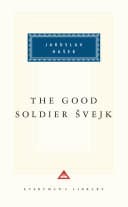
Synopsis
Covers the whole plot, including the ending.
- Difficulty
- Medium
- Pacing
- Variable
- Mood
- Satirical, Absurdist, Humorous, Cynical, Chaotic
- Read it if
- You enjoy satirical war narratives, dark humor, and stories about the 'little man' outwitting oppressive systems.
- Skip it if
- You prefer fast-paced plot-driven novels, clear moral messages, or find repetitive absurdism frustrating.
The Good Soldier Svejk Plot Summary
Covers the whole plot, including the ending.
Švejk's Introduction and Initial Arrest
Josef Švejk, a former dog-dealer from Prague, is introduced in his apartment, suffering from rheumatism. When he hears about Archduke Franz Ferdinand's assassination and the coming war, he immediately declares his loyalty to the Austro-Hungarian Empire. This seemingly innocent patriotism, along with his past as a dog-dealer and his eccentric manner, draws the attention of the secret police. Police Agent Bretschneider arrests him for high treason, misinterpreting Švejk's naive statements and literal interpretations as rebellious acts. Švejk is then taken to police headquarters, beginning his long journey through the military-judicial system.
The Medical Commission and the Madhouse
After his arrest, Švejk undergoes medical exams to determine his fitness for military service. His exaggerated ailments, rambling stories, and apparent foolishness lead the military medical commission to declare him a 'professional idiot' and a malingerer. Despite their suspicions, they cannot prove he is faking. He is sent to a lunatic asylum, where he continues his bizarre behavior, amusing and frustrating both patients and staff. His time in the asylum further establishes his reputation as a harmless but unmanageable person, yet he is eventually discharged, still deemed unfit for active service.
Serving Chaplain Katz
After his release from the asylum, Švejk is unexpectedly drafted into the army as an orderly. He is assigned to Field Chaplain Otto Katz, a former Benedictine monk who is now an alcoholic gambler. Švejk's duties involve managing the chaplain's chaotic life, including getting alcohol, handling debts, and preparing for sermons Katz rarely delivers. Švejk approaches these tasks with his usual mix of literal obedience and unintentional subversion, often making things worse while believing he is doing his best. Their relationship is a comedic study in contrasts, with Švejk's unwavering, if misguided, loyalty clashing with Katz's moral decline. Katz eventually gambles Švejk away in a card game.
Orderly to Lieutenant Lukáš
After Chaplain Katz loses him in a card game, Švejk becomes the orderly to Lieutenant Lukáš, a cultured but often exasperated officer. Lukáš initially finds Švejk's constant talking and strange logic irritating, but he also sees Švejk's ability to navigate military bureaucracy and often accidentally solve problems. Švejk's duties under Lukáš are varied and often involve misinterpreting orders, leading to comical mishaps. For instance, Švejk's attempt to get a dog for Lukáš results in him stealing a purebred fox terrier belonging to a colonel. This incident, among many others, constantly gets both Švejk and Lukáš into trouble, yet Švejk remains devoted and seemingly necessary.
The Journey to Budějovice
Lieutenant Lukáš receives orders to move his company to Budějovice. Švejk is tasked with getting them and their luggage on the correct train. True to form, Švejk misses the train, believing he is on the right track while actually heading in the opposite direction. This starts a long and absurd journey across the countryside. Švejk meets various people, including a Hungarian gendarme, a Polish soldier, and many peasants, all of whom are confused by his optimism and peculiar logic. His attempts to rejoin his unit are repeatedly stopped by his own misunderstandings, bureaucratic inefficiency, and the general chaos of wartime travel, leading him further from his destination.
Švejk's Arrest as a Russian Spy
During his long travels, Švejk, dressed in a stolen Russian uniform (which he believes is just another military uniform he's 'borrowed' or found), is caught by a Hungarian patrol. His inability to explain himself clearly, along with his cheerful manner and the foreign uniform, leads the suspicious soldiers to believe he is a dangerous Russian spy. He is interrogated and treated harshly, yet he remains calm, continuing his rambling stories, which only further confuse his captors. This incident shows the absurdity of wartime paranoia and how easily an innocent, if odd, person can be caught in a web of suspicion.
Court Martial and Rejoining the Unit
Švejk is brought before a military court-martial on charges of espionage and desertion. Despite the serious accusations, his defense consists mainly of his usual rambling stories and a firm claim of loyalty to the Emperor. The court, overwhelmed by his apparent idiocy and lack of malicious intent, struggles to understand his case. His unusual honesty and the unlikelihood of him being a competent spy eventually lead to his acquittal. Through a series of bureaucratic twists, he is finally able to rejoin his regiment, much to the exasperation and resigned amusement of Lieutenant Lukáš, who had given him up for lost.
Life in the Marching Company
Back with Lieutenant Lukáš and the marching company, Švejk resumes his duties as an orderly, though with the constant threat of being sent to the front lines. His interactions with other soldiers and officers continue to create comedic situations. He is often tasked with mundane but important chores, which he does with a unique mix of literal interpretation and unforeseen results. Whether getting supplies, dealing with other soldiers, or simply existing within the rigid military structure, Švejk consistently creates minor chaos while believing in his own competence and loyalty. The company's slow journey towards the Russian front is marked by Švejk's endless stories and his ability to survive every problem.
The War on the Eastern Front
As the Austro-Hungarian forces move closer to the Russian front, the realities of war become clearer, yet Švejk's spirit remains strong. He continues to serve Lieutenant Lukáš, often in the most unlikely situations. Whether finding food, dealing with a difficult superior officer, or simply trying to navigate the constant danger, Švejk's 'idiotic' wisdom and endless stories are a constant source of comic relief. The novel ends with Švejk still alive, still cheerfully moving through the war, and still not truly engaging in combat. He embodies the resilience of the common man against the absurdity of conflict.
The Good Soldier Svejk Characters
Josef Švejk
Protagonist
The seemingly simple-minded soldier who navigates the absurdity of war.
Josef Švejk is a former dog-dealer from Prague, conscripted into the Austro-Hungarian army during WWI. He is characterized by his unwavering optimism, his incessant rambling anecdotes, and a profound, often literal, understanding of bureaucracy and military protocol that consistently leads to absurd outcomes. Švejk appears to be a simple-minded buffoon, yet his actions often inadvertently expose the incompetence and futility of the military machine. He is a master of passive resistance, achieving his goals (primarily survival and avoiding the front) through apparent obedience and a cheerful willingness to follow orders to their most illogical conclusions. His driving force is an instinct for self-preservation, cloaked in an almost childlike innocence.
Relationships: Lieutenant Lukáš (His exasperated but ultimately reliant superior officer.); Chaplain Otto Katz (His first military superior, an alcoholic and gambler.); Police Agent Bretschneider (The secret policeman who initially arrests him.)
Lieutenant Lukáš
Supporting
Švejk's cultured but perpetually frustrated superior officer.
Lieutenant Lukáš is an educated and relatively refined officer in the Austro-Hungarian army, often burdened by Švejk's antics. He is a man of culture and intelligence, prone to exasperation and fits of rage, particularly when dealing with Švejk's unique brand of 'help.' Despite his frequent frustrations, Lukáš recognizes Švejk's strange utility and loyalty. He is a pragmatic character, trying to maintain some semblance of order and dignity in the chaotic military environment. His primary drive is to survive the war and maintain his position, often despite Švejk's best efforts to derail him.
Relationships: Josef Švejk (His orderly, a source of constant irritation and unexpected assistance.); Other Officers (Colleagues with whom he shares the absurdities of military life.)
Field Chaplain Otto Katz
Supporting
An alcoholic and gambling chaplain, Švejk's first military superior.
Chaplain Otto Katz is a former Benedictine monk who has embraced a life of heavy drinking and gambling since joining the army. He is morally lax and frequently in debt, embodying the spiritual decay and hypocrisy within the military establishment. Katz is more interested in his next drink or card game than in his ecclesiastical duties, which he often delegates to Švejk. He is a figure of tragicomedy, representing the disillusionment and moral compromise that can occur within the wartime environment. His primary motivation is self-indulgence and escaping the harsh realities of his situation.
Relationships: Josef Švejk (His orderly, whom he exploits and eventually loses in a card game.)
Police Agent Bretschneider
Antagonist (initial)
The overzealous secret policeman who first arrests Švejk.
Bretschneider is a secret police agent tasked with identifying potential subversives and traitors at the outbreak of war. He is characterized by his extreme paranoia, his literal interpretation of every statement, and his eagerness to find fault. His actions are driven by a zealous, almost comical, dedication to his duty, which often leads him to misinterpret innocent remarks as high treason. He represents the oppressive and absurd nature of state surveillance and the dangers of overzealous authority. His primary motivation is to prove his worth by uncovering conspiracies, even where none exist.
Relationships: Josef Švejk (The target of his initial, misguided investigation and arrest.)
Baloun
Supporting
Lieutenant Lukáš's second orderly, obsessed with food.
Baloun is a former waiter who becomes Lieutenant Lukáš's second orderly, replacing Švejk for a period. His defining characteristic is his insatiable hunger and obsession with food. He constantly complains about insufficient rations and is always looking for opportunities to eat, often at Lukáš's expense. Baloun represents the basic, animalistic desires that persist even in wartime, and his gluttony serves as a comedic contrast to Švejk's more philosophical (if unwitting) approach to survival. His primary motivation is simply to eat as much as possible.
Relationships: Lieutenant Lukáš (His superior, whose food he often consumes.)
Corporal Blahník
Mentioned
A minor character often referenced in Švejk's anecdotes.
Corporal Blahník is a character frequently mentioned in Švejk's endless stories and anecdotes. He serves as a composite figure for the ordinary, often unfortunate, people Švejk has encountered throughout his life. Blahník is usually the subject of some absurd mishap or a victim of bureaucratic injustice, allowing Švejk to illustrate his points about the world. He is not a physical presence in the novel but a recurring thematic device, embodying the common man's struggles.
General Fink
Mentioned
A high-ranking officer whose incompetence is often highlighted.
General Fink is a high-ranking officer, often referenced as a symbol of the military's top-heavy incompetence and detached leadership. His decisions and pronouncements are frequently portrayed as arbitrary, ill-informed, or simply absurd. He represents the higher echelons of the military establishment that are out of touch with the realities faced by the common soldier. His primary role is to illustrate the systemic flaws and irrationality of the Austro-Hungarian war machine.
The Good Soldier Svejk Themes
The Absurdity of War and Bureaucracy
Hašek shows the irrationality of military life and its bureaucratic systems. The war is not a noble struggle, but a chaotic, senseless enterprise. Švejk's journey through medical commissions, police interrogations, and military postings constantly highlights the illogical rules, arbitrary decisions, and self-serving nature of the Austro-Hungarian army. For example, Švejk's declaration as a 'professional idiot' by a military medical board is a direct jab at the system's inability to tell real illness from cunning, and its preference for labels over understanding. The endless paperwork, miscommunications, and focus on trivialities over strategic concerns further emphasize this theme, making the military machine a self-defeating entity.
“And so it goes, the more you think about it, the more you see that everything is quite different from what it seems.”
Passive Resistance and Survival
Švejk's main approach is a unique form of passive resistance, achieved through exaggerated obedience and apparent foolishness. By taking every order literally and following it to its most absurd conclusion, he accidentally (or perhaps intentionally) sabotages the system without ever seeming disloyal. His cheerfulness and endless stories act as a shield, deflecting real responsibility and allowing him to survive the war without reaching the front lines. His ability to be declared a 'professional idiot' and later to avoid conviction for espionage, simply by being himself, shows a deep, almost instinctive, method of self-preservation against an overwhelming and oppressive force. This theme celebrates the resilience of the individual spirit against the dehumanizing aspects of war.
“I'm an old soldier, I know what's what. Orders are orders, and I'm going to carry them out.”
The Common Man vs. Authority
The novel explores the dynamic between the ordinary person and powerful, often tyrannical, authority. Švejk, as the 'little man,' is constantly at the mercy of officers, police agents, and military courts. However, instead of directly rebelling, he uses his perceived simplicity and constant talking to confuse and outmaneuver those in power. His interactions with Police Agent Bretschneider, Chaplain Katz, and Lieutenant Lukáš all show this struggle. The authorities, despite their power, are often less competent, more corrupt, or more easily flustered than the unassuming Švejk. This theme champions the spirit of the common person who, through cunning or sheer force of personality, keeps their humanity and individuality in the face of oppressive systems.
“Every soldier is like a cog in a machine, but the machine is broken, and no one knows how to fix it.”
The Dehumanizing Effects of War
While presented comically, the novel subtly addresses how war strips individuals of their humanity and autonomy. Soldiers are treated as expendable units, and bureaucracy reduces people to paperwork and statistics. The constant threat of court-martial, arbitrary punishment, and general lack of concern for individual well-being all point to this dehumanization. Characters like Chaplain Katz, who has fallen into alcoholism and moral decay, show how wartime can erode personal integrity. Even Švejk's 'idiocy' can be seen as a coping mechanism, a way to maintain some sense of self in a world that tries to turn him into a mindless tool. The novel shows how individuals must find unique ways to resist becoming mere cogs in the war machine.
“In the army, you are nothing but a number. They don't care about your soul.”
Plot Devices & Literary Techniques
Picaresque Narrative
A series of episodic adventures featuring a roguish protagonist.
The novel follows a picaresque structure, with Švejk embarking on a series of loosely connected, episodic adventures as he navigates the military. Each chapter or section presents a new predicament or encounter, allowing Švejk to interact with a diverse cast of characters and experience various facets of wartime life. This structure emphasizes Švejk's journey rather than a single overarching plot, highlighting the randomness and chaos of war. It allows for a broad satirical scope, as different aspects of society and the military can be lampooned in each new setting or situation.
Satire and Irony
The use of humor, exaggeration, and ridicule to expose and criticize folly.
Hašek employs biting satire and pervasive irony to critique the Austro-Hungarian Empire, the military, and the absurdity of war. Švejk's apparent unwavering loyalty and patriotism are deeply ironic, as his actions consistently undermine the very system he claims to serve. The novel uses exaggeration, such as the elaborate medical diagnoses of Švejk's 'idiocy,' to highlight the ridiculousness of bureaucracy. The gap between what characters say and what they do, or between official pronouncements and reality, is a constant source of humor and critical commentary, making the entire narrative a prolonged exercise in sardonic wit.
The 'Wise Fool' Archetype
A character who appears foolish but possesses profound, often subversive, wisdom.
Švejk embodies the 'wise fool' archetype. On the surface, he is a simpleton, prone to rambling and literal interpretations. However, his apparent idiocy allows him to expose the greater foolishness of those in authority and the inherent illogic of the military system. His 'wisdom' is not intellectual but instinctual – a profound understanding of how to survive and navigate a chaotic world by appearing harmless. He uses his 'foolishness' as a shield and a weapon, making him unpunishable and ultimately effective in his own unique way, subtly challenging power structures without direct confrontation.
Anecdotal Storytelling
The frequent use of digressive, often lengthy, personal stories within the narrative.
A defining feature of the novel is Švejk's incessant and often lengthy anecdotal storytelling. He constantly interjects with personal stories, usually involving someone he knew or a situation he witnessed, to illustrate a point or respond to a question. These anecdotes, though seemingly irrelevant and digressive, serve multiple functions: they reveal the absurdities of everyday life under imperial rule, provide comic relief, and often inadvertently expose the flaws in the official narrative or the incompetence of his superiors. They also serve as a form of verbal resistance, effectively derailing conversations and frustrating those who try to control him.
The Good Soldier Svejk Quotes
“Thus they went on for a while, Svejk always looking for a good place to hide, and the lieutenant, in his drunkenness, making all sorts of plans.”
“It’s a good thing to be good, but it’s still better to be good for something.”
“Every soldier has to be a hero, but not every hero has to be a soldier.”
“If a man does not know what he wants, he will never get it.”
“Patriotism, gentlemen, is a great thing, but it's even greater to have a good appetite.”
“The human race is a strange thing. First it creates a lot of trouble, and then it tries to get out of it.”
“Nothing is so bad that it couldn't be worse.”
“Order must be, even if it brings about a catastrophe.”
“War is a terrible thing, but it has its good points too. For example, it gets rid of a lot of unemployed people.”
“The main thing is not to lose your head, and to keep smiling.”
“You can never tell what will come out of a good intention.”
“When a man wants to do something, he usually does it badly.”
“He who laughs last thinks slowest.”
“The world is full of madmen, and it's a good thing it is, otherwise it would be too boring.”
Quiz
10 questions on the plot and the characters. Each answer comes with a short explanation.
Question 1
What is Švejk's initial medical diagnosis when he is called to serve in the Austro-Hungarian army?
- Rheumatism
- Flat feet
- Congenital imbecility
- Appendicitis
Show answer
C. Congenital imbecility Švejk is initially diagnosed with congenital imbecility, which he uses to his advantage to navigate the bureaucratic system.
Question 2
Which animal does Švejk attempt to sell to Lieutenant Lukáš as a 'purebred fox terrier'?
- A poodle
- A mongrel with a docked tail
- A dachshund
- A cat
Show answer
B. A mongrel with a docked tail Švejk brings Lieutenant Lukáš a scruffy mongrel, claiming it's a purebred, leading to one of his many absurd situations.
Question 3
What is Švejk's primary method of subverting authority and avoiding the front lines?
- Direct disobedience
- Feigning illness
- Playing the bumbling fool with unwavering loyalty
- Desertion
Show answer
C. Playing the bumbling fool with unwavering loyalty Švejk's genius lies in his ability to appear utterly loyal and eager to follow orders, while his literal interpretation and endless anecdotes create chaos and delay.
Question 4
Who is the army chaplain who frequently gets drunk and relies on Švejk for assistance?
- Father Katz
- Father Lacina
- Father Martinec
- Father Vaněk
Show answer
A. Father Katz Father Katz is the notoriously alcoholic army chaplain whom Švejk serves as a batman, leading to many humorous escapades.
Question 5
What is a recurring theme in the novel regarding the nature of warfare?
- The glory of national service
- The strategic brilliance of military leaders
- The utter futility and absurdity of warfare
- The camaraderie among soldiers
Show answer
C. The utter futility and absurdity of warfare The novel consistently highlights the senselessness and bureaucratic incompetence that define the Austro-Hungarian war effort.
Question 6
Švejk is mistakenly arrested as a Russian spy due to which specific action?
- Wearing a stolen uniform
- Drawing a map in the wrong direction
- Speaking Russian to a local
- Possessing a forbidden book
Show answer
B. Drawing a map in the wrong direction While attempting to rejoin his unit, Švejk takes a wrong turn and, when asked to draw a map, depicts the wrong direction, leading to his arrest as a spy.
Question 7
What is the name of the dog Švejk procures for Lieutenant Lukáš, which causes a scandal due to its theft?
- Max
- Kiki
- Lux
- Rex
Show answer
C. Lux Švejk steals a dog named Lux for Lieutenant Lukáš from a colonel, which results in a significant disciplinary incident.
Question 8
Which city is Švejk trying to reach to rejoin his unit when he gets lost and arrested as a spy?
- Prague
- Budapest
- Budejovice
- Vienna
Show answer
C. Budejovice Švejk's journey to Budejovice (Budweis) is a significant part of the plot, marked by his getting lost and subsequent arrest.
Question 9
What is the primary critique of the Austro-Hungarian military bureaucracy conveyed through Švejk's experiences?
- Its efficiency and strict discipline
- Its logical and rational decision-making
- Its inherent incompetence, rigidity, and self-defeating nature
- Its progressive social policies
Show answer
C. Its inherent incompetence, rigidity, and self-defeating nature The novel consistently lampoons the Austro-Hungarian military as a system plagued by incompetence, senseless rules, and a complete detachment from reality.
Question 10
What is the eventual fate of the novel, as Jaroslav Hašek died before its completion?
- It was completed by another author based on Hašek's notes.
- It remains unfinished, ending abruptly.
- Hašek published a brief summary of the intended ending.
- His family completed it as a tribute.
Show answer
B. It remains unfinished, ending abruptly. Jaroslav Hašek died in 1923, leaving 'The Good Soldier Švejk' famously unfinished, ending mid-sentence.
The Good Soldier Svejk FAQ
What is the central premise of 'The Good Soldier Švejk'?
The novel follows the titular character, Josef Švejk, an unassuming Czech dog-trader, as he is called to serve in the Austro-Hungarian army during World War I. He navigates the bureaucratic and absurd military system by appearing to be a bumbling, overly loyal fool, thereby inadvertently sabotaging the war effort and avoiding the front lines.
Who is Josef Švejk and what are his key characteristics?
Josef Švejk is the protagonist, characterized by his seemingly simple-minded demeanor, endless anecdotes, and a remarkable talent for getting into and out of trouble. He appears outwardly obedient and eager to serve, but his actions often lead to chaos and expose the absurdity of the military system, making him a genial nuisance.
What role does the Austro-Hungarian army play in the narrative?
The Austro-Hungarian army serves as the primary antagonist and the setting for Švejk's escapades. It is depicted as a deeply inefficient, bureaucratic, and often cruel institution, where rules are nonsensical, officers are incompetent, and the common soldier is a disposable cog in a vast, pointless machine.
How does Švejk manage to avoid combat throughout the book?
Švejk avoids combat not through direct defiance, but by an intricate combination of feigned stupidity, overzealous obedience that backfires, and a knack for finding himself in bizarre situations. He is often transferred, arrested, or sidelined due to his 'enthusiasm' or the sheer incompetence of those around him, never quite reaching the battlefield.
What is the significance of Švejk's dog-trading background?
Švejk's background as a dog-trader subtly informs his character, suggesting a shrewdness in managing and manipulating situations, much like he would with animals. It also grounds him in a common, everyday reality, contrasting sharply with the grand, abstract ideals of the war machine he finds himself within.
Are there any real-life inspirations for Švejk's character or escapades?
Yes, Jaroslav Hašek drew heavily from his own experiences as a soldier in the Austro-Hungarian army during WWI. Many of Švejk's adventures, the absurd situations, and the types of characters encountered are inspired by Hašek's personal wartime escapades and observations, lending the narrative an authentic, albeit exaggerated, feel.
What is the implied fate of Švejk, given the unfinished nature of the novel?
The novel remains unfinished due to Hašek's death, so Švejk's ultimate fate is not explicitly revealed. However, given his consistent ability to survive and adapt, it is implied that Švejk would likely continue his pattern of genial subversion and improbable survival, perhaps even outliving the war itself, never truly reaching the front.
How does Švejk's constant storytelling function within the narrative?
Švejk's endless anecdotes serve multiple functions: they are a coping mechanism, a form of subtle resistance, and a way to highlight the ridiculousness of the present situation by drawing parallels to past absurdities. His stories often derail conversations, confuse officers, and provide comic relief, while also reflecting a folk wisdom that challenges official narratives.
Is Švejk genuinely simple-minded, or is his foolishness an act?
This is a central psychological question. While Švejk appears genuinely simple and eager, his consistent ability to outwit authority and survive suggests a deep, perhaps unconscious, shrewdness. His 'foolishness' can be interpreted as a highly effective survival strategy, a form of passive resistance that disarms his superiors and exploits the system's flaws.
How does Švejk represent the 'little man' against authority?
Švejk embodies the 'little man' through his lack of rank, his common background, and his use of everyday cunning to navigate a powerful, oppressive system. He doesn't engage in grand revolutionary acts, but rather undermines authority through persistent, subtle subversion, demonstrating that even the most seemingly insignificant individual can disrupt a vast bureaucracy.
What psychological impact does the war environment have on characters other than Švejk?
The war environment often exacerbates existing flaws in other characters. Officers become more petty, cruel, or incompetent; soldiers become resigned, cynical, or driven to desperation. The constant pressure and absurdity lead to widespread moral decay, mental breakdown, or a hardening of character, contrasting with Švejk's seemingly unshakeable good humor.
Is 'The Good Soldier Švejk' primarily a critique of war or bureaucracy?
The novel is fundamentally a critique of both, but with an emphasis on bureaucracy as the engine that fuels the futility of war. It satirizes the rigid, often nonsensical rules, the incompetence of officials, and the dehumanizing systems that make modern warfare so absurd and destructive, rather than focusing solely on the violence of combat.
How does the novel's humor contribute to its satirical message?
The novel's humor, often dark, ironic, and absurd, is crucial to its satirical message. It allows Hašek to expose the ridiculousness and cruelty of the Austro-Hungarian military without resorting to heavy-handed moralizing. The laughter generated by Švejk's antics and the situations he encounters makes the critique more palatable and memorable, highlighting the inherent illogic of the system.
What is the significance of the novel being translated into over fifty languages?
Its widespread translation indicates the universal appeal and timelessness of its themes. The struggle of the individual against oppressive, bureaucratic systems, the futility of war, and the power of comic endurance are concepts that resonate across cultures and generations, making Švejk a globally recognized symbol of resistance through absurdity.
How do Josef Lada's illustrations enhance the reading experience?
Josef Lada's 156 drawings are integral to the novel's identity, providing a visual representation of Švejk and the absurd world he inhabits. Lada's distinctive, often caricatured style perfectly captures the humor, the folk quality, and the satirical edge of Hašek's text, helping readers visualize the characters and situations and adding another layer to the comic experience.
Is Švejk a hero, a trickster, or simply a survivor?
Švejk can be interpreted as all three. He is a survivor by instinct, navigating perilous situations with uncanny resilience. He acts as a trickster, often inadvertently, by using his apparent foolishness to outwit authority. While not a conventional hero, his steadfast good humor and ability to maintain his humanity in an inhumane world make him a kind of anti-hero, embodying the spirit of comic endurance.
How does the novel reflect Czech national identity and resistance?
The novel, written by a Czech author, subtly reflects Czech national identity by portraying a common Czech man resisting an oppressive foreign (Austro-Hungarian) power. Švejk's passive resistance and folk wisdom can be seen as an allegorical representation of the Czech spirit of endurance and subtle subversion against imperial rule, even without explicit political statements.
What is the lasting legacy of 'The Good Soldier Švejk' in literature and popular culture?
The novel's legacy is profound: it established Švejk as an archetypal character for the 'little man' resisting authority and defined a unique brand of satirical humor. It has influenced countless authors and artists, been adapted into films, plays, and operas, and continues to be a touchstone for discussions on war, bureaucracy, and the human spirit's ability to endure absurdity.
About the author
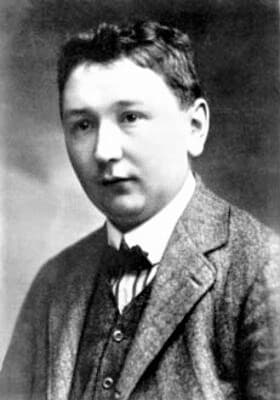
Jaroslav Hašek was a Czech writer, humorist, satirist, journalist, bohemian and anarchist. He is best known for his novel The Fate of the Good Soldier Švejk during the World War, an unfinished collection of farcical incidents about a soldier in World War I and a satire on the ineptitude of authority figures. The novel has been translated into about 60 languages, making it the most translated novel in Czech literature.
Similar books
- Catch-22
Joseph Heller
4.0 (723k) average on GoodreadsHistorical FictionShares a similar absurdist, anti-war satire and a protagonist trying to navigate a nonsensical military bureaucracy.
- All Quiet on the Western Front
Erich Maria Remarque
4.0 (355k) average on GoodreadsHistorical FictionWhile both novels address the horrors of World War I, their approaches are fundamentally different. Remarque's All Quiet on the Western Front is a stark, realistic, and deeply poignant portrayal of the physical and psychological toll of trench warfare on the common soldier. It evokes empathy through suffering and loss. In contrast, The Good Soldier Švejk uses satire and humor to highlight the absurdity and senselessness of the same conflict. Remarque aims for emotional impact through realism, while Hašek uses laughter to expose the underlying tragedy and systemic failures. Švejk's world is one of bureaucratic bungling and pointless orders, while Remarque's is one of mud, blood, and constant existential threat.
- Nineteen Eighty-Four
George Orwell
4.2 (5.5M) average on GoodreadsFictionWinston Smith dreams of truth and rebellion in a world where Big Brother watches all, but he confronts the terrifying power of a regime that controls not just actions, but thoughts.
- The Frozen River
Ariel Lawhon
4.4 (600k) average on GoodreadsFictionIn 1789 Maine, a heroic midwife's diary helps her expose a murder and get justice in a town that wants to silence her.
- A Man Called Ove
Fredrik Backman
4.4 (569k) average on GoodreadsFictionA stubborn widower, who lives by strict rules, finds his quiet world changed by a lively new family next door, making him face his past and find happiness in human connection.
- The Art of Racing in the Rain
Garth Stein
4.2 (452k) average on GoodreadsFictionThrough the eyes of Enzo, a wise and observant dog, a race car driver's family navigates a journey of love, loss, and resilience, learning that life's most important lessons often come in the curves, not just on the straightaways.






Enjoyed the summary?
A summary gives you the shape of the book. The book itself has the detail, the examples and the voice.
Find The Good Soldier Svejk on AmazonAs an Amazon Associate, BookBrief earns from qualifying purchases. How we're funded