
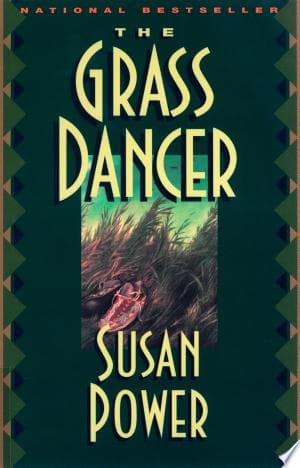
Synopsis
Covers the whole plot, including the ending.
- Difficulty
- Medium
- Pacing
- Moderate
- Mood
- Atmospheric, Spiritual, Melancholy, Hopeful, Culturally Rich
- Read it if
- You enjoy multi-generational sagas rich with cultural lore, spiritual themes, and a blend of historical and contemporary narratives.
- Skip it if
- You prefer fast-paced plots without much introspection or stories that are strictly linear and realistic.
The Grass Dancer Plot Summary
Covers the whole plot, including the ending.
The Ghost Dance and Red Dress
In 1864, Ghost Horse, a respected holy man, has a vision of the Ghost Dance. He warns his people not to perform it, fearing its destructive power. His vision also shows a future where his granddaughter, Red Dress, will bring sorrow to their family through tragic choices. Red Dress, beautiful and independent, falls in love with a white trader named John, defying tribal customs and her grandfather's warnings. This forbidden love, along with her rejection of traditional ways, starts a generational curse that will affect her descendants with unfulfilled desires, broken relationships, and early deaths, especially for the women in the family.
Harley and the Spirit of the Grass Dancer
Decades later, in the present-day reservation, Harley Wind Soldier, a young man dealing with his identity and ancestral legacy, has a vivid vision of a grass dancer. This vision marks his connection to the spiritual world and his family's inherited gifts. He is a direct descendant of Red Dress, and the spiritual burden and power passed down through generations begin to show in him. This experience leads him to seek understanding of his family's history and the spiritual forces at play, setting him on a path of self-discovery and a quest to connect the past with the present in his community.
Lourdes and the Fire
Lourdes, Harley's grandmother, is a central figure who carries the weight of the family's history. She tells powerful stories, through which the reader learns about the past's lasting impact. She shares the harrowing tale of a devastating fire that destroyed her home, leaving her with physical and emotional scars. This fire is not just an accident; it symbolizes the destructive forces that have plagued her family. Lourdes's resilience and her deep connection to the land and her heritage are clear, as is the pervasive sense of loss and the struggle against the curse's lingering effects.
The Arrival of Mercury
Mercury, a young woman with a troubled past and an almost ethereal presence, arrives on the reservation. She is an outsider, yet she feels an inexplicable pull to the land and its people. Her arrival is not accidental; she is unknowingly connected to the Wind Soldier family through complex ancestral ties and the curse's lingering effects. Mercury carries her own burdens and secrets, and her presence stirs up old memories and dormant energies in the community. Her interactions with Harley and other residents begin to uncover hidden truths and force confrontations with the past.
Harley and Mercury's Connection
Harley and Mercury are drawn to each other from their first meeting. Their connection goes beyond the ordinary, suggesting a spiritual bond from before their current lives. They share a deep understanding, recognizing each other's inner turmoil and strength. This connection is complex, intertwined with the generational curse and their ancestors' unresolved conflicts. Their relationship becomes a focal point for the story, as they navigate their feelings while uncovering the secrets that bind them to the reservation's history.
The Story of Alma and the Jealousy
The story explores the tragic tale of Alma, Red Dress's daughter, who falls deeply in love. However, her happiness is shattered by another woman's intense jealousy, a rival for Alma's beloved. This jealousy grows into a destructive force, leading to a violent confrontation and Alma's early death. This incident is a direct sign of the generational curse, showing the pattern of unfulfilled love and tragic loss that affects Red Dress's female descendants. Alma's story shows how past grievances and unresolved emotions continue to haunt and shape future generations.
Harley's Spiritual Journey and the Grass Dance
As Harley learns more about his family's history and undergoes his spiritual awakening, he begins to accept his role as a healer and tradition keeper. He sees the importance of the Grass Dance, not just as a cultural performance, but as a spiritual act of healing and reconciliation. He commits to learning and performing the sacred dance, understanding that it can break the generational curse and bring peace to his ancestors and community. This journey is challenging, but Harley's resolve strengthens as he connects with his elders' wisdom and his ancestors' spirits.
Unveiling the Truth about Mercury's Ancestry
Through revelations and shared stories, the truth about Mercury's ancestry comes out. It is discovered that she is not just an outsider but a descendant of the very individuals involved in the original curse and its tragedies. This shocking revelation solidifies her deep connection to Harley and the Wind Soldier family, explaining the inexplicable pull she felt towards the reservation. Her lineage intertwines with theirs, making her a part of the curse's manifestation and, possibly, its resolution. This discovery forces both Harley and Mercury to face the full weight of their shared history.
The Healing Power of Storytelling
Throughout the story, storytelling helps the community heal and understand. Characters like Lourdes carefully retell their ancestors' tales, preserving memories and sharing wisdom. These narratives, often painful, help the younger generation, especially Harley and Mercury, understand their heritage's complexities and the curse's origins. By facing these stories, the community processes its traumas, acknowledging historical injustices and personal tragedies. This communal act of remembrance is important for moving forward and seeking reconciliation with the past.
The Grass Dance and Redemption
The novel's climax is Harley's performance of the sacred Grass Dance. This is not just a ceremony but a spiritual act, the culmination of his journey and dedication to his ancestors. As he dances, he channels the pain, suffering, and unfulfilled desires of his family line, especially the women affected by Red Dress's curse. His dance is an offering, a prayer for healing and redemption. Through this powerful act, Harley seeks to break the cycle of tragedy, bring peace to his ancestors' restless spirits, and open a path for a brighter future for his community and his relationship with Mercury.
Mercury's Choice and the Future
After Harley's powerful performance of the Grass Dance, Mercury faces a choice about her future. Having confronted her lineage and her deep connection to the reservation's history, she must decide whether to accept this legacy or to retreat from it. Her decision is influenced by her growing love for Harley and her understanding of the potential for healing. Her choice shows a commitment not only to Harley but also to the community and the possibility of a future free from the past's burdens, suggesting a new beginning for both of them and their ancestral lines.
The Legacy and Hope
The novel ends with cautious optimism and the promise of a new beginning. While past scars are deep, Harley's efforts through the Grass Dance, along with Mercury's acceptance of her heritage, suggest the generational curse has significantly weakened, if not broken. The community, through shared stories and rituals, has found a way to acknowledge and process its collective trauma. The ending emphasizes the strength of indigenous culture, the power of love and forgiveness, and the possibility of healing, offering a hopeful outlook for future generations of the Wind Soldier family and the reservation.
Principal Figures
Harley Wind Soldier
Protagonist
A young man grappling with his heritage and destined to become a spiritual healer.
Harley is a descendant of Red Dress, burdened by his family's generational curse but also blessed with spiritual gifts. He is initially somewhat detached from the deeper traditions of his people but is increasingly drawn into understanding his ancestry. He is thoughtful, sensitive, and struggles with the weight of the past. His journey is one of self-discovery, spiritual awakening, and ultimately, embracing his role as a Grass Dancer, a conduit for healing. He is driven by a desire to understand and eventually rectify the suffering of his ancestors.
Relationships: Lourdes (Grandson, looks to her for guidance and stories); Mercury (Love interest, their connection is ancestral and deeply spiritual); Red Dress (Ancestor, whose curse he seeks to break)
Mercury
Love Interest/Supporting
A mysterious young woman with a troubled past, unknowingly connected to the reservation's history.
Mercury is an enigmatic character, initially an outsider who arrives on the reservation with her own burdens and secrets. She possesses a keen intuition and a quiet strength. Her past is marked by trauma, but she is also resilient and open to spiritual experiences. Unbeknownst to her, she is deeply intertwined with the Wind Soldier family's history, a descendant of those involved in the original curse. She is driven by a subconscious pull towards understanding her origins and finding a place where she belongs.
Relationships: Harley Wind Soldier (Love interest, their connection is ancestral and deeply spiritual)
Lourdes
Supporting
Harley's wise grandmother, a storyteller and keeper of the family's history.
Lourdes is a matriarchal figure, a strong and resilient woman who has endured much hardship, including a devastating fire. She is a vital link to the past, holding the stories and memories of her ancestors, particularly Red Dress and Alma. Lourdes is grounded in her traditions and possesses a deep spiritual understanding. She guides Harley, sharing fragmented truths and encouraging him to embrace his heritage. Her character embodies the enduring strength and wisdom of the Lakota people, despite generations of suffering.
Relationships: Harley Wind Soldier (Grandmother, mentor, and source of family history); Red Dress (Ancestor, whose story she recounts)
Red Dress
Ancestral Figure/Antagonist (unwitting)
The beautiful, defiant ancestor whose choices initiated the generational curse.
Red Dress is a pivotal ancestral figure, a woman of striking beauty and independent spirit from the 19th century. Her defiance of tribal customs, particularly her love for a white trader, and her subsequent choices are seen as the catalyst for the generational curse that plagues her descendants. She embodies the conflict between tradition and assimilation, and her story highlights the profound consequences of choices made in love and rebellion. While not intentionally malicious, her actions set in motion a chain of tragic events.
Relationships: Ghost Horse (Grandfather, whose warnings she defied); John (White trader, her forbidden lover); Alma (Daughter, who suffers from the curse)
Ghost Horse
Ancestral Figure/Supporting
A holy man who foresees the Ghost Dance and warns of the curse.
Ghost Horse is a powerful holy man and Red Dress's grandfather, living in the mid-19th century. He is a visionary who foresees the destructive nature of the Ghost Dance and the sorrow Red Dress will bring upon their family. He represents traditional wisdom, spiritual insight, and a deep connection to the earth and ancestral spirits. His warnings, though initially unheeded, resonate through generations, providing a framework for understanding the origins of the family's struggles. He is a figure of both prophecy and sorrow.
Relationships: Red Dress (Granddaughter, whose fate he foresees); Harley Wind Soldier (Distant descendant, who eventually heeds his spiritual message)
Alma
Ancestral Figure/Victim
Red Dress's daughter, whose tragic love story further solidifies the generational curse.
Alma is Red Dress's daughter, another victim of the family's curse, whose story is recounted through oral tradition. She falls deeply in love, but her happiness is tragically cut short by the intense jealousy of a rival, leading to her untimely death. Her story exemplifies the pattern of unfulfilled love and loss that afflicts the female descendants. Alma represents the innocent suffering caused by the ancestral curse, a poignant reminder of the pervasive sorrow that Harley seeks to heal.
Relationships: Red Dress (Mother, whose choices impacted her life); Lourdes (Ancestor, whose story Lourdes recounts)
John
Mentioned/Catalyst
The white trader whose relationship with Red Dress sparks the generational curse.
John is the white trader with whom Red Dress falls in love, defying tribal customs. While his character isn't deeply explored, his presence and relationship with Red Dress are crucial as the catalyst for the generational curse. He represents the outside world's intrusion and the cultural conflicts that arise from such interactions. His role is primarily symbolic, highlighting the initial transgression that sets the tragic events of the novel in motion.
Relationships: Red Dress (Lover, their forbidden love begins the curse)
Patsy
Supporting
A resident of the reservation who embodies the struggles and resilience of the community.
Patsy is a member of the reservation community, a friend or acquaintance to some of the main characters. She represents the everyday struggles and resilience of the people living on the reservation, dealing with contemporary issues while still being connected to their heritage. Her character helps to ground the more mystical elements of the story in the reality of reservation life, showing how the past continues to influence the present for everyone, not just the central family.
Themes & Insights
The Weight of Ancestral Memory and Generational Trauma
The novel shows how ancestral choices and traumas affect generations, shaping their descendants' lives. The generational curse from Red Dress's defiance and later tragedies (like Alma's death and Lourdes's fire) are not just historical events but active forces influencing Harley and Mercury. The characters constantly deal with the 'ghosts' of the past, feeling their presence and the burden of their unfulfilled desires. Storytelling and memory help them understand and confront this inherited trauma, highlighting the deep connection between past and present in indigenous cultures.
“The past is not dead. It's not even past.”
The Power of Storytelling and Oral Tradition
Storytelling is a way to preserve culture, heal, and understand. Characters like Lourdes carefully retell family histories, myths, and legends, ensuring that the younger generation understands their roots and struggles. These narratives are not just entertainment; they are living histories that share wisdom, warn of dangers, and help make sense of present challenges. Sharing these stories allows for communal processing of grief and trauma, and ultimately, offers a path towards reconciliation with the past, as seen in Harley learning about Red Dress and Alma.
“Stories are all we have to make us remember.”
Spiritual Connection to Land and Culture
The novel explores the deep spiritual bond between the Lakota people and their land, as well as their cultural practices' enduring strength. The reservation is not just a place but a sacred space filled with ancestral spirits and historical memory. Harley's visions, the Ghost Dance's significance, and the Grass Dance's power all emphasize indigenous traditions' spiritual vitality. The characters' struggles and triumphs are linked to their connection to the land and their efforts to preserve and revitalize their cultural identity in the face of historical oppression and modern challenges.
“The land remembers. The land knows.”
Healing and Redemption
Despite themes of trauma and loss, the novel offers a message of healing and redemption. Harley's journey to become the Grass Dancer shows a conscious effort to break the cycle of suffering and bring peace to his ancestors. The possibility of love and connection between Harley and Mercury, despite their entangled histories, signals a new beginning. The communal act of remembering and confronting the past, along with traditional ceremonies' spiritual power, suggests that even deep wounds can heal, allowing for a future with hope and reconciliation.
“Sometimes the only way to heal is to dance the pain out, to offer it to the spirits.”
Love, Loss, and Forbidden Desire
Love, in its various forms—passionate, forbidden, and familial—drives the novel, often leading to joy and sorrow. Red Dress's forbidden love for a white trader starts the generational curse, while Alma's tragic love story shows its devastating effects. The intense connection between Harley and Mercury, though burdened by history, offers hope for a love that can overcome past suffering. The story explores how love can be a source of strength, but also how unfulfilled desires and jealousies can lead to loss and lasting pain across generations.
“Love could be a blessing, but it could also be a fire that burned everything down.”
Plot Devices & Literary Techniques
Generational Curse
A curse initiated by an ancestor's actions, affecting subsequent generations.
The generational curse is the central plot device, originating from Red Dress's defiance of tribal customs and her love for a white man. It manifests as a pattern of tragic love, untimely deaths, and unfulfilled longings, particularly affecting the women in the Wind Soldier family. This curse provides the primary conflict and motivation for Harley's journey, as he seeks to understand its origins and ultimately break its hold on his family. It intertwines the past with the present, demonstrating the long-lasting impact of ancestral actions.
Visions and Dreams
Supernatural insights that guide characters and reveal hidden truths.
Visions and dreams serve as crucial plot devices, acting as conduits for spiritual knowledge and foreshadowing. Ghost Horse's initial vision of the Ghost Dance and Red Dress's fate sets the entire narrative in motion. Later, Harley experiences powerful visions, particularly of the Grass Dancer, which awaken his spiritual gifts and guide him towards his destiny as a healer. These supernatural elements connect the characters to the spirit world and their ancestors, providing vital information and direction that cannot be obtained through ordinary means, blurring the lines between reality and the mystical.
Oral Tradition and Storytelling
The recounting of ancestral stories and myths to transmit history and wisdom.
Oral tradition and storytelling are not just themes but active plot devices. Characters like Lourdes serve as keepers of these stories, recounting detailed narratives of Red Dress, Alma, and other ancestors. These stories are essential for the reader (and the characters) to piece together the complex history of the Wind Soldier family and understand the origins of the curse. They provide crucial exposition, reveal character motivations, and link past events directly to present circumstances, demonstrating how memory and narrative are fundamental to understanding identity and purpose within the community.
The Grass Dance
A sacred ceremonial dance that holds the key to healing and redemption.
The Grass Dance is a powerful symbolic and plot device. Initially appearing in Harley's vision, it becomes the ultimate goal of his spiritual journey. It represents a sacred, traditional ceremony with the power to heal, reconcile, and break the generational curse. Harley's commitment to learning and performing the dance provides the narrative's climax and resolution. Its significance lies in its ability to connect the physical and spiritual worlds, allowing for the release of ancestral pain and the forging of a new, hopeful future for the Wind Soldier family and the entire community.
The Grass Dancer Quotes
“The wind was a living thing, always, on the plains. It carried the scent of rain or dust, the memory of buffalo, the whispers of ancestors.”
“History wasn't just in books or old photographs. It was in the land, in the blood, in the way a person carried themselves.”
“Grief was a river, and you could drown in it, or you could learn to swim.”
“Sometimes the strongest medicine wasn't a root or an herb, but a story.”
“The past wasn't something you could leave behind. It walked with you, a shadow, a companion.”
“Love was a complicated thing, like a braid with many strands, some bright, some tangled.”
“Even in the darkest times, there was always a flicker of light, if you knew where to look.”
“The spirits were always listening. You just had to know how to speak to them.”
“To forget was to lose a piece of yourself, a piece of who you were meant to be.”
“The dance was prayer, it was history, it was defiance. It was everything.”
“Sometimes the hardest thing to do was to forgive, especially yourself.”
“The land remembers. It holds the echoes of all who have walked upon it.”
“Silence could be a comfort, or a heavy cloak. It depended on what it was hiding.”
“We are all connected, like the roots of the grass, even when we don't see it.”
Quiz
10 questions on the plot and the characters. Each answer comes with a short explanation.
Question 1
What significant historical event is frequently referenced throughout the novel, particularly in connection to the ancestors' struggles and the land?
- The Louisiana Purchase
- The Battle of Little Bighorn
- The Wounded Knee Massacre
- The Trail of Tears
Show answer
C. The Wounded Knee Massacre The Wounded Knee Massacre is a deeply significant historical event that profoundly impacts the generational trauma and spiritual narratives of the characters in 'The Grass Dancer,' especially in relation to the land and their ancestral memories.
Question 2
Who is the character known for her powerful spiritual abilities and connection to the ancestral spirits, often acting as a guide or a source of traditional wisdom?
- Harley Wacipi
- Lillian Thunder
- Pumpkin
- Celeste
Show answer
B. Lillian Thunder Lillian Thunder is a central figure in the novel, embodying the spiritual heritage and traditional wisdom of the Sioux people, often guiding characters through their struggles with her visions and understanding of the spirit world.
Question 3
What is the primary motivation behind Harley Wacipi's actions and his pursuit of Pumpkin throughout the story?
- He seeks to reclaim stolen tribal artifacts.
- He is driven by a deep, unfulfilled love and a desire to right past wrongs.
- He wants to become the new tribal chairman.
- He is attempting to escape a criminal past.
Show answer
B. He is driven by a deep, unfulfilled love and a desire to right past wrongs. Harley Wacipi's narrative is heavily influenced by his enduring love for Pumpkin and the unresolved history between them, driving many of his significant actions and decisions.
Question 4
Which of the following best describes the role of the 'grass dance' itself within the novel's narrative and themes?
- It is a competitive sport played by young men.
- It symbolizes a ritual of healing, connection to ancestors, and cultural preservation.
- It is a modern dance form introduced to the reservation by outsiders.
- It represents a form of protest against the tribal government.
Show answer
B. It symbolizes a ritual of healing, connection to ancestors, and cultural preservation. The grass dance is a powerful symbol throughout the novel, representing the spiritual and cultural resilience of the Sioux people, a way to connect with ancestors, and a path towards healing and identity.
Question 5
How does the novel primarily explore the theme of 'unfulfilled longings'?
- Through characters' desires for material wealth and modern conveniences.
- Through the historical injustices and broken promises made to the Native American people, mirrored in individual characters' personal losses and loves.
- Through the characters' inability to travel beyond the reservation.
- Through the lack of educational opportunities for the youth on the reservation.
Show answer
B. Through the historical injustices and broken promises made to the Native American people, mirrored in individual characters' personal losses and loves. The theme of 'unfulfilled longings' is central, manifested not only in individual romantic and personal desires but also deeply rooted in the historical context of broken treaties, land loss, and the cultural wounds inflicted upon the Sioux people.
Question 6
What is the nature of the 'ghosts' or spiritual presences that frequently appear to characters like Lillian Thunder?
- They are malevolent spirits seeking revenge on the living.
- They are figments of the characters' imaginations due to stress.
- They are ancestral spirits offering guidance, warnings, or carrying unresolved burdens.
- They are symbols of guilt from past actions.
Show answer
C. They are ancestral spirits offering guidance, warnings, or carrying unresolved burdens. The spiritual presences in the novel are primarily ancestral spirits, deeply connected to the land and the characters' heritage, providing both spiritual guidance and representing the lingering impact of historical and personal traumas.
Question 7
Which specific object is imbued with significant spiritual power and is passed down through generations, often playing a role in the characters' fates?
- A silver locket
- A sacred pipe
- A ghost shirt
- A beaded belt
Show answer
C. A ghost shirt The ghost shirt is a powerful and recurring motif, representing protection, spiritual connection, and the enduring legacy of the ancestors, particularly those who suffered at Wounded Knee. It carries significant spiritual weight throughout the narrative.
Question 8
What is the underlying 'mystery' that the novel suggests has healing power?
- The mystery of who will win the next tribal election.
- The mystery of love and its ability to overcome all obstacles.
- The mystery of the spirit world, ancestral connections, and the cyclical nature of time and healing.
- The mystery of a hidden treasure on the reservation.
Show answer
C. The mystery of the spirit world, ancestral connections, and the cyclical nature of time and healing. The 'mystery' with healing power in the novel refers to the profound and often inexplicable ways the spirit world, ancestral wisdom, and the interconnectedness of past and present contribute to the characters' ability to find peace and resolution.
Question 9
How does the narrative structure contribute to the novel's exploration of time and memory?
- It follows a strictly chronological order from beginning to end.
- It uses only a single, present-day perspective to tell the story.
- It weaves together multiple perspectives and shifts frequently between past and present, blurring the lines of time.
- It relies solely on historical documents and letters to tell the story.
Show answer
C. It weaves together multiple perspectives and shifts frequently between past and present, blurring the lines of time. The novel's non-linear narrative, with its frequent shifts between different time periods and character perspectives, is crucial for demonstrating how the past constantly informs and intersects with the present, reflecting the cyclical nature of memory and trauma.
Question 10
What is the primary significance of the North Dakota reservation setting?
- It provides a backdrop for a modern-day crime story.
- It is a neutral location that could be any rural setting.
- It is a specific, historically charged landscape that embodies the characters' cultural identity, ancestral ties, and ongoing struggles.
- It serves primarily as a place of economic hardship and little cultural relevance.
Show answer
C. It is a specific, historically charged landscape that embodies the characters' cultural identity, ancestral ties, and ongoing struggles. The North Dakota reservation is far more than just a setting; it is a living entity imbued with history, memory, and spiritual significance that profoundly shapes the lives, identities, and narratives of its inhabitants.
The Grass Dancer FAQ
What is the central premise of 'The Grass Dancer'?
'The Grass Dancer' explores the interconnected lives of several generations of Sioux people on a North Dakota reservation, weaving together their past traumas and present struggles. The narrative centers on themes of love, loss, spiritual heritage, and the enduring impact of historical events on individual lives, often through the lens of family secrets and the power of tradition.
Who are some of the main characters, and how do their stories intertwine?
The novel features a diverse cast, including Red Dress, a powerful medicine woman; her descendant Harley Wind Soldier, a grass dancer struggling with his identity; and David, a young white man drawn to the reservation. Their stories intertwine through shared ancestry, romantic entanglements, and the lingering effects of historical injustices, all connected by the land and spiritual practices.
What role does the 'grass dance' play in the novel?
The grass dance is a significant cultural and symbolic element, representing tradition, healing, and connection to the ancestors. For Harley Wind Soldier, it is both a burden and a source of strength, embodying his heritage and his struggle to reconcile modern life with his spiritual roots. The dance itself acts as a bridge between the past and present.
How does the novel explore the concept of time?
The novel fluidly shifts between different time periods, often blurring the lines between past and present, dreams and reality. This non-linear structure emphasizes the cyclical nature of history and trauma, showing how ancestral experiences continue to influence contemporary lives on the reservation. Memories and spiritual visions are as real as current events.
What is the significance of the North Dakota reservation setting?
The reservation setting is crucial, serving not just as a backdrop but as a character itself, imbued with history, spiritual power, and the scars of colonialism. It highlights the unique challenges and resilience of Indigenous communities, showcasing their deep connection to the land and the ongoing fight for cultural preservation.
What is the story behind Red Dress and her power?
Red Dress is a powerful medicine woman whose tragic love story and spiritual gifts profoundly impact generations. Her ability to heal and curse, often through visions and specific rituals, sets in motion many of the events that characters in the present day grapple with. Her legacy is a central thread connecting past and present characters.
How does Harley Wind Soldier's 'curse' manifest throughout his life?
Harley's 'curse,' inherited from his ancestors, manifests as a series of misfortunes and difficulties in his romantic relationships and personal life, particularly concerning his ability to find lasting love and happiness. It represents the inherited trauma and unresolved spiritual debts that plague his family line, influencing his choices and struggles.
What is the true nature of Virgil's relationship with Lillian, and how does it affect other characters?
Virgil's complicated and often manipulative relationship with Lillian is rooted in a mix of affection, control, and a shared history of trauma. This dynamic contributes to Lillian's struggles and indirectly impacts her children, including Harley, by perpetuating cycles of dysfunction and unfulfilled longing within the family. Their unresolved issues cast a long shadow.
Are there specific historical events that subtly influence the narrative?
While not explicitly detailed as historical fiction, the novel is deeply informed by the historical injustices faced by Indigenous peoples, including forced assimilation, land dispossession, and the legacy of residential schools. These historical traumas are woven into the characters' present-day struggles and contribute to the collective memory of the community.
How does the novel portray the psychological impact of intergenerational trauma?
The novel vividly illustrates intergenerational trauma through characters like Harley, who grapple with the unresolved pain and curses of their ancestors. Their struggles with relationships, identity, and mental well-being are direct consequences of past events and family secrets, showing how historical wounds continue to echo through generations.
Discuss the psychological motivations behind Lillian's choices and her relationship with Harley.
Lillian's choices are often driven by a deep-seated longing for love and security, coupled with the psychological scars of her own upbringing and past relationships. Her complex relationship with Harley is marked by both fierce maternal love and an inability to fully protect him from the family's inherited burdens, often making her seem distant or overwhelmed.
How do the characters cope with grief and loss throughout the story?
Characters cope with grief and loss in various ways, often through a blend of traditional spiritual practices, storytelling, and sometimes destructive behaviors. The novel shows both healthy and unhealthy coping mechanisms, emphasizing the community's struggle to process profound sorrow while attempting to find healing and continuity.
What is the psychological significance of dreams and visions for the characters?
Dreams and visions hold immense psychological significance, serving as a conduit to the spiritual world, ancestral memories, and unconscious desires. For many characters, they are not mere fantasies but real experiences that provide guidance, warnings, or reveal hidden truths, blurring the lines between the conscious and subconscious mind.
Is the ending of 'The Grass Dancer' hopeful or tragic?
The ending is complex, offering a nuanced blend of hope and lingering sadness. While some characters find a measure of peace or understanding, and the cycle of trauma shows signs of breaking, the novel acknowledges that healing is an ongoing process. It suggests a future where traditions endure, but not without continued struggle.
How does the novel balance realism with elements of magical realism?
'The Grass Dancer' skillfully blends the harsh realities of reservation life with elements of magical realism, where ancestral spirits, curses, and visions are treated as integral parts of the characters' world. This balance enriches the narrative, allowing for a deeper exploration of spiritual heritage and the unseen forces at play.
What is the author's message about tradition versus modernity?
Mona Susan Power suggests that tradition and modernity are not necessarily opposing forces but can coexist and even enrich each other. The novel highlights the challenges of maintaining cultural identity in a contemporary world, but ultimately advocates for the enduring power and necessity of ancestral knowledge and practices for healing and survival.
How does the novel portray the concept of 'home' and belonging?
The concept of 'home' is deeply tied to the land, community, and ancestral heritage for the characters. While some struggle with feelings of displacement or alienation, especially those who leave the reservation, the novel ultimately emphasizes that true belonging comes from an understanding and acceptance of one's roots and spiritual connections to the land.
What is the significance of the recurring motif of water?
Water, in various forms like rivers, rain, or tears, often symbolizes life, cleansing, renewal, and the flow of time and memory. It appears in moments of spiritual significance, emotional release, or as a connection to the land and the ancestors, reflecting the cyclical nature of life and the possibility of purification.
Similar books
- Love Medicine
Louise Erdrich
4.0 (22k) average on GoodreadsLiterary FictionExplores multi-generational Native American family sagas with interwoven narratives and spiritual elements.
- Ceremony
Leslie Marmon Silko
3.8 (18k) average on GoodreadsLiterary FictionFocuses on healing from trauma through traditional Native American spirituality and storytelling.
- Nineteen Eighty-Four
George Orwell
4.2 (5.5M) average on GoodreadsFictionWinston Smith dreams of truth and rebellion in a world where Big Brother watches all, but he confronts the terrifying power of a regime that controls not just actions, but thoughts.
- The Frozen River
Ariel Lawhon
4.4 (600k) average on GoodreadsFictionIn 1789 Maine, a heroic midwife's diary helps her expose a murder and get justice in a town that wants to silence her.
- A Man Called Ove
Fredrik Backman
4.4 (569k) average on GoodreadsFictionA stubborn widower, who lives by strict rules, finds his quiet world changed by a lively new family next door, making him face his past and find happiness in human connection.
- The Art of Racing in the Rain
Garth Stein
4.2 (452k) average on GoodreadsFictionThrough the eyes of Enzo, a wise and observant dog, a race car driver's family navigates a journey of love, loss, and resilience, learning that life's most important lessons often come in the curves, not just on the straightaways.




Enjoyed the summary?
A summary gives you the shape of the book. The book itself has the detail, the examples and the voice.
Find The Grass Dancer on AmazonAs an Amazon Associate, BookBrief earns from qualifying purchases. How we're funded