
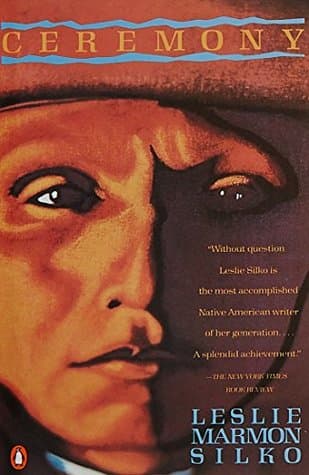
Synopsis
Covers the whole plot, including the ending.
- Difficulty
- Medium
- Pacing
- Slow
- Mood
- Meditative, Haunting, Resilient, Spiritual
- Read it if
- You appreciate profound explorations of trauma, identity, and the power of cultural heritage in the face of modern alienation.
- Skip it if
- You prefer fast-paced plots with clear-cut resolutions, or are uncomfortable with non-linear narratives and spiritual themes.
Ceremony Plot Summary
Covers the whole plot, including the ending.
Return to Laguna Pueblo and Lingering Trauma
Tayo, a half-white, half-Laguna Pueblo man, comes home to the Laguna reservation in New Mexico after fighting in World War II and being held as a Japanese prisoner of war. He has deep trauma, suffering from 'battle fatigue' (PTSD), and struggles with the deaths of his cousin Rocky and his uncle Josiah. Rocky died in the Philippines, a memory that constantly bothers Tayo, especially the image of Rocky's body rotting in the mud. Josiah's death from influenza back home also affects him. Tayo feels sick, vomits, and feels very isolated. He finds no comfort among his family or other returning veterans who use alcohol and destructive behavior to cope. He feels disconnected from the world and his own people, believing he is cursed or somehow responsible for bad things.
Failed Healing Attempts and the White Doctors
Tayo's family, especially his Auntie, tries to help, but their efforts are limited. He goes to a Veterans Administration hospital, where white doctors call his condition 'melancholia' and 'schizophrenia'. They try to treat him with sedatives and talk therapy. But Tayo knows his sickness is not just physical or psychological in the Western way; it is a spiritual problem from a deeper imbalance. The doctors' methods do not address the cultural and spiritual parts of his trauma. Tayo continues to get worse, spending his days in a haze of alcohol and despair with his friends Emo, Harley, and Leroy, who are also struggling veterans and often act recklessly and violently.
Betrayal and Visions in the Bar
During a night of heavy drinking with Emo, Harley, and Leroy at a bar, Tayo's emotional pain comes out. He tries to talk about his grief and the horrors he saw, but Emo, who is bitter, mocks him, dismisses his suffering, and even shows off teeth from Japanese soldiers he keeps as souvenirs. This further disrespects the war's memory for Tayo. This causes Tayo to lash out violently, trying to stab Emo with a broken bottle. The fight makes Tayo feel more alone from his friends, who see him as weak and 'crazy.' In this chaotic moment, Tayo has a vivid hallucination of Josiah and Rocky. While painful, it suggests a path toward spiritual understanding, showing his connection to the land and his ancestors is still there.
The Old Man Ku'oosh and the Traditional Ceremony
Seeing that Western medicine is limited and his current path is useless, Tayo's grandmother, sensing his deep spiritual sickness, suggests he talk to Ku'oosh, an old Laguna medicine man. Ku'oosh performs a traditional ceremony for Tayo, speaking in the old language and using ancient rituals. The ceremony offers some temporary relief and a feeling of belonging, but it is not enough to fully cure Tayo's deep trauma. Ku'oosh explains that Tayo's sickness is complex and needs a new, more complete ceremony, one that must be 'fixed' or changed for the unique circumstances of the modern world and Tayo's specific suffering. This is a turning point, as Tayo begins to actively seek healing through his cultural heritage.
Betonie, the Mixed-Blood Medicine Man
Following Ku'oosh's advice, Tayo travels to the edge of Gallup, New Mexico, to find Betonie, a Navajo-Mexican medicine man. Betonie is an unusual healer, living in a run-down hogan filled with calendars, junk, and symbols of both traditional and modern life. He is mixed-blood like Tayo, which makes him able to understand Tayo's broken identity and the challenges of adapting old traditions to a modern, post-war world. Betonie immediately recognizes the 'witchery' affecting Tayo and the world. He explains that the old ceremonies are no longer enough because the world has changed. He tells Tayo he must take part in a new, evolving ceremony that involves a journey and specific tasks.
The Search for Josiah's Cattle
Betonie tells Tayo to go on a quest that will be the main part of his ceremony: finding Josiah's lost cattle. Before the war, Josiah had bought a herd of Mexican cattle, different from the local breeds, planning to raise them for profit. These cattle, representing Josiah's dreams and connection to the land, were scattered during a drought. Tayo's search for them becomes a symbolic journey. It forces him to reconnect with the land, its cycles, and its stories. This quest takes him into the large, harsh landscape of the Laguna Pueblo lands and beyond, away from the destructive influences of his drinking friends and into a deeper connection with nature and his ancestral heritage. The cattle represent not just a physical loss, but a spiritual one Tayo must get back.
The Woman Ts'eh and Spiritual Connection
While searching for the cattle, Tayo meets a mysterious and beautiful Ute woman named Ts'eh. She lives peacefully with nature, tending a hidden garden and embodying the land's spirit. Ts'eh becomes a spiritual guide and lover for Tayo, teaching him about how all living things connect, the importance of patience, and the sacredness of the earth. She helps him understand life and death cycles and how to read nature's signs. Their relationship is spiritual, giving Tayo comfort, understanding, and a strong sense of belonging he has missed since the war. Ts'eh represents the earth's feminine power and nature's healing ability.
Confrontation with the Ranchers and the White World
Tayo's quest leads him to a ranch owned by white men who have rounded up Josiah's Mexican cattle, branding them as their own. Tayo confronts the ranchers, risking his life to get back what belongs to his family and, by extension, his heritage. This encounter shows the ongoing conflict between Indigenous peoples and white settlers over land, resources, and cultural identity. Tayo's ability to outwit the ranchers and get the cattle back, despite the danger, is a big step in his personal growth and his ability to deal with the complexities of a world run by white institutions while keeping his cultural values. He learns to use his intelligence and knowledge of the land to succeed where direct confrontation would fail.
The Mountain Lion and the Power of Nature
During his journey, Tayo meets a mountain lion. Instead of being afraid, he feels a deep connection and respect for the animal, understanding its place in nature. This moment shows Tayo's growing connection to the wild parts of the natural world and his letting go of the fear and isolation that had troubled him. The mountain lion is a strong symbol in Native American cultures, representing strength, wisdom, and protection. This encounter shows Tayo's progress in his ceremony. He sees himself as part of the larger web of life, not separate from it, and draws strength from the land itself.
The Final Confrontation with Emo and the Witchery
As the ceremony nears its end, Tayo faces his biggest test. Emo, filled with bitterness and representing the 'witchery' that tries to destroy Indigenous people from within, tries to ambush and kill Tayo at the old uranium mine. Emo, with Harley and Leroy, tortures Pinkie, another veteran, before Tayo's expected fate. Tayo hides and watches, fighting the strong urge for revenge and violence. But remembering Betonie's lessons and how all things connect, Tayo resists the urge to kill Emo. He understands that giving in to violence would complete Emo's destructive ceremony and continue the cycle of hatred. By choosing not to kill, Tayo breaks the witchery's spell and finishes his own healing ceremony.
Completion of the Ceremony and Return to the Community
After avoiding Emo's trap and seeing his former friends' destruction, Tayo spends the night on the mountain, watching the sunrise. He returns to the Pueblo at dawn, feeling peaceful and clear. He tells his experiences to the elders, including Ku'oosh and his grandmother, who confirm his ceremony's success. Tayo has not only healed himself but has also brought back a new understanding of the old ways and their place in the modern world. He is no longer isolated but integrated, having found his place within the community and the cosmic order. His journey has confirmed his culture's lasting power and the land's ability to heal and support.
Principal Figures
Tayo
Protagonist
Mixed-blood Laguna Pueblo veteran, seeking healing from war trauma.
Tayo is a young, mixed-blood Laguna Pueblo man who returns from World War II deeply traumatized by his experiences as a prisoner of war and the death of his cousin, Rocky. He suffers from severe PTSD, manifesting as nausea, vomiting, and a profound sense of alienation and spiritual sickness. Tayo feels responsible for Rocky's death and struggles with his identity, caught between his Laguna heritage and the white world. His journey is one of self-discovery and spiritual healing, as he grapples with the 'witchery' that afflicts both him and his community. He is sensitive, introspective, and ultimately resilient, seeking a path beyond the self-destructive coping mechanisms of his peers.
Relationships: Rocky (Cousin, close friend, and fellow soldier whose death haunts Tayo); Josiah (Uncle, mentor, and source of inspiration; his death and cattle are central to Tayo's quest); Auntie (Adoptive mother figure, traditional but often critical and controlling); Grandmother (Wise elder, encourages Tayo to seek traditional healing); Ku'oosh (Elderly Laguna medicine man, initiates Tayo's traditional healing); Betonie (Mixed-blood Navajo medicine man, guides Tayo through the new ceremony); Ts'eh (Mysterious Ute woman, spiritual guide, and lover who connects Tayo to the land); Emo (Fellow veteran, antagonist, embodies the destructive 'witchery' and bitterness)
Rocky
Supporting
Tayo's cousin and fellow soldier, whose death deeply affects Tayo.
Rocky is Tayo's cousin and closest friend, raised alongside him by Auntie. He represents the aspirations of assimilation, embracing white education and military service, believing it would bring respect and success. Rocky was a star athlete and a diligent student, often seen as the 'good' son compared to Tayo. His death in the Philippines during the war devastates Tayo and is a central source of Tayo's guilt and trauma. Rocky's belief in the white world's promises, and his ultimate demise, highlight the tragic consequences of abandoning traditional ways for an alien culture. His memory serves as a constant reminder of Tayo's wartime experiences and the cost of cultural disconnection.
Relationships: Tayo (Cousin and best friend); Auntie (Mother, whose hopes and expectations he carried)
Josiah
Supporting
Tayo's uncle, a progressive rancher and source of traditional wisdom.
Josiah is Tayo's kind and insightful uncle, who serves as a mentor and a connection to the land and traditional ways. He is a pragmatic man, attempting to blend traditional Laguna life with modern economic ventures, such as raising Mexican cattle. His death from influenza while Tayo is at war is another significant loss that contributes to Tayo's trauma. Josiah's dream of the cattle and his gentle wisdom provide a foundation for Tayo's later healing journey. He represents a balanced approach to life, integrating old and new, and his spirit guides Tayo's quest to reclaim the lost cattle, which symbolize a connection to the land and a future for the community.
Relationships: Tayo (Uncle and mentor); Robert (Brother)
Auntie
Supporting
Tayo's adoptive mother, conflicted between traditional values and social status.
Auntie is Tayo's adoptive mother, the sister of Tayo's biological mother. She is a devout Christian and a strong-willed woman who tries to maintain a respectable image within the community. Her love for Tayo is often overshadowed by her resentment of his mixed heritage and her preference for Rocky, whom she saw as 'pure' Laguna. She frequently criticizes Tayo and attributes his illness to his mother's perceived moral failings. Auntie represents the internal conflicts within the Pueblo community, torn between traditional beliefs, Christian teachings, and the desire for social acceptance. Her complex character highlights the pressures and judgments Tayo faces even within his own family.
Relationships: Tayo (Adoptive mother, often critical); Rocky (Son, favored and idealized)
Grandmother
Supporting
Wise elder who guides Tayo towards traditional healing.
Tayo's grandmother is a wise and intuitive elder who embodies the enduring strength and wisdom of the Laguna Pueblo people. Unlike Auntie, she understands that Tayo's sickness is spiritual and rooted in 'witchery,' not just a physical or psychological ailment. She is the one who suggests Tayo seek help from traditional medicine men, first Ku'oosh and then Betonie, initiating his healing journey. Her quiet strength and unwavering faith in the old ways provide a crucial anchor for Tayo. She represents the repository of ancestral knowledge and the vital link to the past that Tayo must rediscover to heal.
Relationships: Tayo (Grandmother, spiritual guide and advocate)
Ku'oosh
Supporting
Elderly Laguna medicine man, the first healer Tayo consults.
Ku'oosh is an elderly, traditional Laguna medicine man who performs an initial ceremony for Tayo. He represents the ancient, foundational healing practices of the Pueblo people. While his ceremony offers some temporary relief, he recognizes that Tayo's specific trauma, intertwined with modern warfare and cultural disruption, requires a 'new' and adapted ceremony. His wisdom lies in understanding the limitations of the old ways in a changed world and in directing Tayo to Betonie, acknowledging the need for evolution in healing practices. Ku'oosh symbolizes the continuity of tradition but also its necessity for adaptation.
Relationships: Tayo (Medicine man, initial healer and guide)
Betonie
Supporting
Mixed-blood Navajo medicine man, architect of Tayo's healing ceremony.
Betonie is an unconventional, mixed-blood Navajo-Mexican medicine man who becomes Tayo's primary healer and spiritual guide. Living in a hogan filled with a mix of traditional and modern objects, he embodies the adaptation of ancient traditions to the contemporary world. Betonie understands that the 'witchery' afflicting Tayo and the world is a complex, evolving force that requires a new kind of ceremony, tailored to the specific historical moment. He provides Tayo with the framework for his healing journey, emphasizing the interconnectedness of all things and the importance of ceremony as an ongoing process, not a singular event. He is a wise, patient, and profoundly insightful figure.
Relationships: Tayo (Medicine man, primary spiritual guide and mentor)
Ts'eh
Supporting
Mysterious Ute woman, a spiritual guide and embodiment of the earth.
Ts'eh is a mysterious and beautiful Ute woman whom Tayo encounters during his quest for the cattle. She lives in deep harmony with the land, tending a hidden garden and embodying the feminine power and wisdom of the earth. Ts'eh becomes Tayo's lover and a crucial spiritual guide, teaching him about the cycles of nature, the sacredness of life, and the importance of patience and observation. She helps Tayo reconnect with the land on a profound, intimate level, offering him solace and a sense of belonging. Ts'eh is often interpreted as a manifestation of the earth goddess, a powerful figure in Native American cosmology, representing fertility, healing, and enduring life.
Relationships: Tayo (Lover and spiritual guide)
Emo
Antagonist
Fellow veteran, embodies bitterness, resentment, and destructive 'witchery'.
Emo is a fellow Laguna veteran and a primary antagonist. Unlike Tayo, Emo embraces a destructive path, fueled by bitterness, resentment, and a deep-seated hatred for anything perceived as 'weak' or 'Indian.' He proudly displays the teeth of Japanese soldiers as souvenirs, symbolizing his dehumanization and perpetuation of violence. Emo represents the 'witchery' that seeks to destroy Indigenous people from within, through self-hatred, alcohol abuse, and internal division. He actively tries to undermine Tayo's healing, seeing Tayo's sensitivity as a weakness and a betrayal. His character highlights the internal challenges faced by the community in the aftermath of war and colonial oppression.
Relationships: Tayo (Antagonist, former friend, and rival); Harley (Drinking companion, follower); Leroy (Drinking companion, follower)
Themes & Insights
Healing and Ceremony
The main theme is healing from deep trauma, especially through a traditional Native American ceremony. Tayo's journey shows that healing is not just physical or psychological, but spiritual. It needs a strong reconnection to cultural heritage, land, and community. Betonie's 'new' ceremony stresses that tradition must adapt to address modern problems like war trauma and cultural isolation. The ceremony is not a single event but an ongoing process of discovery and reintegration, as seen in Tayo's search for the cattle and his encounters with Ts'eh and the mountain lion, all contributing to his spiritual repair.
“The only cure they knew was a ceremony, and the only ceremony they could perform was a going-on ceremony, a continuing process that brought about a reconciliation with the earth.”
Identity and Belonging
Tayo's mixed-blood background and his war experiences in a white-dominated world create a deep crisis of identity and belonging. He feels separate from both white society and, at first, from his own Pueblo community. The novel looks at the struggle to define oneself when faced with cultural assimilation and war trauma. Tayo's healing journey is a quest to reclaim his Indigenous identity, understand his place within the Laguna cosmos, and find a sense of belonging not just to people, but to the land itself. His eventual integration shows how important cultural roots are for a stable and healthy self-concept.
“He had come to believe that only the ceremonies understood the things he had seen and felt.”
The Power of Story and Oral Tradition
Silko skillfully includes traditional Laguna stories, myths, and poems throughout the narrative. She shows their role in shaping reality, passing on knowledge, and providing a way to understand and heal. These stories are not just entertainment; they are living things that connect past, present, and future, offering guidance and meaning. Betonie explains that 'witchery' can be understood and defeated through stories, and Tayo's own journey becomes a new story, a living ceremony. Storytelling, by the narrator and by characters like Betonie and Tayo, is a powerful, healing force that keeps culture continuous and strong.
“The stories were not for their entertainment; they were for their lives.”
The Destructive Force of Witchery and Colonialism
The idea of 'witchery' is central to the novel. It represents not just individual evil but a widespread, harmful force that causes division, despair, and cultural destruction. This 'witchery' appears in colonialism, racism, war, and the self-destructive behaviors (alcoholism, violence) some Native Americans adopt. Emo embodies this destructive force, trying to keep hatred and division going. The novel argues that 'witchery' is a global problem, coming from those who seek power through destruction. Tayo's ceremony directly opposes this force, aiming to bring back balance and harmony. The atomic bomb, built on ancestral lands, is a strong symbol of ultimate witchery.
“They see no life in the land. They see only resources. They see only what they can take. The witchery works through them.”
Connection to the Land and Nature
The Laguna landscape is not just a setting but a living, sacred thing connected to Tayo's spiritual well-being. His healing is directly tied to his renewed engagement with the land, its cycles, and its creatures. The quest for Josiah's cattle makes Tayo travel the land, learning to read its signs and connect with its spirit. His relationship with Ts'eh, who represents the earth, further deepens this bond. The novel shows that disrespect for the land, like the uranium mines and the white ranchers, causes spiritual sickness and imbalance. True healing comes from understanding and respecting the connection between humans and the natural world.
“He had arrived at a place where the only thing he could feel was the earth, the earth that had been waiting for him.”
Plot Devices & Literary Techniques
Non-linear Narrative / Flashbacks
Interweaves past trauma with present-day healing journey.
The novel frequently shifts between Tayo's present-day experiences on the reservation and his vivid, traumatic memories of World War II, particularly the death of Rocky and his time as a prisoner of war. These flashbacks are often triggered by sensory details or emotional states, mirroring Tayo's fragmented mental state. This non-linear structure blurs the lines between past and present, emphasizing how deeply Tayo's trauma is embedded in his psyche and how his past continually informs his present struggle for healing. It also reflects the cyclical nature of time in Native American cosmology, where past events are always present.
Interspersed Poetry and Traditional Stories
Integrates ancient myths and poems to provide context and spiritual guidance.
Throughout the narrative, Silko includes passages of traditional Laguna Pueblo poetry, myths, and creation stories. These oral traditions are not merely decorative but serve as a crucial narrative device. They provide a deeper cultural context for Tayo's struggles, explain the concept of 'witchery,' and offer a framework for understanding the healing ceremony. The stories often parallel Tayo's experiences, suggesting that his modern trauma is a continuation of ancient struggles and that ancient wisdom holds the key to resolution. This device emphasizes the power of storytelling and oral tradition in maintaining cultural identity and providing spiritual guidance.
Symbolism (Cattle, Mountain Lion, Weather)
Uses natural elements and animals to represent spiritual states and cultural connections.
Various symbols enrich the narrative: Josiah's Mexican cattle represent a blend of tradition and modernity, a connection to the land, and a hope for the future that Tayo must reclaim. The mountain lion symbolizes strength, wisdom, and Tayo's re-integration with the natural world. Weather patterns, especially drought and rain, reflect Tayo's spiritual state and the health of the land, linking his personal healing to the ecological balance. These symbols are deeply rooted in Native American cosmology, imbuing the physical world with spiritual significance and guiding Tayo's journey.
The 'Ceremony' as a Meta-Narrative
The entire novel functions as a healing ceremony for both character and reader.
Beyond being a plot point, the concept of 'ceremony' functions as a meta-narrative device. The entire novel itself, through its structure, themes, and language, becomes a ceremony for Tayo and, by extension, for the reader. Betonie's idea of a 'new' ceremony, adapted for modern times, mirrors Silko's own act of writing 'Ceremony' as a contemporary expression of traditional healing narratives. The act of reading and engaging with Tayo's story is intended to be a transformative, healing experience, reinforcing the novel's central message about the power of stories and cultural continuity for survival and well-being.
The Figure of the Mixed-Blood Healer (Betonie and Tayo)
Highlights the necessity of bridging cultural divides for healing in a complex world.
The character of Betonie, a Navajo-Mexican medicine man, is a key plot device representing the adaptation of traditional healing to a world fractured by colonialism and war. His mixed heritage allows him to understand Tayo's own dual identity. Tayo himself, as a mixed-blood Laguna, embodies this same bridge. This device suggests that healing in the modern world requires embracing complexity and integrating different perspectives, rather than rigidly adhering to 'pure' traditions. It emphasizes that those who exist between worlds are uniquely positioned to forge new paths and ceremonies for collective healing, making Tayo's journey universally resonant.
Ceremony Quotes
“He cried the way all the world was crying, and the rain came with it, a deluge from the sky that poured for days, washing out the roads and flooding the arroyos, carrying away everything, leaving nothing behind but a slick of mud and a bad smell.”
“The only cure they knew was ceremony, and the only ceremony they knew was the mountain. The mountain was the ceremony, the only one that could heal the land and the people.”
“He had to get back to the land, back to the ceremonies, back to the people. He had to remember what it was to be a human being, a human being among other human beings.”
“The world was an inseparable web of all its components, and a change in one of them, no matter how small, affected the whole.”
“Nothing was ever lost, not really. The wind would carry it, the rain would wash it, the sun would dry it, and the earth would hold it.”
“The white people had their books and their laws and their God, but they didn't have the rain. They didn't have the land. They didn't have the people.”
“He knew then that there was no way to get rid of the witchery. It was inside him, inside them all. The only way was to live with it, to accept it, to understand it.”
“The stories were not just stories, they were the land. They were the mountains, the mesas, the arroyos, the plants, the animals, the people. They were all one.”
“He had been living in a world of ghosts, a world where nothing was real, where everything was a dream. But now, he was awake. He was alive.”
“The white men had taken everything from them except the stories. And the stories were everything.”
“The ceremony was not an interruption of daily life, but an intensification of it.”
“It was a battle, he realized, not against the white men, but against the witchery, the destroyers who were inside them all.”
“He had come back to something he had lost, something he had forgotten, something that had been waiting for him all along.”
“The sun was coming up, and the world was beginning again, just as it always did, just as it always would.”
Quiz
10 questions on the plot and the characters. Each answer comes with a short explanation.
Question 1
What is Tayo's primary struggle upon returning to the Laguna Pueblo reservation after WWII?
- Finding employment and housing.
- Coping with the effects of PTSD, alienation, and a sense of spiritual sickness.
- Reconnecting with his immediate family members.
- Dealing with the discrimination from the non-Native community.
Show answer
B. Coping with the effects of PTSD, alienation, and a sense of spiritual sickness. Tayo's main struggle is a deep internal one, characterized by the psychological trauma of war (PTSD), a profound feeling of estrangement, and a spiritual sickness that Western medicine cannot address. This leads him to seek traditional Native American healing.
Question 2
Which character serves as Tayo's spiritual guide and healer, initiating him into a traditional ceremony?
- Robert
- Auntie
- Ku'oosh
- Rocky
Show answer
C. Ku'oosh Ku'oosh is the old medicine man who first attempts to help Tayo with a traditional ceremony, recognizing that Tayo's illness is not merely physical but spiritual. He points Tayo towards further healing with Betonie.
Question 3
What is the primary difference in how Tayo and other returning soldiers like Emo cope with their post-war trauma?
- Tayo embraces modern psychiatric treatment, while Emo rejects it.
- Tayo seeks traditional healing and connection to his heritage, while Emo turns to alcohol, violence, and bitterness.
- Tayo isolates himself, while Emo actively participates in community events.
- Tayo focuses on rebuilding the reservation, while Emo leaves for the city.
Show answer
B. Tayo seeks traditional healing and connection to his heritage, while Emo turns to alcohol, violence, and bitterness. The novel explicitly contrasts Tayo's path of seeking spiritual healing through ancient traditions with the self-destructive behaviors of other veterans like Emo, who succumb to alcohol, anger, and a rejection of their heritage.
Question 4
The 'ceremony' Tayo undergoes is not a single event but a prolonged journey. What does this journey primarily involve?
- A series of physical endurance tests and vision quests.
- Recovering lost war memories through hypnosis.
- Connecting with nature, animals, and the land, guided by traditional stories and healers.
- Participating in community dances and festivals.
Show answer
C. Connecting with nature, animals, and the land, guided by traditional stories and healers. Tayo's healing ceremony is multifaceted, involving a physical journey across the land, a spiritual connection to nature (like the spotted cattle), guidance from Betonie who reinterprets traditional stories, and ultimately, a re-integration of himself into the cosmic order of the Pueblo world.
Question 5
Who is Betonie, and what is his significant role in Tayo's healing?
- Tayo's childhood friend who helps him find work.
- An old mixed-blood medicine man who reinterprets traditional ceremonies for modern times.
- Tayo's commanding officer during the war who offers him comfort.
- A Christian missionary who tries to convert Tayo.
Show answer
B. An old mixed-blood medicine man who reinterprets traditional ceremonies for modern times. Betonie is crucial because he understands that traditional ceremonies must adapt to new evils (like the atomic bomb and modern warfare). He guides Tayo through a complex, evolving ceremony that integrates Tayo's unique experiences into the ancient stories, making the healing relevant to his contemporary trauma.
Question 6
The concept of 'witchcraft' in the novel is presented as more than just individual malice. How is it primarily characterized?
- As individual acts of black magic by specific characters.
- As a destructive force that targets only Tayo.
- As a pervasive, systemic evil that causes alienation, destruction, and a loss of connection to the earth and tradition.
- As a metaphor for the psychological effects of war.
Show answer
C. As a pervasive, systemic evil that causes alienation, destruction, and a loss of connection to the earth and tradition. Silko expands the traditional Pueblo concept of witchcraft to encompass the destructive forces of colonization, industrialization, and war, which lead to a spiritual imbalance, alienation, and a severing of ties to the land and community. It's a systemic, not just individual, affliction.
Question 7
What symbolic significance do the spotted cattle hold for Tayo?
- They represent the wealth and prosperity he lost during the war.
- They are a direct link to his mixed heritage and a specific memory of his uncle.
- They symbolize a connection to the natural world, the land, and a return to balance and life, being part of his healing ceremony.
- They are a common hallucination he experiences due to his trauma.
Show answer
C. They symbolize a connection to the natural world, the land, and a return to balance and life, being part of his healing ceremony. The spotted cattle, which Tayo is tasked with finding, are more than just animals. They represent the continuation of life, the sacred relationship between humans and the land, and a tangible connection to his family's past and the Pueblo traditions. Their recovery is an integral part of his ceremony of re-creation.
Question 8
How does the structure of the novel, with its interweaving of traditional myths and Tayo's contemporary narrative, contribute to its themes?
- It serves to confuse the reader and highlight Tayo's disorientation.
- It shows that ancient stories are irrelevant to modern problems.
- It demonstrates the timeless relevance of Pueblo cosmology and storytelling in understanding and healing contemporary trauma.
- It provides historical context for the Japanese internment camps.
Show answer
C. It demonstrates the timeless relevance of Pueblo cosmology and storytelling in understanding and healing contemporary trauma. The interweaving of myths with Tayo's story is central to the novel's message. It illustrates how ancient narratives are not just historical relics but living tools for understanding the present, diagnosing spiritual sickness, and guiding the path to healing and re-integration, emphasizing the cyclical nature of time and experience.
Question 9
What is the ultimate outcome of Tayo's ceremony by the end of the novel?
- He completely forgets his wartime experiences and lives a normal life.
- He achieves a complete cure, eliminating all his past trauma and pain.
- He finds a sense of peace, re-establishes his connection to his land and people, and understands his place in the cosmic order, overcoming despair.
- He becomes a medicine man himself, fully taking on Betonie's role.
Show answer
C. He finds a sense of peace, re-establishes his connection to his land and people, and understands his place in the cosmic order, overcoming despair. Tayo doesn't necessarily forget or erase his trauma, but through the ceremony, he achieves a profound understanding and acceptance. He re-weaves himself into the fabric of his community and the natural world, finding a sense of belonging, purpose, and spiritual balance that defeats the 'despair' mentioned in the book's description.
Question 10
The novel suggests that the 'white world's' solutions for Tayo's trauma are insufficient. Why?
- Because Western medicine is inherently inferior to traditional healing for all ailments.
- Because they fail to address the spiritual and cultural dimensions of his illness, viewing it only as a psychological or physical problem.
- Because Tayo refuses to cooperate with any non-Native doctors.
- Because the white doctors deliberately try to harm him.
Show answer
B. Because they fail to address the spiritual and cultural dimensions of his illness, viewing it only as a psychological or physical problem. The novel highlights the limitations of Western approaches (like the VA hospital) in treating Tayo's specific illness. His trauma is not just individual psychological damage but a spiritual sickness exacerbated by historical oppression and cultural dislocation, which only a holistic, culturally-rooted ceremony can address.
Ceremony FAQ
What is 'Ceremony' about?
'Ceremony' tells the story of Tayo, a shell-shocked Laguna Pueblo veteran of World War II, who returns home to his reservation deeply traumatized by his experiences as a prisoner of war and the loss of his cousin Rocky. He struggles with a profound sense of alienation, despair, and a spiritual sickness that Western medicine cannot cure, leading him on a quest to heal through traditional Native American ceremonies and reconnect with his cultural heritage.
Why should I read 'Ceremony'?
You should read 'Ceremony' for its profound exploration of trauma, cultural identity, and healing, particularly from an Indigenous perspective. Silko masterfully weaves together traditional Laguna Pueblo myths and contemporary narrative, offering a unique insight into the spiritual and psychological struggles of a veteran and the enduring power of cultural traditions to restore balance and meaning.
What is the background/setting of 'Ceremony'?
The novel is primarily set in the Laguna Pueblo reservation in New Mexico, shortly after World War II. It also features flashbacks to Tayo's time fighting in the Philippines and his childhood on the reservation. The backdrop includes the stark beauty of the New Mexico landscape, the social challenges faced by returning Native American veterans, and the deep spiritual heritage of the Pueblo people.
What are the most memorable quotes?
One memorable quote is, "I will tell you something about stories, [he said] they aren't just entertainment. Don't be fooled. They are all we have, you see, all we have to fight off illness and death." Another is, "The only cure Tayo knew was the ceremony, the only thing that would make him whole again." These quotes encapsulate the novel's central theme of storytelling as a healing power.
What writing style does the author use?
Leslie Marmon Silko employs a lyrical and evocative prose style, seamlessly blending traditional oral storytelling with modern narrative. She frequently intersperses the main narrative with italicized sections of Laguna Pueblo myths, poems, and songs, creating a multi-layered text that reflects the cyclical nature of time and the interconnectedness of past and present.
What minor details add significant meaning?
The recurring motif of the spotted cattle is a minor detail that holds significant meaning; these cattle, belonging to Josiah, represent Tayo's connection to his ancestral land and his past, and his quest to retrieve them becomes a tangible part of his spiritual journey. The changing weather patterns, particularly the drought, also symbolize the spiritual sickness afflicting the land and its people, mirroring Tayo's internal state.
What are some subtle foreshadowing moments?
Early in the novel, Tayo's recurring dreams and fragmented memories of the Japanese soldiers and the death of Rocky subtly foreshadow the depth of his PTSD and the specific traumas he must confront. The old men's warnings about the 'witchery' and its pervasive influence also hint at the powerful, destructive forces Tayo will eventually face, both external and internal, before achieving healing.
What unexpected character connections exist?
An unexpected connection is between Tayo and Ts'eh, a mysterious woman he encounters during his journey. She is deeply connected to the land and traditional ways, serving as both a lover and a spiritual guide, embodying aspects of the feminine deities from Pueblo mythology. Her presence is crucial to Tayo's healing, linking him to ancient wisdom and the life-giving forces of nature.
What are unspoken character motivations?
Emo's relentless cruelty towards Tayo stems from an unspoken resentment and jealousy, not just of Tayo's mixed heritage, but also perhaps of Tayo's capacity for empathy and his eventual turn towards tradition, which Emo has rejected in favor of a violent, self-destructive path. Emo's actions are motivated by a desire to assert dominance and a deep-seated bitterness stemming from his own inability to cope with the trauma of war.
What psychological complexities do characters exhibit?
Tayo exhibits profound psychological complexities, grappling with survivor's guilt, extreme anxiety, hallucinations, and a profound sense of alienation that borders on psychosis. His struggle is not merely about recovering from war trauma but also about reconciling his biracial identity and finding a place within a fractured community, highlighting the intricate interplay of individual psychology and cultural context.
What are the major emotional turning points?
A major emotional turning point for Tayo is his encounter with Betonie, the old medicine man, who validates his suffering and offers him a path toward a new, evolving ceremony. Another crucial moment is Tayo's decision to actively pursue the recovery of Josiah's cattle, which transforms his passive despair into purposeful action and reconnects him tangibly with his family's legacy and the land.
How do relationship dynamics evolve?
Tayo's relationship with his Auntie shifts from one of perceived resentment and misunderstanding to a subtle, unspoken acknowledgment of her love and concern, particularly as he begins to heal. His bond with Josiah, though cut short by Josiah's death, deepens in memory and becomes a guiding force. The evolving relationship with Ts'eh signifies his growing connection to spiritual wisdom and the natural world, moving beyond superficial interaction.
Which parts remain ambiguous or open-ended?
The exact nature of Ts'eh's existence remains somewhat ambiguous; she could be interpreted as a literal woman, a spiritual guide, or a manifestation of the earth goddess, highlighting the blending of reality and myth. Similarly, the full extent of the 'witchery' is left open-ended, suggesting it's not just a specific group of individuals but a pervasive force of destructive thought and action that continues to threaten balance.
What are controversial scenes or decisions?
Tayo's decision to spare Emo's life, despite Emo's relentless torment and murderous intent, can be seen as a controversial moment. While it signifies Tayo's ultimate triumph over the witchery and his commitment to healing rather than revenge, some readers might question the justice or practicality of letting his abuser go unpunished, especially after Emo's role in the death of Harley.
'Ceremony' ending explained: how it ends & what it means
The novel ends with Tayo completing his ceremony, not through a single ritual, but through his entire journey of suffering, seeking, and ultimately choosing life and connection over despair and revenge. He survives Emo's attempt on his life, witnesses the sunrise, and returns to the community with a newfound understanding and peace. His healing signifies a triumph over the 'witchery' and the restoration of balance, not just for himself, but offering hope for his community to heal by embracing their traditions.
About the author

Leslie Marmon Silko is a Native American author known for her contributions to contemporary literature. Her notable works include "Ceremony," which explores themes of healing and identity, and "Gardens in the Dunes," a novel that intertwines the lives of Native Americans and European settlers. Silko's writing often reflects her heritage and the complexities of cultural identity.
Similar books
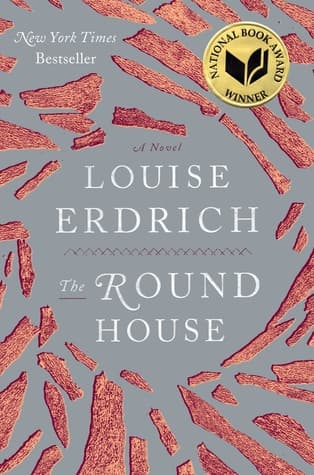
- The Round House
Louise Erdrich
3.9 (96k) average on GoodreadsLiterary FictionFeatures contemporary Native American life, legal themes, and the impact of trauma on a community.
- One Flew Over the Cuckoo's Nest
Ken Kesey
4.2 (631k) average on GoodreadsPsychologyExamines themes of institutionalization, sanity, and rebellion against oppressive systems through a Native American narrator.
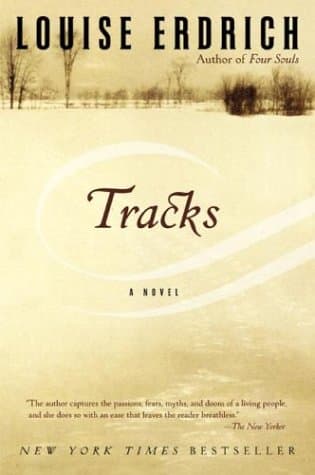
- Tracks
Louise Erdrich
3.9 (11k) average on GoodreadsLiterary FictionLouise Erdrich's Tracks (1988) also delves into Native American identity, history, and the impact of colonization, but it differs significantly in scope and narrative approach. While Ceremony focuses intensely on one individual's healing journey within a relatively contained timeframe, Tracks is a multi-generational saga, part of Erdrich's fictional universe of interconnected novels, offering a broader historical panorama of the Ojibwe people in North Dakota. Erdrich employs multiple first-person narrators, providing diverse perspectives and often conflicting interpretations of events, creating a more polyphonic and less singular narrative voice than Silko's focused portrayal of Tayo's internal and external quest. Both authors use myth and oral tradition, but Erdrich's application in Tracks often serves to enrich the historical narrative and character motivations, while Silko's in Ceremony is more directly integrated as a framework for understanding and enacting healing.
- The Old Man and the Sea
Ernest Hemingway
3.8 (831k) average on GoodreadsLiterary FictionA Cuban fisherman's long struggle with a giant marlin becomes a story of endurance and dignity, now retold for young adults with illustrations, phonetic guides, and writing prompts in Traditional Chinese.
- One Hundred Years of Solitude
Gabriel García Márquez
4.1 (753k) average on GoodreadsLiterary FictionThrough the multi-generational story of the Buendía family, a mythical town deals with the repeating patterns of time, love, and solitude, as the extraordinary mixes with the ordinary.
- The Goldfinch
Donna Tartt
3.9 (720k) average on GoodreadsLiterary FictionHaunted by a tragic explosion and clutching a stolen Dutch masterpiece, a young orphan navigates the opulent drawing rooms of New York and the gritty underbelly of the art world, desperately seeking connection and redemption amidst a life spiraling into crime and obsession.




Enjoyed the summary?
A summary gives you the shape of the book. The book itself has the detail, the examples and the voice.
Find Ceremony on AmazonAs an Amazon Associate, BookBrief earns from qualifying purchases. How we're funded