
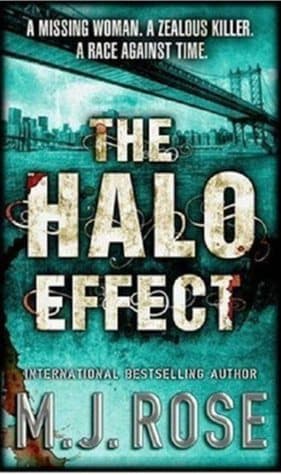
Synopsis
Covers the whole plot, including the ending.
- Difficulty
- Medium
- Pacing
- Moderate
- Mood
- Dark, Suspenseful, Psychological, Sensual
- Read it if
- You enjoy dark, psychological thrillers with a strong female lead, a focus on sexual dysfunction, and a touch of romance.
- Skip it if
- You are sensitive to graphic violence, sexual themes, or prefer mysteries where the 'whodunit' is the primary focus over character psychology.
The Halo Effect Plot Summary
Covers the whole plot, including the ending.
A Gruesome Discovery and a Missing Patient
The novel opens with the discovery of a prostitute's body in a Manhattan church. The body is mutilated, dressed in a nun's habit, and has her pubic hair shaved into a cross. This scene immediately sets a dark tone. Meanwhile, Dr. Morgan Snow, a psychiatrist at the Butterfield Institute, is concerned about her patient, Cleo Thane. Cleo is a call girl who has written a tell-all memoir, detailing the secret lives and unusual fetishes of her powerful clients, thinly disguised but recognizable. She leaves this manuscript with Morgan for safekeeping, calling it a 'gift,' before missing several subsequent appointments. Morgan's unease deepens as she suspects Cleo's disappearance is not voluntary, especially given the sensitive nature of her manuscript and clientele.
Detective Jordain's Skepticism and the Ritualistic Murders
NYPD Detective Noah Jordain is assigned to the escalating series of murders targeting prostitutes. The initial victim's mutilation and the ritualistic elements, like the nun's habit and shaved cross, suggest a disturbed killer. As more bodies are discovered, each bearing similar signatures, Jordain realizes he's hunting a serial killer. Morgan contacts Jordain, expressing her fears for Cleo and trying to connect her disappearance to the murders. However, Jordain is skeptical. Cleo's high-class clientele and discreet operations do not fit the profile of the victims found so far, who are from a different, less exclusive segment of the sex trade. He believes Cleo likely just left town, perhaps to avoid the repercussions of her memoir, and sees no direct link to his active murder investigation.
Morgan's Deepening Investigation and Noah's Reluctance
Frustrated by Noah's lack of interest in Cleo's case, Morgan decides to act. She reads Cleo's manuscript, hoping to find clues about her whereabouts or potential enemies among her powerful clients. The manuscript reveals a world of hidden desires and dangerous secrets. A dynamic develops between Morgan and Noah. Despite their professional disagreements regarding Cleo, there is an attraction between them. Noah is drawn to Morgan's intelligence and determination, even as he struggles to reconcile her theories with the concrete evidence of his police work. Morgan is intrigued by Noah's intensity and commitment to justice, despite his initial dismissal of her concerns.
Undercover and in Peril
Driven by a growing sense of responsibility and a belief that Cleo is in grave danger, Morgan makes a bold decision: she goes undercover. Using information from Cleo's manuscript and her own professional understanding of psychology, Morgan creates an alter ego to pose as a high-end call girl, hoping to attract the attention of Cleo's former clients. Her goal is to gain access to their private world and uncover any information that might lead her to Cleo or the killer. This dangerous masquerade puts Morgan in vulnerable situations, forcing her to confront the dark side of desire and power, and placing her directly in harm's way, beyond her professional comfort zone.
Unveiling the Clients' Secrets
As Morgan navigates the world of high-end escort services, she encounters several of Cleo's former clients. These men are powerful, influential, and harbor deeply concealed fetishes and psychological complexities. Morgan uses her therapeutic skills to draw them out, listening to their confessions and observing their behaviors, all while maintaining her disguise. She meets a prominent politician with a bizarre power dynamic, a wealthy businessman with a need for infantilization, and an artist obsessed with control. Each encounter tests her resolve and her acting abilities, as she tries to discern who among them might have had a motive to silence Cleo, or worse, who might be the serial killer preying on women like her.
Noah's Growing Concern and Intertwining Investigations
While Morgan is deep undercover, Noah's murder investigation continues. The ritualistic nature of the killings points to a disturbed individual, and the body count rises. As Noah and his team follow leads, they begin to uncover subtle connections between the victims and a more affluent segment of society than initially assumed. He starts to realize that the victims, while seemingly disparate, might have ties to powerful individuals, mirroring the world Cleo inhabited. This realization, coupled with his growing concern for Morgan's safety as she becomes more deeply involved, makes Noah consider that Morgan's initial theories about Cleo might have been more accurate than he initially believed. Their investigations begin to converge.
A Traumatic Past and a Shared Vulnerability
Morgan's undercover work, particularly the psychological manipulation and exposure to the dark desires of others, brings up painful memories from her own past. A past trauma involving sexual abuse resurfaces, making her current situation even more emotionally taxing and dangerous. This vulnerability, however, also deepens her connection with Noah. As they spend more time together, sharing snippets of their lives and their anxieties, Morgan confides some of her past to Noah. This shared understanding of pain and resilience strengthens their bond, moving their relationship beyond professional interest to a more intimate and supportive connection, even amidst the escalating danger of their pursuits.
The Killer's Identity and a Shocking Revelation
Through a combination of Morgan's undercover insights and Noah's police work, the identity of the serial killer is revealed. The killer is not a random psychopath, but someone deeply embedded within the world Cleo exposed in her memoir. The motive is a twisted form of moral righteousness, a desire to 'cleanse' society of perceived impurities, specifically targeting women involved in the sex trade. The killer believes they are enacting a divine justice, meticulously staging the bodies to reflect their warped religious fervor. This revelation sends shockwaves through the elite circles Cleo once served, exposing the hypocrisy and darkness hidden beneath a veneer of respectability.
The Climax: Morgan in the Killer's Crosshairs
As Morgan gets closer to the truth, her undercover identity is compromised, and she becomes the killer's next target. The killer, now aware of her true intentions, lures her into a trap, intending to make her another victim in their ritual. This leads to a terrifying and high-stakes confrontation. Morgan, despite her lack of combat training, must use her psychological acumen and quick thinking to survive. The scene is tense as she faces a deranged individual who sees her as another instrument of their twisted 'justice.' Her life hangs in the balance, relying on her wits and the hope that Noah will arrive in time.
Rescue and Resolution
Noah Jordain arrives just in time, having pieced together Morgan's perilous situation. He confronts the killer, leading to a violent fight. Noah subdues the killer, ending the reign of terror and saving Morgan from almost certain death. The killer is apprehended, and justice is served for the victims. While Morgan is safe, the fate of Cleo Thane remains somewhat ambiguous. Although her disappearance was the catalyst, the full extent of what happened to her is left with a lingering question, emphasizing the impact she had on Morgan's life and the dark world she exposed. Morgan and Noah's relationship, forged in danger, solidifies, hinting at a future together.
The Halo Effect Characters
Dr. Morgan Snow
Protagonist
A Manhattan psychiatrist who goes undercover to find her missing patient and uncover a serial killer.
Dr. Morgan Snow is a dedicated and intelligent psychiatrist at the Butterfield Institute, specializing in sex therapy. She is professional and empathetic, but also possesses a deep-seated curiosity and a strong moral compass that compels her to act when she believes an injustice has occurred. Her decision to go undercover, despite her lack of experience in such dangerous situations, highlights her courage and her commitment to her patients. She is driven by a desire for truth and justice, and her own past trauma makes her particularly sensitive to the vulnerabilities of others. She is initially dismissed by law enforcement but proves to be an invaluable asset in the investigation.
Relationships: Cleo Thane (patient and catalyst for her investigation); Detective Noah Jordain (initial professional adversary, later romantic interest and partner in investigation)
Detective Noah Jordain
Supporting/Love Interest
A diligent NYPD detective investigating ritualistic prostitute murders, who forms a complex relationship with Morgan.
Detective Noah Jordain is a seasoned and pragmatic NYPD homicide detective. He is focused on evidence and procedure, initially skeptical of Morgan's theories regarding Cleo Thane's disappearance because her case doesn't fit the profile of his serial killer victims. He is dedicated to his work and driven by a strong sense of justice for the victims. Despite his initial professional friction with Morgan, he is drawn to her intelligence, passion, and unconventional insights. He is protective and ultimately recognizes the value of Morgan's contributions, even as he worries for her safety. His commitment to solving the murders is unwavering.
Relationships: Dr. Morgan Snow (initial professional adversary, later romantic interest and partner in investigation)
Cleo Thane
Catalyst/Mentioned
A sophisticated call girl whose disappearance and tell-all memoir trigger the central mystery.
Cleo Thane is a high-end call girl, known for her intelligence, discretion, and ability to cater to the unique desires of powerful and wealthy clients. She is a patient of Dr. Morgan Snow and the author of an explosive, thinly disguised memoir detailing the sexual eccentricities and secret lives of her clientele. Cleo is enigmatic and manipulative, leaving her manuscript with Morgan as a 'gift' before she disappears. Her character is primarily revealed through her writings and the accounts of others, serving as the central mystery that drives Morgan's investigation. Her clients include a diverse range of influential figures, all with secrets they wish to keep hidden.
Relationships: Dr. Morgan Snow (patient-therapist relationship, later her book's custodian); Various Powerful Clients (professional (call girl) relationships, often involving unusual fetishes)
The Serial Killer
Antagonist
A religiously zealous individual targeting prostitutes, driven by a twisted sense of moral cleansing.
The serial killer is the primary antagonist, a deeply disturbed individual who meticulously murders prostitutes, staging their bodies in a ritualistic manner (e.g., in a nun's habit, with pubic hair shaved into a cross). The killer believes they are enacting a divine or moral justice, 'cleansing' society of what they perceive as sin. Their identity is initially unknown, but they are revealed to be connected to the upper echelons of society, specifically the world Cleo Thane inhabited. The killer's actions are precise, calculated, and driven by a profound psychological pathology rooted in a warped sense of religious fervor and control. They are cunning and dangerous, preying on vulnerable women.
Relationships: Dr. Morgan Snow (antagonist, targeting her as a perceived threat and future victim); Cleo Thane (indirectly connected through her exposure of the killer's world)
Dr. Ben Butterfield
Supporting
Director of the Butterfield Institute and Morgan's mentor.
Dr. Ben Butterfield is the esteemed director of the Butterfield Institute, a renowned sex therapy clinic. He is Morgan's boss and a respected mentor figure. He provides professional guidance and support to Morgan, though he is initially unaware of the full extent of her dangerous extracurricular activities. He represents the ethical and professional anchor for Morgan, often offering advice or a sounding board for her thoughts. His presence underscores the legitimate therapeutic world that Morgan operates within, contrasting sharply with the dark underworld she infiltrates. He is a supportive, if sometimes cautious, figure in her life.
Relationships: Dr. Morgan Snow (mentor and boss)
Councilman Robert Hastings
Supporting/Mentioned
A powerful politician and one of Cleo's clients with a specific, unusual fetish.
Councilman Robert Hastings is a prominent and seemingly respectable politician, but he is also one of Cleo Thane's high-profile clients. His secret life, as revealed in Cleo's memoir and later explored by Morgan, involves a specific and unusual fetish related to power dynamics and control. He is a man who meticulously maintains a public image of integrity while privately indulging in highly unconventional sexual practices. His inclusion highlights the hypocrisy and hidden lives of the powerful figures in Cleo's world, making him a person of interest in Morgan's investigation due to his potential motive for silencing Cleo.
Relationships: Cleo Thane (client-call girl relationship); Dr. Morgan Snow (interrogated by her during her undercover work)
Richard Vance
Supporting/Mentioned
A wealthy and influential businessman, another of Cleo's clients with a unique psychological need.
Richard Vance is a wealthy and influential businessman who was also a client of Cleo Thane. His character represents another facet of the powerful men with hidden desires that Cleo catered to. As revealed in the memoir and during Morgan's undercover encounters, Vance has a specific psychological need, possibly related to infantilization or control, that he sought to fulfill through Cleo. He is a man accustomed to getting what he wants, and his involvement adds another layer of complexity to the investigation, as he too could have a motive to protect his reputation or silence Cleo. He embodies the discreet and financially powerful segment of Cleo's clientele.
Relationships: Cleo Thane (client-call girl relationship); Dr. Morgan Snow (interrogated by her during her undercover work)
Captain Miller
Supporting
Noah Jordain's superior officer at the NYPD.
Captain Miller is Detective Noah Jordain's superior officer at the NYPD. He represents the institutional authority and the pressure Noah faces to solve the high-profile serial killer case. Miller is focused on results and maintaining public order, and while he trusts Noah's abilities, he also pushes him for progress. He is initially even more skeptical than Noah about Morgan's involvement and her theories, viewing her as an outsider. His role is to provide the operational framework for Noah's investigation and to highlight the bureaucratic challenges of police work.
Relationships: Detective Noah Jordain (superior officer and colleague)
The Halo Effect Themes
Identity and Deception
The novel explores identity, both public and private, and the pervasive nature of deception. Cleo Thane maintains a public identity as a discreet professional while privately documenting the hidden lives of her clients. Dr. Morgan Snow sheds her professional identity to go undercover, adopting a false persona as a call girl, forcing her to confront the blurring lines between her true self and her fabricated identity. This theme is further highlighted by the powerful clients who craft respectable public images while secretly indulging in unconventional sexual desires, showing the gap between who people pretend to be and who they truly are.
“Everyone has a secret life. Some just keep it buried deeper than others.”
The Dark Side of Desire and Power
The book explores the interplay between desire and power, particularly in the context of sexuality. Cleo's memoir exposes the hidden fetishes and psychological needs of powerful men, demonstrating how their influence and wealth enable them to indulge in desires that might otherwise remain suppressed. Morgan's undercover work reveals the vulnerability and danger in this world, where power dynamics are often exploited and desires can turn predatory. The serial killer's motive, a twisted sense of moral cleansing, is itself a perversion of power, demonstrating how extreme ideologies can manifest through violence and control over others' bodies.
“The more power a man has, the more he believes he's entitled to anything he wants, no matter how unusual.”
Justice and Morality
The novel discusses different interpretations of justice and morality. Noah Jordain pursues justice through legal means, adhering to police procedures and evidence. Morgan, however, operates outside these boundaries, driven by a personal sense of justice for Cleo and a belief that the system is failing. The serial killer, in contrast, believes they are enacting a higher, twisted form of moral justice, 'cleansing' society through murder. This theme questions who has the right to define justice, how morality is enforced (or perverted), and the lengths individuals will go to achieve their own versions of it, highlighting the subjective and often conflicting nature of these concepts.
“Sometimes, the law isn't enough to catch the real monsters. Sometimes, you have to step into their world.”
Trauma and Resilience
Morgan's own traumatic past, involving sexual abuse, resurfaces during her dangerous undercover work. Her ability to confront these memories and continue her investigation demonstrates her resilience. This personal struggle adds depth to her character and informs her empathy for the victims and her drive to expose the truth. The theme also extends to the victims of the serial killer, highlighting the brutal trauma inflicted upon them and the societal indifference they often face, making their stories a backdrop to Morgan's personal and professional journey.
“The past never truly leaves you. It just waits for the right moment to remind you it's still there.”
Plot Devices & Literary Techniques
The Tell-All Memoir
A scandalous manuscript that serves as the central catalyst and information source.
Cleo Thane's memoir is the primary plot device, serving as the catalyst for the entire story. It contains thinly disguised accounts of her powerful clients' secret lives and unusual fetishes. This manuscript is not only the reason for Cleo's disappearance and potential danger but also provides Dr. Morgan Snow with crucial information, names, and insights that enable her to go undercover and understand the world she is infiltrating. It's an explosive document that threatens to expose the city's elite, creating multiple motives for silencing Cleo and becoming a roadmap for Morgan's investigation.
Undercover Operation
Morgan's dangerous masquerade as a call girl to infiltrate Cleo's world.
Morgan's decision to go undercover as a high-end call girl is a pivotal plot device. It propels the narrative forward by placing the protagonist directly into the dangerous environment she is investigating, rather than observing from a distance. This device allows for direct interaction with the suspects (Cleo's clients), generates intense suspense, and forces Morgan to confront her own psychological limits and past traumas. It's a high-risk strategy that highlights her courage and commitment, while also creating opportunities for her to gather firsthand intelligence that would be inaccessible through conventional police work.
Ritualistic Murders
The specific and symbolic staging of the victims' bodies.
The ritualistic nature of the prostitute murders (e.g., nun's habit, shaved cross) is a key plot device that immediately establishes the dark tone and the disturbed nature of the killer. These symbolic elements provide clues about the killer's psychology, motives, and potentially their background, guiding Detective Jordain's investigation. The consistent pattern in the staging of the bodies allows the police to confirm they are dealing with a serial killer and helps them profile the perpetrator, adding a layer of psychological complexity and horror to the crime scenes.
The Butterfield Institute
A sex therapy clinic providing a professional backdrop and contrasting with the illicit world explored.
The Butterfield Institute, a prestigious Manhattan sex therapy clinic where Dr. Morgan Snow works, serves as a significant plot device by providing a legitimate professional backdrop for Morgan's character. It establishes her expertise in human sexuality and psychology, which is crucial for her understanding of Cleo's clients and her ability to go undercover. The Institute represents a space for healing and open discussion about sexuality, contrasting sharply with the dark, secretive, and exploitative world of high-end prostitution and murder that Morgan eventually navigates, highlighting the spectrum of human sexual experience.
The Halo Effect Quotes
“The past is a ghost, the future a dream, and all we ever have is now.”
“We see what we want to see, and we believe what we want to believe.”
“Love is the only thing that transcends time and space.”
“The truth is rarely pure and never simple.”
“Fear is a prison of our own making.”
“In the darkness, we find our true selves.”
“Every choice we make echoes into eternity.”
“The heart has its reasons, which reason knows nothing of.”
“Secrets are like shadows; they grow longer with time.”
“To understand the present, we must first unravel the past.”
“Trust is the rarest currency in a world of deception.”
“In the end, we are all stories waiting to be told.”
“The line between love and obsession is often blurred.”
“Courage is not the absence of fear, but the triumph over it.”
Quiz
10 questions on the plot and the characters. Each answer comes with a short explanation.
Question 1
What is the Butterfield Institute, as introduced in 'The Halo Effect'?
- A police department unit specializing in ritualistic crimes
- A Manhattan sex therapy clinic where Dr. Morgan Snow works
- A publishing house that handles controversial memoirs
- A secret society for clients with unusual fetishes
Show answer
B. A Manhattan sex therapy clinic where Dr. Morgan Snow works The Butterfield Institute is a Manhattan sex therapy clinic, and it serves as the setting for the novel, featuring psychiatrist Dr. Morgan Snow as the protagonist. This establishes the psychological and therapeutic context of the story.
Question 2
Who is Cleo Thane in relation to Dr. Morgan Snow?
- A colleague at the Butterfield Institute
- A patient of Dr. Snow who is a call girl
- A detective working with Noah Jordain
- The first murder victim found in a nun's habit
Show answer
B. A patient of Dr. Snow who is a call girl Cleo Thane is a patient of Dr. Morgan Snow—a clever and selective call girl whose disappearance and potentially explosive memoir drive much of the plot, linking the therapeutic and criminal investigations.
Question 3
What does Cleo Thane leave with Dr. Morgan Snow that becomes central to the mystery?
- A list of her clients' addresses
- A memoir with thinly disguised portraits of her powerful clients
- A key to a safe deposit box containing evidence
- A diary detailing her own psychological struggles
Show answer
B. A memoir with thinly disguised portraits of her powerful clients Cleo leaves a memoir with Dr. Snow that contains thinly disguised portraits of her powerful clients, revealing their odd fantasies and fetishes. This manuscript becomes a crucial element as Morgan investigates Cleo's disappearance.
Question 4
Why does Dr. Morgan Snow decide to go undercover in the investigation?
- To prove her therapeutic methods to the police
- Because she is ordered to by her superiors at the clinic
- After failing to persuade Det. Noah Jordain to prioritize searching for Cleo
- To expose a corruption scandal within the NYPD
Show answer
C. After failing to persuade Det. Noah Jordain to prioritize searching for Cleo Morgan decides to go undercover after she cannot convince Detective Noah Jordain to devote more effort to finding Cleo Thane, leading her to take matters into her own hands and meet Cleo's clients herself, despite the dangers.
Question 5
What is a key characteristic of the murder cases that Det. Noah Jordain is investigating?
- They involve victims who are all nuns from local convents
- They are gory, ritualistic killings of prostitutes
- They are financially motivated crimes with no sexual elements
Show answer
B. They are gory, ritualistic killings of prostitutes Noah Jordain and his team are investigating a series of gory, ritualistic prostitute murders, which sets a dark and suspenseful tone for the novel and intersects with Morgan's concerns about Cleo.
Question 6
How does the novel balance its thriller elements with other themes?
- By focusing equally on police procedures and courtroom dramas
- By prioritizing a catalogue of sexual eccentricities over the mystery plot
- Through extensive historical flashbacks to the victims' lives
- By emphasizing scientific forensic details above all else
Show answer
B. By prioritizing a catalogue of sexual eccentricities over the mystery plot According to the description, the mystery takes second place to the catalogue of sexual eccentricities, with Cleo serving as a guide to a world of dysfunction, highlighting the novel's focus on psychological and erotic themes alongside the thriller plot.
Question 7
What is the initial clue found on the first murder victim that sets the tone for the novel?
- A tattoo linking her to a secret society
- Her pubic hair shaved into a cross, and she is dressed in a nun's habit
- A note pinned to her clothing with a cryptic message
- A business card from the Butterfield Institute
Show answer
B. Her pubic hair shaved into a cross, and she is dressed in a nun's habit The novel opens with the mutilated body of a prostitute in a nun's habit, her pubic hair shaved into a cross, immediately establishing a graphic and ritualistic element that underscores the dark and unsettling nature of the crimes.
Question 8
Why does Det. Noah Jordain initially not consider Cleo Thane a likely victim in the murder series?
- Because Cleo has a solid alibi for the time of the murders
- Due to lack of evidence and her high-class clientele setting her apart
- Since Cleo is known to be writing fiction, not a real memoir
- Because Morgan Snow refuses to share any information about Cleo
Show answer
B. Due to lack of evidence and her high-class clientele setting her apart Noah Jordain and his team have no evidence that Cleo might be a victim, partly because her clientele puts her in a class by herself, making her disappearance seem less connected to the gory prostitute murders they are investigating.
Question 9
What role does Cleo Thane's memoir play in the broader narrative of 'The Halo Effect'?
- It serves as a red herring to mislead the police investigation
- It acts as a therapeutic tool for Dr. Snow's other patients
- It exposes the sexual fantasies of powerful men, driving Morgan's undercover investigation
- It is published anonymously to become a bestseller, distracting from the crimes
Show answer
C. It exposes the sexual fantasies of powerful men, driving Morgan's undercover investigation Cleo's memoir, with its thinly disguised portraits of powerful clients and their odd fantasies, is potentially explosive. It becomes a key catalyst for Morgan's undercover investigation as she uses it to understand and infiltrate Cleo's world.
Question 10
In what way does the dynamic between Morgan Snow and Noah Jordain influence the plot?
- Their romantic tension leads to a joint undercover operation from the start
- Their professional conflict results in Morgan being removed from the case
- Their attraction draws them together, but disagreement over Cleo's case pushes Morgan to act independently
- Their collaboration solves the murders quickly, minimizing suspense
Show answer
C. Their attraction draws them together, but disagreement over Cleo's case pushes Morgan to act independently Morgan and Noah are drawn to each other romantically, but when Noah does not prioritize searching for Cleo, Morgan's determination to find her patient leads her to go undercover alone, heightening the peril and driving the plot forward.
The Halo Effect FAQ
What is 'The Halo Effect' about?
The novel follows psychiatrist Dr. Morgan Snow as she investigates the disappearance of her patient, high-end call girl Cleo Thane, who left behind a potentially explosive memoir detailing her powerful clients' sexual fetishes. Meanwhile, NYPD Detective Noah Jordain investigates a series of ritualistic prostitute murders, and Morgan goes undercover to find Cleo, putting herself in grave danger.
Why should I read 'The Halo Effect'?
This thriller combines psychological depth with gritty mystery, exploring themes of sexuality, power, and obsession through the unique setting of the Butterfield Institute sex therapy clinic. The tension between Morgan's professional ethics and her personal investigation, plus the evolving romance with Detective Jordain, creates a compelling narrative.
What is the background/setting of 'The Halo Effect'?
The story is set in Manhattan, primarily at the Butterfield Institute, a sex therapy clinic where Dr. Morgan Snow works. The gritty urban backdrop contrasts with the high-society world of Cleo Thane's clients, creating a tense atmosphere of hidden desires and criminal investigation.
What are the most memorable quotes?
While specific quotes aren't provided in the summary, key thematic lines likely involve Cleo's observations on power and desire from her memoir, such as her insights into how 'odd fantasies' reveal hidden truths about her elite clients. Morgan's reflections on the blurred lines between therapy and danger also stand out.
What writing style does the author use?
M.J. Rose employs a suspenseful, psychological thriller style with graphic descriptions (e.g., the mutilated body in a nun's habit) and a focus on sexual eccentricities. The narrative balances clinical detachment from Morgan's perspective with the visceral tension of the murder investigation.
What minor details add significant meaning?
The prostitute's body shaved into a cross in a nun's habit symbolizes the clash between purity and sin, foreshadowing the themes of hidden desires and ritualistic violence. Cleo's memoir being 'thinly disguised' suggests her clients' identities are barely concealed, heightening the stakes of its exposure.
What are some subtle foreshadowing moments?
Cleo missing appointments after leaving her memoir with Morgan foreshadows her potential victimhood in the murder series. Morgan's decision to go undercover, despite being 'ill-equipped,' hints at the peril she'll face, linking her investigation to the broader ritualistic killings.
What unexpected character connections exist?
Cleo's clients, powerful men with odd fetishes, may have ties to the ritualistic murders, suggesting a network of corruption. The parallel between Morgan's therapeutic role and Noah's police work creates an unexpected alliance that blurs professional boundaries.
What are unspoken character motivations?
Morgan's drive to find Cleo stems not just from professional duty but a personal need to protect a vulnerable patient, reflecting her deeper empathy. Noah's initial reluctance to prioritize Cleo's case may hide institutional biases or a fear of exposing high-profile individuals.
What psychological complexities do characters exhibit?
Morgan grapples with ethical dilemmas as a therapist turned investigator, risking her safety to uncover truths. Cleo's memoir reveals her psychological insight into clients' fetishes, showing how she navigates power dynamics while maintaining her own agency.
What are the major emotional turning points?
Morgan's realization that Cleo is in serious danger prompts her to go undercover, marking a shift from passive observer to active participant. The growing attraction between Morgan and Noah adds emotional stakes, complicating their professional collaboration.
How do relationship dynamics evolve?
Morgan and Noah's relationship evolves from professional skepticism to mutual reliance and romantic tension as they work on overlapping cases. Morgan's connection with Cleo deepens from therapist-patient to a protective bond, driving her risky actions.
Which parts remain ambiguous or open-ended?
The summary leaves Cleo's fate ambiguous—whether she is a victim of the murders or involved in something else. The full extent of her clients' connections to the crimes and the resolution of Morgan's undercover mission are likely explored with lingering questions.
What are controversial scenes or decisions?
Morgan's decision to go undercover as a call girl, despite her lack of experience, is controversial as it breaches ethical therapy boundaries and endangers her. The graphic depiction of sexual fetishes and ritualistic violence may challenge readers' comfort levels.
'The Halo Effect' ending explained: how it ends & what it means
Based on the summary, the ending likely resolves whether Cleo is found alive or dead, tying her disappearance to the murder series. It may explore the consequences of Morgan's undercover work and the exposure of clients' secrets, emphasizing themes of truth and redemption in a corrupt world.
About the author

M.J. Rose is an author known for her fiction, particularly in the realm of psychological thrillers and historical narratives. Her book "The Halo Effect" explores themes of love and betrayal, showcasing her ability to weave complex characters and intricate plots. Rose's work often delves into the interplay between past and present, reflecting her interest in history and human psychology.
Similar books
- The Silent Patient
Alex Michaelides
4.1 (507k) average on GoodreadsThrillerFeatures a psychotherapist protagonist investigating a dark mystery with psychological twists.
- Gone Girl
Gillian Flynn
4.1 (2.3M) average on GoodreadsThrillerExplores dark psychological themes, dysfunctional relationships, and a missing person mystery with a suspenseful tone.
- The Secret Place
Tana French
3.9 (63k) average on GoodreadsThrillerWhile both explore hidden truths and psychological tension, Rose's 'The Halo Effect' incorporates a distinct supernatural element (past-life regression) that French's more grounded and realistic thrillers do not, making Rose's approach more speculative and genre-bending.
- Angels & Demons
Dan Brown
3.9 (2.7M) average on GoodreadsThrillerA Harvard symbologist races through Rome's ancient sites, deciphering cryptic clues to unmask the Illuminati and stop a vengeful plot to destroy the Vatican with a stolen antimatter weapon.
- The Girl on the Train
Paula Hawkins
3.9 (2.1M) average on GoodreadsThrillerA woman’s fascination with a seemingly perfect couple she watches from her daily train commute leads her into a dark investigation when she witnesses something that shatters their idyllic image.
- The Da Vinci Code
Dan Brown
3.9 (1.9M) average on GoodreadsThrillerA symbologist and a cryptologist race through European landmarks, deciphering ancient codes and uncovering a conspiracy that could rewrite the foundations of Christianity.






Enjoyed the summary?
A summary gives you the shape of the book. The book itself has the detail, the examples and the voice.
Find The Halo Effect on AmazonAs an Amazon Associate, BookBrief earns from qualifying purchases. How we're funded