
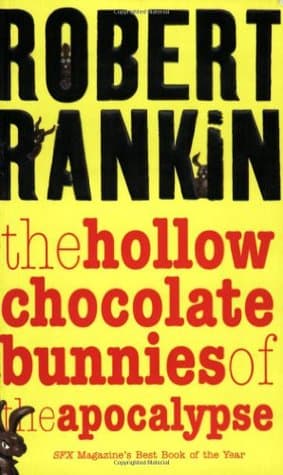
Synopsis
Covers the whole plot, including the ending.
- Difficulty
- Medium
- Pacing
- Moderate
- Mood
- Humorous, Whimsical, Mysterious, Absurdist, Quirky
- Read it if
- You enjoy absurd British humor, a unique blend of fantasy and mystery, and a story that doesn't take itself too seriously.
- Skip it if
- You prefer serious, grounded mysteries, dislike whimsical or surreal settings, or are put off by frequent puns and wordplay.
The Hollow Chocolate Bunnies of the Apocalypse Plot Summary
Covers the whole plot, including the ending.
The First Murder and the Missing Detective
The story begins in Toy Town, a bustling city of sentient toys and nursery rhyme characters. The respected Humpty Dumpty, one of the 'Old Rich' who gain wealth from nursery rhyme royalties, is found brutally murdered. He was pushed from a wall, reassembled, and then smashed again. This bizarre crime shocks the community. The town's only private detective, Dan Shakespeare, is missing. His office is in disarray, with clues suggesting he was working on a major case before he vanished. This leaves the investigation without a lead, and the local police, led by Chief Inspector Marmalade, seem overwhelmed.
Eddie Bear and Jack Discover Clues
Eddie Bear, a small, unassuming teddy bear, and his best friend Jack, a wooden toy soldier, work for Dan Shakespeare. With Dan missing and the police making little progress, Eddie feels he must investigate. They return to Dan's office and search his files. Among the scattered papers, they find a cryptic note and a children's book. Eddie, with Jack's help, deciphers a coded message in the book, which points to a secret society called the 'Nursery Rhyme Collective' and hints at a deeper conspiracy involving the Old Rich and their money. This discovery draws them into the murder investigation.
The Second Victim and the Suspect
As Eddie and Jack continue their amateur investigation, another prominent Old Rich character, Little Miss Muffet, is found dead, seemingly from fright, surrounded by spiders. This second murder increases the panic in Toy Town. Chief Inspector Marmalade, under pressure, quickly names Little Bo-Peep as the prime suspect, citing her odd behavior and a past dispute with Miss Muffet. Bo-Peep, however, maintains her innocence. Eddie and Jack, having learned more about Toy Town's social dynamics from Dan's files, suspect the police are wrong. They believe the murders are more organized and sinister than the police admit.
Encountering the Collective
Following clues from Dan's notes, Eddie and Jack infiltrate a secret meeting of the Nursery Rhyme Collective, a shadowy group of nursery rhyme characters who secretly manage Toy Town's financial and political affairs. They observe a tense discussion among the members, revealing underlying fears and rivalries. It becomes clear that the Collective knows about the murders and is trying to cover up information to protect their interests and Toy Town's stability. Eddie and Jack realize the killer is likely targeting members of this powerful group, and their investigation is now dangerous.
The Prophecy and the Toymaker
Through further investigation and a chance meeting with a reclusive scholar, Eddie and Jack uncover an ancient prophecy about Toy Town's end and the return of the legendary Toymaker. The prophecy suggests the Toymaker, the creator of all toys, will return to 'reclaim' his creations, and the murders are linked to this event. This revelation adds dread to their quest, changing it from a simple murder mystery into a race against a potentially apocalyptic future. They begin to suspect the killer might not be a simple psychopath, but someone carrying out a larger, perhaps even divine, plan.
The Candy Killer's Modus Operandi
As more bodies are found, a chilling pattern emerges. Each murder scene has a hollow chocolate bunny, perfectly crafted but empty inside, left as a calling card. This signature earns the perpetrator the name 'The Candy Killer.' Eddie and Jack realize these bunnies are not just a taunt, but a symbolic message, perhaps representing the 'hollow' nature of the Old Rich and their manufactured lives. They begin to investigate the origin of these specific chocolate bunnies, hoping it will lead them to the killer's identity and motives. The police, meanwhile, remain confused by the unusual calling card.
Dan Shakespeare's Return
Just as Eddie and Jack feel they are making progress, Dan Shakespeare suddenly reappears, disheveled but alive. He reveals he was abducted by an unknown party, who were also investigating the murders, but from a different angle. Dan had been pursuing a lead involving a hidden faction within Toy Town, one even more secretive than the Nursery Rhyme Collective. His return gives Eddie and Jack valuable insights and resources. The three combine their findings, realizing the conspiracy is far more complex than any of them had imagined, involving multiple layers of deception.
Unmasking the Impostor
The combined efforts of Eddie, Jack, and Dan lead them to a shocking discovery: one of the prominent members of the Nursery Rhyme Collective is not who they claim to be. This individual is an impostor, a creation or agent of the Toymaker, placed within Toy Town to destabilize the existing order. This revelation makes them doubt everything they thought they knew about Toy Town's power structure. The impostor's true identity and motives are slowly revealed, showing a deep resentment towards the 'Old Rich' and their perceived corruption, and a desire to dismantle the established hierarchy.
The Toymaker's True Intentions
When the impostor is confronted, the full scope of the Toymaker's plan is revealed. The Toymaker, disillusioned with Toy Town's moral decay and stagnation, intends to 'reset' it, destroying the current inhabitants and creating a new, purer generation of toys. The murders are not merely acts of vengeance, but ritualistic killings designed to weaken Toy Town and prepare it for a complete overhaul. The hollow chocolate bunnies symbolize the emptiness the Toymaker sees in the current inhabitants, and their impending replacement. Eddie, Jack, and Dan realize they are not just solving murders, but trying to prevent an apocalypse.
The Confrontation and Resolution
In a confrontation, Eddie, Jack, and Dan face the Toymaker and his agent. The Toymaker, a figure of immense power and disillusionment, explains his reasons for wanting to destroy and remake Toy Town. Through cunning, bravery, and an appeal to the Toymaker's creative spark, Eddie, the seemingly insignificant teddy bear, helps disrupt the Toymaker's plan. They prevent Toy Town's complete annihilation, though not without significant loss and a deep shift in the town's understanding of its origins and future. The murders stop, and a fragile peace is restored, forever changed by the events.
The Hollow Chocolate Bunnies of the Apocalypse Characters
Eddie Bear
Protagonist
A small, unassuming teddy bear who becomes an accidental detective.
Eddie Bear is a small, brown teddy bear, initially working as an assistant to detective Dan Shakespeare. He is quiet, observant, and possesses a surprisingly sharp mind, often noticing details others overlook. Despite his diminutive size and initial timidity, he demonstrates immense courage and determination when faced with the murders and the looming threat to Toy Town. His loyalty to his friends and his innate sense of justice drive him to pursue the truth, even when it puts him in grave danger. He represents the everyday hero, rising to an extraordinary challenge.
Relationships: Jack (Best friend and loyal companion); Dan Shakespeare (Boss and mentor)
Jack
Supporting
Eddie Bear's loyal, if somewhat dim, wooden toy soldier friend.
Jack is a wooden toy soldier, Eddie Bear's best friend and constant companion. He is steadfastly loyal and physically robust, often serving as Eddie's muscle or comic relief. While not as intellectually sharp as Eddie, Jack possesses a simple, unwavering moral compass and is always ready to stand by his friend. His straightforward nature provides a grounding presence amidst the complex conspiracies of Toy Town. He often provides practical assistance and unwavering support, even when he doesn't fully grasp the intricacies of the investigation.
Relationships: Eddie Bear (Best friend and partner in crime-solving)
Dan Shakespeare
Supporting
Toy Town's original private detective, initially missing.
Dan Shakespeare is Toy Town's only private detective, a seasoned investigator with a reputation for solving difficult cases. He is intelligent, cynical, and has a deep understanding of Toy Town's underbelly and its eccentric inhabitants. His initial disappearance sets the stage for Eddie and Jack's involvement, but his eventual return brings crucial insights and experience to their investigation. Dan is a mentor figure to Eddie, and his past dealings with the various factions of Toy Town prove invaluable in unraveling the larger conspiracy.
Relationships: Eddie Bear (Employee and mentee); Jack (Employee)
The Toymaker
Antagonist
The disillusioned creator of all toys, seeking to 'reset' Toy Town.
The Toymaker is the enigmatic, almost mythical creator of all toys in Toy Town. He is a figure of immense power and creative ability, but also profound disillusionment. He views the current state of Toy Town and its 'Old Rich' inhabitants as corrupt, stagnant, and having strayed too far from their original purpose. His motivation is not pure malice, but a desire for perfection and a 'reset' of his creation, even if it means destroying what currently exists. He operates through agents and prophecies, orchestrating events from the shadows until his final, direct confrontation.
Relationships: All toys in Toy Town (Their creator); The Impostor (His agent)
Chief Inspector Marmalade
Supporting
The bumbling and often misguided head of Toy Town's police force.
Chief Inspector Marmalade is the official head of Toy Town's police force. He is well-meaning but often out of his depth, prone to jumping to conclusions and focusing on the most obvious, rather than the most logical, suspects. He represents the bureaucratic and somewhat ineffective official response to the escalating crisis. His efforts to solve the murders are often comical and serve to highlight the superior deductive skills of Eddie and Dan. He is easily flustered and more concerned with appearances and maintaining order than with truly understanding the complex motives behind the crimes.
Relationships: Eddie Bear (Rival investigator (unacknowledged by Marmalade))
Humpty Dumpty
Mentioned
The first victim, one of the 'Old Rich' nursery rhyme characters.
Humpty Dumpty is the first victim of the Candy Killer. He is one of the 'Old Rich,' having amassed wealth from his famous nursery rhyme. His brutal and symbolic murder, being pushed from a wall and then reassembled only to be smashed again, sets the tone for the grim and unusual nature of the crimes to follow. His death immediately signals that the murders are not random, but targeted and deeply symbolic, aimed at the very foundations of Toy Town's elite.
Relationships: The Candy Killer (Victim)
Little Miss Muffet
Mentioned
The second victim, also one of the 'Old Rich'.
Little Miss Muffet is the second victim of the Candy Killer. She is another prominent member of the 'Old Rich' and her death, seemingly from fright surrounded by spiders, reinforces the symbolic and unsettling nature of the murders. Her demise further escalates the panic in Toy Town and puts pressure on the police to find a culprit, leading to the misguided accusation of Bo-Peep. Her wealth and status make her a target, linking her to the wider conspiracy against the Old Rich.
Relationships: The Candy Killer (Victim)
Little Bo-Peep
Supporting
A quirky nursery rhyme character, falsely accused of the murders.
Little Bo-Peep is a whimsical nursery rhyme character who becomes Chief Inspector Marmalade's prime suspect after the murder of Little Miss Muffet. She is known for her eccentricities and her past disputes, making her an easy target for a police force looking for a quick arrest. Despite the accusations, she maintains her innocence, and Eddie and Jack's investigation eventually clears her name, highlighting the police's incompetence and the deeper conspiracy at play. She represents the innocent bystander caught in the crosshairs of a larger plot.
Relationships: Chief Inspector Marmalade (Her accuser)
The Hollow Chocolate Bunnies of the Apocalypse Themes
The Corruption of Nostalgia
The novel explores how the innocence of nursery rhymes and childhood toys has been corrupted by greed and power. The 'Old Rich' characters, once symbols of childhood joy, have become complacent, self-serving, and morally empty, gaining wealth from the rhymes that made them famous. The murders targeting these characters suggest a cleansing or rebellion against their decayed state. The hollow chocolate bunnies left at crime scenes directly symbolize this emptiness, showing how Toy Town's essence has been lost to materialism and complacency, as seen in the opulent but morally bankrupt lives of characters like Humpty Dumpty and Little Miss Muffet.
“They were hollow. Just like the Old Rich, for all their gilt and their gold.”
The Nature of Reality and Creation
The book explores what it means to be 'real' as a toy, and the power dynamic between creator and creation. The revelation of the Toymaker and his intention to 'reset' Toy Town forces the characters to confront their manufactured existence and the possibility of their world being unmade. This theme is central to the conflict, as the Toymaker believes his creations have become unworthy. The characters' struggle for self-determination against their creator's will highlights the philosophical implications of their existence, questioning whether their lives belong to them or their maker.
“We are but playthings, Eddie. And the Toymaker, he has grown tired of his game.”
The Power of the Underdog
Despite the presence of detective Dan Shakespeare and the official police, the unassuming Eddie Bear, a small teddy bear, uncovers the truth and plays a key role in saving Toy Town. This theme celebrates the idea that heroism can come from unexpected places, and that size or status do not determine one's ability to make a difference. Eddie's journey from timid assistant to courageous investigator, often underestimated by more powerful characters, shows the potential for greatness within the 'ordinary,' proving that courage and intellect are not exclusive to the traditionally powerful.
“Never underestimate a bear, particularly one who knows how to listen.”
Conspiracy and Hidden Societies
Toy Town, seemingly a whimsical place, is revealed to have secret societies and hidden power structures, especially the Nursery Rhyme Collective. This theme explores how power is secretly used, and how official narratives often hide a more complex and sinister reality. The murders are not random acts, but are deeply linked to these hidden groups and their struggles for control, forcing the protagonists to navigate alliances and betrayals. The existence of these groups highlights the difference between the public facade and the true, often darker, workings of power.
“Toy Town, my dear Eddie, is not as simple as it seems on the surface. There are strings, and then there are the hands that pull them.”
Plot Devices & Literary Techniques
Red Herring
Misleading clues or suspects designed to divert attention from the real killer.
The novel frequently employs red herrings to deepen the mystery and challenge the reader's assumptions. A prime example is the immediate suspicion cast upon Little Bo-Peep after the murder of Little Miss Muffet. Her eccentric personality and past disputes make her an easy and convenient suspect for Chief Inspector Marmalade, drawing attention away from the more complex and systemic conspiracy involving the Toymaker and his agents. These diversions force Eddie and Jack to look beyond the obvious, highlighting the superficiality of the official investigation and the true depth of the plot.
The Prophecy
An ancient, cryptic prediction that foreshadows future events and guides the narrative.
An ancient prophecy concerning the return of the Toymaker and the 'resetting' of Toy Town serves as a crucial plot device. It elevates the murder mystery into a larger, more existential threat, giving the characters a sense of urgency and a deeper understanding of the stakes involved. The prophecy is initially vague but becomes clearer as the story progresses, providing a mythological framework for the events and suggesting a predetermined fate for Toy Town. It transforms the killer from a mere psychopath into an agent of a cosmic, or at least world-altering, force.
Symbolism of the Hollow Chocolate Bunnies
A recurring motif that represents the moral emptiness and manufactured nature of the victims.
The hollow chocolate bunnies left at each crime scene are a powerful and central symbolic device. They represent the moral and spiritual emptiness of the 'Old Rich' and, by extension, the perceived corruption of Toy Town itself. The hollowness suggests a lack of genuine substance beneath a sugary, appealing exterior. This symbol not only serves as the killer's calling card but also provides a key insight into the killer's (and ultimately the Toymaker's) motivations, highlighting their disdain for the superficiality and manufactured nature of the victims and their world.
The Unreliable Narrator (Subtle)
While not fully unreliable, the narrative perspective initially withholds crucial information, shaping reader perception.
While the primary narrator is generally trustworthy, the initial lack of information about Dan Shakespeare's disappearance and the true nature of Toy Town creates a subtle form of unreliability. The reader, like Eddie, is initially presented with a seemingly straightforward murder mystery in a whimsical setting, only to gradually uncover layers of conspiracy, hidden motives, and existential threats. This controlled release of information shapes the reader's understanding, making the eventual revelations more impactful and challenging their initial perceptions of Toy Town as a purely innocent place.
The Hollow Chocolate Bunnies of the Apocalypse Quotes
“It was a dark and stormy knight, and the rain fell in torrents – except where it was intercepted by a passing gargoyle, which then spat it out with a look of disgust.”
“The only difference between a wise man and a fool is that the wise man knows he's a fool.”
“Reality is a crutch for people who can't cope with drugs.”
“When you stare into the abyss, the abyss stares back, but when you stare into a pint of beer, the beer just sits there and looks inviting.”
“The universe is not only stranger than we imagine, it is stranger than we *can* imagine.”
“Life, a tale told by an idiot, full of sound and fury, signifying nothing... unless you add a few dwarves and a dragon, then it gets interesting.”
“There are no such things as coincidences, only patterns we haven't yet understood.”
“The past is like a foreign country; they do things differently there, especially if you're a time-travelling detective.”
“Never trust a man who talks to his imaginary friends, especially if they start talking back.”
“Optimism is merely a lack of information.”
“Sometimes the greatest mysteries are hidden in plain sight, disguised as the utterly ridiculous.”
“The only thing more dangerous than a man with a plan is a man with no plan whatsoever, who just wings it and somehow succeeds.”
“He who hesitates is lost, but he who doesn't hesitate often ends up in a very sticky situation indeed.”
“The truth is out there, but it's probably wearing a rubber chicken suit and juggling flaming chainsaws.”
Quiz
10 questions on the plot and the characters. Each answer comes with a short explanation.
Question 1
Which specific nursery rhyme character is the first victim found murdered in Toy Town?
- Humpty Dumpty
- Mary, Mary, Quite Contrary
- Little Bo Peep
- Old Mother Hubbard
Show answer
B. Mary, Mary, Quite Contrary Mary, Mary, Quite Contrary is the first of the Old Rich to be murdered, found in her garden.
Question 2
What is the primary occupation of the 'Old Rich' characters in Toy Town?
- Inventing new toys
- Managing Toy Town's economy
- Collecting royalties from their world-famous nursery rhymes
- Running the Toy Town police force
Show answer
C. Collecting royalties from their world-famous nursery rhymes The Old Rich are wealthy due to the royalties generated by their famous nursery rhymes.
Question 3
What kind of animal is Eddie, one of the main protagonists?
- A rabbit
- A bear
- A dog
- A cat
Show answer
B. A bear Eddie is explicitly referred to as Eddie Bear, indicating his species.
Question 4
Who is the 'missing' detective that Eddie Bear and Jack initially try to replace or find?
- Sherlock Holmes
- Dick Turpin
- Jack and the Beanstalk
- Jack and the Beanstalk's detective partner
Show answer
D. Jack and the Beanstalk's detective partner The official detective of Toy Town is missing, leaving Eddie and Jack to step in. The missing detective is actually Jack, meaning Eddie and his best friend Jack are the ones left to solve the case.
Question 5
What is the significance of 'hollow chocolate bunnies' in the title and the narrative?
- They are the murder weapon used by the killer.
- They represent the superficiality and emptiness of some of Toy Town's inhabitants.
- They are a rare delicacy only consumed by the Old Rich.
- They are a clue left by the killer at each crime scene.
Show answer
B. They represent the superficiality and emptiness of some of Toy Town's inhabitants. The 'hollow chocolate bunnies' symbolize the superficial nature and lack of substance in some of the characters and the world of Toy Town.
Question 6
What unique characteristic does Toy Town possess that distinguishes it from a typical setting?
- It is entirely populated by sentient machines.
- It is older, bigger, and not wiser, implying a decayed or cynical version of a classic toy setting.
- It is a microscopic world existing within a child's toy box.
- Its inhabitants are constantly changing their forms.
Show answer
B. It is older, bigger, and not wiser, implying a decayed or cynical version of a classic toy setting. The description specifically states Toy Town is 'older, bigger, and certainly not wiser,' setting a unique, darker tone for the familiar concept.
Question 7
What is the primary motivation behind the serial killings of the Old Rich?
- Revenge for past injustices committed by the Old Rich.
- A random act of violence by a deranged individual.
- An attempt to gain control of Toy Town's economy.
- A desperate plea for attention from the killer.
Show answer
A. Revenge for past injustices committed by the Old Rich. The killer's motivation is rooted in a desire for revenge against the Old Rich for actions or omissions in the past, often related to the exploitation of their nursery rhyme creations.
Question 8
How do Eddie Bear and Jack typically fund their investigative endeavors?
- They receive a generous stipend from the Toy Town council.
- They rely on Eddie's past earnings from a short-lived acting career.
- They often resort to unconventional and sometimes illegal means, like betting on races or scamming.
- Jack has a hidden inheritance he uses for expenses.
Show answer
C. They often resort to unconventional and sometimes illegal means, like betting on races or scamming. Eddie and Jack are often down on their luck and resort to various schemes, including betting and minor cons, to get by and fund their investigations.
Question 9
What is the underlying satirical commentary on fame and intellectual property in the novel?
- It praises the enduring nature of classic children's stories.
- It critiques how original creators can be exploited while others profit immensely from their work.
- It suggests that true art can only be created anonymously.
- It argues that all intellectual property should be free for public use.
Show answer
B. It critiques how original creators can be exploited while others profit immensely from their work. The novel satirizes the exploitation of creators and the immense wealth garnered by those who merely own the rights to the nursery rhymes, often at the expense of the characters themselves.
Question 10
Which of the following fantastical elements is most prominent in the world of Toy Town, beyond sentient toys?
- Time travel technology
- Interdimensional portals
- Anachronistic technology and a blurred line between reality and storybook logic.
- Magic spells and potions
Show answer
C. Anachronistic technology and a blurred line between reality and storybook logic. Rankin's style often blends anachronistic technology and a reality where storybook logic and physics can unpredictably manifest, creating a unique fantastical and surreal atmosphere.
The Hollow Chocolate Bunnies of the Apocalypse FAQ
What is the central mystery driving the plot of 'The Hollow Chocolate Bunnies of the Apocalypse'?
The core mystery revolves around a series of brutal murders targeting the Old Rich, the wealthy nursery rhyme authors of Toy Town. A psychopath is systematically killing them, and with Toy Town's only detective missing, it falls to Eddie Bear and Jack to unmask the killer before more beloved figures are lost.
Who are Eddie Bear and Jack, and what is their relationship?
Eddie Bear is a teddy bear and, somewhat reluctantly, steps into the role of detective when the official one disappears. Jack is his best friend, a human boy, who often provides the more grounded perspective and practical assistance in their investigations, forming an unlikely but effective duo.
What is unique about the setting of Toy Town?
Toy Town is a fantastical, anachronistic metropolis inhabited by sentient toys, nursery rhyme characters, and mythical beings. It's a place where magic and mundane coexist, but also one grappling with crime, social stratification among the 'Old Rich' and the 'New Rich,' and a pervasive sense of underlying absurdity.
Who are the 'Old Rich' and why are they significant to the story?
The 'Old Rich' are the original authors and beneficiaries of Toy Town's most famous nursery rhymes, having amassed immense wealth and status from their creations. Their murders are the central plot point, as their deaths threaten the very fabric and nostalgic identity of Toy Town, making them prime targets for the killer.
What role does the missing detective play in the early stages of the investigation?
The official detective's disappearance is the catalyst that forces Eddie Bear and Jack into their investigative roles. While absent, his legacy and the void he leaves behind highlight the urgency and amateur nature of Eddie and Jack's efforts, often leading them down unconventional paths.
Are there any subtle clues early on that hint at the killer's true identity or motive?
The narrative sprinkles subtle hints, such as the specific nature of the nursery rhymes involved and the victims' connections to them, suggesting a killer with a deep-seated grievance related to Toy Town's history or the exploitation of creative works. The seemingly random nature of the attacks often masks a thematic link.
How does the concept of 'hollow chocolate bunnies' tie into the larger themes or a hidden meaning in the book?
The 'hollow chocolate bunnies' metaphorically represent the superficiality and empty grandeur of Toy Town's 'Old Rich' and their world. It suggests that beneath the sweet, appealing exterior of fame and nostalgia, there's often nothing of substance, hinting at the killer's possible disillusionment with these figures.
What is the significance of the specific nursery rhymes mentioned or characters involved beyond their surface-level presence?
The specific nursery rhymes and characters often carry a darker subtext or forgotten origins, which the killer might be exploiting or reinterpreting. Their inclusion is rarely accidental, often reflecting themes of betrayal, forgotten promises, or the darker side of childhood innocence, providing clues to the killer's warped perspective.
Is there a deeper connection between the 'fantasy' and 'science fiction' elements, or are they mostly disparate aspects of the setting?
The fantasy and science fiction elements are often interwoven, with the magical reality of Toy Town sometimes explained or augmented by advanced, albeit fantastical, technology. This blend suggests a world where the boundaries of possibility are blurred, hinting at a larger, more complex universe than initially perceived, possibly involving time manipulation or alternate realities.
How does Eddie Bear's inherent 'toy' nature influence his investigative methods and psychological state?
Eddie Bear's toy nature often grants him a unique perspective, but also limits him. He approaches problems with a child-like sincerity and moral compass, yet struggles with the grim realities of murder. His initial naïveté slowly gives way to a more jaded understanding of Toy Town's underbelly, forcing a psychological maturation.
What psychological motivations might drive the killer, given their targets are famous nursery rhyme creators?
The killer's motivations likely stem from a profound sense of injustice, resentment, or a twisted form of moral righteousness. They might feel the 'Old Rich' have betrayed the spirit of childhood, profited from stolen innocence, or represent a corrupt establishment that needs purging, reflecting a deep-seated psychological wound related to their own past.
How does Jack's human perspective ground or challenge Eddie's more fantastical worldview during their investigation?
Jack's human pragmatism often provides a crucial counterbalance to Eddie's more fantastical or toy-like interpretations of events. He challenges Eddie to look for logical explanations, question assumptions, and consider the practical implications of their actions, preventing them from getting lost in the absurdity of Toy Town and offering a psychological anchor.
In what ways do the characters grapple with the loss of innocence within Toy Town?
The characters, particularly Eddie Bear, grapple with the shattering of Toy Town's idyllic facade as the murders expose its darker underbelly. The loss of innocence is palpable as beloved figures are revealed to have flaws, and the very concept of 'happy ever after' is questioned, forcing them to confront a more cynical reality.
What is the author's commentary on fame, wealth, and creativity through the depiction of the 'Old Rich'?
The author seems to critique the commodification of creativity and the corrupting influence of fame and wealth. The 'Old Rich' are often portrayed as complacent, self-serving, and out of touch, suggesting that once art becomes a source of immense profit, it can lose its soul and lead to moral decay among its creators.
Could the 'mad killer' be interpreted as a symbolic force rather than a literal individual?
The 'mad killer' could be interpreted symbolically as the inevitable consequence of Toy Town's moral decay or the collective subconscious yearning for change. Their actions might represent the destruction of outdated ideals or the violent purging of a corrupt system, rather than solely the malice of a single individual.
What philosophical questions does the book raise about the nature of reality or existence, especially with its mix of genres?
The book raises questions about the constructed nature of reality, especially in a world where toys are sentient and nursery rhymes are historical documents. It blurs the lines between fiction and reality, asking what defines 'real' and how our narratives shape our existence, challenging the reader's perception of what is possible.
How does the book's humor and absurdity contribute to its overall message or theme?
The book's pervasive humor and absurdity serve multiple purposes: they lighten the grim subject matter, highlight the inherent ridiculousness of certain societal conventions, and create a unique lens through which to critique reality. This juxtaposition often amplifies the underlying serious themes, making them more palatable and thought-provoking.
Is there a definitive 'moral' to the story, or is it more open to individual interpretation?
While the story offers clear critiques of greed and the abuse of power, its ultimate 'moral' is largely open to individual interpretation. It encourages readers to ponder the nature of heroism, the cost of nostalgia, and the blurred lines between good and evil, rather than presenting a simplistic, singular message.
About the author
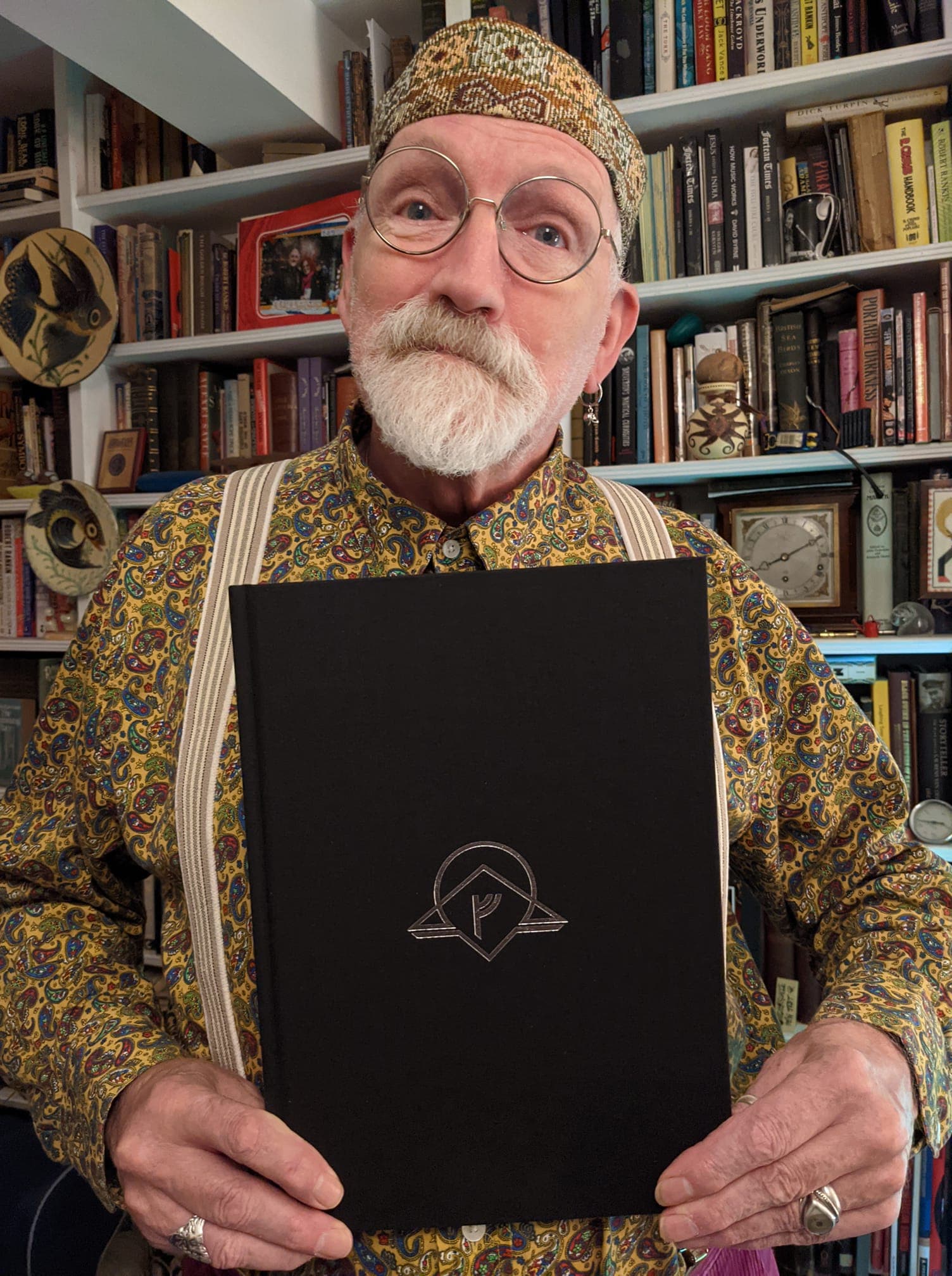
Robert Rankin is a British author known for his unique blend of fantasy and humor. His notable work, The Hollow Chocolate Bunnies of the Apocalypse, features a whimsical narrative set in a surreal world. Rankin's writing often combines elements of satire and absurdity, appealing to readers who enjoy unconventional storytelling.
Similar books
- Dirk Gently's Holistic Detective Agency
Douglas Adams
4.0 (121k) average on GoodreadsFantasyFeatures a quirky detective, an absurd plot, and a comedic, philosophical tone.
- Guards! Guards!
Terry Pratchett
4.3 (165k) average on GoodreadsFantasyBoth novels blend fantasy with a comedic, detective-like plot. However, Pratchett's work, as noted by Butler (2009), often uses humor for deeper social and political satire, whereas Rankin's 'Bunnies' leans more into pure absurdist humor and whimsical nonsense, with less overt societal critique.
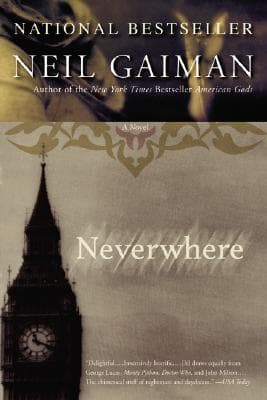
- Neverwhere
Neil Gaiman
4.2 (430k) average on GoodreadsFantasyBoth explore hidden, fantastical versions of familiar worlds. Gaiman's 'Neverwhere' presents a darker, more overtly mythical, and often perilous hidden London, focusing on profound themes. Rankin's 'Bunnies' is significantly lighter in tone, prioritizing whimsical absurdity and comedy over gravitas or overt mythological depth.
- Harry Potter and the Sorcerer's Stone
J.K. Rowling
4.5 (7M) average on GoodreadsFantasyRescued from a miserable life under the stairs, an orphaned boy discovers he's a wizard destined for a magical school, where he uncovers a dangerous secret tied to the dark wizard who murdered his parents.
- The Hunger Games
Suzanne Collins
4.3 (6.4M) average on GoodreadsFantasyIn a future where children fight to the death on live television, Katniss Everdeen volunteers for the arena, turning a death sentence into a fight for survival and a spark of rebellion.
- 1984
George Orwell
4.2 (3.1M) average on GoodreadsPoliticsIn a future where surveillance and thought control are absolute, a man's search for truth clashes with the Party, showing that hope can be a form of rebellion.



Enjoyed the summary?
A summary gives you the shape of the book. The book itself has the detail, the examples and the voice.
Find The Hollow Chocolate Bunnies of the Apocalypse on AmazonAs an Amazon Associate, BookBrief earns from qualifying purchases. How we're funded