
Synopsis
Covers the whole plot, including the ending.
- Difficulty
- Medium
- Pacing
- Moderate
- Mood
- Gritty, Reflective, Melancholy, Intense
- Read it if
- You enjoy classic American literature, character-driven stories about ambition and redemption, or narratives centered around competitive subcultures like pool.
- Skip it if
- You prefer fast-paced thrillers, lighthearted reads, or stories without significant emotional hardship and dark themes.
The Hustler Plot Summary
Covers the whole plot, including the ending.
Arrival in Chicago and the First Match with Minnesota Fats
Fast Eddie Felson, a young, cocky pool hustler, arrives in Chicago with his partner Charlie Burns, intent on challenging the legendary Minnesota Fats. Eddie has a reputation for being unbeatable, and he's confident he can take down Fats, who is renowned as the best in the country. They find Fats at Ames' Pool Hall, a high-stakes establishment where Fats reigns supreme. Eddie, after observing Fats's play, challenges him to a game of straight pool. The initial stakes are small, but as Eddie's confidence grows and Fats demonstrates his formidable skill, the betting escalates, drawing a large crowd and the attention of the hall's owner, Bert Gordon.
The Marathon Match and Eddie's Devastating Loss
The match between Fast Eddie and Minnesota Fats turns into an epic, two-day marathon. Eddie initially gains a significant lead. However, Eddie's arrogance and a critical mistake, drinking bourbon during the game, begin to erode his focus and precision. Fats, with his unwavering composure and seemingly endless stamina, slowly chips away at Eddie's lead. Despite Charlie's desperate attempts to get Eddie to quit while ahead, Eddie's pride compels him to continue. After twenty-five grueling hours, Eddie, physically and mentally exhausted, makes a series of errors, losing all his money and suffering a humiliating defeat to Fats.
Meeting Sarah Packard and a New Beginning
After his crushing loss, Fast Eddie is emotionally shattered and financially ruined. He rejects Charlie Burns's offer to stake him again, feeling betrayed by Charlie's caution during the match. Eddie wanders aimlessly, eventually finding solace in a bus station where he encounters Sarah Packard, a lonely, alcoholic woman. Sarah is drawn to Eddie's vulnerability, and they strike up a conversation that leads to them spending the night together. This encounter marks a significant turning point for Eddie, offering him a chance at a life outside the pool hall and a different kind of connection than he's ever known.
Life with Sarah and the Lure of Pool
Eddie and Sarah move in together, sharing a small room. Eddie attempts to find regular work, taking a job as a dishwasher, but he finds the mundane tasks unfulfilling. His mind constantly drifts back to the pool hall and his desire for redemption against Minnesota Fats. Sarah, recognizing his internal struggle, tries to encourage him to pursue his passion, despite her own fears about his self-destructive tendencies. Their relationship deepens, providing Eddie with a sense of stability and emotional support he's never experienced, yet the allure of the green felt table and the challenge of Fats continue to haunt him.
Bert Gordon's Offer and the Demand for Eddie's Soul
While hustling small games to make ends meet, Fast Eddie is approached by Bert Gordon, a wealthy and powerful gambler who observed his marathon match with Minnesota Fats. Bert sees potential in Eddie but also recognizes his fatal flaw: a lack of character. Bert offers to bankroll Eddie, providing him with the money and connections to challenge Fats again, but under strict conditions. Bert demands total control over Eddie's games, his winnings, and his personal life, requiring Eddie to forfeit his independence and play according to Bert's cold, calculating rules, stripping Eddie of his self-respect.
The Kentucky Derby Hustle and the Broken Thumbs
Bert Gordon takes Eddie to the Kentucky Derby, a high-society event, to hustle wealthy marks. Eddie, under Bert's strict guidance, wins a considerable sum of money. However, during a game, Eddie, fueled by a resurgence of his old pride and a desire to prove his independence, deliberately disobeys Bert's instructions to lose a specific game, instead winning it outright. This act of defiance infuriates Bert. As punishment, Bert's enforcers brutally break Eddie's thumbs, crippling his ability to play pool and sending a clear message about the consequences of disobeying Bert's will, leaving Eddie in excruciating pain and despair.
Sarah's Despair and Tragic End
After the brutal beating, Fast Eddie returns to Sarah Packard, his hands bandaged and his spirit crushed. Sarah is horrified by his injuries and the realization of the violent world he inhabits. She sees the extent of Bert Gordon's control over Eddie and the destruction it has wrought upon him. Already struggling with her own alcoholism and a sense of hopelessness, Sarah's despair deepens. Unable to cope with Eddie's brokenness and the bleakness of their future, she leaves him a note and tragically commits suicide, leaving Eddie utterly alone and burdened by immense guilt and grief.
Eddie's Recovery and Renewed Determination
Devastated by Sarah's death and his physical injuries, Fast Eddie hits rock bottom. He spends weeks recovering, both physically and emotionally. The pain in his thumbs gradually subsides, and with it, a renewed, more mature determination begins to form. Sarah's memory, though painful, also acts as a catalyst for change. He realizes that his previous arrogance and lack of character were major factors in his downfall. Eddie begins to practice again, slowly regaining his touch and developing a newfound patience and control, understanding that true mastery requires more than just raw talent.
The Rematch with Minnesota Fats and a Transformed Eddie
With his thumbs healed and his spirit tempered by loss and suffering, Fast Eddie returns to Ames' Pool Hall to challenge Minnesota Fats once more. This time, Eddie is different. He's no longer the cocky, self-destructive hustler; he's a man who has faced his demons and emerged with a deeper understanding of himself and the game. The match is intense, but Eddie plays with a new level of focus, composure, and strategic brilliance. He avoids his previous mistakes, demonstrating not just superior skill, but also a newfound mental fortitude that was absent in their first encounter.
Victory and the Price of Redemption
Fast Eddie, demonstrating almost Zen-like concentration, systematically dismantles Minnesota Fats's game. He plays with a precision and control that Fats cannot match. The crowd, initially skeptical, becomes captivated by Eddie's transformed play. He finally defeats Fats, achieving the victory he so desperately sought. However, the triumph is bittersweet. Bert Gordon, still present, demands a percentage of Eddie's winnings, reminding him of the controlling nature of the game and the moral compromises he's had to make. Eddie has proven himself as the best player, but the journey has cost him Sarah and his innocence, leaving him with a hollow victory.
Principal Figures
Fast Eddie Felson
Protagonist
A gifted but arrogant pool hustler seeking to prove himself the best.
Eddie Felson is a young, exceptionally talented pool player driven by an intense desire to be recognized as the best. He possesses natural skill, a keen eye, and a competitive spirit, but his fatal flaw is his arrogance, self-destructive tendencies, and a profound lack of character. He struggles with pride, impulsiveness, and an inability to handle success or failure gracefully. His journey is one of self-discovery, learning that true mastery extends beyond physical skill to encompass mental fortitude and moral integrity.
Relationships: Minnesota Fats (Rival, ultimate challenge); Charlie Burns (Manager/partner, moral compass (initially)); Sarah Packard (Love interest, emotional anchor, tragic victim); Bert Gordon (Antagonist, manipulative financier)
Minnesota Fats
Antagonist/Rival
The legendary, seemingly unbeatable pool champion.
Minnesota Fats is a legendary pool player, revered as the undisputed king of the game. He embodies calm, unyielding confidence, and seemingly effortless skill. Fats is a master of psychological warfare at the table, using his composure and reputation to intimidate opponents. He is a symbol of the pinnacle of pool excellence, serving as the ultimate challenge for Fast Eddie. Despite his intimidating presence, Fats represents a pure, almost Zen-like dedication to the game, unburdened by the same internal struggles that plague Eddie.
Relationships: Fast Eddie Felson (Rival, challenger)
Sarah Packard
Supporting
A lonely, alcoholic woman who becomes Eddie's lover and emotional anchor.
Sarah Packard is a vulnerable and deeply troubled woman battling alcoholism and a profound sense of loneliness and despair. She is drawn to Eddie's raw vulnerability after his initial defeat and offers him a different kind of connection than he's ever known. Sarah represents a chance for Eddie at a life outside the pool hall, a symbol of love, compassion, and the potential for domesticity. Her fragility and ultimately tragic fate highlight the destructive nature of Eddie's world and the high price of his ambition.
Relationships: Fast Eddie Felson (Lover, emotional support)
Bert Gordon
Antagonist
A ruthless, calculating gambler who seeks to control Eddie.
Bert Gordon is a wealthy, powerful, and utterly ruthless professional gambler who operates on the fringes of the pool world. He is a shrewd judge of character, recognizing both Eddie's talent and his fatal flaws. Bert embodies the cold, predatory, and amoral side of high-stakes gambling. He offers Eddie financial backing and a path to redemption, but at the cost of Eddie's independence and self-respect, demanding total control and punishing any defiance with brutal efficiency. Bert represents the corrupting influence of money and power.
Relationships: Fast Eddie Felson (Manipulative financier, controller)
Charlie Burns
Supporting
Eddie's initial partner and cautious manager.
Charlie Burns is Fast Eddie's initial partner and manager. He is more cautious and pragmatic than Eddie, often trying to rein in Eddie's impulsiveness and protect their winnings. Charlie represents a more traditional, less self-destructive approach to hustling. He acts as a voice of reason, though Eddie often disregards his advice. After Eddie's initial loss to Fats, Charlie's desire to play it safe conflicts with Eddie's need for redemption, leading to their separation. He cares for Eddie, but cannot fully understand or manage Eddie's deep-seated character flaws.
Relationships: Fast Eddie Felson (Manager, partner)
Preacher
Mentioned
A fellow pool player who observes Eddie.
Preacher is a minor character, a fellow pool player who is often seen observing games at Ames' Pool Hall. He represents the common, experienced hustler who understands the nuances of the game and the players. While not directly involved in the main plot, his presence adds to the atmosphere of the pool hall and serves as a silent witness to Eddie's rise and fall. He embodies the community of players who understand the life Eddie leads.
Relationships: Fast Eddie Felson (Acquaintance from the pool hall)
The Bartender at Ames'
Mentioned
A watchful figure in the pool hall.
The bartender at Ames' Pool Hall is a peripheral figure who witnesses much of the action, particularly the epic match between Eddie and Fats. He represents the ever-present, watchful eyes of the establishment, privy to the high stakes and the drama that unfolds. His presence contributes to the authentic atmosphere of the pool hall, a silent observer of the triumphs and tragedies that play out on the green felt.
Themes & Insights
The Nature of Winning and Losing
The novel explores the idea that winning is not solely about skill, but also about character, mental fortitude, and self-control. Eddie's initial loss to Minnesota Fats is not due to a lack of talent, but a lack of discipline and an arrogant self-destructive streak (drinking during the game, refusing to quit while ahead). His eventual victory comes only after he has endured profound personal loss and learned to control his pride and emotions, demonstrating that true mastery encompasses more than just physical ability. The book questions what it truly means to win, suggesting it's about inner strength as much as external triumph.
“He knew that he had lost not because Fats was a better player, but because he, Eddie, was a better loser.”
Pride and Self-Destruction
Eddie's journey is heavily influenced by his overwhelming pride, which frequently leads him to self-sabotage. His initial defeat to Minnesota Fats is a direct result of his inability to walk away when ahead, driven by an arrogant desire to utterly humiliate Fats. This pride also manifests in his defiance of Bert Gordon, leading to his brutal punishment. It is only when Eddie is stripped of everything – his money, his ability to play, and tragically, Sarah – that he begins to shed this destructive pride and develop a more mature, disciplined approach to life and the game.
“He had to prove it, had to prove it to himself, and to Fats, and to the whole goddamned world.”
The Price of Ambition and Redemption
The novel illustrates the steep personal cost of pursuing one's ambition, especially in a ruthless environment like the world of high-stakes hustling. Eddie's relentless quest to defeat Minnesota Fats leads him through physical violence, emotional devastation, and the tragic loss of Sarah Packard. His redemption isn't a simple triumph; it's a hard-won victory achieved through immense suffering and self-reflection. The story suggests that while ambition can drive greatness, it can also demand profound sacrifices, questioning whether the ultimate reward is always worth the price paid.
“He had paid for it, all right, paid for it with Sarah, and with his hands, and with his soul.”
The Corrupting Influence of Power and Money
Bert Gordon embodies the corrupting influence of power and money. He is a character who views people as instruments to be controlled and exploited for profit. His offer to bankroll Eddie comes with the explicit demand for total control, stripping Eddie of his autonomy and self-respect. The brutal breaking of Eddie's thumbs is a stark reminder of the violent consequences for those who defy this power. The novel suggests that in certain environments, the pursuit of wealth and dominance can dehumanize individuals and foster a morally bankrupt system.
“Money isn't everything, but it buys everything.”
Plot Devices & Literary Techniques
The Marathon Match
An extended, high-stakes pool game used to reveal character flaws.
The initial marathon match between Fast Eddie and Minnesota Fats is a crucial plot device. Its extended duration and escalating stakes strip away Eddie's façade, exposing his arrogance, lack of stamina, and self-destructive tendencies (drinking bourbon, refusing to quit). The match serves as a crucible, highlighting Eddie's fatal flaws and setting the stage for his subsequent downfall and journey of self-discovery. It's not just a game; it's a psychological battle that reveals the true nature of the players.
The Mentor/Antagonist Figure (Bert Gordon)
A manipulative figure who offers opportunity at a moral cost.
Bert Gordon functions as both a twisted mentor and a primary antagonist. He provides Eddie with the means to challenge Fats again but demands a moral price for it. Bert's character allows the novel to explore themes of control, corruption, and the dehumanizing aspects of the gambling world. He forces Eddie to confront the compromises required for success and serves as an external force that brutally punishes Eddie's defiance, catalyzing his most profound personal growth through suffering.
Physical Injury (Broken Thumbs)
A brutal consequence that forces a protagonist's re-evaluation.
The breaking of Eddie's thumbs is a pivotal plot device. It is a direct, visceral consequence of his defiance against Bert Gordon, symbolizing the physical and psychological pain inflicted by the ruthless world he inhabits. This injury physically incapacitates Eddie, forcing him away from the pool table and into a period of introspection and recovery. It serves as a catalyst for his rock bottom, leading to Sarah's death and ultimately, his transformation into a more disciplined and mature player.
The Love Interest/Sacrifice (Sarah Packard)
A character who represents an alternative life and whose loss fuels the protagonist's growth.
Sarah Packard serves as a crucial plot device, representing a potential alternative life for Eddie outside the cutthroat world of pool. Her vulnerability and love offer Eddie emotional solace and a chance at genuine connection. Her tragic suicide, directly resulting from the violence and despair inherent in Eddie's chosen path, becomes the ultimate sacrifice. Her death profoundly impacts Eddie, stripping him of his last emotional anchor and forcing him to confront the true cost of his ambition, ultimately fueling his final, more mature quest for redemption.
The Hustler Quotes
“I wasn't trying to beat him, I was trying to beat myself.”
“Fast Eddie Felson. That's what they call me. Fastest cue in the west.”
“He ain't a loser. He's a winner who hasn't won yet.”
“You got to have character to be a winner.”
“The money isn't important. It's the winning.”
“He played a game, not just with the balls, but with me, too.”
“I felt like I was being watched, not just by him, but by the whole room.”
“It isn't enough to be good. You have to be lucky.”
“You're a born loser, Eddie. You're a natural-born loser.”
“I didn't want to just win. I wanted to destroy him.”
“The table was a green ocean, and I was the only ship on it.”
“You can't buy class, Eddie. You either got it or you don't.”
“The worst thing you can do is quit.”
“The hustler doesn't just play the game. He plays the player.”
Quiz
10 questions on the plot and the characters. Each answer comes with a short explanation.
Question 1
What is the primary activity 'Fast' Eddie Felson engages in to make a living at the beginning of the novel?
- Poker
- Horse racing
- Poolroom hustling
- Professional boxing
Show answer
C. Poolroom hustling 'Fast' Eddie Felson is introduced as a poolroom hustler, traveling from town to town to con people into playing him for money.
Question 2
Who is considered 'the true king of the poolroom' and Eddie Felson's ultimate match?
- Bert Gordon
- Minnesota Fats
- Charlie Burns
- Sarah Packard
Show answer
B. Minnesota Fats The synopsis explicitly states that Eddie meets his match in Minnesota Fats, who is described as 'the true king of the poolroom.'
Question 3
What is the central internal conflict Eddie Felson faces throughout the story?
- His struggle with gambling addiction
- His desire to escape the poolroom life
- His struggle with his soul and his self-esteem
- His ambition to become a world champion
Show answer
C. His struggle with his soul and his self-esteem The book is described as 'a classic tale of a man's struggle with his soul and his self-esteem,' which forms the core of Eddie's internal journey.
Question 4
What is Eddie's initial strategy when playing pool against strangers?
- He immediately demonstrates his superior skill to intimidate them.
- He feigns being an average player to encourage them to bet more.
- He only plays against opponents he knows he can easily beat.
- He relies on psychological tricks rather than actual skill.
Show answer
B. He feigns being an average player to encourage them to bet more. Eddie 'con[s] strangers into thinking they could beat him at the game' by initially playing below his true skill level, which is a key part of hustling.
Question 5
How does meeting Minnesota Fats impact Eddie Felson's life?
- It inspires him to quit pool and pursue a different career.
- It causes his life to change drastically, leading to significant challenges.
- It cements his reputation as an unbeatable player.
- It leads to a long-term partnership with Fats.
Show answer
B. It causes his life to change drastically, leading to significant challenges. The text states that meeting Minnesota Fats causes Eddie's 'life to change drastically,' indicating a pivotal and challenging turning point.
Question 6
The novel's publication in 1959 marked a significant event in the history of billiards literature because:
- It was the first novel about billiards to ever be published.
- It was the first and best novel written about billiards in the 400-year history of the game.
- It popularized billiards among a mainstream audience for the first time.
- It was the first novel to be adapted into a major Hollywood film about billiards.
Show answer
B. It was the first and best novel written about billiards in the 400-year history of the game. The provided text highlights that 'The Hustler was the first--and the best--novel written about billiards in the 400-year history of the game.'
Question 7
What specific characteristic is noted as being absent from Eddie's play before he meets Minnesota Fats, which contributes to his 'unbeaten' status?
- Aggression
- Anxiety
- Loss
- Strategy
Show answer
C. Loss The text states Eddie 'has never lost a game' until he meets Minnesota Fats, implying a lack of experiencing loss was a defining characteristic of his play prior to that encounter.
Question 8
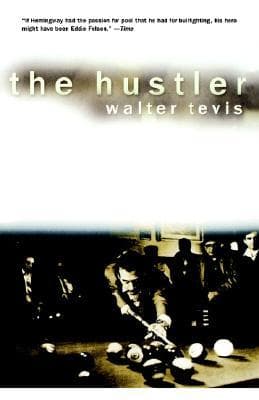
The quote 'If Hemingway had the passion for pool that he had for bullfighting, his hero might have been Eddie Felson' suggests what about the novel's protagonist?
- Eddie Felson is a character who embodies a certain rugged, intense masculinity and a direct confrontation with life's challenges.
- Eddie Felson's story is primarily about travel and adventure across different countries.
- The novel contains extensive descriptions of the technical aspects of pool, similar to Hemingway's detailed writing.
- Eddie Felson is a tragic figure destined for an early demise.
Show answer
A. Eddie Felson is a character who embodies a certain rugged, intense masculinity and a direct confrontation with life's challenges. Hemingway's heroes are often characterized by their stoicism, courage, and engagement with life-or-death struggles, much like bullfighting. Comparing Eddie Felson to a Hemingway hero implies he possesses similar qualities of intense engagement and a struggle for integrity.
Question 9
Beyond the game of billiards, 'The Hustler' explores deeper themes. Which of the following is most strongly emphasized as a core thematic element?
- The corrupting influence of money and power.
- The pursuit of fame and celebrity within competitive sports.
- The internal battle for self-worth and authenticity.
- The importance of teamwork and camaraderie among players.
Show answer
C. The internal battle for self-worth and authenticity. The synopsis explicitly states, 'This is a classic tale of a man's struggle with his soul and his self-esteem,' directly pointing to themes of self-worth and authenticity.
Question 10
Given the description of Eddie Felson as a 'hustler' who 'con[s] strangers,' what moral dilemma is implicitly central to his character's journey before his encounter with Minnesota Fats?
- The conflict between personal ambition and loyalty to friends.
- The struggle between genuine skill and deceptive practices to achieve success.
- The choice between a settled life and a nomadic existence.
- The impact of past failures on future opportunities.
Show answer
B. The struggle between genuine skill and deceptive practices to achieve success. As a hustler, Eddie uses deception (conning strangers) despite possessing great skill. His journey likely involves confronting the ethics of his methods versus the purity of his talent, which ties into his 'struggle with his soul and his self-esteem.'
The Hustler FAQ
What is the central conflict 'Fast' Eddie Felson faces at the beginning of 'The Hustler'?
At the outset, Eddie Felson's primary conflict is his ambition to prove himself the best pool player by defeating the legendary Minnesota Fats. He believes that by beating Fats, he will validate his skill and secure his place at the pinnacle of the pool world, a goal that consumes his every thought and action.
Who is Minnesota Fats and what role does he play in Eddie's journey?
Minnesota Fats is depicted as the undisputed, almost mythical, king of the poolroom, a master player who rarely loses. He serves as Eddie Felson's ultimate challenge and rival, representing the peak of skill and reputation that Eddie desperately seeks to overcome, thereby acting as a catalyst for Eddie's profound personal transformation.
How does Sarah Packard enter Eddie Felson's life and what is her initial impact?
Sarah Packard, a lonely and disillusioned woman, encounters Eddie Felson in a bus station after his initial defeat by Minnesota Fats. She offers him a place to stay and a different perspective on life beyond the pool hall, initially providing a sense of stability and emotional connection that Eddie has lacked.
What prompts Eddie to seek out Bert Gordon, the professional gambler?
After running out of money and experiencing significant losses, Eddie Felson seeks out Bert Gordon, a ruthless professional gambler, to stake him for another match against Minnesota Fats. Eddie is desperate to regain his financial footing and prove his prowess, believing Bert's backing is his only path back to the top.
What crucial lesson does Eddie learn about 'character' from Bert Gordon?
Bert Gordon teaches Eddie a harsh lesson about 'character,' explaining that true winners play not just with skill, but with an inner resilience and an ability to withstand immense pressure and pain. Bert suggests that Eddie's lack of character, rather than pure skill, is what led to his initial downfall against Minnesota Fats, implying a need for emotional fortitude.
What is the significance of the 'whiskey' during Eddie's first match with Minnesota Fats?
The whiskey consumed by Eddie during his first marathon match against Minnesota Fats symbolizes his self-destructive tendencies and a lack of discipline. While he believes it helps him focus, it ultimately impairs his judgment and stamina, contributing significantly to his eventual collapse and devastating loss to Fats.
How does the author use the setting of the pool halls to reflect Eddie's internal state?
The pool halls, with their smoky atmospheres, dim lighting, and transient populations, serve as a microcosm of Eddie's internal world—isolated, competitive, and morally ambiguous. The changing nature of the different pool halls Eddie visits subtly mirrors his emotional highs and lows, from the vibrant hope of his early games to the desolate despair after his losses.
Are there any subtle hints about Sarah Packard's past struggles before her direct confession?
Subtle hints about Sarah's past struggles include her profound loneliness, her cynical outlook on life, her tendency to drink heavily, and her general air of detachment. These behaviors suggest a history of pain and disappointment, foreshadowing her later revelations about her family and personal hardships.
What does the final match between Eddie and Minnesota Fats reveal about their evolving characters?
The final match demonstrates Eddie's newfound maturity and emotional resilience, as he plays with a controlled intensity and a deeper understanding of himself, rather than just pure ego. Minnesota Fats, in contrast, remains a formidable player but is subtly affected by Eddie's transformation, acknowledging Eddie's growth and the changed dynamic between them.
Analyze Eddie Felson's initial motivation: Is it purely about money or something deeper?
Eddie Felson's initial motivation transcends mere financial gain; it is fundamentally about ego, validation, and a desperate need to prove his worth as the best. The money is a byproduct of his skill, but the driving force is the recognition and self-affirmation he believes defeating Minnesota Fats will bring him.
How does Sarah Packard's character challenge Eddie's worldview and self-identity?
Sarah Packard challenges Eddie's worldview by forcing him to confront a life beyond the pool hall, introducing him to concepts of love, vulnerability, and genuine human connection. Her presence and eventual tragic fate dismantle his self-identity as solely a hustler, compelling him to re-evaluate his values and what truly matters.
Explore the psychological impact of Bert Gordon's manipulation on Eddie.
Bert Gordon's manipulation has a profound psychological impact on Eddie, stripping him of his self-respect and forcing him into a position of subservience. Bert's cold, calculating nature and emphasis on 'character' break down Eddie's ego, making him question his own strength and integrity, ultimately pushing him towards a darker, more hardened self.
What role does self-sabotage play in Eddie's early failures?
Self-sabotage plays a significant role in Eddie's early failures, particularly in his first match against Minnesota Fats. His excessive drinking, inability to pace himself, and overwhelming need to prove himself immediately, rather than strategically, all contribute to his physical and mental collapse, preventing him from playing at his true potential.
Is 'The Hustler' primarily a story about pool, or does the game serve as a metaphor for broader human struggles?
'The Hustler' uses the game of pool as a powerful metaphor for broader human struggles, particularly those of ambition, identity, self-worth, and the search for meaning. While the detailed descriptions of pool are central, the narrative delves deeply into Eddie's internal battles, making the game a vehicle for exploring universal themes of success, failure, and redemption.
How does Eddie Felson's character arc reflect a journey from arrogance to humility and ultimately, self-awareness?
Eddie's arc begins with immense arrogance, fueled by his undefeated streak and raw talent. His initial defeat by Fats, coupled with his relationship with Sarah and the harsh tutelage of Bert, strips him of this arrogance, forcing humility upon him. By the end, he achieves a hard-won self-awareness, understanding that true mastery involves not just skill, but also emotional fortitude and a deeper sense of purpose.
What is the novel's stance on the nature of 'winning' – is it just about beating an opponent, or something more profound?
The novel suggests that 'winning' is far more profound than merely defeating an opponent. Through Eddie's journey, it illustrates that true winning involves mastering oneself, understanding one's limitations, and achieving a sense of inner peace and integrity, even if it means sacrificing immediate financial gain or public acclaim. It's about character and self-respect.
Could Minnesota Fats be interpreted as more than just an opponent, perhaps a mirror or a shadow self for Eddie?
Minnesota Fats can certainly be interpreted as more than just an opponent; he serves as a powerful mirror for Eddie, reflecting both the pinnacle of skill Eddie aspires to and the potential emptiness of a life solely defined by a game. Fats also represents a 'shadow self,' embodying the pure, unadulterated focus on pool that Eddie initially possesses, but must eventually transcend to achieve true growth.
How does the ending of the novel, particularly Eddie's final interaction with Bert Gordon, signify his ultimate triumph?
The ending, specifically Eddie's defiant refusal of Bert Gordon's money and his declaration that he will never hustle again, signifies his ultimate triumph. It's not about winning a game, but about reclaiming his autonomy, integrity, and self-worth, choosing freedom from Bert's manipulation and the destructive hustler lifestyle over financial gain.
About the author

Walter Tevis was an American author known for his works of fiction that often explore themes of alienation and human experience. His notable books include "The Man Who Fell to Earth," a science fiction novel about an extraterrestrial visitor, and "The Hustler," which delves into the world of competitive pool. Tevis's writing has garnered attention for its psychological depth and social commentary.
Similar books
- The Old Man and the Sea
Ernest Hemingway
3.8 (831k) average on GoodreadsLiterary FictionExplores themes of struggle, pride, and an individual's battle against overwhelming odds, with a sparse, impactful prose style.
- A Place of Greater Safety
Hilary Mantel
4.0 (8k) average on GoodreadsLiterary FictionFeatures complex character studies within a specific historical or cultural setting, examining ambition and moral compromise.
- Angels & Demons
Dan Brown
3.9 (2.7M) average on GoodreadsThrillerA Harvard symbologist races through Rome's ancient sites, deciphering cryptic clues to unmask the Illuminati and stop a vengeful plot to destroy the Vatican with a stolen antimatter weapon.
- Gone Girl
Gillian Flynn
4.1 (2.3M) average on GoodreadsThrillerA wife's sudden disappearance on her fifth anniversary reveals a web of lies and psychological warfare, exposing the secrets within a seemingly perfect marriage.
- The Girl on the Train
Paula Hawkins
3.9 (2.1M) average on GoodreadsThrillerA woman’s fascination with a seemingly perfect couple she watches from her daily train commute leads her into a dark investigation when she witnesses something that shatters their idyllic image.
- The Lovely Bones
Alice Sebold
3.8 (2M) average on GoodreadsFantasyA murdered teenage girl watches from the afterlife as her family struggles with grief and her killer remains free, wanting to bridge the gap between worlds to bring him to justice.






Enjoyed the summary?
A summary gives you the shape of the book. The book itself has the detail, the examples and the voice.
Find The Hustler on AmazonAs an Amazon Associate, BookBrief earns from qualifying purchases. How we're funded