

Core Idea
- Difficulty
- Medium
- Read it if
- You feel stuck in a conventional career path, desire to make a unique impact, or are looking for inspiration to infuse more creativity and meaning into your work and life.
- Skip it if
- You prefer highly practical, step-by-step guides for business or productivity, or are uncomfortable with philosophical arguments about work and art.
Key Takeaways from The Icarus Deception
The Icarus Deception: Fly Higher, Not Just Safe
The real danger isn't flying too high, but too low, in a world that rewards conformity less and less.
Godin reinterprets the Icarus myth. He shows how its traditional lesson—play it safe, obey authority—was good for the industrial economy. This story encouraged conformity and discouraged independent thought, creating a workforce for repetitive tasks. Godin says this interpretation is incomplete and outdated. The full myth warns against flying too close to the sun (ambition, risk) and against flying too low (timidity, mediocrity), where the sea water could ruin Icarus's wings. In today's economy, the 'safety zone' has changed; conformity no longer guarantees comfort or success. The real danger is flying too low, being unremarkable and thus invisible, rather than daring to create and lead.
“Everyone knows that Icarus’s father made him wings and told him not to fly too close to the sun. But he ignored that warning and plunged to his doom. We’ve retold this myth, and many others like it, to generations of kids. All these stories have the same lesson: Play it safe. Obey your parents. Listen to the experts.”
In the book: Godin dissects the Icarus myth, highlighting how the 'don't fly too high' warning has been emphasized to promote obedience, while the 'don't fly too low' warning is conveniently forgotten by those in power who benefit from a compliant workforce.
Try this: Challenge ingrained beliefs about safety and risk. Identify areas in your work or life where you've been 'flying too low' out of fear of standing out or making a mistake. Actively seek opportunities to push boundaries and differentiate yourself, rather than simply following established norms.
Related ideas: icarus-myth-reinterpretation, industrial-economy-propaganda, conformity-dangers
The End of the Industrial Age Contract
The old promise of comfort through conformity is broken; the new economy rewards creativity, not obedience.
For generations, the industrial economy offered a clear deal: show up, follow instructions, don't cause trouble, and you'd have a stable job, a pension, and a good life. This system valued people as parts of a machine, not as creators. Godin states that this deal is now over. Automation, global competition, and the internet have ended the old guarantees. Playing it safe and sticking to the usual way is no longer a path to security; it is a path to becoming irrelevant. The new economy values uniqueness, innovation, and the ability to solve difficult, non-routine problems that machines cannot. This change requires a new way of thinking, moving from seeking safety in a group to embracing the risks of leadership and creation.
“The safety zone has moved. The propaganda has been exposed, and the old promises have been broken: Conformity no longer leads to comfort.”
In the book: Godin points to the exposure of 'propaganda' and the breaking of 'old promises' as evidence that the economic landscape has fundamentally changed, rendering the industrial-age contract obsolete.
Try this: Evaluate your career path and skills. Are you relying on tasks that are easily automated or outsourced? Actively cultivate unique skills, creative problem-solving abilities, and a willingness to take initiative. Don't wait for permission; create value where none existed before.
Related ideas: post-industrial-economy, broken-promises, automation-impact
Art as a Mindset, Not a Medium
Being an artist isn't about paint or music; it's about bringing passion, innovation, and self to any work.
Godin redefines 'art' and 'artist.' He rejects the traditional idea that art is only painting, sculpture, or music, and that artists are rare, gifted people. Instead, he says art is a way of seeing the world and approaching work—an attitude. It is about bringing your unique perspective, passion, and creativity to whatever you do, no matter your job. An artist is someone who makes connections others miss, who takes initiative, who creates something new and meaningful, and who works without a pre-defined plan. This view makes creativity accessible and essential for everyone, from a teacher to an engineer, a doctor to a customer service representative. It is about sharing your unique self with the world.
“Being an artist isn’t a genetic disposition or a specific talent. It’s an attitude we can all adopt. It’s a hunger to seize new ground, make connections, and work without a map.”
In the book: Godin explicitly states that artistry is an 'attitude we can all adopt,' characterized by a 'hunger to seize new ground, make connections, and work without a map,' challenging conventional definitions of art.
Try this: Identify an area in your current role where you can inject more creativity, personal ownership, or unconventional thinking. Don't just follow the manual; find a way to improve a process, connect with a customer differently, or present information more compellingly. Treat your work as a canvas for your unique contribution.
Related ideas: democratized-creativity, art-as-attitude, shipping-your-art
The Scarcity of Creativity, The Abundance of Value
In a world drowning in data and standardization, genuine creativity and brave leadership are precious commodities.
While machines can easily copy conformity and obedience, true creativity remains human and rare. Godin suggests that this rarity makes creativity very valuable in the modern economy. Businesses and organizations need people who can think differently, innovate, lead without a map, and connect with others on a human level. This is not just about coming up with 'new ideas,' but about the courage to put them into action, to stand out, and to take responsibility for the result. 'Making art'—doing something unpredictable and brave—is the new engine of personal and professional growth. It offers a strong advantage in a world that increasingly makes everything else a commodity.
“But the good news is that creativity is scarce, and more valuable than ever. So is choosing to do something unpredictable and brave: make art.”
In the book: Godin directly states that 'creativity is scarce, and more valuable than ever,' linking this scarcity to the value of 'choosing to do something unpredictable and brave: make art.'
Try this: Actively seek out problems that require non-obvious solutions. Don't shy away from being the person who proposes a new approach, even if it feels risky. Develop your 'artistic muscle' by deliberately practicing creative thinking and courageous action in small, everyday ways.
Related ideas: value-of-creativity, leadership-without-map, competitive-advantage
Working Without a Map
True artists and leaders embrace uncertainty, navigating by intuition and vision rather than predefined instructions.
The industrial age taught us to follow maps, to stick to standard procedures, and to look for clear instructions. Godin argues that this approach does not work in an era that needs innovation. 'Working without a map' means accepting uncertainty, making decisions with incomplete information, and trusting your intuition and judgment to find new ways. It means being a pioneer, not someone who settles. This requires moving from seeking outside approval and instructions to developing inner conviction and self-direction. It is the willingness to step into the unknown, to experiment, and to learn from mistakes, rather than waiting for someone else to draw the perfect route. This independence is both scary and exciting, but necessary for making an impact.
“It’s an attitude we can all adopt. It’s a hunger to seize new ground, make connections, and work without a map.”
In the book: Godin defines the artistic attitude as a 'hunger to seize new ground, make connections, and work without a map,' directly advocating for navigating uncertainty.
Try this: Identify a project or task where you typically wait for detailed instructions. Instead, proactively define the problem, research potential solutions, and propose a course of action. Take initiative to chart your own course, even if it's a small deviation from the norm. Learn to be comfortable with not having all the answers upfront.
Related ideas: embracing-ambiguity, pioneering-mindset, self-direction
The Illusion of Safety in Low Flight
Conformity offers a false sense of security, making it more dangerous than the perceived risks of high flight.
The most dangerous part of the Icarus myth, Godin argues, is the overlooked warning against flying too low. This 'low flight' means conformity, playing it safe, and blending in. While it feels safe—avoiding the 'burning' risks of ambition—it is, in fact, more dangerous in the long run. The 'sea water' that ruins Icarus's wings represents irrelevance, stagnation, and the loss of one's unique abilities in a world that no longer rewards mediocrity. This misleading safety gives people a false sense of security, stopping them from developing the skills and courage needed to succeed in the new economy. The comfort of the crowd becomes a trap, leading to a slow, unnoticed decline into irrelevance, which is more harmful than a dramatic fall.
“Icarus was also warned not to fly too low, because sea water would ruin the lift in his wings. Flying too low is even more dangerous than flying too high, because it feels deceptively safe.”
In the book: Godin highlights the often-ignored part of the Icarus myth where flying too low is warned against, stating it 'feels deceptively safe' but is ultimately more dangerous due to the 'sea water' ruining wings.
Try this: Reflect on areas where you might be deliberately underperforming or avoiding visibility to feel safe. Challenge the assumption that blending in protects you. Identify one small way to 'raise your altitude' at work or in a personal project, even if it means stepping outside your comfort zone.
Related ideas: deceptive-safety, risk-of-mediocrity, irrelevance-trap
The Courage to Care
Artistry is fundamentally about caring deeply enough to make a difference, even when it's hard or unrewarded.
At its core, Godin's call to artistry is a call to care deeply about your work. It is not enough to simply show up; it is about putting your best self, your intelligence, and your passion into what you do, every day. This 'caring' shows up as a constant desire for improvement, a wish to make things better, and a willingness to take responsibility for results. It means asking 'how can I improve tomorrow?' instead of just 'what do I have to do today?' This level of involvement turns a job into a calling and a task into art. It takes courage because caring deeply makes you open to criticism and failure, but it is also the source of true fulfillment and impact.
“Whether you’re a teacher, engineer, doctor, middle manager, or customer service rep, you can fly higher by bringing your best self to work. You can care about what you’re doing today and how you can improve tomorrow.”
In the book: Godin explicitly connects flying higher with 'bringing your best self to work' and a commitment to 'care about what you’re doing today and how you can improve tomorrow.'
Try this: Choose one aspect of your work that you currently approach with minimal enthusiasm. Challenge yourself to find a way to care more deeply about it, focusing on the potential impact or the opportunity for personal growth. Proactively seek feedback on how you can improve and then act on it.
Related ideas: engaged-work, passion-in-profession, ownership-mindset
Permission is Obsolete
Waiting for approval stifles creativity; true artists grant themselves permission to create and lead.
One of the most important changes Godin suggests is rejecting the need for outside permission. In the industrial age, hierarchy meant waiting for a manager's approval or a company directive before acting. This model goes against creativity and innovation. Artists, by definition, do not wait for permission; they give it to themselves. They see a problem or an opportunity and take initiative to create a solution or explore new ground. This self-permission helps creativity grow. It requires confidence, a willingness to take calculated risks, and the understanding that waiting for approval often means missing the opportunity entirely. The book's main point is to give the reader permission to become an artist.
“Godin shows us how it’s possible, and convinces us why it’s essential.”
In the book: While not a direct quote on 'permission,' the entire premise of the book—challenging established myths, encouraging individuals to 'make art' and 'fly higher' without a map—implicitly argues against waiting for external validation or permission.
Try this: Identify a project or idea you've been holding back on because you're waiting for someone else to give you the green light. Instead, take a small, actionable step forward on that idea without seeking explicit permission. Demonstrate its value rather than just proposing it.
Related ideas: self-authorization, initiative-taking, breaking-hierarchy
The Imperative of Generosity
True art is a gift given to the world, creating value and connection without expectation of direct reciprocity.
Though not directly stated in the summary, generosity is a core part of Godin's philosophy, built into the idea of 'making art.' Art is a gift. It is created not just for personal gain, but to make a difference, to connect, to inspire, or to solve a problem for others. When you 'bring your best self to work' and 'care about how you can improve tomorrow,' you are being generous with your unique talents and insights. This generosity builds trust, creates community, and ultimately makes more value than a self-serving approach. It is about contributing more than is required, giving more than you take, and understanding that lasting impact comes from serving others with your unique 'art.'
“If you do those things you’re an artist, no matter what it says on your business card.”
In the book: The summary's emphasis on 'bringing your best self to work' and 'how you can improve tomorrow' implies a commitment to contribute and serve beyond mere obligation, aligning with Godin's broader philosophy of generosity in 'shipping your art.'
Try this: Look for opportunities to go above and beyond in your work, not for recognition, but to genuinely help a colleague, improve a customer's experience, or refine a product. Share your knowledge or insights freely without expecting immediate returns. See your contributions as gifts.
Related ideas: gift-economy, value-creation, community-building
The Icarus Deception Quotes
“The only thing that makes people and organizations great is their willingness to be not great along the way.”
“The industrial economy is gone. The connection economy is here.”
“Art is not a gene or a specific talent. Art is an attitude, culturally driven and available to anyone who chooses to adopt it.”
“The path to success is to take massive, determined action.”
“We are surrounded by invisible walls, walls built by industrialists and marketers and bosses and teachers and parents.”
“The only purpose of starting is to finish, and while the projects we do are never really finished, they must ship.”
“The lizard brain is hungry, scared, angry, and horny. The lizard brain only wants to eat and be safe.”
“If it scares you, it might be a good thing to try.”
“The connection economy rewards things that can't be easily copied.”
“We are all artists now, and it is our job to make art.”
“The industrialist wanted to know 'how can I make a lot of them?' The artist asks, 'is it remarkable?'”
“You are not your resume. You are your work.”
“The only way to do great work is to love what you do.”
“The future belongs to those who care, who stand out, and who are willing to be vulnerable.”
Quiz
10 questions on the main ideas. Each answer comes with a short explanation.
Question 1
According to Seth Godin in 'The Icarus Deception,' what is the commonly overlooked part of the Icarus myth that challenges traditional safety advice?
- Icarus was warned not to fly at night due to poor visibility
- Icarus was also warned not to fly too low, as sea water would ruin his wings
- Icarus's father secretly wanted him to fail to teach him a lesson
- Icarus was told to avoid flying near mountains to prevent collisions
Show answer
B. Icarus was also warned not to fly too low, as sea water would ruin his wings Godin emphasizes that while the myth is typically used to warn against flying too high (taking risks), it also warns against flying too low (playing it safe), as the sea water would damage the wings. This illustrates his argument that excessive caution is more dangerous than boldness in the modern economy.
Question 2
What does Godin argue is the primary reason traditional myths like Icarus have been retold to emphasize safety and obedience?
- To protect children from physical harm in their daily lives
- To serve as propaganda for the industrial economy, benefiting bosses who want conformist employees
- To preserve ancient cultural traditions without modern reinterpretation
- To encourage artistic expression through structured guidelines
Show answer
B. To serve as propaganda for the industrial economy, benefiting bosses who want conformist employees Godin contends that these stories were repurposed as propaganda to promote conformity and obedience, which were valued in the industrial economy to maintain control and efficiency in workplaces.
Question 3
According to the book, what has changed about the 'safety zone' in the modern economy?
- It has expanded to include more high-risk industries
- It has moved, and conformity no longer leads to comfort as old promises have been broken
- It has become irrelevant due to technological advancements eliminating all risks
- It has been legally enforced by new government regulations
Show answer
B. It has moved, and conformity no longer leads to comfort as old promises have been broken Godin argues that the traditional safety zone of conformity and obedience is no longer effective; the industrial economy's promises of security through compliance have failed, making creativity and bravery more essential.
Question 4
What does Godin define as being an 'artist' in the context of this book?
- Someone with innate genetic talent or specific skills in traditional arts like painting or music
- An attitude of seizing new ground, making connections, and working without a map, applicable to any profession
- A person who has formal training and certification in creative fields
- Someone who prioritizes financial success over personal expression in their work
Show answer
B. An attitude of seizing new ground, making connections, and working without a map, applicable to any profession Godin redefines 'artist' not as a genetic disposition or limited to traditional arts, but as an attitude anyone can adopt—characterized by innovation, connection-making, and venturing into the unknown, regardless of their job title.
Question 5
How does Godin suggest individuals can 'fly higher' in their professional lives, according to the book?
- By strictly following industry standards and expert advice without deviation
- By bringing their best self to work, caring about their tasks, and continuously seeking improvement
- By avoiding any form of risk or uncertainty to maintain job security
- By focusing solely on maximizing profits and efficiency at all costs
Show answer
B. By bringing their best self to work, caring about their tasks, and continuously seeking improvement Godin advocates for personal engagement and growth, encouraging readers to invest emotionally and intellectually in their work to achieve higher fulfillment and success, rather than relying on passive conformity.
Question 6
What key shift does Godin identify in the value of creativity in the current economy?
- Creativity has become less important due to automation and standardization
- Creativity is now scarce and more valuable than ever, contrasting with the industrial era's emphasis on conformity
- Creativity is only valuable in specific sectors like technology and entertainment
- Creativity has been commoditized and is easily replicated by large corporations
Show answer
B. Creativity is now scarce and more valuable than ever, contrasting with the industrial era's emphasis on conformity Godin argues that in the post-industrial economy, creativity is a scarce resource that drives innovation and success, making it highly valuable compared to the conformity prized in the past.
Question 7
In practical terms, what does Godin imply by 'work without a map' as a characteristic of an artist?
- Avoiding any planning or structure to foster spontaneous creativity
- Venturing into uncharted territory, embracing uncertainty, and creating new paths rather than following established routines
- Rejecting all forms of guidance or mentorship in professional development
- Focusing exclusively on short-term goals without long-term vision
Show answer
B. Venturing into uncharted territory, embracing uncertainty, and creating new paths rather than following established routines This phrase encapsulates Godin's call to break free from conventional, predictable paths and to innovate by exploring new ideas and methods, which is central to making 'art' in any field.
Question 8
What does Godin suggest is the deceptive danger of 'flying too low' in the context of modern work and life?
- It leads to immediate failure and public humiliation, similar to flying too high
- It feels safe but actually prevents growth, innovation, and fulfillment, making it more perilous than taking risks
- It causes physical exhaustion from lack of challenge and variety in tasks
- It results in legal penalties for not meeting minimum performance standards
Show answer
B. It feels safe but actually prevents growth, innovation, and fulfillment, making it more perilous than taking risks Godin uses the Icarus metaphor to argue that playing it safe (flying too low) is deceptively dangerous because it stifles potential and leads to mediocrity, whereas taking calculated risks (flying higher) can lead to greater achievements.
Question 9
How does Godin connect the idea of 'making art' to professions like teaching, engineering, or customer service?
- By suggesting that these professions should incorporate traditional artistic hobbies into their workdays
- By arguing that any work can be transformed into art through a mindset of creativity, connection, and meaningful contribution, regardless of the job title
- By recommending that professionals in these fields switch to careers in the arts for true fulfillment
- By stating that only those with artistic training can excel in these professions in the modern economy
Show answer
B. By arguing that any work can be transformed into art through a mindset of creativity, connection, and meaningful contribution, regardless of the job title Godin democratizes the concept of art, asserting that it's not limited to conventional creative fields. He encourages all workers to adopt an artistic attitude—infusing their roles with innovation and purpose—to enhance their impact and satisfaction.
Question 10
What broader economic and social change does Godin imply has made his advice in 'The Icarus Deception' particularly relevant and urgent?
- The decline of the industrial economy and the rise of a knowledge-based economy that rewards creativity and individuality
- The increase in global competition requiring stricter adherence to standardized practices
- The legal enforcement of work-life balance policies reducing the need for personal initiative
- The proliferation of social media making conformity more profitable than innovation
Show answer
A. The decline of the industrial economy and the rise of a knowledge-based economy that rewards creativity and individuality Godin's central thesis is that the transition from an industrial to a post-industrial economy has shifted the rules of success, making traditional conformity obsolete and elevating the importance of creative, brave contributions—hence the need to 'fly higher.'
The Icarus Deception FAQ
What is 'The Icarus Deception' about?
The book challenges the traditional interpretation of the Icarus myth, arguing that playing it safe by 'flying too low' is more dangerous than taking creative risks. It encourages treating work as art through creativity, bravery, and non-conformity in the modern economy.
What does 'flying too low' mean in the book?
'Flying too low' represents sticking to deceptively safe conformity and obedience, which Godin argues is riskier than taking creative leaps. It leads to stagnation as the industrial-era promise of security through compliance has broken down.
How is 'The Icarus Deception' different from other business books?
Unlike traditional business books focusing on optimization and efficiency, it frames professional success through an artistic lens—emphasizing creativity, emotional labor, and meaningful connections over mere productivity metrics.
Does Seth Godin's advice work in corporate environments?
Yes, Godin argues it's essential in modern workplaces. He shows how professionals in any role—from engineers to managers—can create 'art' by innovating, caring deeply about their work, and challenging status-quo thinking.
What is 'art' according to Seth Godin in this book?
Godin defines 'art' not as traditional creative output, but as an attitude of making brave, meaningful contributions in any field. It involves seizing new ground, making human connections, and working without predefined maps.
How different is this from Godin's book 'Linchpin'?
While both advocate for indispensable work, 'The Icarus Deception' focuses more on the artistic mindset and historical myths shaping our risk-aversion, whereas 'Linchpin' emphasizes becoming irreplaceable through emotional labor and generosity.
What are practical steps to apply the book's ideas?
Start by identifying where you're 'flying too low' in safe routines, then deliberately inject creativity into daily tasks. Connect work to personal meaning, share ideas bravely, and treat improvement as an artistic practice rather than just a duty.
Who is an 'artist' in Godin's definition?
Anyone who approaches their work with hunger to innovate, connect, and challenge conventions—regardless of their job title. Teachers, engineers, or service reps can be artists by bringing their best, most creative selves to their roles.
Does the book apply to non-creative industries?
Absolutely. Godin stresses that 'art' is about attitude, not industry. He uses examples from diverse fields to show how creativity and courage in problem-solving or customer service can transform any role into artistic work.
What is the main warning in 'The Icarus Deception'?
The core warning is that avoiding risks by conforming ('flying too low') is now more dangerous than aiming high. In today's economy, safety lies in creativity and bravery, not in following outdated industrial-era rules.
About the author

Seth Godin is an American author and entrepreneur known for his insights on marketing and leadership. His notable works include "Linchpin: Are You Indispensable?", "Tribes: We Need You to Lead Us", "The Dip: A Little Book That Teaches You When to Quit (and When to Stick)", "Poke the Box", and "The Icarus Deception: How High Will You Fly?". Godin's writing often focuses on the importance of creativity and innovation in business.
Similar books
- Linchpin: Are You Indispensable?
Seth Godin
3.8 (40k) average on GoodreadsBusinessExpands on the idea of becoming indispensable by bringing art and unique value to work.
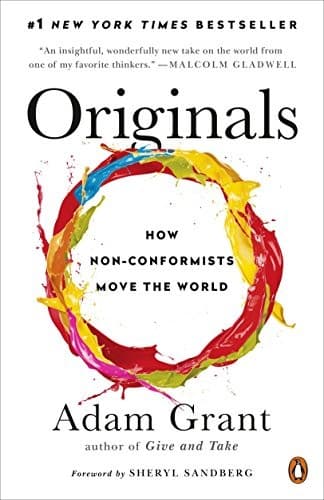
- Originals: How Non-Conformists Move the World
Adam Grant
4.0 (59k) average on GoodreadsAdam Grant's 'Originals' shares Godin's emphasis on challenging the status quo and the importance of novel ideas. However, Grant provides a more data-driven and nuanced exploration of how 'originals' succeed, examining the psychological traits, strategies, and organizational cultures that foster innovation. Unlike Godin's more singular, inspirational narrative, Grant often highlights the paradoxes and complexities, such as the benefits of procrastination for creativity or the importance of strategic risk-taking rather than reckless abandon. Godin is more about the individual's internal shift, while Grant provides a broader sociological and organizational lens on how non-conformity thrives.
- Steve Jobs
Walter Isaacson
4.1 (957k) average on GoodreadsBusinessSteve Jobs was a visionary who fused creativity and technology to revolutionize six industries and shape our digital world.
- Freakonomics: A Rogue Economist Explores the Hidden Side of Everything
Steven D. Levitt
4.0 (709k) average on GoodreadsBusinessThis book uses economic principles to reveal the surprising incentives behind everything from drug dealing and real estate to cheating teachers and the decline of crime.
- The Tipping Point: How Little Things Can Make a Big Difference
Malcolm Gladwell
4.0 (690k) average on GoodreadsBusinessMalcolm Gladwell explains how small, targeted actions can start widespread changes in trends, behaviors, and ideas.
- Outliers: The Story of Success
Malcolm Gladwell
4.2 (556k) average on GoodreadsBusinessMalcolm Gladwell argues that true success is not just about individual talent, but about the hidden advantages of culture, opportunity, and unique experiences that shape extraordinary lives.




Enjoyed the summary?
A summary gives you the shape of the book. The book itself has the detail, the examples and the voice.
Find The Icarus Deception on AmazonAs an Amazon Associate, BookBrief earns from qualifying purchases. How we're funded