
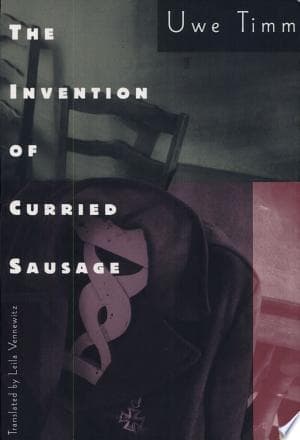
Synopsis
Covers the whole plot, including the ending.
- Difficulty
- Medium
- Pacing
- Moderate
- Mood
- Quirky, Reflective, Charming, Historical
- Read it if
- You enjoy quirky historical fiction, stories about post-war Germany, or unique origin stories for everyday items.
- Skip it if
- You prefer fast-paced thrillers or straightforward historical narratives without eccentric characters.
The Invention of Curried Sausage Plot Summary
Covers the whole plot, including the ending.
The Narrator's Quest
The story begins with an unnamed narrator, a writer, remembering his lifelong interest in curried sausage, especially the one from his youth in Hamburg. He describes the unique taste of the original dish, which he believes is now lost. Driven by nostalgia and a wish to find the true origin of this German street food, he starts an investigation. His search takes him to many snack bars, but none have the flavor he remembers. He eventually hears of a woman named Lena Brücker, rumored to be the true inventor, and sets out to find her.
Meeting Lena Brücker
The narrator's search ends at a Hamburg nursing home, where he finds an elderly Lena Brücker. She is at first unwilling to talk about her past, especially her role in inventing curried sausage. The narrator, however, keeps trying, gently encouraging her with his genuine interest and shared appreciation for the dish. Over several visits, Lena slowly begins to share parts of her life story, focusing on the time right after World War II. Her memories are clear but sometimes broken, and the narrator must carefully put her story together, often asking for more details.
Hamburg, April 1945
Lena Brücker takes the narrator back to Hamburg in April 1945. The city is in ruins from Allied bombing, and the war is ending. Despite the destruction, life continues in a strange way. Food is scarce, and people struggle to survive. Lena, a resourceful woman in her late twenties, works at a canteen for soldiers. She sees the breakdown of order, the fear, and the desperate actions of both soldiers and civilians. This time of extreme scarcity later becomes the setting for her cooking invention.
Encounter with Hermann Bremer
In the chaos of the war's final days, Lena meets Hermann Bremer, a young, lost German soldier. He is a deserter, trying to avoid the collapsing front lines. Lena finds him hiding, hungry and tired, near the canteen where she works. Despite the great risks of hiding a deserter, Lena feels a connection to him, a mix of pity and attraction. Their meeting is important, setting the stage for their unusual relationship and the invention of curried sausage. Hermann's weakness appeals to Lena's independent nature.
A Secret Life Together
Driven by an impulse she doesn't fully understand, Lena takes Hermann to her small apartment. She hides him, giving him food and shelter, making him her secret captive and lover. Their relationship comes from the desperate war situation: Hermann needs safety, and Lena wants companionship and control in a world where she has little. They live in a strange domesticity, cut off from the outside world. Lena creates a private world for them, an intimate bubble among the destruction, and Hermann becomes completely dependent on her.
The Prolonged Captivity
As the war officially ends, Lena decides to keep Hermann in the dark. She continues to tell him the war is still going on, extending his captivity and their unique relationship. Her reasons are complex: a wish to keep their intimacy, a fear of losing him once he knows the truth, and perhaps a need to feel in control in a world that has gone out of control. Hermann, isolated and trusting, believes her, and their strange, long secret life continues, supported by Lena's detailed lies and her carefully chosen news reports.
The Seeds of Invention
During Hermann's long captivity, Lena's resourcefulness is tested. Food is still very scarce, and she has to be creative with the rations she gets. She experiments with ingredients, trying to make meals more appealing for Hermann and herself. This time of cooking improvisation is important. She starts combining different spices and sauces, driven by necessity and a growing creative spirit. These early experiments, born from wartime limits, set the stage for her later success with curried sausage.
The Revelation and Departure
Eventually, the truth about the war's end becomes clear, even to Hermann. Through a chance event or an overheard conversation, he realizes Lena's deception. The discovery shatters their private world and the trust between them. Hermann is angry and deeply hurt by Lena's long lie. He confronts her, and despite Lena's attempts to explain, he decides to leave. His departure ends their intense, isolated relationship and leaves Lena alone, though now free from her secret. This event pushes her to move forward into a new, post-war world.
The Birth of Curried Sausage
After Hermann leaves, Lena puts her energy into her cooking experiments. She has extra ingredients, especially spices and sauces she had collected. Driven by her creativity and the desire to make something new and comforting, she perfects her sauce recipe. She combines available ingredients – ketchup, curry powder, and other spices – to create a unique and flavorful condiment. She then puts this sauce on a simple grilled sausage, creating the iconic curried sausage. With a new purpose, she opens a small snack bar, selling her innovative dish.
Success and Legacy
Lena's curried sausage quickly becomes popular among Hamburg's war-weary population. Its unique taste, low cost, and comforting familiarity appeal to people wanting a taste of normalcy and something new. Her snack bar does well, and the curried sausage becomes a local hit, eventually spreading across Germany. Lena, however, never seeks widespread fame or a large business. She remains a humble seller of her beloved dish. The narrator ends his story, having found not just the origin of a food, but a poignant tale of survival, love, deception, and the quiet strength of a woman who made a lasting mark on German food culture.
Principal Figures
Lena Brücker
Protagonist
The resourceful and independent inventor of curried sausage.
Lena Brücker is a spirited and pragmatic woman in her late twenties during the war, later an elderly resident of a nursing home. She is resourceful, intelligent, and possesses a strong will to survive. Her actions are often driven by a complex mix of compassion, loneliness, a desire for control, and an innate creativity. She is not conventionally beautiful but possesses a captivating inner strength and a sharp wit. Her culinary innovation stems from both necessity and a genuine passion for food.
Relationships: Unnamed Narrator (Informant and interviewer); Hermann Bremer (Lover and captive)
Unnamed Narrator
Protagonist/Frame Narrator
A writer obsessed with uncovering the true origins of curried sausage.
The narrator is a middle-aged writer, a connoisseur of food, driven by a nostalgic quest to find the original taste and story behind curried sausage. He is curious, persistent, and empathetic, approaching Lena Brücker with respect and patience. He acts as the reader's guide through Lena's memories, piecing together her fragmented story. His personal connection to the dish makes him an invested and reliable, if sometimes romanticized, chronicler of Lena's tale.
Relationships: Lena Brücker (Interviewer of, and listener to, Lena's story)
Hermann Bremer
Supporting
A young, disillusioned German deserter taken in by Lena.
Hermann Bremer is a young, vulnerable German soldier who has deserted his post in the chaotic final days of WWII. He is initially fearful, exhausted, and hungry. He becomes entirely dependent on Lena, trusting her completely, which makes her deception all the more impactful. He represents the lost generation of soldiers, disillusioned and seeking only survival. His youthful innocence and desperation make him susceptible to Lena's manipulations, but also capable of deep affection.
Relationships: Lena Brücker (Captive and lover)
Frau Meissner
Mentioned
Lena's friend and confidante.
Frau Meissner is a minor character, a friend of Lena's during the war years. She serves as a sounding board for Lena, and her existence highlights Lena's social interactions outside of her relationship with Hermann. She is depicted as a pragmatic woman, enduring the hardships of war alongside Lena. Her role is primarily to provide context for Lena's life in wartime Hamburg.
Relationships: Lena Brücker (Friend and neighbor)
Themes & Insights
Memory and Storytelling
The novel explores the subjective and often broken nature of memory, especially when telling historical events and personal experiences. The narrator's effort to rebuild Lena Brücker's story shows how individual accounts can differ, be exaggerated, or be forgotten. Lena's own telling is not straightforward, full of pauses, corrections, and emotional shifts. This theme is central to the book, as the narrator's act of listening and piecing together Lena's tale shows how history itself is built and understood. For example, Lena struggles to remember exact dates but clearly recalls feelings and sensory details.
“Memory is a tricky thing. Sometimes it tells you what you want to hear, not what actually happened.”
Survival and Resourcefulness
The difficulties of post-war Germany require characters like Lena Brücker to show great resilience and inventiveness. Lena's ability to not only survive but also create something new and lasting – curried sausage – from scarcity and destruction shows the human spirit. Her resourcefulness is clear in how she feeds herself and Hermann, maintains her apartment, and creatively combines limited ingredients to invent a new dish. This theme is evident in the descriptions of ruined Hamburg and the constant struggle for basic needs.
“Necessity is the mother of invention, they say. And in those days, necessity was a very demanding mother.”
Love, Deception, and Control
The unusual relationship between Lena and Hermann is based on love, but also on significant deception and Lena's wish for control. Lena's choice to hide the end of the war from Hermann, extending his captivity, shows the complex mix of her affection, her fear of being left, and her need to feel in charge in a world where she had little control. This theme examines the moral questions of such a relationship, asking if her actions, though partly from love, were selfish or a desperate attempt to keep a fragile intimacy. The dramatic reveal of the war's end highlights the damaging power of deception.
“I wanted to hold onto him. Just a little longer. Was that so wrong?”
The Enduring Power of Food
Food in the novel is more than just nourishment; it symbolizes comfort, memory, and cultural identity. The narrator's deep emotional connection to curried sausage drives his entire search, suggesting that certain foods hold deep personal and shared meaning. For Lena, inventing curried sausage is not just a business; it is an act of creation that provides warmth and familiarity in a world stripped bare. The simple act of sharing food, even in scarcity, creates connection and brings a brief sense of normalcy and joy amid chaos, as seen in Lena's efforts to prepare meals for Hermann.
“A good sausage, with a good sauce, can make you forget a lot of things.”
Plot Devices & Literary Techniques
Frame Narrative
The story of Lena Brücker is told within the context of the narrator's investigative journey.
The novel employs a frame narrative, where the primary story of Lena Brücker's life and the invention of curried sausage is embedded within the narrator's ongoing quest to discover its origins. The narrator's present-day interviews with Lena serve as the framing device, allowing him to recount her past experiences. This structure emphasizes the act of storytelling and the subjective nature of memory, as the narrator often interjects with his own observations and interpretations, drawing the reader into his process of discovery.
Unreliable Narrator/Memory
Lena Brücker's recollections are subjective and sometimes fragmented, requiring interpretation.
While the unnamed narrator is persistent in his quest for truth, Lena Brücker's memory of events is presented as inherently subjective and occasionally unreliable due to age, emotional bias, and the passage of time. She struggles with exact dates but vividly recalls sensory details and feelings. This device highlights the reconstructive nature of memory and history, forcing both the narrator and the reader to actively engage in piecing together the 'truth' from her personal, emotionally charged narrative. It adds depth and realism to her character, making her story more human and less a dry historical account.
Symbolism of Curried Sausage
The dish symbolizes resilience, creativity, and the blending of cultures.
Curried sausage itself serves as a powerful symbol throughout the novel. Initially, it represents comfort and nostalgia for the narrator. As Lena's story unfolds, it becomes a symbol of survival and human ingenuity, born from the scarcity and chaos of post-war Germany. The blending of a traditional German sausage with exotic curry spices also symbolizes the unexpected cultural fusions that can arise from difficult circumstances, and the ability to create something new and beloved out of disparate elements. It embodies Lena's unique spirit and her lasting legacy.
Dramatic Irony
The reader knows the war has ended while Hermann Bremer remains unaware.
Dramatic irony is a key device in the central plotline involving Lena and Hermann. The reader is aware that World War II has officially ended, while Hermann Bremer, isolated and trusting Lena, believes the war is still ongoing. This creates tension and suspense, as the reader anticipates the inevitable moment when Hermann will discover Lena's deception. It also deepens the reader's understanding of Lena's complex motivations and the emotional weight of her secret, highlighting the moral dilemma inherent in her actions and making Hermann's eventual heartbreak more poignant.
The Invention of Curried Sausage Quotes
“The memory, I've noticed, resembles a house. It has many rooms, some brightly lit, others dark and dusty, and some you never visit at all.”
“When you invent something, you become a creator. You're no longer just a consumer. You're changing the world, even if it's just a little bit.”
“War makes strange things happen to people. It changes them, sometimes in ways they don't even understand themselves.”
“Taste is not just about the tongue; it's about memory, about association, about the whole story behind the food.”
“You can't just invent something out of thin air. It always comes from somewhere, from something you've seen, heard, or experienced.”
“The past isn't dead. It's not even past. It's just waiting for someone to dig it up again.”
“Sometimes the greatest inventions are born out of the greatest scarcity.”
“A good story isn't just about what happened, but about how it's told, and who's telling it.”
“The smell of food, that's what truly brings back the past. More than pictures, more than words.”
“Every invention, no matter how small, changes the world in its own way. It creates new possibilities, new desires.”
“You don't just eat food; you eat the history, the culture, the circumstances that created it.”
“To forget is sometimes a necessary act of survival. But to remember is an act of justice.”
“The most ordinary things can become extraordinary if you just look at them from a different angle.”
“Sometimes you have to break the rules to create something new, something truly your own.”
Quiz
10 questions on the plot and the characters. Each answer comes with a short explanation.
Question 1
What is the name of the woman credited with inventing the curried sausage in the story?
- Lena Brücker
- Herta Heuwer
- Else Schmidt
- Greta Müller
Show answer
B. Herta Heuwer The story centers around Herta Heuwer and her claim to have invented the curried sausage in Hamburg.
Question 2
In what city does the narrator's encounter with the inventor of curried sausage take place?
- Berlin
- Munich
- Hamburg
- Cologne
Show answer
C. Hamburg The narrator meets Herta Heuwer in Hamburg, where she ran her snack stand and claims to have invented the dish.
Question 3
Who is the deserter that Herta Heuwer holds captive in her apartment?
- Helmut Kohl
- Hermann Göring
- Willie Kaminski
- Klaus Richter
Show answer
C. Willie Kaminski Herta shelters the German deserter, Willie Kaminski, in her apartment during the final days of WWII.
Question 4
What specific year does Herta Heuwer claim to have invented the curried sausage?
- 1942
- 1945
- 1950
- 1955
Show answer
B. 1945 Herta's invention takes place in April 1945, just before the end of World War II.
Question 5
What did Herta Heuwer use to create the 'curry' flavor for her sauce, given the scarcity of spices during wartime?
- A pre-made curry powder from a British soldier
- A mixture of various spices traded on the black market
- A concoction made from ketchup, paprika, and other available ingredients
- Leftover spices found in a deserted grocery store
Show answer
C. A concoction made from ketchup, paprika, and other available ingredients She improvises the sauce using ketchup, paprika, and whatever else she could find or trade, reflecting the scarcity of the time.
Question 6
The novel explores the theme of memory and its reliability. How does the narrator's interaction with Herta Heuwer demonstrate this theme?
- Herta provides perfectly consistent details about her invention, confirming its factual accuracy.
- The narrator meticulously cross-references Herta's story with historical documents, proving its exactness.
- Herta's story changes and evolves with each telling, highlighting the subjective nature of personal history.
- The narrator dismisses Herta's story as completely fabricated, without further investigation.
Show answer
C. Herta's story changes and evolves with each telling, highlighting the subjective nature of personal history. Herta's account of the invention shifts and changes throughout the narrator's interviews, emphasizing how memory is constructed and fluid, rather than a fixed record.
Question 7
What is the primary motivation for Herta Heuwer to keep Willie Kaminski hidden in her apartment?
- She wants to use him as a guinea pig for her new food creations.
- She is deeply in love with him and fears for his safety if he leaves.
- She plans to turn him over to the authorities for a reward after the war.
- She needs his help to rebuild her apartment after it was damaged in bombings.
Show answer
B. She is deeply in love with him and fears for his safety if he leaves. Herta's feelings for Willie are a significant factor in her decision to keep him hidden, creating a private world for them amidst the chaos of war's end.
Question 8
The novel often juxtaposes the mundane details of everyday life with the grand historical events of World War II. Which of the following best exemplifies this juxtaposition?
- The detailed descriptions of bombing raids contrasted with the government's official war reports.
- Herta's preoccupation with creating a new snack while the city around her is being destroyed.
- The narrator's personal reflections on his own childhood memories of food.
- Willie Kaminski's detailed accounts of his military service.
Show answer
B. Herta's preoccupation with creating a new snack while the city around her is being destroyed. The invention of a simple street food against the backdrop of a collapsing world and the final days of a devastating war is a central example of this thematic juxtaposition.
Question 9
What literary device is primarily used by Uwe Timm in his portrayal of the invention of curried sausage?
- Magical realism
- Historical fiction with elements of oral history and subjective memory
- Allegory
- Stream of consciousness
Show answer
B. Historical fiction with elements of oral history and subjective memory The novel blends historical events with a fictionalized personal account, emphasizing the subjective nature of memory and storytelling, a characteristic of oral history.
Question 10
How does the narrator initially come to know Herta Heuwer and hear her story?
- He is a historian researching post-war German culinary traditions.
- He is a regular customer at her snack stand who develops a rapport with her over time.
- He is her estranged nephew returning to Hamburg after many years.
- He discovers her story through old newspaper articles and seeks her out.
Show answer
B. He is a regular customer at her snack stand who develops a rapport with her over time. The narrator describes himself as a frequent patron of Herta's snack stand, gradually building a relationship that allows him to hear her detailed, evolving story.
The Invention of Curried Sausage FAQ
What is the central premise of 'The Invention of Curried Sausage'?
The novel explores the intertwined stories of Lena Brücker, a woman living in Hamburg in April 1945, and Hermann Bremer, a deserter she takes in. Amidst the chaos of war's end, Lena invents the beloved German street food, the 'Currywurst,' while sheltering Bremer and navigating their unusual relationship.
Who is Lena Brücker and what is her significance?
Lena Brücker is the ingenious and pragmatic protagonist who, in the final days of WWII, invents the 'Currywurst' out of necessity and a flash of culinary inspiration. She runs a snack stand after the war and is the central figure in the narrator's quest to uncover the origin of the dish.
Who is Hermann Bremer and what role does he play?
Hermann Bremer is a young German soldier who deserts his post in April 1945 and is taken in by Lena Brücker. He becomes Lena's captive and lover, living in her apartment's pantry for weeks, and his presence profoundly influences Lena's life and perhaps even her culinary creativity.
How does the narrator become involved in the story?
The unnamed narrator, a food enthusiast and connoisseur of Currywurst, encounters Lena Brücker at her snack stand years later. Intrigued by her unique sauce and her claim to have invented the dish, he forms a bond with her and listens to her extended, detailed account of those pivotal weeks in 1945.
What is the historical context of the novel?
The story is set primarily in Hamburg in April 1945, during the very end of World War II, a time of immense destruction, food shortages, and societal upheaval. This chaotic backdrop provides the perfect environment for desperate measures, unconventional relationships, and surprising innovations like the Currywurst.
Are there any subtle clues about the narrator's own background or connection to Lena?
While not explicitly stated, the narrator's deep fascination with Lena's story and his persistent questioning suggest a deeper personal investment beyond mere culinary curiosity. His detailed recounting of her memories, almost as if he were there, hints at a profound empathy or even a subconscious identification with the isolation Lena and Bremer experienced.
What is the significance of the pantry where Bremer is kept?
The pantry serves as a symbolic microcosm of their relationship and the war itself. It's a hidden, confined space that offers both safety and imprisonment, mirroring the paradoxical freedom Bremer finds in desertion and the control Lena exerts. It represents a liminal space outside the collapsing world.
How does the novel subtly comment on historical memory and truth?
The entire narrative is Lena's subjective recollection, filtered through time and her own biases, as retold to the narrator. This highlights the fluidity of memory and how personal narratives can shape or even invent historical 'truths,' especially regarding a humble origin like a street food. The narrator's role is to capture, not necessarily verify, her truth.
What is the underlying symbolism of the 'Currywurst' itself in the story?
The Currywurst symbolizes resilience, adaptation, and the ability to create something new and comforting out of scarcity and chaos. It represents a small act of civilian ingenuity and pleasure amidst the devastation of war, a culinary invention born from both necessity and a spark of joy.
Analyze Lena Brücker's psychological state during the war's end.
Lena exhibits remarkable resourcefulness and a strong will to survive, bordering on ruthlessness. Her decision to take in and 'imprison' Bremer suggests a complex blend of compassion, loneliness, and a desire for control in a world where she has none. She finds agency in her unusual domestic arrangement.
What psychological dynamics are at play in Lena and Bremer's relationship?
Their relationship is a fascinating power dynamic, shifting from captor/captive to lover/confidant, all within the confines of Lena's apartment. Bremer's initial fear gives way to a form of dependency and affection, while Lena experiences a rare intimacy and control during a period of utter chaos, fulfilling emotional needs for both.
How does Bremer's desertion affect his psyche and his interaction with Lena?
Bremer's desertion is an act of self-preservation, but it also leaves him vulnerable and guilt-ridden. His confinement with Lena, while physically restrictive, offers him a psychological refuge from the war's horrors. He gradually sheds his soldier identity, becoming more human and dependent on Lena's care and affection.
What does the novel suggest about the nature of love and connection in extreme circumstances?
The book suggests that love and connection can emerge in the most unexpected and unconventional ways when societal norms break down. Lena and Bremer's bond, born of necessity and shared isolation, highlights how human needs for intimacy and survival can intertwine, creating relationships that defy conventional morality.
Is Lena's invention of the Currywurst a literal historical claim or a metaphorical one?
While the book presents Lena's story as *the* origin, it functions more as a metaphorical exploration of how everyday innovations arise from specific circumstances and individual ingenuity. Timm is less concerned with historical accuracy of the dish's origin and more with using it as a lens to explore human experience during wartime.
How does the novel blend historical fact with fictional narrative?
Uwe Timm masterfully blends the documented historical backdrop of WWII's end in Hamburg with a deeply personal and fictionalized narrative. The general atmosphere, destruction, and food shortages are real, providing a vivid stage for Lena's entirely imagined, yet plausible, personal story and her culinary invention.
What is the significance of the narrator's persistent pursuit of Lena's story?
The narrator's relentless quest signifies a deeper human desire to understand origins, to connect with the past, and to find meaning in everyday things. His dedication to Lena's subjective truth underscores the power of individual stories to illuminate broader historical moments, even if those stories are personal myths.
Could Lena's story about Bremer be partially fabricated or embellished?
Given that the entire narrative is Lena's recollection, presented years later, it is highly plausible that elements are embellished, romanticized, or even partially fabricated. The novel invites the reader to consider the reliability of memory and the way individuals construct their own histories, especially for a captivated audience like the narrator.
What larger statement does the book make about humanity's capacity for adaptation?
The book powerfully illustrates humanity's profound capacity for adaptation, not just physically to harsh conditions, but emotionally and psychologically. Lena and Bremer's ability to forge a life and even love amidst the collapse of their world, and Lena's invention of a comforting food, exemplify this remarkable resilience.
About the author
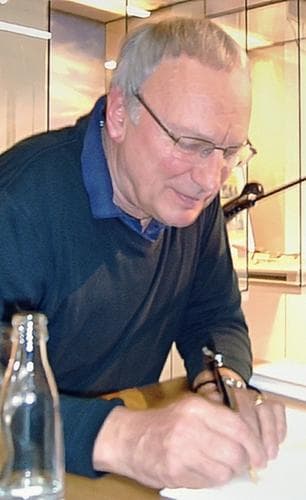
Uwe Timm is a German writer.
Similar books
- Austerlitz
W.G. Sebald
4.0 (14k) average on GoodreadsHistorical FictionFeatures a contemplative narrator piecing together a historical puzzle, often through personal accounts.
- Nineteen Eighty-Four
George Orwell
4.2 (5.5M) average on GoodreadsFictionWinston Smith dreams of truth and rebellion in a world where Big Brother watches all, but he confronts the terrifying power of a regime that controls not just actions, but thoughts.
- The Frozen River
Ariel Lawhon
4.4 (600k) average on GoodreadsFictionIn 1789 Maine, a heroic midwife's diary helps her expose a murder and get justice in a town that wants to silence her.
- A Man Called Ove
Fredrik Backman
4.4 (569k) average on GoodreadsFictionA stubborn widower, who lives by strict rules, finds his quiet world changed by a lively new family next door, making him face his past and find happiness in human connection.
- The Art of Racing in the Rain
Garth Stein
4.2 (452k) average on GoodreadsFictionThrough the eyes of Enzo, a wise and observant dog, a race car driver's family navigates a journey of love, loss, and resilience, learning that life's most important lessons often come in the curves, not just on the straightaways.
- The Colour of Magic
Terry Pratchett
4.0 (425k) average on GoodreadsFictionOn a discworld hurtling through space on the back of a giant turtle, an inept wizard and his naive, walking-luggage-toting tourist embark on a chaotic, belief-fueled journey to the very edge of their flat planet, encountering dragons that only exist if you believe in them.






Enjoyed the summary?
A summary gives you the shape of the book. The book itself has the detail, the examples and the voice.
Find The Invention of Curried Sausage on AmazonAs an Amazon Associate, BookBrief earns from qualifying purchases. How we're funded